Platform for African – European Partnership in Agricultural Research for Development

Tuesday, September 15, 2015

Regional Strategic Analysis and Knowledge Support System Annual Conference

1-3 September 2015. Addis Ababa. This conference was organized by the International Food Policy Research Institute (IFPRI) in partnership with the African Union Commission (AUC). The theme of the conference was “Beyond a Middle Income Africa: Transforming African Economies for Sustained Growth with Rising Employment and Incomes.”


In addition to discussing findings of the 2014 Africa-Wide Annual Trends and Outlook Report (ATOR), the Conference allowed policymakers, researchers, advocacy groups, farmers’ organizations, the private sector, development partners, and other key stakeholders from within and outside of Africa to:
  • Review progress in implementing the Comprehensive Africa Agriculture Development Programme (CAADP) and in particular, progress toward achieving key CAADP goals and targets;
  • Assess mutual accountability and review processes and associated capacities as well as their effectiveness in fostering evidence based policy planning and implementation;
  • Evaluate progress and challenges in establishing effective country strategic analysis and knowledge support systems (SAKSS) platforms and agriculture joint sector reviews (JSR); and
  • Exchange on the technical support required for the effective roll out of the Malabo Declaration and its Implementation Strategy and Roadmap (IS and R), the CAADP Results Framework, and the Guidance Note on Government Agriculture Expenditures.
To learn more about the conference, its objectives and expected outcomes, please read the 4-page Conference Note (PDF 300 KB) and the agenda

Extracts:
Side event:  Harmonization of Methodology for Country Studies in the Program for Accompanying Research for Innovation (PARI)
  • The Program for Accompanying Research for Innovation in Africa Agriculture (PARI) is a partnership initiative of the ZEF, FARA, IFPRI and other German organizations, entrenched in the “One World – No Hunger” initiative of the Germany government. 
  • The PARI project aims to foster the scaling of agricultural innovations in Africa and to contribute to the development of the agricultural sector through science. The PARI activities are aligned with the works of the Agricultural Innovation Centers (AICs) in Africa countries; it addresses the needs of the smallholders and other actors along the commodity value chain through partnerships. 
  • The PARI project builds on the experiences and success of the agricultural innovation systems, particularly, the Integrated Agricultural Research for Development (IAR4D) concept and the use of the Innovation Platforms as a forum to facilitate interactions and learning among stakeholders. The interaction leads to the generation of agricultural innovation with accompanying socio-economic benefits along the targeted commodity chain(s).
  • PARI is currently being implemented in 12 Africa countries in a strong partnership with the lead National Agricultural Research Institution (NARI), and coordinated FARA in close relationship with the IFPRI.
  • The PARI side event provided an overview of the program, set the background for its results and update of progress; it harmonized the methodology for the backdrop studies at the country level.
Other presentations

Related:
2 September 2, 2015. Washington, DC. IFPRI Policy Seminar: "Road to New York: Keeping the SDGs' Agenda in Focus." 

Part 1 and Part 2 of panel discussion + Q and A.


PAEPARD Communication tool training session


15-17 September 2015. Accra, Ghana. As part of the communication activities a three-day training workshop was organised to facilitate the use of the PAEPARD, communication and information tool. 

The communication tool:
  • facilitates work group and allows the sharing and dissemination of information. 
  • it references all the documents produced as part of the project and allows easy consultation of all these documents. 
  • This tool is copyright-free and may be used after the end of the project to ensure communication on the PAEPARD platform.
The participants involve:
  • Two representatives from each Regional Farmer Organisation and the Private sector who are involved in the Users' Led Process (Research priorities set by the Regional Farmer Organisation and by ColeACP:
    (a) the EAST AFRICAN FARMER FORUM (EAFF): innovative multi stakeholder research around the “Extensive livestock value chain” ;
    (b) the PLATEFORME RÉGIONALE PAYSANNE DE L’AFRIQUE CENTRALE (PROPAC): innovative multi stakeholder research around the (urban) vegetable sector in Central Africa ;
    (c) the RÉSEAU DES ORGANISATIONS PAYSANNES ET DES PRODUCTEURS AGRICOLES DE L’AFRIQUE DE L’OUEST (ROPPA): innovative multi stakeholder research around the Climate change adaptation technologies on rice production
    (d) the Food Agriculture Natural Resources Policy Network/Southern African Confederation of Agricultural Unions (FANRPAN/SACAU): innovative multi stakeholder research around the
    Ground nut value chain in Zambia and Malawi
    (e) the Comité de Liaison Europe-Afrique-Caraïbes-Pacifique pour la promotion des exportations horticoles(ColeACP): innovative multi stakeholder research around the Mango byproducts in Senegal, Burkina Faso and Ivory Coast
  • a representative of the research projects funded by the Dutch Applied Research Fund
    (a) More potatoes - Secure food in Burundi
    (b) Indigenous African Vegetable systems for better livelihoods in Kenya and Uganda
    (c) Matching grain quality attributes to the requirements of soybean processors in Benin (ProSeSS)
    (d) Designing appropriate agronomic and processing practices for pineapple supply chains in Benin
  • a representative of the research projects funded by Competitive Research Fund of PAEPARD :
    (a) Soja-Benin “Re-engineered Soybean “Afitin” and Soybean Milk processing technologies in South and Central Benin (ProSAM)”
    (b) Stemming Aflatoxin pre-and post-harvest waste in the groundnut value chain (GnVC) in Malawi and Zambia to improve food and nutrition security in the smallholder farming families
    (c) Effets des amendements organiques enrichis aux Trichoderma sp. appliqués aux productions maraîchères de la zone sub-saharienne, Burkina Faso
    (d) Enhancing nutrition security and incomes through adding value to indigenous vegetables in East and Central Uganda
They will be responsible to train others in their work structure and to ensure that information relating to the activities of their group is properly entered into the tool.

Related:
08/09/2015, Scidev: Weak links hamper knowledge sharing in agriculture
Agricultural Innovation Systems' complexity means that ICTs and knowledge management should be recognised as critical components of every activity or project that aims to take innovation to farmers’ fields. ICT and mobile applications are making knowledge brokers’ engagement with rural farmers easier, faster and cheaper. And they are making partnerships easier to manage. Benjamin Kwasi Addom, CTA

Sunday, September 6, 2015

Africa Climate Talks: East/Southern Africa, and Indian Ocean

3-5 September 2015. Dar Es Salaam, Tanzania. Under the theme, 'Democratizing Global Climate Change Governance and Building an African Consensus toward COP 21 and Beyond,' the Africa Climate Talks (ACT!) were organized by the Climate for Development in Africa (ClimDev-Africa) Programme.

This series of interconnected sub-regional and Africa-wide events contribute to Africa's preparation for the 21st session of the Conference of the Parties (COP 21) to the UNFCCC, engaging Africans from all walks of life. ACT! aims to raise public awareness of climate change, hear perspectives of linkages between climate change issues and Africa's development, and consider the potential implications of COP 21 outcomes for Africa.

ClimDev-Africa is a joint Programme of the African Union Commission (AUC), the UN Economic Commission for Africa (ECA) and the African Development Bank (AfDB).

ClimDev-Africa will host two regional forums, one for the Eastern and Southern Africa, and the other for Western, Central and Northern parts of Africa, as outlined below:
  • 3rd - 5th September 2015 Dar es Salaam, Tanzania 
  • 1st - 3rd October 2015 Dakar, Senegal 
Climate change and development in africa conference (CCDA-V)
  • 28th - 30th October 2015 Victoria Falls, Zimbabwe 

Friday, September 4, 2015

Revamping the groundnut value chain of West Africa through aflatoxin mitigation

Dr. Amare Ayalew, Program Manager PACA Secretariat
1 - 2 September 2015. Dakar, Senegal. PACA organized a workshop on “Revamping the groundnut value chain of West Africa through aflatoxin mitigation”
Since the 1960s, groundnut production and trade have been declining in many West African countries due to various factors among which the most critical is aflatoxin contamination. It is believed that many countries in the region would unleash their groundnut sector’s potential if they could effectively tackle the aflatoxin menace.

The objectives of the workshop were:
  • Share perspectives on the state of the aflatoxin challenge in groundnut value chains in West Africa and opportunities for intervention
  • Discuss the current policy landscape of West African States in relation to aflatoxin control, food safety as well as trade and identify actions to address gaps
  • Discuss current technological practices for aflatoxin prevention and control and explore new options
  • Review and validate the ECOWAS Aflatoxin Control Action Plan as a step towards facilitating adoption in the region 
  • Right: Dyborn Chibonga of NASFAM Malawi
  • Identify new, and strengthen existing partnership opportunities among national, regional and international stakeholders in aflatoxin management and agree on strategies for mobilizing required investments to support priority activities.
The workshop was jointly organized by PACA Secretariat,Economic Community of West African States (ECOWAS), International Institute of Tropical Agriculture, International Crop Research Institute for the Semi-Arid Tropics, Pan African Agribusiness and Agro Industry Consortium, Bill and Melinda Gates Foundation, United States Agency for International Development, West and Central African Council for Agricultural Research and Development (CORAF), the Government of Senegal and other partners.

A workshop summary and communique will be shared soon. The following workshop materials are available:
  • Program of the workshop "Revamping the groundnut value chain of West Africa through aflatoxin mitigation" (English and French)
  • Concept Note for the workshop "Revamping the groundnut value chain of West Africa through aflatoxin mitigation" (English; French)
  • Scoping Study to Assess the Policy Environment and Capacity for Aflatoxin Control in the ECOWAS Member States (English; French)
  • The previous Regional Workshop on the Aflatoxin Challenge in West African States was in Accra 18-20 November 2013. See: Communique and Meeting Materials
Workshop Session 2: Scene-setting Presentations:
Workshop Session 5
Workshop Session 6: Towards Priority Actions; Input Presentations:
PAEPARD video interviews:
Interview with Dr. Janet Edeme, Head Rural Economy Divison, African Union Commission, Dept. of Rural Economy and Agriculture. Dr. Edeme answers following questions:
  1. How serious in the aflatoxin contamination? 
  2. What do you expect from donors? 
  3. Why is PACA important for multi stakeholder coordination? 
  4. Don't we need greater awareness of the consumer? 

Interview with Papa Ousseynou SANE, C.E.O Snambel Production et Distribution: Les défits de l'exportation d'arachides non-contaminée Papa Ousseynou SANE answers following questions:
  1. Pourquoi devez-vous assurer une non-contamination par l'aflatoxin comme exportateur d'arachide?
  2. Quel est le business model des Fonds d' Investissement?
  3. Quelle est votre experience avec les Fonds d'Investissement?
  4. Quel support recevez-vous des chercheurs Senegalais?
  5. Quelle est l'importance d'un Partenariat Publique Prive (PPP) pour combattre l'aflatoxin?

Related:
28-29th of September 2015. Lilongwe, Malawi. Southern Africa Peanut Value Chain Meeting in Malawi. Dr. Rick Brandenburg from North Carolina State University, PMIL Lead Scientist for the Southern Africa Peanut Value Chain Intervention, is hosting a project meeting.

Over 50 project partners including researchers, students, and private sector actors from the target countries, Malawi, Mozambique, and Zambia, plus collaborators from the United States and the United Kingdom will attend the meeting. Initial findings and updates from the ongoing projects that span the value chain will be presented to improve multidisciplinary and regional cooperation and impact during the completion of the project.

Visit the website for more information about the Southern Africa Peanut Value Chain Intervention project.

Webinar with Dr. Roger Leakey on The Global Food Crisis

2 September 2015. This Webinar Series of Foodtank featured Dr. Roger Leakey, a crop physiologist and tree biologist who has worked in forestry and agroforestry aimed to reverse deforestation and desertification in the tropics.

The Global Food Crisis: can we heal an ailing and divided world? The answer is ‘yes’ but it will require a different mindset if we are to have the ‘political will’ to scale up existing, unconventional approaches based on the ideas of poor smallholder farmers in Africa: ones that are being highly successful after 12 years on a scale of 500 villages.
  • Roger first examined the production and associated social, economic and environmental issues driving a downward spiral that results in hunger, malnutrition and environmental degradation. 
  • He then presented a simple, bottom-up, 3-step approach to reversing this downward spiral, before looking at some of the outcomes to date and the potential impacts.


More about the speaker:
Dr. Roger Leakey is a crop physiologist / tree biologist who has worked in forestry and agroforestry aimed at helping to reverse deforestation and desertification in the tropics. Perhaps even more importantly, however, his pioneering work over the last twenty years has also been dedicated to the alleviation of poverty, malnutrition and hunger in developing countries, especially in Africa and Oceania. In recent years the fruits of his labours (literally – the numerous virtually unknown, traditionally and culturally important indigenous fruits and nuts of many tropical countries) have started to come to maturity. Dr. Leakey is the former Director of Research at the International Centre for Research in Agroforestry.

Thursday, September 3, 2015

Agriculture at the AGOA and the New York Forum AFRICA forum

24-27 August 2015. Libreville, Gabon. The 2015 US – sub-Saharan Africa Trade and Economic Cooperation Forum (known as the AGOA Forum) had this year as theme Charting a Course for a Sustainable U.S.-Africa Trade and Investment Partnership. Representatives from the private sector, civil society, and the U.S.-sponsored African Women’s Entrepreneurship Program (AWEP) participated in the Forum.

The program included two sessions related to agriculture:
  • WORKSHOP 1 – Building capacity to comply with international SPS standards to increase food security, agro-business investment, and AGOA exports 
  • PLENARY 5 – The Missing Middle – Supporting African women entrepreneurs to participate in global supply chains
Ambassador Linda Thomas-Greenfield assistant secretary, United States Bureau of African Affairs joined CNBC Africa to discuss key takeaways from this year's forum.

There has been a standoff between the U.S and the South African poultry industries over South Africa's anti-dumping duties. Carol O'Brien, executive director of the American Chamber of Commerce in South Africa joined CNBC Africa to discuss the other end of the Agoa story.

28 - 30 August 2015. Libreville, Gabon. The New York Forum AFRICA examined the key areas of growth, and the investment opportunities that lie therein. Richard Attias and Associates advised the Government of Gabon to organize a large-scale business and economic summit. Using the firm’s flagship brand, The New York Forum, and under the banner of its non-profit The New York Forum Institute, the summit was branded The New York Forum AFRICA. In 2012, the inaugural edition of the NYFA took place, and has been followed by subsequent editions in 2013, 2014 and 2015.

These conferences, drawing more than 1,500 participants each, have been held under themes that address the investment and development priorities of global and African investors, and take a multi-stakeholder approach to understanding the continent's challenges. In addition, it has become the umbrella brand for new initiatives for job creation, climate change, and political integration on the continent.

See all video sessions

Extracts of the programme:

The NYFA 2015 hosted the Climate South Initiative to underline the connections between climate change, economic development, and investment in advance of the December COP21 meeting in Paris.

CLIMATE SOUTH INITIATIVE: GREEN IS THE COLOUR OF SUCCESS
With $50 billion in annual investment going into Africa, there is an unprecedented opportunity to leverage the private sector and build Africa into a green continent.
How can we scale up innovation in green businesses so we also maximise their job creation potential? How can we optimise the collaboration between entrepreneurs and lead innovators and ‘big business’? What can be done to harness the power of the informal economy in the battle against climate change? What new innovations in energy tech will represent change for the most people in Africa?
Patrice FONLLADOSA
President and CEO Africa and Middle East, Veolia
France
Thierry LEPERCQ
CEO, Solairedirect
France
Harry VERHAAR
Head of Global Public & Government Affairs, Philips Lighting
The Netherlands
Nik GOWING
International Broadcaster,
UK
Peter BALLINGER
Managing Director, Africa – Overseas Private Investment Corporation (OPIC)
USA


FOOD SECURITY AND LAND MANAGEMENT PRACTICES
See White paper:DRIVEN BY NEED: FOOD SECURITY, BUT FOOD FIRST
The wealth of the African continent lies in its land, with two-thirds of Sub-Saharan Africa’s population relying on land activities such as agriculture, freshwater fishery and forestry for their livelihoods. But we need to prioritise the reduction of tropical deforestation associated with the sourcing of commodities and turn to a more market-driven approach.
Daniel COTTA
Business Development Director, Grégori International
France
William KWENDE
Chairman, Agritech Group
Burkina Faso
Albert SASSON
Director, Life Sciences & Biotechnology Section, Hassan II Academy of Science and Technology
Morocco
Leyth ZNIBER
CEO and Founder, Eiréné4Impact
Morocco
Dawood AZAMI
Senior Broadcast Journalist & Desk Editor, BBC World Service
UK
Leandre BOULOUBOU
General Coordinator, Graine
Gabonese Republic


CLIMATE SOUTH INITIATIVE: GREEN STRATEGIES FOR CITIES AND REGIONS
Cities and regions do not need to wait for global climate agreements to be reached, and can start acting immediately with nimble policies designed to encourage energy efficiency and tackle climate change affordably.

What examples on policy innovation can be learned from regions around the world? How can these be scaled up to be implemented by cities across Africa?
Jean-Jacques GUILBAUD
Chief Administrative Officer, Executive Committee Member, Total
France
Thierno Bocar TALL
Chairman & CEO, African Biofuel and Renewable Energy Company ABREC
Togo
Narcisse MBUNZAMA
Founder, Avonax
Sweden
Michel RENTENAAR
Climate Envoy to the Netherlands, Ministry of Foreign Affairs
The Netherlands
Michel GOSTOLI
CEO, Eiffage Construction
France

Friday, August 28, 2015

Les technologies de transformation du soja en lait et afitin au Bénin


28 au 29 août 2015. Benin. Atelier de validation des résultats des études de base relatives aux technologies de transformation du soja en lait et afitin au Bénin.

Dans le cadre de la mise en œuvre du projet ProSAM, une cartographie des acteurs des chaînes de valeur soja, l’identification des technologies de transformation du soja en lait et en afitin et une analyse financière des chaînes de valeur lait et afitin soja ont été réalisées. Un atelier réunissant les différents acteurs intervenants dans la filière soja a été organisé pour la validation des résultats des différentes études suscitées.

 Les participants à cet atelier étaient au nombre d’une trentaine et constituent des représentants des acteurs publics et privés de la filière soja au Bénin. Les membres du consortium Soja du Bénin (CSB) exécutant actuellement le ProSAM sont:
  • Faculté des Sciences Agronomiques (FSA) de l’Université d’Abomey Calavi
  • Institut National des Recherches Agricoles du Bénin (INRAB) ;
  • Association pour le Développement du Soja au Bénin (SOJAGNON ONG) 
  • Fédération des Unions des Producteurs (FUPRO) du Bénin
  • Université de Wageningen (WU) des Pays-Bas et
  • Institut International pour la Recherche Scientifique et Tropicale (IICT) du Portugal.
Cet atelier visait à valider les résultats des études de référence et des technologies de transformation du soja en afitin et en lait.
  • Restituer et valider les résultats de l’étude sur la cartographie des acteurs ; 
  • Restituer et valider les résultats des études technologiques approfondies ; 
  • Restituer et valider les résultats de l’étude de la rentabilité financière des chaînes de valeur lait et afitin ; 
  • Identifier les axes d’amélioration et de promotion de la consommation et de la transformation du soja en lait et en afitin 
  • Réaliser une analyse des FFOM de la filière; 
  • Réaliser la cartographie de la filière soja ; 
  • Réaliser la cartographie des projets intervenants dans la filière.
Published on 4 Sep 2015
Améliorer la chaine alimentaire des dérivés du soja (lait et afintin) pour une meilleure sécurité alimentaire des populations vulnérables, c'est l'objectif du Projet Soja Afintin (ProSAM) financé par l'UE à travers le PAEPARD de FARA. Huit mois après le lancement de ce projet, une visite de terrain dans la commune de Zogbodomey au Bénin a été organisée à l'attention des différents acteurs venus des quatre coins du monde dans le cadre dudit projet. Le présent numéro de Agro Mag renseigne sur la chaine de valeur du soja au Bénin, les raisons justificatives du Projet et les temps forts de la visite de terrain.


Exploring Storage and Drying Solutions for Aflatoxin Prevention

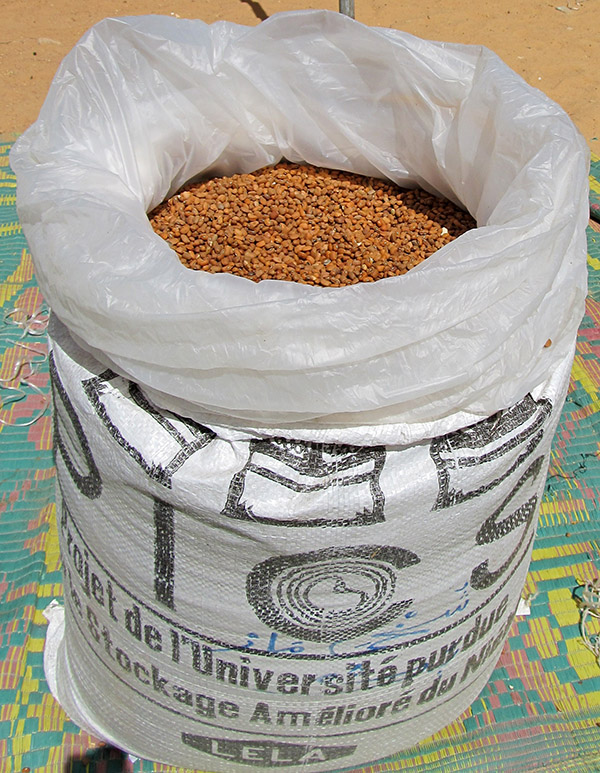
This bag is a triple layer plastic bag introduced 
to West Africa by Purdue University and 
currently manufactured in Kenya by Bell Industries. 
This bag requires placement on a pallet. 
Capacity ranges 90-100kg with costs 
estimated at $2.80 per bag.
14 August 2015. Agrilinks interviewed Sophie Walker, Chief of Party of AflaSTOP project.

Based in Kenya, AflaSTOP is investigating storage devices that will prevent the growth of aflatoxin-producing mold during storage and exploring drying technologies that will help farmers reduce grain moisture from current levels at 15-18 percent to a safer 13.5 percent.

AflaSTOP intends to commercialize the most promising of these technologies in order to scale adoption.
"The goal of my work right now is mass adoption of these storage and drying devices by smallholder farmers, either as an investment on farm or a service that they buy in to. We need to ask ourselves how we can provide the knowledge to private sector companies working in this area so they can drive their supply chains down to small agridealers."
The AflaSTOP: Storage and Drying for Aflatoxin Prevention (AflaSTOP) project is identifying the most promising storage options to arrest the growth of aflatoxin and designing viable drying options that will allow smallholder farmers to dry their grain to safe storage levels.
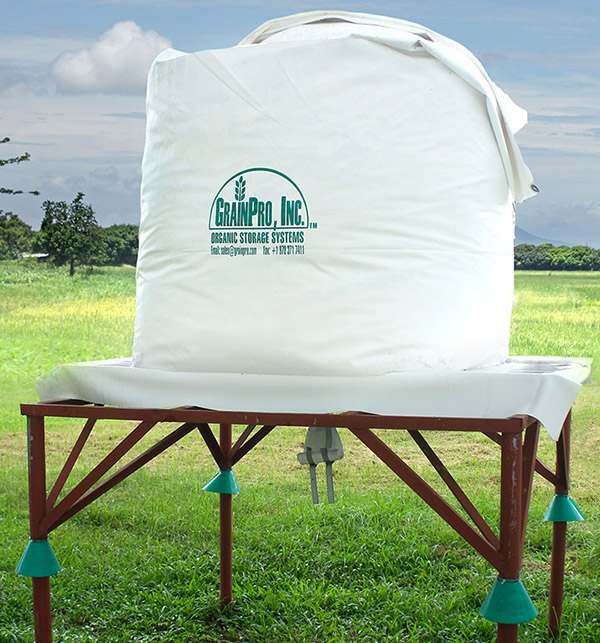
This bag is produced by GrainPro and imported 
into the country duty free. Current storage 
capacity ranges from 800-1,300 kg. 
They will soon be introducing a 500kg bag. 
The estimated cost for the frame and bulk bag is around $260.
The project works to ensure that businesses operating in Africa are able to provide these devices to smallholder farmers.

Linking scientifically rigorous research with human-centric design and grounded in marketplace realities, the project consists of three core components:
  1. Storage: scientific testing of storage devices in controlled conditions and field testing with smallholder farmers
  2. Drying: research, design, testing, fabrication, and adaptation of potential drying solutions
  3. Metal Silo: The silos are made out of aluminum 
    and produced by local artisans. They are placed 
    on a pallet and size ranges from 200-1,000kg. 
    Estimated cost is $144.
  4. Commercialization strategy development: tailored investigation and validation of the commercial viability of each storage and drying product
AflaSTOP has conducted the largest aflatoxin trial to date of small-scale agricultural grain storage devices (90kg-1,000kg). AflaSTOP’s research shows that until the underlying problem of maize being contaminated in the field is addressed, hermetic storage can be a major contribution to addressing the phenomenal increase in contamination experienced during the storage period due to current storage methods.

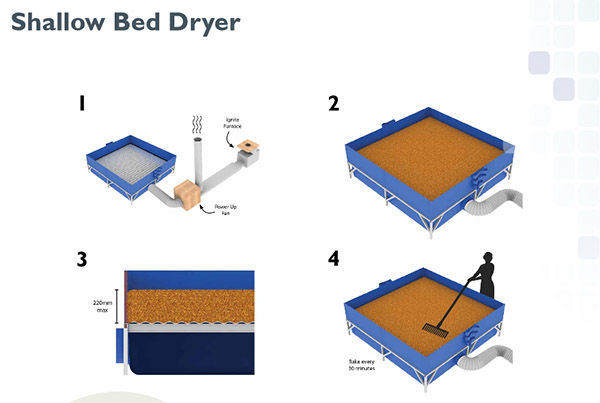
As for drying technology, the shallow bed dryer shows the most promise. It is a completely new device that has never gone to market. The basic configuration of this mechanical dryer is a furnace, a heat exchanger and a supply of air (provided by fan). The heat from the furnace moves through the heat exchanger and through the raised bed that contains the grain.

AflaSTOP supports the objectives of the Partnership for Aflatoxin Control in Africa (PACA), which is establishing a comprehensive, Africa-wide approach to aflatoxin control. Cofunding for this project is provided by the Bill & Melinda Gates Foundation and USAID, and the project is jointly implemented by ACDI/VOCA and Agribusiness Systems International (ASI), under the direction of Meridian Institute.

Resources:
Related:
27 July 2015. Mycotoxin Detection Options
We would like to see standardized testing protocols across all of Peanut & Mycotoxin Innovation Lab (PMIL’s) programs and develop an information Booklet and Web-based recommendation app.
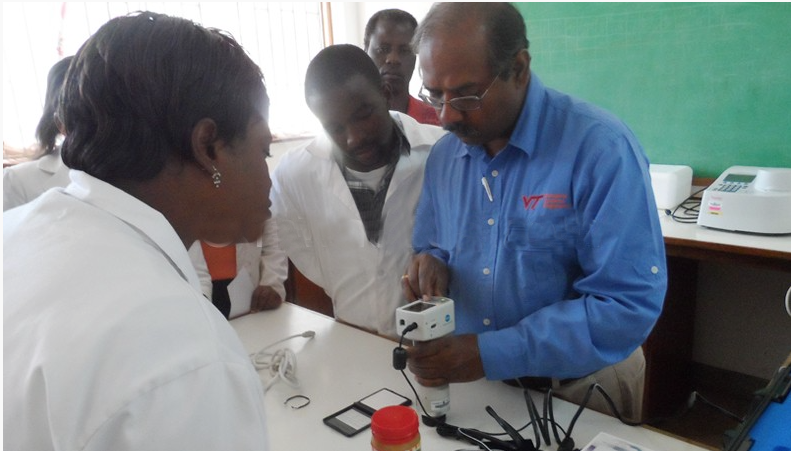
Kumar Mallikarjunan is a Professor at Virginia Polytechnic Institute and State University in Blacksburg, VA. He has been involved with the USAID funded peanut projects for almost 20 years – formerly with the Peanut CRSP and now with the Peanut and Mycotoxin Innovation Lab.

27 July 2015. Solar Drying to Control Aflatoxin Contamination in Peanut
Aflatoxin is not something that is well known outside the scientific community. Most families in Ghana do not know much about it. Actually, I hardly hear anything about it in Ghana. Solar drying does not expose the peanuts directly to sunlight and they are not exposed to rain either. The dryer has a collector to capture the heat from the sun and an enclosed structure around the nuts that conducts the heat. Everything is enclosed so there will be no moisture from rain. I want to work to create technology that eliminates aflatoxin and that is affordable and easily transferred to farmers.
Maxwell Lamptey is participating in a short-term training program supported by the Peanut and Mycotoxin Innovation Lab from March to September 2015. He is a senior technical officer working on legumes at the Crops Research Institute (CRI) in Kumasi, Ghana.

Thursday, August 27, 2015

GFAR Constituent Assembly

24-26 August 2015. Bangkok, Thailand. Around 150 GFAR stakeholder representatives took part in the “Renewal & Reform” of GFAR, coming together for its first-ever Constituent Assembly. During three days they met to decide the future role, resourcing and governance of the Global Forum.

The Global Forum was established almost 20 years ago, but agriculture today faces very different and complex new challenges, requiring us all to work together to solve them.
FAO’s Dr Ren Wang, 

who is helping to shape 
the future of GFAR
at the Constituent Assembly
I am optimistic about GFAR’s future – so long as it continues to get its strategy and priorities right, and if it continues to strengthen its competitive advantage; that is, its networks and links with multiple stakeholders. It will be important for GFAR to increase and enhance its representation, particularly of the emerging economies that continue to represent a large proportion of the increased investment in agricultural innovation systems. I hope that is a consideration when it comes to looking at the future governance of the Forum.”
The current “Renewal and Reform” process was triggered by an independent review in 2013,which recommended changes to GFAR’s governance structures in light of its evolving role. Since then, the Strategic Governance Working Group (SGWG) has been leading a strategic reflection on issues raised by the review as they impact on the Global Forum’s governance, including GFAR’s role and purpose, the basis for collective action by stakeholders, new models of governance required and how to resource the actions of the Forum.

These themes were examined and discussed in more depth at the Constituent Assembly, before participants are asked to make decisions related to each. Mark Holderness says that will require exploring some key concepts, to build understanding and mutual commitments around each –essential items in a voluntary movement.

Published on 19 Aug 2015
Interview with Dr. Ruth Onaing'o, GFAR Vice Chair on the upcoming Constituent Assembly to be held on Bangkok, Thailand.

First Climdev-Africa Special Fund Project

3 August 2015. The ClimDev Africa Special Fund (CDSF) launched its first project in Ethiopia on August 3 to help the country cope with, and build resilience to, climate change by enhancing capacity in climate monitoring, data analysis, interpretation, forecasting and dissemination for use in national decision-making.

The project entitled "Strengthening Climate Information and Early Warning Systems for Climate Resilient Development and Adaptation to Climate Change in Ethiopia - (SCI-EWS)" will be implemented over a span of three years at a total cost of EUR 1 million. The project will enhance the capacity of the country's National Meteorology Agency by :
  • promoting strategies that effectively manage risks; 
  • reduce vulnerability; 
  • and maximize opportunities associated with climate variability, change and extreme weather events for different socioeconomic sectors
  • Improved service delivery and cost recovery systems as a result of the project, are expected to generate additional income for the Government to ensure the future sustainability of the system together with the National Meteorological Agency.
This project exemplifies the importance of the ClimDev-Africa Special Fund to help mitigate the challenges associated with gathering and relaying important climate-related information on the continent - a critical step to help countries deal with climate change-related risk. In countries such as Ethiopia, in which climate change is not only recognized as a real threat, but as an opportunity as well, working towards sustainable adaptation and mitigation will help it achieve rapid economic development by promoting safe agricultural investments and boosting industrial growth. Justus Kabyemera, AfDB ClimDev-Africa Special Fund Coordinator

Background
Launched in November 2014, the ClimDev Africa Special Fund (CDSF) is the funding arm of ClimDev Africa, a joint programme between the African Union Commission, the United Nations Economic Commission for Africa and the African Development Bank. Housed at the AfDB, it is a demand-led fund that pools resources to finance investment activities on the ground across Africa for the generation and use of climate information for climate-resilient development. Grants are provided to projects in line with the ClimDev-Africa Programme's goal, purpose and results areas and are implemented by national and regional organizations at all levels on the continent.

Related PAEPARD blog post:
EU Grants €8 Million to ClimDev Africa
27 April 2012: A grant agreement was signed by the UN Economic Commission for Africa (UNECA), the EU and the African Union (AU) in support of the ClimDev Africa programme, a flagship initiative in the Africa-EU Partnership on Climate Change and Development.

Effective forest and farm producer organizations

Effective forest and farm producer organizations
Sharing stories and experiences
Nick Pasiecznik and Herman Savenije© 2015 ETFRN and Tropenbos International, Wageningen, the Netherlands
September 2015, 213 pages

A new book brings together 30 articles, highlighting examples from more than 30 countries, showing that well-organized groups hold the key to a more sustainable and equitable world. Reporting on issues of inclusiveness, this is also reflected in the authorship, with most of the 80 contributing (co)authors from the Global South, representing NGOs, UN organizations, government bodies and private companies as well as producer organizations, a third of them women.

Farm and forest producer organizations are of critical importance to the sustainable use of our natural resources, now and into the future. So says the growing consensus of global opinion. And they hold the key to overcoming many issues, from poverty and human rights, to environmental degradation and biodiversity conservation.

Producer organizations represent the collective voices of farmers and forest- dependent peoples, indigenous groups and rural communities. They, are the building blocks of local democracy, and provide essential services to members. And when truly inclusive and with the right support, management choices are sustainable and the benefits are equitable.

The result is a compilation of experiences that adds significantly to a growing body of knowledge. Forest and farm producer organizations speak of their achievements and successes – and challenges, some overcome, some not. They share how they have organized themselves, what support they have received, and whether this was for better or for worse. Some benefits were expected, others unexpected. Problems remain, and some were made worse, even with well-meaning intentions of ‘outsiders’.

African cases:
  • Learning lessons slowly: artisanal millers associations in Ghana ; Evans Sampene Mensah and Sam Nketiah
  • From demonstration plot to agribusiness and rural tourism, Cameroon ; Divine Foundjem-Tita, Ann Degrande, Charlie Mbosso and Kuh Emmanuel Lo-ah 
  • Kenyan smallholders improving benefits from milk production ; Maria J. Restrepo, Joseph Ndung’u, Meshack Mwaura, Margareta A. Lelea and Brigitte Kaufmann
  • Public forest agencies and producer organizations in Kenya ; Marco Boscolo, Oscar Simanto, Philip Kisoyan, Jhony Zapata and Duncan MacQueen

The Forest and Farm Facility of the Food and Agriculture Organization of the United Nations (FAO) and the Government of the Netherlands provided financial support.


Related:
9 to 11 June 2015. Nairobi, Kenya. The “African Farm/Family Forestry Producer Organizations Conference" has been organized by the International Family Forestry Alliance (IFFA) in close collaboration with the Forest and Farm Facility, FAO, the Kenya Forest Service, the African Forest Forum, We Effect, FLEGT, the Great Green Wall Initiative, PEFC, the Forest Action Network and the Farm Forestry Smallholder Producers’ Association of Kenya. The conference has produced resolutions which will feed into the XIV World Forestry Congress (7 - 11 September 2015. Durban, South Africa).  
Related:
Published on 22 Jul 2015
Training piloted by the Forest Farm Facility (FFF) introducing energy saving (cooking stove) in Gambia prepared by Kumba Gaye, in order to reduce the depending on firewood for cooking.

Wageningen Soil Conference

23 - 27 August 2015. Wageningen, the Netherlands. The second edition of the Wageningen Soil Conference with the theme “Soil Science in a Changing World” attracted around 250 scientists from 28 countries.

Extract form the programme:
  • Bernard Vanlauwe, International Institute of Tropical Agriculture (IITA), Kenya Pathways towards the sustainable intensification of smallholder farming systems in Sub-Saharan Africa 
  • Deborah Bossio, Soils Research Area Director, CIAT International Center for Tropical Agriculture, Kenya Soil organic matter for climate change mitigation: boon or bane for food security?
  • Richard Kraaijvanger: Evaluating resource use efficiency and stock balances of fertilizer inputs: the effect of soil supply capacity in Tigray (Ethiopia); Richard Kraaijvanger: Four years of farmer experimentation on soil fertility in Tigray, northern Ethiopia: trends in research strategies  
  • Johan Leenaars: Soil information to feed the African soil, crop and people
  • Maria Ruiperez Gonzalez: Digital Mapping of Soil Nutrients for the Republics of Burundi and Rwanda 
  • Takoutsing Bertin Land health surveillance for identifying land constraints and enhancing soil productivity in smallholders’ agriculture in Cameroon  
  • Lieven Claessens The Global Yield Gap Atlas for targeting sustainable intensification options for smallholders in SubSaharan Africa 

2015 World Water Week

23 – 28 August 2015. Stockholm, Sweden. World Water Week in Stockholm is the annual focal point for the globe’s water issues. It is organized by SIWI. This year is the jubilee year for both the Week and the Stockholm Water Prize. The theme is Water for Development. Experts, practitioners, decision-makers, business innovators and young professionals from a range of sectors and countries come to Stockholm to network, exchange ideas, foster new thinking and develop solutions to the most pressing water-related challenges of today.

Extracts:
23/08 Small Farms, Big Opportunities- Pioneering Corporations and Drip Irrigation
Affordable drip irrigation allows smallholders to improve food security, reduce poverty and increase water productivity. Why has business-as-usual failed to bring drip to smallholder farmers? And how are current challenges to scaling-up being overcome?
The FAO is developing a publicly accessible near real time database using satellite data that will allow monitoring of agricultural water productivity.
  • Implementation of concrete examples of water productivity monitoring in Irrigated areas and rainfed maize production, South Africa, Andre Roux, Department of Agriculture South Africa
23/08 Impact of subsidies on efficient water technology uptake within agriculture
  • “The relevance of subsidies to promote efficient irrigation technologies to World Bank Group’s operations. Specific programmatic example of the Sahel Irrigation Initiative.” 
  • Rwanda: “Promotion of efficient irrigation technologies in Rwanda and prospects for scalability in the region” Richard Colback, International Finance Corporation, the World Bank Group
  • Morocco: “The use of subsidies for solar energy and efficient irrigation technologies in Morocco” (based on report by H. Serghini, R. Telleria, A. Singhabhandhu, A. Laamari and A. Aw-Hassan) Aden Aw-Hassan, International Center for Agriculture Research in the Dry Areas
23/08 Towards economically viable and socially just dams in West Africa
Sélingué dam in Mali.

24/08 Water for Food Security and Nutrition.
This event provided an opportunity for participants to be informed about the findings and recommendations from the High Level Panel of Experts for Food Security and Nutrition (HLPE) report: ‘Water for Food Security and Nutrition’. HLPE is the science-policy interface of the Committee on World Food Security (CFS). HLPE reports provide a basis for multi-stakeholder debates in the CFS. Comments to the report will be provided from representatives of: private sector, civil society, CFS member countries, WLE-CGIAR, SIWI, and a perspective on implementation from FAO.

25/08 Africa Focus: Investments in agricultural lands vs water security

26/08 Landscape approaches for sustainable development, water and land resource management
This seminar provided a platform for discussion on how a holistic landscape approach can be taken when managing land AND water resources jointly to support and serve developing communities.
  • Gertrude Ngabirano, Project Manager Kagera River Basin Management Project, Rwanda
  • Anders Malmer, Head of SLU Global, Swedish University of Agricultural Sciences
  • Sylvester Mpandeli, Agricultural Research Council-Institute for Soil, Climate and Water
27/08 EU Water Initiative Multistakeholder Forum
The EU Water Initiative (EUWI) is working to reinforce political commitment to the water agenda, to create a strong and integrated framework for EU action, and is active in regional components : Africa, Eastern Europe Caucasus and Central Asia (EECCA), Latin America, the Mediterranean and the China-EU Water Platform.

Wednesday, August 26, 2015

Food Tank Webinar Series: Digital Agriculture with David Bergvinson

25 August 2015. Online Webinar of Food Tank.

More about the speaker:

Dr. David Bergvinson assumed office as Director General of ICRISAT on 1 January 2015. 
  • He is highly committed to demand-driven innovation that recognizes the important role of women and youth to enable inclusive market-oriented development, and in helping improve the lives of the hundreds of millions of impoverished smallholder farmers and their families living in the semi-arid tropics of Asia and sub-Saharan Africa. 
  • Prior to his appointment at ICRISAT, Dr Bergvinson was with the Bill & Melinda Gates Foundation as Senior Program Officer, Crop Value Chains and Digital Design for Agriculture Development since 2007. 
  • He was responsible in accelerating the development and delivery of farmer-preferred products and services for staple crops in the developing world through formulating strategies, forging partnerships and applying digital technologies.
Published on 26 Aug 2015 
Dr. Bergvinson presented on creating equitable opportunities for smallholder farmers to realize their full potential by leveraging digital technology (mobile, cloud computing, social media, and big data analytics) along the agriculture value chain.

Global Youth Ag-Summit

On August 24-28, 2015, 100 young leaders from around the world gathered at the Global Youth Ag-Summit in Canberra, Australia to discuss ideas, develop a vision and deliver action.

An initiative of Bayer CropScience, the Summit was held in conjunction with Australia’s only national youth agricultural network “Future Famers Network” (FFN) Australia.

Operating since 2002, Future Farmers Network connects and supports young Australians involved in all facets of agriculture and provides members with access to the latest news, events, scholarships, wards and information from across all aspects of the Australian agricultural sector.