Platform for African – European Partnership in Agricultural Research for Development

Monday, February 13, 2017

Feed the Future Innovation Labs Regional Partners Meeting

6-9 February 2017. Dakar, Senegal. With the passage of the Global Food Security Act (GFSA) and a number of the Innovation Labs nearing the end of their programs, the Bureau for Food Security, Office of Agricultural Research and Policy of USAID, is redesigning and developing new Innovation Labs.

The Senegal meeting provided an opportunity for strategic reflection about the future of the Innovation Lab programs and the role they will play in addressing key agricultural and nutrition constraints in West Africa.

It will provide a venue for Missions, regional programs, local and international collaborators to present a vision of the strategic directions for research and the development needs of each, to be taken into consideration as new Innovation Lab programs come on board and as BFS realigns the Feed the Future Research Strategy to meet the goals of the GFSA. 

At the same time, this visioning exercise has the potential to identify new modes for interdisciplinary
and inter-Innovation Lab collaboration responsive to the demand of local and regional programs.

The meeting generate a report synthesizing:
  • Key agricultural and nutrition research and development needs for West Africa and the role of the Innovation Labs and their partners in addressing these needs;
  • Key human and institutional capacity development needs in partner institutions;
  • Opportunities for inter-Innovation Lab and interdisciplinary collaboration to meet the above needs in addition to Innovation Lab-specific contributions;
  • Visioning on the role of the Innovation Labs in the realignment of the Feed the Future Research Strategy and how the Labs will contribute to the new strategy.
Browse the list below to learn more about our 24 Feed the Future Innovation Labs or download this fact sheet for more details and contact information for each.
Feed the Future Innovation Lab Name
Lead Institution

Kansas State University

Oregon State University


University of California, Davis


The Pennsylvania State University

University of California, Davis

Feed the Future Innovation Lab for Climate-Resilient Cowpea

University of California, Riverside

Feed the Future Innovation Lab for Climate-Resilient Millet  

University of California, Davis

Feed the Future Innovation Lab for Climate-Resilient Sorghum

University of Georgia

Feed the Future Innovation Lab for Climate-Resilient Wheat

Washington State University

Purdue University

Michigan State University

University of California, Davis

Michigan State University

University of California, Davis

Virginia Polytechnic Institute and State University

University of Florida


Tufts University

University of Georgia

Kansas State University

University of Texas, El Paso

Texas A&M University

Kansas State University

University of Illinois


Kansas State University

Planting Artemisia annua: a plant to decrease school absenteeism!

IDAY supports the growing use Artemisia annua to treat malaria, a plant used by the Chinese for over 2,000 years. IDAY is an ngo baised in Braine-l’Alleud Belgium.

Artemisia annua is a repellent against the mosquito which carries the disease and is mostly used to prevent malaria by drinking one cup of tea a day for 9 days each month. The tea is a natural polytherapy containing compounds that act in synergy to fight against malaria; it has no side effects, and the efficiency rate exceeds 90%. Research conducted in the US by Professor Pamela Weathers at Worchester Polytechnic Institute on rodents has confirmed the superiority of the Artemisia annua natural treatment compared to medication and its lesser sensitivity to resistances.

In a pilot program promoted by IDAY-Kenya in the Kisumu region (Kenya), an area heavily affected by malaria, Artemisia annua was planted by students from two secondary schools. Preventative treatment with the tea has proven to be astonishingly effective. School absenteeism disappeared, and health expenditures dropped by up to 80%. Students’ academic performance skyrocketed: in 2010, in one of the participating schools, all of the pupils who applied to university were admitted. Following this success, numerous schools in Kenya adopted the plant and Artemisia annua projects have also been launched by IDAY members in Senegal, Guinea, Burkina Faso, Benin, Togo, DRC, Burundi, Rwanda and Uganda.

The programmes comprises three other components : plantations of school gardens, youth exchanges to facilitate the dissemination of the growing techniques of Artemisia annua and the organisation of colloquiums in Africa to bring together political and institutional authorities, reseachers and practicians of Artemisia annua.

In English: Artemisia annua - Cultivation methods of a plant with a great future


In French: Artemisia annua - Méthodes de culture d'une plante d'avenir

Friday, February 10, 2017

Launch of the Be4Ag CBL/ACP BeLux Agro & Agro-Industries Cluster

10 February 2017. Brussels. ACP Secretariat. The launch of this cluster calls for a revitalized partnership between the private sector, ACP member states' countries strategies and other stakeholders.

The rising of net food imports (expecting to grow from US$ 35bn in 2015 to over US$ 110bn by 2025) are indicative for a broader opportunity to transform agriculture construed as a business. The scale of imports demonstrates that demand exists.

Be4Ag CBL-ACP Cluster is an environment where the enterprises can develop a competitive and global edge. Getting there requires a strategic approach based on lessons learned.

Despite the potential benefits deriving from joint actions, entrepreneurs often choose a go-it-alone strategy. Africa is a market of 1.2 billion people where agriculture is the mainstay of most economies.Nevertheless, only 13% of European companies do business outside the EU. Doing business in Africa is the same as with another continent: barriers are everywhere. Africa is a continent in transition with rapid urbanization, increasing stability, young and growing population, expanding internet connectivity, and a changeover in consumption patterns.

Consequently, appropriate policy support and assistance of the African Caribbean Pacific (ACP) Group of States is required: be it South-South partnership, be it North-South, be it Triangular. The ACP Group with its 79 members is the unique and longstanding entities on the landscape of international relations. 

Speakers:
  • The Belgian support to agribusiness, Tom Neijens, Advisor of Deputy Vice Prime Minister and Minister of Development Cooperation
  • CTA support to agribusiness development in ACP countries, Isoline Boto, CTA
  • Sugar a sustainable commodity‖ by Paul Kronacker, Chairman of Group Sopex NV and Board Member of the European Association of Sugar Traders (ASSUC)
  • A sustainable development approach‖, Paul Jacquet de Haveskercke, Director-Chief Strategic Officer, DURABILIS NV
  • Inclusive activities of the DENYS Group in Sub Saharan Africa‖ by Johan Van Wassenhove, Managing Director, DENYS Group NV
More broadly Be4Ag CBL-ACP Cluster represents a new way of thinking, challenging much of the conventional wisdom about how companies should be configured, how institutions such as universities can contribute to competitive success, and how governments can promote economic development and prosperity.

Highlighted SME's:

Casibeans, Melsele, Belgium

The company was registered by Mr Albert Suy in August 1935 near Antwerp, Belgium. With his sharp trading spirit, the company grew from a one-man entity to a larger workforce. In the 1970s his son, Mr Carlo Suy took over the steering wheel and directed the company towards growth.

With production lines in Antwerp, Paris and Chartres C.A Suy NV delivered pulses, seeds and grains to the industry, retail, agro-industry and export. Contract farming, seeding projects and very close relationships with suppliers lead to the set up of subsidiaries and branches in other countries, such as the France, the Netherlands, but also Kyrgistan, Myanmar and China.
Chickpeas

The company is also active in Africa since many years (mainly Ethiopia, Kenya, Tanzania, Uganda) where it is working closely with suppliers, to advise them on how to improve production processes to meet European quality requirements.

Quality and product development have always been at the core of its activity. As such, the company was ahead of its time when in the 1990s it was the first to launch chips and biscuits made from beans under its brand Fiberking. Building on its product know how and its expertise of the entire value chain from seeding up to cleaning and logistics, nourishing established long standing relationships both with customers and suppliers, while continuously looking for new partners and origins to discover, the company remains a highly reputable player in the European industry today.

Forpex Belgium (CVBA) Rotselaar, Belgium

Is producing among others anorganic chimical products

Investments in small-scale sustainable agriculture

2017, More and Better network, 32 pages

The report gives an overview of the global situation of investments in agriculture, provides examples from some countries and presents recommendations for future investments in small-scale sustainable agriculture.There is a gap to be filled on new models for investments in small scale, diversified and sustainable farming.
“The rising interest in agricultural investment from the public and private sector contrasts with the very limited role formal financial actors have played so far in providing financial services to agricultural actors, especially rural smallholders and agricultural small and medium enterprises" (page 7)
Elisabeth Atangana is
International co-coordinator 
of the More and BetterNetwork. 
She was the first President of the
Pan African Farmers Organization (PAFO)
“There are currently very few funds in Africa targeting inclusive business development, and value chain/sectoral development, cater to SME’s and/or seeking broader positive development impacts (...) Models mainly focus on agribusiness, value chains and SMEs. There are no examples of models for agroecology and other forms of diversified and sustainable agriculture. These financial models are conditional to the adoption of specific technical packages.” (page 13)
The aim of this report is:
  • increase knowledge, awareness and discussions about investments in small-scale sustainable agriculture among farmers’ organizations, NGOs, institutions and investors working in agriculture, especially in developing countries, as well as decision-makers and institutions in OECD-countries dealing with official development assistance (ODA).
  • Contribute to increased public and private investments in small-scale sustainable agriculture.
  • Contribute to build links between organizations for small-scale farmers and investors. 
The report provides facts about the current situation for investments in agriculture, shows the need for more investments in and support for small-scale sustainable agriculture, gives an overview of some of the most important financial institutions involved in agriculture and of the recent development in research for innovative investment schemes. It also gives some examples of investment schemes for small-scale sustainable farming.

The report provides a brief overview of some key financial institutions and networks investing in agricultural development.
  • International Fund for Agricultural Development (IFAD)
  • The Global Agriculture and Food Security Program (GAFSP)
  • The Green Climate Fund
Impact investors:
  • Global Impact Investing Network (GIIN)
  • Toniic
  • Grow Africa Partnership
  • Kiva
  • Intergenerational finance
  • Blending4AG
  • The Task Force on Innovative Financing for agriculture, food security and nutrition
  • Initiative for Smallholder Finance (ISF)
  • Direct Finance Institutions (DFI)
You can dowload the PDF version (32 pages) of the Report by clicking here

Wednesday, February 8, 2017

Enabling the Business of Agriculture 2017

Enabling the Business of Agriculture 2017
© 2017 International Bank for Reconstruction and Development / The World Bank, 296 pages
EBA 2017 is the third report in the series of EBA reports, presenting data that measure legal barriers for businesses operating in agriculture in 62 economies countries and across 12 topic areas. 

It provides quantitative indicators on regulation for seed, fertilizer, machinery, finance, markets, transport, information and communication technology (ICT), and water economies countries and across 12 topic areas. It provides quantitative indicators on regulation for seed, fertilizer, machinery, finance, markets, transport, information and communication technology (ICT), and water.

Two overarching themes—gender and environmental sustainability—continue to be included in the report analysis to ensure that the messages developed by EBA encourage inclusive and sustainable practices. 

This year scoring was piloted for the land topic for 38 countries in which data were collected. The data for the remaining 24 countries will be collected next year and the team will refine the methodology further. EBA also collected data on the livestock topic, focusing on veterinary medicinal products (VMPs).
“Sustainable, inclusive investments in the agriculture and food sectors help create jobs –  on farms, in markets, cities, towns and villages and throughout the farm-to-table food production and supply chains – which, alongside improved access to affordable and balanced, diverse diets, are key to fighting extreme poverty and for boosting shared prosperity,” Preeti Ahuja, Practice Manager, World Bank Food and Agriculture Global Practice.
“Government regulations affect agricultural development through several dimension, including agricultural inputs such as seed, fertilizer, land and water, as well as small-scale and remote farmers’ access to financial services. Boosting agribusinesses requires public policies and regulations that foster growth in the agriculture and food sectors, improve the functioning of markets, and enable agribusinesses and food entrepreneurs to better meet the growing demand for food. Federica Saliola, Program Manager, World Bank Vice Presidency for Development Economics. 
The dataset provides countries with an overview of their performance regarding agricultural regulation, and identifies potential areas of improvement. Overall, the study finds that, while many countries already have regulations that encourage strong, commercially-oriented agriculture, almost all countries can further improve conditions. Measures to do so include, for example, regulation that lowers transaction costs, improves registration and permit systems, or facilitates international trade. Such investments would not only improve food production, but also create jobs along the entire agri-food supply chain and thereby contribute to poverty reduction.

Regarding regional differences, the report shows that OECD high-income countries rank highest in quality and efficiency of regulation, followed by the Europe and Central Asia Region and Latin America and the Caribbean. Regulation is least developed in East Asia and the Pacific, Sub-Saharan Africa and South Asia. On average, countries in these regions have adopted less than half of the good practices promoted by the EBA. The publication also notes that the methodology of the EBA assessment is still under development. Future editions of the report will allow monitoring progress in the different categories at the country level and more detailed comparisons across countries and regions.
  
Background:
EBA is a joint project of the World Bank’s Agriculture Global Practice and Global Indicators Group. The Agriculture Global Practice defines the World Bank’s strategic direction in agriculture, develops and deploys expertise globally, delivers integrated solutions while capturing and leveraging knowledge effectively for maximum development impact needed to end poverty and boost shared prosperity. The Global Indicators Group, which is part of the World Bank’s Development Economics network, produces global datasets that document and explore the relationship between business environment reforms and key development outcomes. The group’s products include the Doing Business report; Women, Business and the Law; Enterprise Surveys; and Subnational Doing Business, amongst others.

Tuesday, February 7, 2017

How to broker Public-Private-Producer Partnerships in agriculture?

17 January 2017. The Public-Private-Producer Partnership (4P) approach, is one of IFAD’s strategies to connect smallholders to the private sector as a way to secure access to inputs and outputs markets. But how do we broker the 4P model?

  • An IFAD grant-funded initiative implemented by SNV Netherlands Development Organisation looks into this question. 
  • Through the grant, SNV brokered twenty three 4P cases in Senegal, El Salvador, Mozambique Uganda and Vietnam. 
  • With the grant hitting midterm, some initial lessons from the grant were presented at IFAD headquarters in Rome on 7 December 2016. 
Conventional Public-Private-Partnerships often assume that farmers are common private sector operators. However, it is obvious that smallholders have specific needs and face different constraints than well-established agribusinesses. Many agribusinesses, and especially international companies are therefore still hesitant to source directly from smallholders. A 4P therefore explicitly includes smallholders as equal partners in a business relationship and blends public and private resources in order to make the 4P mutually beneficial (win-win) for both producers and agribusinesses.

4P brokers hired by SNV through the IFAD-grant, are independent brokers and not connected to governments. Independency is a key requirement for the success of the 4P model. But how to roll out the 4P strategy in IFAD projects? The grant aims at showcasing different models through which a 4P brokerage can be developed in order to replicate it in IFAD projects globally.
A key feature of my role is to balance the interests of different participants and take a neutral stand in potential discussions between the partners. In order to do so it is important to understand what the main motivations and interest of the different partners are by talking to them separately. Afterwards a broker should bring different partners together and slowly start with the development of the partnership. Unfortunately it is often the producer who is the most vulnerable partner in the partnerships. Producers could for example be illiterate and have urgent financial needs luring them to side-selling which jeopardizes the entire 4P. Producers are not accustomed with working for an agribusiness and, therefore, require more attention.
Mr. Abbey Anyanzo, Team Leader at PALM Business Consult, independent broker in Uganda hired by SNV 
Related:
IFAD and PPPs: Selected project experiences
IFAD 2013, 48 pages

Case studies of IFAD-supported PPPs IFAD’s experience in partnering with the private-sector centres on its role as a facilitator and ‘honest broker’. Through the projects and programmes that it supports, IFAD has forged partnerships between private companies and groups of small-scale producers along specific value chains. In these projects,

IFAD has supported three basic types of PPP models:

  1. Formal contractual arrangements. In this model, private-sector companies work with small-scale producers according to a variety of contractual arrangements – such as outgrower schemes or contract farming – and form a long-term commercial relationship with them. 
  2. Delegation of a particular function of the value chain to producers’ organizations. In this model, private-sector companies delegate the management of producer-owned primary processing centres to small producers’ organizations. 
  3. Joint ventures between private companies and producers’ groups. In this model, a new enterprise is set up in which small-scale producers and the private-sector company co-own the business along part of (e.g. at the processing stage) or the whole value chain. 

The case studies described below illustrate these PPP models (or slight variations and combinations of these models) and indicate the results and impacts documented thus far.

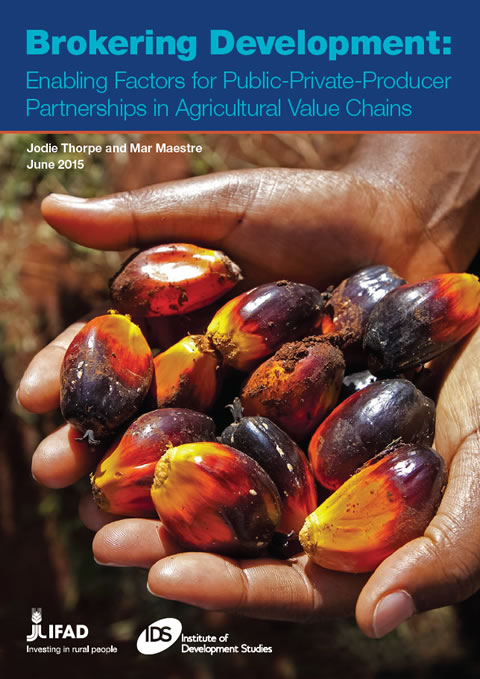
Brokering Development: Enabling Factors for Public-Private-Producer Partnerships in Agricultural Value Chains
IFAD 2015, 56 pages
  • This research seeks to understand how public-private-producer partnerships (PPPPs) in agricultural value chains can be designed and implemented to achieve more sustained increases in income for smallholder farmers and broader rural development.
  • The research also considers the role of PPPP brokers as independent facilitators who support the process of exploring, designing and implementing PPPPs. The research is based on four case studies of agricultural value chain PPPPs developed through projects financed by the International Fund for Agricultural Development (IFAD) in Ghana, Indonesia, Rwanda and Uganda
How to doPublic-Private-ProducerPartnerships (4Ps) in AgriculturalValue Chains
IFAD 2016. 36 pages
A 4P arrangement ensures that smallholder producers are respected partners and not relegated to the receiving end of public-private partnerships (PPPs). There are important asymmetries in the balance of power that need to be acknowledged in 4Ps, since smallholders are typically not well equipped to negotiate with public and private actors. It is important to ensure the transparency, fairness and accountability of these arrangements, especially when it comes to recognizing local communities’ tenure rights (to land, water and forests), the role of women and environmental issues. The devil is often in the details of PPP deals when it comes to price-setting mechanisms, enforcement of contracts, regulatory issues, payment modalities, ownership and coordination. Introducing the 4Ps concept helps to identify and address these issues from the outset. It can also be employed to justify the use of public funds as an incentive for both the private sector and producers to make better deals in which everyone is genuinely committed to a long-term partnership.

The PPP Canvas
Businesses are increasingly involved in partnerships with CSOs and governments to jointly work on
sustainable development challenges. For these Public Private Partnerships, a solid business case is very important. To formulate a sound business case, it is necessary to understand the entire business model, and describe the way an organization creates economic and social value.

To understand how PPPs can deliver added value, by creating business opportunities and a smarter business approach, PPPLab has developed the PPPCanvas, based on the Business Model Canvas of Alexander Osterwalder.

Banana research priority setting

7 February 2017. Help to shape banana research priority setting. Following its official launch in 2012, the CGIAR Research Program on Roots, Tubers and Bananas (RTB) embarked on a strategic assessment of research priorities for five of its major crops (banana, cassava, potato, sweet potato, and yams).

The objective of this exercise was to determine the expected impact each research options would generate in terms of economic benefits, poverty reduction, food security, nutrition and health, gender equity, and environmental sustainability.
  • A website introduces you to the methods and results of the strategic assessment of banana research priorities and provides a knowledge toolkit that will guide you step-by-step through the different stages of the assessment process.
  • A prior online survey (through ProMusa and the regional banana networks from January to March 2013) already elicited the key constraints faced by small-scale banana producers. 
  • As part of this priority assessment exercise the impact of different research investments for bananas and plantains, such as cropping system intensification or breeding for virus-resistant bananas, has been estimated to provide a basis for the strategy development of RTB research.
  • Take the survey to help shape their research priority setting. 
  • Currently, only the English version is available; the French and Spanish versions will be online by the end of the week.

The role of genetically modified crops and trees

Innovative farming and forestry across the emerging world: the role of genetically modified crops and trees
De Buck, S., Ingelbrecht, I., Heijde, M., and Van Montagu M. (2016). 
Gent, Belgium. International Industrial Biotechnology Network (IIBN).128 pages


This book assessed the role of biotechnology innovation for sustainable development in emerging and developing economies. It compiles studies that each illustrate the potential, demonstrated value and challenges of biotechnology applications for sustainable agricultural innovation and/or industrial development in a national, regional and international context.

This book was written in the frame of the International Industrial Biotechnology Network (IIBN), a joint initiative between UNIDO and IPBO (International Plant Biotechnology Outreach) supported by the Flemish government (EWI). IIBN coordinated by IPBO fosters the development of sustainable applications of agricultural and industrial biotechnology in developing and emerging economies through international cooperation.

If you are willing to become a member of this network you can register here.

Monday, February 6, 2017

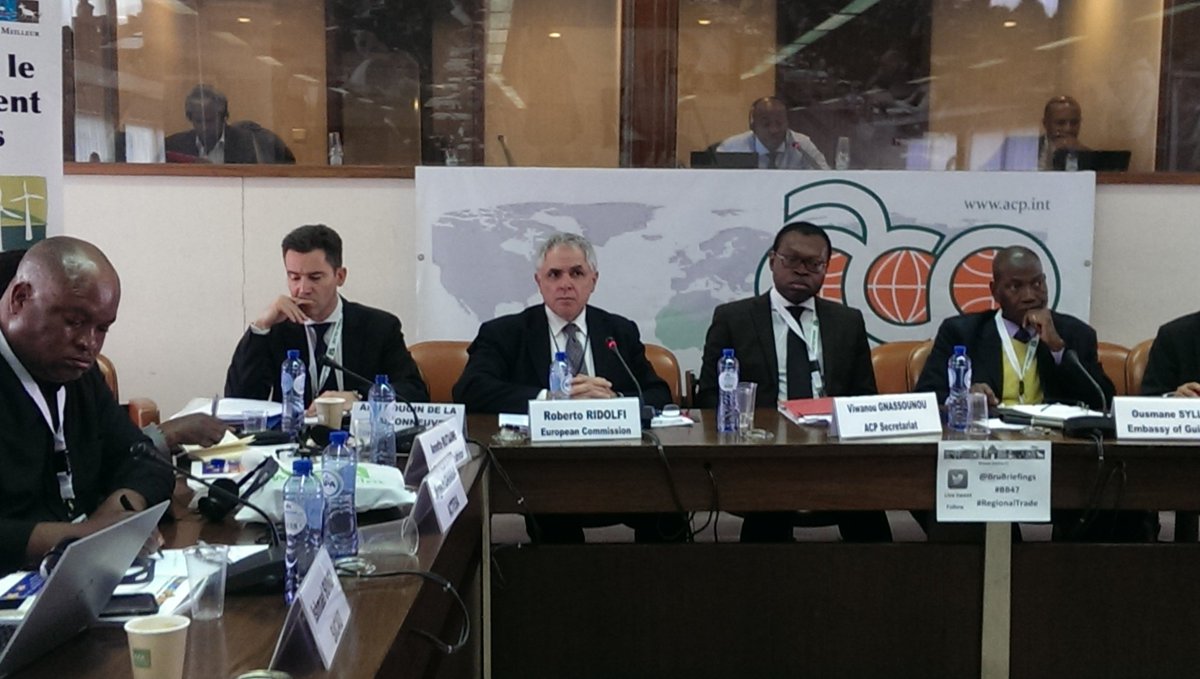
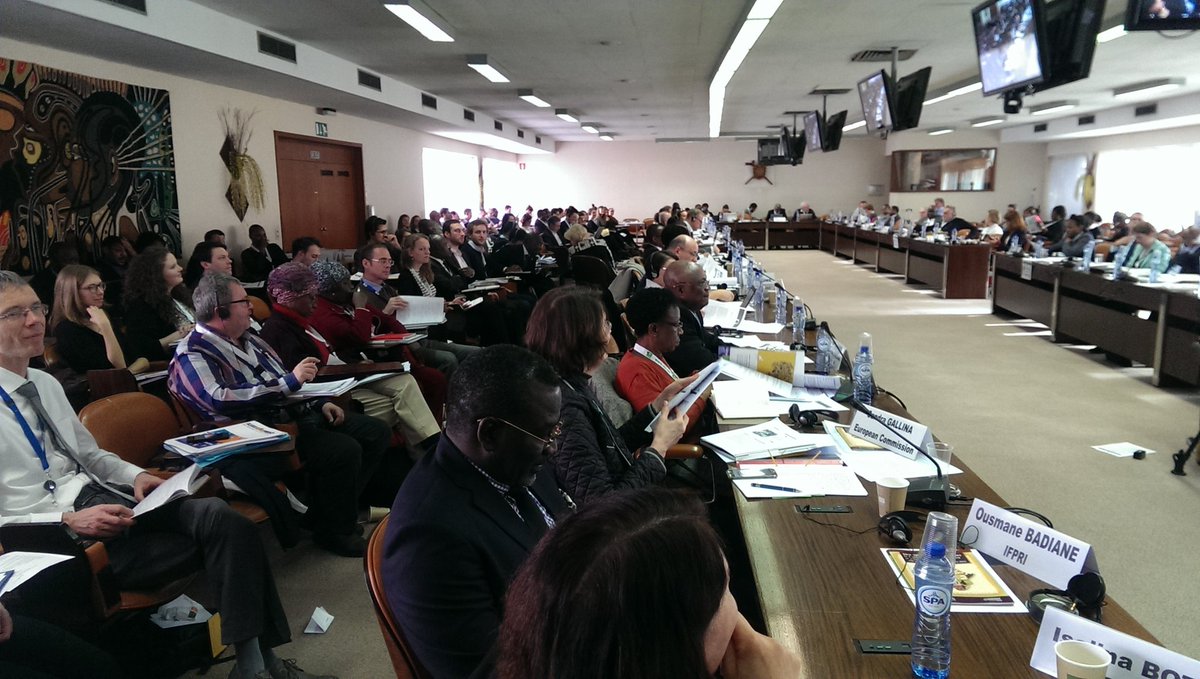
Regional Trade in Africa: Drivers, Trends and Opportunities

Renewable energy and sustainable agriculture are 
the 2 streams for the Africa-EU Business Forum 
in November 2017 said R. Ridolfi
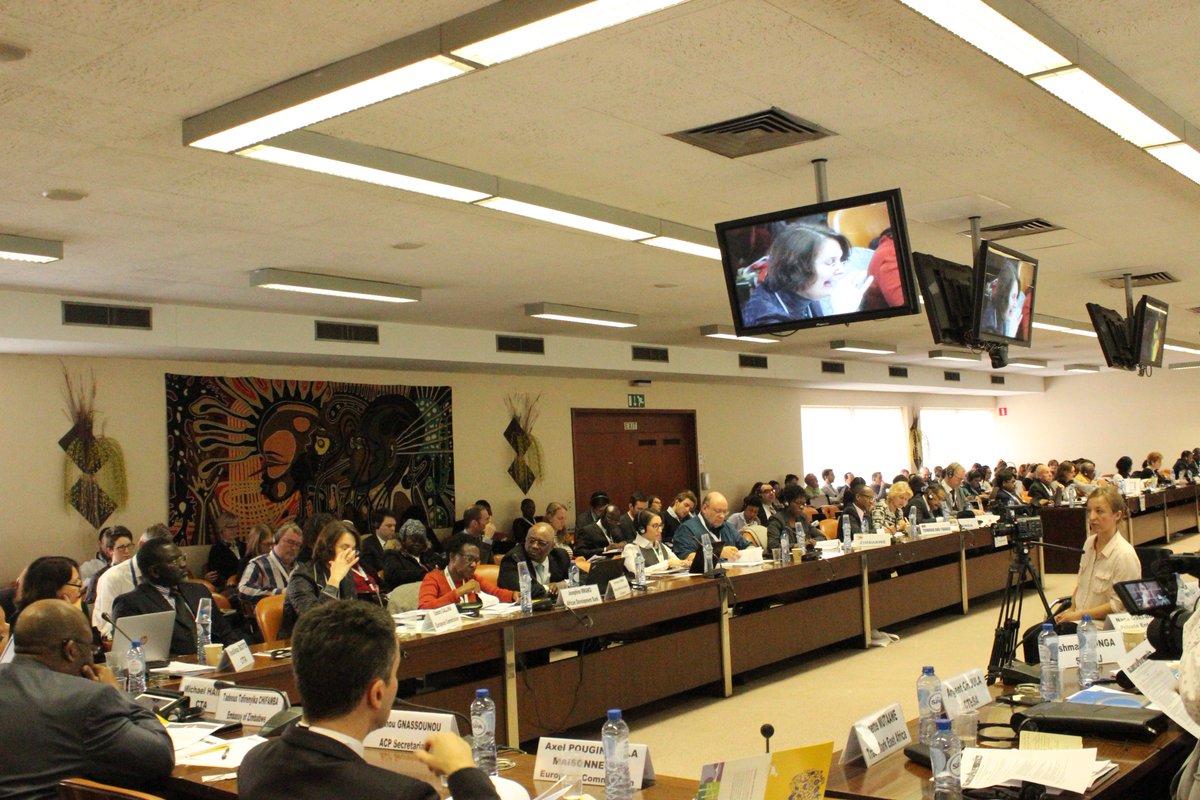
3 February 2017. Brussels. ACP Secretariat. This Briefing was organised by the ACP-EU Technical Centre for Agricultural and Rural Cooperation (CTA), in collaboration with IFPRI, the European Commission / DEVCO, the ACP Secretariat, and CONCORD.
In order to maximise the benefits of regional integration and look for new opportunities for competitiveness, policymakers, the private sector and development partners need access to accurate and comprehensive data on intra and inter-regional trade in Africa with respect to agricultural goods.

It is in this context that CTA and the International Food Policy Research Institute (IFPRI) launched the“African Agricultural Trade Status Report”, which examines the current status, trends and outlook in African trade performance, making an important contribution towards data and analysis of developments both at regional and at continental levels.

The Report, which was released in conjunction with the Briefing, builds on the work by the Regional Strategic Analysis and Knowledge Support System (ReSAKSS) of CAADP and the African Growth and Development Policy Modeling Consortium (AGRODEP) trade and also reflects the CTA’s commitment to advancing knowledge and sharing of best practices relating to agricultural trade.

African Agricultural Trade Status Report 2017
– Executive Summary– Chapter 1. Introduction
– Chapter 2. Africa global trade patterns
– Chapter 3. Regional trade patterns
– Chapter 4. Competitiveness of African agricultural exports
– Chapter 5. Determinants of African agricultural exports
– Chapter 7. West Africa trade outlook: business as usual vs alternative options
– Chapter 8. Summary and conclusions

Panel 1: Overview of Africa regional trade
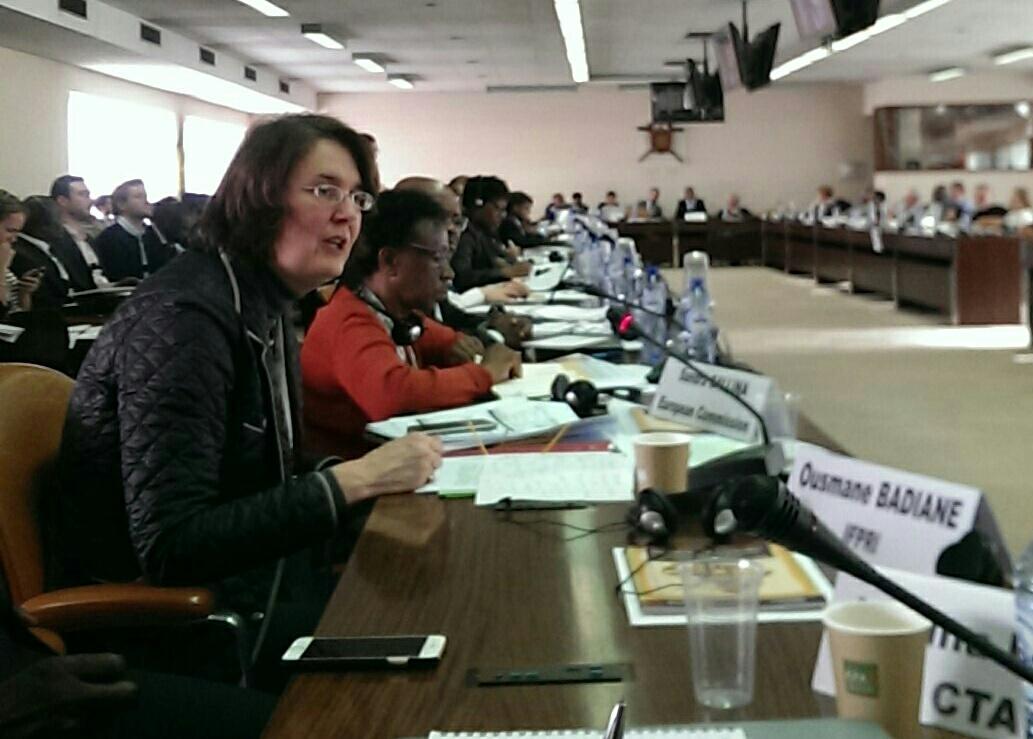
  • Trends in African regional trade, Ousmane Badiane, Director for Africa, International Food Policy Research Institute (IFPRI) [presentation|video]
  • Innovative finance for agriculture transformation ; Josephine Mwangi, Manager, Agriculture & Agro-Industry Dept, African Development Bank [presentation|video]
  • New opportunities for regional trade within the EPAs implementation; Sandra Gallina, Director for Sustainable Development, DG Trade at the European Commission [presentation|video]
  • Challenges and successes in implementing regional trade agreements ; Dominique Njinkeu, Executive Director, African Trade and Sustainable Development (AFTSD) [presentation|video]
Panel 2: Implementing regional trade: successes and opportunities ahead
  • Growth opportunities for the private sector in East Africa as a result of regional integration ; Annette Mutaawe, Deputy Chief Executive Officer, TradeMark East Africa [presentation|video]
  • New opportunities in regional trade ; Argent Chuula, Chief Executive Officer, Alliance for Commodity Trade in Eastern and Southern Africa (ACTESA) [presentation|video]
  • Promoting regional trade through PPPs and agribusiness development ; Ishmael Sunga, CEO, Southern African Confederation of Agricultural Unions (SACAU) [presentation|video]
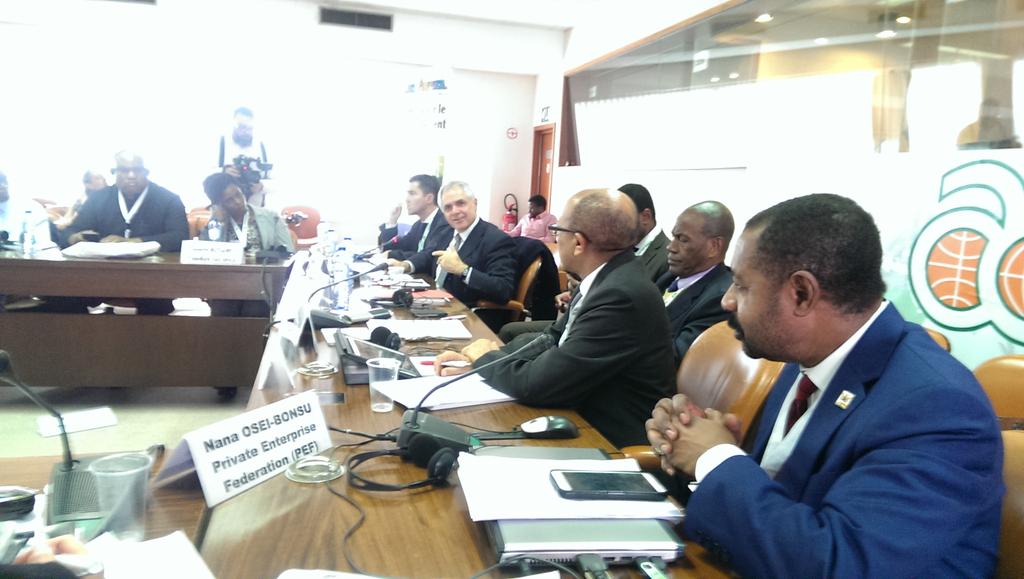
  • Investment opportunities and PPPs ; Nana Osei-Bonsu, CEO, the Private Enterprise Federation (PEF), Ghana [presentation|video]

Web stream of the conference

Global Donor Platform Annual General Assembly (AGA) 2017

1-2 February 2017. Brussels. Global Donor Platform Annual General Assembly (AGA) 2017 took a closer look at where rural transformation might be a decade from now and what role agriculture will play considering the new SDGs, the growing changes in Official Development Assistance (ODA), the challenges of climate change impact, the fact that millions of low-income people in rural as well as urban areas, are still highly food insecure.

The Annual General Assembly is taking place every year and was hosted this time by the European Commission (DG DEVCO).

In the paper Implications of Agenda 2030 for Rural Development (29 pages) commissioned by the Global Donor Platform, John Barrett notes that, beyond SDG 2 (end hunger, achieve food security/improved nutrition and promote sustainable agriculture), world leaders are increasingly pre-occupied by challenges in the global economy and the need for job creation which relates to SDG 8 (Promote sustained, inclusive and sustainable economic growth, full and productive employment and decent work for all), as emerged in the discussion within the Platform and in other international fora.

Leonard Mizzi Head of Unit,
Rural Development, 
Food Security and Nutrition
(Directorate C) DG DEVCO
The Platform document The Future of Donor Programmes in Rural Development induced a debate about the current shift from an integrated approach towards rural development to a more overarching systems approach1. The systems approach should ultimately lead to targeted, evidence-based interventions by donors and international finance institutions that increase development effectiveness.

The open discussion with members, partners and invited guests of Day 1 explored the multiple views of development partners, donors, civil society and private sector on how the rural space in 2030 may look like and what it takes to get there. The high-level forum on Day 2 (morning) complemented the findings of Day 1 and heads of programmes/departmental managers politically and strategically framed the future deliberations of the Platform on donor/IFI support to rural transformation, and helped to inform our priorities, programmes and operations.

Resources:
AGA2017_GDPRD_BOOKLET_LOWRES-FINAL.PDF (PDF, 5.4 MIB)
CONCEPT NOTE (PDF, 388.4 KIB)
PARTICIPANTS LIST (PDF, 839.6 KIB)

Enabling the Business of Agriculture Programme - Christopher Brett, World Bank:
  • A well-designed legal and regulatory framework, supported by strong institutions and efficient administrative procedures, is a bedrock for a prosperous agricultural and agribusiness sector 
  • Globally comparable data and indicators offer meaningful tools that can enable countries, policymakers and stakeholders to identify barriers that impede growth of agriculture and agribusinesses, share experiences and develop strategies to improve the policy environment anchored in local contexts 
  • The Enabling the Business of Agriculture indicators and analysis not only help strengthen the information base that can be used for informed policy dialogue but can also encourage regulations that ensure safety and quality of agricultural inputs, goods and services while minimizing costs and time burdens.
  • "Bilateral collaboration is often hijacked by national political agendas"
  • "We have to demonstrate that migration is positive (when regular)"
  • "There is a need for a returnable capital fund to finance the CGIAR"

Initiative Adaptation of African Agriculture - Mohamed Badraoui, National Agricultural Research Institute, Morocco and ASEAN Climate Resilience Network - Imelda Bacudo, ASEAN/GIZ.
  • Global environmental and social changes like climate change, high pressure on natural resources and globalization of trade are impacting on 20% GDP and 50% of employment in developing countries and inducing massive migration; 
  • The degree of resilience and adaptation to such big changes is becoming more difficult to achieve because both public domestic investments and international aid for development to African agriculture was decreasing during the last 30 years, making African economies more and more vulnerable.
  • UNFCCC COP22 (Marrakech 2016) was the COP of actions to implement Paris agreement - Morocco launched a new initiative for the adaptation of African agriculture to climate change (AAA or Triple A).

Upcoming:
7 February 2017: Launch Enabling the Business of Agriculture 2017. The latest edition provides analysis and results from 40 countries, covering all regions of the world.

The Enabling the Business of Agriculture (EBA) project focuses on identifying and monitoring regulations that negatively affect agriculture and agribusiness markets. EBA aims to inform and encourage policy decisions that support inclusive participation in agricultural value chains and foster an environment that is conducive to local and regional businesses in agriculture. The project is supported by several donors, namely United Kingdom’s Department for International Development (DFID), the Government of Denmark, the Government of the Netherlands, Bill and Melinda Gates Foundation, and the United States Agency for International Development (USAID).

Eighteen indicators, covering six topics, have been developed to address aspects related to production inputs and market enablers that facilitate farmers, firms and producers to sell their goods and services. The indicators developed and measured in last year’s report covered the following topics: Seed; Fertilizer; Machinery; Finance; Transport; Markets.

27-28 April 2017. Berlin. "The Future of the Rural World" Innovation – Youth – EmploymentIm Rahmen der deutschen G20 Präsidentschaft möchte das Bundesministerium für wirtschaftliche Zusammenarbeit und Entwicklung (BMZ) mit Ihnen und anderen zentralen Akteuren aus dem In- und Ausland erörtern, wie wir eine innovative, wettbewerbsfähige, nachhaltige und gerechte ländliche Entwicklung – vor allem für die junge Generation – fördern können.

Smallholder farmers and agricultural biodiversity in South Africa

Against the odds, smallholder farmers maintain agricultural biodiversity in South Africa.
©The African Centre for Biodiversity, January 2017. 49 pages

2 February 2017. This report investigates the state of farmer-managed seed systems in rural South Africa.

Through 3 case studies in Eastern Cape, Northern Cape and KwaZulu-Natal, the report highlights both the fragility and perseverance of smallholder farmers, who continue to maintain agricultural biodiversity and traditional knowledge, in the face of increasing pressure from all sides. Smallholder farmers are finding it increasingly difficult to make end meet in an agricultural sector dominated by large-scale commercial production and corporate value chains.

Multinational corporations dominate seed provision in South Africa, further driving a commercial and industrial Green Revolution agenda. Farmer-managed seed systems, and the diversity of crops and diets that rely on them, are marginalised and neglected in the process.

The research is one step in highlighting the threats and opportunities facing smallholders and biodiversity in an increasingly harsh production environment. ACB will continue working with its partners and smallholder farmers to support and promote sustainable farming practices and farmer-managed seed systems as part of broader objectives to transform seed and food systems in South Africa.

Broadening the funding base of GFRAS

31 January 2017. Brussels. Special event held in conjunction with the AGA on “Broadening the
funding base of the Global Forum for Rural Advisory Services (GFRAS)”, co-hosted by the Swiss Agency for Development and Cooperation (SDC) and GFRAS.

This event specifically seeked to engage development partners and other actors in a practical discussion on avenues to expand the funding base of GFRAS and increase the involvement of Platform donors and partners in the substantive work of the Global Forum.
  • GFRAS Steering Committee Chair, Dr. Rasheed Sulaiman V (Director of the Centre for Research on Innovation and Science Policy, Hyderabad, India) set the scene, introduced GFRAS, reviewed how Rural Advisory Services (RAS) are operating in South Asia, their contributions to addressing development challenges in the region, and the development gaps that Rural Advisory Services can help to resolve. He then presented progress in organising, reforming and improving Rural Advisory Services in the region across the different stakeholders and provide perspectives on the strategic roles of RAS in broader development. He conclude by discussing the ways in which GFRAS supports Rural Advisory Services to take up these roles effectively.
  • Mr. Karim Hussein, GFRAS Executive Secretary, provided a brief overview of the current GFRAS structure, vision, mission and strategic fields of action, its key partners and its ways of working (Working Groups, thematic initiatives etc.). He gave a snapshot of some thematic areas in which GFRAS has an interest: those it has focused on in the past, current activities of GFRAS and possible areas it will focus on in the future (e.g. producer organisations; policy for extension and RAS; Education and Training and the ‘New Extensionist’; Global Good Practices; ICT4RAS; nutrition; youth; rural-urban issues; access to services in fragile situations; etc.).
  • The last speaker was Mr. Felix Fellmann of SDC, a donor representative in the GFRAS Steering Committee and GDPRD member representative. Mr. Fellmann presented the reasons why Switzerland has been interested in being a founding donor and active partner supporting GFRAS since its establishment and why it would like to see others join to scale up the activities and capacities of GFRAS to make a difference at the country, regional and global levels.
Resources from GFRAS:
  • GFRAS Strategic Framework 2016 – 2025 
  • GFRAS; The first five years 2010 – 2015
  • AESA Policy Brief 1. CAPACITY NEEDS OF EXTENSION AND ADVISORY SERVICES (EAS) IN SOUTH ASIA. Agricultural Extension in South Asia (July 2016)
    Undertaking Capacity Needs Assessment (CNA) is critical for organizing appropriate capacity development interventions. AESA organised four workshops on CNA of EAS in India, Sri Lanka, Bangladesh and Nepal with the following objectives: (a) Identify capacity gaps among EAS providers; (b) Finalise a methodology for undertaking capacity needs assessment.
  • ASSESSING CAPACITY NEEDS OF EXTENSION AND ADVISORY SERVICES. A Guide for Facilitators Agricultural Extension in South Asia (2016)
    This guide is intended to assist facilitators in conducting a workshop with Extension and Advisory Service (EAS) providers for assessing their capacity needs. It builds on the outputs of the National Workshops on "Capacity Needs Assessment of Extension and Advisory Service (EAS) Providers" held in India, Sri Lanka, Bangladesh and Nepal and it uses a blend of interactive approaches for different sessions with tips for facilitators for effective delivery.
Events:
Training for Facilitators - How to lead workshops and meetings efficiently and effectively
20 February 2017 - 24 February 2017, Geneva, Switzerland

PAEPARD video interviews:
Mr. Felix Fellmann of the Swiss Agency for Development and Cooperation (SDC) answers following questions:
  • How to make sure GFRAS is not another platform but close to the field concerns?
  • How can GFRAS be a good broker?

Dr. Rasheed Sulaiman V, GFRAS Steering Committee Chair, answers following question: "Why is GFRAS an important player in rural agricultural innovation systems?"

AFRHINET Symposium

1-2 February 2017. Nairobi, Kenya. This 2-day symposium focused on “Fostering the Use of Rainwater for Food Security, Integrated Landscape Management and Climate Resilience”. In this regard, cost-effective experiences from research, field projects and best-practices on the use of rainwater for irrigated and rainfed small-scale agriculture, soil and water conservation, and poverty alleviation in sub-Saharan Africa was showcased. The symposium was an interdisciplinary event, mobilizing African and non-African stakeholders undertaking research and/or executing rainwater-smart projects in the African continent.

Objectives:
  1. to provide research institutions, universities, NGOs, governments and enterprises from Africa with an opportunity to display and present their works in this field of knowledge; 
  2. to foster the exchange of information, ideas and experiences acquired in the execution of rainwater-smart projects, especially successful initiatives and best-practices practices across the African continent; 
  3. to discuss methodological approaches and experiences deriving from case studies and projects, which aim to show rainwater-smart adaptation strategies can be implemented in practice; 
  4. to provide a platform to network and possibilities for cooperation in this field of knowledge.
Background:
AFRHINET is a three-year project which focuses on fostering the use of rainwater for small-scale irrigation during dry periods in rural drylands of sub-Saharan Africa. 
  • The project focused on the implementation of integrated capacity-building and demonstration activities, the establishment of research and technologytransfer centres, and the setting-up of a transnational network of multivariate relevant stakeholders. 
  • The action of the project took place in Ethiopia, Kenya, Mozambique and Zimbabwe. 
  • The AFRHINET project was part of the second ACP Science and Technology Programme, an EU-ACP cooperation programme which is funded by the European Union and implemented by the ACP Group of States.
Publication:
FOSTERING THE USE OF RAINWATER FOR SMALL-SCALE IRRIGATION IN SUB-SAHARAN AFRICA
A regional baseline study in Ethiopia, Kenya, Mozambique and Zimbabwe
  • The main goal of this report was to conduct a capacity and technology transfer assessment in the field of rainwater harvesting for irrigation management in Ethiopia, Kenya, Mozambique and Zimbabwe.
  • You can download this publication using this link:

The Energy Challenge in sub-Saharan Africa

25 January 2016. Two new reports from Oxfam and the Renewable and Appropriate Energy Laboratory at the University of California, Berkeley detail the policy challenges around addressing the energy challenge in sub-Saharan Africa. 
  • The first considers the possibilities for renewable energy technologies to generate electricity for sustainable and equitable development. 
  • The second looks at the challenge of addressing energy poverty on the continent. 
The reports are intended as technical resources, discussion papers, and a guide for action for all those concerned with a just and sustainable energy transition in the region.

Friday, February 3, 2017

Theory of Scaling in the context of agrifood systems

Using a Theory of Scaling to guide decision making. Towards a structured approach to support responsible scaling of innovations in the context of agrifood systems.
Wigboldus S, with Brouwers J (December 2016). 
Wageningen Centre for Development Innovation (CDI), Knowledge, Technology and
Innovation Group (KTI), and Philosophy Group (PHI) of Wageningen University and
Research

This booklet is part of a series of legacy products of the CGIAR Research Program on Integrated Systems for the Humid Tropics (Humidtropics). It structures key findings from earlier research towards an approach that connects a theory of change perspective specifically to the question of ‘how scaling happens’.
By doing so, it offers a way of thinking systemically and systematically about how scaling happens and could happen in the context of agrifood systems. Over the years, monitoring and evaluation (M&E) became so important that M&E experts were trained to support related processes. Scaling processes are both considered extremely important in the context of agrifood system innovation and relate to a multifaceted picture of dimensions and dynamics. Maybe it is therefore time to start training experts in the field of responsible scaling to advise and support scaling initiatives. If so, this booklet may provide initial ideas on how to strengthen capacity in this field through a curriculum along the lines of a Theory of Scaling.