Platform for African – European Partnership in Agricultural Research for Development

Friday, May 4, 2018

Blog post of April 2018

Please find hereunder the blog posts (in chronological order) related to ARD activities in April 2018. To view the whole blog instead of separate postings click on http://paepard.blogspot.com/

Veuillez trouver ci-dessous les ressources du blog se relatant à la RAD pour le mois d’avril 2018 Pour la traduction en français cliquez dans la colonne de droite du blog sur « automatic translation » et choisissez votre langue !

Por favor, encontre aqui os posts do blog relacionados à ARD atividades. Para a versão em Português, clique na coluna da direita do blog "tradução automática" e escolha o seu idioma!

1.       Innovating for the future of farming and rural communities PAEPARD participation + video
2-3 May 2018. Brussels. The EU AgriResearch Conference was dedicated to scientists, farmers, rural communities, industry, advisors, policy-makers, citizens and NGO representatives who wished to learn about EU agriculture and rural Research and Innovation activities
The Common Dissemination Booster (CDB) is a brand-new service from the European Commission which is free of charge and available to all, ongoing or closed, European, National, Regional funded Research & Innovation (R&I) projects (H2020, FP7 or other).
The Data-Driven Bioeconomy project (DataBio) demonstrates the benefits of Big Data technologies in the production of raw materials from agriculture, forestry and fisheries.
25 April 2018. Bouchout Castle, Botanic Garden Meise Belgium. African Diaspora Agro Food Forum 2018.
25 April 2018. Meise/Brussels. The consultation between African Diaspora Agro-entrepreneurs and researchers resulted in a strong recommendation for more research into the domestication of African orphan crops and indigenous medicinal plants and wild fruits for nutritious food and healthcare.
This is a small selection of plants that can be found in the collections of Meise Botanic Garden (Brussels)and that can be considered as African ‘orphan crops’.
25-27 avril 2018.  Université de Parakou, Benin. Première édition des journées Scientifiques des Sciences Economiques et de Gestion de l’Université de Parakou
8.       Agrinatura General Assembly meetings and workshops 2018 PAEPARD participation
24-26 April 2018. Stuttgart, Germany. This year Agrinatura celebrated its 30th anniversary.
25 April 2018. IFAD launched a 1-million-U.S.-dollar project that is aimed at unveiling financial services to the youths involved in agriculture in East Africa.
24 April 2018. This report provides details on maximizing finance for development in agricultural value chains.
24 April 2018. With the competition 'Sustainable Technology for Africa' (SusTech4Africa), Entrepreneur Entrepreneurs, VITO, The African Diaspora Projects Initiative and Thomas More want to boost sustainable entrepreneurship in Africa.
The Danish funded Valorizing Green Growth in Africa (VALOR) project created new knowledge on how African origin product (OP) producers can add value to their products by documenting and incorporating territory specific cultural, environmental and social qualities.
The discussion runs from 23 April to 21 May 2018, and emerging issues will be shared during the Africa Climate Smart Agriculture Summit on 15 and 16 May in Nairobi, Kenya.
14.   Global Bio economy summit + video
19-20 April 2018. Berlin, Germany. Around 700 high-ranking representatives from politics, science, civil society and the business sector and from more than 70 countries discussed the latest developments and challenges in the global bioeconomy.
19-20 April 2018. The Hague. One of the objectives of this meeting was to select the final 83 eligible proposals which were submitted under the the LEAP-Agri Call 2017 on 'African European collaborative research on Sustainable Agriculture and Aquaculture and on Food and Nutrition Security' (which close 15 June 2017).
18 April 2018. Rome. This policy brief explores opportunities to build much more ambitious and effective links between the public and the private sectors to help improve the food environment, and enable better dietary choices.
AKTZ is a value-added business whose supplier-members consist of an expanding network of women and youth local farmers in rural areas.
OECD, April 2018. 32 pages. The food economy is the biggest employer in West Africa accounting for 66% of total employment.
17 April 2018. This webinar introduced AGRIS (the International System for Agricultural Science and Technology), a global public domain database with more than 9 million structured bibliographical records on agricultural science and technology.
16-20 April 2018.  Entebbe, Uganda.
21.   Diversifood: Cultivating diversity and food quality PAEPARD participation + video
11 April 2019. Brussels. DIVERSIFOOD is a European project aiming at enriching cultivated biodiversity by testing, renewing and promoting underutilized or forgotten crop species.
11 April 2018. Release of the PAEPARD policy brief at the PAEPARD Steering Committee (Malawi,
10 April 2018. Pre- and post-harvest management of the aflatoxin.
10 April 2018. CTA Brussels Development Briefing no. 50
9-12 April 2018. Cape Town South Africa. Experts explored among others the science and technology of how to process Ancient grains into mainstream food and beverage products to bring the nutritional and health-promoting benefits of these climate-friendly grain staples to consumers worldwide.
9-10 April 2018. Copenhagen. This included a presentation on Evaluating the impact of consumption of indigenous fruits and vegetables
27.   Agroecology and Livestock new resource **
FAO, 2018, 16 pages. This brief reviews opportunities and challenges related to livestock’s potential to contribute to agroecological transition.
FAO, 2018, 112 pages
6 April 2018. Deadline for registration: 21 May 2018. The finale will be held during the 2018 edition of the African Green Revolution Forum (AGRF 2018), organised by AGRA and other partners, in Rwanda in September 2018.
6 April 2018. Rome. The SCAR Strategic Working Groups ARCH, AKIS and Food Systems organised jointly this Workshop
5 April 2018. USAID LandLinks shared findings from the first voluntary Investor Survey on Land Rights
5 April 2018. The ACCF has approximately US $5 million available to allocate to approved projects
5 April 2018. Webinar.
5 April 2018. Delegates of the Alliance for Food Sovereignty in Africa (AFSA) converged on the high-level UN meeting in Rome, Italy, to beat the drum for Agroecology in Africa.
4 April 2018. The articles "The Mycotox Charter: Increasing Awareness of, and Concerted Action for, Minimizing Mycotoxin Exposure Worldwide" + "Scaling-Up the Impact of Aflatoxin Research in Africa. The Role of Social Sciences" have been published in Toxins as part of the Special Issue of the International MYCOKEY Conference (September 2017)
3-5 April 2018. Rome.
3 April 2018. A new peer-reviewed scientific research journal showcasing cutting-edge African research was launched in Kigali + Side event: editors' forum on growing science and technology reporting in africa (SHEMA)
30 March 2018. Cotonou, Benin.
26-28 March 2018. Kigali. The Next Einstein Forum (NEF) is a platform that connects science, society and policy in Africa and the rest of the world – with the goal to leverage science for human development globally.
26 March 2018. SciDev. Project using Research and Development is changing wheat farming in Africa
17-21 March 2018. Kigali. The AfCFTA aims at providing a single continental market for goods and services, with free movement of people and investments.
20 March 2018. Washington D.C. AMEA facilitates the development of the global definition for professional farmer organizations

Total number of page views in the month of April 2018: 29,574
Most viewed pages on PAEPARD blog over the past month:

Entry
Page views
533
468
453


The Common Dissemination Booster (CDB)

The Common Dissemination Booster (CDB) is a brand-new service from the European Commission which is free of charge and available to all, ongoing or closed, European, National, Regional funded Research & Innovation (R&I) projects (H2020, FP7 or other).

The booster encourages projects to come together to identify a common portfolio of results and shows them how best to disseminate to end-users, with an eye on exploitation opportunities.
  • Brand-new service from the European Commission
  • Professional support to disseminate results from your R&I Project Groups
  • Free of charge
  • Available to all European and nationally-funded Research &Innovation (R&I) projects

Data-driven Bioeconomy (DataBio)

The Data-Driven Bioeconomy project (DataBio) demonstrates the benefits of Big Data technologies in the production of raw materials from agriculture, forestry and fisheries. DataBio helps the bioeconomy industry to produce food, energy and biomaterials in a responsible and sustainable manner.

To achieve the above goals, DataBio uses innovative ICT technologies and information flows. Proximity and distance sensors provide a streamlined data infrastructure for finding, retrieving, processing and ultimately visualizing information to support the decision making of farmers and fishermen.

DataBio proposes to set up an advanced Big Data platform that runs on top of the existing infrastructure and solutions of the partners. The work consists of continuous collaboration between experts, end-users, research institutes and technology companies, as well as stakeholders from the bioeconomy sector.

The DataBio consortium includes 48 partners from 17 countries. This project has received funding from the European Union’s Horizon 2020 research and innovation programme. For more information, have a look at the webpage of the Data-Driven Bioeconomy project.

The expected outcomes include:
  • Demonstrate the increase in productivity
  • An increase in market share of Big Data technology providers
  • More than doubling the use of Big Data technology in the bioeconomy
  • Use additional sector investments with a factor >5
  • More than 100 organizations in demonstration
  • Collaboration with other Big Data activities
  • Close cooperation with Big Data Visual and Immersive Analytics (BDVA)

Innovating for the future of farming and rural communities

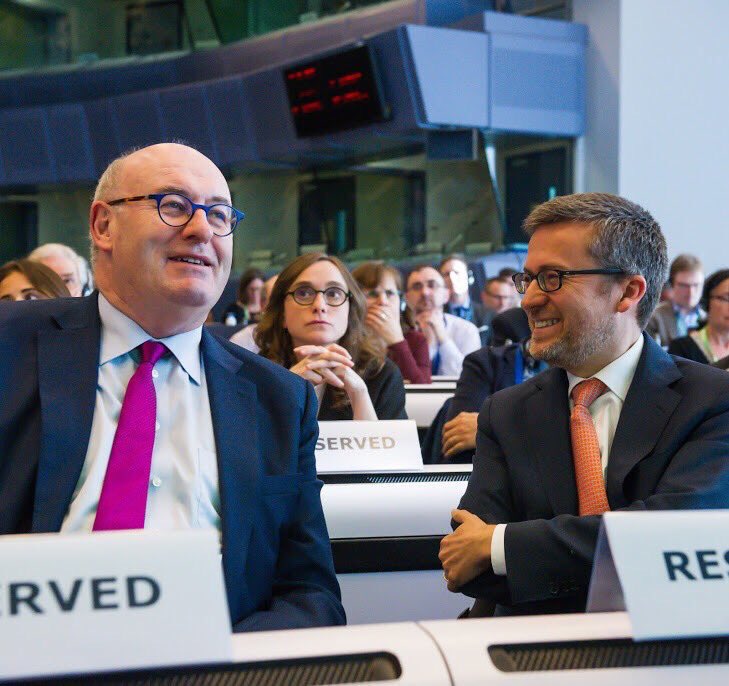
Commissioner Phil Hogan (Agri) and
Commissioner Carlos Moudas (Research)
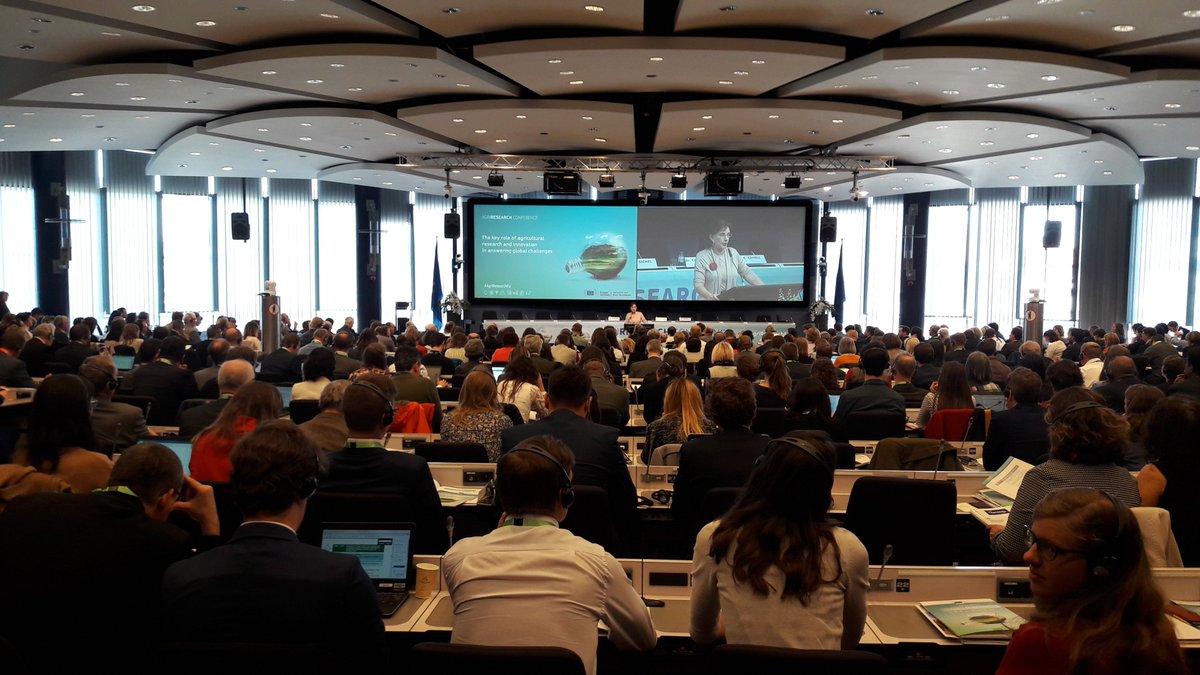
2-3 May 2018. Brussels. The EU AgriResearch Conference was dedicated to scientists, farmers, rural communities, industry, advisors, policy-makers, citizens and NGO representatives who wished to learn about EU agriculture and rural Research and Innovation activities and achievements and to have their say on how to shape the future of agriculture Research and Innovation after 2020. The conference was also a great occasion to network with around 500 peers.

Presentations and recordings are available from the conference web page (recordings will remain available for 2 years) as well as other conference documents (including factsheets)
Conference supporting documents
Facsheets:
Extracts of the Programme
Systems approaches: sustainable farming at the interface of land and food systems 
  • Tim Benton (see picture), UK Champion for Global food security and Professor of population ecology, Faculty of biological sciences, University of Leeds Agriculture Research and Innovation: a key contribution to the implementation of SDGs video recording @ 14:16:00 
  • Bruce Campbell, Director of the Research Programme on Climate Change, Agriculture and Food Security (CCAFS), CGIAR A global perspective on agricultural innovation trends and policies video recording @ 14:36:30
  • Carmel Cahill, Deputy Director, Directorate for Trade and Agriculture, Organisation for Economic Co-operation and Development (OECD) video recording 14:51:40

How to maximise synergies between various instruments and approaches?
  • Building synergies between Horizon 2020, EIP-AGRI focus groups and INTERREG Examples in the field of nutrients cycling and circular economy (Biorefine) Erik Meers, Ghent University video recording @ 11:38:00 + @ 12:37:50 - The complexity of research funding can be overcome through good guidance


  • Building international cooperation with key global partners The example of the EU-African Union Partnership on Food and nutrition security and sustainable agriculture Yemi Akinbamijo, Forum for Agricultural Research in Africa (FARA) video recording @ 11:49:00 + @ 12:24:30 - Does research benefits the millions of farmers?


Wednesday, May 2, 2018

A selection of African orphan crops with market potential

This is a small selection of plants that can be found in the collections of Meise Botanic Garden and that can be considered as African ‘orphan crops’.

Selection criteria:
  • Plant is endemic to Africa or has been introduced a long time ago in Africa and became a significant part of the diet in parts of Africa. 
  • Plants can be expected to play a major role in providing food security, because of high protein content and/or high content of vitamins and minerals. 
  • AND/OR: plants that have aromatic values that now only are recognized in limited areas but that are promising as an export product. 
  • AND/OR: plants that have a potential as ‘Superfood’ of ‘Novel food’ or in industrial food production.
Penthaclethra macrophylla = African oil bean tree
The oil bean tree is found in the southern rain forest zone of West Africa where it grows wild, having never been cultivated to any real extent by individuals around homesteads or commercially in plantations.
Fruit is called ugba in Nigeria.
Oil can be extracted from the seeds, with a content of up to 44% of protein with an ideal amino-acid composition and many minerals.
Also attracts the edible caterpillars of the silk moth.
Piper guineense = West-African or Ashanti pepper
Piper guineense native to topical regions of Central and Western Africa and is semi-cultivated in countries such as Nigeria where the leaves, known as uziza, are used as a flavouring for stews. Local cultivation also takes place in other West- and Central African countries.
Consumption is now limited to Central and Western Africa, but it used to be popular in Europe in the Middle Ages.
Apart from being an appreciated aromatic plant, it is also usefull as preservative for the conservation of e.g. catfish.
Aframomum melegueta = alligator pepper, grains of paradise
Indigenous in swampy areas of West-Africa.
Now used in the cuisines of North and West Africa, it used to be popular in Europe. Mentioned already by Pliny the Elder, it got forgotten in Europe but was rediscovered in the 14th and 15th century as a substitute for black pepper. Up to the 19th century, it was imported in large volumes to European countries.
This hot spice nowadays starts getting more appreciation again in both African and Western cuisine. A famous American television cook, Alton Brown, mentions it in the show ‘Good Eats’.
In West-Africa, it is used for its aromatic and medicinal values.
Cultivation:
Aframomum melegueta is reported to be cultivated in West-Africa, India and the Caraibean area. A detailed study on the cultiviation in forested regions of Southern Ghana (Ashanti region) was published in 1977. (https://www.jstor.org/stable/4253855?seq=1#page_scan_tab_contents).
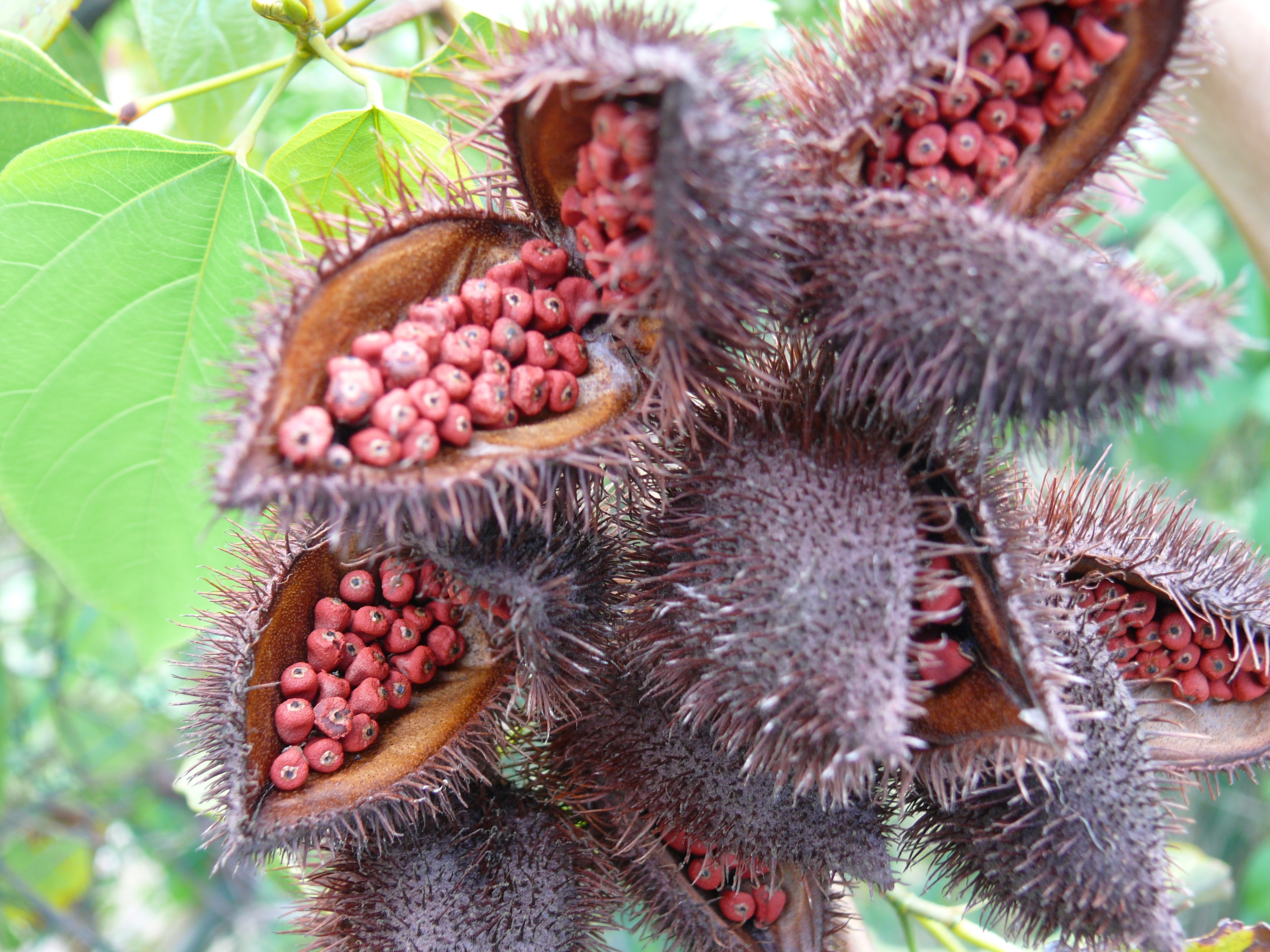
Bixa Orellana: the lipstick tree
Originally from the tropical regions of the America’s, this tree is now mainly cultivated in Brasil, Peru and Kenya. Peru is the largest exporter, followed by Kenya. Peru is the largest exporter of annatto seed, annually about 4,000 tons. Côte d'Ivoire and Angola are also exporters.
Main industrial use: oil extracted from the seeds is used as food colorant for cheese, margarine etc.
In Latin-American cuisine, it’s also used for colouring dishes. Other uses: skin protection, insect repellent, textile dye.
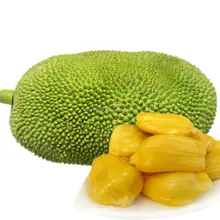
Arthocarpus heterophyllus = Jackfruit
Being native to West-India, this tree is now found in several African countries: Uganda, Kenya, Central-Africa …. In most Asian and African countries were it is grown, it is still largely a neglected and under-valued crop.
However, it has many qualities. It produces the largest tree-borne fruit. It’s fast growing and can start producing fruits after three years. It’s rich in minerals, flexible when it comes to climate, can be grown without pesticides … .
Researchers if the ICAR (Indian Council for Agricultural Research) promote the fruit for its potential in fighting food insecurity. In an article it is described how value-adding can change the faith of  the jackfruit from a neglected crop to a major factor in fighting food-insecurity and even a replacer of staple foods like wheat and corn, where these are under treat due to climate change. In Vietnam and Sri Lanka, jackfruit is processed into noodles, flour, ice-cream and more.
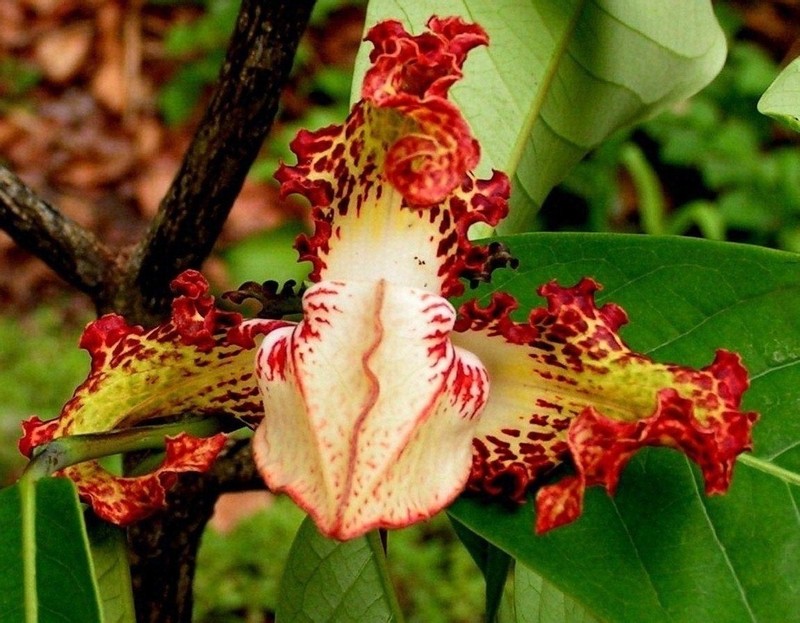
Monodora myristica: the African nutmeg
This tree is most common in the forests of West-Africa, but is also found in East Africa (Uganda, Kenia).
It caries large berries that contains up to 120 seeds that have a taste similar to nutmeg. It has both aromatic and medicinal values.
The tree is cultivated for its ornamental qualities (orchid-like flowers). However, trees seldom set fruit when cultivated because they lack the beetle that normally pollinates them in the wild.  
Musa balbisiana
One of the two ancestors to all varieties of bananas and plantains we eat (the other is Musa accuminata).
Worldwide, there are approx. 500 banana and plantain varieties, but almost all bananas grown for export are of the variety Musa accuminata Cavendish. The other varieties are mainly grown for local consumption.
Bringing new varieties on the global market could have major advantages:
People around the world could discover new and delicious tastes.
The threat of diseases would be mitigated.
Phytelephas macrocarpa = tagua nut, vegetable ivory
The seed of this palm, endemic to the coastal regions of South America, can be used in a similar way as ‘real ivory’.  A global antipathy to the trade in elephant ivory has led to renewed interest in the sustainable resource of vegetable ivory. Tagua is becoming sought after for buttons on clothes, small carvings and for use in jewelry such as watches, earrings, bracelets, and necklaces. The nut is a nutritious food when ground up.
Tagua nuts are mainly gathered in the wild in South America. In order to protect the plant in the wild, researchers investigate possibilities for controlled germination and cultivation
Adansonia digitata = baobab tree
This tree is traditionally valued in many African countries, both for its symbolical, nutritional and medicinal value. The fruits and leaves are eaten, seeds are roasted as a coffee substitute or for making an edible oil with a pleasant taste.
The ripe fruit being particularly rich in Vitamine C and B2, is nowadays promoted as a ‘superfood’ on the European market. The grounded powder of the ripe fruit is sold for prices up to €50 per kilo.
Synsepalum dulcificum = wonderberry
Other names: miracle fruit, miracle berry, miraculous berry, sweet berry and in West Africa, where the species originates, agbayun, taami, asaa, and ledidi.
This West-African shrub is famous for its berries, that contain ‘miraculin’. This molecule binds to the tongue's taste buds, causing sour foods to taste sweet for as much as half an hour after having swallowed the fruit.
The berry (or, more often, tablets made out of the berry, as it is not easy to find it fresh on the market) is now enjoyed as a ‘taste trip’ by partying people around the world. It might however have more ‘serious’ applications in the future, e.g. giving diabetes patients the possibility to enjoy a sweet taste without doing any harm to their health.