Platform for African – European Partnership in Agricultural Research for Development

Thursday, September 18, 2025

Conservation and use of plant genetic resources for food and agriculture

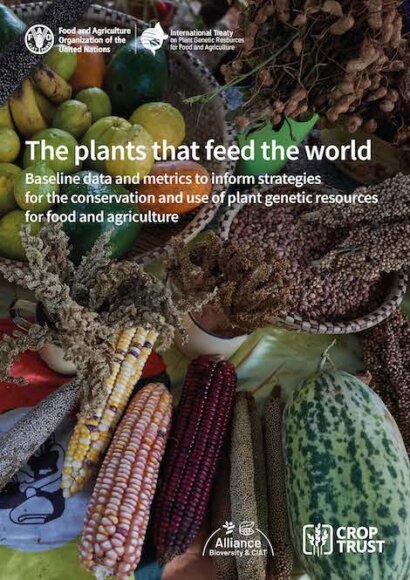
FAO (2025) The plants that feed the world Baseline data and metrics to inform strategies for the conservation and use of plant genetic resources for food and agriculture. International Treaty on Plant Genetic Resources for Food and Agriculture 146 pp.

The availability of comprehensive and reliable information is crucial for developing evidence-based policies and strategies for the conservation and use of plant genetic resources for food and agriculture. Information on food and agricultural crops, on their use, interdependence, demand, supply, and security is increasingly available but scattered through a number of information systems, databases and scientific literature.

The study “The plants that feed the world: Baseline data and metrics to inform strategies for the conservation and use of plant genetic resources for food and agriculture” brings together pertinent information from these different sources. It presents a set of reproducible metrics that provide an evidence base for the international plant genetic resources community to prioritize conservation and utilization activities. Measured periodically, these metrics can also provide insights on change over time in the use of crops and issues regarding interdependence on, demand for, supply of, and security of their genetic resources.

The study was undertaken by a team of international experts to pool together information from a wide range of sources in a user-friendly manner and to develop a reproducible set of metrics and indicators, complementing existing indicators. The main global database sources consulted include FAOSTAT, the Data Store of the International Treaty, FAO WIEWS, Genesys PGR, GBIF, PlantSearch, the Svalbard Global Seed Vault’s SeedPortal, UPOV’s PLUTO database, and NCBI’s Entrez database. The resulting metrics were organized into five domains – crop use, interdependence, demand, supply, and security.

The study includes findings about the importance of the Multilateral System of Access and Benefit-sharing of the International Treaty, the primary global operational mechanism to exchange plant germplasm needed for research and breeding around the world, while pointing at gaps and possibilities to enable its growth.

A number of vignettes complete the study with information on contemporary issues on crop conservation and use, to further showcase how the management of plant genetic diversity is evolving at present.

It is hoped that this publication will support countries, researchers, breeders and other stakeholders in prioritizing activities, implementing multilateral frameworks and leading policy discussions related to plant genetic resources for food and agriculture.

HIGHLIGHTED FINDINGS

The study presents figures on 355 crop species directly involved in feeding humanity. Many of these are greatly underused, not well characterized, or not widely known. But some are just becoming important or are likely becoming more important in the future with climate change.” – Geoff Hawtin, author
“With all this information we are able to understand where these crops are at, how much countries need them or want to work together in a multilateral way to conserve them and trade them and how we should devote international resources towards various different crops.” Colin Khoury, author
The study tells us that the way and extent to which we use different crops and crop varieties changes geographically and over time. Likewise, our approach to food and nutrition security, climate change, sustainable agriculture, biodiversity loss and other challenges have shifted over the decades. New challenges, knowledge and opportunities arise and across the world we see that diversification is becoming a strategy in response. The demand for crops is changing and this should equally inform our planning for policies and research on plant genetic resources for our food and agriculture, at national, regional and global levels.


> Listen to the Treaty Talks podcast, exploring the trends and stories behind the study

> View publication

> Access datasets (Crop indicator application; Crop list; Results)

AgBase Impact Profile Metrics Self-Reporting Form

AgBase is a data and intelligence platform showcasing AgTechs' activities to promote more engagement from funders, donors, and ESOs. Self-reported impact profiles help increase visibility to investors, especially beyond the usual donor crowd, and benchmark your company among peers. This impact profile metrics was co-developed by MercyCorp Agrifin, AgBase, and 60 Decibels. AgBase and MercyCorp Agrifin will review your self-reported impact profile and add the verified information on AgBase.

With AgBase, you can track:
✅ Farmer reach (including women & youth)
✅ Income & livelihood improvements
✅ Service quality (NPS & customer feedback)
✅ Climate-smart practices adoption

💡 Why it matters:
🔹 Boost your visibility with funders & partners
🔹 Share your unique impact story with confidence
🔹 Back it up with credible, standardized data
🔹 Benchmark & learn from peers

Improving Market Access for Women through Policy Instruments

17 September 2025. Improving Market Access for Women through Policy Instruments

Colorful Revolution Webinar Series. This webinar series built on a recent global study examining fruit and vegetable (F&V) research and development investments across nine countries.  

Women face systemic constraints in accessing markets, from limited mobility and time burdens to exclusion from formal systems. Investing in gender-responsive infrastructure, improved market information systems, and supportive policy environments can unlock women’s full economic potential in horticulture. 

  • Olivia Nyaidho Executive Director | Development in Gardening Kenya - With nearly 20 years of experience working alongside smallholder farmers, she has dedicated her career to advancing horticulture and agroecology as pathways to more equitable communities. For more than a decade, Olivia has led DIG’s programs in Kenya, which focus on training marginalized women farmers in agroecological vegetable production to strengthen food security, nutrition, resilience, and social cohesion. In her global role, she also provides technical support to DIG programs in Uganda and Senegal. Olivia holds a Bachelor of Science in Agriculture from Egerton University and a Master’s in Project Planning and Management from the University of Nairobi. She serves on the governing board of PELUM Kenya, a leading network of organizations promoting agroecology solutions for smallholder farmers. 
  • Dr. Freda Asem Senior Lecturer, Department of Agricultural Economics and Agribusiness | University of Ghana. She holds a PhD in Development Studies from University of Ghana, an MSc. in Agricultural and Resource Economics from University of Alberta, Edmonton, Canada, and a BSc. in Agricultural Economics from University of Ghana, Legon. Freda is also the Associate Director for the West Africa Horticulture Innovation Hub. Dr. Asem is an agricultural economist by training and a researcher with over 20 years of experience in the agricultural sector. She is passionate about agricultural development in Ghana and Africa at large; particularly in relation to smallholder farmers. Her research focuses on agribusiness, agrifood systems and agricultural value chain analyses and their implications for improving the livelihoods of all value chain actors; most importantly smallholder farmers. 
  • Dr. Janelle Larson Associate Professor, Agricultural Economics | Pennsylvania State University - Her research focuses on international rural development, with work primarily on gender in development, land markets, and value-chain analysis. She was involved in USAID-funded research projects on gender and horticulture in Honduras, (funded by the Horticulture Innovation Lab at UC Davis), on gender in Cambodia (Sustainable Intensification Lab at Kansas State) and on women’s time poverty in Ghana (Peanut Innovation Lab at Georgia). Larson was also the gender consultant for the Horticulture Innovation Lab at UC Davis and was co-Chair of the Innovation Lab Affinity Group for Gender. Through these projects and the PSU Gender Equity through Agricultural Research and Education (GEARE) initiative she has provided numerous workshops on gender in development and incorporating gender in research and outreach. In addition, she leads a multi- disciplinary collaborative effort to develop livelihoods for highly vulnerable youth in Kenya involving undergraduate students. Larson received Penn State Global’s Lifetime Achievement Award in 2025. 
  • Carla Legros Consultant | CGAP World Bank - Carla Legros is a strategy and finance professional with over a decade of experience shaping agricultural and food systems across Africa. At One Acre Fund, she led the internal consulting team, advising senior leadership on commercialization strategies for smallholder farmers. Previously at Dalberg Advisors, she advised development actors on investments in agribusiness, food systems, and inclusive finance. At Aceli Africa, Carla designed and operationalized blended-finance incentives that mobilized $300M in lending to agricultural SMEs. She is currently at CGAP at the World Bank, supporting financial institutions to design climate- and gender-responsive products. She is based in Nairobi, Kenya.

Tuesday, September 16, 2025

Opportunity Crops: A BOLDER Approach to Food Security

9  September 2025. Bonn. Opportunity Crops: A BOLDER Approach to Food Security

The event focused on promoting “opportunity crops” — lesser known, nutrient-rich, resilient crops that are environmentally friendly and have potential to support food security. It was part of the BOLDER initiative, aiming to build momentum around those crops in Africa. The program included opening remarks, panel discussions, short talks, thematic sessions from seed to table, and conversations about preserving crop diversity. Learn more about BOLDER.

Welcome & Opening Remarks
  • Cody Gildart, Chief Communications Officer, Crop Trust
  • Stefan Schmitz, Executive Director, Crop Trust Talk: “Within Diversity; Among Diversity”
Setting the Scene: Africa Today, Africa Tomorrow
  • Céline Termote, Senior Scientist and Regional Team Leader for Food Environment and Consumer Behavior, Alliance of Bioversity International and the International Center for Tropical Agriculture (CIAT)
  • Mercy Mwambi, Agricultural Economist, World Vegetable Center (WorldVeg)
  • Matilda Ntowa Bissah, Scientist, Council for Scientific and Industrial Research - Plant Genetic Resources Research Institute (CSIR-PGRRI), Ghana
BOLDER Opportunities: Expanding the Value of Crop Diversity

Short talks from BOLDER collaborators on how opportunity crops can strengthen food systems from seed to table.
  • Sarah Paule Dalle, Researcher, Department of International Environment and Development Studies (Noragric), Norwegian University of Life Sciences (NMBU)
  • Peter Emmrich, John Innes Centre (JIC)
  • John Adriko, Director of Research, National Forestry Resources Research Institute (NaFORRI),
    National Agricultural Research Organisation (NARO), Uganda
Food Systems & Opportunity Crops

What are researchers seeing in terms of production trends, markets, and shifts in consumer preferences?
  • Mercy Mwambi, Agricultural Economist, World Vegetable Center (WorldVeg)
  • Céline Termote, Senior Scientist, Alliance of Bioversity International and CIAT
Building the Ecosystem: The BOLDER Process
  • Nora Castañeda-Álvarez, BOLDER Project Coordinator, Crop Trust
  • Nico Wilms-Posen, Project Coordinator, Power of Diversity Funding Facility, Crop Trust
Exploring & Evaluating Crop Diversity

How farmers are working with researchers to test, select and adopt diverse crops using the 'tricot'
approach.
  • Kauê de Sousa, Scientist, Alliance of Bioversity International and CIAT
  • Carlos Houdegbe, Faculty of Agronomic Sciences, University of Abomey-Calavi, Benin
  • Sognigbe N’Danikou, Scientist, World Vegetable Center (WorldVeg)
Collecting & Conserving Crop Diversity

Why urgent collecting efforts are vital to prevent the loss of valuable crop diversity forever.
  • Mujuni Sospeter Kabululu, Senior Research Officer, Tanzania Plant Health and Pesticides Authority
  • Dèdéou Apocalypse Tchokponhoue, Genebank Manager, University of Abomey-Calavi, Benin
The Future: Building on BOLDER

A look at what’s next: how to build equitable, sustainable food systems with support from national governments and new initiatives.
  • Nora Castañeda-Álvarez, Crop Trust
  • Nico Wilms-Posen, Crop Trust
Video published 03/12/2025

Background:

Crop Trust has launched (19/03/2025) the Power of Diversity Funding Facility (PDFF). This transformative multi-donor funded initiative will promote the use of so-called opportunity crops across Africa, Asia, the Pacific, and Latin America and the Caribbean.

Initially, the PDFF will focus on 14 high-potential opportunity crops in seven countries,: Colombia, Kenya, India, Nigeria, Tanzania, Uganda and Zambia. Additional funding can extend the project’s reach to more countries
, driving a shift towards resilient and sustainable agrifood systems worldwide.

Backed by an initial investment of €10 million from Germany (the German Federal Ministry for Economic Cooperation and Development (BMZ) through KfW Development Bank) and €2 million from Ireland, the PDFF will empower farmers to diversify their agricultural systems with resilient and nutritious alternatives to mainstream crops. The German funding will come via KfW, the German Development Bank, and Ireland is providing funding through its Department of Foreign Affairs.

National Workshops


Kenya: 18–22 August 2025. Nairobi. Finger millet and amaranth were selected as Kenya’s priority “opportunity crops” during the two-day National Stakeholder Consultation under the Power of Diversity Funding Facility (PDFF). They were chosen from a longlist of 43 crops. The initiative will be implemented in collaboration with Alliance of Bioversity International and CIAT, and Kenya’s Agricultural and Livestock Research Organization (KALRO).
  • Edwin Garzón-Horta — PDFF Project Specialist, Crop Trust
  • Dr. Gloria Otieno — Genetic Resources & Food Security Policy Specialist, Alliance of Bioversity International & CIAT
  • Peterson Wambugu — Genetic Resources Research Institute (GeRRI), Kenya
  • Evelyne Okoth — Farmer representative from Kisumu

India: 19-20 August 2025. Chennai. Foundation National Stakeholder Consultation on Opportunity Crops in India, under the Power of Diversity Funding Facility (PDFF).

India’s agricultural landscape is rich with diversity, yet many traditional crops have quietly faded from mainstream attention. At the national dialogue hosted by the MS Swaminathan Research Foundation and Crop Trust called the ‘Power of Diversity Funding Facility – Identifying Priority Opportunity Crops’, scientists, farmers, and policymakers came together to spotlight these neglected and underutilised species (NUS)—and why they might hold the key to a healthier, more sustainable future.


Colombia: 15–16 July 2025. Bogotá. Colombia Chooses Its Opportunity Crops The participatory
process to choose opportunity crops brought together representatives from the national government, farmers, researchers, environmental organizations, international cooperation agencies, agricultural unions and the private sector. The group finally chose peach palm and chayote, opportunity crops that will now receive critical support from the Funding Facility to tap their full potential for Colombia’s communities and economy.


In Nigeria the consultation tackled a list of 37 possible crops. Fonio and pigeon pea came out on top.

The Crop Trust’s Power Of Diversity Funding Facility brought together partners from the Zambia Agricultural Research Institute (ZARI), the National Genebank of Zambia, local experts and farmers to identify Opportunity Crops that matter most for the country’s agricultural future. The top picks? Sorghum and cowpea – crops that can withstand harsh conditions while providing reliable nutrition.


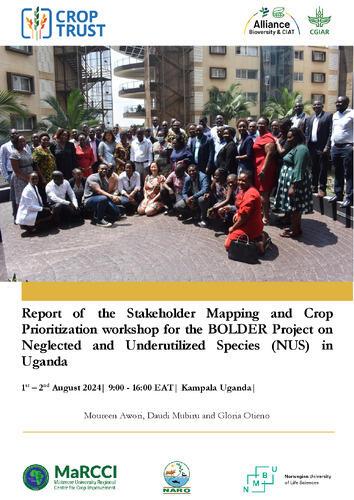
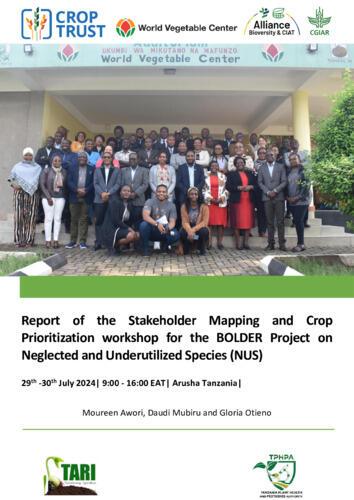
Organized by: The Alliance of Bioversity International & CIAT (CGIAR), which coordinated the Uganda and Tanzania workshops for BOLDER.

Uganda has prioritized five Neglected and Underutilized Species (NUS) for their potential to enhance food security, nutrition, and economic growth. Among these, jackfruit stands out with the highest ranking (11.6), valued for its adaptability to climate change, rich nutritional content, and widespread cultural acceptance. Pearl millet, scoring 11.4, is recognized for its exceptional drought tolerance and importance in traditional ceremonies, such as marriages. Pumpkin, with a score of 11.2, is celebrated for its nutritional and medicinal properties, as well as its broad acceptance among communities. Cowpea, scoring 11.0, is notable for its seasonal adaptability, nutritional richness, and cultural significance. In addition, amaranth, both as a grain and a leafy vegetable, was included among the priority crops due to its vital role in promoting food security, nutrition, and health. 

These species collectively offer immense potential for strengthening Uganda’s food systems, improving dietary diversity, and fostering sustainable economic development. By focusing on their promotion and utilization, Uganda can leverage their climate resilience, nutritional benefits, and cultural relevance to address malnutrition and support long-term growth. 


A stakeholder workshop in Tanzania convened 55 participants to identify priority Neglected and Underutilized Species (NUS) crops, develop comprehensive stakeholder lists, and define roles within NUS food systems. The workshop identified five key priority crops: sweet potatoes, finger millet, Moringa, Bambara groundnuts, and Jute mallow. Participants emphasized the importance of selecting crops with traits such as pest and disease resistance, drought tolerance, high nutritional value, and marketability. These traits are critical for enhancing food security, improving nutrition, and ensuring the resilience and sustainability of local food systems. The collaborative efforts of stakeholders aimed to strengthen NUS integration into Tanzania’s agricultural value chains and promote their broader adoption.


Friday, September 12, 2025

Assembly Global Confederation of Higher Education Associations for Agricultural and Life Sciences (GCHERA)

9 to 11 September 2025
. Beauvais, France. Global Confederation of Higher Education Associations for
Agricultural and Life Sciences (GCHERA)

  • This year’s Assembly, themed “Leadership for Educational Innovation and University Transformation”, focused on:
  • Visioning the future of GCHERA
  • Institutional strengthening through policies, governance, and partnerships
  • Regular business, including the election of new officers

Synthesis of GCHERA Group Discussion

1. Value of GCHERA / Value Proposition

       GCHERA must remain apolitical, ensuring neutrality and inclusivity.

       Acts as a global convenor: sharing good practices, producing reports on global challenges, and shaping higher education transformation.

       Focus on developing human skills, setting guidelines/tools for accreditation, and enabling international student mobility.

       Provides a platform for joint proposals and projects, enhancing members’ ability to secure external resources.

       Functions as a policy think tank and plays a stronger advocacy role globally.

2. Future Objectives / Strategic Thrusts

       Champion higher education in agriculture and life sciences.

       Develop guidelines for accreditation and international standards.

       Expand international mobility and student exchange programs.

       Strengthen global partnerships, ensuring balance across South-South, North-South, and South-North collaborations.

       Establish GCHERA as a recognized knowledge broker.

3. Membership Strategy

       Restructure membership model to be more inclusive and financially supportive.

       Consider a tiered membership fee structure (universities, associations)

       Increase engagement through quarterly meetings and communities of practice.

4. Governance & Leadership

       Current two-year leadership terms are insufficient — propose extending terms to ensure continuity and impact.

       Governance restructuring to improve representation and decision-making.

       Editorial and communications committees to be formalized.

5. Strengthening GCHERA

       Financially: Membership fees, donor partnerships, project funding.

       Organizationally: Enhanced Secretariat with dedicated staff; improved governance mechanisms.

       Membership: Broader recruitment and meaningful engagement activities.

       Secretariat: Expand communications, knowledge management (newsletters, social media, website updates).

6. Leadership Effectiveness

       Quarterly online meetings for updates and dialogue.

       Professional development programs through webinars.

       Regular knowledge products (policy briefs, newsletters, social media).

       Stronger representation of members’ voices internationally.

7. Resources for Viability

       Realistic options:

       Membership contributions

       Donor/foundation partnerships

       Regional and global project collaborations

       Advocacy-driven funding through policy networks

8. Service Offerings of GCHERA

       Policy and Advocacy: Represent higher education interests at global policy levels.

       Championing Higher Education: Transform curricula, skills, and accreditation.

       Knowledge Brokering: Produce reports, guidelines, and facilitate exchange of good practices.

       Global Partnerships: South-South, North-South, and South-North collaboration platforms.

       Communications: Active dissemination through newsletters, social media, updated website, and outreach initiatives.

9. Path Forward / Next Steps

       Establish a clear 2026 Workplan with timelines.

       Launch a Community of Practice on Higher Education Transformation.

       Formalize an Editorial/Communications Committee.

       Develop a membership and governance restructuring proposal.

       Begin positioning GCHERA as a policy and advocacy leader in higher education globally.

       Co-develop initiatives with regional organizations like APAARI, ARINEENA for the International Year of the Woman Farmer (2026), highlighting women’s leadership in agriculture and higher education transformation.


Background:

The Global Confederation of Higher Education Associations for Agricultural and Life Sciences
(GCHERA)
is an international network that brings together associations of universities and higher education institutions engaged in agriculture, food, and life sciences. Its main purpose is to foster global dialogue and cooperation among universities to address the complex challenges of sustainable development, food security, environmental stewardship, and rural transformation. By connecting institutions across regions, GCHERA helps promote the exchange of ideas, best practices, and innovations in education, research, and outreach, while also strengthening leadership capacity in universities to meet the needs of rapidly changing agricultural and food systems.

GCHERA’s activities include hosting annual conferences and general assemblies, facilitating collaborative projects, and providing platforms for partnerships between academia, government, industry, and civil society. It also supports leadership development in higher education and works to advance transformative teaching and learning approaches that prepare future graduates to contribute effectively to global challenges. Ultimately, GCHERA serves as both a convening body and a catalyst, helping institutions evolve in their governance, curricula, and partnerships, while ensuring that agricultural and life sciences higher education plays a central role in shaping sustainable and resilient
societies.

APAARI and AARINENA Association


APAARI and AARINENA Association have joined forces in a new partnership to advance shared goals in agricultural development and foster knowledge exchange across the Asia-Pacific region.

As a start to this collaboration, both organizations will be hosting joint webinars that leverage the strengths and expertise of their networks in specific fields of agriculture.

Tropentag 2025

10 - 12 September 2025. Tropentag 2025 is an interdisciplinary international conference focused on tropical and subtropical agriculture, natural resource management and rural development. 

This year the theme was “Reconciling land system changes with planetary health”, meaning the conference explored how agricultural systems, land use, food security, and environmental protection can be balanced in the face of climate change, urbanization, land-use change, and other pressures. 

The event was organized by the University of Bonn/ZEF together with several partner European
universities and research bodies, and it will include keynotes, oral and poster presentations, workshops, and hybrid/online sessions. 

The key thematic areas were:

  • Resilient Crop & Livestock Systems: Enhancing crop and livestock productivity through optimized management, breeding, and climate-smart agriculture. Addressing biotic (pests, diseas-es) and abiotic (drought, salinity) stresses to improve resilience and resource efficiency.
  • Soil, Water & Biodiversity: Strengthening soil fertility, water management, and agricultural biodiversity. Applying nature-based so-lutions for soil conservation, water retention, and ecosystem services in agricultural landscapes.
  • Land Use, Forestry & Agroecology: Optimizing land management and farming systems through regenerative agriculture, sustainable forestry, and agroecological approaches. Balancing productivity, soil health, and ecosystem functions to enhance long-term agricultural and forest sustainability.
  • Food Systems & Nutrition: Improving food quality, safety, and biofortification while ensuring seed system sustainability. Strength-ening nutrition-sensitive agricultural value chains for healthier diets and resilient food systems.
  • Markets, Economics & Science Policy:Understanding farmer decision-making, risk management, and innovation adoption. Co-design of poli-cies and market mechanisms that support climate-resilient agriculture while ensuring economic viability.
  • Social Learning & Governance: Promoting knowledge transfer, participatory govern-ance, and institutional change. Addressing land ten-ure security, gender equity, and access to resources to support inclusive agricultural transitions.
  • Technology & Agricultural Innovation: Leveraging artificial intelligence, remote sensing, and smart farming for better decision-making and re-source efficiency. Advancing biotechnology and pre-cision agriculture to enhance productivity with mini-mal environmental impact.

Extracts of the programme 80 pp.

  • Opening session Dr. Siméon Ehui — Director General of the International Institute of Tropical
    Agriculture (IITA) & CGIAR Regional Director for Africa Reconciling land systems changes with planetary health. 
  • Dr. Lenis Saweda Liverpool-Tasie (Michigan State University, USA) Her research is about transforming food systems, rural livelihoods, MSMEs, policy-advisory in agriculture in low-/middle-income countries. 
  • Dr. Chris Hoffmann (University of São Paulo, Brazil) Works on nutrition transition, gut microbiome, how socioeconomic & agricultural policies affect health outcomes. 
  • Closing session Dr. Ousmane Badiane — Executive Chairperson of AKADEMIYA2063 On remote sensing & AI applications in agriculture; broad reflections toward planetary health. 

11/09 Sessions on Neglected & Underutilised Species


This session highlighted the crucial role of neglected and underutilised species (NUS) and broader biodiversity in tackling today’s food system challenges. Presentations spanned themes such as how NUS link biodiversity, climate, and nutrition; the nutritional potential of neglected African crops; and the integration of biodiversity into agricultural and rural development. Case studies also addressed ecological restoration in Brazil, mangrove protection in Vietnam, and citizen science approaches in the Dominican Republic. Together, the talks emphasized that biodiversity conservation and mainstreaming NUS are key strategies for building climate resilience, improving nutrition security, and supporting sustainable livelihoods.

Céline TermoteNUS at the nexus of biodiversity, climate and nutrition → Framed NUS as critical for dietary diversity and resilience to climate change.
Michael Frei, Hervé Mube K., Dominique van der Straeten, et al.Micronutrient density of neglected and underutilised African crops → Showed how NUS could help combat hidden hunger through high micronutrient content.
Mariam AbbasMainstreaming biodiversity into agricultural and rural development: The case of Mozambique → Explored how policy and practice can embed biodiversity in rural development.
Milka KiboiPerformance and yield stability of maize under a long-term experiment in the sub-humid tropics → Provided insights on biodiversity and stability of staple crops, linking to agro-biodiversity themes.
Emma Tamez MonteroSocial-ecological restoration in the Brazilian Mata Atlântica: Implications on landscape connectivity dynamics → Examined restoration efforts to reconnect fragmented landscapes.
Uyen TranDoes sustainable aquaculture certification protect mangroves? Evidence from Vietnam → Investigated whether certification schemes actually safeguard biodiversity.
Hugo-Enrique Reyes-AldanaCitizen science for biodiversity monitoring and pathogen detection in coffee farms in the Dominican Republic → Highlighted farmer participation in biodiversity tracking and early warning systems.


Poster Session: Biodiversity and neglected species

A number of poster presentations under this theme: e.g. “Transforming Ethiopian botanical gardens into socio-ecological systems …”, “Wild and alien plant species as a source of food and livelihood support among low-income households …”, “Valorising neglected and underutilised crops: Role of bio-inoculants in improving productivity” etc.

11/09 Bridging Farmer Innovation and Digital Co-Design


The session focused on how farmers’ knowledge and innovation can be combined with digital tools through participatory and co-design approaches. Presentations highlighted how peer-to-peer learning, serious games, and participatory digital literacy can strengthen farmer capacities, encourage more sustainable practices, and improve rural livelihoods. Case studies spanned Kenya, Namibia, Cameroon, and Thailand, showing how farmers and researchers can co-create digital solutions tailored to local needs. The common thread was empowerment of rural communities by embedding innovation within their own social and ecological contexts, rather than top-down technology transfer.

Rufo Roba Halakhe, Maria Restrepo, Brigitte KaufmannPeer-assisted smartphone learning to support digital literacy and participatory design in northern Kenya → Farmers learned digital skills by supporting each other, enabling stronger participation in co-design of digital solutions.
Sean Yeo, Kingpai Koosakunilrund, Patrick WaeberBreaking the failure cycle: Strategy game design to rethink mangrove restoration → A role-play/strategy game helped stakeholders rethink and improve approaches to mangrove restoration in Thailand.
Francis E Ndip, Perez L Kemeni Kambiet, Ernest L MoluaAgricultural commercialisation and children’s welfare: Impacts on diets and education → In Cameroon, commercialization of agriculture was linked to both opportunities and risks for children’s nutrition and schooling, underlining the need for inclusive policies.
Mareike Aufderheide-Voigts, Mpule Kamwi, Rufo Roba Halakhe, Maria Restrepo, Brigitte KaufmannEnhancing livestock husbandry and rural livelihoods through peer-to-peer information access: A transdisciplinary approach in communal areas of Namibia → Farmers co-designed peer-sharing platforms to improve livestock practices and strengthen communal resilience.


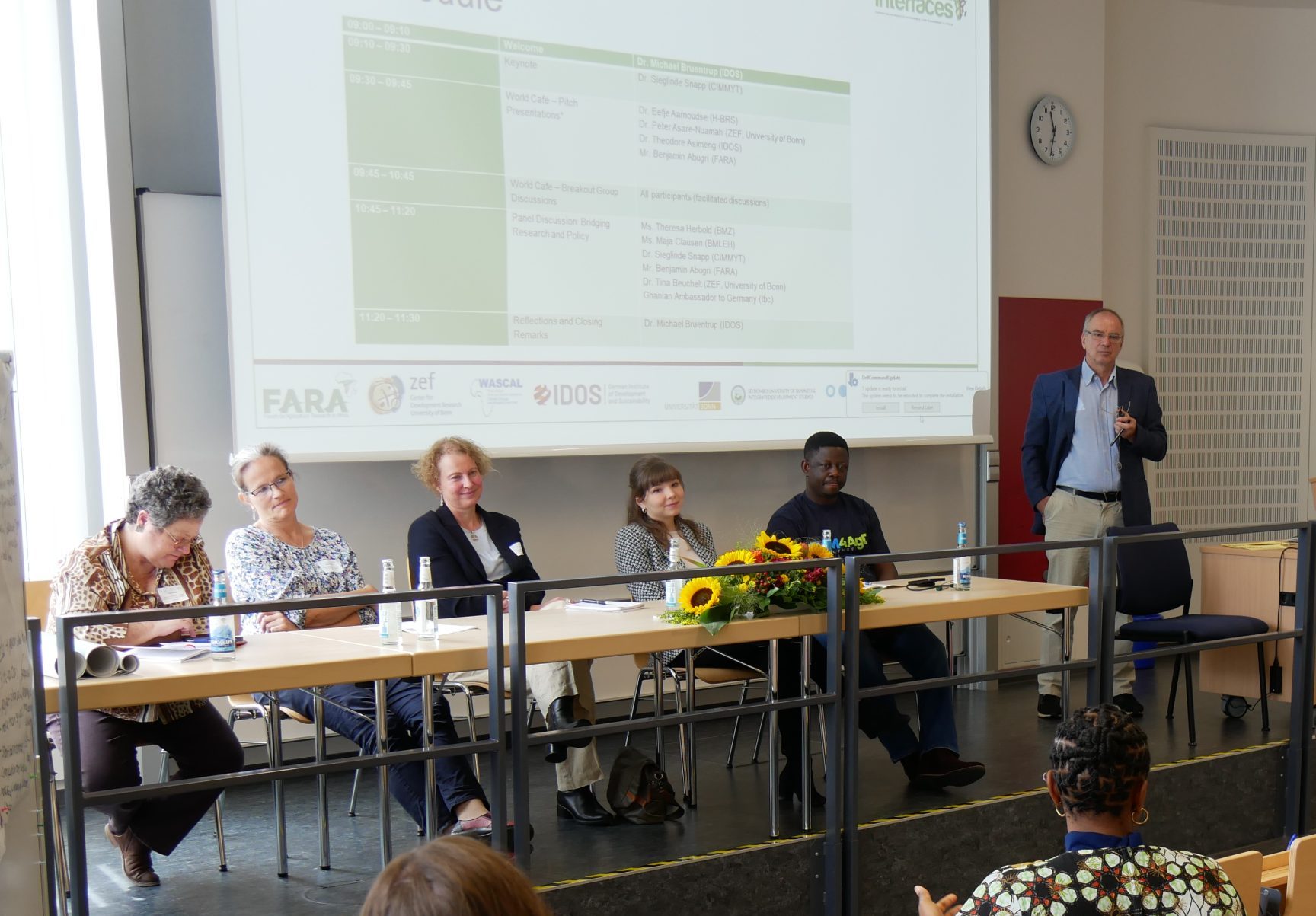
10/09 Bridging the Gap: Strengthening Science-Policy Interfaces in Agricultural Research


  • INTERFACES Side Event at Tropentag 2025,
  • The event brought together researchers, policymakers, and development practitioners from Africa and Europe to reflect on how scientific knowledge can more effectively shape and inform policy processes. 
  • The workshop built on previous Tropentag conversations on participatory research and agricultural knowledge management, and it offered a platform to deepen the dialogue around bridging research, policy, and practice.

Scalable Solutions for Crop Improvement and Production Technologies for the Global South


12 September 2025. 
To commemorate the United Nations Day for South-South Cooperation, ICRISAT hosted a webinar titled: “Scalable Solutions for Crop Improvement and Production Technologies for the Global South.”

Organized by the ICRISAT Center of Excellence for South-South Cooperation in Agriculture (ISSCA), the event will highlight impactful, scalable innovations that are strengthening agricultural resilience across the Global South.

Aligned with this year’s UN theme “New Opportunities and Innovation through South-South and Triangular Cooperation”, this webinar underscored the vital role of collaboration among Global South countries in fostering innovation, shared solutions, and collective action. ICRISAT is proud to join the global community in advancing this spirit of cooperation to tackle today’s most pressing challenges towards building agricultural resilience.

Organised by the ICRISAT Center of Excellence for South-South Cooperation in Agriculture (ISSCA)

Highlight: Africa Vegetable Breeding Consortium:


The Africa Vegetable Breeding Consortium (AVBC) is a joint initiative of the World Vegetable Center and the Africa Seed Trade Association (AFSTA) aimed at promoting the development of a strong
vegetable seed sector in Africa.

Established in 2018, the AVBC helps companies to:

  1. Learn about the latest developments in vegetable breeding research from the WorldVeg team of internationally renowned plant breeders
  2. Obtain improved breeding material (varieties, inbred lines and hybrids) to enhance your cultivar catalogs
  3. Meet breeders, pathologists, entomologists, and other researchers to strengthen your knowledge network
  4. Share experiences with colleagues from other vegetable seed companies operating in Africa
  5. Invest in joint projects with other consortium members that target the specific needs of their companies

Transformative role of Digital Advisory Services (DAS)

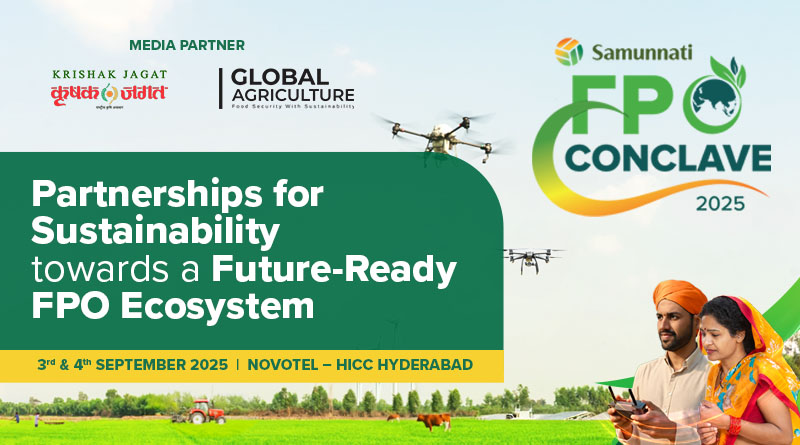
3 - 4 September 2025.  Hyderabad. Samunnati FPO Conclave 2025 in Hyderabad.

This  Conclave 2025 convened over 1,000 Farmer Producer Organizations, agri-businesses, financiers, policymakers, and technology innovators to address the critical challenges confronting agriculture today. Centered around the theme "Partnerships for Sustainability towards a Future-Ready FPO Ecosystem," the conclave aims to foster collaborative action among stakeholders to develop innovative, sustainable solutions. Through shared expertise and partnership-driven approaches, the event seeks to strengthen both environmental resilience and economic viability across the agricultural ecosystem.

Programme first day

  1. Inaugural Plenary Session
  2. Release of the 5th edition of the State of the Sector Report 2025
  3. Special Address: PFRDA + Panel — Making FPOs Enterprise-Ready: Unlocking Scale through Ecosystem & Financial Partnerships
  4. Triggering investment in rural enterprises — public policy & private capital
  5. Climate-Smart Agriculture in Action 
  6. Voices from the Field — Stories of Change & Resilience for the Future 
  7. In Talks with Women Leaders — Farmer Collectives 
  8. Shaping the Future: Financial Security for Farmer Leaders 
  9. Empowering Communities through FPO-led Adoption of Climate-Smart Agri Technologies


Programme second day

  1. Perspectives on Agri Marketing — from gram haats to global markets
  2. Release of Report: Access SAP report on Social Procurement
  3. Agrivoltaics: Solar as the Third Crop
  4. Digital Infrastructure for a Future-Ready FPO Ecosystem
  5. Transforming Agricultural Systems through Inclusive Digital Advisory Services in India
  6. Policy-Finance Linkages to Scale Innovations for Sustainable Horticulture
  7. Partnerships for Resilient Value Chains
  8. Bridging the gap in access to finance for thriving landscapes & biodiversity conservation

Panel discussion Transforming Agricultural Systems through Inclusive Digital Advisory Services (DAS) in India

by Grameen Foundation India (GFI) 

  • Key note presentation by Sarita Mishra, Research Scholar in AgriPath at Grameen foundation India (GFI), whose foundational research guided the conversation.
  • Moderator Shatarupa Kashyap, Senior Director Institutional relations and Business development, Lead Agriculture and Livelihood Practices (GFSI) 
  • Benjamin Gräub (farmbetter)
  • Ruchit G Garg (Harvesting Farmer Network)
  • Puja Bhaskar (AgriPath Project, GFI)
  • Dr Naresh Shejawal (MH Agristartups & FPO Community)
  • Anuj Kumbhat (Weather Risk Management Services)

Key Insights: 
  • For Tech Builders: Human-centric design is non-negotiable. The discussion confirmed that features like WhatsApp integration and AI-powered voice notes are essential for making apps accessible to all farmers, especially women, and driving real participation in decision-making.
  • For Field Teams & FPOs: Trust is your most valuable asset. The panel emphasized that digital tools must be supported by grassroots engagement and local facilitators to be adopted and effective.
  • For Policy Makers & Investors: The future is collaborative. To create scalable impact, we must build a connected ecosystem that integrates with public infrastructure and breaks down data silos.

Launching the DAS Toolkit: 
  • The AgriPath Toolkit is a practical guide to support Digital Advisory Services (DAS) implementing organizations to leverage and strengthen agent networks for improved delivery of Digital Advisory Services (DAS) to smallholder farmers.
  • this field-tested resource is designed to help development agencies and agritech firms scale inclusive, smartphone-based advisory models