Platform for African – European Partnership in Agricultural Research for Development

Tuesday, June 11, 2013

Towards Sustainable Clusters in Agribusiness through Learning in Entrepreneurship

IFDC, the International Centre for development oriented Research in Agriculture (ICRA) and Base of the Pyramid Innovation Center (BoP Inc.) are promoting sustainable agricultural production and commodity chain development across Africa through the five-year (2012-2016) Toward Sustainable Clusters in Agribusiness through Learning in Entrepreneurship (2SCALE) project. Funded by the Netherlands’ Directorate-General for International Cooperation (DGIS), the project focuses on the development of competitive rural agricultural systems, viable agro-enterprises and the use of public-private partnerships (PPPs).
2Scale_Activites_map1b.jpg
2SCALE targets eight countries with which the Netherlands has multi-year bilateral development relationships – Benin, Ethiopia,Ghana, Kenya, Mali, Mozambique, South Sudan and Uganda. 2SCALE also targets Nigeria because of its importance to the West African economy and to the development of Benin’s agro-food sector and because of the potential to implement successful PPPs with private sector partners. In addition, ongoing agribusiness cluster activities will continue for approximately two years in Burkina Faso, Niger and Togo.

In each country, 2SCALE staff members work with local, national and international partners to improve rural livelihoods, nutrition and food security. The project’s strategic objective is to develop a portfolio of 500 robust and viable agribusiness clusters (ABCs) and value chains, supplying food to regional, national and local markets as well as to the least fortunate (also known as base-of-the-pyramid [BoP] consumers). 2SCALE will also transfer knowledge on best agricultural practices and leverage the impact of its activities through collaboration with other projects and related activities of the embassies of the Netherlands.

CASE approach (2SCALE)- LR vs door moovon

Background:
Other successful projects have emphasized IFDC’s Competitive Agricultural Systems and Enterprises (CASE) approach and the benefits of PPPs. 2SCALE will expand the CASE and PPP solutions in the nine target countries. IFDC and others have shown that private sector-driven interventions can significantly improve agricultural development in Africa. Using CASE, IFDC proved that participants in an ABC can generate substantial, successful and sustainable smallholder-based agricultural development. In IFDC’s From Thousands to Millions (1000s+) project, nearly 425,000 farmers and over 1,500 small and medium enterprises (SMEs) in seven West African countries were linked effectively to markets. Farmers’ agricultural productivity almost doubled, while their incomes increased by 30 percent.

2SCALE will emphasize ‘going to scale’ – increasing the number and size of ABCs, strengthening the role of the private sector contribution in cluster activities and enlarging the impact on food security by tripling the number of smallholder farmers involved. 2SCALE will leverage private sector investments (up to 50 percent of the total project budget) to generate innovations in local, national, regional and BoP markets.

Achievements to date
  • The project has taken off with a first workshop from 25 August till 12 September 2012 in Accra, Ghana, on CASE. For ICRA, Toon Defoer and Marie-Jo Dugué were the main facilitators.
  • 27/8 to 5/9 2012: Workshop for Cluster Advisors of West and East African 2SCALE countries, including Burkina Faso, Niger and Togo. Cluster assistants of all West African countries also participated, as well as the Dairy Public Private Partnership (PPP) manager (based in Nigeria). The regional IFDC agribusiness coordinators and two ICRA Regional Capacity Strengthening Coordinators also participated.
  • 6/9 to 8/9 2012: Workshops for 2SCALE cross-cutting staff of West Africa, including the West Africa Capacity Strengthening Coordinator.
  • 28/10 to 4/11 2012: Team building workshop, Nairobi, Kenya. Facilitators: Toon Defoer, Marie-Jo Dugué, and the two ICRA Regional Capacity Strengthening Coordinators
  • 28/11 to 5/12: Design & Management of Capacity Strengthening Programmes training for 2SCALE trainers in West Africa, Benin. Facilitators: Toon Defoer, Marie-Jo Dugué, and the two ICRA Regional Capacity Strengthening Coordinators
  • 12-15 Feb 2013. Uganda. Training of 2SCALE trainers
  • 10 April 2013, Utrecht. Business Meeting. The meeting attracted over 80 participants including Lilianne Ploumen, Minister for Foreign Trade and Development Cooperation; members of two ‘topsector’ boards mandated by the Dutch government to stimulate private investment in high-priority sectors of the economy; and a range of private firms, from medium-scale to multi-national.
2SCALE Project Overview (English and French)


IFDC
2Scale is presented in the last volume of the IFDC Report (Quarterly Newsletter): page 17 to 25
Download Volume 38, No 1 (English)
PAEPARD video interviews
Interview with Dr Arno Maatman (economist, coordinator 2SCALE programme based in Ghana, former ICRA Director) has been involved in interdisciplinary research on food-security policies and farmer strategies in sub-Saharan Africa, with emphasis on risk management, with a long-term tenure with IFDC as team leader of the Agribusiness Development programme. He has worked for over 15 years in West Africa and has ample experience in facilitating multistakeholder platforms. His expertise areas include institutional economics, empowerment and transformational change, competitiveness and value-chain development.

Arno answers following questions:
  • How do you accompany an agro-entrepreneur in 2SCALE?
  • Do you support individuals or cooperatives & producers' organisations?
  • You don't become an entrepreneur but you are born an entrepreneur?
  • Is there a danger to support wrong or opportunistic entrepreneurs?


Interview with Toon Dufoer, coordinator Capacity Strengthening activities in 2SCALE.

Toon answers following questions:
  • How is 2SCALE organised?
  • How can an entrepreneur from Benin, working around soja get a support?
  • When is the next 2SCALE call?


Interview with Richard Hawkins, Director ICRA, about 2SCALE.

Richard answers following questions:
  • Do we need a new class of service providers?
  • What is the rationale of clustering agribusinesses?

Interview with Jane Tum, Regional Capacity Strengthening Coordinator (RCSC) based in Nairobi, Kenya.

Jane answers following questions:
  • How does 2SCALE goes about capacity strengthening?
  • How much time do you need to upgrade an agricultural entrepreneur?
  • What is an agricultural entrepreneur?


Interview with Beatrice A. Obara Regional Access to Finance Specialist, IFDC - East & Southern Africa Division, Icipe campus - Kasarani Nairobi.

Beatrice answers following questions:
  • What is important to know in the livestock value chain from a financial perspective? 
  • What means understanding quantity and quality? 
  • At the level of slaughter houses what financial products are available? 
  • Do we need research in the meat value chain?
 

Recent IFDC agribusiness support projects

Accelerating Agribusiness in Africa – Bridge (AAA-Bridge), 2011-2012
  • The AAA-Bridge project was an extension of Strategic Alliance for Agricultural Development in Africa (SAADA-B) activities. 
  • It was funded by the Netherlands' Directorate-General for International Cooperation (DGIS)
  • The objective of AAA-Bridge was to expand IFDC activities and best practices developed in West Africa, such as the Competitive Agricultural Systems and Enterprises (CASE) solution, Integrated Soil Fertility Management (ISFM), fertilizer deep placement (FDP), fertilizer resource assessments and market information systems (MIS), into other regions of Africa. 
  • Specifically, this project expansion was designed to replicate the CASE approach and other aspects of the IFDC agribusiness model in select countries of eastern and southern Africa.
Livelihoods and Enterprises for Agricultural Development (LEAD), 2008-2013 (IFDC support: 2008-2010)
  • LEAD helped to raise rural agricultural productivity and incomes for smallholder farmers in Uganda, providing support to targeted smallholders who grow food and cash crops. Utilizing the value chain approach to agricultural development, the project improves productivity through training and access to quality agro-inputs and increases trade capacity and market competitiveness by building better market linkages. IFDC provided technical assistance to the LEAD project from 2008 to 2010.
  • LEAD was the principal vehicle of USAID for transforming Uganda’s agricultural sector and improving the livelihoods of smallholder farmers. In line with Feed the Future(FtF) activities of USAID-Uganda, USAID-LEAD supported the Mission’s aim of assisting the Government of Uganda (GoU) reach certain objectives under its Development Strategy and Investment Plan (DSIP) and Comprehensive Africa Agriculture Development Programme (CAADP). 

LEAD Programs

Coffee Value Chain

Coffee Value Chain
In Uganda, the majority of Robusta coffee farmers sell dried coffee cherries (kiboko), which traders then hull to extract the green beans to be sold through to graders and exporters. For the sale of green beans, the coffee industry has well developed quality parameters and pricing strategies that reward better quality and penalize for high moisture, foreign matter and presence of black and other...
read more

Maize & Beans Value Chain

Maize & Beans Value Chain
Unlike the coffee value chain, there is much less private sector-led investment in the maize and beans value chain. For one reason, margins for all businesses are significantly lower compared with coffee. To be profitable, businesses need to produce, trade, or process much larger volumes. One reason for low margins is that Ugandan maize is generally not of top quality due to poor post-harvest...
read more

Inputs Value Chain

Inputs Value Chain
The value chain of inputs to the agricultural sector, namely for seeds and agro-chemicals, is strongest at the level of import of agro-chemicals and production and import of seed and weakest at the retail of inputs to farmers. Large importers of agro-chemicals and seed companies routinely promote their products, especially new items or seed varieties. These companies often conduct field...


Related:
Experiences from some of the USAID LEAD agribusiness partners in maize, coffee and agro-inputs.
  • On April 23 and 24, 2013, nearly 300 value chain actors that included farmers, traders, bank officials, the media, as well as local government officials met in Iganga and Mbale districts respectively to share experiences and build strong partnerships. This was during the 4th regional close out events organized by USAID LEAD as part of its overall exit strategy. The participants hailed from eight eastern Ugandan districts of Sironko, Kapchorwa, Tororo, Mbale, Iganga, Kamuli, Bugiri and Jinja.
  • On May 23, 2013, over 150 maize, coffee and inputs value-chain stakeholders from Rubirizi, Mitooma, Bushenyi, Buhweju, Sheema, Ibanda and Kamwenge districts attended the last of the six USAID LEAD regional showcasing event in Bushenyi.

Promotion of Private Sector Development in Agriculture


Promotion of Private Sector Development in Agriculture (PSDA) is a bilateral technical assistance programme jointly implemented by the German Agency for International Development (GIZ) on behalf of the Government of Germany and the Ministry of Agriculture on behalf of the Government of Kenya. PSDA closely collaborates with other agricultural sector Ministries, mainly with the Ministry of Livestock Development, Ministry of Fisheries Development and Ministry of Cooperative Development and Marketing.

Commissioned by: German Federal Ministry for Economic Cooperation and Development (BMZ)
Country: Kenya
Lead executing agency: Ministry of Agriculture
Overall term: 2003 to 2015

The programme’s activities and services are divided into three components:

Component 1: Improvement of the Policy Framework for Agriculture and Agribusiness
DEVELOPMENT OBJECTIVE: POLICY FRAMEWORK FOR THE PRIVATE SECTOR ACTORS IN AGRICULTURE AND AGRIBUSINESS IMPROVED.

The policy advisory function is an essential part of the PSDA support to GoK. Continued support to the Agricultural Sector Coordinating Unit (ASCU) is vital to ensure that the Strategy for Revitalization of Agriculture (SRA) policy environment and approach is thoroughly anchored and implemented with active support from the ministerial management and private sector representatives. Read more...

Component 2: Strengthening of Implementation Capacities for Value Chain Development
DEVELOPMENT OBJECTIVE: THE PRIVATE SECTOR REALISES MORE ECONOMIC BENEFIT FROM BUSINESS ACTIVITIES IN AND ALONG THE SELECTED VALUE CHAINS IN A SUSTAINABLE WAY.

Since many of the important stakeholders have received training during the previous phase, the focus in the phase ahead will be on creating cohesive implementation and coordination frameworks for value chains (or groups of value chains) that include all relevant actors, service providers and associations alike. Supporting private-public stakeholders as value chain (or sub sector) groups with specific governance structures that will plan, coordinate and monitor activities and ensure feed-back on crucial policy issues to line ministries and ASCU is a major focus. Read more...

The following high-potential value chains supported by PSDA are;
Beef cattle
Dairy Goats
Fisheries
Potatoes
Mangoes
Passion Fruit
Sweet Potatoes
Poultry

Component 3: Promotion of Resource Friendly Technologies
DEVELOPMENT OBJECTIVE: ENTERPRISES AND HOUSEHOLDS BENEFIT ECONOMICALLY FROM ENVIRONMENTALLY FRIENDLY TECHNOLOGIES.

Considerable potential for broad-scale implementation of different environmentally friendly technologies for industrial and household use exists. Read more...

Related: 
28th – 30th May 2013. Training for Fish Farmers of Nyanza and Western Province. Under the PSDA program GIZ organised the First Aquaculture Training in collaboration with Jewlet, Enterprise Homa-Bay and Aquatic Blue.

JEWLET Enterprises, is a Kenya based company mainly involved in Farming High Quality Selectively Bred Nile tilapia fingerlings (mainly monosex), African catfish fingerlings and ocaasionally both tilapia and catfish food fish. 
  • JEWLET Enterprises has a long experience since 1999 as trainers of government Fisheries officers, aquaculture managers and researchers. They have developed aquaculture on several consultancies both locally and internationally. 
  • The director operations, Jedida Atieno Nyongayo did a two month consultancy to Zambia in May to June 2011 and Senegal in with FAO. 
  • The MD, Enos Were developed aquaculture in Uganda, as a consultant for US AID Washington SPEED project for Africa. Both the Enos Were and Jedida Atieno developed aquaculture in Namibia under the Government of the Republic of Namibia. Enos Were has also had several successful consultancies with Kenya Gatsby Trust on Support to the development of an aquaculture sector development strategy for the Market Assistance Program (MAP), which is DFID (United Kingdom – Department of International Development) Kenya’s program for promoting employment and income generation in selected market systems in Kenya under Kenya Gatsby Trust. (January 26th to February 22nd 2012) and Aquaculture Training and Extension Manual Production, funded by FARM (Food & Agricultural Research Management)-Africa, which is DFID (United Kingdom –Department of International Development) (January 9th to February 17th 2012).
Trainer Albert Altena 
Aquatic Blue, Sustainable aquaculture, 
Bremen, Germany
Aquatic Blue assists and advices companys operating mainly within the field of sustainable or organic aquaculture.
  • Aquatic Blue together with Organic Services has been appointed by IFOAM to conduct a scoping study on the potential of organic aquaculture in East Africa.
  • The project is part of the Organic Standards in East Africa Program (OSEA II) and includes Burundi, Kenya, Ruanda, Tanzania and Uganda to develop a regional standard for organic aquaculture. The results of the project will be presented in a workshop in Dar es Salaam, Tanzania in July 2013. Aquatic Blue will carry out the project in co-operation with his aquaculture network partner Organic Services in
    Munich as well with various partners in Kenya, Tanzania and Zambia.
  • Within the framework of a trilateral cooperation between Kenya, Israel, and Germany, since July 2012 Aquatic Blue is involved in the construction of a training unit at the Ramogi Institute of Advanced Technology and the development of a training concept to establish sustainable aquaculture in Kenya. In cooperation with the partner from Israel a training unit was constructed at Kisumu near Lake Victoria in July 2012. The facility was officially opened on 16. August 2012 by the German minister of development aid, Dirk Niebel and a trilateral official opening ceremony on  4th of June 2013.
  • The German Co operation for International Dvelopment and the Israeli agency for International Development co operation jointly sponsor research studies in aquaculture related fields at RIAT. RIAT may soon be upgraded to university status with some reputable institutions like the Florida Agricultural Mechanical university which is already offering degree courses at the college.

Published on YouTube April 22, 2013 The fishermen on Lake Victoria in Kenya have withdrawn due to overfishing and pollution which has affected gradually their livelihoods. In a trilateral cooperation between Germany, Israel and Kenya, the BMZ has been involved in the development of aquaculture and the provision of appropriate expertise to give people livelihoods and perspective back.

Monday, June 10, 2013

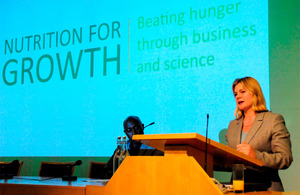
High-level meeting on global nutrition and growth

Development Secretary Justine Greening announced 
a major boost to Britain's work in reducing hunger 
and malnutrition around the world. 
Picture: Benet Coulber/DFID
8 June 2013. London, UK. The UK government, the Children’s Investment Fund Foundation (CIFF), Nutrition for Growth: Beating Hunger through Business and Science brought together business leaders, scientists, governments and civil society to make the political and financial commitments needed to prevent undernutrition, enabling people and nations to prosper.
and the Government of Brazil will co-host

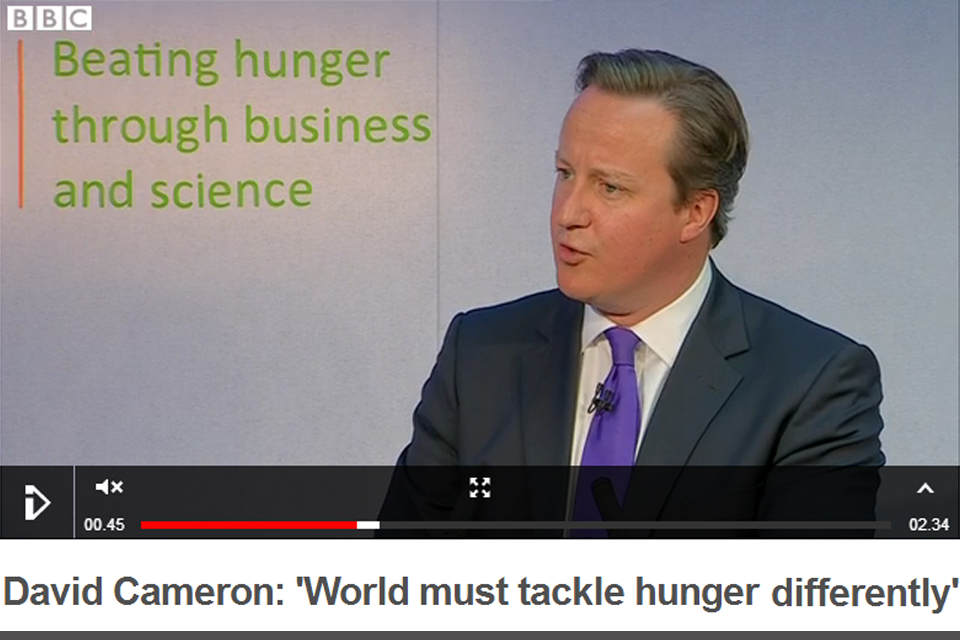
The Nutrition for Growth event has ended with world leaders signing a global agreement to help beat hunger and malnutrition around the globe, saving the lives of at least 1.7 million children.

Among the participants were two presidents and four prime ministers from Africa, Irish Taoiseach Enda Kenny, philanthropist Bill Gates, former UN Secretary General Kofi Annan and Unilever chief executive Paul Polman.

Donors have secured new commitments of up to £2.7 billion ($4.15 billion) to tackle undernutrition up to 2020, £1.9 billion ($2.9 billion) of which is core funding with the remainder secured through matched funding. The UK has today committed an additional £375 million of core funding and £280 million of matched funding from 2013 to 2020.
Image of BBC video player

Related:
Report by the UK House of Commons’ International Development Committee released a report titled “Global Food Security”. You can read it here: Global Food Security

The International Development Committee is appointed by the House of Commons to examine the expenditure, administration, and policy of the Office of the Secretary of State for International Development.

Their report outlines long-term factors affecting demand for and supply of food. It then considers how these factors, together with more short-term policy decisions such as export bans, have contributed to recent food price “shocks” or “spikes”, and how to reduce the magnitude of these shocks. They then consider how best to protect the most vulnerable when shocks occur.

The report is timely as the G8 presidency is currently held by the UK and they are focused on food security and nutrition. They are hosting the G8 summit on June 17-18 where food security is sure to be on the agenda and they will also be co-hosting an event with Brazil on June 8th called “Nutrition for Growth: Beating hunger through nutrition and science”.

Related: 

Saturday, June 8, 2013

Innovation for fashion or action? Building Innovation Capacity

Innovation for fashion or action? Building Innovation Capacity.
Authors: R Mur , Suzanne Nederlof (eds.)
108 pages
Published: 2013

Sustainable agricultural development requires innovation. Due to globalisation and liberalisation, amongst other factors, smallholder producers operate in an increasingly complex and hence uncertain environment. This provides new challenges and opportunities, and requires continuous adaptation and more systemic approaches to agricultural innovation.

There has been a growing interest in building innovation capacity through Innovation Platforms (IP) in recent years. This reflects a trend in agricultural development practice to focus interventions on the support of innovation processes rather than just on the supply of new technologies.

This new focus draws attention to the different sorts of changes that are involved, capacities required and the wide range of actors involved in innovation. These ideas are elegantly articulated in the concept of an innovation system, with its emphasis on the importance of links between different actors and the role of the policy and institutional environment as an enabler of interaction, information flows and learning and change.

This book is about the challenges and practical realities of building the capacity to innovate. It describes the experiences of the Research Into Use (RIU) programme in Africa, a five-year, multicountry investment by DFID that aimed to extract development impact from past investments in agricultural research. The book documents lessons for practitioners and policy-makers in the national and international arenas who are planning and implementing investments to enable agricultural innovation.

Some extracts:

Systems of innovation are rarely self-organising. Weak linkages between key actors are a major disabler of innovation – even where opportunities for mutual benefit exist. More recently, it has become apparent that functional innovation systems are not organised by ‘the hidden hand’ of the market, but often by intermediary organisations that broker linkages, negotiate change and facilitate access to information and other resources needed for innovation. This is increasingly described as an innovation-brokering role. It is from this realisation that the current interest in capacity building, including through IPs and the innovation-brokering function they perform, emerges. (page 10)

Innovation brokers are as those who act as catalysts of interaction. Brokering may include: (1) involvement in the establishment of the platform – for example, by identifying potential members; (2) involvement in the process – for example, by making transactions between stakeholders possible,  by acting as a mediator; and (3) helping to find advice, funding and support for the members. (page 20)

What hampered the the RIU programme in its development was the urge to over-design the pilot efforts from the outside. At the onset of the programme, in particular, the country offices had very little freedom to deviate from prescribed models and were over-advised by external consultants. This led, in some cases, to somewhat artificial Innovation Platforms (IPs), of which a number were abandoned later. In addition, the activities on the agenda were too ambitious for the ultimately fairly modest resources and time frame of the programme in each of the countries. The Mid-Term review forced the abandonment of a substantial number of activities. At the same time, it brought the country programmes more autonomy and control over the remaining activities, allowing them to develop further in a more organic fashion.

The RIU experience shows that there is no right or wrong choice when it comes to choosing a commodity or a theme as the starting point for IP building. What is essential, however, is the identification of a promising opportunity and then engaging the actors who have common objectives  and are enthusiastic to engage. (page 32)

In RIU there was an assumption that in order to achieve a well-functioning IP, the involvement of the private sector was needed. Getting this private sector involvement, however, turned out to be difficult. The degree of private sector involvement varied highly among the different platforms. In Tanzania, the private sector was involved in all platforms because all of the platforms had aspects of value chain and entrepreneurial development. (page 42)

Initially, RIU country programmes made major efforts to build the understanding of stakeholders on the innovation processes and systems. However, this did not seem to lead directly to concrete action. The introduction of rather abstract concepts related to innovation thinking did not provide sufficient entry points. (...) Activities that bind the members of the platform are important. Showing concrete results is part of this process. Therefore, to initiate an innovation process, concrete action is required early in the process in order to create dynamic engagement. (page 44-45)

For innovation to occur in a sub-sector that is dominated by small-scale stakeholders, formation of partnerships has to allow flexible terms for partners to explore new ways of working. In some cases, it is necessary for stronger partners or innovation brokers to support weak (small) partners to move some processes forward and unblock challenges in the value chains, even when the weak partners are not in the best position to negotiate. (page 48)

The RIU case does point to the fact that if the capacity to facilitate IPs is in place then platforms can act as mechanisms to enable innovation. This suggests that the focus of investment and policy support should be aimed at building these capacities and this means focusing first on specialist agencies to perform the facilitation and brokering role rather than focusing first on IPs. (page 63)

It is probably safe to say that RIU interventions were at best inclusive of the poor, but not targeted at the poor. This is likely to be a general feature of innovation support interventions because by their very nature they encompass a range of stakeholders. Indeed a key feature of these initiatives is to provide incentives to individuals and organisations with resources and ideas to engage in enabling innovation with wider benefits. (page 64)

The main impact from RIU will come from the influence these experiences exert on the practices of development investors and policy makers and the resource allocation decision they make. Ultimately this is where success will be judged. (page 64)


Friday, June 7, 2013

Agricultural business development services


The business of agricultural business services. Working with smallholders in Africa.
Mariana Wongtschowski, John Belt, Willem Heemskerk and David Kahan Editors
2013, 192 pages.

The majority of farmers – particularly smallholders – need to expand their understanding of markets and economic opportunities if they are to achieve success in running their farms as sustainable and profitable businesses. To create a viable livelihood from farming, they need to move from a sole focus on production for home consumption and occasional marketing of surpluses to producing also for the market, responding to the continuously changing market demands.

Even though farmers are innovative and entrepreneurial, they often lack the know-how to do so alone. They need advice from others; they need services.

Traditionally, farmers were served by public extensionists. In response to the trends described here and the challenge to link farmers to markets, several countries have been reconsidering extension delivery, encouraging a more pluralistic, business-oriented and demand-driven approach to providing advice to its farmers.

Governments and international donors have long tried to promote small and medium enterprises (SMEs) in urban areas by providing “business development services”. From the mid-1990s onwards, they began adapting this approach to rural settings. Agricultural business development services – the subject of this book – include technical advice on production and postharvest handling, marketing ideas, assistance with business planning and access to credit, advice on how to organize farmers, training, links with suppliers and buyers, market information and research, etc. Such services can also be provided to other value chain actors such as local traders, input dealers and agro-processors. Some of the same services were provided by extensionists earlier on, but with a keen eye on the market. Sustainable financing of these services remains a challenge because resource-poor farmers cannot afford to pay for them.

Business service providers now operate in a pluralistic system where governmental, non-governmental, for-profit companies and farmers’ organizations all play a role in service provision. They often compete with each other, and depend on subsidies from governments and donors. In this landscape and from a perspective of financial viability, new and innovative ways of ensuring broad-based coverage and financing of services need to be introduced.

This book describes the two dominant approaches to providing services:

  1. supply-driven (where the funder decides what services should be offered), 
  2. and market-driven (where more emphasis is put on market forces). 
It looks at how 12 business service providers from across Africa run their businesses.It describes the seven different “business models” that they pursue, and examines the features of each one. Based on their experiences, it proposes a new, needs-driven approach, which aims to overcome the shortcomings of both the supply-driven and the market-driven approaches by taking the needs of clients as a starting point for policy and action.

 As a collaborative endeavor between FAO, KIT and Agri-ProFocus, it sheds new light on agricultural business development services in Africa. The objective of this book is to learn from field experiences to gain an understanding of what has worked where and why. It analyses the challenges faced by those trying to make business service provision a business in itself.

Practitioners working in value chain and enterprise development, development partners who finance projects and policymakers will find this book useful for orienting their support to the agricultural sector.

Analyse systémique des processus d’innovation dans les systèmes agraires de la région des Grands Lacs basés sur la culture de la banane


Van Damme, Julie. Analyse systémique des processus d'innovation dans les systèmes agraires de la région des Grands Lacs basés sur la culture de la banane. Prom. : Baret, Philippe ; Delvaux, Bruno (2013) 274 pages

Abstract:
The banana based cropping systems of the Great Lakes region (Rwanda, Burundi, Kivu), one of the most densely populated of the continent, are characterized by smallholders farms where the banana crop constitutes an agronomic, food, economic and social pillar for the households. Faced with major issues, as the lack of means of production (labor force, degradation of soil fertility) and the diseases (Banana Xanthomonas Wilt), the farmers must innovate to overcome these constraints. By a systemic and a comprehensive methodology developed and built throughout the research, this thesis analyzes the processes of innovation ongoing in the agricultural systems of the region. The results highlight the diversity, the complexity and the performances of the smallholders farms. Taking into account these elements along the research process made it possible to understand the strategies of the farmers and to exceed the pejorative perceptions (archaism, incompetence) which too often weigh on them, to recognize their capacities. This thesis shows the potential of a bottom-up and systemic approach of the innovation in comparison to the technical solutions supported by many national and international actors. Two projects of research-action, one in microfinance and one in phytopathology, illustrate the usefulness of this approach and the interest of the newly developed methodology. This interdisciplinary thesis contributes to legitimate a more relevant alternative way for the future of the agriculture while questioning the role of the researcher in agricultural research for the development (ARD).

Extract:
The scale at which an innovation is implemented specifies the type of innovation. A simple innovation (or additive innovation) introduces limited changes in the exploitation while a systemic innovation (transformative innovation) implies a major change in the entire organisation of the agricultural system.
Between these two types the radiant innovation (modifier innovation) addressed a sectoral problem but with repercussions on the broader framing system. 

  • The mulching technique is an example of less-intrusive simple innovation that limits itself to the banana plot, and even only to part of the banana mats.
  • The shift from beer bananas to cooking and desert bananas is a radiant innovation as it affects the way in which the farm is exploited. 
  • In the case of the promotion of mono cropping, the entire organisation of smallholder's livelihood activities is called into question. Indeed the promotion of mono cropping is closely linked with the principle of regional specialization which calls into question  the subsistence-orientation of farmers' agricultural production system. This is therefore systemic innovation.
Systemic innovations are the most complex and risky because they entail a reconfiguration of the entire system in place. And the risk notion is crucial in the rationale of peasant. this risk factor is crucial in explaining the reluctance and resistance from the side of the farmers when innovations involve changes in the overall agricultural system. (page 174)


Résumé
Les systèmes agraires de la région des Grands Lacs (Rwanda, Burundi et Kivu), l’une des plus densément peuplée du continent, sont caractérisés par de petites exploitations familiales où la culture de la banane constitue un pilier agronomique, alimentaire, économique et social pour les ménages. Confrontés à des enjeux majeurs tels que le manque de moyens de production (force de travail, dégradation de la fertilité des sols) et les maladies (flétrissement bactérien du bananier), les agriculteurs doivent innover pour surmonter ces contraintes. Par une méthode systémique et compréhensive développée et construite au fil de la recherche, cette thèse analyse les processus d’innovation à l’œuvre dans les systèmes agricoles de la région. Les résultats mettent en évidence la diversité, la complexité et l’efficacité des petites exploitations paysannes. La prise en compte de ces éléments tout au long du cheminement de la recherche a permis de comprendre les stratégies des agr iculteurs et de dépasser les perceptions négatives (archaïsme, incompétence) qui pèsent trop souvent sur eux, pour reconnaître leurs capacités. Ce travail démontre le potentiel d’une approche bottom-up et systémique de l’innovation par rapport aux solutions le plus souvent exclusivement techniques portées par de nombreux acteurs nationaux et internationaux. Deux projets de recherche-action, l’un en microfinance et l’autre en phytopathologie, illustrent l’utilité de ce type de démarche et l’intérêt de la méthodologie développée. Cette thèse interdisciplinaire contribue à légitimer une voie alternative plus pertinente pour l’agriculture de demain tout en interrogeant le rôle du chercheur en recherche agricole pour le développement.

Extrait: 

L’innovation peut être de plusieurs types liés à l’échelle à laquelle elle intervient et consécutivement à l’ampleur des impacts qu’elle aura sur le système en place.
  • L’innovation simple (ou additive), comme l’adoption d’une nouvelle semence de céréales par exemple, introduit peu de changement sur l’exploitation. 
  • L’innovation irradiante (ou modificatrice) vise à résoudre un problème sectoriel, comme la Gestion Intégrée de la Fertilité des Sols (GIFS) par exemple, et elle a un impact sur l’ensemble de l’exploitation.
  • L’innovation systémique (ou transformatrice) implique l’adoption d’une combinaison de techniques cohérentes qui engendre un changement global même au-­‐delà de l’exploitation. 
Les innovations simples font partie de la réalité quasiment quotidienne alors que les innovations systémiques sont beaucoup moins fréquentes car elles engendrent une reconfiguration en profondeur du système en place. Ces dernières sont inévitablement beaucoup plus risquées et le passage d’un système à un autre constitue généralement une période de crise (page 134)

Julie Van Damme presented the finding of her research during a PAEPARD meeting in Brussels (CSA office) on 6th of June 2013. The research findings will also be presented Tuesday 25th of June at the Belgian Technical Cooperation.  

Systematic Review - innovation grants to smallholder farmers

May 2013. Grants for agricultural innovation are common but grant funds specifically targeted to smallholder farmers remain relatively rare. Nevertheless, they are receiving increasing recognition as a promising venue for agricultural innovation. They stimulate smallholders to experiment with improved practices, to become pro-active and to engage with research and extension providers. 

The systematic review covered three modalities of disbursing these grants to smallholder farmers and their organisations: 
  1. vouchers, 
  2. competitive grants 
  3. and farmer-led innovation support funds. 
The synthesis covers, among others, innovation grant systems in Malawi (Agricultural Input Subsidy Programme), Latin America (several Challenge Funds for Farmer Groups), Uganda (National Agricultural Advisory Services ), and Colombia (Local Agricultural Research Committees - CIAL).

The review team used a systematic search in electronic data-bases to capture studies from different disciplines and geographical areas, published till January 2012. The synthesis was based on 20 impact studies and makes reference to another 42 largely qualitative studies. These additional studies provide information about the functioning and effectiveness of the innovation grant system but do not contain a structured assessment of impact.

All studies present evidence of the positive changes due to these investments in agricultural innovation. Some of the impact studies show mixed impacts on natural resources, especially due to land clearing of tree species or increased cultivation without soil conservation. The negative outcomes reported in these studies are however always accompanied by a positive outcome in another area, such as an increase in yields or income. Unfortunately none of the studies had a research design that generated comparative information about the impact of alternative policies.

Most studies focus on field-level impacts and use household survey data to support their inferences. However, in most cases, the grant is often only one of the many contributing factors to smallholder innovation along with access to markets, supporting infrastructure, access to credit, and/or starting levels of social and human capital. This complexity is especially relevant for business development grants and innovation support funds, where the grants feed into existing innovation processes. Their impact on household wellbeing often lies beyond the project period. 

The review points to an important and transversal outcome area of innovation grant systems: the creation of human and social capital to sustain creative thinking and innovative practices. Indicators used to measure this are knowledge on agricultural practices, changes in agricultural practices and capabilities of farmer groups. Measurement of human and social capital with common indicators would help to establish longitudinal data-sets, to be used for benchmarking and comparing different support policies or development interventions to facilitate innovation in smallholder agriculture.

This research was funded by the Australian Agency for International Development (AusAID). The research was commissioned as part of a joint call for systematic reviews with the Department for International Development (DFID) and the International Initiative for Impact Evaluation (3ie).

Comments are welcome and can be posted on the innovation grants web-site

Ton G, de Grip K, Klerkx L, Rau M-L, Douma, M, Friis-Hansen E, Triomphe B, Waters-Bayer A, Wongtschowski M (2013) Effectiveness of innovation grants to smallholder agricultural producers: an explorative systematic review. EPPI-Centre, Social Science Research Unit, Institute of Education, University of London.

Download the Policy Brief

Ton G, de Grip K, Klerkx L, Rau, M-L, Douma M (2013) 
"Are innovation grants to smallholders effctive in facilitating agricultural innovation?'"
Systematic Review Policy Brief: kowing what works and why. Austarlian Government - Australian Aid

Wednesday, June 5, 2013

Better linkages between Agricultural Research and Development for greater impact on Global Challenges


5th June 2013. Brussels, Belgium. International Conference – Better linkages between Agricultural Research and Development for greater impact on Global Challenges.

In recent years, significant progress has been made in improving European coordination of Agricultural Research for Development through ERA-ARD, an EC funded project addressing national programmes for Agricultural Research for Development (ARD) in Europe, as well as EIARD (European Initiative for Agricultural Research for Development) targeting European support to global ARD initiatives like the CGIAR and SCAR (Standing Committee on Agricultural Research) targeting research programmes addressing primarily European concerns.

Future coordination interventions are expected to focus on improved alignment of research and development policies, programmes and instruments both within Europe and between Europe and the South. This conference brought together policy-makers, donors, programme managers, scientists, the private sector and other stakeholders from Europe and regions of the world concerned with the fields of agriculture, research and international cooperation.
Frank De Wispelaere (DGD),  Annette Wijering, chair ERA-ARD 
Steering Committee ; Rudolf Strohmeier, Deputy 
Director-General: Research Programmes DG RTD 

Conference Objectives 
  • forward looking perspective building on achievements and existing mechanisms to identify concrete ways to improve coordination of agricultural research for development efforts in Europe, 
  • emphasising improved synergies between national
    Paco Sérémé, Research Director at INERA, Burkina Faso
    Elfriede Fuhrmann, Federal Ministry of Agriculture, Forestry,
    Environment and Water Management, Austria

    Annette Wijering, chair ERA-ARD Steering Committee

    Pierre-André Cordey, Swiss Agency for Development and 

    Cooperation, Switzerland
    and bilateral programmes, 
  • strengthened linkages between AR and ARD and stronger alignment between national and European programmes with global initiatives in order to address global challenges 
  • and to maximise the impact of European investments in AR and ARD, at national, continental and global level.
    Nicolas Dandois, Task Force on Research & Innovation, DG Agri ; 
    Hans Jorg Lutzeyer, DG RTD ; 
    Martin Kropff, EFARD Chair, Wageningen University
The outputs of the conference will include proposals for renewed linkages between European AR and ARD, further alignment between member state policies and instruments for a specific dialogue within Europe and between Europe and other regions of world.

Programme Topics
  • The role of Europe in implementing the GCARD Road Map and addressing Global Challenges 
  • Looking forward with lessons learnt and results from ERA-ARD 
  • European Partnership with the South, including the South’s vision of collaboration with Europe 
  • Linkages between agricultural research and research for development in Europe 
  • The European ARD coordination set-up: possibilities for the future


Presentations and the conference report can be found on the ERA-ARD Website

ICT for Sustainable Agriculture in Africa @ the IST-Africa 2013

29 - 31 May. Hosted by the Government of Kenya through the Ministry of Higher Education Science and Technology, and Supported by the European Commission (EC) and African Union Commission (AUC), IST-Africa 2013 was the eighth in an annual series of Ministerial Level Technology Research Conferences.

Focused on Information Society and ICT Policy Dialogues, International Development and Research Cooperation and Community Building, each conference brought together senior representatives of leading public, private, education and research organisations from 50 countries to discuss policy, share insight and identify collaboration opportunities.

The goals of the IST-Africa Conference Series was to
  1. Support Development of the Information Society and Knowledge Economy in Africa
  2. Promote International Research and Development Cooperation and Coordination
  3. Showcase African Research and Innovation Capacity
  4. Stimulate exploitation of research results by the public and private sectors
Two workshop covered ICT for Sustainable Agriculture in Africa
  • ICT Supporting Agriculture, Forestry, Environment incl. Smallholder FarmersWalter Mayer, Progis Software GmbH,Austria
  • Vexcel Imaging / Microsoft, Image Data Collection and Mapping – Global Ortho: Rapid, High Efficiency Ortho Update TechnologiesCarol Sella Kinuthia, Microsoft East and Southern Africa, Kenya (to be confirmed)
  • Opening Access to Research Data for Agricultural Development ; AjitMaru, Global Forum onAgricultural Research, Italy
  • Weather Index Insurance and Other Climate Related Services hrough Multi-purpose Monitoring Networks ; Bernhard Pacher, Adcon Telemetry, Austria
  • Strategic Research Agenda for Introduction of Innovative Approaches on Data Exchange in Agrifood Industry ; Karel Charvat, Help service remote sensing s.r.o., Czech Republic
  • The Importance of IT in Agriculture and Necessity of Agro-ICT Infrastructures ; Lucy Muchoki, Pan African Agribusiness and Agroindustry Consortium, Kenya
  • From Geoportal to Geosocial Space; Tomas Mildorf, Czech Centre forScience and Society, Czech Republic
  • Complex Solution for Sensor Network in Precision Farming ; Michal Kepka, Czech Centre forScience and Society, Czech Republic
  • Worldclass Agribusiness Practice: What is the role of Executive Management ; Education ; David Mugun, Director, Strathmore University, Kenya
 More information on the ICT for Sustainable Agriculture in Africa workshop here

A French delegation composed of Sabine Jaume (RENATER), Joël Sor (Cirad) and DamienAlline (IRD) attended this conference following a recommendation of the European Union (DG CONNECT).They made a presentation on the development of Research and Education networks in Central and West Africa. The aim was to show examples of "user driven" needs and to contribute to the next steps of AFRICA CONNECT, a project funded by the European Commission and the African Union. (see: La Conférence IST-Africa 2013 s'est tenue à Nairobi)

5th FANRPAN Annual Partners Meeting

30 May 2013. FANRPAN hosted its 5th Annual Partners' Meeting. This is an annual flagship event on the FANRPAN calendar that presents an opportunity for organisations and individuals to share current programmes and future plans with existing and prospective partners. The convener of the meeting was Chairman of the FANRPAN Board of Governors, Hon. Sindiso Ngwenya who is also the Secretary-General of COMESA.

During the meeting, FANRPAN avail an opportunity for partners to briefly share their programmes and areas of focus. This will benefit FANRPAN in terms of strategic alignment, and enable partners to share experiences and focal areas amongst each other.

Download Draft Programme Here
Sithembile Mwamakamba, project manager of FANRPAN addressed the 5th PANRPAN Partners meeting in Pretoria:
From the outcomes we had when FANRPAN successful partnered with the Bill and Melinda Gates Foundation on the Women Accessing Realigned Markets (WARM) project, we saw that women farmers also need equal access to knowledge, full participation in and obtain appropriate returns from the agricultural system.
Dr David Bugeme, Advisor in charge of Agricultural Production and Agronomic Research to the DRC
Prime Minister, said
His Excellency, the Prime Minister, Honourable Matata Ponyo Mapon, is championing the country’s agricultural green revolution programme. This has seen government allocating funds to support, small-scale farmers under the “Farming Campaign” programme which includes agricultural innovations, Congolese “Young” Entrepreneurs in agriculture and the involvement of universities and research centres, for the betterment of the sector. (...) We have also started creating “Agro-Industrial Parks”, the promotion of export crops as well as improving the business climate by reviewing the agricultural policy. We are also in the process of reviewing our agricultural law and tax exemption on agricultural inputs and equipment.

Wednesday, May 29, 2013

Launch of the Montpellier Report

28th May 2013. Borschette, Brussels. Belgium. The European Commission, the Imperial College and CTA organized an event for the launch of the report 'Sustainable Intensification: A New Paradigm for African Agriculture', which aims to provide a new framework for understanding sustainable intensification and offers practical approaches to achieving it.
front cover
'Sustainable Intensification: A New Paradigm for African Agriculture' 

Event Speakers
Chair 1: Jean-Pierre Halkin, Head of Unit, Rural Development, Food Security and Nutrition, Directorate General for Development and Cooperation - EuropeAid, European Commission
Chair 2: Yemi Akinbamijo, the new Executive Director of FARA
Mr David Radcliffe, Montpellier Panel member and Senior advisor: Agricultural Research for Development, DG Development and Cooperation, European Commission
Mr Tom Arnold, Montpellier Panel member, former CEO of Concern Worldwide and Chair of the Convention of the Irish Constitution
Dr Peter Hazell, Montpellier Panel member and Visiting Professor, Imperial College London
H.E. Frédéric Assomption Korsaga, Ambassador of Burkina Faso


CTA Video Guest: Tom Arnold, Montpellier Panel member, on "Sustainable Intensification".

“It is about producing more from less, and in a way that it can be sustained“ (Tom Arnold).

On the occasion of the launch of the Montpellier report entitled 'Sustainable Intensification: A New Paradigm for African Agriculture', which took place on 28th May in Brussels, CTA Brussels discussed with Tom Arnold, former Chief executive of Concern Worldwide and member of the Montpellier Panel, on the meaning of this new concept and the challenges laying ahead in achieving it.

According to Tom Arnold, Montpellier Panel member, and former CEO of Concern Worldwide, (currently Chair of the Convention of the Irish Constitution), the biggest value of the newly launched report lays in its implication for African governments, highlighting the need to create an adequate policy environment that would favor sustainable intensification and the need for a strong commitment over agriculture.

Over recent years, the term “Sustainable Intensification” – producing more outputs with more efficient use of all inputs on a durable basis, while reducing environmental damage and building resilience, natural capital and the flow of environmental services – has come to take on a highly charged and politicised meaning, becoming synonymous with big, industrial agriculture. As we strive to feed a population expected to reach nine billion by 2050 sustainably, the risk is that we may lose sight of the term’s scientific value and its potential relevance to all types of agricultural systems, including for smallholder farmers in Africa.

TWO Swiss Calls for Proposals

Swiss programme for Research on Global Issues for Development (r4d programme)
Detailed information on the “Swiss Programme for Research on Global Issues for Development” and its structure can be found on the following website: www.r4d.ch

Innovations in Agricultural and Food Systems ‐ Call for Proposals (Launch 28/06/2013)
  1. Topic 1: Sustainability of agricultural and food systems, natural resources and resilience
  2. Topic 2: Agricultural innovation, extension and research into use
  3. Topic 3: Governance and policies for the future world food system
The deadline for submission of Pre‐proposals is 13 September 2013.

The pre-proposal should provide an outline of the planned research project and has to cover the entire period of six years with more details of the planned activities for the first three year period.

Sustainable management of ecosystems for the provision of ecosystem services (Launch 28/06/2013)
  1. Topic 1: The drivers of ecosystem change
  2. Topic 2: Appropriating the economic, social and environmental value of ecosystems and ecosystems services
  3. Topic 3: Ecosystems, ecosystem services and climate change
The deadline for submission of Pre‐proposals is 13 September 2013.

The pre-proposal should provide an outline of the planned research project and has to cover the entire period of six years with more details of the planned activities for the first three year period.