Platform for African – European Partnership in Agricultural Research for Development

Saturday, August 9, 2014

Animal Science Research Priorities Under Feed the Future


28 July - 1 August 2014. Animal Science Research Priorities Under Feed the Future.

The U.S. Agency for International Development (USAID) Bureau for Food Security (BFS) implements the Feed the Future initiative as the United States’ contribution to a collaborative global effort supporting country-owned processes and plans for improving food security. 

The current Adapting Livestock Systems to Climate Change Innovation Lab ends in April 2015, BFS seeks to develop a new Innovation Lab that defines a livestock-focused research agenda which enhances livelihood possibilities and food security while attending to key value chains and agricultural development priorities identified by USAID Missions in the framework of Feed the Future priorities. 

The USAID Bureau for Food Security (BFS) hosted a web-based Livestock AgExchange July 28 – August 1, 2014 to solicit global, public input in defining key research and capacity development priorities which BFS will use to help inform the development of the new Innovation Lab.

Hereunder are the conclusions of the third and last day

I. Role of Livestock in Global Food Security & USAID’s Scaling-Up Initiative (Moderators: Drs. Betram & Chapotin)
Introduction
Feed the Future has placed increasing emphasis on "technology scaling" to accelerate delivery and uptake of innovations to enhance food security, smallholder incomes and household nutrition and delivering these advances in ways that enhance the sustainability of systems for innovation and extension, e.g. working in ways that strengthen commercial agro-inputs dealers, and accelerating the rate at which livestock producers adopt new or improved technologies or practices. In this session we have asked: (1) What are the key points of entry for interventions that are likely to enhance the role of livestock in agricultural development and food security? (2) What are some livestock-linked technologies or innovative practices that merit consideration as opportunities for scaling? It is important to determine how innovations and technologies related to livestock can be made to reach smallholder farmers to enable them to strengthen their production systems, reach markets, and get better access to animal source foods. How can we ensure that research partners are building the connections to players along the value chain so that new innovations are tested, adapted and scaled across diverse production systems? 
Small livestock
  • Encouraging and training for small livestock rearing (rabbits, chickens, etc) to promote food security for the urban poor is immediately scalable and both neglected and of considerable potential.
  • As part of a health project targeted to people living with HIV/AIDS in Nairobi, we supported a church-based organization in establishing chicken production in the grounds of their building with community labor and included an egg-hatching machine. Worker profited from sale of chickens and eggs but also consumed eggs.
  • Backyard poultry rearing can be done with local materials for poultry housing and stock is available locally (exotic to be crossed with local breeds).
Training and education for livestock management
  • Donors and other policy makers should work with people at the grassroots level and conduct trainings since diseases are a bother to small-scale livestock farmer in subSaharan Africa. Research centers for diseases and breeding near farmers would be effective along with regular vaccination programs and provision of trained veterinary personnel.
  • For example a goat production/intensification sites of which there are now 203 around the country are close to the farmers and assists the goat group who owned the production site where extension demonstrations are conducted including nutrition & feeding, improved forage feeders, importance of clean water, deworming and other health care, slatted floor dry shelters and their use, intestinal parasite and the cycle of parasitism, salt mineral blocks basically addressing calcium and phosphorous deficiencies in the local forages. 
  • Pastoralists should be encouraged to destock and keep manageable herds but this is difficult since in Africa the number of animals owned is associated with prestige no matter their state of health. Water harvesting technology and climate predictions are needed for this sector of livestock.
  • The role of livestock in agricultural and food security is enhanced by implementation of sustainable management practices. Taking much of the existing knowledge and skills we currently have for the diagnosis and control of many infectious and nutritionally related diseases to the community level would likely eliminate many health problems that constrain livestock production. Merely applying what we already know in a consistent broad based approach could significantly reduce the burden of disease for animals and humans. Buy-in and uptake by communities takes place when we have engaged all stakeholders before, during and after the studies/implementation take place. 
  • In many countries, veterinary and animal health services were hit hard during the period of structural adjustment that occurred back in the 80s and 90s.  We now often look to the private sector to fill the gap, but lack of effective demand (in economic terms) from small producers means that their needs go unmet.  The key it seems would be to think of ways to apply "what we already know" through some approach that would be sustainable, rather than a one-off intervention.  
  • There is a need for public and private sectors to work in sync, including perhaps in the process of engaging stakeholders, e.g., in Kenya there have been several advances in technologies for milk storage, processing and storage of animal products (yogurts, ghee, dried meats, etc) that improve nutritional impacts especially for children (e.g., The BMGF-funded East Africa Smallholder Dairy Program).
  • Introduction of camels in drought prone areas is another example, which provide an important source of milk and foods during dry periods that cattle and other livestock species cannot.  This raises a series of management and possible environmental issues, but there is little doubt that the increased adoption of camels in dry parts of the Horn of Africa has been at least partially a response to improve local food security and nutrition.
Livestock as banking system
  • Livestock as an asset/saving:  there is been little mention of livestock's role as an economic asset, but the asset/savings dimension is an important means for smallholders to address food insecurity through sales and then purchases of cereals during periods of shortage.  Evidence from parts of the Sahel shows that households with livestock often were less vulnerable to severe food insecurity than strictly crop-based systems in the Sahel, because the former could sell off livestock to buy cereals during extreme weather events.  
  • Goats are walking bank accounts and kept for sale during time of need for cash such as school fees, health problems especially since there is no rural banking system. Can goatherds be scaled up with improved management to increase security? 
Attracting the next generation
  • Young people interested in the Peace Corps and NGOs like Heifer International and international studies seem to have waned in number over the last 3 decades. There seems to be a ‘disconnect’ between international animal agriculture at American universities and the concept of globalization. 
  • When faculty interested in international agriculture retired in the 1990s and the concept of globalization took hold there was a loss of attendance at specific ‘international agriculture’ sessions at meetings and more integration of research presentations into specific disciplinary sessions. Do we need to recreate a great interest in our young and older students and faculty in international animal agriculture in order to feed the future, by encouraging scientists to "go out there" and contribute to feeding the world using the latest technologies as we have seen with the boom of mobile phone use in Africa opening up markets for huge numbers of small producers etc.
  • This may be necessary to accomplish the multi-inter-and trans-disciplinary research and extension activities discussed above that lead to many different applied and outreach projects and especially the "farm to fork value chain projects" needed to feed the future.
  • It is imperative to motivate livestock farming among youth and provide conducive environment for the existing farmers so that they can continue to do so. Programs like VFT and CAHF could be helpful to incentivize and bring more youth to this sector.
II. Relationship building with other livestock programs, projects & donors (Moderators: Drs. Richard, Turk, Sukumaran and Yazman) 
Introduction
70% or 1.5 billion people globally generate a livelihood through livestock and animal source food that is an important part of food security worldwide. Donors want to address the issues of alleviating poverty, increasing incomes, and sustaining livelihoods. While various donors may fund programs in the same region or countries, each has a specific agenda, mandate or vision and programs must align with both donors’ interests as well as beneficiaries’ interests. Lack of co-ordination and learning exists among the many donor organizations involved in research and that are gaining valuable experiences. Even though the expertise and strategies are different for different projects implemented, varying from disaster response to resource management, there is essentially an overlap that needs to be taken care of through principles of inclusion, transparency and focus on work. The ultimate goal would be improving the lives protecting them from hunger, poverty and disease. To do this not only the countries but the donors need to be aligned and kept well informed about the role of the livestock sector in several important aspects of food security, income generation, control of zoonoses and so on. Those in the private sector are interested in becoming engaged because development activities make a profit so while their motivation differs it should have an understanding of what support donors can give and what type of coordination the donors have to align support for achieving objectives and improving the sector. The private sector is important because livestock keeping is a business. Therefore, it is necessary to build relationships and balance support for coordination with the private sector and between donor groups especially considering that funding for livestock is at its lowest point in 30 years.
Coordination through meetings and committees
  • There is much overlap, and very little inter-organizational discussion that includes all players who might be interested in finding common ground.  It requires old-fashioned one-to-one reaching out. Personal interactions that foster true partnership require inter-personal skills, respect and sincere action toward mutual understanding and support. It requires effort, stepping out of one's own comfort zone. Identify organizations and understand their missions/visions/objectives. Thus we need to establish collegiality and opportunities for cooperation and collaboration. Provide a platform for learning from each other so as to avoid redundancy and inefficiency in effort and expenditure (financial and human capital).
  • A multi stakeholder committee needs to be set up at country level by governments to coordinate and complement current donor projects and strengthen future participation of all stakeholders for a pro-poor livestock development. Compare and contrast each currently implemented or planned donor initiatives and determine at what levels of interventions the initiatives work and determine overlaps or synergies and gaps. The Country Co-ordination mechanism followed by the Global Fund is a replicable model for donors in countries to ensure right channeling of funds.
  • Learn from others about both local and international organizations with complimentary goals and mandates to find new partnerships with experts outside of veterinary medicine: feed experts, soil scientists, aquaculturalists, environmentalists, botanists, horticulturalists, entrepreneur trainers, anthropologists, marketing, communications, media and public relations specialists, since livestock farming in not a standalone sector. It is embedded in the culture and traditions of the country involving positive and negative externalities, very closely linked to climate change and above all the needs of the sector has to be translated to understandable messages for use of policy makers.
  • Leverage interdisciplinary expertise since one organization cannot know all or do all, but there seems to be untapped possibility for exchange of knowledge that would not result in the dreaded "competition for donor dollars.
  • The use of ethics based decision tools can enable agencies to identify stakeholders as well as points of agreements and common interests. This in turn could serve as the starting points for building stronger longterm relations between the administrations and external agencies.
Coordination of donor groups and clients through online forums
  • Few NGO sharing platforms exist like REGLAP in Horn and East Africa, Graziers Diary on Face book. Online forums could go beyond the information exchange about the local problems and challenges to co-operation between countries. It has been used to link One Health veterinarians at Makerere University in Uganda and to support capacity building in Liberia along with US based international development experts.
Crafting and funding the development agenda for ASF
  • Investment plans and policy agendas need to adequately address the issues and opportunities that characterize the livestock sector. Policy makers and budget investment planners need to be provided with the evidence required to make the right decisions on funding livestock sector research and in promoting the right livestock sector policies.
  • As a body researchers have been too introverted, interested in own sub-research fields in animal health, production issues, marketing and not focused sufficiently on addressing the main problem which is the plight of poor livestock keepers. Donors have also been too competitive, often vying with other donors to undertake a piece of developmental research rather than collaborating with them. As long as projects solely deal with sub-systems and not with how they benefit livestock keepers then donors will be seen to be more interested in research than development and thus governments will provide less funding accordingly. We need more joined-up and follow-through research where the benefits of donor investments can be seen as increases nutrition or other food security and livelihoods benefits to discreet livestock keepers - pastoralists, small stock keepers, smallholder dairy farmers etc. Research needs to change from the introverted, individual and sub-research field focusing style to that of a joint venture capable of producing demonstrable outcome for the investment made.
  • Livestock research has generated some amazing pro-poor benefits but donor marketing of such products for wide scale benefit has been lacking partly due to the fact that donors have not appreciated the strengths and experience of the private sector in marketing research products and have relied rather on generally inefficient and cash-strapped extension agencies to do the Scaling-up. We need to embrace both these institutions (extension and private sector) into our research programs right from the program planning stage and provide financial support and training to the national extension agencies. If livestock research is not seen to be delivering wide scale benefits to the target population funding levels will be lower.
  • Provide educational opportunities and future career and volunteer opportunities for veterinarians new to the profession, or interested in changing career paths to engage in development work.
  • The production to consumption value chain provides a basis for identifying common interest in supporting livestock development and thus could be used to define areas and avoid redundancies and provide synergies of efforts. Utilize an approach based on the two components of the livestock value chain in most FtF countries: (1) pre-farm gate production component and (2) post-farm gate marketing/processing/distributing. Agencies primarily concerned with pro-poor development to improve family livelihoods will focus on the pre-farm gate component while development agencies and banks primarily concerned with economic development will primarily focus on the post-farm gate component, not least because they will be addressing macro-economic priorities of national decision makers.
Examples of success
  • East Africa Dairy development Project led by Heifer International and funded by Bill & Melinda Gates and implemented in Kenya, Uganda, Rwanda and Tanzania over 2 phases has successfully promoted 40 different practices based on “best fit practice” policy for the local context.
  • The Volunteer Farmer Trainer (VFT) program has proved to be a sustainable one, after the end of the project period. The probable reasons could be early access to new technologies, social status, social networking, altruism and also the fact that this helps them generate income from associated extension activities. VFT has also demonstrated its capability to penetrate across male and female livestock farmers equally.
  • Operation Flood in India is another success story. This is the world’s biggest dairy development program that has led to white revolution in India and made India the largest milk producer in the world. Dairy farming became India’s largest and self-sustaining employment. Operation Flood works through a network of milk co-operatives formed by livestock farmers across the country. The program commenced with the EU assistance through the World Food Program and still continues as a sustainable program. It is important to be cautious about the replication of this in a different environment since there are countries that have been affected by protracted civil conflicts and where education has been disrupted for many years. In such situations, the role of external assistance could be very critical.

Safe food saves life: Dealing with aflatoxin

Milk is a major food in Kenya. Understanding how, and to what extent, these toxins affect dairy products in this country is under investigation by scientists at the International Livestock Research Institute (ILRI).

‘We don’t know enough about the specifics of milk consumption in Kenya’, says Johanna Lindahl, a food safety researcher at ILRI. ‘We know that some groups, such as young children, pregnant and nursing women, as well as livestock herders, consume more milk than others.’
"Aflatoxins in milk has had quite some research interests, but it might be important to note that the public health importance of this has not been shown. We know the AFM1 is there, but we don't really know what it does to you (apart from being less carcinogenic than AFB1), and we know people consume it. I think there is a lot of research that still needs to be done on this issues, and this also needs to be conveyed to donors. There are knowledge gaps still in the basic pathology and the actual total impact on human and animal health. There is a lack of knowledge in binders and their efficiency, and we have very little means of actually mitigating the problem in a cost efficient manner."
ILRI is determining the risks posed to such different groups of people by exposure to aflatoxin-contaminated milk in a ‘My-Dairy’ project in Kenya funded by Finland’s Ministry of Foreign Affairs. In a series of studies, this project, which is under the CGIAR Research Programs on Agriculture for Nutrition and Health (A4NH) and Policies, Institutions and Markets, is also assessing the economic impacts of contaminated dairy feeds and the most appropriate ways of reducing aflatoxins along Kenya’s dairy feed chain.

Related:
How can the presence of aflatoxins in food be controlled?
This virtual briefing of the Global Donor Platform for Rural Development looks at two Kenyan studies on the effects of fungi, mycotxins and aflatoxins. Caused naturally, common fungus has been isolated in soils, maize, millet and sorghum in both regions. They are even found in infants' food.

Prof. Erastus K. Kang'ethe of the University of Nairobi speaks about the reasons for high contaminations – both on the natural, agricultural side as well as a result of cultural practice and societal problems. Erastus K. Kang'ethe is member of the PAEPARD supported consortium "Aflatoxin contamination management along the maize value chain in Kenya".

Published on 7 Jul 2014


Related:
Interview with Pierre-Marie Borne Public Affairs Director of the Public Health Zoonoses and Food Safety at CEVA SANTE ANIMALE (Bordeaux, France) on the state of meat production and dairy development projects. 

Published on 31 Jul 2014 When different organisations -donors, funders, governments, private sector agencies, project managers, farmers- all enter a local developing market they each have different objectives and intentions. However if their goals differ then so would the strategies employed to achieve them.
"In order to help the emergence of a profitable, sustainable dairy sector -that includes small farmers- you need at the origin good public private partnerships. So you need to have all these ingredients -the prerequisites- but also you have to get the most suitable collaborations in order to produce and to push the development of the dairy sector," explains Pierre-Marie Borne in an interview with the platform.
 

Friday, August 8, 2014

Regional consultation between farmers organisations, and research actors in Central Africa

6 to 8 August 2014. Yaounde. Regional consultation between farmers organisations, and research actors in Central Africa: "Agricultural Research for development and capacity building of stakeholders." 

Organized by the Sub-Regional Platform of Farmers Organizations of Central Africa (PROPAC) the workshop included thirty participants from producer organizations, national institutes and regional research centers, ministries, RECs (CEMAC and ECCAS).

The workshop aimed at strengthening mechanisms for collaboration between producer organizations and agricultural research institutes, for a common purpose and a shared vision on the key aspects of agricultural research for development in Central Africa.

Specifically the objectives were:
  • Establish mechanisms to promote the inclusion and involvement of FOs in the research process;
  • Promote the uptake process and research results by FOs and their members for better extension; 
  • Create a formal framework for dialogue between research, PROPAC and the national farmer organisations; 
  • Identify areas and thematic priorities for collaboration.

Presentations:

Status of commercialized biotech GM crops in Africa

5 August 2014. Accra, Ghana. Stakeholder's forum "Global Status Of commercialized biotech GM cropsBiotechnology will not just address malnutrition, but it will also help increase food production and food security, says Dr. Florence Wambugu, CEO of Africa Harvest Biotech Foundation International.

Dr. Wambugu mentioned the statement during the stakeholder's forum and launch of ISAAA Brief 46:
Global Status of Commercialized Biotech/GM Crops 2013

The population of Africa is projected to increase significantly in the coming years, thus there is a need for a massive increase in food production, Dr. Wambugu stressed. There must be a high level of political will to successfully adopt and reap the benefits of biotechnology in the region, she added.

On the other hand, Prof. Walter Alhassan, agricultural biotechnologist and Biosafety Policy Consultant at the Forum For Agriculture Research in Africa (FARA), said that he observed that the public's fear on the technology is a result of misinformation. Thus, he encouraged publications on agri-biotech, which will help the public get the right information on biotech, and eventually help in the development of agri-biotech in the region.

Related:

US Public conversation about the role of agriculture in realizing Africa’s economic potential

4-6 August 2014. The first US-Africa Leaders Summit. The theme of the Summit was "Investing in the Next Generation."

The three-day event, which drew the leaders of more than 40 African nations to Washington with the idea of transforming the way Americans – and American business in particular – think of Africa.
See: Statement by the Chair of the U.S.-Africa Leaders Summit.

Agriculture Secretary Vilsack of the U.S. Department of Agriculture (USDA) announced four new partners in the Global Open Data for Agriculture and Nutrition (GODAN) initiative and up to $1 billion in export credit guarantees that will enhance trade between the U.S. and Africa. The export credit is a part of President Obama's Doing Business in Africa Campaign. The Ghana Open Data Initiative, Sierra Leone, IBM and Kellogg Company will join over 100 GODAN partners who work to make agricultural and nutritional data available, accessible and useable for unrestricted use worldwide.

USDA's Commodity Credit Corporationwill make the funding available to export U.S. agricultural commodities to Africa over the next two years. The Department, which currently works with nine eligible banks in 49 African countries, will also conduct outreach seminars to Africa in 2015 to promote the use of its credit guarantee program for the export of U.S. agricultural products.

Also during the Summit, representatives from the American Soybean Association's World Initiative for Soy in Human Health program met with African officials to discuss the program's current and future plans in the area. With funding from USDA's Emerging Markets Program WISHH has developed a strategy to promote trade in U.S. soy to the feed, poultry and aquaculture sectors in Ghana, Nigeria and Senegal.

At the U.S.-Africa Business Forum, private-sector companies announced an additional $7 billion in commitments to promote agricultural development in Africa as part of the New Alliance for Food Security and Nutrition. This two-year-old effort brings socially responsible private investment to the African agricultural sector, creates good jobs, and encourages countries to enact sustainable agriculture reforms.


The "Resilience and Food Security in a Changing Climate" Signature Event highlighted three critical and interrelated areas in the U.S-Africa relationship: food security, climate change, and resilience. 

This event highlighted how climate change and variability are impacting food security in Africa, and how key U.S. initiatives align with the commitments of African leaders to bolster the resilience of people, households, communities, and systems.

Dr. Jill Biden delivered remarks at the U.S.-Africa Leaders Summit on resilience and food security in a changing climate:


During this conference there were also side-events held in both Washington and in other U.S. cities.

Side event: The Young African Leaders Fellowships program – which in the first year of 2014 , allowed 500 young Africans to spend six weeks in the US, announced that next year the program will double to bring 1,000 young African leaders to the US.


Side event: ONE.org hosted a top US and African official for a public conversation about the role of agriculture in realizing Africa’s economic potential.

A late night concert featured performances from some of Africa’s top young musicians from ONE’s Do Agric Campaign, which spurred over 2 million citizens from across the continent to use their voices and demand that their leaders support smart, effective agricultural development policy that will help lift 85 million Africans out of poverty.


Side event:
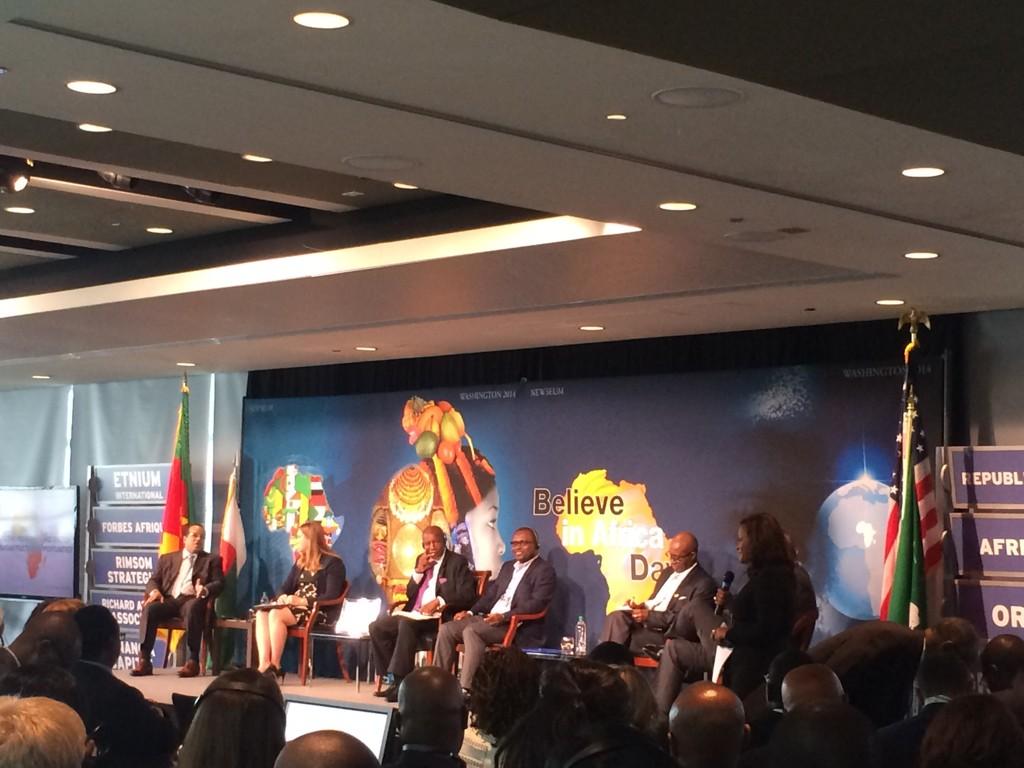
3 August 2014. Increasing agribusiness in Africa was the focus of a panel discussion moderated by African "Believe in Africa Day".
Development Bank Group President Donald Kaberuka on Sunday at

"Believe in Africa" is an African Diaspora-led initiative founded by former U.S. Congressional staffers and African leaders in the U.S. to empower young Africans, educate policy-makers about economic growth on the continent and highlight its gradual rise in the global economy.

AFDB President Donald Kaberuka 

kicked off "Believe in Africa Day"
"How do we work together to increase agribusiness investments now that the policies are in place? That is the question," Kaberuka said. As part of the panel on realizing a new vision for Africa's development, African agricultural leaders from Cameroon, Madagascar and Guinea, along with industry executives, fielded pointed questions from Kaberuka on food security, the use of subsidies to fuel growth and the need for regional integration when it comes to agricultural expansion on the continent.

Side event:
4 August 2014. Washington. The Empowered Africa Dialogue was a day-long event hosted by the U.S.-Africa Network. A discussion group on Agribusiness and Land Grabbing included the following speakers:
  • Jacques Bahati, Africa Faith and Justice Network
  • M. Jahi Chappelle, Institute for Agriculture and Trade Policy
  • Scholastica Haule, ActionAid Tanzania
  • Nina Moses, ActionAid USA, Moderating
Related:
A new report released July 31 from the U.S. Department of Agriculture provides uniform scientific methods for quantifying the changes in greenhouse gas emissions and carbon dioxide storage from various land-management and conservation activities.

The report, Quantifying Greenhouse Gas Fluxes in Agriculture and Forestry: Methods for Entity-Scale Inventory, will help it evaluate greenhouse gas (GHG) conservation programs, develop new tools and update existing tools to help U.S. landowners participate in emerging carbon markets.

The report, available on the USDA website, is the work of 38 experts in the cropland, grazing land, livestock and forest-management sectors across academia and government. It was reviewed by another 29 scientists, federal experts and the public.

Related:
31 July 2014. SciDev. Report sheds new light on gender gaps in agriculture. African research institutes need to provide policymakers with better evidence on what works to close the large gap in agricultural production between men and women, says a report.

The joint report “Levelling the Field: Improving Opportunities for Women Farmers in Africa” delves into the scale and causes of the striking differences between how much men and women farmers produce in six African countries-- Ethiopia, Malawi, Niger, Nigeria, Tanzania and Uganda-- which together make up more than 40% of Sub-Saharan Africa’s population.

The report is published by the World Bank and US-headquartered ONE Campaign and aims at providing policymakers and researchers with an assessment of Africa’s gender gap in agriculture and to address the challenge.

The researchers used a statistical technique called decomposition analysis to evaluate datasets from the World Bank’s Living Standards Measurement Study —Integrated Surveys on Agriculture initiative to document the drivers of gender gap in agriculture for six African countries: Ethiopia, Malawi, Niger, Nigeria, Tanzania and Uganda.


Thursday, July 31, 2014

CCAFS East Africa training in climate-smart innovations

28 July - 2 August, 2014. Agricultural Society of Kenya (ASK) Kisumu Fair.

As part of its 2014 work plan on participatory action research in Nyando climate- smart villages, CCAFS East Africa intends to train 500 women, leaders and entrepreneurs and farmers in climate-smart innovations focusing on three thematic areas; new climate-smart practices and agro-advisories, appropriate on farm tools and technologies; and accessing micro finance and
micro- insurance.

Farmers will be trained on agricultural practices and how agro-advisory services can improve their knowledge in making choices about farm enterprises under climate-smart agriculture.

The specific topics of the Kisumu ASK training are:

  • Appropriate technologies to increase on-farm productivity: e.g. agronomic methods, livestock technologies, farm equipment, post-harvest processing technologies 
  • Climate related risk management through index insurance and microfinance 
  • Agro-advisories and how to integrate them with new and improved agriculture practices

How to build research partnerships that benefit farmers?

9 July 2014. This article was originally published on SciDev.Net and the Southern Times (South Africa). 

True partnerships are vital for linking ‘upstream’ innovation to ‘downstream’ uses, says CGIAR Generation Challenge Programme’s Jean-Marcel Ribaut.

Agricultural research for development spans a broad spectrum of activities — from ‘upstream’ research, generally at universities or advanced research institutes, to much more ‘downstream’ research by plant breeders to put better crops in farmers’ hands.

  • As a result of this spread, activities can become fragmented, with little communication between specialised teams along the research and development (R and D) chain. This is often counterproductive, especially when researchers stretch beyond their area of expertise.
  • In addition, broader and more diverse research portfolios often compromise efficiency and create unhealthy competition for funding. And resulting research projects may never turn into products that improve farm productivity.
  • True and effective partnerships — connecting the right people from complementary teams — is one obvious way to improve R and D effectiveness.
It is important to find right people and teams, and to have adequate financial and human resources to manage partnerships effectively, and as a result believesvagricultural policy research team in African countries should work with a range of partner countries to provide them with support to create policies that will be successfully put into real action.

Demand-driven research needs to strengthen each part of the agricultural industry from production to processing, marketing and to the final consumer. Therefore, key partnerships need to be fostered with other key research organisations, meaning researchers must work more closely development practitioners in agriculture.


More so, governments, policy decision makers and other stakeholders must create agricultural policy clusters, and their mandate must be to provide a knowledge sharing process and information platform to promote innovations, technologies, and best practices that can benefit farmers.
“A key challenge in true partnership is to strike the right balance between management that serves the programme as a whole and creating ownership so all partners can nurture a network spirit.

I must add a necessary note of caution: this model can work only if it builds on strong and well-established institutions, and as a complement to core activities.

Another key element of success is identifying specific research objectives that can be achieved in a given time frame. Our experience also suggests that the benefits of having an independent management team outstrip the cost it entails.


Jean-Marcel Ribaut is director of the CGIAR Generation Challenge Programme, a plant-breeding partnership network hosted at CIMMYT’s headquarters in Mexico. He can be contacted at 

References

[1] Paramjit S. Sachdeva and others Report of the final external review of the Generation Challenge Programme (CGIAR, April 2014)


Agribusiness Africa conference 2014


15 - 16 July 2014. Midrand. The Agribusiness Africa conference offered an opportunity to meet with role-players in the agri-business sector and learn from the experts on how to enhance food security through commercial agricultural practices on the African continent.
Extracts of the programme:

SESSION 1 OVERCOMING LOGISTICAL CHALLENGES WHEN DOING BUSINESS IN SUB-SAHARAN AFRICA
Lester Mouton, President: Agri SA Mozambique on “The importance of primary producers unlocking the food value chain in Africa and understanding logistical changes.”

H.E. Ambassador of France, 
Elisabeth Barbier
was asked to talk about political and 
SESSION 2 REGULATORY ASPECTS WHEN DOING BUSINESS IN SUB-SAHARAN AFRICA
Introduction by Dr Bellah Mpofu, programme manager at FANRPAN.

SESSION 3 DYNAMICS AND CHALLENGES IN FINANCE AND 
FINANCING WHEN DOING BUSINESS IN SUB-SAHARAN AFRICA


AfDB’s NERICA dissemination project receives US Treasury Award

23 July 2014. Washington D.C. The African Development Bank’s New Rice for Africa (NERICA) project received Development Impact Honors from the US Treasury Department in an awards ceremony.

The NERICA Dissemination Project increased domestic production and food security in seven West African countries, namely Benin, Gambia, Ghana, Guinea, Nigeria, Mali and Sierra Leone. The project was selected from a pool of 29 submissions from various multilateral development banks (MDBs). It is the third consecutive year in which an African Development Bank project has won a US Treasury Award.

The US Treasury Department’s Development Impact Honors awards promote the highest standards in development by recognizing outstanding projects undertaken by multilateral development banks. The program seeks to reward excellence in project design and implementation and to showcase the vital work MDBs carry out in communities, countries and regions to support the world’s poorest people.


O.N.U. - NERICA The Seed of Hope (AfDB) from City VIDEO on Vimeo.

Global Initiative for Agricultural Education Formed

Participants of the global expert consultation workshop
on ‘One Agriculture-One Science: A Global Education
Consortium’ held at the University of Florida, Gainesville
17-18 July 2014. Gainesville, Florida, USA. India, Africa and the USA have formed an international partnership across the countries to revitalizing global agricultural education, capacity building and technology transfer.

One Agriculture-One Science: A Global Education Consortium will be made possible with the collaboration of the International Crops Research Institute for the Semi-Arid Tropics (ICRISAT) and top universities from all these continents.

The ‘One Agriculture-One Science’ will see the formation of a consortium of international educators including select universities in the USA, international and regional organizations, and universities in interested regions, especially from the BRICS countries (Brazil, Russia, India, China, and South Africa).

The launch was attended by select experts from land grant state universities in the USA, the Indian Council of Agricultural Research (ICAR), the African Green Revolution Alliance (AGRA), the Regional University Forum for Capacity Building in Agriculture (RUFORUM, a consortium of 42 universities in 19 countries in Africa), US Department of Agriculture, US Agency for International Development, and CGIAR centres.
“The ‘One Agriculture-One Science’ will see the formation of a consortium of international educators including select universities in the USA, international and regional organizations, and universities in interested regions, especially from the BRICS countries (Brazil, Russia, India, China, and South Africa),” Dr K Ramesh Reddy, Graduate Research Professor and Chair of Soil and Water Science Department, UF-IFAS said.

Related:
25 July 2014. African scientists visit UAS, Dharwad. A five-member scientific delegation from Bunda College Malawi, Lilongwe University of Agriculture and Natural Resources, Africa visited the University of Agricultural Sciences in Dharwad and held discussion with the experts here on wide range of topics related to agricultural research and operations.

The team comprising of agronomist Vernon Kabambe, plant breeder Moses Maliro, soil chemist Patson Nalivata, agricultural entomologist Trust Kasambala and agricultural economist Josef Djanza were in UAS Dharwad for four days from July 20 as part of the Obama Singh Initiative as tripartite arrangement between Cornell University, USA, Bunda College, Malawi and Sathguru Consultants, Hyderabad.

On trial: Agricultural biotechnology research in Africa

21 July 2014. SciDev. GM’s potential in Africa impeded by ‘dysfunctional debate’. Opportunities to enhance crop yields and reduce poverty in Africa are being lost because of a “polarised public debate” on the continent, according to a report by the international policy institute Chatham House.

Genetic modification (GM) research projects remain stuck at the field trial stage due to governments’ fears keeping the technology from African farmers, it says.

This “deadlock” of continual field trials has allowed African governments to appease both sides of the GM debate: proponents are pleased research is done, whereas opponents are satisfied that research has not led to products on the market, the report says.
“Part of the problem is that it is a very one-sided debate. Governments are not doing a
good job of providing reliable information and data that contradicts the misinformation campaigns about GM. Politicians and policymakers are wary of stepping into the debate,” says author Rob Bailey, from Chatham House.
The report cites evidence from a survey of ongoing GM research and development projects in selected African countries by the networking organisation FARA (Forum for Agricultural Research in Africa): from 2010 to 2013 none of the surveyed projects had progressed from field trials.
“Many of the opponents of GM crops are not interested in engagement or understanding. They want to eliminate the technology altogether,” says Calestous Juma, an international development expert at Harvard Kennedy School, United States. “This is why the highly restrictive laws were put in place [in Africa] before the technology was given a chance or before there was sufficient evidence either way. It is also the reason why some of the opponents destroy field trials,” he says. “It is because they do not want to see any evidence that might lead to the adoption of the technology. They have made up their minds that biotechnology should be eliminated. The situation is more like war than it is like debate.”
Related:
25/07 BBC Africa 'missing out on biotech green revolution'
25/07 Voice of America Researchers: Africa Genetically Modified Crops Held Back by Scaremongering
21/07 All Africa Africa: On Trial - Agricultural Biotechnology in Africa

Wednesday, July 30, 2014

Technical handbook of domestication and production of diptera black Soldier Fly

15 juillet 2014. Technical handbook of domestication and production of diptera black Soldier Fly Hermetia illucens, Stratiomydae
Domenico Caruso, Emilie Devic, I Wayan Subamia, Pascale Talamond, Etienne Baras Badan penelitian dan pengembangan- IRD

Ce manuel technique a pour objectif de fournir les indications nĂ©cessaires pour la domestication et le dĂ©veloppement de la production de l’insecte Hermetia illucens. Connu Ă©galement sous le nom de Black Soldier Fly (BSF), ce diptère cosmopolite, appartenant Ă  la famille des Stratiomyidae, est un non nuisible.

Saprophage au stade larvaire il est capable de bio dĂ©grader des substrats ou des dĂ©chets organiques divers. Depuis quelques annĂ©es, la valorisation des sous-produits agroalimentaire et le recyclage des dĂ©chets urbains sont devenus incontournables et le potentiel des larves de BSF dans ce domaine n’a pas Ă©chappĂ© Ă  de nombreux chercheurs. Les larves sont capables de traiter et de rĂ©duire les masses de dĂ©chets organiques et leur action diminue aussi significativement les odeurs provenant des matières en dĂ©composition.

Mainstreaming Nutrition in Agriculture Development Plans

Published on 14 Jul 2014

10th CAADP Contributed interview with H.E. Dr Ibrahim Mayaki NEPAD CAADP - FRENCH

Regional Training Workshop to build capacity of Farmer Organizations in selected Agribusiness Models

28 - 30th July 2014. Naivasha-Kenya. Regional Training Workshop to build capacity of Farmer Organizations in selected Agribusiness Models.

Related: SFOAP supervision to East Africa

The Support to Farmer Organizations in Africa Program (SFOAP). The SFOAP is supporting farmers organizations (FOs)' institutional, advocacy and economic capacities at regional, national and continental levels in Africa. It is supporting EAFF National Farmer Organizations. The main phase supports the development of FOs’ economic services to facilitate the integration of smallholder farmers in value chains. During the Supervision mission, IFAD visited the KIRINYAGA Dairy Cooperative in Kenya, member of EAFF, that is benefiting from support of SFOAP Component 3 to critically review the implementation of the Programme by EAFF.

4th RUFORUM Biennial Conference

19 - 25 July 2014, Eduardo Mondlane University in Maputo, Mozambique. Over 600 delegates attended the Fourth Regional Universities Forum for Capacity Building in Agriculture Biennial Conference.

The Regional Universities Forum for CapacityBuilding in Agriculture (RUFORUM) is celebrating its 10th anniversary under the theme, "African Higher Education Week: Transforming Agricultural Education - a Platform for the Way Forward."

See further RUFORUM conference blog.

RUFORUM organized a side session where it interacted 

with the Alumni students who have been in the field to 
listen to them in order to know the changes needed in the 
approach to the career path.
FUFORUM's 10th anniversary celebrations coincides with the AU annual theme of Agriculture and Food Security, as well as the 10th anniversary of the Comprehensive AfricanAgricultural Development Programme (CAADP), a blue print agreed upon, and signed in Maputo in 2003, by African Heads of Statesand Governments for achieving 6% economic growththrough agricultural transformation.

In her keynote address Dr. Dlamini Zuma said that Agriculture over the last decade grew by 4% per annum, lower than the target of 6% as envisaged by CAADP
"African agriculture should and must do much better, to ensure our collective food security, to reverse the trend of being a net importer of food, to create jobs and to contribute towards industrialisation." 
Another keynote address was delivered by Mrs. Graca Machel, a Member of the International Panel of Elders and Former Mozambiquan Minister of Education. The event was officially opened by the Minister of Science and Technology, and representative of the Prime Minister of the Republic of Mozambique.

Dr Wanjiru from AWARD fellowship
Related:
FARA and partners (e.g. NPCA, SROs, ANAFE, RUFORUM and other key regional agencies) are jointly implementing a project known as the Africa Human Capital in Science, Technology and Agripreneurship for Food Security Framework (AHC-STAFF). 
  • The AHC-STAFF seeks to undertake exhaustive studies to determine current and future capacity needed to propel Africa’s agriculture and recommend appropriate capacity strengthening actions to address the identified needs. 
  • The project has adopted a technology capital (within the wider value) chain’ approach to elucidating requisite capacity for technical change needed to uplift Africa’s agriculture. 
  • The project will assess the overall national capacity needs for knowledge/technology generation, knowledge/technology diffusion, and knowledge/technology adoption and utilization in priority program areas of the NAFSIPs. 
  • The assessments will be conducted in all the CAADP post-compact countries over a three-year period, and will furnish credible grounding for comprehensive human capital formation and institutional strengthening. 
In the first year, the following countries will be targeted:
  • ASARECA: Burundi, Democratic Republic of the Congo (DRC), Ethiopia, Kenya, Rwanda, and Djibouti
  • CCARDESA: Angola, Lesotho, Malawi, Mozambique, Namibia, Tanzania and Zambia
  • CORAF/WECARD: Cameroon, Burkina Faso, Gabon, Ghana, Guinea Bissau, Liberia, Nigeria, Senegal, Sierra Leone, The Gambia
  • NASRO: Tunisia, Mauritania

Tuesday, July 29, 2014

Establishing farmers’ agricultural banks at the country or regional level in Eastern Africa

16 July 2014. Nairobi. Fin4Ag Conference. Session S49: The East African farmers’ challenge: establishing farmers’ agricultural banks at the country or regional level in Eastern Africa: prospects and practical steps ahead.

EAFF commissioned a study in 2013 to explore agricultural financing models across the region: Investigating agricultural financing models and approaches for farmers and farmer organizations in Eastern Africa. The study generated various ideas on possible viable models to be scaled out. Despite these initiatives, a comprehensive solution to the challenge of access to affordable credit still eludes the smallholder agricultural sector. Another study was commissioned by EAFF on the Foreign Direct investment in agriculture in 5 countries of the sub-region.

During a session at the Fin4Ag Conference concrete proposals for an agricultural bank and policy for agricultural financing were discussed.

Highlight: the Oromia Co-operative Union by Tadesse Meskela General Manager.

A similar presentation was made during session 3 of the 2nd African Continental Briefing (13 July 2014): The banking service to its 190 member cooperatives by Dessalegn Jena, Deputy Manager Accounts & Finance, Oromia Coffee Farmers' Co-operative Union (OCFCU) and EAFF 2nd Vice President.

In 1999, Oromia Coffee Farmers' Co-operative Union was established with 35 member co-operatives, the first of its kind in Ethiopia, and Tadesse was appointed as General Manager. Membership has recently risen to 74 co-operatives, representing 68,691 smallholder farmers with a total of 343,455 family members.
"Oromia is the best example of how farmers can do business". 
Philip Kiriro, President of EAFF

Related:
Black Gold tells the complex story behind an attempt to make globalization work for the producers of the second most valuable traded commodity for developing countries in the world.

Nowhere is the disparity of the coffee industry more evident than in Ethiopia, the birthplace of coffee. Tadesse Meskela manages the Oromia Coffee Farmers Cooperative Union, representing more than 74,000 coffee farmers. The union buys coffee from 101 individual cooperatives, spread across southern Ethiopia. Black Gold follows Meskela on his mission to save struggling coffee farmers from bankruptcy.

Monday, July 28, 2014

Food 4 Growth Forum 2014

14 – 16 July 2014. Australia Africa Conference 2014. Promoting strategic engagement and partnership between government, academia and business.

The Australia-Africa Universities Network focuses the engagement of Australian universities in sub-Saharan Africa to enable the provision of specific expertise across areas of priority for Australia and Africa. Key objectives for the Network are:
  • Provide an intelligence and advisory portal for government institutions, the corporate sector and media to access, via a ‘one-stop-shop’, a range of expertise on Africa.
  • Develop institutional research partnerships on Africa.
  • Develop capacity building and training programs for example in governance, public sector reform, education, mining, agriculture and health.
  • Produce innovative policy solutions through position papers with key academics, non-government organisations, business and political representatives.
  • Provide post-training support for African scholars, including an alumni network, linking with African communities in Australia as appropriate.
Panel Discussion Three: Health, Nutrition and Food Security: optimal policies to improve agricultural production to enhance nutrition and food security and harnessing emerging markets.
Objective: The session determined optimal governmental policy interventions in agriculture to maximise 
food output and ensure its distribution in such a way to provide food security to the population. The 
contribution of food security to good health outcomes was considered, as will the role of the private 
sector in achieving these outcomes

Related:


16 -17th June 2014. Brisbane Australia. The Food4Growth (F4G) Forum was held on  and was an event hosted by Australia's national science agency, CSIRO, supported by partners in the Australian Government.

This Forum was a lead-in event to the G20 Meeting of Agricultural Chief Scientists (MACS), later the same week. The MACS is an official G20 event in the lead-up to the G20 Leaders' Summit to be held in Brisbane in November 2014.

The F4G Forum was an opportunity for business and science leaders to explore the linkages between agricultural productivity, sustainability, food security and economic growth in both the developed and developing world. The meeting also drew upon the insights arising from the FAO/OECD review on food security currently underway for the Donor Working Group of the G20.

The Forum enabled a sharing of experiences in public and private sector stimulation of agri-innovation and inclusive market development. Forum participants crafted a communique on opportunities for better science - business collective actions, which were considered at the G20 MACS Meeting on 19/20 June 2014. The communique is available here.

Key messages developed through Food4Growth and delivered to the MACS included:
  • encouragement to take a food systems perspective, building the links from production to consumption, reflecting the role of small and large-scale farms and considering the links between agriculture, environment and society
  • that MACS provide a unique and critical opportunity to coordinate and align research and innovation efforts across the G20 (with appropriate links beyond) and to provide strategic oversight of efforts that identify and fill gaps in the global agricultural science capability that underpins food and nutritional security
  • the importance of better monitoring, foresight and scenario analysis capabilities to inform decision-making (across scales) in research, business and government
  • the ongoing critical role for global public goods in the agricultural science domain
  • considerable attention is needed on the issue of brokering linkages between science, business and development outcomes. A significant capability gap was recognised in the skill set, incentives, institutional mechanisms and investments to effectively broker partnerships, dialogue and knowledge synthesis that is needed to speed up and scale up the necessary innovation.
MACS Communique 328.7 KB
Food4Growth Communique

Participants included delegations from G20 countries and G20 guests (Argentina, Australia, Brazil, Canada, China, European Union, France, Germany, Indonesia, Italy, Japan, Mexico, Myanmar, New Zealand, Russia, Spain, United Kingdom, United States of America), APEC economies (Hong Kong China, Malaysia, Chinese Taipei, Vietnam), International Organisations (International Maize and Wheat Improvement Center [CIMMYT], Forum for Agricultural Research in Africa [FARA], Food and Agriculture Organization of the UN [FAO], Global Crop Diversity Trust [GCDT], Global Forum on Agricultural Research [GFAR], International Treaty on Plant Genetic Resources for Food and Agriculture [ITPGRFA], and Organisation for Economic Co-operation and Development [OECD]).
Related:
Uploaded on 17 Jun 2014
International scientists from nations participating in the G20 travelled around southern Queensland today to look at agricultural businesses.

The Agribusiness Incubation Trust (AgBIT) Limited Zambia consortium

19 July 2014. Lusaka, Zambia. The government of Zambia and the Agribusiness Incubation Trust (AgBIT) Limited Zambia consortium have launched a centre to develop the agriculture sector and support small and medium entrepreneurs (SMEs) in Chongwe.

The Agribusiness Incubation Trust centre will provide strong business mentorship to SMEs, linking smallholders to market, strengthen the supply chain and deliver quality business development services to enterprises. The centre is a unique public-private partnership established with support of Danish Foreign Ministry and the Danish International Development Agency through the Universities Business and Research in Agricultural Innovation facility. AgriBIT Limited is Zambia’s pioneer agribusiness incubator, focused on accelerating innovation and the growth of scalable enterprises in the sector.
At the same occasion, Forum for Agricultural Research in Africa (FARA) executive director Yemi Akinbamijo called on the consortium to offer up-to-date skills techniques and monitor support to its incubatees. Dr Akinbamijo said FARA will continue supporting and partnering with Government as AgBIT undertakes its work of building competitive agribusiness SMEs globally, particularly in Zambia.