Platform for African – European Partnership in Agricultural Research for Development

Monday, July 11, 2016

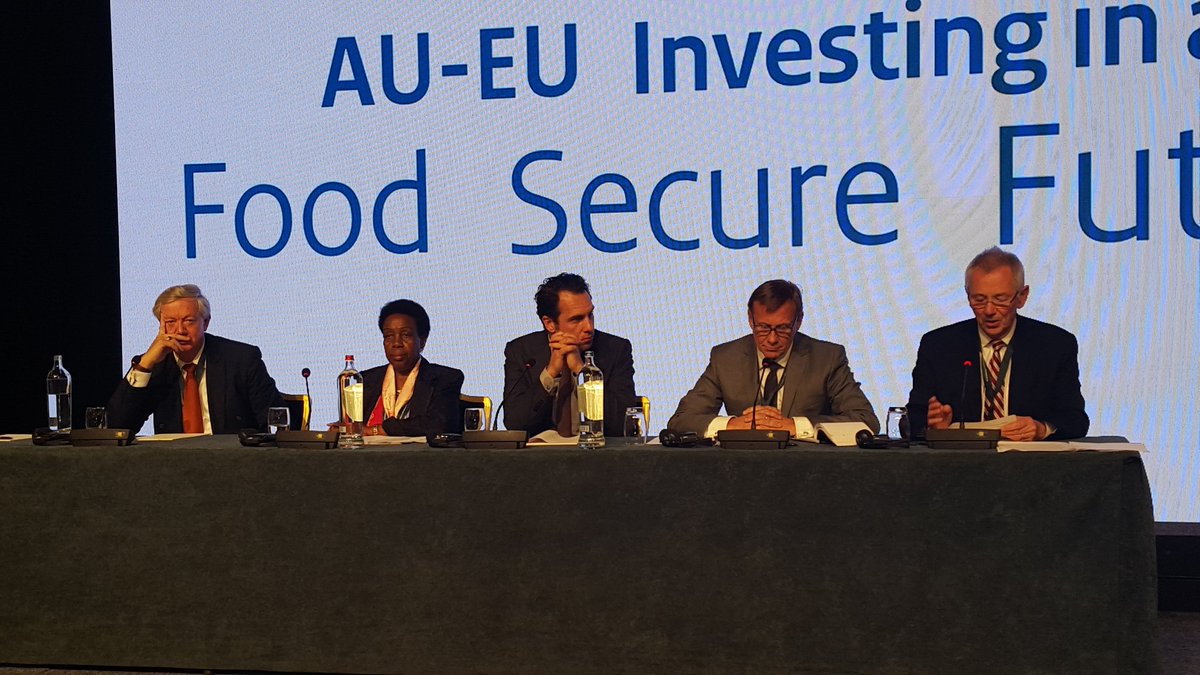
Closing panel of the AU-EU Conference on Investing in a Food Secure Future

Closing panel
6 July 2016. High Level Ministerial segment.  The Government of the Netherlands, in its role as EU Presidency 2016, has taken the initiative to advance AU - EU cooperation in the field of agriculture, and place special emphasis on the role of agricultural policy cooperation in food security and nutrition improvement.

This agricultural policy cooperation seeks to support governments, farmers, private sector, scientists, businesses, and civil society, as well as regional blocs and international organizations, in adjusting agricultural, forestry and fisheries practices, food systems and social and economic policies in order to reach these goals.

Ministerial meeting
The Conference was built around a two-day Experts’ segment followed by a High Level Ministerial segment on the third day, giving political orientations to improve AU-EU agricultural cooperation and build on previous international efforts and existing structures.

Following Ministers participated in the High Level Ministerial meeting:

  • H.E. Deo-Guige RUREMA, Minister of Agriculture and Livestock of BURUNDI
  • H.E. Henry Eyebe Ayissi, Minister of Agriculture and Rural Development of CAMEROON
  • H.E. Henri DJOMBO, Ministre de l’Agriculture, de l’elevage et de la Pêche, Republique de CONGO
  • H.E. Mboumba NzienguiI Mathieu, Ministre de l'Agriculture GABON
  • H.E. Jacqueline Marthe Sultan, Ministre de l’Agriculture GUINEA
  • H.E. Lisemelo 'Mapalesa MOTHOKHO, Minister of Agriculture and Food Security LESOTHO
  • H.E. Audu I. Ogbeh OFR, Minister of Agriculture and Rural Development NIGERIA
  • H.E. Gerardine Mukeshimana, Minister of Agriculture and Animal Resources RWANDA
  • H.E. Lam Akol Ajawin Agongdit, Minister of Agriculture and Food Security SOUTH SUDAN
  • H.E. Ibrahim Adem Ahmed Eldekerei, Minister of Agriculture & Irrigation SUDAN
  • H.E. Vincent Ssempijja, Minister of Agriculture, Animal Industry and Fishery UGANDA
Themes of cooperation
  • Climate smart agriculture
  • Fighting Food Losses and Waste
  • Improved Market Access
  • Responsible Private Sector Investment
  • Science and Innovation for Agricultural Development
The Conference put forward partnerships on the main themes of AU-EU cooperation, in order to accelerate the implementation of relevant agreements and actions as well as to strengthen the cooperation with privates sector, especially through public private partnerships. This will be a rolling agenda for the AU-EU cooperation the coming years.
  • The Netherlands, as co-organizer of the AU-EU Investing in a Food Secure Future Conference,
    committed to funding two to four Agri-business incubators for Africa, and invited to further exploring this approach with other partners.
  • The European Commission committed to deepen their work in the five thematic areas, especially via EC Funds, mainly EDF, ENI for North Africa, the Global Public Goods Fund, Agrifi, and Funds of the European Investment Bank.
  • The Dutch Topsector Agri-food and Horticulture will support the set up of a AU-EU Business Forum involving Government, private sector, farmers organizations, and financial institutions;
  • UNECA offered a platform for accelerating technology transfer on thematic issues, including
    on Food Loss and Waste.
  • And as a next step facilitate the continued dialogue called for by the Conference, by bringing a biennial Ministerial AU-EU ‘Roundtable’ focused on implementation to life, aimed at a strong and lasting partnership of AU and EU around the five main themes of cooperation.
Highlight:
Creation of two new research-industry-public partnership incubators.
Set up a Africa-EU multistakeholder agricultural business platform focused on market access
  • This proposal involves establishing two new incubator programs in each of the 54 countries. 
  • A science-driven approach is the only way to transform agricultural markets quickly enough. In order to achieve this transformation, there needs to be a new paradigm for commercializing science to address critical questions asked of scientists. 
  • Innovation systems require bringing relevant actors together to achieve the kind of big impact Africa is looking for. While a number of models have already been tested, only one of those models is implementing innovation platforms. 
  • Furthermore, there is a need to engage the private sector, research universities, and policymakers in most effectively designing incubation programs. 
  • Currently, there are a number of incubators around a variety of value chains, including coffee, banana, livestock, vegetables, and agroforestry products. 
  • These incubators are creating direct jobs, supporting SMEs, and are often the basis for devleoping agribusiness curricula.
References:
Highlight:
ColeACP announced at the Ministerial meeting the approval by the EC/DG-DevCo (Directorate General Development Cooperation) of the ColeACP programme on "Competitiveness through sustainable business" (European Development Fund/EDF).
“In our new programme, the economic dimension of the business is fundamental. So far, we have devoted ourselves to its technical dimension by supporting businesses in the field of food safety, traceability and the implementation of international standards. With the new programme, we also want to help them integrate all the economic data into their management and decisionmaking. The objective is competitiveness. In other words, ensure that the technical skills acquired by businesses are used to improve their economic performance and, in addition, to help unlock the potential of agro-industrial production in developing countries. 
The support of COLEACP will therefore extend to entrepreneurial development as a whole, including dimensions such as market analysis, marketing, the cold chain, logistics, invoicing and administration. This diversification is designed to set up a virtuous circle to resolve the main problem of SMEs in Southern countries - access to credit. By working to consolidate their economic pillar, COLEACP will help improve their bankability, to facilitate the raising of funds from financial institutions, and thus leverage their development. The aim, in fact, is to prepare ACP businesses so that they are in a position to take advantage of opportunities that will inevitably arise for them in the coming decades.”  Guy Stinglhamber, General Delegate of COLEACP

Farming for the future of Friends of the Earth

Farming for the Future: Organic and Agroecological Solutions to Feed the World
This report was written by Christopher D. Cook, Kari Hamerschlag, Friends of the Earth U.S. and Kendra Klein, Friends of the Earth U.S
2016, 23 pages
The science is clear: Feeding the world sustainably requires that we protect the ecological resources that are essential for producing food now and in the future. What’s more, research consistently shows that hunger is not a problem of overall supply of food, but results from poverty, lack of democracy and unequal access to land, water and other resources. 

Rather than producing more food under unequal and ecologically destructive conditions, the solution to hunger hinges on creating a more sustainable, democratic and fair food system for all.
Despite the many proven benefits of ecological farming, there is a massive disparity in research funding for organic in comparison to conventional agriculture. Of the $49 billion invested globally in agricultural research, less than one percent goes to organic farming.164 In the U.S., less than two percent of public agricultural research funding goes to organic and biologically diversified farming.165,166 Agroecological farming approaches have achieved high levels of environmental performance and productivity despite minimal funding. Increased research could improve yields and environmental gains beyond already proven success. (page 17)
Presentations
Learn from top scientists and thought leaders on the science of sustainable food production and a comprehensive approach to creating a healthy, resilient food system to feed all people, now and into the future.

The AfDB strategy for Africa’s agricultural transformation


22 May 2016. Abidjan, Côte d’Ivoire.  The Board of Directors of the African Development Bank
Group (AfDB) has approved an agricultural transformation strategy for a competitive and inclusive agribusiness sector that creates wealth, improves lives and secures the environment. The document was widely reviewed by global stakeholders, peer institutions and partners as well as through regional consultations held in Rabat, Kinshasa, Lusaka, Dar es Salaam and Accra.

Focusing on transformation, scaling up agriculture as a business through value addition, led by the private sector and enabled by the public sector, and using innovative financing mechanisms, the strategy aims to end hunger and rural poverty in Africa in the next decade.

It is the second of the Bank’s High 5 priorities – Light up and power Africa, Feed Africa, Industrialize Africa, Integrate Africa, and Improve the quality of life for the people of Africa – a blueprint for the implementation of its Ten Year Strategy 2013-2022.

Realizing the objectives of the strategy would involve increased productivity; value addition; investment in infrastructure; creating an enabling agribusiness environment; catalyzing capital flows; ensuring inclusivity, sustainability and effective nutrition; all in a coordinated manner.
  • The idea is to drive transformation through 15 priority commodity value chains in given agro-ecological zones specifically to achieve self-sufficiency in key commodities such as rice, wheat, fish, palm oil, horticulture, cassava; move up the value chain in key export-oriented commodities like cocoa, coffee, cotton, cashew; create a food-secure Sahel in sorghum, millet, livestock; and realize the potential of the Guinea savannah in maize, soybean and livestock.
  • The Feed Africa Strategy makes a strong case for reversing the situation of a continent that spends US $35.4 billion on food imports annually despite being home to 65% of the world’s undeveloped arable land.
  • The total investment for the realization of the transformation agenda over 10 years is estimated at US $315-400 billion with annual returns of US $85 billion, when fully funded.
  • The Bank will itself invest US $24 billion and leverage additional investments through equity, quasi equity, debt and risk instruments to catalyze investments at scale from the private sector and with co-financing from traditional donors and new players. 
  • The identified financing gap estimated at US $23 billion can be met using innovative de-risking tools and blended financing from combined sovereign, pension and private equity funds.
Related PAEPARD blog post:
23-27 May 2016. Lusaka. 2016 AfDB Annual Meetings to focus on energy and climate change


Resilient Cities 2016


6 - 8 July 2016. Bonn, Germany. Over 300 participants from more than 40 countries gathered for the seventh year in Bonn to discuss urban resilience. Three main strands of work were launched:
  1. how to finance resilience; 
  2. how to ensure that resilience is inclusive; 
  3. how to move forward on the global agenda.
After three days it became clear to all that these issues are fundamentally interconnected. It is impossible to move forward the global agenda without the involvement of citizens, and in particular slum dwellers and members of marginalized communities that are often the backbone of local economies. The case of Accra, in Ghana, where the so-called “informal economy” makes up a very large part of the local economy, is telling. Thanks to the help of WIEGO, hawkers and street sellers got together, identified their priorities and gradually conquered a sit at the table.

Resilience projects can often be outside the financial reach of local authorities. Lots of money is needed to build new, green and resilient infrastructure, as it is to upgrade existing infrastructure. How to make this connection happen? People, again. Their capacity, which needs to be build; their involvement in the planning and implementation of the project, which is crucial to ensure long-term success and therefore financial viability of the project.

It is not (or not only) about making “prettier” projects that would appeal to potential investors, but rather about creating the environment in which innovative financial tools can be developed to leverage existing resources and even bridge the income gap in many emerging economies, as was suggested during a workshop on City Innovation Platforms (CIPs) for African infrastructure risk and resilience.

Extract of the programme:

PANEL: Inclusive and Resilient Urban Development Forum - Slum upgrading achieving resilient cities for all in Africa
Session Description
  • Julian Baskin, Head of Programme Unit, Cities Alliance, Brussels, Belgium
  • Ellen Oteng Nsiah, Executive Director, Housing the Masses, Accra, Ghana
  • Sipliant Takougang, National Coordinator Urban Governance Programme, Ministry of Urban Development and Habitat, Yaounde, Cameroon
  • Wolfgang Ryll, Principal Sector Economist, KfW, Frankfurt, Germany
PANEL: Resilience planning in small and intermediate-sized cities in Sub-Saharan Africa
Session Description
  • Katharina Rochell, Urban Resilience Specialist, UN-Habitat, Nairobi, Kenya
  • Joost Möhlmann, Head of Programme, UN-Habitat Mozambique, Maputo, Mozambique
  • Julian Baskin, Head of Programme Unit, Cities Alliance, Brussels, Belgium
  • Sean O’Donoghue, Acting Manager of the Climate Protection Branch, Environmental Planning and Climate Protection Department, eThekwini Municipality/Durban, South Africa 
  • Daviz Mbepo Simango, Mayor, City Council of Beira, Mozambique
WORKSHOP: City Innovation Platforms (CIPs) for African infrastructure risk and resilience
Session Description
  • Tom Herbstein, Programme Manager, Cambridge Institute for Sustainability Leadership (CISL)'s ClimateWise, Cambridge, UK Leadership (CISL)'s ClimateWise, Cambridge, UK
  • Vanessa Otto-Mentz, Head: Group Strategy Unit Santam, Bellville, South Africa
  • Kobie Brand, Regional Director, ICLEI Africa, Cape Town, South Africa
  • Butch Bacani, Programme Leader, The UNEP FI Principles for Sustainable Insurance Initiative (UNEP FI - PSI), Geneva, Switzerland

Friday, July 8, 2016

The vital role of adapted and resilient pastoral systems

1 July 2016. Ouagadougou, Burkina Faso. The workshop on Policy Dialogue and Strengthening of the capacity of pastoralists’ networks and organizations reaffirmed the vital role of adapted and resilient pastoral systems in the face of climate change. The three-day gathering workshop was organized by the Department of Rural Economy and Agriculture (AUC/DREA), through Pastoralism Division, under the theme: “Resilience and adaptation to drought conditions and pastoralists systems in Africa”. It was attended by various experts and actors, namely representatives of the AUC, Regional Economic Communities (RECs), pastoralist organisations, Farmers’ Organizations, National Governments and Civil Society Organizations.

The main objective of the workshop was to understand the mechanism for assessing and predicting risks, monitoring and early warning in pastoralists’ regions. The workshop provided the opportunity for the creation of platform for exchanges, dialogues and cooperation among African pastoralist organizations and networks which would facilitate the management, sharing and dissemination of knowledge and best practices of pastoralism.

Delivering the opening remarks on the behalf of AUC, Dr Ahmed ELMEKASS, underlined the importance of pastoralism despite the vulnerability of pastoralists and hence the need for promotion of sustainable pastoralism to take the place it deserves in the debate on development of natural resource management strategies.
“Some of the critical elements necessary to strengthen the capacity of pastoralists include livestock development, policy and governance, gender balanced development, equitable resource tenure, access to social services in addition to efficient resource use”. Mr. Djibo Bagna, Head of Board of the network of peasant organizations and producers in West Africa (ROPPA) 
After three days of intensive sessions, strong recommendations have been formulated to key targets. The role of the African Union Commission in addressing the plight of pastoralists through the preparation of the Policy Framework for Pastoralism was acknowledged. Also African governments were called on to support the implementation of the Policy Framework by committing adequate resources as well as developing suitable policies and laws to enhance cross border livestock mobility that would go a long way to boost food security and nutrition.

As key messages, the workshop noted the need for concerted actions aimed at mitigating the effects of climate change including technical preventive measures and aspects of socio-economic interventions to ease the vulnerability of populations inhabiting arid and semi-arid zones to ensure resilience and adaptation to drought conditions and pastoral systems in Africa.

Delegates noted pastoralism as a business that is a continuum along the demand and supply value chains that would benefit from investment in public infrastructure and provision of basic services to the pastoral communities. Delegates underscored the need for a robust advocacy campaign with solid and scientific evidence, capacity building, favorable policies, structured investments and technological innovations to make pastoralism an attractive venture for women and youth as well as for financial support through credits. The workshop recognized the sensitive land tenure systems within Member States which affect transformation towards sustainable pastoralism in arid and semi-arid zones.

A key recommendation of the workshop was that AUC, in collaboration with RECs, should provide the needed support to cascade the AUC policy framework on Pastoralism in Africa in the New Generation of Regional Agriculture Investment Plans (RAIPs)/National Agriculture Investment Plans (NAIPs) under theComprehensive African Agriculture Development Programme (CAADP).

Has ECOWAP contributed to improve Nutrition?


Has ten-year implementation of the regional agriculture policy of the Economic Community of West African States (ECOWAP) contributed to improve Nutrition?

Achieving nutrition outcomes through agriculture and food systems in West Africa
Publisher: FAO
Year of publication: 2016
Pages: 28 p.
Download:
Abstract:
In 2005, the Economic Community of West African States (ECOWAS) elaborated its first regional agricultural policy (ECOWAP), in line with the Comprehensive Africa Agricultural Development Program (CAADP), to boost West Africa agricultural sector, improve livelihoods and reduce food insecurity and malnutrition. After 10 years of implementation, it became necessary to assess the progress made and the impacts of the Policy. Considering also the new developments at global and regional level in term of commitment to fighting hunger and malnutrition, such as the Sustainable Development Goals (SDGs); the Rome Declaration and Framework of Actions of the Second International Conference on Nutrition (ICN2); the African Union (AU) 2014 Malabo Declaration with its implementation strategy and roadmap; ECOWAS Hunger Free Initiative and other laudable initiatives such as the CAADP Nutrition Initiative.

This assessment represents an opportunity to reinforce nutrition priorities which may not have been fully captured and addressed in the first version of the ECOWAP. The analysis reviews the contribution of ECOWAP to the prevention and reduction of malnutrition with relevant contributing factors. It also proposes key nutrition interventions to mainstream into the new ECOWAP

The Livestock Development Strategy for Africa

14 June 2016. Kigali. Staff of the International Livestock Research Institute (ILRI) helped organize a side event during the 7th Africa Agriculture Science Week on ‘How research is contributing to Livestock Development Strategy for Africa (LiDESA)’.

The side event showcased contributions by projects under the CGIAR Research Program on Livestock and Fish and their local partners in four East and Southern Africa countries (Ethiopia, Uganda, Tanzania, Rwanda and Swaziland) to the LiDESA objectives, which include:
  • Attracting public and private investments along the different livestock values chains
  • Enhancing animal health and increasing the production, productivity and resilience of livestock systems
  • Enhancing innovation, generation and utilization of technologies, capacities and entrepreneurship skills of livestock value chain actors
  • Enhancing access to livestock markets, services and value addition
By 2050, milk consumption is likely to triple in East Africa, while consumption of monogastric foods (pork, poultry meat and eggs) will increase at least four-fold. Replacing Africa’s current 90% of locally produced livestock commodities with imports from outside Africa is unfeasible and unaffordable. Among the challenges facing Africa’s livestock sector are deficiencies of one kind or another in the following areas:
  • livestock breeds, productivity, health systems, disease control
  • land, feed and water resources and measures to reduce environmental harm
  • input supplies and service delivery for animal agriculture
  • livestock value addition
  • livestock market information and market infrastructure
  • competitiveness of African livestock products
  • meeting sanitary and phyto-sanitary standards
  • policy, legislative and institutional frameworks impinging on the livestock sector
  • capacity in livestock research and development
Discussions at this AASW7 side event by these pan-African livestock R&D organizations (AU-IBAR and FARA, ILRI, ICARDA and CIAT) and the Rwanda Agriculture Board (RAB), which implements Rwanda’s national policy on agriculture and animal husbandry to deliver research and extension services, capacity development and partnerships—focused on how the national and international agricultural research systems could collaborate better.

A wrap-up session summarized the following key gaps and opportunities.
  1. Partnerships are key to achieve our goals and have impact on the ground. National partners should be involved in strategic aspects of projects and programs right from the inception phase so that they are part and parcel of the strategic agenda rather than looped in only at the implementation phases of the work, as is currently common.
  2. Science alone is not enough to bring about the transformational change we envisage. We need to strengthen country systems, particularly implementation by line ministries.
  3. Livestock research should also address the environmental footprints associated with livestock production, such as greenhouse gas emissions.
  4. Research on regional livestock trade issues, which are often ignored, should be strengthened because these aspects are important in resolving non-tariff barriers that hinder regional and cross-border trade.
The plenary recommended that:
  • LiDESA set up a platform for stakeholders from the 54 member states
  • FARA backstop the platform as a key science partner and work with the platform to make a case for larger investments in the livestock sector
  • FARA strengthen its livestock agenda and raise the visibility of this agenda within FARA-organized events
  • The relevance of livestock research be validated to ensure it is driven by the needs of target communities and their objectives.
View posters from this event:
Background
The Livestock Development Strategy for Africa (LiDESA) has the the goal ‘to transform the African livestock sector for enhanced contribution to socio-economic development and equitable growth’.

Five continental agencies that can help meet the LiDESA objectives are AU-IBAR, which is championing the LiDESA strategy in line with its role to support and coordinate livestock use; the Forum for Agricultural Research in Africa (FARA), which is responsible for coordinating and advocating agricultural research-for-development; and three CGIAR centres—ILRI, which works for better lives through livestock; the International Center for Agricultural Research in the Dry Areas (ICARDA), which promotes sustainable livestock development in the dry areas; and the International Center for Tropical Agriculture (CIAT), which works to improve tropical forages for better livestock feeding.

NEW VIDEOS ON CATTLE AND ONION

Accessagriculture uploaded five new cattle videos on their platform and they are available in English,
French, Hausa, Peulh/Fulfulde, and Yoruba languages. Below is the titles of these new videos:
  1. Keeping milk clean and fresh
  2. Taking milk to the collection centre
  3. Managing cattle ticks
  4. Keeping milk free from antibiotics
  5. Pure milk is good milk
Accessagriculture also uploaded six new videos on onions and they are currently available in
English, and French languages. You can therefore access the following videos:
  1. Making more money from onions
  2. The onion nursery
  3. Installing an onion field
  4. How to make a fertile soil for onions
  5. Managing onion diseases
  6. Harvesting and storing onions
The AA website has produced as per today some 124 videos , translated in 66 different local languages spoken across the world, and that can be accessed freely.

To be able to download one of the videos available, simply register on www.accessagriculture.org.

Monday, July 4, 2016

Zonal workshop on the Aflatoxin Challenge in Northern Uganda

26th May 2016. Lira, Northern Uganda. The National Crops Resources Research Institute (NaCRRI) in partnership with International Institute of Tropical Agriculture (IITA) and Ngetta Zonal Agricultural Research and Development Institute (NGEZARDI) held a Zonal workshop on the aflatoxin challenge.

The zonal aflatoxin workshop was attended by a total of sixty one (61) participants, including aflatoxin experts drawn from 3 NARO National institutes and Ngetta ZARDI. 

See the proceedings of this meeting 
Aflatoxin Challenge in Northern Uganda and the role of communication on mitigating the aflatoxin induced decline in house hold productivity. Theme: Improving Health, productivity and Food Security through Zonal Efforts to Mitigate Aflatoxin Contamination.

The objectives of the workshop were: 
  1. to sensitize stakeholders in the production value chain, high-level decision-makers and industry leaders on the magnitude of the aflatoxin challenge in the zone; 
  2. engage multi-stake holder platforms, experts and relevant stakeholders on setting zonal priorities and initiating work on the zonal action plan. 
The workshop identified priority areas necessary for combating the aflatoxin challenge and the proposed interventions for dealing with the challenges were also proposed. The challenges identified include low awareness among key actors / stakeholders, knowledge gaps and ignorance inadequate capacity in human resources, systems and infrastructure and weak regulatory frameworks. 

The workshop proposed interventions which included: 
  • Regulatory system to show where Aflatoxin is and how much, determine risk to justify intervention, 
  • awareness raising campaigns, 
  • institutions and individuals to champion costs and share data. 
  • Communication to the farmers - to get buy-in from the farmers and enhancing awareness creation through targeted education, 
  • knowledge sharing; mass media etc, to include food safety (aflatoxin).
Communication challenges
  • Aflatoxins are colourless and odourless 
  • Aflatoxins may form even before visible mould growth; BUT not all mould results in toxin 
  • Only through analysis (mostly lab BUT now also field base) are aflatoxins detected 
  • Translating survey results and risks in a way that is informative for a majority of stakeholders is a challenge. everyone should be concerned 
  • Control measures show rarely immediate or visible effect 
  • Management practices – do make grains cleaner 
  • Bio-Control - Its not easy to communicate easy how the bio-control works in simple terms to the audience without illustration
  • Control measures are mostly labour (management) or capital intensive (inputs) 
  • A large number and categories of stakeholders and sectors need to co-operate and collaborate to effectively address aflatoxin (effect in health; solutions in agriculture)
Important lessons
  • Finding a local concept for aflatoxin (using already known concepts, often hard to describe in local language) 
  • Researchers might not be the best communicators of this local information 
  • Use of a combination of communication media and methods builds understanding 
  • Innovation Platforms, Learning Alliances, multi-stakeholder processes – will be of central importance 
  • Finding a local concept for aflatoxin (using already known concepts, often hard to describe in local language) 
  • Researchers might not be the best communicators of this local information 
  • Use of a combination of communication media and methods builds understanding 
  • Innovation Platforms, Learning Alliances, multi-stakeholder processes – will be of central importance

Experience Sharing on ICT4Ag

28 June until 1 July 2016. Wageningen, the Netherlands.This CTA workshop was to help document the experiences across the seven activities for cross-border and cross-sectoral learning and exchange across ACP countries.

Five grants were awarded following a call in 2015 and the activities have been implemented between August 2015 and October 2015 in Antigua, Belize, Barbuda, Trinidad and Tobago, Burkina Faso, Ivory Coast, Ghana, Mali, and Sudan.

The granted organisations were:
  • eLEAF Competence Centre, a Netherlands-based high-tech company that uses reliable, quantitative data on water and vegetation coverage to support sustainable water use, increase food production and provide environmental protection systems, will be scaling up its satellite-based information services at the Gezira Irrigation Dam in Sudan to provide targeted delivery of extension services to farmers. Read more.
  • RONGEAD, a France-based international network system made up of NGOs, technical specialists, international institutions and businesses that provides market information services, will use the grant to improve its current initiative and scale it up through market analysis, training and capacity building, provision of information and advice and delivery of a business intelligence service to improve the competitiveness, profitability and ability of smallholder farmers to manage business risks in food chains in West Africa. Learn more.
  • Syecomp Business Services, a private-sector provider of geographic information system (GIS) services based in Ghana, will use its grant to develop a proof of concept and explore business models for the adoption of geospatial technology (GIS/global positioning system applications), dissemination of agro climatic information and mFarm actor-chain interactions in Ghana.Read more.
  • The University of West Indies, a public-sector research institute located in Trinidad and Tobago, will use its grant to extend and scale up an existing suite of web and mobile applications (mFisheries) for small-scale fisheries. It will also explore a novel co-management delivery model for ICTs amongst various agents in the small scale fisheries ecosystem in the Caribbean. Read more.
  • Yam Pukri, a non-governmental organisation (NGO) based in Burkina Faso, will use the grant to improve the monitoring and implementation of agricultural policies using ICTs, thereby empowering smallholder farmers to contribute to the agricultural and rural development policy processes. Read more.
In 2015, CTA followed up with a second activity that targets mobile applications in specific as a result of the ubiquitous nature of the mobile technology in almost every household, particularly in developing regions, such as Africa. Two mobile applications were chosen for this proof-of-concept activity:
  • Farmerline Ltd. Farmerline has a mobile-web based application that communicates timely and relevant agricultural information (such as weather alerts, best farm practices, financial tips, market prices and market access) to farmers. Its challenge lies in ensuring mobile app users are fully capable of using and benefiting from the functions of the app. Read more.
  • Ensibuuko. It is an early start-up technology enterprise that facilitates development solutions geared to increasing access to finance and information services to smallholder farmers. With its core banking and information platform, “Mobile Banking Information Systems” (MOBIS), Ensibuuko seeks to increase access and efficiency to financial services and information to both the rural financial institutions and farmers. Ensibuuko won the first ‘Hackathon’ organised by CTA during the ICT4Ag Conference 2013. Their main goal for the Apps4AgLO was to build capacity of target users to ensure successful adoption and use of MOBIS platform to improve agricultural productivity. Read more.

Saturday, July 2, 2016

AU-EU Investing in a Food Secure Future

4 - 6 July 2016. Noordwijk, the Netherlands. The Government of the Netherlands, the African Union Commission and the European Commission organised the conference: AU-EU Investing in a Food Secure Future. 

Further information about the conference can be found in the back ground note. Click here.

The programme can be found here - Click here

The conference had a two-day Experts' segment followed by a High Level Ministerial segment
on the third day, to give political orientations to improve AU-EU agricultural cooperation and build on previous international efforts and existing structures.

It focused on the following five themes (and sessions):
  1. SESSION I: Climate-Smart Agriculture (CSA); click here for paper.

    dr. Misael Kokwe: Download presentation (PDF, 1.1mb)
    mr. Palmier: Download presentation (PDF, 1.8mb)
    ms. Lillian Beauttah: Download presentation (PDF, 0.9mb)
  2. SESSION II : Reducing Food Losses and Waste; click here for paper.

    Rabobank FLW Suzanne van Tilburg: Download presentation (PDF, 0.7mb)
  3. Session III: Improving Market Access, regionally and internationally; click here for paper.

    mr Spreij: Download presentation (PDF, 0.5mb)
  4. SESSION IV: Increasing Responsible Private Investment in Sustainable Agriculture; click here for paper.

    ms. Abuah: Download presentation (PDF, 0.6mb)
  5. SESSION V: Science and Innovation for Development; click here for paper.
Science and Innovation for Development: Institution building, capacity building and access to research and innovation determine the success of increasing agricultural productivity in a sustainable way. Enhanced instructional cooperation between universities and research centers in both regions can lay a firm foundation for sustainable growth, and attract the interest of youth to work in the agricultural sector, as young entrepreneurs, the future farmers. The EU-Africa Research and Innovation Partnership on Food and Nutrition Security and Sustainable Agriculture, adopted on 4 April 2016 will inform the discussions.
Opening remarks by Minister Martijn van Dam at AU-EU conference investing in a Food secure Future:
Minister Martijn van Dam, Min. Agri. the Netherlands
Phil Hogan, EC Commissioner Agric.
I am convinced that setting up innovation incubators and field labs in agriculture will bring about more new relevant techniques and innovations for the development of agriculture in Africa. And that is why I want to kick start this idea by committing on behalf of the Netherlands government as a start to set up two to four incubators. And I hope you will follow by example. We will work with relevant parties and existing examples to further expand the network of incubators all over Africa.I was told that one of the panelists has calculated that two incubators per country could create 72.000 jobs in the country! Moreover, it also will be very beneficial to another cross cutting theme of this conference. And that is to attract more youth into agriculture. Without creating an appealing environment for the youth to become active in agriculture, the future will look a lot less bright. Furthermore, The Netherlands will support the idea of joint action around setting up an AU-EU multi stakeholder round table on food security and nutrition, focused on implementing concrete actions on the five areas of cooperation. 
Download speech (PDF, 60kb)
Related:
European Parliament resolution of 7 June 2016 on the New Alliance for Food Security and Nutrition
Extract: Funding agricultural investment in Africa
80. Stresses the need to ensure the transparency of all funding granted to private -sector companies, and that such funding must be made public;
81. Calls on donors to align Official Development Assistance (ODA) with the development effectiveness principles, to focus on results with a view to poverty eradication, and to promote inclusive partnerships, transparency and accountability;
82. Calls on donors to channel their support for developing agriculture primarily through national development funds which grant subsidies and loans to smallholders and family farming;
83. Urges donors to support education, training and technical counselling for farmers;
84. Calls on donors to promote the forming of farmers’ organisations of a professional and economic nature, and to support the establishment of farmers’ cooperatives which enable the delivery of affordable means of production and help farmers process and market their products in a way that safeguards the profitability of their production;
85. Believes that the funding provided by G8 member states to NAFSN contravenes the objective of supporting domestic local companies which cannot compete with multinationals that already benefit from a dominant market position and are often granted business, tariff and tax privileges;
86. Recalls that the purpose of development aid is to reduce, and ultimately to eradicate, poverty; believes that ODA should focus on direct support to small-scale farming;
87. Stresses the need to revitalise public investment in African agriculture, while providing support for private investment, and to prioritise investment in agro-ecology, so as to sustainably increase food security and reduce poverty and hunger while conserving biodiversity and respecting indigenous knowledge and innovation;
88. Stresses that G7 member states should guarantee African countries the right to protect their agricultural sectors through tariff and tax regimes that favour family and smallholder farming

SELAMAT management meeting + Collab4Safety (C4S) final meeting


29 June - 1 July 2016. Montpellier, France. The Collab4Safety team organized the project’s final event on the topic of Strengthening Cooperation for Global Food Safety Research which took place at CIRAD. The morning of the second day of the event focused on the presentation of the achievements of the Collab4Safety project, including the results of the Delphi study and the implementation plan for the policy recommendations. The afternoon session was focused on external insights on food safety from representatives of FAO, World Bank, EFSA, and the European Commission.

The detailed programme is available here. The presentations were live-streamed.

SELAMAT is an EU FP6 project. The network brings together stakeholders dealing with food production from Europe and Asia to share methodology, expertise, knowledge and policy developments related to food production with emphasis on food safety, food quality and related issues.
  • Subjects of mutual interest in relation to research, development, training and trade in this area are:
  • Certification & Normalisation (i.e. open exchange of methods, new detection methods, risk assessment).
  • Sustainable production systems for food safety (i.e. unintended effects, public perception transparency).
  • Trade issues (i.e. market stability, traceability).

Collab4Safety
The European Union FP7 project Collab4safety co-ordinated by Dr Hans Marvin, DLO-RIKILT consists of a partnership of ten collaborating organisations. A central component of Collab4Safety is to expand on the previous legislation portal to design, construct and compile a collection of such web based portals to cover further aspects of high relevance to food safety.

Within the European Research Area, and within similar programmes elsewhere in the world, a huge amount of data is being generated that could help policy makers and industry to deal successfully with the challenges associated with food safety. High quality research and innovation are prerequisites for improving the quality of life, enhancing social welfare and boosting economic competitiveness. It is expected that broader and more inclusive international cooperation on food safety than the one currently in operation will lead to a more efficient use of research funds, sharing of best practices and a durable partnership with the European Union’s major food trading partners.

Collab4Safety is aimed at contributing to an increased cooperation and coordination on food safety at a global level and consequently at contributing to improving quality of life, enhancing social welfare and boosting the economic competitiveness of the European food industry. The Collab4Safety project started on 1 August, 2012 and will run for 4 years, counting with the participation of 10 partners from 8 different countries.

  • FOOD SAFETY CHALLENGES AND HOUSE-LEVEL FOOD SAFETY IN SOUTH AFRICA Dr. Oluwatosin Ijabadeniyi, Durban university of Technology (South Africa) 
  • SAFE FOOD SUPPLY AND CONSUMPTION IN AFRICA: WAY FORWARD Dr. Obadina Adewale,Federal University of Agriculture (Nigeria) 
  • STRATEGY TO ENSURE SELECTED GHANAIAN AGRO PRODUCE SAFETY WITH FOCUS ON PESTICIDE RESIDUES AND AFLATOXINS IN NUTS, PULSES AND GRAINS Dr. Roderick Kwabena Daddey-Adjei, Food and Drugs Authority (Ghana) 
  • FOOD SAFETY CHALLENGES IN MAURITIUS Dr. Daya Goburdhun, University of Mauritius (Mauritius)
  • HORIZON 2020 - INSIGHTS ON FOOD SAFETY RESEARCH AND INNOVATION IN THE EU Dr. Luis Vivas-Alegre (European Commission, Belgium)
  • SUMMARY OF THE SELAMAT PRESENTATIONS (PRIORITIES OF FOOD SAFETY IN AFRICA) Dr. Roderick Kwabena Daddey-Adjei (Food and Drugs Authority, Ghana) 
  • AN EXAMPLE OF SUCCESS IN IMPLEMENTING A NATIONAL SYSTEM OF FOOD SAFETY: THE CASE OF THE IVORY COAST Dr. Didier Montet (CIRAD, France)

International conference on Agricultural Engineering 2016

28-29 June 2016. Aarhus Danmark. CIGR-AgEng 2016 was the ideal place to meet and network with agricultural and biosystem engineering colleagues from companies and universities around the world.

All the meetings were organized in topics:
  1. Land, Soil and Water Engineering 
  2. Structures, Animal Production and Environmental Technologies 
  3. Plant Production Technologies 
  4. Energy, Biomass and Biological Residues  
  5. Systems Management 
  6. Post Harvest Technologies 
  7. Information Technologies 

Africa Carbon Forum 2016

28 - 30 June 2016. Kigali. Over 600 delegates attended the Promoting Cooperative Climate Action in AfricaAfrica Carbon Forum. The Africa Carbon Forum has a record connecting African policymakers and practitioners, investors, local project developers and carbon market players. They come together to share the latest knowledge and opportunities for collaboration on regional and global climate change initiatives.

The UNFCCC(along with UNEP, the African Development Bank, theWorld Bank, Africa Low Emission Development Strategies (LEDS) Partnership, and the International Emissions Trading Association (IETA)) arranged the Carbon Forum.

Rhoda Peace Tumusiime, the African Union's Commissioner for Rural Economy and Agriculture, applauded the fact that most countries in the run-up to the Paris Climate Change Agreement in December 2015 spelled out how they intend to address climate change, but she challenged countries to do more.
“We need good, coordinated effort at the country level,” said Ms Tumusiime. I call for Africa to receive its fair share of pledged climate finance and encourage countries to adopt policies that incentivize private sector action on climate change".
The Eight Africa Carbon Forum (ACF) informed participants on the latest investment, finance and development opportunities relating to climate change. The discussions included: 
  • opportunities for Africa in a post-Paris global landscape; 
  • policy options and opportunities for transformational development in the region presented by Nationally Determined Contributions (NDCs); innovative projects, programmes and investment opportunities for climate-resilient development, such as the Africa Renewable Energy Initiative and African Initiative on Adaptation and Loss and Damage; 
  • sources of climate finance and how to access them, including market-based approaches to sustainable development; 
  • results-based financing; and cooperative initiatives under the Nairobi Framework (NF) Partnership, which aims to improve the level of participation of developing countries, especially those in sub-Saharan Africa, in the Clean Development Mechanism (CDM). 
Related:
Nationally Appropriate Mitigation Actions (NAMAs) are country driven initiatives that developing nations are implementing to achieve sustainable development while contributing towards global efforts in reducing greenhouse gas emissions.
pdf-icon The Gambia (500 kB)
pdf-icon Senegal (1301 kB)

Les achats publics au service de l’agriculture familiale

28 juin 2016. Namur, Belgium. Séminaire organisé par le Collectif Stratégies Alimentaires dans le cadre du projet international «Echanges d'expériences et plaidoyer sur l'implication des organisations paysannes dans les programmes publics générateurs d'activités économiques à orientation emploi-environnement » financé par la Wallonie.

La journée était organisée autour de trois sessions :
Programme séminaire Achats publics- 28 juin (PDF - 662.7 ko)
  1. Défis de l’organisation de l’offre : renforcer les capacités des producteurs. Les organisations de producteurs agricoles ou organisations paysannes (OP) jouent un rôle central dans la mise en place des programmes d’achats publics. Elles sont en effet impliquées dans l’analyse des conditions de mise en marché par les producteurs et la négociation de meilleures conditions de transaction appliquées par les acheteurs institutionnels. Elles interviennent également pour améliorer l’organisation de la filière en termes de programmation de l’offre en fonction de la demande (organisation de l’offre -étalement, groupage-, mise en marché collective, …). Elles interviennent dans le renforcement des capacités de leurs membres en termes de contractualisation, respect des conditions des cahiers des charges. Enfin, elles fournissent des services pour améliorer l’accessibilité des intrants et du crédit de campagne. 
  2. Défis de l’organisation de la demande : rencontrer les besoins des consommateurs tout en remplissant un rôle incitatif, au bénéfice des producteurs. L’achat public complique le métier d’intermédiaire entre le fournisseur et le consommateur. Ce « négociant » se doit de rencontrer les besoins des consommateurs tout en remplissant un rôle incitatif, au bénéfice des producteurs et/ou d’autres bénéfices sociaux et environnementaux. Jusqu’où ces deux pans de leurs métiers sont compatibles ? Comment arrivent-ils à adapter leurs manuels de procédures, leur logistique, la capacité de leur personnel pour s’adapter à cette double contrainte ? 
  3. Quelles conditions associer aux achats publics pour assurer un impact social et environnemental favorable ? De l’objectif politique à la mise en œuvre d’un programme d’intervention jusqu’aux aux incidences sociales et environnementales, le chemin est long. Il est pavé d’intentions, de mesures plus ou moins bien conçues, lesquelles sont appréhendées par les parties prenantes qui les transposent dans leurs activités d’entrepreneurs, d’institutions etc. Comment le pilotage de ces politiques et programmes fonctionnent-t-ils et prennent-ils en compte les constats des parties prenantes et les incidences sociales et environnementales réelles?

Knowledge transfer towards cost–effective poultry feeds in Nigeria

27 June - 1 July 2016. Asaba, Nigeria. Workshop organised by the PAEPARD supported consortium: Knowledge transfer towards cost–effective poultry feeds production from processed cassava products to improve the productivity of small-scale farmers in Nigeria.

This partnership seeks to address the critical issues of high cost and poor quality feeds in the Nigerian livestock industry. Feed cost constitutes 75% of input cost of commercial poultry production in Nigeria. Specifically, the rising demand for maize, soybean and groundnut for alternative industrial uses has driven the cost of these important animal feed raw materials upwards in a region that has never produced enough of
these to meet the demand for human consumption, the beverage industries and livestock production. The solution therefore has been to explore through research, the use of alternative feed ingredients, such as abundant cassava roots hitherto under exploited by poultry farmers.

During the workshops, research on equipment fabrication, processing of fresh or pre-dried cassava roots to value added products, poultry feed formulation and production were transferred to small-scale farmers in order to scale up the production and supply of cassava based poultry rations to the poultry industry in south-eastern Nigeria and beyond. 

The workshops had the general objective of building capacity of small-scale poultry operators on development of value added cassava products for use in formulating cost-effective poultry rations in the Nigeria poultry industry. The two workshops resulted in:
  • Knowledge on equipment needed for production of processed cassava products for poultry feeding. 
  • Technologies for producing cost-effective poultry feeds from processed cassava products 
  • Knowledge on poultry feed formulations that utilize cassava in place of maize 
  • Interest of the farmers in the adoption of cassava based poultry rations 
  • Poultry farmers knowledgeable on the use of cassava in producing poultry products 
  • Farmer-researcher nucleus for collaboration on future challenges in the industry 
  • A model for research collaboration between Nigerian universities and industry 
  • A group of agricultural researchers with experience in science technology innovation transfer 
  • A sub-regional awareness of the value of cassava as raw material for poultry production
Despite the difficulties of this consortium to attract external third party funding, the two workshop may help in submitting a proposal to a German call on food processing and packaging if a German partner is identified. 

List of participants

Presentations
Dr. Nnanyere Okwunna Aladi, Department of Animal Science and Technology, Federal University of Technology, Owerri – Nigeria
Dr. Chikaire, Jonadab Ubochioma, Department of Agricultural Extension, Federal University of Technology, Owerri, Imo State

Dr Timbilfou KIENDREBEOGO, Institute of Environmental and Agricultural Researches (INEAR), Department of Livestock Productions (DLP), Non Ruminants Program (NRP), Burkina Faso (Member of the ULP ColeACP consortium: Mango waste for feed )

DR. CHIDOZIE CLIFFORD UGWU, Department of Animal Science and Technology, Federal University of Technology, Owerri
Engr Chinweze
MR I. H NJOAGWUANI, NIGERIAN INSTITUTE OF ANIMAL SCIENCE

M.C. Uchegbu , Department of Animal Science and Technology Federal University of Technology, Owerri
Professor A.B.I. Udedibie, Department of Animal Science and Technology, Federal University of Technology, Owerri, Imo State – Nigeria


Video interviews
Mr. Idowu Fagbolu at the NIPOFERD 2016 workshop

Mr. Chika Ukwu at the NIPOFERD 2016 workshop

Ms. Augusta Maduugo at the NIPOFERD 2016 workshop

Mrs. Chinwe Nwogu at the NIPOFERD 2016 workshop

Professor A.B.I. Udedibie at the NIPOFERD 2016 Workshop

Dr. Timbilfou Kiendrebeogo at the NIPOFERD 2016 Workshop

Professor Patrick Van Damme of University of Gent, Belgium at the NIPOFERD 2016 Workshop.

 Mr Johnson Ukpong of FARA, Ghana at the NIPOFERD 2016 Workshop

Friday, July 1, 2016

Sharing knowledge in development organizations: making Communities of Practice work

16 June 2016. Brussels. The brainstorming lab “Sharing knowledge in development organizations: making Communities of Practice work” took place during the European Development Days.

48 participants from multilateral and bilateral organisations, NGOs, Foundations, Think-Tanks and the private sector came together to come up with concrete ideas, innovative solutions and good practices on the shared challenges faced regarding establishing Communities of Practice (CoP).

Ms. Androulla Kaminara, Head of the KM Task Force at DEVCO, welcomed participants and provided a short contextual introduction in which she raised the following points:
  • There are many knowledge sharing challenges in development organisations, such as geographical dispersion, knowledge “silos”, lack of knowledge sharing culture and a weak link to the overall organisational strategy 
  • Communities of Practice (CoP) can be an effective mechanism to address challenges.
  • But there are a lot of challenges associated with setting up CoP in development organisations, such as high workload and low prioritization for knowledge sharing, few incentives to share, 
  • Communication apprehension” (i.e. difficulty to ask questions and share in public) and ensuring usefulness of the CoP
  • DEVCO as part of its LKDS strategy is also trying to support CoP on its platform Capacity4dev
 Following the background introduction, participants discussed the following questions in a World Café format:
  • How can you ensure a CoP best responds to practitioners’ needs in their daily work? (hosted by Ivan Kulis, ECDPM)
  • How do we engage practitioners, including those from the field, in active participation and exchanges of substance? (hosted by Teresa Kerber, GIZ)
  • How can we know that our CoP is on the right track and monitor success? (hosted by Pauline Van Norel, MDF)
  • What tools can we best use to enable knowledge sharing in CoPs? (hosted by Chris Korakas, DEVCO Unit 06)
You will find the session’s report back videos here and, on the EDD website, you can find here photos of the session