Platform for African – European Partnership in Agricultural Research for Development

Wednesday, November 9, 2022

World Bank Group at COP27

8 - 16 November 2022.
World Bank Group at COP27

Extracts of the programme

Nov. 8: Climate Finance: Let’s Get To Scale: Climate Finance for People and Planet

World Bank Group President Malpass introduced SCALE – Scaling Climate Action by Lowering Emissions – the new partnership to catalyze transformative climate action. The panel showcased the benefits of emissions reductions programs that utilize results-based climate finance as an innovative tool to support development goals, help countries to achieve their national climate goals, and generate high-quality, high-integrity emission reductions, ensuring benefits are shared fairly among people and communities.

SCALE, is a new umbrella trust fund for the Bank’s results-based climate finance. SCALE will provide grants for verifiable emissions reductions and aim to expand the funding sources for these activities, including from the private sector and philanthropies. It will help countries build a track record of projects and unlock private sector funding from international carbon markets. This fits squarely within our goals to provide efficient ways to pool funding from the global community for scalable projects with impact.

Nov. 9: Renewable Energy in Africa: Accelerating Sub-Saharan Africa Energy Access with Distributed Renewable Energy

The World Bank, IFC, and MIGA are launching a joint program to triple the electrification pace in Sub-Saharan Africa. The program will work with governments and the private sector to scale up private financing and deliver clean energy services through decentralized renewable energy solutions, such as mini-grids, off-grid solar markets, and systems for schools and health facilities, solar irrigation and cold chain for farmers, and innovative business models to displace diesel generation and improve access reliability.

The panel will discuss the importance of accelerating investment in distributed energy solutions and how innovative risk mitigation solutions can unlock barriers to investment. Insights will be provided by project developers, investors, and governments, who will highlight how political risk solutions could help mitigate some of the key risks while improving the viability of projects and accelerating scale.
  • Hiroshi Matano Executive Vice President, MIGA
  • Riccardo Puliti Vice President of Infrastructure, World Bank 
  • Emmanuel Nyirinkindi, Vice President, Cross-Cutting Solutions, IFC 
  • Ruth Nankabirwa Ssentamu Minister of Energy and Mineral Development, Uganda

Nov. 9: Greening of the African Financial Sector

This interactive, high-level panel shared successful climate finance investment instruments in Africa’s private sector banks, while highlighting the important role regulators play in greening the financial sector.
  • Dr. Sherif Samy, Chairman, Commercial International Bank (CIB)
  • Sherif Lokman, Sub-Governor, Central Bank of Egypt (CBE)
  • Todd Wilcox, CEO, HSBC (Egypt)
  • Reshma Shah, Group Director, Sustainability, Equity Group Holdings Plc
  • Moderator  Rhian-Mari Thomas, CEO, Green Finance Institute

Nov. 9: CCDR: Country Diagnostics: Country Climate and Development Reports

In 2022, the World Bank successfully launched our transformative new core diagnostic tool, the Country Climate and Development Reports, or CCDRs. It has already published more than 20 CCDRs, covering more than a third of the global population and GHG emissions. CCDRs are shifting the discussion from distant impacts into immediate and actionable recommendations for decision makers today.

This new report synthesizes the key findings from around 25 countries and reveal their most interesting recommendations about how countries can reduce emissions while growing their economies. Learn also from developing countries about their experience with CCDRs and how they plan to use them.
  • Axel van Trotsenburg - Managing Director of Operations, World Bank 
  • Stéphane Hallegatte, Lead Economist, Climate Change Group, World Bank Group 
  • Auguste Kouamé - World Bank Country Director for India 
  • Leila Benali - Minister of Energy Transition and Sustainable Development, Morocco 
  • Eisenhower Mkaka - Minister of Natural Resources and Climate Change, The Republic of Malawi 
  • Crispian Olver - Executive Director, Presidential Climate Commission, South Africa 
  • Merli Baroudi - Director, MIGA
Eastern and Southern Africa
Western and Central Africa
The G7 Presidency and the World Bank developed a publicly accessible dashboard to share information on acute food security and responses.
  • Mari Pangestu, Managing Director, Development Policy and Partnerships, World Bank 
  • Svenja Schulze - Federal Minister for Economic Cooperation and Development, Germany 
  • Juergen Voegele - Vice President, Sustainable Development, World Bank
The goal of the panel is to get insights from leading decision makers regarding policy, financing, and real sector innovations. 
  • Patrick Walsh, CEO & Co-founder, SunKing
  • Frannie Léautier, CEO, SouthBridge Investment
  • Emmanuel Nyirinkindi, VP, Cross-cutting Solutions, IFC
  • Moderator: Dr. Gökçe Mete, Senior Manager, Hydrogen for Net Zero Initiative, South Pole

Nov. 10 Global Food Security Program (GFSP)

Increasing commodity prices and greater climate volatility are putting additional strains on food supply chains and increasing pressure on food producers to optimize their practices. IFC’s new $6 billion financing facility, the Global Food Security Platform, will provide financing to support immediate needs and build more climate- and shock-resilient food systems for the future. The panelists will discuss private sector solutions to strengthen food security and innovations for climate-friendly production.
  • Kateryna Rybachenko, Deputy Chair of Ukrainian Agri-Business Club, the largest Ukrainian farming association with 5 million hectare of cultivated lands; Board member and former CEO of Agro-Region
  • Abanti Sankaranarayanan, Chief Group Public Affairs Officer, member of the Group Executive Board, Mahindra Group
  • Feike Sijbesma, Former CEO of Royal DSM and current honorary chairman
  • Bernhard Mauritz Stormyr, Vice President, Sustainability Governance at Yara International
  • Moderator: Vivek Pathak, Director and Global Head for Climate Business, IFC

Nov. 10: Achieving Universal Energy Access and Climate Goals in Africa

IFC and IRENA will host an Energy Access event which aims to bring together Ministers from across the region and the heads of international organizations to share experiences and discuss the Energy Access agenda and propose a way forward to reach SG7 by 2030 through clean energy solutions. Participants will explore some of the main emerging themes around universal access to clean and affordable energy in the continent, focusing on the opportunities, strategic, operational and technical challenges of incorporating energy access both on the demand and supply side including a renewed understanding of its complexity and the key role played by the private sector.
  • Riccardo Puliti Vice President of Infrastructure, World Bank 
  • Emmanuel Nyirinkindi, Vice President, Cross-Cutting Solutions, IFC 
  • Matthew Opoku Prempeh Minister of Education of Ghana 
  • Ruth Nankabirwa Ssentamu Minister of Energy and Mineral Development, Uganda

Nov. 11: Powering Africa and Promoting a Just Energy Transition

Achieving universal energy access and a just energy transition in Sub-Saharan Africa are closely intertwined. Energy transition cannot be complete in the region without ensuring access to modern and affordable energy services to those who lack access to energy. Half of SSA population still live without access to electricity, and two-thirds use polluting cooking fuels with negative consequences for their health, well-being, gender equality, as well as the climate. A fundamental shift in accelerating energy access is critical. Both public and private sector funding needs to step up, requiring strong policies and regulatory frameworks, well-functioning and financially viable utilities and innovative business models leveraging decentralized renewable energy technologies. This session comprises representatives from the World Bank, African governments and development partners to discuss how public and private sector can work together to fast-track energy access in the region leveraging both on- and off-grid renewable energy.
  • Axel van Trotsenburg Managing Director of Operations, World Bank
  • Riccardo Puliti Vice President of Infrastructure, World Bank 
  • Ruth Nankabirwa Ssentamu Minister of Energy and Mineral Development, Uganda 
  • Ibrahim Matola, Ministry of Natural Resources, Energy and Mining, Malawi 
  • Goddy Jedy Agba Minister of State for Power, Nigeria 
  • René van Hell Director of Inclusive Growth, Ministry of Foreign Affair, Netherlands

Nov. 12: Investing in Agriculture to Boost Climate Resilience

Overview of IFCs approach to Agriculture and Adaptation including services offered by the MAS Advisory team. The discussion  introduced the recently published IFC/IFAD Handbook for Scaling Irrigation Systems and focus on the way smart irrigation systems and practices can provide a pathway out of poverty for millions and increase farmers’ climate resilience, with a particular focus on Sub-Saharan Africa and South Asia.

Nov. 12: Food Security and Climate: Delivering Climate Action While We Feed the World


Developing countries have the opportunity to simultaneously reduce emissions from agriculture, while supporting adaptation priorities. The World Bank is committed to helping client countries achieve this goal, having already increased financing for climate-smart agriculture by 7 times since the Paris Agreement. This event will discuss key initiatives and operations, in a synthesized way, for delivering climate mitigation action to sub-sectors such as livestock and rice and will showcase relevant Bank projects, while engaging the voices of client countries around key mitigation themes.
  • Muhammad Abdur Razzaque - Minister of Agriculture, Bangladesh 
  • Moisés Santiago Bertoni - Minister of Agriculture and Livestock, Paraguay 
  • Mustapha Baba Shehuri - Minister of State for Agriculture and Rural Development, Nigeria 
  • Maria Helena Semedo - Deputy Director General, FAO Emma van de Ven - Strategy & Research Lead, Acorn, Rabobank 
  • Julian Lampietti - Manager for Global Engagement, Agriculture and Food, World Bank

Tuesday, November 8, 2022

Foresight processes to support sustainable food system transformations through agroecology


The recording of the webinar can be found here.

The webinar was co-chaired by the Animal Production and Health Division (NSA) and Plant Production and Protection Division (NSP), two FAO divisions in charge of the development of TAPE. Remi Cluset, Agroecology Advisor at NSP, gave an overview of the TAPE mandate, the development process as well as the objectives of the tool. Dario Lucantoni, a Livestock and Agroecology Specialist at NSA, presented the progress to date and gave an overview of the results on a global scale. Preliminary results and examples of analysis were given by Anne Mottet, a Livestock Development Officer at NSA, and Frank Escobar, a consultant on Agroecology policies at NSP highlighted the links with local context and policies.

The second session focused on practical insights generated from the implementation of TAPE in four different countries. Alejandro Marengo and Mauro Casselo from INSITU (Instituto de Intervenciones Situadas) gave insights on how they implemented TAPE in Argentina and specifically on the participatory component they included in the process to evaluate and interpret the results for the generation of policy recommendations. Anina Gilgen and Lutz Merbold from Agroscope talked about how they included a further component to TAPE to assess the biodiversity component more in-depth. Furthermore, Salia Hebie from ARFA (Association for Research and Training in Agroecology) shared his experience with using TAPE to analyze agrosilvipastoral systems in Burkina-Faso while Rada Kong from ASSET (Agroecology and Safe Food Systems Transitions in South East Asia) illustrated practical issues and first results from a study which applied TAPE to assess four different agroecosystems in Cambodia.

The webinar highlighted how the growing community of practice for TAPE is generating a multitude of evidence and insights, thereby contributing to the further development and application of this tool.


Related:

7 - 8 November 2022
. Exploring sustainable futures through agricultural foresight exercises: method, purposes and implications

8 November 2022 Foresight processes to support sustainable food system transformations through agroecology

Current global challenges put strong emphasis on the urgent need for a sustainable transformation of agriculture and food systems. This transformation requires appropriate tools designed to make structural changes possible. In particular, agricultural foresight methodologies need to take into account complex agricultural practices (from production to consumption) that are context specific and territory-based, incorporating biodiverse and integrated production systems that favour such transformations, and that engage a broad set of stakeholders that represent all sectors of society in building future scenarios. Such adapted foresight methodologies could build up confidence among policy makers in options towards transformative development pathways that have been little explored until now.

The main objective of the virtual event was to share key findings from an ongoing stocktaking exercise on how foresight initiatives support sustainable food system transformations, including through agroecological approaches. It will also enable multi-disciplinary and collective discussions to highlight key recommendations on the use of foresight exercises to facilitate agroecological transitions that could be relevant at different levels and contexts. The event will bring together a wide variety of stakeholders, including decision-makers, farmer organizations, private sector, civil society organizations, foresight practitioners, agroecology practitioners and public authorities.

This event was co-organized by the Food and Agriculture Organization of the United Nations (FAO), the French Agricultural Research and International Cooperation Organization (CIRAD) and the Deutsche Gesellschaft für Internationale Zusammenarbeit (GIZ).
  • Robin Bourgeois, Senior Researcher, CIRAD. Welcoming remarks and introduction
  • Ronnie Brathwaite, Team Leader, Ecosystem Approach to Crop Production Intensification Unit, Plant Production and Protection Division, FAO. Building sustainable food systems through agroecology, 
  • Ingrid Prem, Project Manager, Sustainable Agriculture, Rural Development Agriculture, Food Security, GIZ. Agroecology in GIZ: lessons learned and challenges
  • Marie de Lattre-Gasquet, Senior Researcher, CIRAD. Key features of foresight for agroecological transitions and main recommendations,
Interactive panel discussion:
  • Jim Woodhill, Senior Consultant, Foresight4Food Initiative.
  • Lorenzo Giovanni Bellù, Senior Economist, Agrifood Economics Division, FAO.
  • Molly Anderson, Member, International Panel of Experts in Sustainable Food Systems IPES-Food.
  • Esther Penunia, Secretary General, Asian Farmers’ Association for Sustainable Rural Development and Interim Coordinator of the Agroecology Coalition.
  • Marisa Fogante and Marcos Filardi, Advisers at the National Directorate of Agroecology, Ministry of Agriculture, Livestock and Fisheries, Argentina
  • Anne-Sophie Poisot, Agricultural Officer, Pest and Pesticide Management Unit, Plant Production and Protection Division, FAO Concluding remarks


Monday, November 7, 2022

EU COP27 side events

8 - 16 November 2022. EU COP27 side events. These events are part of the EU Pavilion programme in the framework of COP27.

The 27th Conference of the Parties of the UNFCCC (COP27) is the premiere international event dedicated to fighting global climate change. Accompanied by EU side events, several projects managed by the European Research Executive Agency (REA) will be displaying on-site and online sessions.

Nov. 8. Rolling-out the AEGEI: accelerating its implementation.

  • The Africa EU Green Energy Initiative is one of the key flagships of the Global Gateway Africa–Europe Investment Package.
  • Incl. Carla Montesi Director INTPA.F - Green Deal Digital Agenda European Commission


Nov. 8. EU response to food crises and support to African resilience: Agro-ecological approaches and the Great Green Wall

  • Moderated by Sue Chomba, World Resource Institute Nairobi
  • Ibrahim Thiaw , Executive Secretary | UNCCD
  • Koen Doens , Director-General INTPA | European Commission
  • Alvaro Lario IFAD President
  • Carla Montesi - Director for Green Deal and Digital Agenda


Nov. 8. How science and innovation deliver concrete solutions on the ground for communities and ecosystems

Incl. Michèle Mbo'o Tchouawou Deputy Director, Programs African Women in Agricultural Research and Development (AWARD)

Nov. 8. Driving investments for climate in Africa – financing a green and just recovery through Global Gateway

Incl. Koen Doens Director General European Commission -Directorate General for International Partnerships

Nov.8. Adaptation without borders: strengthening cooperation to manage cross border climate risks

Incl. Estherine Lisinge-Fotabong Director of Programme Innovation and Planning African Union Development Agency-NEPAD & Tim Benton Research Director Chatham House


Nov. 8. A Mediterranean agenda for an effective energy transition in a new global context

In the face of increasing demographic pressures, growing energy demand, and the progressive degradation of the environment, it is imperative to rethink and actively support the transition to a low-carbon economy in the Mediterranean. The EU is placing at the heart of its mandate the EU Green Deal and the plans to implement a Carbon Border Adjustment Mechanism (CBAM), which offers a great opportunity to accelerate the energy transition in the South and East Mediterranean, while also raising numerous challenges.

This event showcased IPSF’s continuous commitment to international cooperation on sustainable finance and efforts to support the transition to a climate neutral and sustainable economy. Notably, it was an opportunity to present the IPSF Transition Finance work and discuss about common approaches within transition finance frameworks and tools to help markets plan and communicate about the transition, seek financing for it and eventually encourage a credible and robust transition.


Nov. 9. EU SWITCH programmes - recipes for change: how a sustainable food system can curb carbon emissions

  • The event show-cased how the EU has been supporting the food transition in partner countries underpinning goals of the EU Circular Economy Action Plan and the Farm to Fork Strategy.
  • Incl. Karim Elwakkad Project Manager Sekem Development Foundation & Carla Montesi Director INTPA.F - European Commission


Nov. 9. Management of climate risks and the treatment of green investments

An overview of the EU initiatives to improve the management and stress testing of climate-related financial risks in the financial sector. The event allowed participants to have an overall understanding of the EU supervisory initiatives, including expectations and scenario/stress testing. The event also provided a summary of the European Commission’s latest prudential regulatory proposals for banks and insurers.


Nov. 10. Advancing Climate smart agriculture through the Africa-Europe International Research Consortium Platform

Food and Nutrition Security and Sustainable Agriculture (FNSSA) is central to the Green Transitions in Africa and Europe. Under the aegis of the AU-EU High Level Policy Dialogue, the recently launched FNSSA International Research Consortium (IRC) Platform is to enable coordination of actions and programmes. This side event discussed the opportunities that the IRC presents for directly improving the outcomes of Climate Smart Agriculture actions and schemes by integrating regional interests and multistakeholders needs and participations. 
  • J. Dorra Fiani President Knowledge Economy Foundation 
  • Yemi Akinbamijo Executive Director FARA 
  • Irene Annor-Frempong Coordinator, LEAP4FNSSA FARA 
  • Sherif Elgabaly Member of the Egyptian Parliament Polyserve Group 
  • Magdalena Gajdzinska Food Systems Policy Officer EUROPEAN COMMISSION 
  • Daniele Rossi Chairman Copa-Cogeca WP Research & Innovation Confederation of Farmers - Confagricoltura 
  • Isabelle Hippolyte Scientific Officer ANR

Nov. 12. 11:00 AM to 12:00 PM (Egypt) Resilient agriculture in Africa : EU and partners in action

The event will highlight selected examples of EU support to local, bottom-up initiatives addressing climate change in the agriculture and food systems area. The International Land Coalition will focus on secure land tenure as prerequisite for climate action and sustainable food systems. Tony Rinaudo (tbc) will present its striking results with Farmer Managed Natural Regeneration (FMNR) of trees and the Water and Energy for Food (WE4F) initiative will highlight the role of innovation.

Nov. 12. 12:30 PM to 1:30 PM (Egypt) Food systems transformation to support climate ambition: opportunities for coherent & collaborative action

This side event organised by the European Economic and Social Committee will involve policy-makers and civil society organisations with the aim to debate opportunities and challenges of the transition towards sustainable food systems that can effectively contribute to climate mitigation and adaptation efforts.

Nov. 12. 13:30 to 14:30 CET. Is our food system ready for the climate crisis ?

  • Many EU projects provide innovations for Food Systems transition in a joint EU-Africa approach, among them: FOODLAND | InnoFoodAfrica | HealthyFoodAfricaEWA – BELT | SustainSAHEL | SustInAfrica | UPSCALE | Soils4Africa
  • In this session, 8 panellists will discuss the role of research & innovation to support this transformation, and the need for ambitious science–policy interfaces to improve the governance of our food systems.
  • Incl. Hans-Jörg Lutzeyer · European Commission, DG Research and Innovation, Tom Arnold · Irish Government, Irene Annor-Frempong · FARA

Nov. 15. 11:00 AM to 12:00 PM (Egypt). Optimizing food and climate action

Nov. 15. 2:30 PM to 3:30 PM (Egypt) Building a stronger Africa-Europe cooperation on ocean-climate action

Nov. 15. 7:00 PM to 8:00 PM (Egypt) The European Scientific Advisory Board on Climate Change: how independent scientific advice can strengthen climate action

Nov. 16.  9:30 AM to 10:30 AM (Egypt) Climate services for adaptation in Sub-Saharan Africa

Nov. 16.  11:00 AM to 12:00 PM (Egypt) All things considered: the role of scientific advice in climate-related crises

Nov. 16.  5:30 PM to 6:30 PM (Egypt) High-level ministerial event: Joint Europe-Africa action on adaptation and resilience

Incl. Josefa Leonel Correia Sacko Commissioner for Agriculture, Rural Development, Blue Economy, and Sustainable Environment African Union Commission

Nov. 16.  7:00 PM to 8:00 PM (Egypt) Digital technologies for climate change adaptation and mitigation

Incl. Carla Montesi Director INTPA.F - European Commission

Nov. 17.  7:00 PM to 8:00 PM (Egypt) Enhancing action on adaptation in Africa - The Africa Adaptation Initiative

COP 27: The Food Systems Pavilion: CGIAR & FAO

6 - 18 November 2022 UN CLIMATE CHANGE CONFERENCE (COP27)

The annual UN Climate Change Conference advances the global climate talks, mobilizes action, and can provide a significant opportunity to look at the impacts of climate change as well as innovation and solutions in Africa.

See all UN Climate Change - Events on YouTube

The Food Systems Pavilion 

Featuring 12 days of programming, with thematic days that focus on building foundations and resilience within sustainable climate action.

6 November 2022 CGIAR in Africa: Accelerating delivery of science-based innovations for climate resilience across Africa through partnership

  • CGIAR’s three Africa-based Regional Integrated Initiatives and their partners shared experiences in scaling climate adaptation and mitigation efforts for accelerated growth in East and Southern Africa, West and Central Africa, and North Africa. 
  • They considered impacts on food system transformations; national and regional policies; finance; and resilience building, especially among vulnerable populations. 
  • Building on lessons learned from previous CGIAR Research Programs and existing scaling projects, they discussed the most impactful scaling mechanisms that have brought about systemic change in food systems transformation in Africa.
3 CGIAR initiatives were presented:

Diversification in East and Southern Africa - Ukama-Ustawi initiative
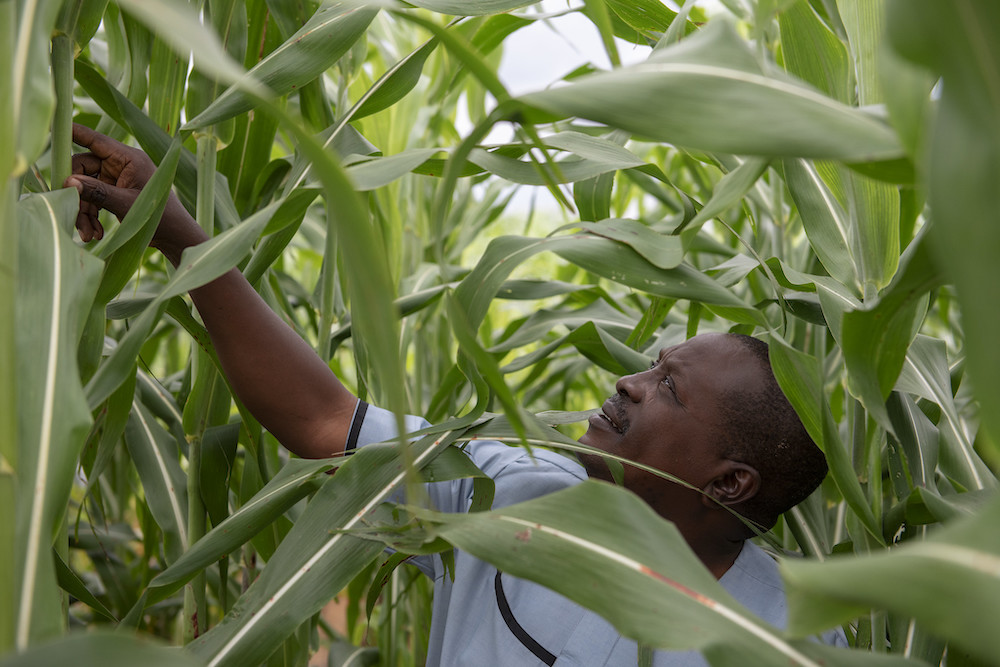
This Initiative aims to support climate-resilient agriculture and livelihoods in 12 countries in East and Southern Africa by helping millions of smallholders intensify, diversify and reduce the risks in maize-based farming through improved extension services, small and medium enterprise development, supporting governance frameworks and increased investment with a gender and social inclusion lens.

West and Central African Food Systems Transformation
This Initiative aims to improve nutrition, incomes and food security within the context of climate change in West and Central Africa through nutritious, climate-adapted and market-driven food systems.

Fragility to Resilience in Central and West Asia and North Africa
This Initiative aims to respond to the climate, nutrition and agrifood challenges most affecting the CWANA region by applying, scaling and supporting effective, resilience-focused solutions, reducing fragility and conflict, and empowering all stakeholders for change, while minimizing and/or mitigating any trade-offs.


7 November 2022 Featuring research and innovation to address food security in Africa amidst climate change

  • Global food crises, conflicts, and trade shocks increasingly highlight the vulnerability of Africa’s food systems, and global food, water and biodiversity systems. 
  • In this session, CGIAR and partners unveil knowledge and initiatives to foster transformative adaptation approaches and respond sustainably to food security challenges, addressing root causes of vulnerability while contributing to sustaining peace.


8 November 2022 What’s the best approach to transformative adaptation for resilient agriculture in Africa?

  • By 2050, up to $50 billion will be needed yearly for climate change adaptation in Africa. 
  • The scale of the challenge requires a transformative response: incremental action is not enough. 
  • This event defined transformative adaptation and explore the most promising actions in African agriculture.


8 November 2022 Climate security for the global drylands

  • Integrated desert farming transforms agrifood systems for climate resilience, better water management, climate smart crops, community livestock breeding and desert agroforestry. 
  • This event explored how regional collaboration, improved policies and increased investment for desert farming will mitigate and adapt agriculture to the climate crisis.


8 November 2022 Food systems opportunities to deliver low-emission climate-resilient development strategies

  • This session looked at the potential for integrating food system approaches into long-term low greenhouse gas emission and climate resilient development strategies, as Article 4 of the Paris Agreement prescribes. 
  • It drew on the ongoing efforts to develop guidelines for African countries and the experiences of countries that have developed and are implementing such strategies.


8 November 2022 How a new African strategy for climate action can make agriculture and food systems resilient

  • Examining how the African Union Climate Change Strategy and Action Plan (2022–2032) serves as a common guide for governments and donors to maximize impact, including how Accelerating Impacts of CGIAR Climate Research for Africa (AICCRA) is a proof-of-concept for African climate initiatives.


8 November 2022 Multistakeholder partnerships to tackle the global food crisis through regenerative agriculture

  • The global scale and complexities of food insecurity calls countries to prioritize the policy actions needed through multi-stakeholder dialogues.
  • Representatives from the public and private sector put forward policies for food systems transformation through regenerative agriculture and climate action.


9 November 2022 A roadmap to align food, finance and philanthropy with climate goals

  • There is a lack of consensus on what changes need to happen in food systems by 2050 to align with climate and nature goals, and how finance can align with this.
  • This breakfast panel discussion explored how private, public and philanthropic funding in food systems can align with climate goals, and the role a global agricultural roadmap could play.


9 November 2022 Two sides of the same coin: Advancing joint action on climate and food security

  • This panel discussion focused on the ripple effects of climate change on global food security.
  • By fostering the exchange between different stakeholders, it aims to strengthen complementary approaches and align efforts addressing both climate change and food insecurity.


9 November 2022 Lessons from different mitigation areas: case studies on research and tools to quantify emissions, and mitigation strategies in the dairy sector

The side event presented case studies to highlight opportunities and challenges of available mitigation strategies in different areas focusing on concrete projects to quantify emissions in tropical ecosystems, and the progress of climate action in the dairy sector.


9 November 2022 13:00–14:00 Promoting more and better (blended) finance for the adaptation of African food systems

This event identified actions and building partnerships for increasing finance for the adaptation of food systems, with a focus on access to finance for local actors and informing negotiators.


9 November 2022 Indigenous Peoples’ food systems: regenerative, resilient and protectors of the land

This event showcased knowledge and learning from Indigenous Peoples’ regenerative food systems.


9 November 2022 16:00–17:00 Accelerating youth for a climate smart world

  • The next generation of skilled agrifood scientists and engineers is needed to sustain and make the food system ever more sustainable, especially in face of climate change.
  • This event explored opportunities for young people to be trained, mentored and accelerated into leadership in the sector.


9 November 2022 Leveraging global markets and innovative finance for food system resilience: A look at East Africa

Joined by key stakeholders, CGIAR, Planet Tracker and the Africa Group of Negotiators Expert Support (AGNES) system gave an overview of countries' exposure to climate risk and nature dependency, discussing opportunities for innovative financial instruments, for the design of a Green Climate Fund (GCF) proposal for East Africa to enable climate change adaptation.


9 November 2022 Science to shape a climate smart and nature-positive financial system: Launch of the CGIAR Hub for Sustainable Finance (OneSF)

  • This session launched the CGIAR Hub for Sustainable Finance (OneSF).
  • It presented a first-of-its-kind science-based architecture to enable financial institutions and investors to quantify climate and environmental risk and impacts in food systems investments, draw lessons learnt from the Climate Smart Food System Fund launched by responsAbility and CGIAR, and identify with key stakeholders the way forward to transition towards climate smart and nature-positive financial systems.

10 November 2022 08:30–09:30 Put healthy diets and nutrition at the center of food system transformation

  • Globally millions of people are at risk of under-nourishment due to extreme climate events that threaten local food production.
  • There is also an increasing epidemic of obesity and diet-related illnesses that coincides with the rise of the Western-style diets.
  • Speakers discussed why it is essential to put healthy diets at the centre of the agrifood system reform that responds to the climate emergency.

10 November 2022 10:00–11:00 CLIFF-GRADS: Building capacity for climate change research in the next generation of scientific leaders from the Global South

  • The Climate, Food and Farming, Global Research Alliance Development Scholarships Programme (CLIFF-GRADS) offers exciting opportunities for early career scientists from low- and middle-income countries to learn to conduct applied research in agricultural greenhouse gas emission quantification and mitigation.
  • In this session, some of these young scientists shared how the experience they acquired through this program has boosted their careers.

10 November 2022 11:30–12:30 Opportunities to scale regenerative food systems for people, nature and climate

  • This event celebrates the inception of Regen10 as a global community of food producers, Indigenous Peoples and local communities, business networks, landscape stewards and aligned initiatives.
  • Regen10 aims to learn from landscape-level approaches to measure the outcomes of regenerative approaches in different contexts.

10 November 2022 13:00–14:00 Livestock transitions: Global options and local realities for adaptation and mitigation

  • We must reduce livestock emissions to achieve the 1.5°C goal, but actions must be tailored to local production systems and recognize trade-offs.
  • This event will use examples from Brazil and Kenya to show how mitigation and adaptation can be prioritized depending on context.

10 November 2022 14:30–15:30 Triangular cooperation: Innovative climate-smart solutions

  • Triangular cooperation can help to achieve the SDGs in innovative and collaborative ways and provide solutions to overcome today's most pressing challenges.
  • The event will unpack triangular cooperation in the context of climate change and food systems transformation and how impact can be achieved.

10 November 2022 16:00–17:00 The future Is now: How to unlock young farmers’ potential for a sustainable future of food systems

  • Youth have a tremendous impact on ensuring that food and agriculture are part of the conversations. Young people, including young farmers, are challenging us to leap into more sustainable, climate-resilient, nature-positive practices.
  • The event will explore how youth is working and can be empowered to catalyze their potential for climate action.

10 November 2022 19:00–20:00 Unlocking the power of youth-led innovation in ag and climate-tech to transform global food systems

  • Research and innovation can help develop science-based technologies and policies that can make food systems more equitable, resilient and sustainable.
  • This session highlights how youth-led innovation contributes to this aim and policy priorities set by youth to unlock their potential as innovators.11 November 2022 08:30–09:30 Koronivia’s future: Widen the mandate to a food systems approach
  • This event will focus on the importance of widening the mandate of Koronivia Joint Work on Agriculture (KJWA) to go beyond agriculture and include food systems.
  • Speakers from government, academia and civil society will outline why a food systems approach will deliver better outcomes for climate, people and nature.

11 November 2022 10:00–11:00 Climate security and agriculture: Strategies for inclusive adaptation

  • Climate change-related droughts, natural disasters, and crop failures are undermining livelihoods and food security, and leading to mass forced displacements.
  • Join policymakers who will announce new commitments on locally-based agronomic solutions and hear from grassroots leaders who will share strategies for ensuring an inclusive and resilient global food system.
  • Together they will identify entry points and promising practices for realizing equal access to decision-making, climate financing, land ownership, technology, and agronomy research.

11 November 2022 11:30–12:30 African Food Systems Transformation Initiative (AFSTI): Sustainably scaling African food systems

  • A joint effort between Boston Consulting Group (BCG) and the UN Climate Change High Level Champions, AFSTI accelerates the adoption of high yielding, adaptive and resilient practices in Africa through an ecosystem approach.
  • The session will showcase real opportunities and seek commitments from funders and partners aiming to pivot the African food system towards more resilient practices.

11 November 2022 13:00–14:00 A sustainable and inclusive agriculture transformation, engaging the private sector

  • This event will explore how the private sector can transform and build climate-adaptive LDC (least developed countries') food systems and complementary needs.

11 November 2022 15:00–16:00 Accelerating AIM4C investments for smallholder agriculture

  • This event will serve as a platform for high-level government officials and other key AIM for Climate (AIM4C) partners to announce new AIM4C innovation sprints, as well as highlight progress made against previously announced innovation sprints and related commitments.
  • It will also be an opportunity for governments and partners to speak to the importance of AIM4C investments in agricultural research for climate adaptation, including those in partnership with CGIAR, that benefit smallholder farmers.

11 November 2022 16:30–17:30 Pathways to Dairy Net Zero: Results and progress

  • This event will report on the progress being made on Pathways to Dairy Net Zero, a global climate initiative launched by the dairy sector last year and supported by FAO.
  • The event will be conducted in person with presentations from key UN actors, governments and other stakeholders.

11 November 2022 18:00–19:00 Carbon neutral and resilient agrifood systems

  • This session discusses carbon neutrality and resilience to shocks in local and global agrifood supply chains and systems through four perspectives: resilience and adaptation of agrifood systems; business and greenhouse gas emissions in supply chains; leveraging technology; and innovation to reduce emissions.

11 November 2022 19:30–21:00 Building paths for transformation: the way forward for agriculture and the KJWA

  • There is an urgent need to identify avenues to facilitate climate finance flows to agriculture.
  • This session aims to contribute to discussions on the design of possible strategies, opportunities and mechanisms for the implementation of adaptation and mitigation actions, as a way forward for the Koronivia Joint Work on Agriculture (KJWA).

12 November 2022 08:30–09:30 Farmers at the center of climate action

  • Through this event, a diverse panel of food producers will spotlight agroecology, regenerative agriculture and other innovative approaches, systems and practices they are using to improve food and nutrition security while simultaneously enhancing health and livelihoods, improving the environment, enhancing biodiversity and delivering high value terrestrial solutions to climate change.

12 November 2022 10:00–11:00 Food loss and waste reduction for a better climate

  • The event will showcase how food loss and waste reduction can contribute to emissions reduction and scaled-up adaptation efforts. 
  • It will identify priority interventions to support innovations by small-scale producers to reduce food loss and waste and contribute to climate action. A pledge will be launched inviting different stakeholders to make voluntary commitments to actions to reduce food loss and waste.

12 November 2022 11:30–12:30 Digitalization of agrifood systems for global food security

  • The war in Ukraine has exacerbated global food security, which was already affected by climate change and two years of the COVID-19 pandemic.To increase the security and resilience of global agrifood systems, a renewed focus on increasing sustainable productivity across existing farmlands is needed.
  • This is where digital technologies, especially mobile solutions, can help, and innovation in the agricultural sector is the key.

12 November 2022 13:00–14:00 Climate-smart initiatives in small-scale aquatic food systems for sustainable healthy diets

  • This event builds on 'The Role of Aquatic Foods in Sustainable Healthy Diets', which highlighted that sustainable healthy diets must include diverse aquatic foods, inclusive policy frameworks, and access to innovative climate-smart technologies for small-scale aquatic food producers to ensure the four betters: production, environment, nutrition and life.

12 November 2022 14:30–15:30 Unlocking climate finance for agrifood system transformation

  • This side event will showcase how FAO’s partnership with GCF and the GEF scales up climate finance for high-impact projects that promote green and climate-resilient agrifood systems.
  • Speakers will draw from experiences in Côte d’Ivoire and Southeast Asia where successful partnerships are transforming value chains so no one is left behind.

12 November 2022 16:00–17:00 Ensuring that food business can be net zero

  • This panel will focus on how small, medium, and large scale companies are becoming carbon neutral, not over the long term, but now.

12 November 2022 17:30–18:30 Genetic resources for climate adaptation

  • Genebanks offer crop diversity solutions with their climate-smart genetic traits to ensure climate-resilience of globally important crops.
  • This session will explore the importance of diverse genetic traits in landraces and wild relatives that help ensure global food systems are resilient in the face of a rapidly changing climate.

14 November 2022 08:30–09:30 Scaling climate resilient solutions via innovative SMEs and WEF nexus approach

  • The event will bring forward the experiences of mobilizing innovative solutions to enhance food systems and food security based on sustainable water and energy use.
  • Scaling these climate resilient solutions from the Middle East and Africa helps market value chains to transform and communities to adapt.

14 November 2022 10:00–11:00 Official launch of the new FAO Strategy on Climate Change 2022–2031

  • This high-level event will present FAO’s new Strategy on Climate Change, and stakeholders’ perspectives.

14 November 2022 11:30–12:30 Measuring progress on adaptation and mitigation of women in agriculture: What does it take?

  • Metrics and frameworks to track women’s (and men’s) progress on climate change adaptation and mitigation are urgently needed.
  • This interactive panel will engage key stakeholders, including farmers and funders, to discuss the development of inclusive metrics and monitoring frameworks.

14 November 2022 13:00–14:00 How can we help women and youth build resilience against climate change? 

  • This event will highlight why women and youth are more exposed to climate change and how climate adaptation strategies and climate-smart agriculture can help achieve resilience, gender equality and social equity outcomes at once.
  • Speakers will share about gender and climate hotspot mapping, the Gender Empowerment Index, and explore the enabling policy and financial environment to increase gender equality and social inclusion in climate resilience. 

14 November 2022 14:30–15:30 The global fertilizer crisis: Implications for the transformation towards climate-resilient agrifood systems

  • Improved nutrient management and fertilizer efficiency, and promotion of locally available alternatives to mineral fertilizer, can contribute to climate change mitigation while strengthening the resilience of agroecosystems.
  • This side event, hosted by BMZ, brings together leaders from governments, industry, research and civil society.
  • They will discuss priority actions and commitments needed to respond to the short-term needs of poor farmers and consumers in the Global South, while not losing sight of the objective to support the transformation towards climate-friendly and resilient agrifood systems.

14 November 2022 16:00–17:00 Farmers as soil carbon stewards

  • Agriculture, and in particular agricultural soils, can play a crucial role in food security and climate change. Regenerative agriculture has great potential to store carbon in the ground and restore healthy ecosystems, while improving the livelihood of farmers.
  • Supporting farmers to shift from conventional practices to organic and biodynamic agriculture has succeeded in increasing their standard of living, especially after introducing the Economy of Love carbon credits.

14 November 2022 17:30–18:30 Gender-responsive and sensitive strategies to combat climate change in aquatic food systems

  • This session will share information and knowledge on climate change, gender and aquatic foods, identifying priority investments and interventions needed to deliver positive change for women's empowerment, gender equality and social inclusion in aquatic food systems, while safeguarding ecosystems.

14 November 2022 19:00–20:30 Building the Beans is How theory of change

  • This interactive event will feature members of the newly formed Beans is How Science & Innovation Advisory Council and draw upon specialist knowledge to answer the question: “How can we effectively measure and achieve the goal of doubling global bean consumption in five years?”

15 November 2022 08:30–09:30 Strengthening climate action in agriculture through regional integration

  • This event will share results of the Platform for Climate Action in Agriculture in Latin America and the Caribbean (PLACA), to highlight the importance of this regional collaborative mechanism in supporting ministries of agriculture to achieve sectoral climate commitments under the implementation of the Paris Agreement.

15 November 2022 10:00–11:00 Unlocking multi-stakeholder collaboration for transformative agrifood systems through NDCs and NAPs

  • The event will highlight country experiences and needs in planning, financing and implementing climate solutions through systems-thinking in Nationally Determined Contributions (NDCs) and National Adaptation Plans (NAPs).
  • Discussions will emphasize the need for multi-stakeholder collaboration to harness the potential of agrifood systems, with examples from Africa.

15 November 2022 11:30–12:30 Smallholder farmers lead the way to scale climate solutions

  • Some of the communities most vulnerable to the climate crisis are the small-scale farmers and workers in the Fairtrade system. Fairtrade recognizes the importance of environmental protection and early adaptation to climate change for all as key pillars for building sustainable livelihoods.
  • This session will showcase how the Fairtrade system works to facilitate the implementation of environmental requirements, especially measures that enable decarbonization in certified commodities.

15 November 2022 13:00–14:00 Integrating climate action: managing the food, energy and water nexus for sustainable development

  • The food, energy and water nexus is at the heart of climate action and sustainable development. In this session, panellists from governments, business and research, with UN agencies, will share perspectives on integrated resource planning and management for sustainable climate-resilient development.

15 November 2022 14:30–15:30 Climate risks to water resources for food security: linking global, regional and national responses

  • With agrifood sectors as one of the main users of water, climate change poses a serious threat to places around the world already faced with water scarcity and drought.
  • This event brings together global frameworks, regional approaches and national actions that are attempting to address these risks.

15 November 2022 16:00–18:00 Elaborating the Africa Climate Smart Agriculture Framework (ACSAF) and its Plan of Action

  • The main objective of this event is to launch an inclusive process for the elaboration and validation of the Africa Climate Smart Agriculture Framework and its 10-year Plan of Action.
  • The ACSAF aims to streamline implementation and strengthen coordination of climate-smart agriculture actions.

15 November 2022 18:30–19:30 Agricultural transformation requires a stronger focus on justice for vulnerable farmers

  • At COP27, the Koronivia Joint Work on Agriculture will determine agriculture’s future in climate talks.
  • Yet research from University of Leeds shows the working group has not prioritized justice. Audience and speakers will discuss just agricultural transformation in the UNFCCC and beyond.

16 November 2022 08:30–09:30 Indigenous Peoples and producer organizations upscaling biocentric climate action

  • Indigenous Peoples and forest and farm producer organizations will share more information about their holistic food, knowledge, and territorial management systems, the Indigenous Peoples’ biocentric approach, and their contribution to ecosystem restoration and biodiversity conservation.
  • The event will focus on how to support farmers organizations and Indigenous Peoples to accelerate climate action.

16 November 2022 10:00–11:00 Can nature-based solutions create the necessary resilience for ecosystems and communities in the Sahel’s Great Green Wall?

  • Complementary action at multiple levels is needed to achieve ecosystem and community resilience across the Sahel. Join us for a lively discussion highlighting the potential for nature-based solutions to increase resilience and harness finance for the Great Green Wall.
  • The session will showcase applications of nature-based solution approaches helping to restore the Sahel and address food insecurity, climate change and biodiversity loss.

16 November 2022 11:30–12:30 Building pathways towards more climate-friendly food systems

  • In this session, countries from across the world will present their success stories and best practices and CGIAR leaders will elaborate on how four new CGIAR Initiatives — Agroecology, Nature-Positive Solutions, Sustainable Intensification and Excellence in Agronomy — can join forces to create a framework for more productive, nutritious, sustainable and socially just food systems.

16 November 2022 13:00–14:00 Just Transition in the agricultural sector: Social protection as a pathway for sustainable and inclusive climate actions in agrifood systems

  • The event brings together policymakers, civil society, trade unions, practitioners, and researchers to discuss pathways for a Just Transition in the agricultural sectors, how to enhance sustainable and inclusive climate actions in food systems and why social protection can be leveraged to make climate actions in agrifood systems more inclusive and effective.
  • It will provide a forum for sharing evidence, policy insights, and programmatic approaches.

16 November 2022 14:30–15:30 Forest-climate solutions: Leveraging forests and trees for climate stability and food security

  • This event will highlight the key role of forests and trees in simultaneously supporting climate stability and food security through the launch of three complementary publications by FAO and partners.

16 November 2022 16:00–17:00 Agronomy provides key entry points for climate change adaptation with mitigation as co-benefits

  • The CGIAR Initiative Excellence in Agronomy aims to deliver agronomic gain for smallholder farming households in the Global South and ensure the minimum viable products of all its Use Cases explicitly address region-specific climate change hazards.
  • This session will include examples of how agronomy can address climate change and planned future activities on agronomy and climate change adaptation.

16 November 2022 17:30–18:30 Science and innovation for climate adaptation of African agriculture

  • This event will feature a synthesis of the outcomes of the FAO Science and Innovation Forum 2022 side event on science and innovation for African Agriculture.
  • It will focus on climate change impacts on agriculture and food security in Africa and discuss future research for development strategies for climate change adaptation and sustainable intensification of African agriculture.

16 November 2022 19:00–20:00 Decoupling agriculture from deforestation: Win-wins for climate, livelihoods and food security

  • The event will feature high-level interventions and evidence-based practices from countries and key international actors for agriculture-forestry win-win opportunities that directly contribute to climate change mitigation and resilient landscapes for food security and livelihoods.

17 November 2022 08:30–09:30 Nutrition-sensitive and climate-smart agrifood systems: Tools and options to move to implementation

  • This event will describe efforts linking nutrition and climate action in practice with a focus on agrifood system transformation.
  • FAO and partners will highlight innovative tools and mechanisms to bring the ambition of nutrition-sensitive, climate-smart agrifood systems to action.

17 November 2022 10:00–11:00 Advancing Climate Smart Aquaculture Technologies (ACliSAT): For food security and economic development

  • The Advanced Climate Smart Aquaculture Technologies (ACliSAT) project is promoting climate smart aquaculture systems through development and adoption of water-use efficient and cost-effective systems under water-deficient conditions and reduce global gas emission and contribute to food security.

17 November 2022 11:30–12:30 City region food systems: Strengthening resilience against multiple shocks and stresses

  • The event calls on cities and partners to take a territorial systems and circular approach to building food resilience.
  • In a panel setting, cities and practitioners will discuss transformative solutions, initiatives from partner organizations, and insights from a recent global study from FAO.

17 November 2022 13:00–14:00 Solar irrigation to address recurring global food, nutrition and fuel crises in a climate emergency

  • This session introduces new findings on solar irrigation uptake and challenges in Africa and South Asia, and the potential of the technology in a climate crisis.
  • Key stakeholders will discuss tradeoffs across greenhouse gas mitigation, food and nutrition security and water depletion.

17 November 2022 14:30–15:30 Accelerating digital climate services for resilient food systems in the Global South

  • In the Global South, farmers are observing their traditional knowledge of weather patterns is becoming increasingly unreliable for making farming decisions due to climate change, and demand climate services that can fill this vacuum.
  • This event will showcase pioneering efforts to enable meteorological agencies in the Global South to produce accurate climate information, co-create digital climate services for agricultural systems (crops, aquaculture and livestock) and support sustainable and inclusive business models.

17 November 2022 16:00–17:00 Assessing climate risks and opportunities in SIDS coasts, communities and ecosystems

  • This event will launch new climate data and findings of studies on climate change in Small Island Developing States (SIDS) and discuss climate solutions for coastal areas and ocean economies in SIDS.

17 November 2022 17:30–18:30 Low emissions food systems in conflict-affected settings

  • This side event will discuss evidence on the links between food systems emissions and conflict, as well as evidence on how to scale approaches for achieving low emissions food systems and peace.

17 November 2022 19:00–20:00 Inclusive climate-smart digital technologies: Can small-scale farmers get on board?

  • Climate-smart technologies can only help fight climate change if they are embraced by small-scale farmers.
  • Most digital solutions are scalable and profitable especially for big farms.
  • The panelists will discuss how digital solutions can be designed and made available in more inclusive ways.

18 November 2022 08:30–09:30 Sustainable and circular bioeconomy in the climate agenda: Opportunities to transform agrifood systems

  • This event will raise awareness of circular bioeconomy opportunities to transform agrifood systems and accelerate implementation of climate action.
  • The outcome will be a call for enhanced climate ambition with the sustainable use of biological resources and innovations across economic sectors.

18 November 2022 10:00–11:00 Anticipatory actions and multi-risk management interventions for climate security

  • The frequency and intensity of climate shocks coupled with raising violence and conflict increasingly affects the food security of millions of people worldwide.
  • This session will discuss how to strengthen the resilience of food systems and innovative interventions, including anticipatory actions, to reduce both climate and conflict threats.

18 November 2022 11:30–12:30 Scaling up disaster and climate risk management actions to prevent food crises

  • The event highlights the main drivers of food insecurity driven by extreme events, conflicts, and socio-economic shocks and disturbances, and explores ways to build inclusive, resilient and sustainable agrifood systems for all, through scaling up disaster and climate risk management actions.
  • The moderated discussion will focus on concrete tools and actions to tackle the increasing impacts of disasters on the most vulnerable and their communities, including the climate-related and protracted nature of food crises.

18 November 2022 14:30–15:30 Improving climate resilient food systems in fragile and conflict-affected settings: A way forward for peace and food security?

  • Failure to acknowledge the role of climate as a “threat multiplier” jeopardizes the efficacy of national efforts to improve resilience capacities and achieve SDGs, especially in fragile settings.
  • This panel will discuss concrete food systems solutions to achieve a “climate resilience peace.”


GLF COP Side events 

11 -12 November 2022 Landscapes Forum CLIMATE ALONGSIDE COP27 
GLF Climate: Frontiers of Change


OTHER COP Side events 

14 November 2022 15:00 – 16:15 EAT The role of African women in climate change Mitigation, Adaptation & Response By AGRA/Value4Her

15 November 2022 2:30pm - 3:30pm Digital Solutions and Information for a Climate Resilient Agriculture Sector (DSI-CRA) By IICA / The Commonwealth

Additional Events

Outside the Food and Agriculture Pavilion, CGIAR’s leadership, scientists and Initiatives will be engaged in a wide range of additional events and activities across COP27, including Official Side-Events and other pavilion events.

The International Water Management Institute, a CGIAR Center, will co-host the Water Pavilion for a second consecutive year. 
  • The pavilion will mobilize more than 30 different global organizations, institutions, governments, and companies committed to raising awareness of the role of water for climate. 
  • IWMI will co-lead two thematic days at the pavilion: Disaster Risk Reduction and Sustainable Cities for Improved Livelihoods on 10 November, and Climate Smart Agriculture for Food Security, Adaptation, Sustainability on 11 November.