Platform for African – European Partnership in Agricultural Research for Development

Tuesday, July 15, 2025

Potentially Important Food Plants of Ghana

Potentially Important Food Plants of Ghana – Ghana, Version 1 (English) June 2025, 76 pp 

Potentially Important Food Plants of Ghana has been produced to provide information on approximately 40 edible plants that are known to grow in Ghana. These plants come from all the major food groups and have been chosen because of their high nutritional value. Many of the plants in this book may be neglected and under-utilised plants. This means they may not be well known. 

However, because they are high in many beneficial nutrients, and they are already adapted to the environment, and therefore likely to require minimal inputs, they could be important food plants that are likely to be superior to imported foods and plants. Commercially grown plants may also be included in the book, but only if they are significant foods for household consumption. It is hoped people will become confident and informed about how to grow and use these plants as many local food plants provide very good quality food.

Food Plant Solutions was initiated by the Rotary Club of Devonport North to assist in creating
awareness of the edible plant database developed by Food Plants International, and its potential in addressing malnutrition and food security in any country of the world.

The local food plants of most countries have not been promoted and highlighted in the way they deserve. Visiting a local food market will quickly show what a rich variety of food plants can be grown in this country. Good information about these plants is often still in the minds and experience of local farmers and has not been written down in books. This can make it hard for the next generation of young people to find out how to grow them. In many countries, some of the traditional food plants are only harvested from the wild and others are only known in small areas. Others have hundreds of varieties and are the main food for people in different regions. Information on all these plants, their food value and the pest and diseases that damage them is available in the Food Plants International database

Monday, July 14, 2025

CGIAR observer status at UNEA

9 July 2025. CGIAR observer status at UNEA

CGIAR, the world’s largest agricultural research partnership, has been officially accredited as an intergovernmental organization (IGO) to the United Nations Environment Assembly (UNEA). This milestone grants CGIAR observer status at UNEA, enabling participation in its sessions and subsidiary bodies, including the upcoming UNEA-7 in December. This milestone formally positions CGIAR within the highest level of global environmental governance and strengthening its role as a trusted scientific partner in support of UN Member States. It enables the organization to bring agricultural science into high-level environmental governance, helping bridge gaps between food systems and environmental goals.

This development comes at a crucial time. As the world seeks urgent solutions to the “triple planetary crisis” of climate change, biodiversity loss, and pollution, CGIAR brings over 50 years of agricultural innovation and scientific evidence to these critical discussions. With this new role, CGIAR can ensure that food, land, and water systems are fully considered in global environmental policy.

Accreditation also improves CGIAR’s ability to inform high-level decisions by providing science-based recommendations directly to environment ministers and policymakers. It strengthens ongoing collaborations, such as the CGIAR Nature-Positive Initiative with UNEP, and positions CGIAR to contribute more directly to international campaigns and resolutions on sustainability.

CGIAR’s UNEA accreditation strengthens its ability to contribute to the objectives of the three “Rio Conventions”: the UN Framework Convention on Climate Change (UNFCCC), the Convention on Biological Diversity (CBD), and the UN Convention to Combat Desertification (UNCCD).

Food Additives’ Impact on Gut Microbiome and Human Health

FAO. 2025. State of research on the interactions between food additives, the gut microbiome and the host – A food safety perspective. Food Safety and Quality Series, No. 22. Rome. #298 pp.

26 May 2025. FAO has conducted a scientific literature review to assess how certain food additives may affect the gut microbiome and, in turn, human health. The review aimed to gather and assess the quantity, quality, and reliability of current evidence, mapping research limitations and knowledge gaps, and exploring how microbiome data might be used to enhance chemical food safety risk assessments.

The gut microbiome - a highly dynamic and complex microbial community in the gastrointestinal tract – plays a key role in digestion, immune function, and overall health. Sensitive to environmental influences such as diet, its imbalance has been linked to various diseases, including obesity and inflammatory disorders.

The review concludes with a set of recommendations to guide and improve the integration of microbiome science into risk assessment frameworks. Through this work, the Agrifood Systems and Food Safety Division supports FAO’s mission to improve food safety by promoting robust scientific research and advancing the modernization of food safety assessment frameworks.

You can read the review here

Friday, July 11, 2025

Towards A Big Data Revolution for the Planet

8 - 10 July 2025
. Rome. SPRA and the European Space Agency hosted the Third High Level Expert Group (HLEG) Meeting on Big Data of the UN Science Policy Business Forum on the Environment at ESA-ESRIN headquarters in Frascati. 

Download:
This technical High-Level event under the theme “Towards a big data revolution for the Planet: from Uncertainty to Opportunity” focused on four main objectives, each addressing a key component of Big Data’s role in environmental sustainability. In a rapidly shifting geopolitical context, the need for high-quality environmental data is greater than ever: (1) Governance of the Global Environmental Data Strategy; (2) Environmental Big Data in the Global Digital Compact Framework and Structural  Transformation; (3) Data for Green Investment, Accountability, and Transparency; (4) New Frontiers, New Gaps, New Opportunities.

The UNEP secretariat is expected to share a second draft of the GEDS in August 2025. The second draft is expected to have a more operational focus, including a distinction between international and national levels.


Extract of the programme

08/07 EARTH OBSERVATIONS IN ACTION 

  • Centralized Procurement of Earth Observation Data and Derived Analytics Marie-Christine Delucq, Geospatial Solutions Manager, Airbus 

    Centralizing the procurement of Earth Observation (EO) data and derived analytics enables Airbus to streamline access to high-resolution, multi-sensor satellite imagery and advanced AI-powered insights—driving cost efficiency and operational agility across its geospatial services. This unified approach not only supports scalable digital products—from precision agriculture to disaster response—but also accelerates innovation in downstream analytics, leveraging a robust, centrally managed Earth Observation (EO) ecosystem for faster, smarter decision-making

09/07  TECH & INNOVATION 

  • The Transformative Potential of Environmental Genomics by Nicolas Tsesmetzis, Principal Science Expert, Nature Based Solutions, Shell
The transformative potential of environmental genomics lies in its ability to radically enhance the understanding and monitoring of ecosystem health and function, enabling more precise, data-driven implementation of nature-based solutions. By decoding the genetic material found in soil, water, and other environmental samples, Shell uses this advanced tool to track biodiversity, microbial activity, and ecological responses to interventions at unprecedented resolution. This approach supports the design, validation, and scaling of high-integrity carbon sequestration projects, such as reforestation and soil regeneration, by providing robust, science-backed evidence of environmental impact—thereby improving both the credibility and effectiveness of carbon credits and natural climate solutions.

 Nicolas Tsesmetzis spoke about the transformative potential of environmental genomics and the pioneering work of IOGP-JIP34, a joint initiative to develop guidance and best practices for the use of eDNA in the energy sector. As a present-day solution to the biodiversity data crisis, standardized eDNA methods are enabling the generation of high-integrity, scalable biodiversity data—a critical enabler for nature-positive outcomes, enhanced transparency, and alignment with the UN Global Environmental Data Strategy (GEDS). This approach also opens new pathways for green finance and more effective environmental reporting.

He praised the broader expert community advancing standardization of molecular methods through platforms like ISO TC147/SC5/WG13 and iESTF. As highlighted by Kristian Meissner, the outdated notion that molecular methods lack technical readiness is no longer valid. The evidence is clear: standardized eDNA monitoring is ready to support biodiversity and bioassessment needs, and can meaningfully augment existing indicators to meet the demands of the Global Biodiversity Framework.


10/07 PATHWAYS TO SYSTEMIC CHANGE TOWARDS DATA COHESION & INTEROPERABILITY  

  • Corporate Sustainability Reporting Directive (CSDR) and Tracking Supply Chain  by Sotirios Kanellopoulos, Data and ICT for sustainability policy officer, European Commission, Directorate General Environment. 
    The CSDR is a major EU regulation (entered into force in January 2023) that requires large companies and listed SMEs to report on environmental, social, and governance (ESG) impacts, including their value chains and supply chains. It expands the scope of the earlier Non-Financial Reporting Directive (NFRD).


10/07 Scaling Environmental Data in Developing Countries: What Data Governance and Funding Models? Will Power the Digital Transition? 

  • Moderator: Sherif Dawood, Egyptian Ministry of Foreign Affairs 
  • Charles Mwangi, Director, Kenya Space Agency 
  • Laurent Durieux, Coordinator One Forest Vision, Institut de recherche pour le développement (IRD) 
  • Yblin Roman, Policy Lead, Sirge Coalition 
  • Débora Ingrisano (see 2 slides), Cooperative Development Manager, Brazilian Cooperative Organization System (OCB System) 


GFAiR proposition on future Pathways

The emerging frameworks around big data, environmental governance, and digital transformation—such as the Global Environmental Data Strategy (GEDS) and the Global Digital Compact—offer highly strategic tools for the UN Food Systems Summit (UNFSS) coalitions, particularly in supporting accountability, investment tracking, and structural transformation.

1. Enabling High-Integrity Food Systems Data for Action and Accountability

Coalitions working on Local Food and Nutrition Supply Chains, agroecology, sustainable consumption, school meals, or food loss and waste need reliable, interoperable, and inclusive data. The GEDS governance framework promotes: 
  • Data sovereignty and ethics aligned with Indigenous and farmer knowledge systems.
  • Federated and open-access models, allowing local ownership while enabling global reporting.
  • Standards and protocols for environmental and socio-economic indicators that can be adapted for tracking food systems transformation.
  • For example, coalitions can integrate food biodiversity, nutrition, and agroecological metrics into shared platforms that support SDG 2 (Zero Hunger), SDG 12 (Sustainable Consumption and Production), and climate commitments.
2. Leveraging the Global Digital Compact for Structural Food Systems Transformation

The Global Digital Compact underlines equitable digital infrastructure, ethical AI, and data rights. These principles can help UNFSS coalitions: 
  • Bridge digital divides in food systems innovation—especially for smallholders, women, and youth.
  • Develop digital public goods (e.g. open-source farm-level monitoring tools) aligned with CARE/FAIR principles.
  • Protect food systems data from corporate capture while enabling trusted, real-time analytics to support both grassroots initiatives and policy interventions.
3. Using Environmental Big Data to Mobilize Green Investment

The GEDS roadmap and Frascati Pathways highlight how high-integrity environmental data underpins climate finance and sustainability-linked investments. UNFSS coalitions can use this to: 
  • Embed agroecological and nutrition-sensitive food system indicators into green bond frameworks and blended finance tools.
  • Strengthen credibility and comparability of impact data, critical for scaling nature-based solutions, regenerative agriculture, or carbon-positive food systems.
  • Demonstrate co-benefits (biodiversity, equity, carbon sequestration) for integrated SDG and climate outcomes.

Upcoming

18 July 2025. 11:00 am CEST. From Data to Decisions: Modelling a Sustainable Future for Food Systems

  • Explore how cutting-edge modelling tools are driving evidence-based solutions for food system sustainability. 
  • This webinar will examine the dynamic intersections of ecological priorities, economic realities, and policy-making, highlighting how integrated data approaches can support biodiversity, resilience, and long-term food security across diverse contexts.


28 July 2025. UNFSS+4 session: Investment Dialogue #3: Data and AI for Food Systems Transformation

Leads: UN Global Compact (UNGC) & World Economic Forum (WEF)

16:30 - 18:00 | Africa Hall

See page 5 in the program in attachment (unfortunately not detailed with the speakers)

Related 

26 September 2024. Policy Workshop on International Carbon Certification Schemes

  • This workshop ( see the Agenda) gave an insight into what is happening in the United States and Australia, as well as an overview of the context in the Pacific region and Europe.
  • Organised by the ORCaSa project in the framework of the Soil Carbon International Research Consortium (IRC), this event was an opportunity for experts and policymakers to meet, exchange ideas, and make progress in the field of soil carbon policy.
  • Launched in September 2022, ORCaSa is a Horizon Europe initiative that aims to bring together international stakeholders working on techniques for capturing and storing carbon in the soil.
  • Start date: 1 September 2022
  • End date: 31 August 2025

Thursday, July 10, 2025

𝐀𝐠𝐫𝐨𝐞𝐜𝐨𝐥𝐨𝐠𝐢𝐜𝐚𝐥 𝐋𝐢𝐯𝐢𝐧𝐠 𝐋𝐚𝐛 𝐩𝐫𝐨𝐣𝐞𝐜𝐭𝐬 𝐢𝐧 𝐀𝐟𝐫𝐢𝐜𝐚

10 July 2025
. The (European) Agroecology Partnership organised its 12th Conversation on Agroecology. The online Conversations on Agroecology will run on a monthly schedule throughout the partnership and enable mobilisation and networking of agroecology actors across and beyond Europe.

This month’s conversation: Networks of Agroecology in Africa. 

Conversation Leads:
  • Taru Sandén, Austrian Agency for Health and Food Safety (AGES), Austria
  • Ana Pires da Silva, National Institute for Agricultural and Veterinary Research (INIAV), Portugal

Topic 1: 𝐆𝐥𝐨𝐛𝐚𝐥 𝐨𝐯𝐞𝐫𝐯𝐢𝐞𝐰 𝐨𝐟 𝐀𝐠𝐫𝐨𝐞𝐜𝐨𝐥𝐨𝐠𝐢𝐜𝐚𝐥 𝐋𝐢𝐯𝐢𝐧𝐠 𝐋𝐚𝐛 𝐩𝐫𝐨𝐣𝐞𝐜𝐭𝐬 𝐢𝐧 𝐀𝐟𝐫𝐢𝐜𝐚


As part of the European AGROECOLOGY partnership, a global mapping of agroecological Living Labs and Research Infrastructures was conducted, identifying numerous initiatives worldwide. In Africa, such projects are rapidly emerging, with examples like MAHDIA and NATAE, alongside long-established networks like PELUM and AfrONet. These initiatives encompass a diverse range of activities designed to support local and multi-actor agroecological transition. For this presentation, a selection of agroecological Living Lab projects in Africa were highlighted.
  • Audrey N'gom from the French National Research Institute for Agriculture, Food and Environment in France


Topic 2: 𝐂𝐨𝐧𝐧𝐞𝐜𝐭𝐢𝐧𝐠 𝐭𝐡𝐞 𝐃𝐨𝐭𝐬 𝐨𝐧 𝐀𝐠𝐫𝐨𝐞𝐜𝐨𝐥𝐨𝐠𝐲: 𝐊𝐧𝐨𝐰𝐥𝐞𝐝𝐠𝐞 𝐂𝐞𝐧𝐭𝐫𝐞 𝐟𝐨𝐫 𝐆𝐥𝐨𝐛𝐚𝐥 𝐅𝐨𝐨𝐝 𝐚𝐧𝐝 𝐍𝐮𝐭𝐫𝐢𝐭𝐢𝐨𝐧 𝐒𝐞𝐜𝐮𝐫𝐢𝐭𝐲 𝐚𝐧𝐝 𝐭𝐡𝐞 𝐑𝐞𝐠𝐢𝐨𝐧𝐚𝐥 𝐌𝐮𝐥𝐭𝐢-𝐀𝐜𝐭𝐨𝐫 𝐍𝐞𝐭𝐰𝐨𝐫𝐤𝐬 𝐢𝐧 𝐀𝐟𝐫𝐢𝐜𝐚


Knowledge on agroecology is often fragmented and anecdotal. The European Commission's Knowledge Centre for Global Food and Nutrition Security synthesizes and curates knowledge on agroecology, making it available to policy-makers and the public. Convergence of knowledge is also sought by the African Regional Multi-Actor Research Networks (RMRN), funded by the European Commission's DG for International Partnerships (INTPA) and supported by the KC-FNS. They bring together scientists, stakeholders, and practitioners in three African regions to advance agroecological research and innovation. Both initiatives facilitate knowledge sharing, collaboration and learning. These integrated approaches aims to bridge the knowledge-policy gap and support the scaling up of agroecology practices.

  • Carlo Rega, Joint Research Center, European Commission
  • Caroline Callenius Joint Research Center, European Commission (She was also a guest speaker of a GFAiR webinar on agroecology in December 2024).

    Caroline mentioned that JRC is working on a Research overview and Policy brief on Forgotten Foods.


Upcoming:


15-17 October 2025. Bordeaux, France. International Forum on Agroecosystems living labs

Related:


21 March 2025. PrAEctiCe hosted its first thematic webinar, “Agroecology Living Labs in Africa,” in collaboration with its sister projects. Jan Hoinkis from Hochschule Karlsruhe University of Applied Sciences (HKA), also the coordinator of the PrAEctiCe project, moderated the webinar. The speakers included Mehreteab Tesfai from the Norwegian Institute of Bioeconomy Research (NIBIO) for CANALLS, Gerrie van de Ven from Wageningen University for NATAE, and Miguel Ribeiro from Mertola Heritage Defense Association (ADMP) for CIRAWA.

The projects under the Horizon Europe Farm to Fork program offered a range of perspectives on the development of living labs in various areas, such as climate conditions, ecosystems, crops, and stakeholders involved. They also provided their own definitions of living labs and discussed the potential benefits and challenges of agroecology living labs in Africa.
  • Jan Hoinkis introduced one of the three living labs for the PrAEctiCe project, focusing on the one in Kisumu, Kenya. This particular lab focuses on integrated aqua-agriculture. They use a membrane bioreactor to treat wastewater, which is then used for fish farming. The water from the fish tank is also used for nutrient irrigation for crops. Additionally, the lab is working on cultivating black soldier fly larvae, which can be used as protein-rich feed for tilapia fish. They employ a participatory research approach involving practitioners, students, and stakeholders in research and knowledge exchange. Hoinkis highlighted, “A salient feature of the PrAEctiCe living labs is that it involves practitioners, we show them around, students can come we work together in research, it is not an ivory tower.”
  • Miguel Ribeiro from CIRAWA presented three agroforestry demonstration sites and three plant nurseries on Santo Antao Island, Cape Verde. These sites aim to explore horticultural and tree crop diversity, drip irrigation, forage production and processing, biomass production, ecosystem support services, rural extension and educational activities. He emphasised that the benefit of a living lab is that it has experimental freedom because there is no financial pressure to produce crops, and it only has to show people results, which they can adopt as practices. He explained that altering traditional farming culture is challenging because farming is predominantly a subsistence activity rather than for economic gain. Farmers only perceive a need to change their ways if they see what they will gain. As he puts it, “When they see that these farmers’ sweet potatoes are better and sweeter than mine, they might realise it’s because we put straw on their crops. We have to demonstrate the results to them.”
  • Mehretiab Tesfai, a representative of CANALLS, has stated that the organisation is currently implementing a project in several countries in Eastern Africa, including Cameroon, DRC, Rwanda, and Burundi. The project’s primary objective is to establish agroecological living labs, which are physical spaces for collaborative workshops to identify and develop agroecological practices that can effectively address complex challenges. The solutions identified are then tested using a multimethod approach at experimental field sites on farmers’ fields. Tesfai said, “We have proposed establishing eight living labs, 4 in DRC, 1 in Cameroon, 2 in Burundi, and 1 in Rwanda.” The goal is to transform the agroecological farming systems in these areas from Level 1 to 3. Level 1 involves increasing the efficiency of inputs without climate impact, while level 3 involves redesigning agroecological farming systems across landscapes based on their ecological processes.
  • Gerrie van de Ven defined the Agroecology Living Lab, according to NATAE, as “a self-organised place of structural exchange between food system actors, for identifying and testing combinations of agroecological practices while working towards a joint venture for the implementation of agroecological transition.” The 6 NATAE living labs in North Africa are focused on developing and researching the basics of agroecological practices and working with stakeholders to develop systems. Additionally, they have seven replication labs to test and validate what they have learned, ensuring that it can be applied and expanded to other areas. Van de Ven emphasised that their approach focuses on innovation, co-learning, and systems thinking towards the sustainability of the farming system, with a holistic view of its impact on the entire system.

Wednesday, July 9, 2025

AI and the African Food System

7 - 20 July 2025. The Food Indaba is an annual programme of talks and events that focus on the local food system. 


It brings together a wide range of speakers involved in shaping the food system, providing an opportunity for food growers, academics, activists, writers, nutritionists, policy makers, food lovers and anyone interested in sustainable approaches, to engage in key issues intimately connected to the food we eat, and find ways to work together in creating a better food future. With over 500 in-person attendees and a media audience reach over 50 million, Food Indaba has become a major platform for food systems awareness and transformation.

9 July 2025. AI and the African Food System African practitioners, scholars, and policy specialists were invited to provide inputs on the merits, risks, and ethical imperatives that need to be prioritised within African deliberations on the regulation of Artificial Intelligence, which is being rapidly and eagerly adopted by agro-industries and other food system role players in Africa. (See also press release: 11/07 Decolonising data: ensuring AI reflects Africa’s rich diversity in food systems and ethics

  • Gareth Haysom, senior researcher at the African Centre for Cities, as well as Associate Professor in food security from the University of Namibia

    Haysom introduced an AfriFOODlinks project, which looks at the city food systems in hub cities in countries like Burkina Faso, Tunisia, Uganda, Kenya and South Africa. Those cities then work with 10 more cities, and five European cities. They study what food systems in Africa need, feeding that information back to the public, and working with city officials. He questioned how we challenge the disposable nature of the food system, start to see our bodies as being just as polluted as our atmosphere, and how we could start valorising local and indigenous foods in different ways — the ways that were thrown out by colonialism because they did not suit the economic model. 

  • Ms Alison Pulker, PhD candidate and research assistant at the African Centre for Cities. Her current research interests are related to urban food insecurity and urban food systems governance.

    Pulker said that during her research they ran into an ethical consideration: how to protect data taken from people, and, during storage of that data, how to create long-term anonymity.“We need to ask the questions ‘what is our interest?’ and ‘what is our interest in the food system?’. AfriFOODlinks is a project that has managed to show that Africa’s food systems are not homogenous, in the same way that Africa is not homogenous,” said Pulker. 

  • Dr Dennis Ndolo, Leads the Biopesticides Research Group at the International Centre for. Genetic and Engineering and Technology (ICGEB), which focuses on information and data sourcing, collation, generation and dissemination to support the discovery, development, formulation and commercialisation of low cost, stable and effective biopesticides. 
  • Prof Ndeyapo Nickanor, Executive Dean, Faculty of Agriculture, Engineering & Natural Sciences at the University of Namibia
  • Dr Rike Sitas, Inter-disciplinary urban scholar at the African Centre for Cities, whose research focus includes culture, technology and African cities, with a particular interest in youth, democratic decision-making, and the future of work. 
  • Mr Russel Hlongwane, Cultural producer, research on the Young and Online in African Cities Project (afrotecha.urban). Work aims to understand how digital services and platformed practices are enabling new access to essential services and contributing to urban development.  
  • Prof Shari Daya, Director, Humanities Learning Support Unit at the University of Cape Town whose research focus includes food and ethics. (tbc if not replaced by Dr Anesu Makina)

Upcoming:

19 July 2025.  AI & the Food Systems Conference: A full day in-person conference anchored by key regional AI thought leaders and practitioners drawn from the Centre of Excellence in Food Security's Innovation Lab, the Data Science for Social Impact research group at the University of Pretoria, and the Global Centre on AI Governance. 

Background:

Launched in December 2022, AfriFOODlinks TRANSFORMING AFRICA’S URBAN FOOD
ENVIRONMENTS THROUGH STRENGTHENING LINKAGES BETWEEN FOOD SYSTEMS STAKEHOLDERS IN CITIES ACROSS EUROPE AND THE CONTINENT (1 December 2022 - 30 November 2026, Total cost € 11 816 305,09) is an EU funded project. Coordinated by ICLEI Africa, the project gathers 26 partners across the globe to improve food security and urban sustainability in 65+ cities in Africa and Europe

Related: 

25 June 2025. Advancing Urban-Rural Linkages for Resilient Food Systems. The session was set up with the following objectives: 
  • Discuss how strengthening urban-rural linkages through local, traditional, and farmers’ markets contributes to both food systems resilience and climate adaptation/mitigation. 
  • To exchange policy-relevant experiences and field practices linking local food systems and climate action through integrated urban-rural approaches 
  • Identify key messages to inform UN-Habitat and partners’ contribution to UNFSS+4, CFS 53 and COP30, particularly on sustainable urbanization, inclusive food systems, and climate resilience. 
The session brought together participants from a wide range of sectors, UN agencies, international organizations, local governments, market actors, development agencies, academia, and civil society, creating a rich space for dialogue and cross-sectoral learning. Download the main messages (4 pp.)
  • Remy Sietchiping UN-Habitat, PLGS 
  • Ann Trevenen-Jones (PhD) Global Alliance for Improved Nutrition (GAIN) 
  • Sensasi Boney Advocates for Public Spaces in Uganda 
  • J. Robin Moon (PhD) World Farmers Markets Coalition (WorldFMC) 
  • Giaime Berti Resilient Local Food Supply Chains Alliance (RLFSC) 
  • Sharon Gil Cities Lead, UN Environment Program (UNEP) 
  • Dennis Andaye Team lead, Regional Coalition for Farmers Market, MAMi project, Kenya 
  • Furaha Abwe (PhD) Urban Planning for community Change in Tanzania 
  • Grace Githiri UN-Habitat, PLGS


Monday, July 7, 2025

Webinars and events July 2025

1 July 2025. Session 18 of the IICA-COLEAD Caribbean Agrifood Business Series

2 July 2025. 8:30–10:00 CET. Impact Investing: From Pioneering Innovations to Scalable Solutions

2 July 2025, 14:30–16:30. OECD side event: “Scaling solutions: Improving food and nutrition governance in the Sahel and West Africa” Focus: Strengthening governance, business models, and regional partnerships to build resilient food systems in Sahel/West Africa

2 July 2025. Stronger Farmer Organisations for greater impact CANCELLED 01/07
Join a six-part online series celebrating the transformative power of farmer organizations across the Pacific Islands. Hosted by Pacific Farmer Organisations, this series showcases real-world impacts, best practices, and the voices of farmers shaping the future of food systems and climate resilience

2 July 2025. Session 5: Can farmers become agents in Climate Change mitigation? Farmer Field Schools in Ecosystem Restoration in the Andes

2 July 2025. 14:00–17:00 EAT. Writeshop for My Food is African Barefoot Guide Vol 2

2 July 2025.15:00–17:00 CEST. AI and genetically engineered organisms: a biosafety issue

2 - 4 July 2025. Sarit Expo Centre, Nairobi, Kenya. AFMASS Food Manufacturing Expo 2025

3 July 2025. Participatory Foresight for Sustainable Agrifood Systems through Agroecology

6 - 10 July 2025. Italy. New Phytopathology Frontiers of Research and Education for Plant Health and Food Safety

8 July 2025. Building a Resilient and Equitable Coffee Sector: Addressing Price Volatility and Structural Vulnerabilities.

9 July 2025. AI and the African Food System
  • African practitioners, scholars, and policy specialists will be invited to provide inputs on the merits, risks, and ethical imperatives that need to be prioritised within African deliberations on the regulation of Artificial Intelligence, which is being rapidly and eagerly adopted by agro-industries and other food system role players in Africa.
14 July 2025. Concentrated corporate power in the global food systems: Consequences and potential policy responses

15 July 2025. IAP Webinar: Pastoralism and Grasslands - Science and Policy for Regenerative Rangeland Management

15 July 2025. The Future of Youth Jobs in Agrifood Systems in Africa.

17 July 2025. Gamifying Agroecology

18 July 2025. 11:00 am CEST. From Data to Decisions: Modelling a Sustainable Future for Food Systems

  • Explore how cutting-edge modelling tools are driving evidence-based solutions for food system sustainability. 
  • This webinar will examine the dynamic intersections of ecological priorities, economic realities, and policy-making, highlighting how integrated data approaches can support biodiversity, resilience, and long-term food security across diverse contexts.

19 July 2025. Vyakulani Africa II. Women led intergenerational and intercommunal transfer of African culinary knowledge

21 July 2025. 10:00 – 13:00 (GMT+1). e-consultation on the IRC Strategy and Operational Plan

23 July 2025. What Do We Know About the Future of Food Systems?

24–25 July 2025. Catalysing African Science through scientific partnership. The conference will feature:

  • An overview of the AU-EU Innovation Agenda (2023–2032)
  • Research showcases by ARISE Fellows and European collaborators
  • Sessions highlighting Horizon Europe’s Africa Initiative III and DRC research priorities
  • Interactive roundtables on partnerships, innovation, and capacity building.

27–29 July, 2025. Addis Ababa. 2nd UN Food Systems Summit Stocktake (UNFSS+4)

  • VACS Partnership webinar,
  • hosted by Welthungerhilfe (WHH).
30 July 2025, 10:00 AM EDT Webinar (Agroecology Fund): Agroecology Entrepreneurship through the Lens of the Solidarity Economy

30 July 2025. 2:00 PM (WAT) Enhancing Bambara Groundnut Production Through Improved Agronomic Practices

  •  Guest Speaker: *Dr. Faloye Benjamin* 
  • Fieldbank Manager, Genetic Resources Center International Institute of Tropical Agriculture (IITA), Ibadan, Nigeria
  • Google Meet  (https://meet.google.com/ukw-wmzk-rib)

30 July 2025. Advancing sustainable agricultural mechanization through farmer field schools for small-scale producers

5 August 2025. Positioning Testing for Trade under AfCFTA

  • presented by Dr Andrew Edewa, this webinar will draw on his expertise on Sanitary and Phytosanitary (SPS) measures and Standards and Quality Infrastructure (SQI) while exploring how robust testing frameworks can unlock trade opportunities across Africa under the AfCFTA. 

4 - 8 August 2025. African BioGenome Project (AfricaBP) Open Institute East and Central Africa Regional Workshop 2025

24-29 August 2025. 23rd International Congress of Nutrition 

28 August 2025. 3:00 PM – 4:30 PM CET. Securing Land Rights and Social Equity in Pursuit of Net Zero

31 August - 5 September 2025. Africa Food Systems Forum (AFS Forum)

30 Sept- 3 October 2025. Accra. 8th Sustainable Phosphorus Summit (SPS8)

10 - 12 September 2025. Hybrid - Bonn, Germany. Tropentag 2025

11-13 September, Berlin, Germany Symposium (4 per 1000): SC4C – SoilCarbon4Climate - Learn more

15 - 19 September 2025. Perth Australia. The 15th Biennial ISSS/ 8th Seed Ecology Conferences

16 - 19 September 2025. 5th All Africa Postharvest Congress and Exhibition (5th AAPHCE)

  • The theme for this year's congress is 'Securing the Harvest: Postharvest Management Solutions for Resilient and Inclusive Food Systems.'
  • This biennial pan-African event is a critical platform for discussing and showcasing innovative solutions in postharvest management

23 - 25 September 2025. Uppsala, Sweden. Agri4D 2025: Nurturing regenerative food systems in a changing climate - three specific sub-themes:
  • Empowering the Next Generation of Food Systems Leaders
  • Transforming Food Systems: Innovation and Implementation
  • Equity, Justice, and Resilience
30 September - 3 October 2025. 8th Global Sustainable Phosphorus Summit (SPS8)

2 to 4 October 2025 Malmö Agroecology Europe Forum

7 - 9 October 2025. Nairobi. 10th AfriLabs Annual Gathering: "Africa’s Innovation Future: Policy, Partnerships, and Progress

11 October, Abu Dhabi
IUCN World Conservation Congress 2025
Side event on Agroecological NbS in Action: Jointly Addressing the Resilience of Water, Soil, Biodiversity and People.
More information about the congress and registration

24-25 October 2025. 9th African Diaspora Agrofood Forum

28 October 2025. UK-Africa Women in Food & Ag Investment Summit (WiFAI London 2025)

29-31 October 2025. Kigali Rwanda. 16th Commemoration of Africa Day for Food and Nutrition Security (ADFNS) and 21st CAADP Partnership Platform

4th–6th Nov 2025. 12th ANAPRI Stakeholders Conference

4 November 2025 – 06 November 2025 - Scaling Up Nutrition (SUN) Movement Global Gathering

5 - 7 November 2025. GLOBAL CLIMATE-SMART AGRICULTURE CONFERENCE

10 - 21 November 2025. Belém, Brazil. UN Climate Change Conference (UNFCCC COP 30)

25-27 November, Lao PDR
Conference: TARASA 2025 – Transitioning Towards Agroecology and Regenerative Agriculture
More information and registration


25 to 28 November 2025. Tanzania. Africa Conference on Sustainable Agricultural Mechanization (SAM).

26 - 28 November 2025. Wageningen, Netherlands. Food System Microbiomes International conference

12 December 2025. International Conference GAPSYM18 - Resources in Africa

30 September - 02 October 2025. University of Helsinki. Science for Sustainability 2025

Friday, July 4, 2025

Fuel To Fork - What will it take to get fossil fuels out of our food systems?


Our food system is hooked on fossil fuels. From fossil-fuelled fertilizers and pesticides to plastic packaging, ultra-processed foods, and long-haul cold chains, fossil fuels are entwined at every link in the food chain. Food systems now consume 40% of all petrochemicals and 15% of fossil fuels globally – making them a key growth frontier for Big Oil. Yet food remains glaringly absent from the climate conversation.

This dependency is deepening climate risks and threatening food access. As geopolitical shocks drive oil price volatility, food prices follow – worsening hunger. Meanwhile, as other sectors begin to decarbonize, food the fossil fuel industry is doubling down on fertilizers and plastics to sustain its growth – locking in pollution and keeping food systems on an industrial, fossil-fuelled path.

This report sets out what it will take to break that addiction – and why it must start now. It exposes the false solutions being peddled by powerful corporations – from ‘blue’ ammonia to high-tech digital farming – and maps out real pathways forward: phasing out chemical inputs, investing in agroecology, building resilient local food systems, and reining in corporate power.

Examples:

Some steps taken in India with support given by the government are:
  1. The Government of India is promoting Use of solar-powered pumps for irrigation-replacing diesel engines for drawing water
  2. The National Bioenergy Programme, particularly the Biogas Programme, offers Central Financial Assistance (CFA) for setting up biogas plants of different sizes, for power generation, and for thermal applications.
  3. Crop-livestock integrated system promotes agroecological & circulatory agriculture reducing the use of chemical fertilizers 
  4. Natural farming is being given big push in India- which calls for on-farm reliance for inputs, eliminating chemical fertilizers

Participatory Foresight for Sustainable Agrifood Systems Through Agroecology

3 July 2025. Participatory Foresight for Sustainable Agrifood Systems Through Agroecology

This webinar unveiled the key outcomes and tools from the Foresight for Agroecology project, implemented by FAO and CIRAD, with financial support from GIZ on behalf of BMZ (2022 – 2025). 

The project leverages foresight approaches to support transitions towards sustainable agrifood systems through agroecology. Key tools include a global guidance document for decision-makers, as well as key lessons and insights from two participatory foresight exercises conducted in Andhra Pradesh (India) and Senegal. 

The event addressed critical questions: 
  • Are foresight initiatives currently integrating agroecological pathways?
  •  Which actors are involved in foresight exercises, and do they represent a variety of experiences, disciplines, and viewpoints 
  • What metrics and methods are needed to develop scenarios for inclusive and sustainable agrifood systems? 
  • How can foresight approaches evolve to better support transitions towards sustainable agrifood systems?

The Status of Youth in Agrifood Systems

FAO (2025) The Status of Youth in Agrifood Systems 

The world's agrifood systems stand at a crossroads. With 1.3 billion youth globally, the future of food, livelihoods, and economic resilience depends on their participation in agrifood systems. At the same time, agrifood systems need youth to drive productivity, innovation, and sustainability in a crucial and rapidly evolving sector.

FAO's "The Status of Youth in Agrifood Systems" report is a call to action. It presents the most comprehensive, evidence-based analysis of youth in agrifood systems to date, highlighting both the opportunities and structural barriers that shape their engagement. It explores how transforming agrifood systems can enhance decent job opportunities and food security for youth, and how empowered youth can drive this transformation.

It concludes highlighting policy recommendations and areas of investments to foster more equitable and sustainable agrifood systems, where rural youth are both beneficiaries and leaders of change.

Foresight for the transformation of agrifood systems through agroecology

Foresight for the transformation of agrifood systems through agroecology


The document offers practical guidance for integrating foresight with agroecological principles, helping decision-makers and practitioners envision sustainable, resilient futures for agriculture. 

  • It frames agroecology not just as a technique, but as a pathway to systemic transformation
  • Emphasizes participatory foresight: involving communities, not just experts
  • Encourages a multi-scale perspective, connecting local practices to global policy shifts


Wednesday, July 2, 2025

FfD4 (4) Game Changers: Role of Remittances & Diaspora Contributions

30 June – 3 July 2025. Seville, Spain. Fourth International Conference on Financing for Development (FfD4)


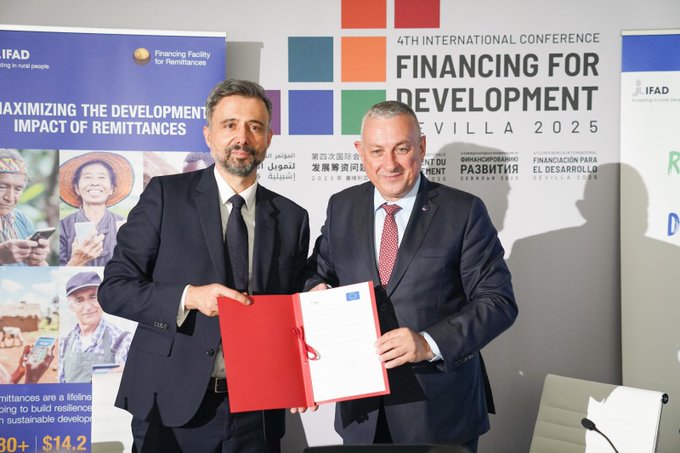
30 June 2025. Seville. From FfD4 Commitments to Actions: Maximizing Remittances and Diaspora Investments towards Financing Development


This side-event provided a platform to reflect on the growing recognition of remittances and diaspora investment to sustainable development in countries of origin. With global remittance flows to low- and middle-income countries (LMICs) surpassing US$685 billion in 2024, exceeding foreign direct investment and over three times the volume of official development assistance, these private financial flows have become indispensable in the global financing landscape, particularly in rural areas where poverty and vulnerability are most concentrated.

Ministers and high-level representatives from IFAD, the European Commission, Italy, Spain, Guatemala, the Philippines and Senegal shared their national experiences and forward-looking actions to mobilize and maximize the impact of remittances and diaspora investment. The session also showcased concrete commitments aligned with FfD4 outcomes, including the signing of a new partnership agreement between IFAD and the EU focused on diaspora investment
, financial inclusion and climate resilience.

The session “Game Changers: Role of Remittances & Diaspora Contributions” explored how remittances and diaspora investments have emerged as transformative forces in global development, far surpassing traditional financing mechanisms like ODA (Official Development Assistance) and FDI (Foreign Direct Investment).

Expert speakers explored the transformative role of remittances and diaspora engagement — recognising them as true game-changers, not afterthoughts:
  • Ms. Faith Kobusingye Mugambwa, Programme Coordinator, Umurenge SACCO Automation & Consolidation Project, Ministry of Finance & Economic Planning, Rwanda
  • Ms. Lanto RAHAJARIZAFY, Director General for Development Partnership & the Diaspora, Ministry of Foreign Affairs, Madagascar
  • Mr. Muyangwa Muyangwa, Director General, National Pension Scheme Authority (NAPSA), Zambia
  • Mr. Jaona Ravaloson, Head of Mission, Meso Capital Madagascar Funds

Read the Financing Policy Brief: Recommendations for FfD4, The role of remittances and diaspora investments in financing the SDGs # 5 pp.
Beyond remittances, migrants also invest back home and contribute substantial human and financial capital in the form of skills and networks into their countries of origin.
Key Themes and Focus Areas
  • Recognition of Growth & Scale: In 2024, remittance flows to low- and middle-income countries (LMICs) reached a staggering US $685 billion, outweighing FDI (~US $435 billion) and tripling ODA (~US $211 billion) feps-europe.eu+3linkedin.com+3ffremittances.org+3.
  • Policy Commitments: Discussions were anchored in the draft outcome document of FfD4, “Compromiso de Sevilla”, which urged governments to: reduce remittance fees (targeting < 3% by 2030), promote digital remittance channels., improve financial inclusion and literacy (especially in rural areas), encourage diaspora investment.
Thematic Highlights
  • Showcasing national experiences (e.g., Spain, Italy, Guatemala, the Philippines, Senegal).
  • Highlighting the EU–IFAD partnership on diaspora investment and climate resilience. 
  • From Commitments to Action. Emphasis on converting high-level pledges into concrete initiatives across digital finance, diaspora engagement, and rural development. ffremittances.org


30 June 2025. Unlocking, Scaling, and Repurposing Finance for Food Systems Transformation: The Strategic Role of International Financial Institutions (IFIs)


High-level speakers from governments, donor agencies, and multilateral organizations assessed progress made in financing sustainable food systems since the 2021 Summit, and identify opportunities and practical solutions to unlock, scale, and repurpose funding. Through data-driven insights, the session pledged for game-changing investments for food systems transformation.

It featured heads of key International Financial Institutions. The UN Deputy Secretary-General Amina J. Mohammed launched the Food Systems Summit +4 (FSS+4) Dialogues, in the lead-up to the UN Food Systems Summit in July in Addis Ababa.

1 July 2025. Harnessing remittances and diaspora investment as innovative financing for development


Over the past 2 years FCDO and IOM have been working to maximise the contributions of remittances and diaspora investment to development on corridors between the UK and East Africa including Kenya and Somalia, working with MTOs and diaspore to bring down remittance costs and stimulate diaspora investment.
  • Amy Pope. IOM Director General
  • H.E. Bihi Iman Egeh, Minister of Finance, Somalia
  • Latest global remittance data: Dilip Ratha, Lead Economist, Migration and Remittances, MIGA, World Bank  (online)
  • Reducing remittances costs UK to East Africa: Killian Clifford, Remittances, diaspora investment and development finance lead, IOM

Panel discussion – The remittance dividend: mobilizing diaspora capital for development – learnings and experiences
  • Killian Clifford, IOM (moderator)
  • Louise Walker, Head of Private Sector and Capital Markets Department, FCDO
  • Prof. Gibril Faal, OBE, Director - GK Partners, LSE visiting professor, UK
  • José Filomeno de Carvalho Dias Monteiro, Minister of Foreign Affairs, Cooperation and Regional Integration and Minister for Communities, Cabo Verde (tbc)

2 July 2025. Investing in the Future: Financing School Feeding as a Cornerstone for Ending
Hunger, Building Resilience and Promoting Development


This side event (Organized by: WFP Centre of Excellence against Hunger in Brazil, Brazilian Cooperation Agency (ABC), FNDE, RAES, and SFI/LGI–EDC) explored how well-financed and nationally integrated school feeding programmes can serve as strategic tools to achieve food security, improve education, promote gender equality, and drive inclusive rural development.

It included keynote presentations, country case studies (including Brazil’s PNAE), and an interactive panel with representatives from Latin America, Africa, and global initiatives. It also showcase the work of key platforms like RAES, the Sustainable Financing Initiative (SFI), and the Global Alliance Against Hunger and Poverty.

GFAiR's Forgotten Food Consortium was represented by Maureen Duru of Foodbridge.

She spoke on the contributions of diasporas as agrofood entrepreneurs, custodians of the African food heritage and development actors. She gave examples of different projects led by diasporas innovating the African food and also as consumers,  how the diaspora has been supporting the African indigenous food systems through what it eats.

She gave an interview at casa devex about the initiatives of Foodbridge. At the school feeding side event she stressed:
  • the need to include indigenous food crops in school feeding programmes 
  • the importance of spending some of the budget for infrastructure on school farms 
  • the support to agricultural undergraduates to ensure sustainability even if the funding stops.

"One of the highlights of attending events like FfD4 is the chance to meet with inspiring individuals and motivated sector leaders; especially those who may not know how their work benefits small organizations that aren’t always visible.  It was a pleasure to meet Mr. Jean Van Wetter , CEO of Enabel and also have a conversation. My colleagues and I informed him of the relevance of our roles as African diaspora development actors." Maureen Duru of Foodbridge 


2 July 2025. From FfD4 Commitments to Action: Unlocking Partnerships between IFIs and NDBs to Increase Agri‑Financing for Rural Transformation. 

This high-level event convened by IFAD, the African Development Bank (AfDB), and the European Investment Bank (EIB) shed a spotlight on a key missing link: scaling up collaboration between International Financial Institutions (IFIs) and National Development Banks (NDBs) to drive investment in agriculture and rural transformation.

The session highlighted how these partnerships can unlock long-term, low-cost financing for country-level priorities, particularly in food systems, where NDBs play a pivotal role as domestic investors. With a focus on concrete examples and lessons from IFAD’s Agri PDB Platform, speakers explored how coordinated financing efforts can boost food security, create rural jobs, and ensure NDBs are more strategically embedded within the international financial system.


FfD4 (3) Scaling solutions: Improving food and nutrition governance in the Sahel and West Africa

30 June - 3 July 2025. Seville, Spain. The 4th International Conference on Financing for Development (FfD4). This global summit is convened by the UN to mobilize and align public and private financing for sustainable development, with a focus on tackling poverty, climate change, inequality, and food system transformation.


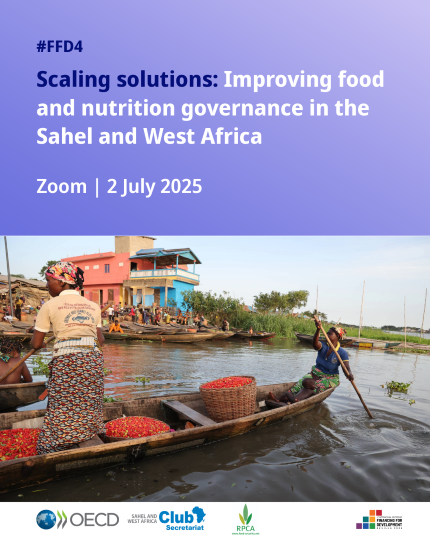
2 July 2025. OECD side event: Scaling solutions: Improving food and nutrition governance in the Sahel and West Africa 


Focus: Strengthening governance, business models, and regional partnerships to build resilient food systems in Sahel/West Africa. Organised by the OECD/Sahel and West Africa Club (SWAC) Secretariat.

Over the past decade, the Sahel and West Africa region has experienced an increase in cereal and root crop production per capita. However, food and nutrition security has worsened, with an additional 30 million people affected in the last five years. This situation demonstrates that agricultural growth alone is insufficient to improve food security which is driven by complex, interconnected factors.

The SWAC Secretariat, in collaboration with the Permanent Inter-State Committee for Drought Control in the Sahel (CILSS), facilitates the Food Crisis Prevention Network (RPCA) under the political leadership of the Economic Community of West African States (ECOWAS) and the West African Economic and Monetary Union (UEMOA). Through the RPCA network, the SWAC Secretariat has recently developed essential governance tools for food security and nutrition. 
  • Moderator: Sidy Gueye NIANG, Programme Manager, Sahel and West Africa Club Secretariat (OECD/SWAC)
  • Dr Issoufou BAOUA, Director General, Agrhymet Centre, CILSS
  • Ms Bintia Stephen TCHICAYA, Representative ad interim in Liberia and Programme Leader for Social Protection for Africa, FAO
  • Ms Cecilia García GASALLA, Director of Cooperation with Africa, the Arab World and Asia, AECID
  • Dr Conrad REIN, Secretary General, Global Flagship Initiative for Food Security, AGFUND
  • Mr Philippe THOMAS, Head of Sector for Crisis and Resilience of Food and Agricultural Systems, European Union
  • Mr Jean Pierre SENGHOR, former Executive Secretary of the Food Security National Council, Senegal
  • Mr Ahmet BENANE, CONACILSS, Mauritania

Tuesday, July 1, 2025

FfD4 (2) New research, innovative financing pathways, and dynamic policy solutions.


    1 July 2025  Prioritizing financing for food system transformation: Options and trade‑offs


    Focus: Aligning public and private capital with sustainable, resilient, nutritious food systems. It presents investment frameworks, green bonds, blended finance incentives, and value‑chain finance to drive sustainable agri‑food transformation - by CGIAR & IFPRI.


    The session opened with the presentation of new CGIAR research that offers a decision-making framework to guide strategic investment in science, innovation, and institutional capacity and market incentives needed to induce farmers and food sector operators to adopt improved sustainable technologies and practices. 

    It then turned to an evidence-based policy discussion on how to (a) create new incentive structures to reallocate existing finance, including through the repurposing of existing public support to agriculture, and, (b) leverage new, alternative financing instruments, such as blended finance mechanisms, incentives for de-risking finance, green bonds, and private value-chain finance, aiming to provide adequate finance for sustainable agrifood system transformation.
    • Johan Swinnen, Director General, IFPRI
    • Representative Agricultural Research Council (ARC) South Africa
    • James Thurlow, Director, Foresight and Policy Modeling (FPM), IFPRI; CGIAR Policy Innovations Program
    • Ruth Hill, Director, Markets, Trade, and Institutions, IFPRI; CGIAR Policy Innovations Program
    • Godefroy Grosjean, CGIAR Hub for Sustainable Finance (ImpactSF)

      CGIAR needs to give commercial banks a better access to data, in terms of assessing risk and understand the risks across their portfolio. We have a role to play in bringing data and science-based solutions for managing risk and impact reporting, and reducing the transaction costs of doing that.

      The CGIAR Hub for Sustainable Finance (ImpactSF) supports banks by providing its AI-powered tool—the ImpactSF Analyzer—which integrates CGIAR’s scientific data, climate‑smart agriculture insights, and local agricultural datasets into customized risk models and portfolio dashboards. This empowers banks to more accurately assess climate and environmental risks across agro-loan portfolios, enabling differentiated pricing, improved due diligence, and the development of new green financial products based on location-specific scenario analysis. The ImpactSF Analyzer, is currently being piloted by multiple banks in Southeast Asia and Africa. 
    Panel on impact investment
    • Moderator Clemens Breisinger, Senior Research Fellow, IFPRI; Interim Director, Policy Innovations Science Program
    • Deniz Harut is CEO and Managing Director of Agri3 fund. The mission of AGRI3 Fund is to mobilise additional public and private capital at scale (to support sustainable agriculture and avert deforestation). Prior to joining AGRI3, Deniz served as an Executive Director at Pollination Group, leading initiatives to transition portfolios
      towards net-zero and nature-positive investments. At Standard Chartered Bank, she held various senior positions for over seventeen years. 
    • Roel Messie, Chief Executive Officer IDH Investment Management | Impact Investing. The EUR 100 million IDH Farmfit Fund wants to empower 3 million farmers with the goal of a 50% income increase.
    • Sylvain Goupille. Founder and Managing Director, October Fund. Entrepreneur for climate action, nature-based solutions and biodiversity "Blending is a nightmare to operate and not a great success for impact"

    Extract Q & A

    GFAiR @James Thurlow: The 26-28 May 2025. Polokwane, Limpopo, South Africa. G20 Meeting of Agricultural Chief Scientists (MACS) gave special attention to the importance of nutrition-sensitive agriculture, biodiversity conservation, and soil health. https://paepard.blogspot.com/2025/06/g20-meeting-of-agricultural-chief.html How desirable  is it to redirect & repurpose funding from staple crops research to Opportunity Crops research: forgotten foods and neglected and underutilised species (NUS) + farmers’ varieties/landraces (FV/LR)

    Petronella Chaminuka (Agricultural Research Council ARC South Africa): Is it desirable to move away from staple crops as staple food are far more affordable for poor populations?

    James Thurlow emphasized that the analysis does not dismiss the importance of staple food crops for poor households—these crops continue to play a significant, pro-poor role. However, the focus of the analysis is on the relative rate of return from various types of agricultural investments, rather than their absolute importance. Twenty years ago, investing in staple crops like maize in regions such as Southern Africa was clearly the most effective strategy for poverty reduction. This was largely because many farmers were subsistence producers, directly consuming what they grew, which created a tight linkage between agricultural production and household food security.

    However, the context has since changed. Markets have become more developed, and farmers are increasingly engaged in commercial agriculture, selling their produce rather than just consuming it. This shift opens up new pathways for poverty reduction that extend beyond staple crops. Investments in other value chains and agricultural products—potentially higher-value or more market-oriented—can now also deliver strong poverty-reducing impacts. The analysis, therefore, looks at how different investment strategies compare in terms of their effectiveness in today’s more dynamic and market-connected agricultural landscape.

    Related: "Impact Investing: From Pioneering Innovations to Scalable Solutions"


    #FFD4 International Business Forum


    2 July 2025 | 8:30–10:00 CET
    📍Room: Madrid E/F, Seville
    Register🔗 https://lnkd.in/gGAgfsik


    This session will examine novel financial tools such as liquidity tools, aggregator platforms, outcome-based finance, and risk mitigation approaches.

    Speakers include: