Platform for African – European Partnership in Agricultural Research for Development

Tuesday, March 31, 2026

AR4D Funding Opportunities for Africa : April 2026

Agriculture Fisheries Forestry


Innovate for Impact Challenge 2026

2026-04-15

The World Food Prize Foundation hosts the Innovate for Impact Challenge to accelerate agricultural technology solutions that address global food security. Early-stage, for-profit AgTech startups from any country are eligible to apply. The winner receives a US$50 thousand grand prize, while second and third-place finalists receive US$10 thousand and US$5 thousand respectively. All three finalists gain international exposure by pitching their innovations live at the Borlaug Dialogue in Des Moines, Iowa. The deadline for applications is 15 April 2026.


Gender Responsive Agriculture Fellowship

2026-04-26

African Women in Agricultural Research and Development (AWARD) manages the Women in Agriculture Leadership Program to strengthen the leadership and research skills of female scientists working on climate-responsive agriculture. This two-year, non-residential fellowship is open to mid-career women scientists who are nationals of and reside in Egypt, Ghana, Morocco, Nigeria, Senegal, or Sierra Leone. While the program does not provide direct cash grants to individuals, it is a fully funded fellowship that covers all costs for high-level leadership training, science mentoring, and professional development workshops. The deadline for applications is 26 April 2026.

Plant Nutrition Scholar Award

2026-04-30

The Plant Nutrition Scholar Award program offers ten awards of US$2,000 to students in the disciplines of soil science, agronomy, and horticultural or tree crop science with a focus on plant nutrition. Students must also be attending a degree-granting institution located in Africa. Candidates must be enrolled in a program of graduate study as of the application deadline of 30 April 2026.

Hermann Eiselen Science Award 2026

2026-04-30

The Fiat Panis Foundation makes awards for university thesis and dissertation research in themes of agriculture and natural resources, with a focus on food security in developing countries. The Hermann Eiselen Science Award is made to a young scientist who focuses on helping to reduce hunger and malnutrition through agricultural research. The value of the award is €30 thousand. The deadline for applications is 30 April 2026.

Prize for Master Thesis in Food Security

2026-04-30

The Fiat Panis Foundation makes awards for university thesis and dissertation research in themes of agriculture, ecology, and natural resources, with a focus on food security in developing countries. The Hans Hartwig Ruthenberg Graduate Award is €7.5 thousand in support of qualified young scientists by honoring their excellent master thesis in the field of food security. The deadline for submissions (German, English) is 30 April 2026.

Collaborative Research Grants

2026-04-30

The International Centre for Genetic Engineering and Biotechnology (ICGEB) provides funding for scientific projects in the life sciences, healthcare, bioenergy, and agricultural biotechnology. This program is open to principal investigators at universities or research institutes located in ICGEB Member States, with a specific category of "Early Career Return Grants" available for researchers under 40 who have recently returned to their home country from abroad. Grants provide a maximum of €25 thousand per year for projects lasting up to three years, for a total award of €75 thousand. The application deadline is 30 April 2026.

Biodiversity Conservation Wildlife

Prize for Nature Conservation

2026-04-08

The Iris Prize celebrates and supports young people accelerating action to protect and restore nature. The Iris Project awards three grants each year: US$5,000 for ages 14-24 awarded for a new idea; US$10 thousand for ages 16-24 awarded for an existing project; US$15 thousand for ages 16-24 awarded for an established project. Application is open to individuals, teams and organizations from all around the world. Applications are open until 08 April 2026.

3-year Postdoctoral Research Fellowship

2026-04-15

The Smithsonian Tropical Research Institute (STRI) invites applications for a three-year postdoctoral fellowship in tropical animal behavior. The annual stipend is US$62 thousand, and the annual research and travel budget is up to US$13 thousand per year. Fellows will be based in Panama and will have the opportunity to conduct comparative research throughout the tropics. Please note that applicants must find a STRI scientific staff member who will serve as their main host/advisor before submitting a final application. Applications have to be submitted by 15 April 2026.

Africa Climate and Environment Micro Grants

2026-04-30

The Pulitzer Center seeks local movements across Africa to promote climate and environmental action by supporting outreach initiatives that creatively integrate Pulitzer Center-supported journalism. Participants will receive micro grants to develop community engagement, dialogue forums, and awareness campaigns focused on climate and labor, rainforest protection, and ocean conservation. Grants range from US$2,500 to US$3,000. Eligibility extends to local organizations and movements targeting young professionals or communities across Africa. Applications close on 30 April 2026.

Small Grants for Conservation in Africa

2026-04-30

The Jana Robeyst Trust Fund provides financial resources to small non-profit organizations and individuals to carry out conservation research in Sub-Saharan Africa. Priority will be given to projects related to the conservation of forest elephants. Applicants can be based anywhere in the world. Funding is €1,500 per applicant. Application deadlines for small conservation grants are 30 April, 31 August, and 31 December each year.

Amphibian and Reptile Conservation

2026-04-30

The International Herpetological Symposium (IHS) provides financial assistance to individuals or organizations conducting herpetological research, conservation, and education. Grants are up to US$1,000. Eligibility extends to any individual from the herpetological community from around the world. Students are encouraged to apply. Proposals are due by 30 April of each year.

Crosscutting


African Scholar Program

2026-04-06

The Nordic Africa Institute offers a scholarship for early-career researchers based in Africa to conduct research in Sweden for two to three months. The program is open to PhD students enrolled in African doctoral programs and postdoctoral researchers who completed their degree within the last four years, provided they are employed at an African university or research center. The scholarship covers economy airfare, accommodation, a workspace at the institute, and an installation grant of 2,500 SEK. Participants also receive a daily subsistence allowance of approximately 450 SEK to cover living expenses in Uppsala. The deadline for the 2027 program is 06 April 2026.

Future Positive Challenge 2026

2026-04-07

Logitech invites applications for the Future Positive Challenge to identify next-generation solutions for sustainable consumer electronics. The program seeks startups and scaling companies with innovative technologies in printed electronics, battery alternatives, advanced thermal materials, and sustainable packaging. Eligible applicants must have a working prototype or a solution ready for market integration globally. Winners may receive a share of a US$500 thousand prize pool to support further development and potential commercial partnership with Logitech. The deadline for applications is 07 April 2026.

Marie Curie COFUND Program

2026-04-08

The Marie Sklowdowska-Curie Actions (MSCA) support research training and career development. The MSCA COFUND scheme aims at stimulating regional, national, or international programs to foster excellence in researchers’ training, mobility, and career development. Each proposal under the COFUND scheme shall have a sole participant who will be responsible for matching funds to execute the proposal. Participants submit multi-annual proposals for new or existing doctoral programs or fellowship programs that may be run at regional, national, or international levels. The application deadline is 08 April 2026

Scholarships for International Students 2026

2026-04-10

Xiamen University (XMU) in coastal Southeast China supports several doctoral, master's, and undergraduate programs in English. Subject areas at XMU include marine affairs, environmental sciences and ecology, life sciences, and many others. The university's scholarship programs include several for international students. The application deadline is 10 April 2026.

Young Professional Development Program

2026-04-11

The Young Professional Development Program (YPDP) is a two-year program designed to prepare young professionals from OPEC Fund member countries for a career in global development. The themes include poverty reduction, energy and sustainable development, environment, and other related science and technology fields. YPDP offers training, coaching and mentoring, the opportunity to experience different departments and access to professional networks. To be selected for the program, applicants must be 30 years of age (or younger) and hold a Master’s degree. The deadline for applications is 11 April 2026.

Women Empowerment Award

2026-04-13

The Bayer Foundation Women Empowerment Award (WEA) recognizes women pioneering in health, nutrition, and related climate-smart solutions. Fifteen female entrepreneurs will get the chance to join the 6-month Accelerator Program and receive €25 thousand in support of their business. To qualify, applicants must center their solutions around health or food security related challenges. The award seeks to support women entrepreneurs driving impactful solutions in the Asia Pacific region, Latin America, Africa, and the Middle East. The application deadline is 13 April 2026.

Advancing Seagrass Science

2026-04-15

The Western Indian Ocean Marine Science Association (WIOMSA) invites proposals to enhance the conservation, restoration, and governance of seagrass ecosystems. This initiative supports applied, policy-relevant research designed to contribute to climate action and sustainable blue economy goals across the Western Indian Ocean region. Funding is available for up to two projects, with each eligible for a grant of up to EUR 150,000 (approximately CAN$220,000) for a 12-month implementation period. To be eligible, proposals must be submitted by a consortium of institutions from at least two of the following countries: Comoros, Kenya, Madagascar, Mozambique, or Tanzania. The deadline for submitting proposals is 15 April 2026.

African Women in Biotechnology

2026-04-15

The ICGEB-SAWBP Postdoctoral Fellowship Scheme supports South African women researchers holding a PhD degree, in Biotechnology or a related discipline who will perform hypothesis-driven research. Proposed research projects must fall within one of the ICGEB areas of research: Infectious Diseases, Non-Communicable Diseases, Bioinformatics, Plant Systems Biology, Biopesticides and Virology. The financial package includes an annual non-taxable stipend of approximately US$17,500 (ZAR 320,000) and annual research costs of approximately US$2,700 (ZAR 50,000), plus additional mobility support for visits to ICGEB labs in Italy and India. The closing date for applications is 15 April 2026.

Global STEM Accelerator

2026-04-15

The Global STEM Accelerator is a program for women and girls who desire to learn more about STEM fields that men traditionally dominate. Scholarship winners will participate in 12-week all-virtual programs focusing on emerging and critical STEM skills and fields, global competence education, and social impact. Applicants must be young women ages 15-17.5 years old. The application deadline is 15 April 2026.

African Research Cooperation with Germany

2026-04-15

The TWAS-DFG Cooperation Visits Program invites postdoctoral researchers in Sub-Saharan Africa to make cooperation visits to institutes in Germany. The visits are limited to three months, with the aim of promoting longer-term collaboration. The German Research Foundation will cover travel expenses and provide subsistence costs for the stay in Germany. Preference is given to young PhD-level scientists, particularly women. The next application deadline is 15 April 2026.

Master and PhD Applications 2026

2026-04-15

The Graduate Institute Geneva (Graduate Institute of International and Development Studies) offers Master's and PhD programs that address global, international, and transnational challenges facing the contemporary world. Its centers include the Centre for International Environmental Studies, among others. The Institute strives to support its students -- to the extent of its ability -- through cost-of-living scholarships, partial scholarships, and/or tuition fee reductions. The regular application deadline is 15 April 2026.

Impact Challenge: AI for Science

2026-04-17

Google.org invites applications for its AI for Science Impact Challenge, a US$30 million global initiative to accelerate scientific breakthroughs using artificial intelligence. The program focuses on two primary domains: health and life sciences, and climate resilience and environmental science. Eligible applicants include nonprofit organizations, academic and research institutions, and for-profit social enterprises with a clear social impact purpose. Selected organizations will receive grants ranging from US$500 thousand to over US$3 million, alongside participation in a six-month Google.org Accelerator providing pro bono technical expertise and Google Cloud credits. The deadline for applications is 17 April 2026.

Accelerator Program

2026-04-24

The Biomimicry Institute seeks applications for its Ray of Hope Accelerator. The institute supports high-impact nature-inspired startups from all over the globe. Each selected startup receives US$15 thousand in non-dilutive funding and over US$50 thousand worth of in-kind services. The program includes tailored coaching, investor introductions, and a 4-day Nature Retreat. The application deadline is 24 April 2026.

Training for Social Entrepreneurs

2026-04-27

The Miller Center for Social Entrepreneurship accepts applications for an accelerator program focused on social enterprises working on women’s economic power and/or climate resilience. The program is designed for established social entrepreneurs who directly serve people living in poverty who suffer disproportionately from climate change. Climate resilience falls into one of the following three categories: sustainable energy, availability of sustainable management of water and sanitation, and climate-smart agriculture. Non-profit, for-profit, or hybrid social enterprises that have a clear commitment to an earned revenue model with the potential for scale are all encouraged to apply. There are no geographical limitations. The application deadline is 27 April 2026.

Business Heroes Competition 2026

2026-04-28

African Business Heroes aims to support the next generation of African entrepreneurs who are making a difference in their local communities by working to solve the most pressing problems. Applications are open in English and French to entrepreneurs from all African countries, all sectors, and all ages. Ten finalists will compete for a share of US$1.5 million in grant money. All Finalists win grant funds from US$100-300 thousand. The applicant must be the Founder or a Co-Founder of the company. Applications close on 28 April 2026.

Australia Awards Africa

2026-04-30

The Australian Government invites applications for the Australia Awards scholarships to provide mid-to-senior-level professionals from eligible African countries the opportunity to pursue a master’s degree in Australia. The program targets individuals from 25 countries, including Nigeria, Kenya, Egypt, and South Africa, who work in priority sectors such as agriculture, climate change, and international security. Applicants must be at least 25 years old and possess five years of relevant post-graduate work experience. The scholarship covers full tuition fees, return air travel, a one-off establishment allowance, and a contribution to living expenses for the duration of the study. The deadline for applications is 30 April 2026.

BiotechNet Grants

2026-04-30

The International Centre for Genetic Engineering and Biotechnology (ICGEB) supports original research projects in basic science, healthcare, and biotechnology specifically for investigators in Djibouti, Ethiopia, Kenya, and Uganda. These two-year grants offer a maximum annual contribution of €24,000 (€48,000 total) to cover consumables, equipment, and travel, with a unique requirement that lead investigators must host a fellow from another partner country to foster regional collaboration. Eligible applicants must hold a position at a university or research institute in one of the four beneficiary countries, and a special "Early Career Return Grant" is available for researchers under 40 who have recently returned to the region after at least two years abroad. The application deadline is 30 April 2026.

Research, Innovation, and Creativity Grants

2026-04-30

The O’Shaughnessy Fellowships offer US$100 thousand equity-free grants to individuals worldwide pursuing research, creative projects, or innovation. Fellows receive mentorship and support from OSV’s network of experts, founders, and investors. Applicants must demonstrate initiative, resourcefulness, and strong proof of work. Additional US$10 thousand grants are available to select applicants based on the Fellowship application. Awards are open to individuals aged 18+ globally. The early application deadline is 28 February, and the extended deadline is 30 April.

Solutions and Climate Action

2026-04-30

The Youth4Climate Call for Solutions supports innovative projects led by young people aged 18 to 29 that address climate challenges in areas such as sustainable energy, food and agriculture, and the blue economy. Eligible applicants include individual youth and youth-led organizations from around the world. Selected solutions receive a US$30 thousand grant for implementation over a maximum of 24 months, alongside technical mentorship and capacity-building support. The application deadline is 30 April 2026.

Small World Competition 2026

2026-04-30

The Nikon Small World Competition is open to anyone with an interest in photography through the microscope. Each year, the top 20 prize-winners are exhibited at numerous museums and science centers throughout the United States and Canada. The Top 3 winners will receive up to US$3 thousand. Only photomicrographs are eligible. Entries must be received no later than 30 April 2026.

Science Reporting Award

2026-04-30

The Council for the Advancement of Science Writing (CASW) awards the Sharon Begley Science Reporting Award. The award recognizes the accomplishments of a mid-career science journalist. The winner receives US$20 thousand to undertake a significant reporting project. Candidates must be experienced journalists who have compiled a substantial body of work in science journalism. The deadline for submissions is 30 April 2026.

Sunday, March 29, 2026

Funding Underutilized Legumes Research: Industry Collaboration

25 March 2026. 34th Academic Lecture Series of the Society for Underutilized Legumes (SUL). Funding Underutilized Legumes Research: Industry Collaboration  

Webinar organized by the Society for Underutilized Legumes (SUL).

Professor Adesola Ajayi, Vice-Chancellor of Abiola Ajimobi Technical University (Tech-U), delivered a compelling message: Nigeria is overlooking a major economic and nutritional opportunity—underutilized legumes.

Nigeria possesses one of Africa’s richest legume gene pools, including crops that are drought-tolerant, nutrient-dense, and culturally embedded. Yet these crops remain largely absent from formal research agendas, national budgets, commercial seed systems, and fast-moving consumer goods (FMCG) markets. This neglect is driven by structural factors rather than agronomic limitations. Limited research investment leads to a lack of improved varieties, which discourages private sector engagement and perpetuates a cycle of underinvestment.

This gap is particularly striking given Nigeria’s broader context. With a population exceeding 230 million facing increasing food insecurity and an FMCG market valued at around $25 billion and growing rapidly, the country is under pressure to identify scalable, locally sourced solutions. Underutilized legumes present a compelling opportunity to respond to both challenges simultaneously.

Their potential extends well beyond food security. Economically, they can reduce dependence on imported wheat while opening export opportunities for crops such as Bambara groundnut and pigeon pea. Socially, their commercialization can generate employment across value chains and significantly boost rural incomes. Importantly, these crops are predominantly cultivated and processed by women, meaning that their expansion directly supports women’s economic empowerment. Nutritionally, underutilized legumes offer high protein content and essential micronutrients, making them well suited to address malnutrition and hidden hunger.

The urgency of leveraging this potential is underscored by Nigeria’s nutrition crisis. Approximately one-third of children under five are stunted, while millions face acute malnutrition and a majority of women of reproductive age suffer from anaemia. Underutilized legumes, which can be incorporated into commonly consumed foods such as bread, noodles, and complementary products, provide a practical pathway to improving dietary quality at scale.

Despite this promise, three systemic barriers continue to limit progress

  1. Public research funding remains heavily concentrated on major staple crops, leaving underutilized legumes underfunded. 
  2. The private sector, particularly FMCG companies, has yet to engage meaningfully, relying instead on global commodity supply chains. 
  3. At the same time, a significant gap exists between research and commercialization, with insufficient investment in product development, processing technologies, and regulatory readiness. As a result, many research outputs fail to reach the market.

However, evolving market dynamics suggest that change is possible. Nigeria’s FMCG sector is experiencing strong growth, driven by increasing demand for plant-based and health-oriented products, as well as economic pressures that favor local sourcing. These trends create a growing market pull for innovative ingredients such as underutilized legumes.

Among these crops, Bambara groundnut illustrates the commercial potential. With protein levels comparable to widely consumed legumes and strong resilience to harsh growing conditions, it is already integrated into local diets and has demonstrated versatility in processed foods such as bread, biscuits, and snacks. Even modest incorporation into mainstream food products could generate significant economic returns while improving nutrition and reducing reliance on imports.

Global experience offers useful lessons. Institutions such as EMBRAPA in Brazil and ICRISAT in India have shown that sustained public investment combined with structured private sector engagement can successfully translate research into commercial outcomes. In Africa, the International Institute of Tropical Agriculture provides a strong scientific base, but stronger linkages to markets are needed. The key challenge is therefore not the absence of knowledge, but the lack of coordinated systems to move innovations from laboratory to market.

To address this, the proposed Nigerian Underutilized Legumes Research and Commercialization Consortium (NULRCC) offers a promising pathway. By bringing together researchers, industry, government, and development partners, the consortium would align investments, support product development, and accelerate commercialization through a phased approach combining public and private financing.

Universities are central to this transformation. By acting as translational hubs, they can bridge the gap between research and industry through food technology pilot plants, industry partnerships, and market-oriented research. Institutions such as Tech-U are well positioned to lead this shift, given their applied focus and proximity to key agricultural and research ecosystems.

Nigeria now stands at a pivotal moment. The convergence of market growth, food system pressures, and rising demand for nutritious, locally sourced products creates a unique opportunity. Unlocking the potential of underutilized legumes will require coordinated action across stakeholders, but the rewards are clear: stronger rural economies, improved nutrition, reduced import dependence, and more inclusive agricultural development.

Thursday, March 26, 2026

Conscious Food Systems Alliance

26 March 2026. The Royal Government of Bhutan, the Conscious Food Systems Alliance and the UN Development Programme along with partners, will host the first Global Conscious Food Systems Summit, from 31 August to 4 September in Paro, Bhutan. 

This online kick-off event of the Global Conscious Food Systems Summit 2026— featured high-level speakers including: 

  • Dasho Tshering Tobgay, Prime Minister of the Royal Government of Bhutan 
  • Haoliang Xu, UN Under-Secretary-General and UNDP Associate Administrator
  • Hindou Ibrahim, Climate adaptation expert and Indigenous rights advocate
  • Nana Woo, Human Development Programme Design Specialist, SEKEM

The contribution of Neglected and Underutilized Species (NUS) for sustainable agrifood systems transformation

26 March 2026. The contribution of Neglected and Underutilized Species (NUS) for sustainable agrifood systems transformation

The webinar examined how NUS could support the transition toward more sustainable, resilient, and nutrition-sensitive agrifood systems. It highlighted the role of these crops in enhancing dietary diversity, strengthening climate resilience, and conserving biodiversity, while also contributing to local economic development through diversified value chains. 

The webinar addressed the need to better integrate NUS into policy frameworks and innovation agendas, linking research, practice, and policy processes. Participants emphasized the importance of improving post-harvest handling and value addition, as well as strengthening the science–policy–practice interface to support scaling. The discussions underscored both the potential of NUS and the remaining knowledge gaps, particularly in relation to processing, storage, and market integration.

Speakers:
  • Sayed Azam-Ali, CEO, Crops For the Future CFF; Chair UN High Level Panel of Experts on Food Security and Nutrition; Chair (Emeritus) Global Food Security, University of Nottingham.-Importance of neglected and underutilised species: why do they matter?”


  • Hamid El Bilali, Researcher, CIHEAM Bari From SUSTLIVES to AgriEcoNUS+: Scaling Agrobiodiversity and NUS-Based Food Systems in Africa”


  • NUS from a value chain development perspective”, by Emmanuel Msuya, Marketing Programme Officer, SWISSAID Tanzania


Comment of Maureen Duru, coordinator of the GFAiR Collective Action on Forgotten Foods:

"How will all these interventions ensure that communities especially in Africa, who are custodians of many NUS, retain ownership and control over their genetic resources and traditional knowledge? Are there safeguards are in place to prevent biopiracy or unfair commercialization of African indigenous crops? If these are not in place, we will still have a system that that takes from the continent for the benefit of others."

"Can the EU or relevant projects also explore integrating African diaspora entrepreneurs as key actors in developing NUS value chains between Africa and Europe. The diaspora food markets have been sustaining farmers, processors and marketers working on NUS for years".

Highlight: Main brands producing Bambara groundnut value-added products

Aonyx Foods - Bambara Groundnut and the Agrifood Technology Station (ATS) of the Cape Peninsula University of Technology (CPUT) has used the Bambara Groundnut as a raw material to create several value-added products. These include dairy-substitutes, baked-goods, meat-substitutes, and beverages.

Download here the Aonyx Bambara groundnut product range potential which includes several gluten-, lactose- and cholesterol-free value-added products. These include dairy substitutes, baked goods, meat substitutes and beverages. These products have the potential to be rapidly scaled up to provide niche and alternative products that are nutritious and marketable.

CPUT is looking to create a manufacturing business, vertically integrating with other sectors in the country. It is currently looking for investors to partner with us to take this business opportunity forward.

🥢 WhatIF Foods (Singapore)

  • 👉 This Singapore-based startup is the pioneer in commercializing Bambara-based noodles globally

Products:

  • BAMnut instant noodles (“Only Noods”)
  • Variants include pumpkin, moringa, charcoal, etc.

Key features:

  • Made from Bambara groundnut flour (“BamNut”)
  • High protein (~16–17g per serving) and high fiber
  • Produced using air-frying instead of deep frying (no palm oil)

Resources:

Hamid El Bilali et all (2024) Mapping Research on Bambara Groundnut in Africa Bibliometric, Geographical, and Topical Perspectives 33 p.

Reviews 180 scientific publications on Bambara groundnut across Africa. This article shows its strong potential for:
  • food & nutrition security
  • climate resilience
  • livelihoods
  • Identifies major gaps:
  • weak research coverage in key producing countries
  • limited work on markets, processing, and socio-economics

Analyses Bambara groundnut as a neglected and underutilized species (NUS). This article highlights key constraints:
  • low productivity
  • lack of improved varieties
  • weak agronomic practices

There is a widespread agreement that West African food systems need to be transformed. Neglected and underutilised crop species (NUCS/NUS) and agroecology can play a vital role in making these systems more sustainable and resilient. Therefore, this systematic review analyses the multifaceted and multidimensional relationships between NUS and agroecology as well as the potential contribution of NUS to agroecological transition in West Africa.

Background

SUSTLIVES (August 2021 - July 2025)
SUSTLIVES focused on promoting sustainable livelihoods through the valorisation of neglected and underutilised species (NUS), with particular emphasis on strengthening local value chains, improving nutrition, and enhancing resilience to climate change. 

  • The project worked closely with smallholder farmers and local enterprises to develop sustainable production, processing, and marketing strategies, while fostering multi-actor collaboration among research, policy, and private sector stakeholders. 
  • By integrating agroecological principles and supporting capacity development, SUSTLIVES contributed to more inclusive and diversified agrifood systems, particularly in vulnerable regions.
  • It promoted diversified farming systems, soil health restoration, and climate-smart practices while integrating socio-economic dimensions such as income diversification, gender inclusion, and local value chains. 
  • A key feature of SUSTLIVES was its use of living labs and co-creation with farmers, ensuring that innovations are locally adapted and scalable. The project ultimately aims to strengthen livelihoods while contributing to broader food systems transformation and environmental sustainability.

AgriEcoNUS+ (start February 2026)
AgriEcoNUS+ (Enhancing value chains and markets of Neglected and Underutilized crop Species to contribute to Agroecological transition in Africa), is to strengthen the resilience and sustainability of local agri-food systems in partner countries by promoting agroecological principles and the valorisation of neglected and underutilised species (NUS), with a focus on climate change adaptation and socio-economic shocks.

  • Implementing partners: AICS, IFAD, CIHEAM-Bari (Centre International de Hautes Études Agronomiques Méditerranéennes – Institut Agronomique Méditerranéen de Bari), and SWISSAID.  
  • Development and International Agencies: Alliance Bioversity International– CIAT (ABC), FiBL;
  • Regional Organisations: CORAF, ROPPA, 3AO alliance, AFSA; 
  • African Universities & Research Institutes: UJKZ (Burkina Faso), UAM (Niger), UG (Ghana), UPGC (Côte d’Ivoire), ISRA (Senegal), TARI (Tanzania), SUA (Tanzania), Bio-Innovation Zimbabwe, etc

PrAEctiCe CWEN Agroecology Final Conference 2026

 26 March 2026. Kajjansi, Uganda (NARO Aquaculture Research Centre). PrAEctiCe CWEN Agroecology Final Conference 2026.

The event serves as the culmination of the PrAEctiCe project, showcasing:

  • Evidence from 3 agroecology living labs (Kenya, Uganda, Tanzania)
  • Practical applications of Circular Water–Energy–Nutrient (CWEN) systems
  • Tools and indicators supporting smallholder agroecological transition

The participants for the Main Event included Consortium members, academia, agriculture technology companies, small-scale farmers, farmers’ associations, women’s associations, policy makers, private sector businesses, agricultural input suppliers, extension agents, development partners, and non-governmental organisations (NGOs).

Extract of the programme

The PrAEctiCe project training testimonial from smallholder Farmers and Women's Associations in East Africa.

Farmers and representatives from farmers' associations will share firsthand accounts of how engaging with the PrAEctiCe Living Labs and Agroecology systems has transformed their agricultural practices, water use, and livelihoods.

  • Joel Mwambola - Sustainable Agriculture Tanzania
  • Justine Bagenda, National Agricultural Research Organisation NARO
  • Lovin Kobusingye, President, Uganda National Women’s Fish Organisation
  • John Ochieng, Head of Programs, COFIAuganda
  • Moderator: Faith Njihia, Africa Agribusiness Academy


PrAEctiCe open access training materials


This presentation introduced the PrAEctiCe training materials, “Introduction to Agroecology,” hosted on the Smart Step platform. It explored how these materials have been structured for learners and can be accessed and adapted by stakeholders.

  • Blessing Sorinola, APODISSI


Evidence-based policy recommendation for economic, environmental, and social returns


This presentation outlined the economic, environmental, and social benefits of agroecological practices and present actionable policy recommendations to unlock these returns at scale.
  • Emmanuel Okalany, RUFORUM

European Commission project synergies and collaborative pathways for sustained impact


This session brought together representatives from European Commission-funded projects working on agroecology, sustainable agriculture, and circular food systems to share tools, methodologies, and innovations from their respective projects, identify areas of complementarity, and discuss practical pathways for collaboration.

  • Dr Erick Ogello, Maseno University, CareForAfrica project
  • Godfrey Biso, Biotechnologist at Youths in Technology and Development (YITEDEV) Ruralities project
  • Emmanuel Okalany, CEA FIRST project
  • Morris Egesa, African Forum for Agricultural Advisory Services (AFAAS), Project Coordination Assistant, CANALLS project
  • Moderator: Charles Gitau, Africa Agribusiness Academy


CAADP Continental Technical Workshop on the Kampala Results Framework

23 - 27 March 2026. CAADP Continental Technical Workshop on the Kampala Results Framework 

The African Union Commission (AUC), the African Union Development Agency (AUDA-NEPAD), the Regional Economic Committees (RECs), and technical partners have been developing tools and guidelines to support the implementation of the CAADP Kampala agenda. Amongst these is a robust Results Framework and set of indicators to be assessed every two years at the continental level. A technical team of experts, led by IFPRI, and working with AUC/AUDA-NEPAD and partners, has undertaken initial technical work to draft a proposed CAADP Kampala Results Framework, a preliminary indicator set and technical notes. 

This consultation and technical workshop provided the platform for Member States, RECs and key
stakeholders to review the proposed Results Framework and indicators, co-design and agree on indicators (2026-2035), strengthen feasibility and ownership, and agree on a clear roadmap for implementing the biennial review system.

Specific objectives: 
  • Understand, review and agree on the proposed Kampala Results Framework 
  • Explore alignment between the CAADP results framework with the AU-wide strategy on Flagship Programs
  • Share, understand and review the proposed Kampala BR indicators, baselines and benchmarks
  • Review associated tools (technical guidelines, technical notes, and country reporting template)
  • Agree on governance and coordination arrangements for data collection, validation, and reporting
  • Agree on an implementation roadmap for the first Kampala BR cycle.

Context
  • The new CAADP Kampala strategy (2026–2035) is a flagship of Agenda 2063
  • It includes 6 strategic objectives, 22 targets, and 48 interventions
  • Namibia is highlighted as a leading country in aligning national plans with CAADP

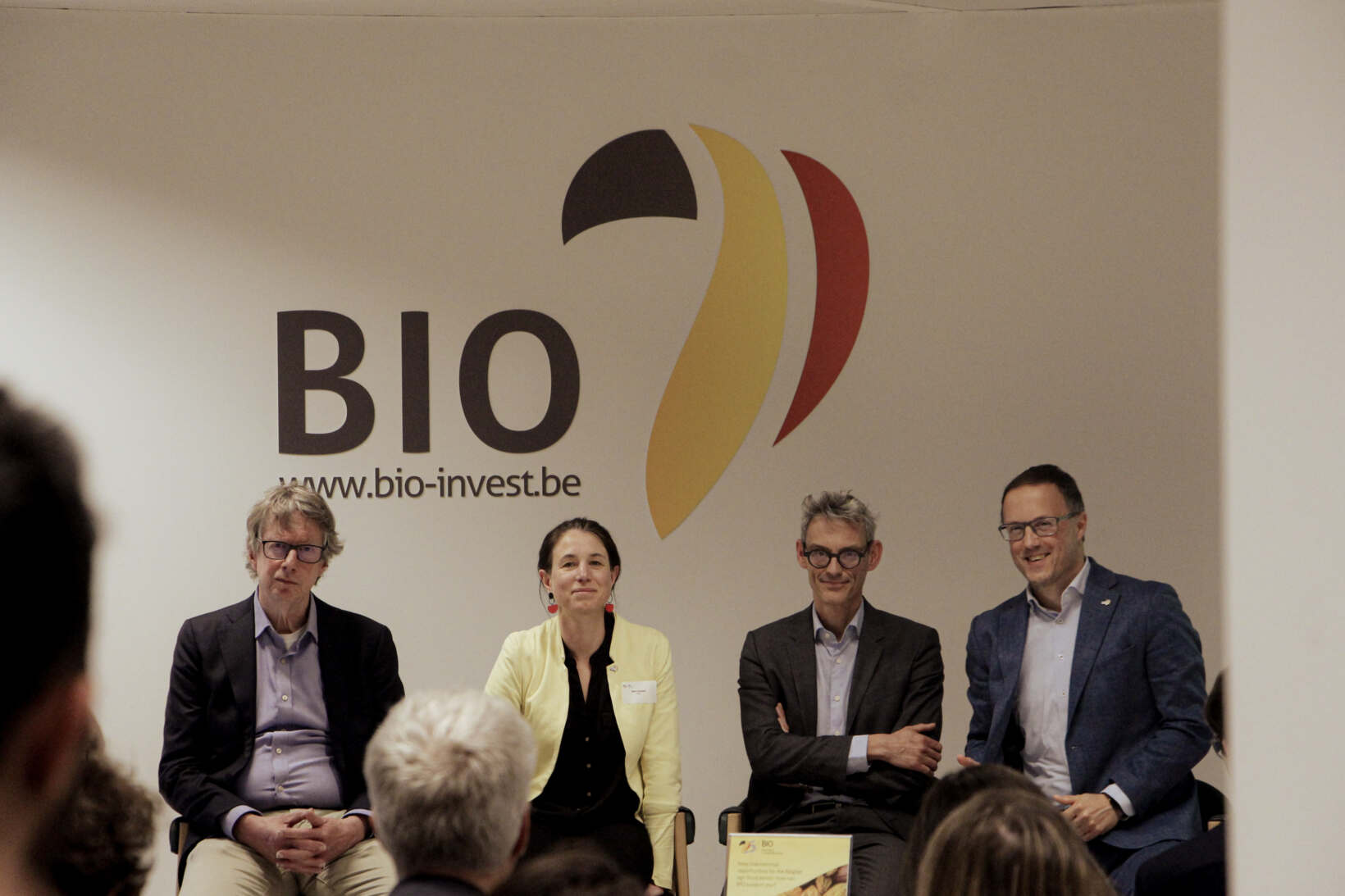
New global opportunities for Belgian agri-food

24 March 2026. New global opportunities for Belgian agri-food: how can BIO support you?

BIO had the pleasure of bringing together, alongside FIT, AWEX, hub.brussels and Beyond Chocolate, a wide range of actors from the Belgian agri‑food sector for an exchange focused on international opportunities. The late‑afternoon event was marked by collaboration, curiosity, and the shared ambition to build stronger, more sustainable, and better‑connected global value chains.

Europe’s Vision: The Global Gateway Ambition

Bart Casier, from the European Commission, further illuminated this dynamic by highlighting the ambition of the Global Gateway: a Europe that goes beyond the role of donor to engage in genuine investment partnerships with Africa, Latin America and Asia. An approach built on cooperation, shared value creation, and next‑generation financing instruments that open markets, strengthen infrastructure and support high‑impact projects.

BIO’s Contribution: Financing, Partnerships and Local Impact

BIO then shared its vision and its role within this ecosystem. Through the presentation of Marie Watelet, the focus was placed on concrete ways of collaborating with Belgian companies: supporting local actors essential to supply chains, financing projects rooted in their territory, and co‑building solutions with Belgian companies whenever there is a relevant economic, social, or strategic link. The objective has remained the same from the beginning: helping companies grow where access to capital is limited, while generating lasting value for local communities.

Practical Inspiration: IDH Invest and the Power of Blended Finance

The testimony of Roel Messie, CEO of IDH Invest, offered a very concrete illustration of what innovative mechanisms such as the Farmfit Fund can achieve—from strengthening the capacity of agribusinesses to improving the incomes of hundreds of thousands of smallholder farmers. A demonstration that when investment and technical assistance advance hand in hand, the transformation of entire sectors becomes possible.

Webinars and events April 2026

1 April 2026. @14:00 CEST (Central European Summer Time). When Saving Seed Becomes a Crime
APBREBES and Third World Network will launch of the study “When Saving Seeds Becomes a Crime” which sheds light on how farmers around the world are increasingly being criminalized and harassed for saving, using, exchanging, and selling seeds. 

2 April 2026. @3:00 PM – 6:00 PM Africa Food Systems Forum 2026 Launch Ceremony.


9 April 2026 (14 CEST/15 EAT/8 EDT, Webinar). Agroecology Coalition and the School Meals Coalition for the One Health Summit - “Agroecology and public health as levers to promote sustainable school food systems”


15 April, 13:00-15:00 (CET) | ATIO at the 2026 Forum for the Future of Agriculture

16 April 2026. @ 16:30 Funding the future: Inside sustainable diaspora organisations
  • Diaspora organisations are key actors in global development, connecting financial, human and social capital across countries of residence and heritage. Yet despite their essential role, many continue to navigate a challenging funding landscape marked by short-term financing, limited structural support and heavy reliance on voluntary contributions.
  • To better understand these dynamics, EUDiF commissioned the study “Business models of diaspora organisations”, prepared by the diaspora-led Innogence Consulting with contributions from Maria Regina Tongson and Michelle Amoakoh. The research identifies seven business models and sheds light on the creativity, constraints and financial logics shaping diaspora organisational life today.
16 April 2026 15:00–16:30 CEST Resolving Land Disputes: Communities and governments bridging land governance institutions
  • Third webinar in the LAND-at-scale series on Land and Conflict.


  • The 18th edition will focus on "Durability of livestock production and food sovereignty" (Durabilité de la production animale et souveraineté alimentaire).
21-22 April 2026 - In person meeting in Brussels Meeting of the Green Era Hub (GEH) on widening and outreach 

21-23 April 2026 (Dakar, Senegal) 5th edition of the Senegal Agroecology Days, “De la vision à l’action : institutionnaliser l’agroécologie pour des systèmes alimentaires durables" 

23 April 2026. AGRINATURA Global Gateway Strategy Conference 

24 April 2026. Technology Transfer and Impact Licensing from Europe towards Africa
  • The Impact Licensing Initiative is celebrating World IP Day on Friday 24 April with an online presentation.
  • The future of the Africa-Europe relationship must move beyond interdependence toward co-sovereignty—a partnership where Europe gains technological resilience while Africa achieves digital and industrial autonomy. The role of intellectual property in that development is of key importance it is not only a matter of industrial revolution: it is a tool that can be used by all parties to assist in the building of bridges between the two continents to achieve the UN Sustainable Development Goals while creating economic growth. Speakers :
  • Mouctar Bah (Brussels Africa Hub) - Opportunities for tech transfer and collaboration between Europe and Africa
  • Kevin Nachtrab (former IP counsel at J&J and President of LESI) and Nora Ho Tu Nam (lawyer at Ipvocate Africa) - How African companies can secure their IP rights
  • Bruno Vandermeulen (IP Director Impact Licensing Initiative) - Impact Licensing as a win-win for European / African tech transfer and collaboration
24 April 2026. PROMOTING INDIGENOUS SEED PRACTICES TO ADVANCE SEED AND FOOD SOVEREIGNTY, AND PROTECTION OF BIODIVERSITY. 

  • Virtual. The Society for Underutilized Legumes (SUL)
  •  Speaker : Lopez Katherine, Head of Communication, IITA.
29 April 2026. Beyond Silos: Lessons from African Cities on Participatory Urban Food Systems Governance
  • side event to the 12th session of the Africa Regional Forum on Sustainable Development.
  • Across the continent, cities are experimenting with new ways to bring governments, researchers, civil society and communities to the same table. The results are here and they are pointing to a shared insight: when cities work together, change happens faster.
  • The AfriFOODlinks project is hosting a session that puts these experiences front and centre. The stories from the ground are compelling. In Lusaka, a dedicated Food Desk is helping city officials make better decisions by connecting policy to evidence. In Mbale, the Good Food Parliament has opened up a formal space for communities to have a real say in what a healthier food environment looks like. In Kisumu, the Food Liaison Advisory Council (FLACK) is bridging the gap between city government, civil society and the people who grow, sell and eat food every day.
  • The session will be particularly relevant for those working on agricultural innovation systems, advisory services, digitalisation, and multi-actor partnerships
6 - 7 May 2026. GLF Africa 2026: Rangelands

  • As an open entry point to the Africa–Europe innovation community, the webinar will introduce the objectives of the AEIP, its role in supporting partnerships across the two continents, and give an update on the growing range of activities available through the digital space for those interested in cross-regional cooperation.
  • This online workshop, jointly organised with EURAXESS Africa, provides a comprehensive introduction to the Africa Initiative IV under the Horizon Europe work programme 2026–2027. Participants will receive guidance on how to engage with the initiative and access available funding opportunities.

25-28 May 2026 at FAO Headquarters, Rome Nutrition Week
  • 25 May: Nutrition Evidence and Innovation for Shaping Agrifood Systems Transformation (thematic lead: FAO)
  • 26 May: Local Food Solutions for Global Impact (thematic lead: WFP)
  • 27 May: Aligning Financing for Nutrition Integration (thematic lead: IFAD)
  • 28 May: Delivering as One for Coherent Nutrition Action (thematic lead: UNN)
  • Proposals can be submitted via this form by 13 March 2026 (COB).

  • Theme: Powering Africa’s Future: Women Leading the Green Energy Transition
  • ​The Women in Geopolitics Debate Series is a high-level dialogue platform that convenes former diplomats, policy experts, political leaders, scholars, and practitioners to examine Africa’s geopolitical positioning within an increasingly complex global order.


9 - 11 June 2026. Accra, Ghana. NUS Africa's regional stakeholders conference 

  • Theme: Feeding Africa: From Smallholder Farmers to Industrial Value Chains
  • ​The Women in Geopolitics Debate Series is a high-level dialogue platform that convenes former diplomats, policy experts, political leaders, scholars, and practitioners to examine Africa’s geopolitical positioning within an increasingly complex global order.


1-2 July 2026. Utrecht, the Netherlands. Land, Conflict, and Peace conference

  • The EU-funded project CIRAWA has been collaborating with farmers and stakeholders in four West African countries (Cape Verde, Ghana, Senegal, and The Gambia) since 2023, to develop and share agroecological and nature-based solutions that promote sustainable and resilient farming.
15-17 July 2026 – Nairobi, Kenya. Africa Food Manufacturing Kenya & Eastern Africa

16 July 2026 – Nairobi, Kenya. Africa Food Awards

27–31 July 2026 in Abuja, Nigeria. 9th Africa Agriculture and Science Week AASW9 and the 10th FARA General Assembly


25 - 26 August 2026. Leuven, KU Leuven. Plant-Based Fermented Foods for Healthier and More Sustainable Diets - HealthFerm Final Conference

8-10 September 2026, Dubai World Trade Centre, UAE. Agra Middle East 2026 (AgraME 2026)

September 2026. Africa Food Systems Forum 2026


16 to 18 September 2026 in Göttingen (Germany) and online. TROPENTAG under the theme 'Towards multi-functional agro-ecosystems promoting climate-resilient future'.

The call for abstracts is now open. You can submit abstracts for either in-person or online presentations until 24 April 2026 via the Submission Portal
The call for workshops is open until 3 May 2026. If you are interested in organizing a workshop, FILL IN THIS TEMPLATE and send it to info@tropentag.de no later than 3 May.15-17 September 2026 – Lagos, Nigeria Africa Food Manufacturing Nigeria & Western Africa

22–25 September 2026. Nairobi (Kenya). Smart Agriculture: Innovation, Digital Transformation, and Trade for a Climate-Challenged Africa.
The event invites papers and proposals on topics like climate-smart ag, agri-finance, digital tech, value chains, and gender/youth in agriculture, with submissions due by March 31, 2026
by African Association of Agricultural Economists (AAAE).
October 2026. FAO’s World Food Forum (WFF) Youth Assembly
This is a year-round platform for youth engagement in agrifood systems. It includes ongoing virtual and thematic consultations throughout the year and typically culminates in activities around the flagship World Food Forum event in October.19–23 October 2026. FAO HQ, Rome, Italy. CFS 54th Plenary Session

19-30 October 2026. Seventeenth meeting of the Conference of the Parties to the Convention on Biological Diversity

31 October 2026. International Conference on Agroforestry Systems for Climate Adaptation and Biodiversity (ICASCAAB-2026)
Focuses on agroforestry systems, climate adaptation, and biodiversity — a platform for researchers and practitioners to share developments in the field.25-27 November 2026. Santiago, Chile. XI CONGRESSO LATINOAMERICANO DE AGROECOLOGIA

17th – 20th November 2026. 1st Eastern Africa Indigenous Seed Conference - EA-ISC 2026
Building farmer managed seed system community of practice (COP) For a Resilient EASTERN AFRICA Region.
  • Catholic university of Eastern Africa, Nairobi, Kenya

Tuesday, March 24, 2026

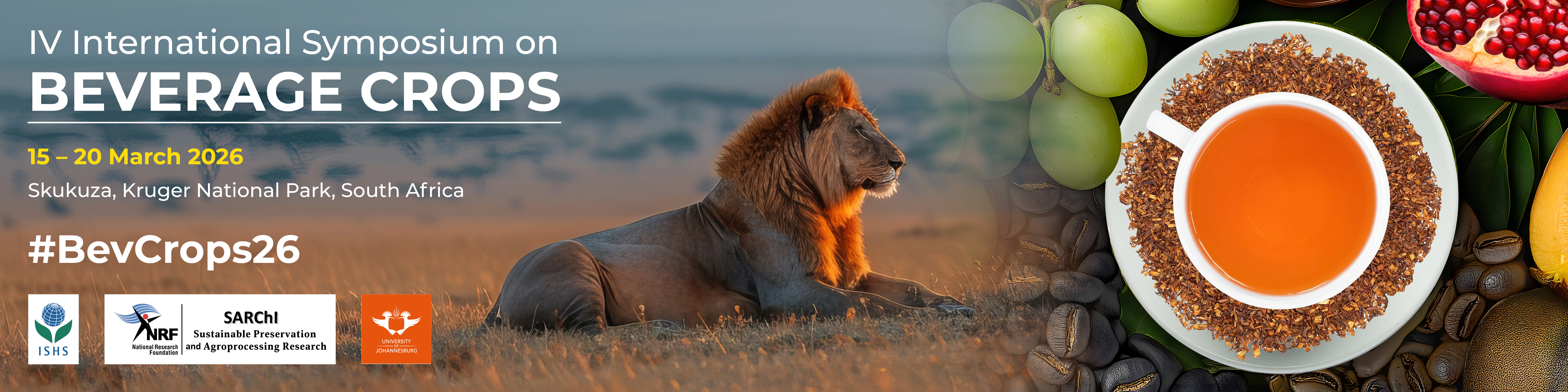
International symposium on Beverage crops South Africa


15-20 March 2026.
 International symposium on Beverage crops South Africa

  • Under the theme ‘Beverage Crops: Sustainability and Scientific Advancements in the 21st Century,’ this symposium highlighted the latest research, technological innovations, and industry trends shaping the future of beverage crop production and processing.
  • This theme reflects the growing importance of beverage crops in sustainable agriculture, nutrition, and global trade. Beverage crops encompass a vast diversity of fruits, nuts, vegetables, vine and berry fruits, and botanical plants used for fresh juices, extracts, fermentations, and infusions.
  • From widely consumed beverages such as coffee, tea, beer, and wine to emerging plant-based alternatives like almond and soy beverages, as well as herbal infusions rich in bioactive compounds—including the proudly South African Rooibos tea—this symposium provided a platform for scientific exchange, innovation, and industry collaboration.
  • This event built on the success of previous symposia held in Cairns, Australia (2016), Xi’an, China (2018), and Murcia, Spain (2023)

Extracts of the programme


16/03 Indigenous, underutilized and culturally significant crops 


  • Chair: Prof. Adeyemi Aremu
  • Community-Based Participatory Research on Beverage Wild Tea Species - Dr. Nadia Araya, Mr. David Sehlola, Ms. Johleen Malaka, Ms. Retang Phaahla, Ms. Nondumiso Phaahla, Ms. Mammone Tang
  • Potential Use of Moringa oleifera as a Functional Underutilized Beverage Crop - Ms. Johleen Malaka, Dr. Nadia Araya
  • Ethnobotanical Appraisal of Ziziphus mucronata as a Reproductive Health Beverage - Ms. Hlengiwe Khumalo, Dr. James Lwambi Mwinga, Prof. Adeyemi Oladapo Aremu
  • Traditional Beverage Potential of Mpesu (Securidaca longipedunculata) for Male Health in South Africa - Dr. Nadia Araya, Mr. Wilson Libago, Ms. Johleen Malaka
  • Medicinal and beverage uses of Myrothamnus flabellifolius Welw. (resurrection plant) for good health and well-being in Southern Africa - Ms. Keloabetswe Mokgau, Dr. James Lwambi Mwinga, Dr. Makhotso Lekhooa, Prof. Stephen O. Amoo, Prof. Adeyemi O. Aremu
  • Nutritional and beverage potential of five edible fruit species consumed by Mapulana people in Mpumalanga Province of South Africa - Dr. Kutullo N. Shai, Dr. Khae Ncama, Dr. James Lwambi Mwinga, Prof. Stephen O. Amoo, Prof. Adeyemi O. Aremu

16/03  Indigenous crops, traditional fermentation and processing 


  • Chair: Prof. Oluwafemi Adebo
  • Characterization of Autochthonous Marula Wine Yeasts Growth Dynamics, Nutrient utilization and Stress Tolerance - Prof. Tieho Paulus Mafeo, Prof. Kgabo Moganedi, Dr. Annastatia Lekganyane, Dr. Lesetja Legodi, Mr. Ramoba, Louis, Ms. Ayishah Seimela
  • The physicochemical properties and microbial diversity of spoiled marula fruits - Prof. Tieho Paulus Mafeo, Dr. Perpetua Tebeila, Ms. Dzuvha Mulaudzi, Prof. Kgabo Lydia Moganedi
  • Chemical composition and bioactive analysis of the marula fruit juice after the pretreatment and fermentation - Ms. Matholo Joyce Mothapo, Dr. Lesetja Moraba Legodi, Prof. Kgabo L Maureen, Moganedi
  • Probiotic Potential and Health-Promoting Properties of Microorganisms Isolated from Spontaneously Fermented Marula Fruit Wine - Ms. Matholo Joyce Mothapo, Dr. Annastasia Lekganyane, Ms. Amahle Ntluko, Ms. Lilian Makgoo, Prof. Kgabo Moganedi, Mr. Louis Ramoba
  • Exploitation of marula fruit wine's wild yeasts as suitable candidates for industrial craft beer brewing - Ms. Matholo Joyce, Mothapo, Loius Ramoba, Prof. Kgabo Moganedi, Dr. Annastatia Lekganyane
  • Exploration of bacteria involved in spontaneous fermentation of umqombothi (an indigenous South African beverage) - Prof. Oluwafemi Adebo, Prof. Patrick Njoberh, Mr. Wisdom Tizayi, Ms. Lungani Nyathi, Mr. Edwin Vukosi

19/03 Cross-cutting and interdisciplinary futures

  • Unlocking the beverage potential of plants identified among the Yoruba-speaking people in Nigeria - Prof. Adeyemi Oladapo Aremu, Basirat O. Ms. Rafiu, Assist. Prof. Abiodun O. Omotayo, Prof. Ibraheem O. Lawal
  • Potential of Eswatini indigenous plants in the nutraceutical beverage industry- a review - Dr. Patricia Carmichael, Dr. Kwanele Andy Nxumalo, Ms. Menzi P. Ms. Ngwenya, Mr. Vusumuzi Vilane, Dr. Gugu Sibandze
  • Chemical diversity and variability in essential oil composition across three underutilised Agathosma species for potential beverage crop preservation - Dr. Yardjouma Silue, Neliswa H. Ms. Gcabashe, Prof. Olaniyi A. Fawole
  • Cultural and nutritional benefits of Ximenia afra var afra among the Bapedi and Vhatsonga people in Mopani district, Limpopo Province - Mathabe P. Maake, Dr. Makhotso Lekhooa, Prof. Dr. Adeyemi O. Aremu, Prof. Stephen Amoo

Friday, March 20, 2026

Financing Flows for Sustainable Food Systems

19 March 2026. Brussels. Financing Flows for Sustainable Food Systems. Organised by Plateforme Agriculture et Sécurité Alimentaire.

The geopolitical shifts of recent years have been accompanied by a significant decline in development aid funding at all levels of government. As a result, funding for food security and sustainable food systems is drying up.  This situation is prompting international cooperation actors to explore new sources of funding and investment. The Global Gateway, which was discussed at a previous PASA session, sets out a new European framework. Blending finance is increasingly being promoted as a solution to invest in sustainable food systems.  The objectives of this meeting were:

  • Gain a better understanding of existing funds and opportunities. 
  • Ensure better access to finance for smallholder producers and sustainable food systems (SFS). 
  • Examine the challenges and opportunities of blending. 
  • Learn about the recommendations issued by the CFS. 
  • Present examples of good practices by Belgian development cooperation actors.  

Speakers:
  • White Paper: An integrated investment framework for climate-adaptive and water-resilient food systems (35 p)- Jahan-Zeb Chowdhury, Lead Technical Specialist for Environment and Climate at IFAD (Online)  
  • Lizah Makombore, Institute for Agroecology, University of Vermont - “Agroecology and public development banks” Report - Coalition against Hunger
  • Jérémy Thirion, Global Gateway Advisor at DGD - Global Gateway Investment Hub - State of Play 
  • Presentation of a case study in Benin - Enabel & BIO-Invest 

Resources:


Makombore, L. and C. R. Anderson. (2025). Agroecology and Public Development Banks: Transforming Development Finance for Equity and Resilience. UVM Institute for Agroecology. Burlington, Vermont. (74 p) 
  • This report outlines how public development banks can shift funding away from industrial agriculture toward agroecology to support sustainable food systems. 
  • Produced by the UVM Institute for Agroecology, the report recommends reforming mandates to prioritize human rights and environmental health through six key actions.
  • This paper advocates for global collaboration to fill the $500 billion to $1 trillion annual investment gap in climate-adaptive, water-resilient food systems. These systems prioritize long-term sustainability over shortterm gains by balancing agricultural productivity with the preservation of nature, biodiversity, and ecosystems.
  • Around 60% of climate adaptation projects focus on water, highlighting the close connection between
  • water resources, climate resilience, and agricultural productivity. These projects offer significant benefits, not only enhancing agricultural resilience and productivity, but also boosting nutrition and health from improved soil and water quality. 
  • However, the paper reveals that financing for such projects faces numerous structural and design-specific challenges.

Tuesday, March 17, 2026

European Carbon Farming Summit

17-19 March 2026. Padua, 
Italy. European Carbon Farming Summit.

The Summit aimed to accelerate the transition to scalable and credible carbon farming in Europe by bringing together science, policy, finance, and practice. It focused on moving from pilot initiatives to real implementation, aligning stakeholders to deliver measurable climate impact while ensuring value for farmers and land managers. Core goals included: Bridging science, policy, and practice Scaling regenerative agriculture and carbon markets Developing robust standards, MRV systems, and financing models Supporting EU climate policy (e.g. Carbon Removal Certification Framework).

The European Carbon Farming Summit 2026 served as a multi-stakeholder, action-oriented platform that advanced discussions on practices, standards, and MRV systems, with the overarching goal of turning carbon farming from fragmented pilots into credible, scalable, and policy-aligned systems across Europe.

Extract of the programme

19 March: Parallel Session 5. Opportunities for Cooperation on Agroforestry Carbon Farming Between European Research Projects, and Extension to Projects Operating in Africa

This session
  • Facilitated knowledge exchange between Europe and Africa on agroforestry carbon farming
  • Explored collaboration between EU and Africa-based projects
  • Addressed shared MRV challenges, methodologies, and scaling opportunities
  • Aimed to strengthen cross-regional coordination and avoid duplication
Speakers
  • European Agroforestry Federation (EURAF)
  • Thünen Institute
  • Technical University of Munich (TUM)
  • ecosostenibile.eu S.r.l. Società Benefit
  • AfroGrow (explicit Africa-linked organisation)
  • CSIC (Spanish National

Innovation Session: On-the-Ground Impact, Regenerative Practices, Biodiversity, and 
Ecosystem Co-Benefits

Abdul-Rauf Brenya, Executive Managing Director of A. R. Brenya Company Ltd - Today's Agriculture in Africa. 
Brenya Company Ltd is a diversified enterprise operating in Africa, with activities spanning agriculture (including farming and related value chains), import–export trade, recruitment services, and travel/logistics support. The company also positioned itself within discussions on climate-smart agriculture, soil health, and carbon farming, reflecting engagement in sustainability-oriented agricultural practices and knowledge sharing.

Global Conference on Women in Agri-Food Systems (GCWAS-2026)

12–14 March 2026. 
The Global Conference on Women in Agri-Food Systems (GCWAS-2026), held in March 2026 in New Delhi under the theme “Driving Progress, Attaining New Heights,” brought together global stakeholders—including policymakers, researchers, women farmers, entrepreneurs, and development organizations—to advance gender equality in agriculture. 

The conference highlighted the central role of women in agri-food systems and focused on promoting inclusive policies, strengthening women’s leadership and economic empowerment, and leveraging technology for transformation. 

Key discussions addressed access to markets, finance, innovation, and capacity building, while dedicated platforms such as the Women Farmers’ Forum and Youth Forum amplified grassroots voices and future leadership. The event is expected to contribute to a global roadmap with actionable recommendations, strengthened partnerships, and scalable solutions to support women as key drivers of sustainable and resilient agri-food systems.


Session 1 – Interface with Global Women Trailblazers


This session explored leadership journeys of prominent women who had shaped agricultural science, innovation, and policy. The discussion highlighted the importance of women’s leadership in decision-making across research institutions, international organizations, and the private sector. Participants reflected on how mentorship, education, and institutional support had enabled women to break barriers in agri-food systems and emphasized the need to strengthen global networks that support emerging women leaders.
  • Ismahane Elouafi – CGIAR
  • Renu Swarup – Government of India
  • Purvi Mehta – Global Center on Adaptation

Session 2 – Driving Progress, Attaining New Heights


This session showcased inspiring case studies from women scientists, entrepreneurs, farmers, and industry leaders who had advanced innovation in agri-food systems. Presenters shared personal and professional experiences demonstrating how women had overcome structural barriers and expanded their impact through technology adoption, leadership in research institutions, and entrepreneurial initiatives. The session emphasized the importance of visible role models and success stories in motivating the next generation of women in agriculture.

  • Purnima Menon – International Food Policy Research Institute
  • Usha Barwale Zehr – Grow Indigo
  • Meenesh Shah – National Dairy Development Board

Session 3 – Mainstreaming Gender Equality and Social Inclusion

This session examined strategies for integrating gender equality into agricultural policies, research programs, and institutional frameworks. Experts discussed approaches for ensuring equitable participation of women across value chains, including access to resources, training, leadership opportunities, and decision-making processes. The discussions emphasized the role of gender-responsive policies and inclusive institutional systems in creating fair and sustainable agri-food systems.
  • Dina Nijjar – International Center for Agricultural Research in the Dry Areas
  • Nitya Rao – University of East Anglia
  • Aly Abousabaa – ICARDA

Session 4 – Emerging and Disruptive Technologies for Gender-Transformative Change


This session highlighted the role of emerging technologies in transforming women’s participation in agriculture. Discussions focused on digital agriculture, artificial intelligence, climate-smart technologies, and women-friendly farm tools designed to reduce drudgery and enhance productivity. Speakers demonstrated how inclusive technological innovation could empower women farmers and entrepreneurs while strengthening sustainable agri-food systems.
  • Bram Govaerts – International Maize and Wheat Improvement Center
  • Nick Austin – Australian Centre for International Agricultural Research
  • Renuka Diwan – Bioprime Agrisolutions

Session 5 – Building Future Leadership in the Agri-Food Sector


This session addressed the need to cultivate a new generation of women leaders in agriculture. Participants discussed mentorship networks, leadership training programs, and educational initiatives that could enable young women to develop professional skills and leadership capacity. The session emphasized that nurturing future leaders was essential for building resilient and inclusive agri-food systems.
  • Rajbir Singh – Indian Council of Agricultural Research
  • Rajarshi Roy Burman – ICAR
  • Mridula Devi – Central Institute for Women in Agriculture

Session 6 – Empowering Women through Economic Inclusion


This session focused on economic empowerment through entrepreneurship, financial inclusion, and market participation. Presentations highlighted successful models of women-led enterprises, cooperatives, and microfinance initiatives that improved access to markets and income opportunities. Discussions emphasized the role of value chains, digital platforms, and financial services in strengthening women’s economic participation in agriculture.
  • Smita Sirohi – National Institute of Agricultural Economics and Policy Research
  • Pratibha Singh – ACIAR
  • Sweta Singh – Corteva Agriscience

Session 7 – Gender Dynamics in Policy and Market Access


This session explored how policy frameworks and institutional reforms could improve women’s access to markets, resources, and decision-making processes. Participants discussed policy innovations that could strengthen food security and ensure that women farmers and entrepreneurs benefit from market opportunities, technology adoption, and inclusive governance structures.
  • Ch Srinivas Rao – Indian Agricultural Research Institute
  • Bhag Mal – Trust for Advancement of Agricultural Sciences
  • JL Karihaloo – TAAS


Scaling Agroecology Through Policy-Driven Investment

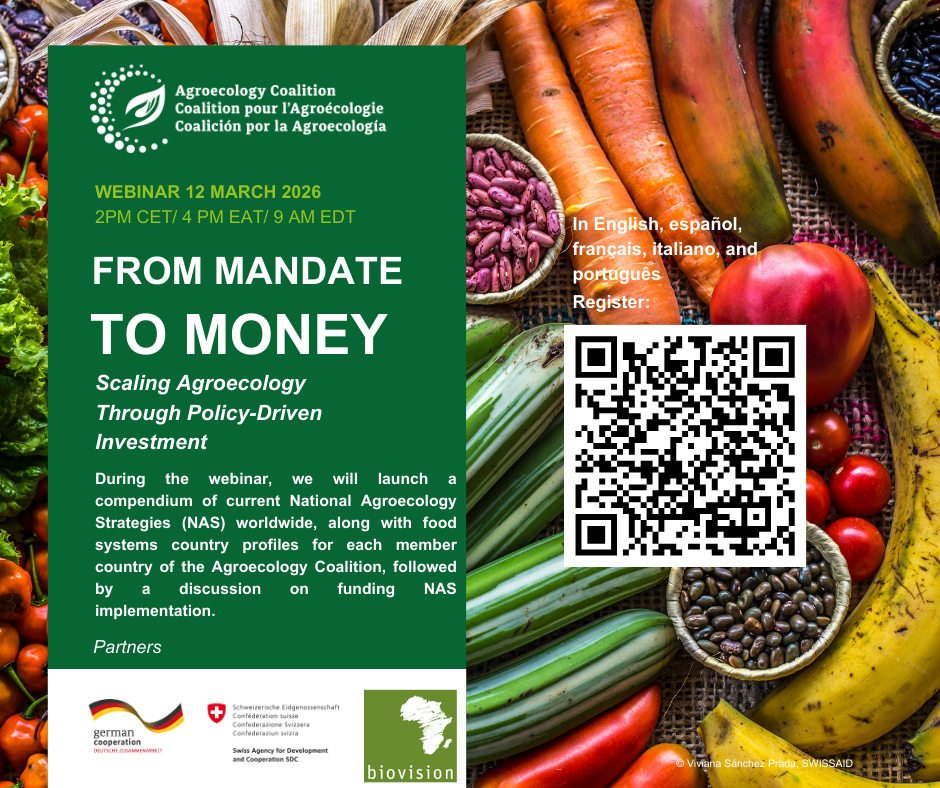
12 March 2026From Mandate to Money: Scaling Agroecology Through Policy-Driven Investment

Despite the challenging global context affecting food systems, agroecology continues to advance as a pathway towards food system transformation. This is evidenced by the emergence of national and regional policies and strategies around the world. In 2025, several countries introduced or strengthened their policy frameworks supporting agroecological transitions.

During the webinar the Agroecology Coalition launched a compendium of current National Agroecology Strategies (NAS) worldwide, along with food systems country profiles for each member country of the Agroecology Coalition, followed by a discussion on funding NAS implementation.

  • Opening address: Ronnie Brathwaite, Food and Agriculture Organization of the United Nations (FAO)
  • Presentation of the Compendium of National Agroecology Strategies and Country Briefs: Oliver Oliveros, Agroecology Coalition
  • Moderation: Amelie Steu

Roundtable discussion with country representatives and donors

  • Thatheva Saphangthong, Lao PDR
  • Fernanda Machiaveli, Ministry of Agrarian Development, Brazil
  • Valentina Palmeri and Guido Bissanti, Coordinamento Agroecologia Sicilia 
  • Stephanie Piers De Ravenschoot, Swiss Agency for Development and Cooperation
  • Lauren Baker, Global Alliance for the Future of Food
  • Morest Agossadou, Caisse des Dépôts et Consignations du Bénin (CDC Bénin)
  • Liesa Nieskens, Deutsche Gesellschaft für Internationale Zusammenarbeit (GIZ)
  • John Garcia Ulloa, Biovision Foundation 
  • Moderation: Oliver Oliveros, Agroecology Coalition
  • Moderation: Marion Michaud, European Commission

Resources: 

As of March 2026, the following countries have adopted National Agroecology Strategies or Laws: Benin, Bolivia, Brazil, Burkina Faso, Colombia, Cuba, Dominican Republic, Ethiopia, Kenya, Tanzania, Tunisia, and Uruguay. Others are also in the process of developing or validating one: Ethiopia, Laos, Malawi, Nepal, Uganda, South Africa, Zambia and Zimbabwe. This acceleration marks a significant shift in the global food systems landscape. It signals growing political recognition of agroecology as a strategic pathway toward more resilient, sustainable, and equitable food systems, and reflects a broader international momentum toward scaling agroecology.

On this page you will find National Agroecology Strategies and Laws in Benin, Bolivia, Brazil, Burkina Faso, Colombia, Cuba, Dominican Republic, Ethiopia, Kenya, Tanzania, Tunisia, and Uruguay

On this page, you will find 53 country briefs—one for each member government of the Agroecology Coalition.

Each country brief provides information on:
  • National agricultural context
  • Main food and agriculture policies, strategies, and laws currently in force, including key highlights
  • Ongoing agroecology programs and projects
  • International development cooperation initiatives related to agroecology
  • Recent news and innovations linked to food systems and agroecology
  • Agroecology Coalition member organizations in the country
  • Additional resources for further reference
  • These briefs offer an overview of how each country is advancing food systems transformation through agroecology, reflecting its specific social, economic, environmental, and political context.