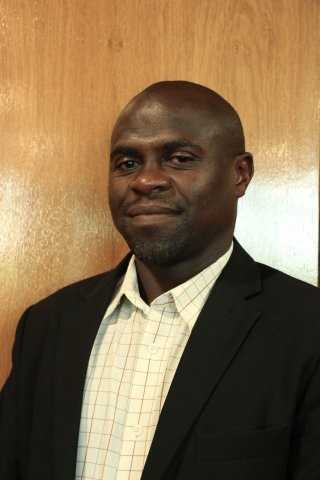
Dr Askwar Hilonga’s innovation – a sand-based water filter that cleans contaminated drinking water using nanotechnology – has earned him prize money of UK £25,000 (TZS79 million).
Each Nanofilter is engineered for a specific body of water and absorbs the contaminants present – from heavy metals or minerals, such as copper and fluoride, to biological contaminants like bacteria and viruses, and pollutants such as pesticides.
Background:
Twelve Africans had been shortlisted last year for the Africa Prize for Engineering Innovation organised by the UK’s Royal Academy of Engineering (RAEng). The agriculture related technologies were:
Ernst Pretorius – A fence tampering warning system for farmers (South Africa)
Musenga Silwawa – A precise and regulated fertiliser applicator for small-scale farmers (Zambia),
Askwar Hilonga – The integration of nanotechnology and sand-based water filtration for safe drinking water (Tanzania),
Oscar Kibazohi –The mechanical pressing of bananas to produce enzyme-free clear banana juice (Tanzania)
Related:
A walking-stick like fertiliser applicator
will help small-scale farmers in sub-Saharan Africa
nother simple device resembling a walking stick could soon be helping small farmers in sub-Saharan Africa to apply fertilisers to their crops and improve efficiency of their work. Silwawa’s design, a runner up in the Africa Prize for Engineering Innovation, consists of a backpack with the fertiliser, a simple transfer tube and a handheld walking-stick-like applicator. The device allows one person to do what three were doing previously. The fertiliser applicator is currently undergoing tests at the University of Zambia in preparation for its market launch.
I developed this technology out of my personal experience of the difficulties that small scale farmers in sub-Saharan Africa face. The farmers there don’t have any appropriate technology. They rely 100 per cent on manual, physical labour. They don’t have tools designed for farming activities. Applying a fertiliser, for example, would normally take three people, going from one plant to another. The first opens a hole next to the plant, the second applies the fertiliser using only his hand and the third closes the hole. It’s not calibrated, it’s inconsistent, it’s wasteful and that’s how I came up with the technology,” Musenga Silwawa, part-time farmer and researcher at Zambia’s Agriculture Research Institute.
10 - 11 July 2015. Arusha, Tanzania. Selian Agricultural Research Institute (SARI). The 3rd Tanzania Agribusiness Expo 2015 took place on ‘’Enhancing innovation in agribusiness to increase productivity and food security”.
The objectives of EAGC Agribusiness expo included the following:
Promote a well functioning regional supply chain, focusing on trade issues affecting all sectors of the chain, and building a platform for reducing constraints in regional trade;
Build cooperation, interaction, partnerships, alliances, networks and market linkages;
Collect and manage market data, generate information exchange and share regional expertise
Promote investment in structured marketing systems including warehouse receipts and commodity exchanges
Act as the main certification authority in structured systems, and provide commercial services as needed
Recognize and support accepted principles of international codes of corporate conduct
Facilitate awareness of new technologies
Represent the regional membership at national, regional and international forums, and lead advocacy and lobbying actions for best interest of council members.
Related:
26 - 27 June 2015. UGANDA. Over 10,000 farmers from Masindi, Kiryandongo, Hoima, Buliisa, Kibaale, Oyam, Apac, Gulu, Nwoya, Lira, Nakasongola and other parts of Uganda attended the annual Agribusiness expo organized by East Africa Grain Council (EAGC).
23 June 2015, Rome - FAO is joining forces with three of Italy's main research institutions in the fields of food, environment and technology to help developing countries build stronger agricultural sectors through better research and information.
The new partnership will focus on advanced research and technology development to help developing countries manage natural resources more sustainably, promote innovation in agriculture, and improve the quality of diets with studies on the best ways to use indigenous crops for healthy nutrition.
It will also support countries in adding value to agricultural products through enhanced processing techniques and certificate schemes, and making food systems more inclusive.
Through the new collaboration with FAO, countries will benefit from the expertise of Italy's National Research Council (Consiglio Nazionale delle Ricerche - CNR), the Council for Agricultural Research and Economics (Consiglio per la ricerca in agricoltura e l'analisi dell'economia agraria - CRA) and the National Agency for new technologies, renewable energy and sustainable economic development (Agenzia nazionale per le nuove tecnologie, l'energia e lo sviluppo economico sostenibile - ENEA).
The awards ceremony took place at the EXPO Milano 2015 world fair and was hosted by the Feeding Knowledge Program - an international network for research and innovation in food security. The competition was implemented by the Mediterranean Agronomic Institute of Bari.
Together with Cornell University and the Ministry of Agriculture, Livestock and Fisheries, IFAD began applying the SRI method in the Upper Mandraré Basin Development Project in Madagascar in 1997. The success of the project, which ran in two phases until 2007, has lead to the adaptation of the SRI method in at least 50 countries around the world and by as many as five million smallholder farmers.
8 - 9 July 2015. Mauritius. This International Conference was a multi-disciplinary, peer-reviewed international conference on sustainable energy and environment. The conference focused on energy conversion and management, green energy, environmental engineering, environmental management, climate change and sustainable development. The conference provide a forum to:
Exchange of latest technical information
Disseminate of the high-quality research results
Present of the new developments in the area
Discuss the future global development on energy access, energy security together with the associated environmental impacts.
One dedicated session on "LifeLong Learning for Energy security, access and efficiency in African
and Pacific SIDS" will be facilitated by the L3EAP project. The L³EAP project funded by the EC/Edulink program aims to increase the capacity of universities in African, Caribbean and Pacific Group of States (ACP) SIDS to deliver high-quality Lifelong Learning courses on the topics of energy access, security and efficiency.
Download the L³EAP newsletter and read the latest news and activities from the L³EAP project.
Werner Hoyer, in cooperation with Luxembourg’s Presidency of the European Union, hosted the EIB Africa Day. On this occasion, the Bank welcomed
Phil Hogan, European Commissioner for Agriculture and Rural Development, Romain Schneider,
Minister for Development Cooperation and Humanitarian Aid, Luxembourg and
Donald Kaberuka, President of the African Development Bank.
High level speakers from Europe as well as Africa shared their experience of doing business on the continent, across several sectors and from various backgrounds.
Panel on the Internationalisation of African Businesses
Extract of the programme:
Breakout-session 2 - Agri-Business
Africa is perceived to have a large potential in agriculture. It
should have the resources to feed its growing population
and able to export to Europe and other continents.
Yet there are persistent inefficiencies in agricultural value chains
leading to low revenues, low productivity and high postharvest
losses and ultimately low competitiveness with
imported commodities like rice and sugar.
There are only few
examples of local processing, in particular when it comes to
cash-crops like cocoa, coffee, cotton or sugar.
What are the
main opportunities out there? What can work? What is
from left to right: Mr Kees Verbeek, Rabobank Netherlands; Mr Carl Heinrich Bruhn, Amatheon Agri Holding; Ms Judith Helfmann-Hundack, German-African Business Association; Mr Mamadou Cissokho, ROPPA, Burkina Faso; Ms Sabine Kontos, Penta Flowers
the
relevance of technology innovation and quality standards? To
what extent can agri-business contribute to enhance African
industrialization?
Agri-Business
Moderator: Judith Helfmann-Hundack, Director,
German-African Business Association
Keynote address: Li Yong, Director General, United Nations
Industrial Development Organisation (UNIDO)
Panel discussion:
Carl Heinrich Bruhn, Founder and Chief Executive Officer,
Amatheon Agri Holding, Germany
Sabine Kontos, Chief Executive Officer, Penta Flowers, Kenya
Kees Verbeek, Senior Relationship Banker Africa, Rabobank,
The Netherlands
Mamadou Cissokho, Honorary President, Network of Farmers
and Agricultural Producers Organizations (ROPPA), Burkina Faso
3 July 2015.This week saw my second trip to Expo Milano since its opening where I had the chance to visit even more pavilions. Beginning my visit at the EU pavilion I was welcomed at a reception of agri-food stakeholders. Expo is a real window of opportunity to communicate with citizens, foster global research and stimulate a meaningful policy debate. During my time there I also stopped by the pavilions for China, Uganda, Japan, Morocco and Colombia and took the opportunity to experience the fantastic food and drink products being produced all over the world.
Building on the results of IPCC 5th Assessment Report (AR5), the
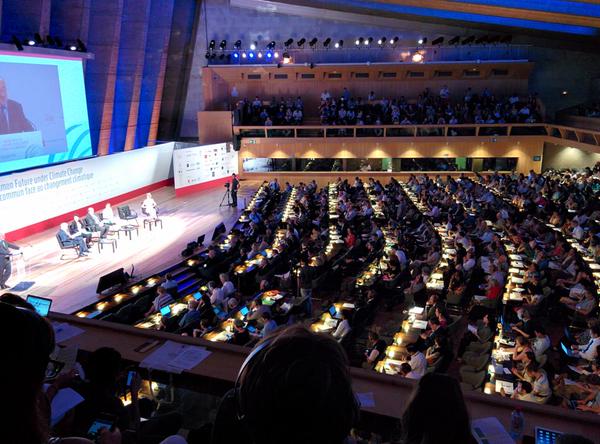
Conference addressed key issues concerning climate change in the broader context of global change. It offered an opportunity to discuss solutions for both mitigation and adaptation issues. The Conference also welcomed Side Events organized by different stakeholders.
The conference was organized under the umbrella of ICSU, Future Earth, UNESCO and major French research institutions, with the support of the French Government.
Published on 10 Jul 2015 (closing session)
Collective Action and Transformative Solutions
Chair: T. Ribera (Institute for Sustainable Development and International Relations, Paris, France)
Speakers: J. Stiglitz (Columbia University, Columbia, United States of America) ; S. Jasanoff (Harvard Kennedy School, Cambridge, United States of America) ; Y. Sokona (The South Centre, Geneva, Switzerland) ; L. Tubiana (Sciences Po, Paris, France), R. Kyte (World Bank, Washington D.C., United States of America) ; H.-J. Schellnhuber (Potsdam Institute for Climate Impact Research, Potsdam, Germany) ; R. D. Holt (U.S. House of Representatives, Washington, United States of America)
Members of the Scientific Committee from Africa: Isabelle NIANG-DIOP (IRD, Senegal) ; Robert SCHOLES (University of Witwatersrand, South Africa)
9 July 2015. Dr. Cheikh Mbow, a senior scientist on climate change and development, was interviewed by AllAfrica on his research on an integrated approach to land management in Africa, where competition for resources between pastoral and agricultural communities often causes conflict. Dr. Mbow, of the World Agroforestry Centre in Nairobi, is also an associate professor of the Universite Cheikh Anta Diop de Dakar in Senegal. Excerpts from his replies:
His presentation [at the conference] was about the change in the paradigm of addressing risk in the African landscape. This risk is related to extreme climatic events, mostly connections between climate risk and other threats such as governance or institutional issues.
Narindra Rakotovao of the University of Antananarivo presented research on the introduction of "agro-ecological practices" among farmers in Central Madagascar - which have the effect of reducing carbon emissions on farms and improving productivity and people's livelihoods. In Central Madagascar there is an NGO whose objective is to diffuse agro-ecological practices to farmers, mainly with a system of rice intensification and the integration of trees into the cropping system.
Extracts of the programme: Facing climate change in Sub-Saharan Africa
Facing climate change in Sub-Saharan Africa
The aim of this session was to review the state of knowledge on observed changes and foreseen perspectives, related to climate, environment and socio-economy, in this highly vulnerable region. It will cover (i) observed climate changes and related impacts, (ii) future climate change and (iii) impacts scenarios and adaptation options in a warmer climate.
Observatories, a Key Tool to Tackle Climate Changes in Tropical Regions T. Lebel (IRD, 38041 Grenoble Cedex, France), C. Peugeot (IRD, Montpellier, France), M. Grippa (Université de Toulouse, Toulouse, France), S. Galle (IRD, 38041 Grenoble Cedex, France)
Climate Change Projections in the Sahel. The what and the why M. Biasutti (Columbia University , New York, United States of America), M. Biasutti (Columbia University, Palisades, NY, United States of America)
External forcing and Sahelian African climate anomalies - A study from the WAMME project Y. Xue (Professor, UCLA, Los Angeles, United States of America), W. Lau, (2. University of Maryland, College Park, College Park, United States of America), A. Boone, (CNRM, Toulouse, France), S. I. Seidou (Centre Régional AGRHYMET/CILSS, Niamy, Niger, Republic of), W. Thiaw (5. National Centers for Environmental Prediction, College Park, United States of America), L. Druyan, (Goddard Institute for Space Studies/NASA and Columbia University, New York City,United States of America), D. Rowell (Met Office Hadley Centre, Exeter, United Kingdom)
Projected Climate Conditions over West Africa for the End of the 21st Century: Impact on Extreme Precipitation Events M. B. Sylla (WASCAL Competence Center, Ouagadougou, Burkina Faso), D. Wisser (University of Bonn, Bonn, Germany), N. Elguindi (Abdus Salam International Centre for Theoretical Physics (ICTP), Trieste, Italy), F. Giorgi (Abdus Salam International Centre for Theoretical Physics (ICTP), Trieste, Italy)
Trends in West African floods: A comparative analysis with physiographic indices N. N. Bernadette (International Institute of Water and Environment Engineering, Ouagadougou, Burkina Faso), H. Karambiri (2IE, Ouagadougou, Burkina Faso), O. Ludovic (UPMC, Paris, France), P. Ribstein (Université Pierre et Marie Curie,Paris, France), J.-E. Paturel (IRD, Abdijan, Ivory Coast)
Temperature in the Sahel: mean climate and multidecadal warming in observations and climate simulations CMIP5F. Guichard (CNRM-GAME (UMR 3589, CNRS and Meteo-France), Toulouse, France), J. Barbier (CNRM-GAME (UMR 3589, CNRS and Meteo-France), Toulouse, France), C. Leauthaud (LSCE, CEA, Gif-sur-Yvette, France), L. Kergoat (GET (UMR CNRS 5563), Toulouse, France), D. Bouniol (CNRM-GAME (UMR 3589, CNRS and Meteo-France), Toulouse, France), F. Couvreux (CNRM-GAME (UMR 3589, CNRS and Meteo-France), Toulouse, France), B. Diallo (LMD (IPSL, CNRS, UPMC), Paris,France), F. Hourdin (LMD (IPSL, CNRS, UPMC), Paris, France), S. Janicot (LOCEAN (CNRS, IPSL, IRD, UPMC), Paris, France), R. Roehrig (CNRM-GAME (UMR 3589, CNRS and Meteo-France), Toulouse, France)
Assessing climate impacts and adaptation options for cereal systems in West Africa D. Lobell (Stanford University, Stanford, United States of America), K. Guan (Stanford University, Stanford, United States of America), M. Biasutti (Columbia University , New York, United States of America), C. Baron (CIRAD, Montpellier, France), S. Benjamin (40 rue Joseph Gaillard, Vincennes, France)
The challenge of water resource management in the Lake Victoria basin, East Africa H. Houghton-Carr (Centre for Ecology & Hydrology (CEH), Wallingford, United Kingdom), M. Fry (Centre for Ecology & Hydrology (CEH), Wallingford, United Kingdom)
Yield Gap and the shares of climate and crop management in yield and yield variability of staple crops in West Africa F. Affholder (CIRAD, Montpellier, France), B. Sultan (IRD, Paris, France), P. Kouakou (CIRAD, Bobo-Dioulasso, Burkina Faso), C. Poeydebat (CIRAD, le Lamentin, France), B. Muller (CIRAD, Montpellier, France)
The re-greening Sahel: How green is green enough ? C. Dardel (LSCE/CESBIO, Toulouse, France), L. Kergoat (GET, Toulouse, France), P. Hiernaux (GET, Toulouse, France), M. Grippa (Université de Toulouse, Toulouse, France), E. Mougin (GET, Toulouse, France)
The probable impacts of climate change on malaria and Rift Valley fever in Africa A. Morse (University of Liverpool, Liverpool, United Kingdom), C. Caminade (University of Liverpool, Liverpool, United Kingdom), A. Jones, (University of Liverpool, Liverpool, United Kingdom), J. Leedale, (University of Liverpool, Liverpool, United Kingdom), A. Tompkins, (ICTP, Trieste, Italy)
Poster presentations from Africa related to this session: (Abstract Book from page 598 onwards)
Wind erosion flux and dune front dynamic
at the Sahara-Sahel border: case of Kilakina
(SE Niger)
Precipitation and disturbance as main
determinant of the spatial variability of
carbon fluxes in 16 West African ecosystems Benin
Study of CLOUDSAT products in semi-arid
region of Cameroon
Impacts of climate variability on crop yield:
how do local farmers adapt in Nigeria?
Climate and climate variability: case study
of the traditional lowland rice cultivation in the middle and upper Casamance
Region, Senegal
Comparative study of five statistical
methods of climate change analysis in the
Niger River basin (West Africa) Benin, South Africa
Latitudinal ITCZ sensitivity to the width
and depth of the convective activity in
West African Monsoon
Climate change in a tropical region: the
case of LAMTO reserve in Ivory Coast
Recent rainfall variability and vegetation
activity in the experimental site of the
Upper Ouémé basin (Benin)
HORIZONTAL VISIBILITY as witness of
ENVIRONMENTAL DEGRADATIONS in CENTRAL SAHEL (NIGER) SINCE 1950
Weather related income shocks and the
child’s health in Burkina Faso
Rainfall in the Sahel and global temperature: lessons from a 1500-year long paleo-climate record Senegal
Assessing Impact of Climate Change on
Vegetative Species Diversity Using the Normalised Difference Water Index: The Case
of Mutirikwi Sub-catchment, Masvingo
Zimbabwe
Responding to Climate Change Challenges
in Sub Saharan Africa - A case for Water
Supply, Nigeria
The impact of global changes on agriculture: the case of Ivorian Basin of Comoe
River, Ivory Coast
Impacts of climate variability and agricultural intensification on the origin of runoff:
the case study of the watershed Kolondieba in the south of Mali
Climate projections in West Africa: evidence and uncertainties? Senegal
Why is the « Sahelian paradox » recently
exacerbated? Senegal
Impact of climate changes in the last thirty
years on the second generation of Cocoa
in Ivory Coast
Determination of malaria parameters
using meteorological data sets of Senegal
stations and reanalyses products Senegal
Climate variability and its role in accessibility to and use of water: social and health
issues in informal settlements in Ouagadougou (Burkina Faso)
Rainy extreme events and phenomenon
of flood in the city of Cotonou (Benin):
Measure of protection and adaptation of
the population
Diffusion and scaling of Soil and Water
Conservation measures to manage Climate
Change in Nigeria
Managing water and nitrogen fertilizers in
maize production for smallholder farmers’
resilience to climate change impacts, Malawi
Managing water and nitrogen fertilizers in
maize production for smallholder farmers’
resilience to climate change impacts Tchad
Trends of Heat Exposure in Northern
Ghana
Development and Assessment of Non-Linear and Non-Stationary Seasonal Rainfall
Forecast Models for the Sirba Watershed,
West Africa, Burkina Faso
AMMA-CATCH a hydrological, meteorological and ecological long term observatory
on West Africa Niger
Preparing for El Nino: a starting point for
climate change adaptation for malaria Ethiopia
Policies to favour crop intensification and
farm income under climatic risk in West
Africa Senegal
A study of flood intensification in Niamey
based on satellite, gauge data and hydrological modeling Niger
Towards innovative solutions for monitoring climate changes in observation poor
regions : Rain Measurement based on
cellular phone networks in Africa Burkina Faso
Less rain but more surface water: paradoxical evolution of ponds and runoff in
pastoral Sahel
Temperature in the Sahel: mean climate
and multidecadal warming in observations
and climate simulations CMIP5
Characterization of seasons with the wind
profiles observed by VHF radar in West
Africa Benin
Description of the agro-climatological
characteristics of the rainy season in southwestern Burkina Faso for the 1970-2013
period
Project ACASIS : A early warning system on
Sahelian heat waves and their impacts on
health
Estimation of the West African Monsoon
variability through the analyses of the
induced wave parameters Burkina Faso
Impact of climate variability on the water
balance of the anthropized Agneby watershed in the southeast of Côte d’Ivoire:
application of nTopAmma hydrological
model Ivory Coast
Climate impact studies in the Sahel: A
word of caution
Improving the incomes of producers on
family farms in the context of climate
change in Burkina Faso
Impact of climate on groundwater recharge in the crystalline basement rocks
aquifer of Northern Ghana
From Artisans to Entrepreneurs: Understanding the role of small business for
sustainable energy access South Africa
Recent climatological trend of the Saharan
Heat Low and its impact in West Africa
Changes in temperature and precipitation
patterns in Benin Republic between 2000
and 2050
Observed multidecadal changes in air tem
-
perature from 1950 to 2010 in the Sahel
Innovating low carbon waste management
models in developing countries: a case of
local community based artisanal entrepreneurship in Sub Saharan Africa countries. Burkina Faso and Cameroon
Multi-Agent System for simulating the
change pattern of agricultural land-use
under changing climate in the semi-arid
region of Ghana
A Bayesian Trend analysis of annual maximum stream flows of the Oti River Basin
(West Africa) Benin
Impact of deforestation on surface water
and energy feedbacks in sudanian region
of West Africa Benin
Impact of Climate, Agriculture and Vegetation in the Sahel in the recent past : the
CAVIARS Projet
Using longterm rainfall and streamflow
trends to inform local level agricultural
water management in Benin
Assessment of climate change impact on
water resources in the Senegal river basin
The main projections of the West African
monsoon : mean climate, seasonal cycle,
extreme rainfall events
How farmers permanently adapt to climate
evolution by testing new options and
caring for food security: case of long-cycle
sanyo millet comeback in Serer area in
Senegal
Economic futures of African family farms in the face of climate change: addressing three big questions through integrated assessment with a Tanzanian case
Trends in daily extreme precipitation and
temperature indices over Ghana from 1980
to 2011
Revivifying a 13th Century Craft to
Enhance Community-based Adaptation
through Ecosystems and Farm-lands Resilience enhancement in Uganda
Climate change and surface water resource
mobilization for agricultural purposes in
the okpara basin (west africa) Benin
Challenges of climate change in Southeastern, Nigeria: Sustainable containment
measures
Use of the CORDEX simulations to with
ORCHIDEE crop to assess the impact of
+2/4 K climate change on crop yields in
Subsaharan Africa
Observed long-term land cover vs climate
impacts on the West African hydrological
cycle: lessons for the future ?
Regional climate modelling of the West
African Monsoon regime and its use for
impacts and adaptation studies in Sahelian
countries Niger
Defining genotypic adaptation targets via
crop-climate modelling
Reconciling Past and Future Rainfall
Trends over East Africa
Crop-Climate ensemble scenarios to
reduce uncertainty in agroclimatic risks
estimation under 2°C regional warming
An observatory for farmers adaptation to
climate change in Thies district Senegal
Assessment of water availability and
demand in lake Guiers, Senegal
A systemic approach to evaluate shea
parklands as possible climate smart agriculture to be intensified in Sudanese Africa
: the multidisciplinary RAMSES Project Benin, Burkina Faso
The ESCAPE project: an inter-disciplinary
study on vulnerability, resilience and adap
-
tation of rural societies to environmental
changes in Africa
The easterly water vapour transport from
Indian monsoon and its role in the variabi
-
lity of west african monsoon Senegal
Impact of Climate Change on Freshwater
availability for Senegal: Modeling Future
Changes in Hydro-climatology of Lake of
Guiers
Effect of seasonal variability on the
incidence and transmission patterns of
malaria in urban, peri-urban and rural communities around Kumasi, Ghana
Multi-decadal variability of Sahel Rain
-
fall and African Easterly Waves in CMIP5
Models: Mechanisms, Model Fidelity and
Implications for Future Climate Change
Projections
Recent trends in the regime of extreme
rainfall in the Central Sahel
Climate Change and Agricultural Production: capitalisation of the farming techniques for the food security in Benin
Role of groundwater in buffering changes
in climatic and anthropogenic conditions:
experiences from Sub-Saharan Africa Uganda
Heat effects of ambient apparent tempe
-
rature on total non-accidental mortality
in Cape Town, Durban and Johannesburg,
South Africa: 2006-2010
Participatory approach for the integrated management of a wet ecosystem in
a context of climate change: Inner Niger
Delta (Mali)
Interaction between moist Kelvin waves
and synoptic variability of precipitation
over Congo basin Cameroon
Extreme condition and climate change in
northern Africa during the last century Cameroon
How Might East African Landscapes Respond to Future Climate Change?
Understanding the past to develop a sustainable future: the value of the East African palaeoecological record R. Marchant (University of York, York, United Kingdom)
Landscape Resilience and Vulnerability in eastern Africa: an archaeological prospectus for the futureP. Lane (Archaeology & Ancient History, Uppsala, Sweden)
“Growing water” in Northern Kenya: Resilience of the Gabbra ecology and technology to adverse climate changeB. Hazard (Institut Interdisciplinaire d'anthropologie du contemporain, Paris, France)
Adopting landscape approach in enhancing resource governance, adaptation and resilience in arid and semi-arid lands of KenyaY. Salah (IUCN, Nairobi, Kenya)
The Rusizi plain,an area proneto the challenges of climate change and subject to political contraintsA. Cazenave- Piarrot (Université de Pau et des pays de l'Adour, Pau, France), C. Thibon (Université de Pau et pays de l'Adour, Pau, France), G. Joseph (Kigali Institute of Education, Kigali, Rwanda), G. Rwanyiziri (National University of Rwanda,Butare, Rwanda), S. Ndayirukiye (UNIVERSITE DU BURUNDI, BUJUMBURA, France)
Adapting to Climate- Bringing Back Traditional Grains to the Dinner tableJ. Gatune (African Centre for Economic Transformation (ACET), Accra, Ghana), D. Cohen, (Pardee RAND Graduates School, Santa Monica, United States of America)
Forest landscape management to create resilience in the face of climate change in West and Central Africa
Forest landscape management to create resilience in the face of climate change in West and Central AfricaL. Verchot (CIFOR, Bogor, Indonesia), D. J. Sonwa (CIFOR (Center for International Forestry Research), Yaounde, Cameroon), K. Fernandes (Columbia University, Palisades, NY, United States of America), W. Baethgen, (Columbia University,Palisades, NY, United States of America), M. Pinedo-Vasquez, (CIFOR, Bogor, Indonesia)
The Great Green Wall for the Sahara and the Sahel within the context of Climate ChangeM. Malagnoux (French Scientific Committee on Desertification, Allinges, France)
Adaptive capacity and tree-based livelihood diversification strategies of smallholders in Central Burkina Faso I. N. S. Djenontin (Center for International Forestry Research, Ouagadougou, Burkina Faso, Burkina Faso), H. Djoudi (Center for International Forestry Research, Bogor, Indonesia), M. Zida (Center for International Forestry Research,Ouagadougou, Burkina Faso, Burkina Faso)
The Great Green Wall : a potential driver of transformation and increased resilience in Sahalian landscapesD. Goffner (CNRS, Marseille, France), A. Guissé (Cheikh Anta Diop University, Dakar, Senegal), J.-L. Peiry (Blaise Pascal University, Clermont-Ferrand, France), P. Duboz (CNRS, Marseille, France), G. Boetsch (CNRS, Dakar, Senegal)
Implementing REDD+ and adaptation to climate change in the Congo Basin: Review of projects, initiatives and opportunities for synergiesA. M. Tiani (CIFOR, Yaounde, Cameroon), C. Pavageau, (CIFOR, Yaounde, Cameroon)
Food and water security under climate change
Food and water security under climate change
Climate change impacts on agriculture are partly mediated by changes in the global hydrological cycle. The extent and productivity of both irrigated and rainfed agriculture can be expected to change, with increased weather induced risks at both local and regional scales. As a result, the livelihoods of rural communities and the food security of a predominantly urban population are at risk from water-related impacts linked primarily to climate variability. The rural poor, who are the most vulnerable, are likely to be disproportionately affected. Adaptation measures that build upon improved land and water management practices will be fundamental in boosting overall resilience to climate change and in mitigating GHG emissions from agriculture.
Decision-support framework for targeting investment towards climate-smart agriculture practices and programs C. Corner-Dolloff, (International Center for Tropical Agriculture (CIAT), Cali, Colombia), A. M. Loboguerrero, (CGIAR research program on Climate Change, Agriculture, and Food Security (CCAFS) , Cali, Colombia), M. Lizarazo (CGIAR research program on Climate Change, Agriculture, and Food Security (CCAFS) , Cali, Colombia), A. Nowak (International Center for Tropical Agriculture (CIAT), Cali, Colombia), F. Howland (International Center for Tropical Agriculture (CIAT), Cali, Colombia), N. Andrieu (Centre de coopération Internationale en recherche agronomique pour le développement (CIRAD), Montpellier, France), A. Jarvis (International Center for Tropical Agriculture (CIAT), Cali, Colombia)
The adoption of Climate Smart Agriculture innovations: a summary of an EU projectV. Blok (Wageningen UR, Wageningen, Netherlands), T. Long (Wageningen UR, Wageningen, Gelderland, Netherlands)
Poster presentations from Africa related to this session: (Abstract Book page 336)
Trends and Spatial Analysis of Temperature and Rainfall Patterns on Rice Yields Nigeria
Climate Smart Adaptation on Lake Kariba:
A Case Study of Siavonga District, Zambia
Tropical climate-smart soil conservation
technologies for agro-ecosystem resilienceNigeria
Climate-smart agriculture and cocoa: engaging with farmers and their supply chains
in Ghana
Exploring socio-economic and bio-physical
indicators for trade-offs in Climate Smart
Agriculture adoption: a case study from
Tanzania and Uganda
The Dynamics of East African Climate and
the Suitability of crop Mapping over the
Mountainous Areas in a changing climate. Kenya
Private Sector Actions to Enable ClimateSmart
Agriculture in Small-Scale Farming in
East Africa. Kenya.This study
demonstrates that social network analysis is an important
tool for identifying which private sector actors can be
strategically targeted for strengthening efforts to scale up
climate-smart agriculture and where weaknesses in input
and output supply chains exist.
Related:
8 July 2015. Paris, France. In association with the International Scientific Conference Our Common Future under Climate Change, the CGIAR Research Program on Climate Change, Agriculture and Food Security (CCAFS) and the International Fund for Agricultural Development (IFAD) organized a side event on “Food and farming under climate change: moving towards a global agreement”
The discussion raised awareness of, and foster discussion about the role of smallholder farmers in climate change adaptation and mitigation in agriculture, particularly in relation to the upcoming UN Framework Convention on Climate Change conference of parties (COP21) in Paris in November. Panelists from a range of perspectives will present and respond to key issues and share experiences and solutions that are emerging from the frontlines of research and development on adaptation and mitigation. The audience will include COP21 negotiators, policy makers, development practitioners, and scientists.
The Peanut and Mycotoxin Innovation Lab (PMIL) applies innovative science to improve peanut production and use, raise awareness on nutrition, and increase food safety in developing countries.
Background:
The University of Georgia (UGA) College of Agricultural and Environmental Sciences (CAES) hosts the Management Entity responsible for directing the Feed the Future Innovation Lab for Collaborative Research on Peanut Productivity and Mycotoxin Control (PMIL). UGA and its U.S. and international partners join other Feed the Future Innovation Labs based at top U.S. universities and developing country research institutions to tackle some of the world’s greatest challenges in agriculture and food security.
Related: Legume Scholars Program Launched
The Legume Scholars Program is a partnership between the CGIAR Research Program on Grain Legumes and the Feed the Future Innovation Labs for Collaborative Research on Grain Legumes and Peanut Productivity and Mycotoxin Control. Graduates from the program will further strengthen the research capacity of institutions in their home countries committed to the growth and development of the legume sectors through scientific inquiry.
Related: APRES Annual Meeting 14-16 July 2015. Charleston, SC USA. The American Peanut Research and Education Society is hosting an annual meeting. The Peanut & Mycotoxin Innovation Lab, and many other international research experts, will have discussions including technical sessions on original research. There is also a symposium for the general session.
The PEANUT Rx program, created by researchers from the University of Georgia, University of Florida, Auburn University and Mississippi State University, allows producers to predict the advantages of using various crop management strategies. Growers can now access this information in the field, on the tractor or in their truck, thanks to the new app.
Related: Published on 1 Aug 2014 UGA is leading peanut research and training efforts for producers around the world through its Feed the Future Innovation Lab for Collaborative Research on Peanut and Mycotoxin. It's an initiative designed to help developing countries increase their yields by providing information from some of the top peanut agronomists in the world. Damon Jones takes a closer look at this important work.
7 July 2015. Ce cours est également disponible en français.
Chronic poverty and recurrent shocks—like droughts, floods, and conflict—are driving many of the same communities into crisis year after year. In partnership with host governments, regional institutions, and other humanitarian and development partners, USAID is helping the global community pivot from being reactive in the wake of disaster to driving evidence-based investments that enable people, households, communities, systems and countries to better manage and adapt to inevitable shocks.
This course introduces learners to the basics of resilience as an analytic, programmatic and organizing concept and discusses USAID’s resilience work to date. As an introduction, it is intended to be the first step to be followed by an advanced course on this topic.
Module 1: Impetus and rationale for resilience
Module 2: Resilience definition and key concepts
Module 3: Resilience at USAID: What is different?
Module 4: Resilience in practice
Module 5: Measuring resilience
Module 6: Key partnerships
Objectives
Describe the rationale for resilience
Understand the concept of resilience
Explain where and how USAID is implementing resilience strategies and programs
Define the basics of resilience measurement
Explain the importance of partnerships for resilience
28 May 2015. Feed the Future's Soybean Innovation Lab announced the availability of a new Tropical Soybean Information Portal (TSIP). The Tropical Soybean Information Portal (TSIP) is a one-stop data and information shop for the global community of researchers, extentionists, and private sector managers working in the soybean value chain.
The site is still small, but it is hoped it will grow to be an invaluable resource for soybean practitioners everywhere. The site is highly interactive so all materials are downloadable, and contributions are welcome. There is a Wiki page for tropical soybean terms and concepts, a video platform for webinars, and a curated database of research articles and reports.
TSIP contains a large online varietal trial information in sub-Saharan Africa. It is funded by USAID and Feed the Future.
Dr. Kristin Bilyeu is a Research Molecular Biologist with the USDA Agricultural Research Service and Adjunct Associate Professor in the Division of Plant Sciences at the University of Missouri. In...
Dr. Dan Reynolds is a Professor of Weed Science at Mississippi State University. In this video, he describes the “SMART” Farm (Soybean Management and Appropriate Research and Technology) concept...
Dr. Dennis Thompson is an Adjunct Assistant Professor in the Department of Crop Sciences at the University of Illinois. In this video, he discusses some of the challenges in delivering high...
Dr. Rita Mumm is an Associate Professor of Quantitative Genetics and Plant Breeding at the University of Illinois, and a former director of The Illinois Plant Breeding Center. In this video, she...
Kia Alexander is a Water Resources Engineer and a PhD candidate in Environmental Engineering at the University of Illinois. In this video, she provides an overview of the environmental impacts of...
Dr. Brian Diers is a Professor of Crop Sciences at the University of Illinois. In this video, he describes some of the key challenges that plant breeders in Africa currently face. Dr.
June 2015.Last November, to better assess the efficiency of these platforms and document stories of Innovation Platforms from various countries in the developing world, Humidtropics launched an Innovation Platforms Case Study Competition. In February, twelve candidates were selected to participate in a writeshop focused on writing stronger, more reflective and cohesive cases.
Case studies were assessed based on the following criteria announced in the competition notice: content strength, quality of writing, and usefulness of the case study.
Can an Innovation Platform Succeed as a Cooperative Society? The story of Bubaare Innovation Platform Multipurpose Cooperative Society Ltd., came out ahead as the winner of the competition. The editors found this to be an excellent case because of the legal precedent of creating a cooperative out of an Innovation Platform, which will be very useful for other country contexts with common law settings. Furthermore, it does a great job in illustrating a true multipurpose Innovation Platform, with the capacity to innovate and scale up its innovation to the benefit of members. This platform came up with technological, market and policy innovations, and tells a compelling story about sustainability and platform impact.
2 July 2015. This video produced for the ICRA/IFDC 2Scale programme demonstrates the coordination and coaching of cluster actors of the soy cluster in Zogbodomey, Benin.
Beginning 2000, farmers of Zogbodomey - a commune in the Zou Department of southern Benin -, who were looking for an alternative to cotton, have started growing soybean. The initiative was supported by the local producers’ organisation, the UCP (L’Union communale des producteurs de Zogbodomè au Bénin). The UCP not only supported the farmers technically, they also arranged for proper seed and engaged in finding market outlets for the produce.
The initial experience with Fludor, a national oil seed processing company, met with many problems. The UCP did not give up, however, and in its search for alternatives, the women of the commune, who are locally processing soybean at small scale, were considered a potential market to explore. Therefore, the UCP organised an initial training on soybean processing techniques to diversify soybean products and make milk, cheese, brochettes, and biscuits.
The UCP also supported the set-up of a women soybean processors association.
Together with the UCP and soybean processor village groups, GVPS, they now form the heart of the agribusiness cluster that is supported by 2SCALE.
The step-wise construction of a stable partnership, facilitated by a coach who is staff member of UCP, and supported by ICRA trainers, has resulted into several successes for both men and women: the men, soybean producers, have now secured access to quality seed and inoculum, and the women processors have extended their knowledge to others and have been able to buy simple processing equipment.
More women actors have joined the cluster, including wholesalers, so less soybeans leave the zone.
The partnership aims at win-win solutions for all actors involved,
for example, an inventory credit system was established that allows women processors and wholesalers to buy soybean from the UCP when market prices rise, without disfavouring the producers.
Cotton, once a men’s occupation, was turned into a profitable soybean business to the benefit of thousands of men and women. With support of the president of the federal farmer organisation FUPRO, the fire is spreading to other zones as well.
Published on 4 Aug 2015
Film of 2SCALE project (40 minutes) shot in Benin on local Soya business promoted through coaching and collaboration at various levels of the value chain.
The Agricultural Growth in West Africa (AGWA) study has been a joint undertaking of the African Development Bank (AfDB), the Food and Agriculture Organization of the United Nations (FAO) and the Economic Community of West African States (ECOWAS).
The report stresses that while increasing agricultural yields is essential, more attention needs to be placed on the downstream segment of the agrifood system: assembly, storage, processing, wholesaling and retail.
For example, domestic food processing companies often prefer to import raw materials such as fruit juice concentrate, wheat and vegetable oil rather than sourcing them domestically or developing substitutes based on local raw materials because local supply chains are too weak and fragmented to provide them reliably.
Appropriate policies will vary by country and market segment, but broad efforts to upgrade small and medium enterprises in food processing should be a policy priority, along with strengthening the linkages between market-oriented family farms and their organizations with agribusiness of all sizes to enhance access to markets, inputs and support services. Special attention should be placed in supporting women entrepreneurs, who play a key role in the agrifood system from farming through retail, and to youth.
As the post-harvest segments of the agrifood system grow ever-more important, addressing the varied demands on the system will require going beyond the traditional mandates of Ministries of Agriculture to focus on interconnections among issues as diverse as research, transport investments, trade policies, and nutrition education.
The report contains in-depth analysis highlighting these interconnections. For example, transport prices for farm produce in West Africa are much higher than in other developing regions, hampering intraregional trade and harming producers and consumers alike.
Addressing this situation requires a combination of measures ranging from investments in road infrastructure through improved road governance to reforming trucking regulations to instill greater competition.
Based on a detailed analysis of the drivers and trends shaping the development of West Africa's agrifood system and the system's response so far, the study identifies key implications for policies and agricultural investments.
These findings will help inform the deliberations on and new orientations of "ECOWAP-10", ECOWAS' forthcoming update to the current West African agriculture policy, ECOWAP/CAADP.
European Commissioner for International Cooperation and Development, Neven Mimica, co-signed new regional funding for cooperation with representatives of regional organisations from West Africa, covering the time until 2020. The so-called Regional Indicative Programme under the 11thEuropean Development Fund amounts to a total of €1.15 billion.
The West Africa Regional Indicative Programme was co-signed by President Kadré Désiré Ouedraogo of the Economic Community of West African States (ECOWAS) and President Cheikhe Hadjibou Soumaré of the West African Economic and Monetary Union (UEMOA).
The Programme focuses on three areas of cooperation:
Peace, security and regional Stability, including support to ECOWAS in its regional peace and security mandate and funding for peace and security initiatives, including migration.
Regional economic integration and trade, to strengthen trade, the private sector and regional integration and support infrastructure
Sustainable Development of natural resources and biodiversity, which covers support to resilience, food security and nutrition as well as environmental protection, biodiversity and climate change.
16 Countries benefit from the EU-West Africa Regional Indicative programme: Benin, Burkina Faso, Cape Verde, Côte d'Ivoire, The Gambia, Ghana, Guinea, Guinea-Bissau, Liberia, Mali, Mauritania, Niger, Nigeria, Senegal, Sierra Leone and Togo.








 L³EAP newsletter 02 (Date: 22.06.2015 - File size: 1.08 MB)




 Ce cours est également disponible


