

Wednesday, October 28, 2020
WEBINAR: Enhancing Commercialization of Africa’s Agricultural Research Products- Cassava Value Chain
28 October 2020. TAAT CDTO Webinar: Enhancing Commercialization of Africa’s Agricultural Research Products- Cassava Value Chain & Youth Enabler Compact


VIRTUAL EVENT: Technological innovations to realise sustainable food systems

3700 participants and 200 expert speakers from 140 countries joined online during the G-STIC 2020 conference.
The realisation of sustainable food systems depends on many factors that need to be addressed, including soil and land use, breed and farming, and harvesting. In particular, sufficient attention should be paid to securing protein sources as more consumers are seeking sustainable food with less environmental impact. Hence, there is a growing challenge to provide plant-based meat-like foods (PBMs), cultured meats, and land-based aquaculture as a means of protein intake.
Technological innovations to realise sustainable food systems – part 1
- Chair: Maximo Torero Cullen - Food and Agriculture Organization of the United Nations - Chief Economist
Setting the scene: overview of the sustainable food system
- Miyuki Iiyama - Japan International Research Center for Agricultural Sciences - Director Research Strategy Office
- Jean-Francois Soussana - French National Institute for Agriculture, Food and Environment - Vice-President
- Tom Peter Migun Ogada - African Centre for Technology Studies - Executive Director
Biotechnology for sustainable agriculture and food
Bt cotton has been the most successful example in developing countries, including India, because of the scale of its impact. This technology has also standardized biosafety regulations in developing countries. The intellectual property rights have also been strengthened to provide incentives to the innovators. But still, there are issues relating to the adequacy of investment, research priorities, and most importantly commercialization of the products.
- Suresh Pal - ICAR-National Institute of Agricultural Economics and Policy Research - Director
Technological innovations to realise sustainable food systems – part 2
Achieving sustainable food systems is not just a matter of how food is produced, however. Aspects related to marketing and consumption should be addressed, as well. Which gains to expect by deploying technological innovations for ensuring traceability of produce or re-using food waste, for example? And how to control excess food intake to reduce the amount of food loss?Smart agriculture for sustainable development
Smart agriculture is a management concept that guides actions towards safeguarding or increasing agricultural productivity and food security under variable physical and chemical constraints and in a changing climate. It relies on observations, analyses and interpretations to make decisions and to implement these at different scales in a field, farm or region. The concept of precision agriculture does not depend on the technology level used in farming. Precision agriculture uses sensors to collect data about soils and crops and their evolution. These new approaches require a rapid deployment of machinery and IT service centres staffed by skilled technical and logistic specialists.
Smart agriculture is a management concept that guides actions towards safeguarding or increasing agricultural productivity and food security under variable physical and chemical constraints and in a changing climate. It relies on observations, analyses and interpretations to make decisions and to implement these at different scales in a field, farm or region. The concept of precision agriculture does not depend on the technology level used in farming. Precision agriculture uses sensors to collect data about soils and crops and their evolution. These new approaches require a rapid deployment of machinery and IT service centres staffed by skilled technical and logistic specialists.
- Josse De Baerdemaeker - KU Leuven, Division of Mechatronics, Biostatistics and Sensors (MeBioS) - Professor
Development of smart agricultural production technology and its social implementation through national projects
In 2019, the Ministry of Agriculture, Forestry and Fisheries launched a “Smart Agriculture Demonstration Project” at 148 demonstration farms throughout Japan, in order to spread smart agricultural technologies developed by SIP.‘Strategic Innovation Promotion Program in Japan’
- Makoto Nakatani - National Agriculture and Food Research Organization - Senior Vice-President
Earth Observation: a flywheel technology for further digitisation of sustainable agro-food systems
Space and airborne observation systems can provide global, high-quality and near-real-time digital information on various parts of the agro-food value chain. This is confirmed by several examples on the practical use of Earth Observation technology combined with Deep learning-based advanced analytics and data fusion techniques. Apart from improving crop quantity and quality, these technologies will also help to balance the economic, environmental and societal responsibility of the global agro-food domain.
- Steven Krekels - VITO - Director Remote Sensing
- Ekaterina Kargopoltseva - ABInBev - Senior Sourcing Director for Raw Materials EMEA
- Jean-Francois Soussana - French National Institute for Agriculture, Food and Environment - Vice-President
- Josse De Baerdemaeker - KU Leuven, Division of Mechatronics, Biostatistics and Sensors (MeBioS)
- Professor Makoto Nakatani - National Agriculture and Food Research Organization - Senior Vice-President
- Steven Krekels - VITO - Director Remote Sensing
- Tom Peter Migun Ogada - African Centre for Technology Studies (ACTS) Executive Director
Related:

Thafi´s Mieldemaguey, is a company made up of a group of valuable indigenous women from the town of San Andrés Daboxtha in the municipality of El Cardonal, committed to the environment and the preservation of the maguey in their region.
Outcome: GIZ Agricultural Innovation Fund (AIF)
27 October 2020. The finale of the Innovation Challenge
In March and April 2020, the GIZ Agricultural Innovation Fund (AIF) published the call for its "Innovation Challenge 2020" on behalf of the BMZ.
The aim of this competition is to find and promote innovative local ideas in GIZ partner countries that contribute to a more efficient and sustainable agricultural sector along the entire value chain. In the end, more than 1,000 people from Africa and Southeast Asia submitted their ideas and participated in the Innovation Challenge.
In March and April 2020, the GIZ Agricultural Innovation Fund (AIF) published the call for its "Innovation Challenge 2020" on behalf of the BMZ.
The aim of this competition is to find and promote innovative local ideas in GIZ partner countries that contribute to a more efficient and sustainable agricultural sector along the entire value chain. In the end, more than 1,000 people from Africa and Southeast Asia submitted their ideas and participated in the Innovation Challenge.
VIRTUAL LEAP4FNSSA West Africa Workshop

28-29 October 2020. 8am-5pm CEST. LEAP4FNSSA West Africa Workshop.
See the Facebook streaming:
Part 1: https://www.facebook.com/watch/live/?v=824506021658697Part 2: https://www.facebook.com/watch/?v=824506021658697
The event will be divided in four thematic sessions and will involve farmers’ associations, research institutions, donors and policy makers. Special attention will be dedicated to 25 young innovators (previously selected through a specific “call for innovative ideas” carrying their solutions to mitigate the socio-economic and environmental impacts of pandemics on FNSSA.
Register online here!
Extracts of the programme
Read/download the agenda of the event [.pdf | 180 KB]
Read/download the public concept note [.pdf | 221 KB]
Read/download the public concept note [.pdf | 221 KB]
28/10 Panel 1: Policies and programmes on Food and Nutrition Security and
Sustainable Agriculture - Building West Africa Chapter and AU-EU Funders Alliance
- Moderator: Henning KNIPSCHILD, Federal Office for Agriculture and Food, Germany
- Bernard MALLET, Enhancement of the AU-EU Funders Alliance: the case of LEAP Agri and LEAP 4 FNSSA, Agence National de la Recherche, LEAP Agri Coordinator, France
- Stefan A. HAFFNER, The LEAP4FNNSA Sorting House Mechanism and Network in the Programme and Innovation Management Cycle (PIMC), German Aerospace Center (DLR-PT), Germany
- Dr. Irene ANNOR-FREMPONG, African Science Agenda, Director Research and Innovation, Forum for Agricultural Research in Africa, FARA
- Dr. Abdou TENKOUANO, Food Nutrition Security and Sustainable Agriculture Research Demand in West Africa, CORAF Executive Director
- Ernest AUBEE, From National Policies to a Regional Agricultural Investment Programme (RAIP) - Economic Community of West African States, ECOWAS
- Dr. Sylvie LEWICKI, Mapping of research agenda within the Sahel Alliance, Regional Director of CIRAD in West Africa
- Dr. Hamidou Hamadou TAMBOURA, Sahel Alliance - Declaration, Fonds National de la Recherche et de l'Innovation pour le Devéloppement (FONRID), Burkina Faso
- Krishan BHEENICK, Setting up the West Africa network within the Programme and Innovation Management Cycle (PIMC), Lead Specialist, Capacity Development, FARA Expert
- Moumini SAVADOGO, West African Science Service Centre on Climate Change and Adapted Land Use (WASCAL) Rapporteur: Jackie KADO, Network of African Science Academies, Kenya
29/10 Panel 3: Short value chains: Innovative ideas for mitigating socio-economic
pandemic impacts in agriculture and food sector
Connecting farmers to operational research outreach is a key component of the FNSSA strategy. Innovative
knowledge transfer and dissemination mechanisms along the value chains will be presented in pitch
presentations of idea carriers and innovative start- ups to be followed by a brief expert’s impression about the
pitch and then a general discussion on FNSSA Systems Improvement: needs and opportunities for partnership,
investments and fund raising.
- Moderator: Jonas MUGABE, Forum for Agricultural Research in Africa FARA, Ghana
- Clement KANDODO, Minimizing post-harvest losses by cold storage and cold chain logistics. FarmRide, Malawi

Clement Kandodo, is a passionate Social Entrepreneur and a Farmer from Malawi. He holds a bachelor’s degree in agriculture and a Certificate in Business and Entrepreneurship from Lilongwe University of Agriculture and Natural Resources (LUANAR) and University of South Africa, College of Business and Leadership respectively. Clement has over 4 years’ experience working in junior and senior managerial positions in local and international organizations which include African Agribusiness Academy, LUANAR (Natural Resources College Campus), My Age Zimbabwe, Network for Youth Development etc. He is also the Founder of a multi award winning social businesses, FarmRide and Ecogen.
- Claire REID and Orin ROESSTORFF, Better use of available resources and space by using an incubator app and other emerging technologies, Reel Life NPC, South Africa

Claire Reid, Claire is an innovative thinker and an entrepreneur at heart from South Africa. She has an ability to look at processes and products and see a simpler, better method of getting the job done. This was the case when Claire encountered the process of vegetable gardening at the age of 16 and subsequently she invented and patented a new process for planting seed known today as Reel Gardening. Claire obtained her Masters in Architecture from the University of Pretoria in 2010 and she attributes her business management style to the creative thinking skills she learnt while becoming an Architect. Claire co-founded Reel Gardening (PTY) ltd in 2009. - Ibrahim ABDULMALIK, Improving sales for retailers and space owners, FARMULA, Kenya

Ibrahim Abdulmalik is a Kenyan entrepreneur with a background in Mechanical Engineering and Economics. His experience spans design engineering, fashion, and the gig-economy. He currently heads operations at Farmula, an agritech startup building a distribution service for food producers in Africa - Zikiru SHAIBU, E-extension service delivery to smallholders along the pineapple value chain, YICT4Ag, Ghana

Zikiru Shaibu graduated with a degree in a Bachelor of Science in Agriculture programme at the University of Cape Coast, Ghana. Currently, Zikiru Shaibu is specializing in Agricultural Extension Education through a PhD Agricultural Extension programme at the University of Cape Coast, Ghana. Mr. Zikiru is an enthused young entrepreneur who has research interest in the Application of Information and Communication Technologies (ICTs) for agricultural value chain development. He provides precision farming information to smallholders farmers through the use of the drones. Moreover, he is championing digitization in agriculture to improve livelihood of smallholders in the agricultural value chain.
- Rachel Gakii ANANGA, Vertical gardens to maximize food production, Mitsa elengos ltd,

Kenya
Vertical gardens by use of locally made grow bags that maximizes food production by 10, swavung on space, to grow leafy vegetables that mature faster than in the conventional farming, Vertical gardens locally made from treated Uv net that accommodates 120 stems vertically. - Prof. Mary OBODAI, Director, CSIR-Food Research Institute, Ghana
Prof Mary Obodai holds a PhD in Food Sciences (Food Microbiology Option) from the University of Nottingham, UK. She has an MPhil in Botany (Mycology option) and a BSc. in Botany with Zoology (Mycology and Plant Pathology option) both from the University of Ghana. - Rapporteur: Victoria KATSAROU, Knowledge and Innovation Intermediaries, Greece
Tuesday, October 27, 2020
VIRTUAL CONFERENCE: Shaping the Future of Food Markets for Agroecology in Africa

conference
Extracts of the programme
27/10 Day 1: Understanding African markets and trendsWhat are the most important characteristics of African Markets? And their strengths and weaknesses?
What do we see as the characteristics of African markets of the future in the transition to agroecology?
- GRAIN (2018) Supermarkets out of Africa! Food systems across the continent are doing just fine without them Susan Nakacwa (GRAIN), Uganda, 17 pages
The report explores the liberalization of the food sector through free trade agreements, the rapid growth of supermarkets, the push for processed food, sidelining agroecologically produced food, harming smallholder farmers and informal trade.

There has been a steady shift from traditional / indigenous production and eating patterns to “modern” patterns. This discussion reflects on a reawakening on agro-ecological production, consumption and marketing of indigenous/African foods
- Moderator: Andrew Bennie (African Centre for Biodiversity), South Africa
- Bibi Giyosi (NEPAD), Botwana
- Prof Cecilia Onyango, (Barefoot Guide), Kenya Indigenous foods in Africa are prominent cultural signifiers for the various ethnic groups.
At the 2021 Summit, the advocates of Nature-Based Solutions are rolling out an elaborate mirage of the food system they say will feed the world but not until long past 2030. Challenging this technocratic myth is the much more efficient and effective strategy for territorial market
- Moderator: Ibrahima Coulibaly, (CNOP), Mali
- Pat Mooney, ETC Group
New technology offer farmers real opportunities to expand their business. In this talk Naudé will show how to use SMS, WhatsApp, Facebook and websites to reach clients and build markets. Smallscale farmers can deliver food at competitive prices to local consumers. This talk will show how to build these systems and profit from them!
- Moderator: Leonida Odongo, Kenya
- Dr Naude Malan, University of Johannesburg, South Africa
28/10 Day 2: Shaping the future of markets for the transition to agroecology
- What are the key changes that need to happen to strengthen African markets for the transition to agroecology?
- How can the strengthening of African Markets promote/protect farmers’ and consumers’ rights?
- What are the enablers and hindrances to the expansion and success of African Markets?
- Moderator: Jen Astone (Integrated Capital Investing), USA
- Charles Dhewa (Knowledge Transfer Africa), Zimbabwe
- Hervé Bouagnimbeck (Groupement d’appui pour le développement durable), Cameroon
This presentation will showcase "food scandals" that GRAIN and the Citizens and Agroecology working group have worked on mapping in 2020.
- Moderator: Sabrina Masinjila (African Centre for Biodiversity), Tanzania
- Susan Nakacwa (GRAIN), Uganda
Establishing and connecting new markets is key to recalibrating local food systems and building resilience within the failings of the existing system and in the wake of COVID19.
- Moderator: Dr Luke Metelerkamp, Rhodes University, South Africa
- Speaker: Dr Scott Drimie, (Southern Africa Food Lab), South Africa
29/10 Day 3: Changing policy towards markets for heathy food systems
- How can we illustrate to key decision-makers that African markets are an integral part of resilient food systems?
- What kind of investment is needed to strengthen African markets for the transition to agroecology?
- What should AFSA be focusing on in the next 5 years to strengthen agroecological markets
29/10
Keynote address 4
See the facebook streaming
- Prof Olivier De Schutter, UN Special Rapporteur on extreme poverty and human rights, Belgium
Panel discussion
- Moderator: Bethule Nyamambi (Trust Africa), Zimbabwe
- Andrew Bennie (African Centre for Biodiversity), South Africa
- Mamadou Goita (AFSA; IRPAD), Mali
- Charles Dhewa (Knowledge Transfer Africa), Zimbabwe
Online Forum on Building climate resilient food systems based on the 10 Agroecology elements
27 October 2020. Online Forum on Building climate resilient food systems based on the 10 Agroecology elements
 Organized jointly by the Secretariat of the Thematic Working Group (TWG) on Agriculture, Food Security and Land Use at the Food and Agriculture Organization of the United Nations (FAO), Biovision Foundation and the World Wide Fund for Nature (WWF), this online forum was the second of a series that addressesed the adaptation and mitigation potential of agroecology in the Nationally Determined Contributions (NDCs).
This discussion forum provided space for members of the NDC Partnership’s Thematic Working Group on Agriculture, Food Security and Land Use, and members of the Koronivia Joint Work on Agriculture community. This session is also open to all actors and interested people involved directly or indirectly in the NDC revision process, transformation of food systems and agroecology.
The KJWA is a decision (decision 4/CP.23) that was reached at the UN climate conference (COP23) in November 2017 on next steps for agriculture within the UNFCCC framework. The decision officially acknowledges the significance of the agriculture sectors in adapting to and mitigating climate change.
Under this landmark decision, countries agreed to work together to make sure that agricultural development ensures both increased food security in the face of climate change and a reduction in emissions. The joint work will address six topics related to soils, nutrient use, water, livestock, methods for assessing adaptation, and the socio-economic and food security dimensions of climate change across the agricultural sectors.
The KJWA represents an important step forward in the negotiations on agriculture within the UNFCCC and emphasizes the importance of agriculture and food security in the climate change agenda. By mainstreaming agriculture into the UNFCCC processes, the KJWA can drive transformation in agricultural and food systems, and address the synergies and trade-offs between adaptation, mitigation and agricultural productivity.
Key messages :
- Existing food systems are not sustainable, being responsible for about one third of global GHG emissions. The need for transformational changes of our food systems through diversified agroecological farming that support resilient and sustainable pathways is well recognized.
- Agroecology can contribute to food security while addressing climate challenges as it boosts biodiversity, restores degraded land, improves ecosystem services and increases soil carbon sequestration. It can also improve economic performances.
- FAO developed the 10 elements of agroecology as an analytical framework to support the design of differentiated paths for agricultural and food systems transformation for increased resilience. The framework highlights four promising entry points: biodiversity, consumers, education and governance. Nexus approaches are used to highlight and examine salient interactions among different sectors and entry points, addressing the issue of silo thinking.
- The current NDC enhancement process offers an opportunity to address food systems emissions and further include agroecological practices in countries’ Nationally Determined Contributions.
Since the food system is highly dynamic and relates to various policy agendas, policymakers might want to apply a food system approach to address this complexity holistically. This means examining food systems as a whole rather than in separate parts. Agroecology and other related systemic approaches provide guidance and options for such transformation along the entire chain of food systems.
Presented resources:
- IPES (2020) BREAKING AWAY FROM INDUSTRIAL FOODAND FARMING SYSTEMSSeven case studiesof agroecological transition 110 pages
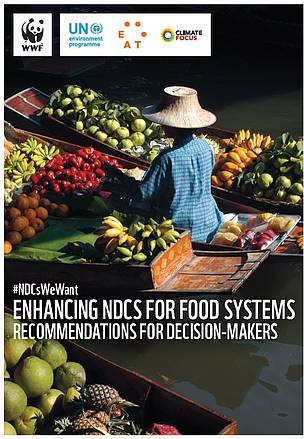
- WWF Germany & WWF Food Practice Report: Enhancing NDCs For Food Systems - recommendations for decision-makers PDF 18.40 MB 45 pages
- WWF Germany & WWF Food Practice Summary: Enhancing NDCs for Food Systems - recommendations for decision makers 5 pages
- Wetzel, A., et. al. 2020. The Food System Approach in Agroecology Supported by Natural and Social Sciences: Topics, Concepts, Applications. In book: Agroecology, Ecosystems and Sustainability. (pp.181-199). CRC Press, Boca Raton (FL). USA.
- Leippert, F., Darmaun, M., Bernoux, M. and Mpheshea, M. 2020. The potential of agroecology to build climate-resilient livelihoods and food systems. Rome. FAO and Biovision.
- Oberč, B.P. and Arroyo Schnell, A. 2020. Approaches to sustainable agriculture: exploring the pathways towards the future of farming. Brussels. IUCN EURO.
- Schulte, I. et al. 2020. Enhancing NDCs for food systems: recommendations for decision-makers. Berlin. WWF Germany and WWF Food Practice.
- Sinclair, F. et al. 2019. The Contribution of Agroecological Approaches to Realizing Climate-Resilient Agriculture. Rotterdam and Washington, DC. World Agroforestry, Bangor University and CGIAR.
- Barrios, E. et al. 2020. The 10 Elements of Agroecology: Enabling transitions towards sustainable agriculture and food systems through visual narratives. Ecosystems and People 16(1): 230-247.
- Information about WWF Thailand Project available at: https://www.wwf-scp.org/thailand/.
Objectives
- To showcase good examples of how food systems approaches based on the 10 Elements of Agroecology also increase climate resilience and how
this can be considered in National Determined Contributions (NDCs) and other national food related strategies. - To flesh out in our discussion what are the key characteristics of food systems that have become truly climate resilient.
- To find answers on how current policy processes under international frameworks (United Nations Framework Convention on Climate Change/Convention on Biological Diversity/Committee on World Food Security/Food Systems Summit 2021) could be geared towards taking a food systems approach.
- Tosi Mpanu-Mpanu, Ambassador and lead negotiator for UNFCCC, DRC;
- Fergus Sinclair, Leader Resilient Livelihood Systems at World Agroforestry (ICRAF);
- Emile Frison, International Panel of Experts on Sustainable Food Systems (IPES-Food)
The relevance of a food systems approach based on Agroecology elements for increased climate resilience
- Edmundo Barrios, Agricultural Officer at FAO.
- Ingrid Schulte, Climate Focus: Enhancing NDCs
for Food Systems
Tangible show cases
- Prof. Rajeshwar Singh Chandel, Sustainable Food Systems Platform for Natural Farming (SuSPNF), India;
- Ply Pirom, WWF, Thailand
“FLR 349”: Forest Landscape Restoration through agroecology in Thailand
- Enos Shumba, WWF, Zimbabwe;
Agroecology based Food Systems Climate Resilience and NDC – Zimbabwe Way Forward
- Allan Mortensen, Chombo Project, Verstergaard.
Founded in 1957, Vestergaard is headquartered in Switzerland with offices in India and quality control and research and development labs in Africa and Vietnam. ZeroFly® Storage Bag is the first insecticide-incorporated storage bag to prevent damaging pest infestations. It reduces the loss of seed or grains that can be consumed, stored for security, or sold for optimized prices, while not having the hazards associated with fumigation or the potential for pesticide residues that come from inaccurate insecticide spraying.
Related:
What is the Koronivia Joint Work Agriculture?Under this landmark decision, countries agreed to work together to make sure that agricultural development ensures both increased food security in the face of climate change and a reduction in emissions. The joint work will address six topics related to soils, nutrient use, water, livestock, methods for assessing adaptation, and the socio-economic and food security dimensions of climate change across the agricultural sectors.
The KJWA represents an important step forward in the negotiations on agriculture within the UNFCCC and emphasizes the importance of agriculture and food security in the climate change agenda. By mainstreaming agriculture into the UNFCCC processes, the KJWA can drive transformation in agricultural and food systems, and address the synergies and trade-offs between adaptation, mitigation and agricultural productivity.
FFA2020 Online Live N°2: Rewarding sustainability in the food system
26 October 2020. FFA2020 Online Live N°2: Rewarding sustainability in the food system
The future of our food systems relies on two interdependent demands, that of the adaptation and reinvention of food chain business models, and the provision of farming methods which actively combat climate change and support biodiversity. The FFA Online Live Event delved into rewarding sustainability in the food system through price mechanisms.
Opening address
The future of our food systems relies on two interdependent demands, that of the adaptation and reinvention of food chain business models, and the provision of farming methods which actively combat climate change and support biodiversity. The FFA Online Live Event delved into rewarding sustainability in the food system through price mechanisms.
Opening address
- Janez Potočnik, Chair FFA2020 and Chairman RISE Foundation
Session 1 Sustainable business models: paying for the transition.
The first session discussed sustainable business models: paying for the transition, asking what new farming models are available for farmers to deliver profitable and climate neutral business. How will this transition be paid for, and are these models scalable enough to effect genuine change?
- Eduardo Cuoco, Director, IFOAM Organics Europe
- Ben O'Brien, Director – Europe, Beef + Lamb New Zealand
- Bas Rüter, Global Head Sustainability, Rabobank
Session 2 Rewarding agriculture’s potential solutions for biodiversity and climate change.
The second session focused on rewarding agriculture’s potential solutions for climate change and biodiversity. How can and should food chain actors be rewarded for setting aside land and resources in order to aid in the fight against climate change and promote biodiversity? How can the state and the market develop (new) incentives and rewards? Who will provide them, and how does that impact the price of food?- Tassos Haniotis, Director of Strategy, Simplification and Policy Analysis, Directorate General for Agriculture of the European Commission
- Dr John Gilliland, Director of Agriculture and Sustainability, Devenish
- Marjon Krol, Senior Project Manager Market and Food Chains at ZLTO
- Ulrike Sapiro, Senior Director, Water Stewardship & Agriculture, The Coca-Cola Company
Monday, October 26, 2020
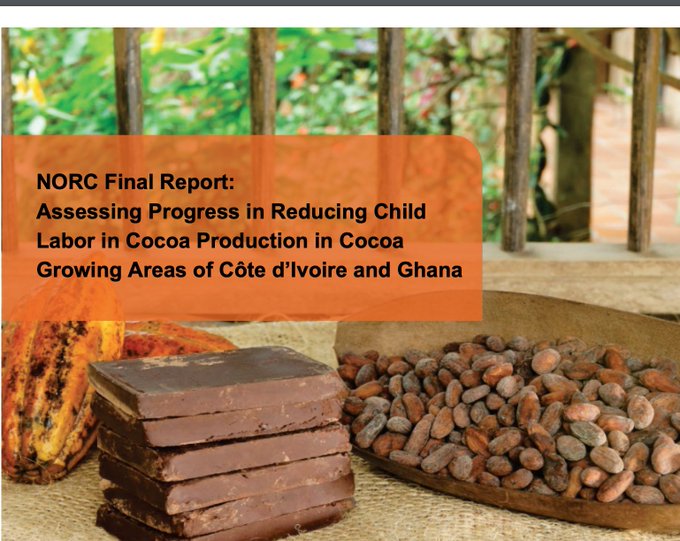
REPORT: Assessing Progress in Reducing Child Labor in Cocoa Production in Cocoa Growing Areas of Côte d’Ivoire and Ghana
NORC Final Report: Assessing Progress in Reducing Child Labor in Cocoa Production in Cocoa Growing Areas of Côte d’Ivoire and Ghana. 301 pages
The National Opinion Research Center, NORC has spent the last five years working closely and collaboratively with ILAB, the governments of Côte d’Ivoire and Ghana, Industry (represented by the World Cocoa Foundation (WCF)), Civil Society Organizations (CSOs), and multiple international organizations with an interest in child labor (including UNICEF, the International Cocoa Initiative (ICI), and the International Labour Organization (ILO)).
The National Opinion Research Center, NORC has spent the last five years working closely and collaboratively with ILAB, the governments of Côte d’Ivoire and Ghana, Industry (represented by the World Cocoa Foundation (WCF)), Civil Society Organizations (CSOs), and multiple international organizations with an interest in child labor (including UNICEF, the International Cocoa Initiative (ICI), and the International Labour Organization (ILO)).
NORC at the University of Chicago is one of the largest independent social research organizations in the United States.
This report is the outcome of that collaborative effort to accurately measure and report on the issue of child labor and hazardous child labor in the cocoa growing areas of Ghana and Côte d’Ivoire.
As part of this study, NORC administered 2,824 roster surveys, 2,809 household head surveys, 5,552 child surveys, 158 community surveys, 372 cocoa shed surveys, and 260 school surveys across Ghana and Côte d’Ivoire.
The country-specific data indicates that in cocoa growing areas 38 percent of children in Côte d’Ivoire and 55 percent of children in Ghana living in agricultural households were engaged in child labor in cocoa production. Amid a 14 percent increase in cocoa production between 2013/14 and 2018/19 in Côte d’Ivoire and Ghana in aggregate, prevalence of child labor in cocoa production among cocoa growing households in each individual country remained stable.
As part of this study, NORC administered 2,824 roster surveys, 2,809 household head surveys, 5,552 child surveys, 158 community surveys, 372 cocoa shed surveys, and 260 school surveys across Ghana and Côte d’Ivoire.
The country-specific data indicates that in cocoa growing areas 38 percent of children in Côte d’Ivoire and 55 percent of children in Ghana living in agricultural households were engaged in child labor in cocoa production. Amid a 14 percent increase in cocoa production between 2013/14 and 2018/19 in Côte d’Ivoire and Ghana in aggregate, prevalence of child labor in cocoa production among cocoa growing households in each individual country remained stable.
In the 2018-19 season, 1.56 million children were involved in child labor working expanding cocoa harvest in Ivory Coast and Ghana. C. 45% of children from farming families in growing areas were working on plantations v. 31% 10 years ago.
Other Key Findings:
- Cocoa is a key part of agriculture in the cocoa growing areas of both countries as can be seen from the fact that a predominant majority of agricultural households grow cocoa.
- School attendance among children in agricultural households increased from 58 percent to 80 in Côte d’Ivoire and from 89 to 96 percent in Ghana.
- The prevalence rate of child labor did not increase in the high cocoa production stratum while we observe substantial increases in prevalence within the low and medium production areas between 2008/09 and 2018/19. There was a similar trend in the change in prevalence of exposure to hazardous work during the same period. This indicates that future interventions should target low and medium cocoa production areas
- When multiple interventions were implemented in a community, it led to a statistically significant reduction in the rates of child labor and hazardous child labor in cocoa production
- Respondents recommend that engaging community leaders, including representatives for women and youth early in the design of the intervention helped promote sustainability
RESOURCES
Video recording
Friday, October 23, 2020
WEBINARS AFAAS: Digitalization of extension.
 The D4AEAS initiative
Digitalization of agriculture is a game changer in improving the reach, effectiveness and efficiency of agriculture and extension and advisory services. AFAAS will not be left behind. Since the outbreak of COVID -19, online remote working using digital tools has become more relevant on top of adding a safety dimension while staying productive in a threatened world. With partners, AFAAS took advantage of digitalisation to transform the AEAS landscape in Africa.
This webinar was about the world’s most popular mass medium in rural Africa. Interactive radio, complemented by ICTs like IVR and other mobile phone technology, is the most effective and accessible way to reach farmers with timely agriculture extension messages at scale.
Objectives for 2020 are three fold:
- To inform and create awareness about the D4Ag in general, and specifically Digitalisation of AEAS
- To immerse AEAS actors in the D4Ag space for more productivity and efficiency
- To engage AEAS actors in Foresight Exercises related to the future of AEAS regarding the D4Ag trends and influence policies
27 August 2021. First webinar. Digitalisation of African Agricultural Report
- organised by AFAAS in partnership with CTA Legacy.
- Dr Benjamin Kwasi Addom was the key speaker who presented a summary of the Digitalisation of African Agricultural Report (2018 – 2019).
- Resource: Presentation of CTA Digitalisation Report
24 September 2021. Second webinar. Challenges, questions, solutions, lessons learned from the Access Agriculture
This webinar showcased the digital extension tools shared by Access Agriculture: more than 200 videos and audio files available and translations in 75 different languages. The webinar session was articulated around:
- The context and challenge of African AEAS
- Access Agriculture digital solution
- Democratisation of knowledge
- Summary in 10 lessons
- Resource: Challenges, questions, solutions, lessons learned from the Access Agriculture webinar
22 October 2020. Third webinar. Farm Radio International
Organised by AFAAS. Watch the video announcement here
This webinar was about the world’s most popular mass medium in rural Africa. Interactive radio, complemented by ICTs like IVR and other mobile phone technology, is the most effective and accessible way to reach farmers with timely agriculture extension messages at scale.
- Evidence has shown that interactive radio has the potential to strengthen the work of traditional extension workers and vice versa.
- Localized, thanks to the efforts of radio broadcasters, and flexible enough to respond to the individual questions of farmers in rural communities, interactive radio is a key tool in effective extension work, and ensures advisory services reach remote communities with accessible and easy to use information.
- Farm Radio International is using their unique and effective interactive radio approaches to build and augment digital agriculture extension services across sub-Saharan Africa.
- Staff from Farm Radio International presented their experience in developing effective interactive radio programs with their network of more than 1000 radio stations across the African continent. They shared experiences in integrating digital advisory services, including radio, directly into ministries of agriculture.
Commission launches knowledge centre to reverse biodiversity loss and protect Europe’s ecosystems | EU Science Hub
21 October 2020. Commission launches knowledge centre to reverse biodiversity loss and protect Europe’s ecosystems | EU Science Hub
The European Commission launched a new Knowledge Centre for Biodiversity: a one-stop shop for science-based evidence to protect the natural ecosystems that provide us with food, medicines, materials, recreation, and wellbeing.
The Knowledge Centre will make the latest knowledge about biodiversity available to strengthen the impact of EU policies.
It will also help to monitor the implementation of the EU Biodiversity Strategy for 2030, which aims to put Europe’s biodiversity on a path to recovery by the end of the decade.

Launched during EU Green Week, the Knowledge Centre will directly address challenges uncovered by the first ever EU-wide ecosystem assessment (452 pages), produced by the JRC. The assessment (the geographical coverage is the territory of EU-28 (EU and the UK) and the EU marine regions)shows that Europe’s natural areas - from its forests, rivers and lakes to its farmland, urban green spaces and soils - are under increasing pressure.
The authors find a wealth of biodiversity data exists that could help in taking the right action to alleviate these pressures, but that much of it remains unused.
Background:
As the European Commission's in house science service, the JRC has experience of managing several
Knowledge Centres and is well placed to host and chair the Knowledge Centre for Biodiversity.
Developed in close collaboration with the Commission’s Directorate-General for Environment and the European Environment Agency, the Knowledge Centre will pull together a broad range of expertise in many areas related to biodiversity and ecosystem services.
The Knowledge Centre for Biodiversity is the eighth European Commission Knowledge Centre and the seventh to be launched under the leadership of the JRC. It adds to those on Bioeconomy, Global Food and Nutrition Security, Territorial Policies, Migration and Demography, Disaster Risk Management, Food Fraud and Quality, and Interpretation (led by the Directorate-General for Interpretation).
The Knowledge Centre will make the latest knowledge about biodiversity available to strengthen the impact of EU policies.
It will also help to monitor the implementation of the EU Biodiversity Strategy for 2030, which aims to put Europe’s biodiversity on a path to recovery by the end of the decade.
The Knowledge Centre for Biodiversity will provide:
- A one-stop shop for key information about biodiversity and the impact of related policies;
- A platform where progress of the EU Biodiversity Strategy for 2030 can be monitored;
- An interface for scientists to network, share research results and channel them more effectively to support EU policies.
- extending and connecting protected areas;
- achieving the EU nature restoration targets and plan, which include, among others: conservation of pollinators and their habitats, reduction of pesticides and nutrient pollution from agriculture, restoration and decontamination of soils, and protection of forests;
- reinforcing enforcement, compliance and implementation of EU law;
- involving businesses, better financing, and integration of natural capital accounting systems;
- supporting the global biodiversity agenda, through work on global biodiversity conservation, protected areas, deforestation, biodiversity footprints.
Launched during EU Green Week, the Knowledge Centre will directly address challenges uncovered by the first ever EU-wide ecosystem assessment (452 pages), produced by the JRC. The assessment (the geographical coverage is the territory of EU-28 (EU and the UK) and the EU marine regions)shows that Europe’s natural areas - from its forests, rivers and lakes to its farmland, urban green spaces and soils - are under increasing pressure.
The authors find a wealth of biodiversity data exists that could help in taking the right action to alleviate these pressures, but that much of it remains unused.
- The assessment finds that we are becoming more and more dependent on our ecosystems, which themselves are under increasing pressure from climate change and its related impacts.
- There are some positive signs, such as the 13 million hectare increase in Europe’s forests between 1990 and 2015 and the growth of organic farms, which now make up 7% of Europe’s agricultural land.
- However, the outlook for biodiversity is a cause for concern. Right now, 76% of the EU’s terrestrial ecosystems currently have no legal designation: forests, agroecosystems, urban green spaces and soils are largely unprotected.
- Pollinator species are under pressure: the index measuring the abundance of grassland butterfly populations in Europe has fallen by 39% since 1990.
- Europe’s rivers and lakes see less pollution and water abstraction than they did in 2000, but the speed of improvement has slowed down. Only 39% of freshwater bodies currently have good ecological status.
- Several other trends are currently difficult to measure and assess, which hampers effective policy action. Europe’s seas are protected by a comprehensive policy framework, but data gaps limit the analysis of trends in the inputs of nutrients, contaminants, and litter.
As the European Commission's in house science service, the JRC has experience of managing several
Knowledge Centres and is well placed to host and chair the Knowledge Centre for Biodiversity.
Developed in close collaboration with the Commission’s Directorate-General for Environment and the European Environment Agency, the Knowledge Centre will pull together a broad range of expertise in many areas related to biodiversity and ecosystem services.
The Knowledge Centre for Biodiversity is the eighth European Commission Knowledge Centre and the seventh to be launched under the leadership of the JRC. It adds to those on Bioeconomy, Global Food and Nutrition Security, Territorial Policies, Migration and Demography, Disaster Risk Management, Food Fraud and Quality, and Interpretation (led by the Directorate-General for Interpretation).
Thursday, October 22, 2020
WEBINAR: The political economy of COVID-19: Impacts on agriculture and food policies
22 October 2020. 8:30-12:00 a.m. CDT The political economy of COVID-19: Impacts on agriculture and food policies IFPRI
The economic impacts of the COVID-19 pandemic and resulting pressures on public finances and donor resources are necessitating stark trade-offs among different policy priorities within the agriculture sector and across the food system. In what ways has the pandemic altered the balance of power among urban and rural populations, the state and private sector, and across government ministries?
For example, are social protections and interventions to help heavily hit urban areas complementing or displacing government and donor investments in the agriculture sector? How are governments helping agri-businesses during this period, and which industries are prioritized for financial and other forms of state support? And are responses to COVID-19 fostering improved coherence across the food system to protect incomes, livelihoods, and food security, or leading to increased inter-governmental fractionalization around scarce resources?
These are some of the considerations that decision makers must now confront. This seminar will delve into these and other questions by examining the political economy dynamics caused by the pandemic in different regions of the world.
Speakers
For example, are social protections and interventions to help heavily hit urban areas complementing or displacing government and donor investments in the agriculture sector? How are governments helping agri-businesses during this period, and which industries are prioritized for financial and other forms of state support? And are responses to COVID-19 fostering improved coherence across the food system to protect incomes, livelihoods, and food security, or leading to increased inter-governmental fractionalization around scarce resources?
These are some of the considerations that decision makers must now confront. This seminar will delve into these and other questions by examining the political economy dynamics caused by the pandemic in different regions of the world.
Speakers
- Samuel Benin, Deputy Division Director, Africa Regional Office, IFPRI
- Carlos Furche, Former Minister of Agriculture of Chile (2014-2018) and Former Director of ESA (Agriculture Development Economic Division of FAO) (2018-2019)
- Joseph Glauber, Senior Research Fellow, IFPRI
- Ashok Gulati, Infosys Chair Professor for Agriculture, Indian Council for Research on International Economic Relations (ICRIER)
- Astrid Haas, Policy Director, International Growth Centre (IGC)
- Danielle Resnick, Senior Research Fellow, and Theme Leader, Governance, IFPRI
- Johan Swinnen, Director General, IFPRI
- Moderator: Katarlah Taylor, Events Manager, IFPRI
WEBINAR: Uniting Science and Policy to End Hunger
Uniting Science and Policy to End Hunger
A conversation on Sustainable Development Goal 2 presented by Nature Research
22 October 2020
Ten percent of the world’s population are currently undernourished. To achieve the United Nations Sustainable Development Goal 2 (SDG2) of zero hunger by 2030, profound changes to our global food and agricultural systems must be made. Much of the future increase in food demand will come from sub-Saharan Africa and South Asia; regions that remain hotspots of hunger and poverty. What interventions then will be effective in transforming the lives and incomes of rural farmers and what will be the cost of ending hunger sustainably?
This free, online event — organised by Nature Research to coincide with new, evidence-based syntheses from the Ceres2030 consortium — brought researchers and decision-makers together to discuss and align the policy agenda.
The event is of interest to social and agricultural scientists in research and development organisations, donors and other agencies who are working to achieve better connections between science and policy, and other stakeholders sophisticated in issues of science who are engaged in agricultural development, poverty eradication and sustainable agriculture.
We have less than ten years to work together as a global community to transform food systems to deliver sustainable, nutritious and healthy diets for all people. The clock is ticking. Register now to secure your place, be part of this important discussion and learn how we can achieve this ambitious goal.
Panelists:
- Jaron Porciello, Cornell University, USA
- Paul Winters, University of Notre Dame, USA
- Leslie Lipper, Cornell University, USA
- Hale Tufan, Cornell University, USA
- Gero Carletto, World Bank
- Joachim von Braun, University of Bonn, Germany
- Marcelis Acevedo, Cornell University, USA
- Isabella Baltenweck, International Liverstock Research Institute (ILRI)
- Eugenie Maïga, Norbert Zongo University, Burkina Faso
- Livia Bizikova, International Istitute for Susatinable Development
- Tanya Stathers, University of Greenwich, UK
- Valeria Piñeiro, International Food and Policy Research Institute
- Segenet Kelemu, International Centre of Insect Physiology and Ecology (ICIPE)
- Saweda Liverpool-Tasie, Michigan State University, USA
- Ellen McCullogh, University of Georgia, USA
- Martin Hoppe, Federal Ministry for Economic Cooperation and Development, Germany
- Ehsan Masood, Nature
- Chris Surridge, Nature Plants
- Anne Mullen, Nature Food
- Monica Contestabile, Nature Sustainability
RELATED:
Nature magazine: EDITORIAL 12 OCTOBER 2020
Ending hunger: science must stop neglecting smallholder farmers
Policymakers urgently need ideas on ways to end hunger. But a global review of the literature finds that most researchers have had the wrong priorities.
Ending hunger: science must stop neglecting smallholder farmers
Policymakers urgently need ideas on ways to end hunger. But a global review of the literature finds that most researchers have had the wrong priorities.
WEBINAR: Open Science Global North- South Partnerships: What Exists for African Researchers?

Organised by the Training Centre in Communication.
- TCC Africa is the first African-based training centre to teach effective communication skills to scientists.
- TCC Africa is an award winning Trust, established as a non-profit entity in 2006 and is registered in Kenya.
- TCC Africa provides capacity support in improving researchers output and visibility through training in scholarly and science communication.
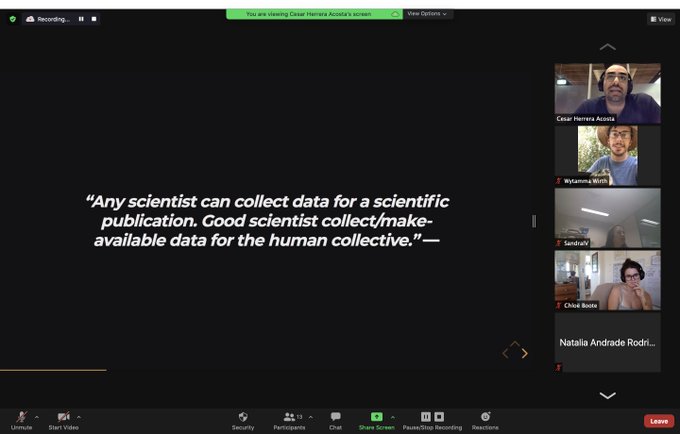
As part the celebration of #OpenAccessWeek.
- What kind of Global North- South partnerships and opportunities exist in promoting Open Science.
- What is the Association of African Universities’ role in supporting Open Science?
- Introduction to Dimensions.ai an Open Access research discovery solution (this comes complete with publications, funding and patent data, clinical trials and journals)

"For years, leading funders have been using the extensive Dimensions grant database to understand global funding trends and drive decision-making. Now, with Dimensions covering the entire research lifespan from funding through outputs to impact, as a funder you have a powerful data set to draw on when developing evidence-based science policy. You can also use Dimensions to monitor the impact of those policies."

Speakers:
- Daryl Naylor, Sales Director, EMEA at Digital ScienceResearch4Life provides institutions in lower income countries with online access to academic and professional peer-reviewed content. It improves teaching, research and policy-making in health, agriculture, the environment and other life, physical and social sciences.
- Gwiranai Danha, Researcher and Lecturer at Botswana International University of Science and Technology (BIUST)
- Abednego Corletey, Association of African Universities (AAU) - Kwame Nkrumah' University of Science, Ghana

UPCOMING COURSES
- 26 OCT-28 OCT
- 07 DEC-09 DEC
- 25 JAN-27 JAN
Related:
African Journals OnLine (AJOL) is the world's largest and preeminent platform of African-published scholarly journals. AJOL is a Non-Profit Organisation that (since 1998) works to increase global & continental online access, awareness, quality & use of African-published, peer-reviewed research. Millions of monthly downloads by site users from nearly every country in the world are an indication of the need and widespread use of the AJOL initiative. More than half of the repeat users are from Africa.
Evidence-Informed Policy Making (EIPM) Toolkit
The VakaYiko Evidence-Informed Policy Making (EIPM) Toolkit is an adaptable suite of resources created to support civil servants and parliamentary staff to use evidence in policy making in developing countries.
Download publication files
Subscribe to:
Posts (Atom)