Platform for African – European Partnership in Agricultural Research for Development

Thursday, May 12, 2022

IPES (2022) ANOTHER PERFECT STORM? # 20 p. How the failure to reform food systems has allowed the war in Ukraine to spark a third global food price crisis in 15 years, and what can be done to prevent the next one. A special report by IPES-Food, May 2022


With the invasion of Ukraine sparking a third food price crisis in 15 years, a new IPES-Food special report, ‘Another Perfect Storm?’ takes stock of the critical factors fanning the flames of global hunger - and what can be done about them.

World food prices continued to see record-breaking highs in April 2022, hitting food insecure countries and populations hard. Numbers of undernourished people could increase by 13 million this year.

The special report blames fundamental flaws in global food systems - such as heavy reliance on food imports and excessive commodity speculation - for escalating food insecurity sparked by the Ukraine invasion. These flaws were exposed, but not corrected, after previous food price spikes in 2007-8.

The expert panel calls for urgent action to:
  • support food importing countries (including through debt relief),
  • curb excessive commodity speculation and enhance market transparency,
  • reduce reliance on fertilizers and fossil energy in food production,
  • build up regional grain reserves & food security response systems,
  • and accelerate steps to diversify food production and restructure trade flows.
Read the special report [EN]
Read the press release [EN]

The Africa Adaptation Acceleration Program (AAAP)


27 March - 1 April 2022.
 Virtual Gobeshona Global Conference. 

The seven-day long annual Gobeshona Global Conference on Locally Led Adaptation will was hosted by the International Centre for Climate Change and Development (ICCCAD) fully online! See all the recordings here. This conference brought together researchers as well as practitioners and supporters of LLA under one platform to focus on Learning and Measuring progress locally, nationally and globally, each year and track progress year on year.

Extract of the events (see the Gobeshona Global Conference 2 programme)

29 March 2022. The Africa Adaptation Acceleration Program 

(AAAP) hosted a session titled, "AAAP: Transformative Adaptation to Accelerate and Scale Climate Action". The recording was put online 28 April 2022.

The session focused on policy shifts, the enabling environment, financing, community engagement and private sector involvement to accelerate and scale climate adaptation in Africa.

The session brought together policy makers, sustainable financiers, climate resilience experts and youth advocates to discuss the latest report by the Intergovernmental Panel on Climate Change (IPCC) that calls for increased speed and scale in implementing adaptation actions.
"Climate change impacts are already occurring, faster and more severely than previous IPCC reports indicated. This new report makes it clear that we are already facing irreversible losses and damages to human societies and ecosystems around the world" Dr. Rebecca Carter, the Acting Director, Climate Resilience Practice at the World Resources Institute, setting the scene for the session.
There is the need to incorporate indigenous knowledge with scientific knowledge to develop the most effective adaptation interventions and solutions. Farmers, use indigenous knowledge to predict drought and rainfall and this knowledge is important for adaptation action, Prof. Philip Antwi-Agyei, Associate Professor at the Kwame Nkrumah University of Science and Technology and Lead Author of IPCC's special report on the impacts of global warming of 1.5 °C
Zambia Ministry of Green Economy and Environment official Chitembo Kawimbe Chunga said adaptation should be integrated into local and national development plans.

She added that laws, policies and regulations on adaptation exist in Zambia that show where and how to adapt. Zambia is working with development partners including the African Development Bank to explore best practices for adaptation and resilience building among communities. Chunga is also the National Coordinator of both the Transforming Landscapes for Resilience and Development and the Zambia Strengthening Climate Resilience projects.

The audience followed presentations on different funding sources, including green bonds and blended finance to mobilise finance for adaptation.

Background:
The Africa Adaptation Acceleration Program (AAAP) is an Africa-owned and Africa-led response to the continent's expressed needs and priorities to reduce its vulnerabilities as well as harness opportunities. 

  • It will contribute to closing Africa’s adaptation gap, support African countries to make a transformational shift to put climate adaptation and resilience at the center of critical growth-orientated and inclusive policies, programs, and institutions. 
  • The AAAP builds on the priority areas identified by the countries in their NDCs and NAPs and accelerates momentum through large scale proof of concept investments, innovations, and knowledge and technical assistance initiatives. 
  • The program is designed to drive a harmonized approach to project implementation and monitoring.
  • The AAAP was first presented and was well-received at the Climate Adaptation Summit in January 2021. The Summit was the largest gathering ever of global leaders on adaptation. The AAAP was officially launched on April 6th at the Leaders Dialogue on Covid-19 and climate emergency. 
  • More than 30 African heads of state and other global leaders rallied behind the AAAP, endorsing it as a key vehicle to operationalize the Africa Adaptation Initiative's mandate. Following this event, a communiqué was issued by African leaders underlining the importance of climate resilience as a key element of Africa’s economic recovery plans.

The recording was put online 8 May 2022.
In this session, the Center for International Forestry Research (CIFOR), the World Agroforestry Centre (ICRAF), and the UN Climate Resilience Initiative (A2R) supported by the FAO, along with local partners, highlighted how locally-led nature-based solutions can accelerate climate action and policy with regards to adaptation and resilience.

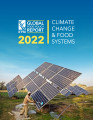
Launch of IFPRI's 2022 Global Food Policy Report: Climate Change & Food Systems

12 May 2022. 3:30 PM CEST. Launch of IFPRI's 2022 Global Food Policy Report: Climate Change &Food Systems

The 2022 Global Food Policy Report, IFPRI’s flagship report, highlights the urgency of accelerating innovation, reforming policies, resetting market incentives, and increasing financing for sustainable food systems transformation. It sets forth a broad range of policy options for accelerated action by policymakers as well as international forums for policy and investment decision-making.

Resource:
IFPRI (2022) 2022 Global food policy report: Climate change and food systems. #186 p.
  • Eleven thematic chapters look at how policies can support the development and adoption of “disruptive” technologies by creating an enabling environment for climate change–related financing, innovation uptake, and integrated governance of natural resources. 
  • The chapters also examine the impacts of climate change and related policies on the most vulnerable, considering how to promote healthy, sustainable diets and increase benefits for all from food systems. 
  • Six regional chapters discuss the diverse impacts of climate change in different parts of the world and identify potential responses that can be taken up in the short and medium term in national and regional food systems.
Overview of the Report
  • Johan Swinnen, Global Director, CGIAR Systems Transformation Science Group & Director General, IFPRI
  • Channing Arndt, Director of Environment and Production Technology Division, IFPRI
Rapid Fire Presentations
  • Eugenio Diaz Bonilla, IICA Visiting Fellow, IFPRI
  • Daniel Gilligan, Deputy Director of Poverty, Health, and Nutrition Division, IFPRI
  • Joseph Glauber, Senior Research Fellow, IFPRI
  • Aditi Mukherji, Principal Researcher, International Water Management Institute (IWMI)
  • Caroline Mwongera, Agriculture & Climate Change Specialist, Alliance of Bioversity International and the International Center for Tropical Agriculture (CIAT)
  • Valeria Piñeiro, Senior Research Coordinator, IFPRI
  • Rob Vos, Director of Markets, Trade and Institutions Division, IFPRI
Discussants
  • Andrew Jarvis, Associate Director-General for Research, Strategy, and Innovation, Alliance of Bioversity International and the International Center for Tropical Agriculture (CIAT)
  • Rachael McDonnell, Deputy Director General, Research for Development, International Water Management Institute (IWMI)
  • Moderator Charlotte Hebebrand, Director of Communications and Public Affairs, IFPRI

Farmer Field Schools for the agroecological transition

12 May 2022. Farmer Field Schools for the agroecological transition

You will find on this link the presentations from the panelists shared during the webinar: 

The characteristics of the agro-ecological transition require transforming the way we accompany farmers in their changes of practices and production systems. Field schools are relevant participatory mechanisms for this, as they increase farmers' capacity to experiment, produce knowledge and build innovations themselves. However, there is a need to ensure the quality of implementation of these schemes, which has implications for research and development actors.

This webinar shared the findings of joint work by FAO, CIRAD (Centre International de Recherche Agronomique pour le Développement) and the NGO AVSF (Agronomes et Vétérinaires Sans Frontières), illustrated with three examples of field school programmes from Togo, Mali and India.

Presentation 1 : Field schools for the support of Agroecological Transition, 
  • Teatske Bakker, researcher in sistemic agronomy at the UMR Innovation at CIRAD
  • presentation of the field schools in Togo: effects observed for farmers (trajectories of change in practices); recommendations for the conduct of field schools to support the Agroecological Transition
Presentation 2: Evidence of the implementation of field schools in Mali and first results of the plots, 
  • Marc Chapon, National Coordinator for AVSF in Mali
  • presentation of the field schools system first results of the plots and perspectives.

Présentation 3 : Field schools for Agroecological Discovery Learning in the Natural Farming Program in Andhra Pradesh, 
  • Anne-Sophie Poisot, Coordinator of the Global Farmer Field School Platform, FAO 
  • Dharmendar Gogu RySS, Thematic Training Coordinator - RySS, Government of Andhra Pradesh, India
  • Presentation of the video: Empowering rural communities through farmer field schools and agroecology
Presentation of the Agroeocology and Farmer Field Schools stocktaking, 
  • Zoé Despretz, Co-facilitator of the Global Farmer Field Schools Platform, FAO
  • Conclusions by Guy Faure, DG INTPA

Resource:
Farmer Field Schools: building capacities to achieve a successful agroecological transition - Perspective No. 57
The agroecological transition implies rethinking the way farmers are supported in their changes in practices. Farmer field schools are particpatory mechanisms that build farmers’ capacity to experiment, to produce knowledge and to innovate independently. However, it is essential that these advisory services are correctly implemented, which has implications for the research and development community.

A study conducted in sub-Saharan Africa shows that after taking part in farmer field schools, farmers are more likely to make changes on their own farms if they have been involved in the decision-making process for the field school.

Wednesday, May 11, 2022

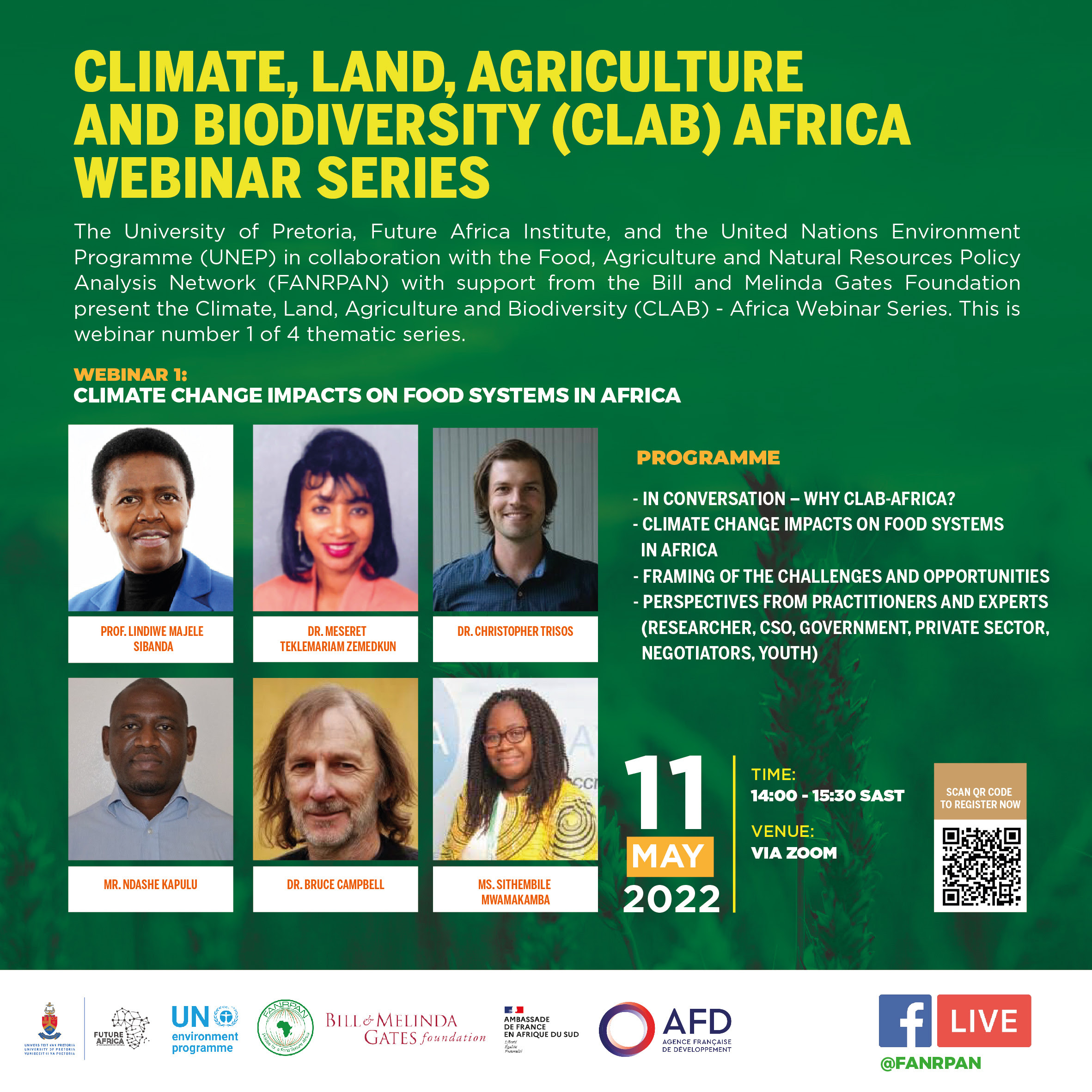
Climate Impacts on Food Systems in Africa by FANRPAN.

11May 2022.
 Climate Impacts on Food Systems in Africa by FANRPAN.

Africa has the most severe vulnerable hot spots to climate change hence increasing the food and water deficit. Addressing these challenges requires new technologies that deal with multiple and interacting stresses.

Whether viewed from a human health, environmental, climate or a financial perspective, food systems and agricultural production in Africa need urgent intervention. The Climate Impacts on Food Systems in Africa Webinar will focus on recommendations on:
(a) applying climate change science to improve food systems.
(b) renewable energy as a solution for climate-sensitive food solution.
(c) Africa’s plant diversity for increased yields and improved nutrition.
  • Moderator: Prof. Lindiwe Majele Sibanda, Future African University of Pretoria.
  • Dr Meseret Teklemariam Zemedkun, United Nations Environment Programme (UNEP).
  • Dr. Christopher Trisos, African Climate & Development Initiative, Coordinating Lead Author, Chapter 9, IPCC AR6 WGII Report; Core Writing Team, IPCC AR6 Synthesis Report.Climate Change Impacts on Food Systems in Africa Presentation 
  • Mr. Ndashe Kapulu, Zambia Agriculture Research Institute (ZARI) Framing of the challenges and opportunities 
  • Dr. Bruce Campbell, CLIM-EAT Perspectives from Practitioners and Experts (Researcher, CSO, Government, Private Sector, Negotiators, Youth)
  • Moderator Ms. Sithembile Mwamakamba, FANRPAN
  • Dr. Tilahun Amede, Alliance for a Green Revolution in Africa (AGRA)
  • Ms. Joyce Kobia, Youth Representative, West Africa Center for Crop Improvement


Resource that was reviewed during the webinar:

POLICY BRIEF 1. CLIMATE CHANGE IMPACTS ON FOOD SYSTEMS IN AFRICA  (# 12 p.) 

This policy brief focuses on the impacts of climate change on food systems, which is a theme under the CLAB-Africa Project. The objectives of the theme include pursuing recommendations on: (i) applying climate change science to improve food systems; (ii) renewable energy as a climate-sensitive food solution; and (iii) Africa’s plant diversity for increased yields and improved nutrition.

The key messages from the study are as follows:
  • Enhance robust financial investment strategies that include participation of the private sector, towards accelerating the adoption of Climate Smart Agriculture (CSA).
  • Document and utilise indigenous knowledge systems (IKS) to transform food systems and enhance sustainable development in the context of climate change.
  • Conceptualise projects of sufficient scale and longevity (minimum ten years), through forming consortiums for donors who are willing to pool resources for long-term investments, in order to ensure the sustainability and effectiveness of projects.
  • Position farmers, particularly women and youth at the centre of designing context specific adaptation strategies in order to transform food systems for specific African contexts.
  • Build and strengthen partnerships for climate-resilience and adaptation by leveraging best practices and tailoring them to local conditions.
Background:
The CLAB-Africa Project was conceived by the Future Africa Institute to provide a platform for Africa's scientific community to contribute to the developmental work of African governments and development institutions. 

The nature of the Project's contributions will be in the form of science-based actionable policy recommendations within the four identified clusters. These clusters are namely: 
  1. climate impact on food systems; 
  2. land restoration and biodiversity; 
  3. <people—animal—ecosystems> health and wellbeing; and 
  4. land-water-energy resources uses.
Related:
24 March 2022. Malabo Climate Policy Webinar Series: At the intersection of climate change and food systems: what are Africa’s key priorities and opportunities?

This webinar was the first of a series of four exploring the rapidly converging agendas of food systems transformation with climate action. It explored the latest science and present key priorities for the African continent.
  • Introduction & welcoming remarks Ms. Nachilala Nkombo, Country Director, WWF Zambia; member Malabo Montpellier Panel 
  • The science - Dr. Edmond Totin, Lead Author, IPCC AR6 chapter on Africa
    In August 2021, the IPCC working group published its latest assessment report providing the most up-to-date physical understanding of the climate system and climate change. On February 28, 2022, this was followed by the second report of this assessment, presenting the impacts of climate change. How is the climate changing across African countries and what are the impacts of these changes on African societies and environments? Specifically, what do these changes mean for food security and nutrition? 
  • Climate policy – Mr. Ephraim Shitima, Chair of the African Group of Negotiators Africa at UNFCCC – what have our priorities been? Overview of African Climate Change and Resilient Development Strategy and Action Plan 2022-2032. 
  • Converging systems – Dr. Martin Frick, Director, WFP Global Office Berlin An overview of how food systems and the climate domain have evolved towards each other

10 March 2022. Adapting agriculture in Africa to build resilience to climate change

This session brought together technical experts, economists, and policy specialists to bring forth solutions to the threat posed by climate change to Africa’s food security.
  • Chair: Prof. Anthony Nyong, GCA Senior Regional Director, Africa
  • Framing Speaker: Ademola Braimoh, Coordinator, Climate Smart Agriculture, World Bank (author of chapter on Agriculture and Food Security in State and Trends in Adaptation Report 2021: Africa)
  • Dr. Tilahun Amede Head, Resilience, Climate & Soil Fertility, AGRA
  • Dr. Suzanne Carter, Lead Partnerships, Adaptation Research Alliance, Cape Town, South Africa
  • Mr. Mahama Suleman Elisha, Global Farms and Trading Company Limited
  • Dr. Sonja Vermeulen, Consultative Group for International Agricultural Research, CGIAR
  • Dr. Caroline Mwongera, Alliance of Bioversity International and CIAT

FoodTech Innovation Revolution: The 2022 Game-Changers


11 May 2022. FoodTech Innovation Revolution: The 2022 Game-Changers

Recording: https://video.ibm.com/recorded/131768310
  • FoodTech is the intersection of agriculture, food, and technology along the value-chain from harvest, storage, processing to distribution and retail. 
  • FoodTech has promising potential to facilitate the transition of agri-food systems to meet both consumers' demands and sustainable development goals. 
A diverse range of speakers and discussants from industry, academia, and policy analyzed the various challenges and opportunities in the ecosystem. This first webinar provided a deep dive into innovation and entrepreneurship across the foodtech sector, while evaluating the potential to scale innovations from one region to another. 

The webinar featured an ultimate list of food and beverage innovations from a newly released “Game-Changers 2022” Spoonshot report. 

Spoonshot analyzed more than 7000 foodtech startups and measured their innovativeness using several criteria including novel ingredients, health benefits, and consumer reviews. 

Additionally, the webinar provided an opportunity to highlight 4 foodtech companies (Awsum, Baby Grubz, and Burton and Bamber) and discussed challenges and opportunities in foodtech entrepreneurship and business creation.
  • Spoonshot is a data and analytics platform that uses AI and food science to study food and beverage related innovation across the globe. The company's insights reveal emerging and evolving consumer and market needs, enabling prediction of future food trends.
  • Awsum is India’s first Ayurveda-inspired functional chocolate incorporating ayurvedic herbs and botanicals into premium milk and dark chocolate for specific functional benefits.
  • Baby Grubz is a Nigerian social enterprise that produces affordable nutrient dense weaning foods and toddler snacks. Their products are focused on providing nutritious and cost-effective meals while focusing on local ingredients and flavors.
  • Burton and Bamber Co Ltd is a Kenyan agro-processing company creating healthy snacks and food ingredients under their “Sweetunda" brand, with fruit and vegetables sourced from small holder farmers, supplying local and international markets.

International Research Consortium Platform: binding together for the mid to long term African and European institutions

11 May 2022. LEAP4FNSSA Webinar: "International Research Consortium Platform: binding together for the mid to long term African and European institutions"

This online event focused on the process of launching the platform and integrating the stakeholders who have already expressed their interests in joining the International Research Consortium (IRC) as well as invite new potential participants.

The webinar was divided into two main sections:

The first section presented the strategy for launching the International Research Consortium (IRC) including the Theory of Change, the governance, the services, etc.
  • Norhan El Dallal, MHESR 
  • TCIP of the IRC - Stefan Haffner, DLR 
  • IRC services and functions - Prudence Makhura, NRF 
  • IRC Funding strategy - Henning Knipschild, BLE 
  • Governance of the IRC - Irene Frempong, FARA
The second section brought speakers from previous events who are familiar with the project and the platform and who have experience in being part of a similar network or initiatives to present ways of linking the proposed IRC to already existing systems.
  • Funders’ institution – funding agency network  - Maurice Heral, ANR
  • Agribusiness network - Yossef Ben Meir, High Atlas Foundation 
  • R&I network - Enock Warinda, ASARECA 
  • Wrap up/recap of key insights - Irene Frempong, FARA

Background:

  1. Create synergies between the many R&I programmes, initiatives, and actors with the aim of improving the food and nutrition security and sustainability of agriculture in Africa and Europe.
  2. Reduce the hassle of identifying partners in R&I, finding appropriate funding opportunities, and contributing to relevant policy developments.
  3. Boost innovation by showcasing solutions that work, supporting creativity and expertise of all stakeholders.
Read/download the booklet about the IRC Platform [,pdf | 725 KB]

Online consultation:

Expression of Interest Survey (research.net) International Research Consortium / AU-EU platform for Research and Innovation (R&I) Food and Nutrition Security and Sustainable Agriculture (FNSSA)

Tuesday, May 10, 2022

New research about Aflatoxin M1 is revealed

10 May 2022
. Not so dangerous? New research about Aflatoxin M1 is revealed. USAID/Feed the future

A panel shared insights and findings from this new publication:

Saha Turna N, Havelaar A, Adesogan A, Wu F (2022). Aflatoxin M1 in milk does not contribute substantially to global liver cancer incidence. American Journal of Clinical Nutrition, in press. #9 p.

Key messages: 
  • The risk of liver cancer from drinking milk contaminated with aflatoxin M1 is much lower than previously thought. 
  • There is no evidence for other serious health effects. 
  • International standards for AFM1 in milk are not risk-based. 
  • Dumping of milk because international standards for AFM1 are exceeded creates economic and nutritional risks that far outweigh the minimal cancer risk.
Shared resource:

Africa-Europe scientific collaboration on climate change and agriculture

10 May 2022
. INTPA Infopoint. Africa-Europe scientific collaboration on climate change and agriculture

Video recording forthcoming

African Women in Agricultural Research and Development (AWARD) and Agropolis Fondation supported by the European Union, the Bill & Melinda Gates Foundation (BMGF), France’s BNP Paribas Foundation and Canada’s International Development Research Centre (IDRC) have partnered to implement the One Planet Fellowship Programme (OPFP). 

With a budget of $20 million, this new programme seeks to build a vibrant, highly connected, and intergenerational network of African and European scientist leaders equipped to lead next-generation research focused on helping Africa’s smallholder farmers adapt to a changing climate. 

Announced at the One Planet Summit in 2017, The One Planet Fellowship is a career accelerator designed to enhance the capacity of high potential agricultural researchers focused on climate change adaptation, by building their leadership, scientific research, networking, and mentoring skills. The InfoPoint session aims to present the various components of the initiative and showcase some early results from the first cohort of Laureates. The event was an opportunity to share insights on the role of science-career development programmes and how they can help to shape future climate change adaptation strategies and policies in Africa.

To continue the discussion, you can join the Capacity4DEV group: Food & Nutrition Security and Sustainable Agriculture – ROSA
  • Christophe Larose - Head of sector, INTPA F3- Sustainable Agri-Food systems and Fisheries
  • Susan Kaaria - Director of AWARD
  • Marie-Christine Cormier Salem - Director of Agropolis Foundation
  • Austin Phiri - OPFP Laureate from Malawi
  • Teresa Murgia - Researcher, University of Sassari (Italy)
  • Joyce Prisca Njoloma - One Planet Mentor from Malawi

Improving the yield and quality of the grain called 'finger millet'

Decreasing the knowledge gap for finger millet

This image shows healthy finger millet plants in a field trial in Ethiopia. Finger millet is a well-known and important crop grown in Africa. Credit: Katrien Devos

The grain called finger millet may not be well-known outside of Africa, but it is an important crop to the region. Finger millet has been farmed in eastern Africa for thousands of years. However, breeding the crop for better traits has been difficult for local farmers.

Katrien Devos, a professor at the University of Georgia, and her colleagues are collaborating with scientists from Kenya to improve the grain's yield and quality.
"Breeding has traditionally been done, and is still often done, by selecting improved lines within existing cultivars. Breeders essentially rely on occasional spontaneous outcrossing events in which pollination occurs with pollen from a nearby growing variety rather than self-pollen to generate new combinations. We have been working with breeders in eastern Africa to bring finger millet breeding into the 21st century."
This study was published in The Plant Genome Journal, a publication of the Crop Science Society of America.

The team set out to find a way to provide breeders with better tools to improve millet traits in a targeted way. This meant digging into the DNA of finger millet to find genes that are responsible for beneficial traits. This is no easy task, says Devos.

The researchers used a technique called genotyping-by-sequencing. This is a form of sequencing where a small portion of the genome is sequenced that represents the broader whole. This saves time and money and allows the researchers to have enough data for genetic mapping. This mapping allowed them to find potential genes or areas on the genome responsible for certain traits, called quantitative trait loci.

"Most traits are controlled by multiple genes. In order to find the genes that control a trait of interest, this analysis is carried out. The chromosome regions that contribute to the expression of the trait are identified using computer models. These areas on the genome can then be identified using DNA markers so that breeders can more easily use them to improve the crop. Once breeders understand how traits are manifested, she says, they can plan their breeding efforts more easily." 
They assessed traits that greatly affect the yield of the crop such as panicle number, disease resistance, and maturity time. Panicles are where the grains form. In areas with drought, an early maturity time is best.

The main disease that impacts finger millet in eastern Africa is blast disease, which is caused by a fungus. The fungus can infect the leaves of the plant but is worst when it impacts the panicle. "Infection during flowering or grain development is most destructive," Devos says. "It can lead to yield losses of up to 90% under environmental conditions that are favorable for disease development. A lot of research has been done on rice blast, but work on finger millet blast is still in its infancy."

She adds that fungicides can be used to control the disease but can be very costly. Breeding for resistance is the only approach that would allow for sustainable finger millet production.

Their research also compared finger millet to other similar crops. Because not much is known about the finger millet genome, comparing it with crops like rice and sorghum may help them make educated guesses about what some of its genes may be responsible for.

Devos describes finger millet as an "orphan crop" because it has largely been ignored by the international research community. Devos was one of the pioneers that developed the idea of comparing finger millet genetics to other grains. "My lab, together with collaborators in the United States and eastern Africa, have been working over the past six or so years to fill this void," Devos explains. "Still, finger millet research is lagging compared to other cereal grains, but we can draw on and apply knowledge that is available in the major cereals to finger millet. This transfer of knowledge allows us to make faster progress in orphan crop species."

Solutions for Shifting Agrifood Systems to More Resilient and Sustainable Pathways

A new CGIAR research Initiative, “Nature-Positive Solutions for Shifting Agrifood Systems to More Resilient and Sustainable Pathways.” This Initiative brings together CGIAR researchers and to pool expertise around stewarding biodiversity and improving soil and water management, with a strong focus on ensuring opportunities for women, youth, and indigenous peoples.

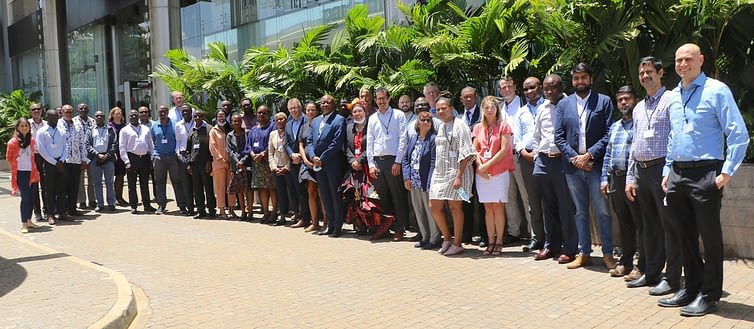
The Initiative, which includes CGIAR researchers from The Alliance, the International Water Management Institute, the International Potato Center, the International Food Policy Research Institute, the International Center for Agricultural Research in the Dry Areas, the International Institute for Tropical Agriculture, and the International Maize and Wheat Improvement Center was launched in Kisumu, Kenya.

The Nature-Positive Initiative at a glance

What are the main actions?

Working with stakeholders across agriculture, economic, environment, and natural resource management sectors at farm- and community-level, CGIAR researchers and partners will:

  • Boost critical ecosystem services and enhance social and economic benefits, including equality,
  • Tackle the root economic and political causes of environmental degradation from agricultural production,
  • Harness the power of nature-based solutions and ecosystem services alongside advances in digital agriculture and agronomy to revers negative trends around natural assets, including climate, biodiversity, land, and water.
  • Promote improved waste management and circular economy
Where is it focused?

Burkina Faso, Colombia, India, Kenya, and Vietnam

What global goals does this work link to?
  • SDGs: 2, 5, 6, 12, 13, 15
  • UNFSS Action Tracks: Nutritious Food, Nature-Positive Production, Equitable Livelihoods, Resilience
Read more about the Initiative here or visit the Initiative webpage.

Related
March 2–3, 2022. Nairobi. Partners of CGIAR’s new regional integrated Initiative in eastern and southern Africa held a kick-off meeting . Eighty-five people participated, including national agricultural research extension programs, government representatives, private sector actors, funders and national and regional agricultural research and development organizations.

Entitled Ukama Ustawi, the Initiative aims to support climate-smart agriculture and livelihoods in 12 countries in eastern and southern Africa: Kenya, Zambia, Ethiopia and Zimbabwe (in Phase 1); Malawi, Rwanda, Tanzania and Uganda (in Phase 2); and Eswatini, Madagascar, Mozambique and South Africa (in Phase 3).

The Initiative will work with innovative multimedia platforms to change knowledge, attitudes and practices of millions of farmers in eastern and southern Africa. One key partner in this area is the Shamba Shape Up TV show and the iShamba digital platform.

Monday, May 9, 2022

Team Europe’s support to Kenya under the EU-Kenya Strategic Dialogue

9 May 2022. EU will mobilise Sh400 billion to support Kenya's green transition

18 EU ambassadors representing their countries in Kenya also contributed to this article.

The green transition is a key theme for Team Europe’s support to Kenya under the EU-Kenya Strategic Dialogue. It covers circular economy, climate smart agriculture, renewable energy, natural capital and biodiversity, and sustainable urban development and infrastructure. 

Team Europe is mobilizing approximately Sh400 billion (1,640,000,000 Euros) for Kenya in grants, loans and mixing in 118 different projects implemented by the EU, Member States and the European Investment Bank. This is just one of many initiatives.

The European Investment Bank (EIB), the EU bank, supports Kenya’s early steps towards renewable
energy generation
. The bank has been active in Kenya since 1975 and opened its regional hub for East Africa here in Nairobi in November. This underscores the appreciation for the environmental support that Kenya provides. 

The EIB office will also help spearhead the 
EU’s new Global Gateway Initiative that focuses on key investments in Kenya and the region, to promote green jobs, growth, and much more.

Team Europe is among Kenya’s largest development partners. It is the largest trading partner and export market of Kenya. It is working closely with our Kenyan partners to begin implementation of the Economic Partnership Agreement as soon as possible. But of course, in the climate crisis we face it's essential to embrace the green transition – and the creative power of Kenya’s youth – to grow sustainably, inclusive and greener.

Friday, May 6, 2022

Green hydrogen windows of opportunity for developing countries

4 - 6 May 2022 7th Multi-stakeholder Forum on Science, Technology and Innovation for the Sustainable Development Goals.

04/05 Green hydrogen windows of opportunity for developing countries

The side event at the 2022 STI Forum was the first in this series and focused on green hydrogen programs. This side event highlighted policies and programs that will enable countries to exploit a specific green window of opportunity on green hydrogen, so that participants will have a clearer understanding of the wide range of issues that should be considered to develop GWO roadmaps tailored to each countries unique circumstances.
  • Moderator: Mr. Clovis Freire, Economist, Science, Technology and ICT Branch, DTL, UNCTAD
  • Opening: Ms. Shamika N. Sirimanne, Director, Division on Technology and Logistics, UNCTAD
  • Mr. Alfred Watkins, Founder and CEO of the Global Solutions Summit and a member of the Governing Council of the UN Technology Bank for the Least Developed Countries
  • Presentation: Green windows of opportunities, Mr. Rasmus Lema, Associate Professor, UNU-MERIT, co-editor in chief of the journal Innovation and Development and vice-chairman of the Globelics Scientific Board
Panel:
  • Mr. Tilman Altenburg, Head of the Department “Sustainable Economic and Social Development” at the German Development Institute (DIE)
  • Mr. Mbangiseni Mabudafhasi, Deputy Director, Power, Department of Science and Technology, South Africa
  • Mr. Constantino Frate, Coordinator of Green Hydrogen Hub and Public Policies Development, Secretariat of Economic Development and Labor, Government of Ceará, Brazil
  • Ms. Winnie Huynh, Founder and CEO of The Green Solutions Group, Viet Nam

Thursday, May 5, 2022

Upcoming Events & webinars from the month of May 2022

 BLOEM SHOW


Apr 29, 2022 - May 7, 2022 The Central Agricultural Society trading as Bloem Show facilitates profitable show opportunities of a high standard which serve the trade, agricultural and entertainment needs of the community.

 CATALYSING CHANGE WEEK


May 9, 2022 - May 13, 2022 Organised by Catalyst 2030, Catalysing Change Week 2022 will build on the success of CCW2021, bringing together social entrepreneurs, representatives from the private sector, governments, funders and others involved in systems change, to inspire change in support of achieving the SDGs.

 NOT BUSINESS AS USUAL: HOW TO BUILD BUSINESS MODELS THAT BLEND PROFIT & PURPOSE


May 9, 2022 - May 9, 2022 The session will cover an overview of the eight steps in the For-Purpose business model workbook and how to implement them. The workbook was developed in collaboration with Bayes Business School in the UK from research with ten for-purpose intermediaries in the UK representing over 10,000 for-purpose businesses and drew on over 90 international journal articles. Participants will learn how to design their impact model, select customers, build products/services, and ensure that collaboration with other players in the ecosystem is baked into their model.

 UNCCD 15TH SESSION OF THE CONFERENCE OF THE PARTIES


May 9, 2022 - May 20, 2022 The fifteenth session of the Conference of the Parties (COP15) of the United Nations Convention to Combat Desertification (UNCCD) will take place in Abidjan, Côte d’Ivoire, from 9 to 20 May 2022.

 HOW TO GUARANTEE SUCCESS IN YOUR START UP. HAVE YOU GOT WHAT IT TAKES?


May 9, 2022 - May 9, 2022 The Dais & YP2G are hosting a Session on ‘How to gaurantee success in your start up. Have you got what it takes?’ led by Mr. Neville Gaunt.

 SYSTEMIC CHANGE DRIVEN BY MSMES AND ARTISANS IN ORDER TO ACHIEVE THE SDGS


May 9, 2022 - May 9, 2022 Hecho por Nosotros and its guests will discuss how decentralized finance and new collaborations with MSMEs and indigenous populations can drive the systemic change necessary to reach the Sustainable Development Goals set by the 2030 Agenda. The event will focus on both theory and practice. The public will learn about the concepts and the current trends of advanced technologies such as Distributed Ledger Technology (DLT) including Blockchain, and how they are expected to shape the industry. The panel will feature speakers representing perspectives from Latin America, Africa, and Asia, while showcasing the importance of integrating MSMEs to the global markets, and the solutions available.

 UNLOCKING VALUE OF RURAL ECO SYSTEMS


May 9, 2022 - May 9, 2022 Rural eco systems have huge human potential locked in, this can be enriched and empowered to create great value. Identifying what is valuable in the rural offerings. How can this value be unlocked? How to bring together the right ingredients to build the perfect recipe.

 ACTIVATING DIGITAL SMART VILLAGES AND SDGS IN KENYA


May 10, 2022 - May 10, 2022 The session will feature a defined roadmap of Kijiji Yeetu’s work on the SDGs and the utility of the Digital Smart Village platform. It will also discuss an inspiring project supporting community-based SDG practice and digital technology in Kenya. Shared practices, tools, and methods learned from Digital Smart Villages, as well as possibilities for boosting the role of youth will be highlighted.

 SHIFTING THE GLOBAL NARRATIVE


May 10, 2022 - May 10, 2022 Authors, Journalists and the Media play an important role in how social sector are portrayed to the outside world. This session explores how social innovators can work and collaborate with them to accelerate the shift of the narrative.

 HOW TO SUCCESSFULLY GROW YOUR BUSINESS USING IP


May 10, 2022 - May 10, 2022 The agri-food sector, covering the production, processing, packing and distribution of food and drink products, has been experiencing strong growth worldwide. The sector currently maintains good dynamism and enjoys a privileged position for further development.

 NOT SO DANGEROUS? NEW RESEARCH ABOUT AFLATOXIN M1 IS REVEALED


May 10, 2022 - May 10, 2022 An April 2022 journal article will be discussed by a panel of experts: “Aflatoxin M1 in milk does not contribute substantially to global liver cancer incidence.” Time will be available for asking questions of the authors.

 ACCELERATING AFRICAN PHILANTHROPY AND SYSTEMS CHANGE


May 10, 2022 - May 10, 2022 An informative discussion led by various key discussants with deeply rooted insight and experience on philanthropy, social change, movement building, inclusion and transformation, all talking about the impact that home grown African based philanthropy would have in the various movements within Africa. The intention behind this discussion is to build a network of African based Philanthropist who will use philanthropy as an agent of transformation through consultative platforms led by social change agents and activists.

 PRO AGRO EAST AFRICA 2022


May 10, 2022 - May 12, 2022 Pro-Agro is a brand new event taking place within Propak East Africa. This premier event will be a good place to introduce a new product or service in the Agro-processing business. You will be able to interact with major players within the business at this leading B2B industry event.  The event will give you a platform to pitch your offering in-person and broker deals in the shortest time possible.

 SOUTH AFRICA CHAPTER LAUNCH


May 11, 2022: 10:00 AM - 12:00 Noon CET: LEAP4FNSSA Webinar: "International Research Consortium Platform: binding together for the mid to long term African and European institutions". Within the LEAP4FNSSA project, the Ministry of Higher Education and Scientific Research of Egypt (MHESR) and the Mediterranean Agronomic Institute of Bari (CIHEAM-IAMB) are organising a webinar on May 11th from 10 to 12 CET. This online event will focus on the process of launching the platform and integrating the stakeholders who have already expressed their interests in joining the International Research Consortium (IRC) as well as invite new potential participants. Register in advance at https://events.iamb.it/p/event/leap4mforum6.


May 11, 2022 - May 11, 2022 Official Chapter Launch of the Catalyst 2030. Catalyst 2030 is a global movement of social entrepreneurs and social innovators from all sectors who share the common goal of creating innovative, people-centric approaches to attain the Sustainable Development Goals by 2030.

 FOOD NARRATIVES – AFRICA’S CONTRIBUTION TO THE SDGS


May 11, 2022 - May 11, 2022 Showcase Africa’s role in shaping the future of food globally Showcase Africa?s dynamic and innovative entrepreneurs who are serving as narrative changers in the global food ecosystem Discuss critical steps for amplify Africa’s voice and impact in the global food and nutrition ecosystem

 TESTING CIRCULAR FOODS SYSTEMS IN RURAL ETHIOPIA


May 11, 2022 - May 11, 2022 We set out to describe the founding of our organisation and the journey that led us to circular food systems and regenerative agriculture as the main focus to fighting poverty and climate change in the most remote regions of Ethiopia

 FRUIT AND VEGETABLE: POST HARVEST LOSSES WEBINAR SERIES 2022


May 11, 2022 - May 11, 2022 AHK looks forward to providing insights about technical options to sustain agricultural produce as food. Moreover, since management skills and knowledge are preconditions to using equipment properly, this series will cover both aspects equally, as well as present plausible German solutions. Under the consideration that food loss and waste happen at all levels, the series addresses actors along the entire agricultural value chain.

 CATALYZING CHANGE WEEK : AFRICA'S IMPACT LEADERSHIP


May 11, 2022 - May 11, 2022 The collective communities of practice supporting systems change for thriving African Social Enterprises & their supporters towards the Sustainable Development Goals (SDGs) call for a renewed vision and partnership-driven commitment to reshape the evolving narrative, shift the social impact funding paradigm, embed principles of equity, resiliency and proximate power; showcase path-breaking initiatives and innovations, and further develop the social impact sector for the Africa we want.

 THE SAHEL SCHOLARS’ CONFERENCE (SSC)


May 11, 2022 - May 11, 2022 The Sahel Scholars’ Conference (SSC) is organized to empower youth in Nigeria Universities with knowledge and opportunities that exist in agribusiness. Annually, Sahel organizes conferences in Nigerian Universities to inspire the students through influential experience sharing and discussion on key subjects highlighting the opportunities that exist in the agribusiness sector. Young professionals in Sahel leverage this platform to share their stories and experiences in agriculture consulting and private equity with the students. Key industry players are also invited to share deep insights on the opportunities that exist in the agriculture sector.

 SUSTAINABILITY SUMMIT AFRICA


May 11, 2022 - May 11, 2022 The 2nd Annual Summit is “the” sustainability procurement and supply chain event that will provide key insights into the drivers, current practices, and future of sustainable procurement.

 MARGINALISED TO MILLIONAIRE


May 12, 2022 - May 12, 2022 Takeaway from the event – Sajhi Mitti is a tremendous opportunity to impact SDGs 1, 3 & 13 and we should help them accelerate. Session 1: Duration – 20 min outline – Explain Sajhi Mitti’s business model that is helping marginalised farmers become millionaires. Session 2: Duration – 15 min outline – What is regenerative farming and how does it benefit our farmers, our families and our planet? Session 3: Duration – 10 min outline – How can you help accelerate the impact? Session 4: Duration – 15 min outline – Q&A.

 LOCALISE YOUR FOOD SYSTEMS!


May 12, 2022 - May 12, 2022 1) What are different initiatives addressing the opportunities and risks in the process of localising food systems? 2) How can we better support each other?

 THE GROWTH MINDSET: TRAINING THE NEXT GENERATION OF AFRICAN AGRIPRENEURS FOR SCALE


May 12, 2022 - May 12, 2022 In this fifth event of the series, we’ll be exploring the current barriers impeding the scale-up of agribusinesses across Africa and asking the question, ‘What soft and hard skills do African agripreneurs need to take their businesses from micro to massive?’


CONSULTATIONS:

Until 13 May 2022 The European Commission launched a public consultation on the working document of the joint African Union (AU)-European Union (EU) Innovation Agenda - The online consultation survey will be available

A survey gathers opinions on how you would like to engage with the EU’s partnerships with Africa, the Caribbean and Pacific States in the long-term. 

  • The OECD has been asked to support this survey in the framework of a project aimed at developing a methodology for structured stakeholder engagement in the EU-OACPS Partnership. 
  • See PAEPARD blogpost
20 April - 20 May 2022. e-discussion on “The co-creation, sharing and dissemination of local innovations for healthy soils in Africa”

AGENDA

2-6 May 2022. XV World Forestry Congress

3-5 May 2022. 4th International Conference on Animal Health Surveillance - Bridging Science and Policy - Copenhagen, Denmark.

4 May 2022 02:30 PM. High-Level Event for the launch of the Global Report on Food Crises 2022

4 May 2022. Women in Livestock: Breaking Gender Biases, Shifting Norms - How to Support More Women to Profit from their Livestock Enterprises

4 May 2022. 15:30 CEST. Fertilizer Availability and Affordability: Implications for Agricultural Productivity and Food Insecurity

4 May 2022. 10:30 a.m. CT. World Food Prize 2022 Laureate Announcement

4 May, 5pm CEST. Energy Transition in Times of War: a Perspective From the MENA Region. Series: "The Future of Energy"

4 - 6 May 2022. The seventh annual Multi-Stakeholder Forum on Science, Technology and Innovation for the SDGs (STI Forum)
5 May 2022. 14:00-14:45 CEST Tech solutions for individual climate action
  • offer young innovators a platform to exchange views on how technology can help individuals make climate-friendly consumer choices, how impactful they are, and the concrete results of such climate tech tools.
5 May 2022. 15:00-16:30 CEST Financing for Sustainable Development Report, by EC/INTPA


5 May 2022 at 15:30 CEST. World Food Prize Laureate Announcement

  • organised by the EU’s LifeWatch ERIC research infrastructure for biodiversity and ecosystem services.
10 May 2022. 12:00 - 13:30 CET. InfoPoint Virtual Conference via Webex Meetings: "Africa-Europe scientific collaboration on climate change and agriculture"

  • this new, monthly FoodTech Innovation Webinar Series FoodTech is the intersection of agriculture, food, and technology along the value-chain from harvest, storage, processing to distribution and retail.
11-13 May 2022. 15th Edition eLearning Africa Kigali, Rwanda.


12 May 2022. 9:30am EDT. Launch of IFPRI's 2022 Global Food Policy Report: Climate Change & Food Systems

16-18 May 2022. ISF World Seed Congress

18 May 2022. 10:00 SAST Dialogue to reflect on the outcomes of COP26! This dialogue is the first for the series “Roadmap to COP27: From Johannesburg to Sharma El-Sheikh” to shape Africa’s narrative for climate justice leading to COP27.

17 - 18 May 2022. Matchmaking event G-STIC Climate Action Programme - Call 2022

  • Webinar 7: Science and the Environment, Speaker TBC, Gothenburg Centre for Sustainable Development, University of Gothenburg, Sweden (Date TBC – registration coming soon; please check back later)
  • Can a thriving soil food web reduce pathogen outbreaks and improve soil fertility? Yes! Join Dr. Elaine Ingham, Dr. Mary Cole and Graham Lancaster to learn how.
  • This powerhouse panel brings extensive knowledge and experience in soil biology and soil chemistry. They’ll be answering questions from the live audience. 
  • Related: https://youtu.be/K9SGknW0T2k

2-3 June 2022. Stockholm+50

7 June 2022. World Food Safety Day

16 June 2022, Brussels, Belgium. EFARD Annual Hybrid Meeting. “EFARD for Inclusiveness and Transformative Learning”

17 June 2022. World Day to Combat Desertification and Drought

20 June - 1 July 2022. The Agriculture, Nutrition and Health Academy conference. The call for abstracts is now open.

21-22 June 2022 European Development Days (EDD 2022) – taking place in Brussels and online. The 15th edition will focus on “Global Gateway: building sustainable partnerships for a connected world.”

22 - 24 June 2022. Jobs, innovation and rural value chains in the context of climate transition: Bridging the gap between research and policy by IFAD

27-29 June 2022, Brussels. MicrobiomeSupport
This high-level conference will bring together stakeholders of microbiome research and the wider food system to discuss opportunities and challenges for harnessing the potential of microbiomes in the agri-food sector, and for human, animal and environmental health. 27 June 1 July 2022. Lilongwe. 12th TRIENNIAL CONFERENCE AFRICA POTATO ASSOCIATION

12-15 July 2022. FAO-CIRAD international conference on Geographical Indication.

14-20 August 2022. 31st International Horticultural Congress, IHC2022, Angers, France

9 - 11 September 2022. Agroecology Europe Youth Forum

12-13 September 2022. “4th Edition of Euro-Global Conference on Food Science and Technology” (FAT 2022)
virtually and in Paris, France
The congress underlines the theme “Harnessing the Latest Innovations and Laying Foreground for Future of Food Science and Technology.”
29-30 September 2022. Africa Dairy & Drink Innovations Summit – Hybrid & Nairobi, Kenya

7-18 November 2022. UN COP27: Sharm El-Sheikh, Egypt


 NIGERIA POULTRY AND LIVESTOCK EXPO


May 17, 2022 - May 19, 2022 NIPOLI EXPO, largest sourcing platform for poultry and livestock products and services in West Africa and Farmers and Key Buyers mostly Attending exhibitions. With an adequate focus on poultry and livestock farmers Business-2-Business, NIPOLI EXPO has become mostly attended gathering for farmers, distributors or wholesalers seeking for latest products, productive business partnership and many more.

 NIGERIAN POULTRY & LIVESTOCK EXPO


May 17, 2022 - May 19, 2022 NIPOLI EXPO, largest sourcing platform for poultry and livestock products and services in West Africa and Farmers and Key Buyers mostly Attending exhibition. With adequate focus on poultry and livestock farmers B2B.

 SCALING UP FEED ADDITIVES & EVIDENCE FOR IMPACTS


May 18, 2022 - May 18, 2022 Yet, skepticism remains, and a lack of user-friendly synthesis of existing research has left investors and policy makers without a clear indication of feed additives’ potential. Are additives that mitigate methane available or effective? Are there any associated constraints or risks? Are they scalable?This webinar brings together experts and industry stakeholders to address the evidence and discuss opportunities for scaling feed additives.

 F&A NEXT 2022 : TRANSFORMING GLOBAL FOOD SYSTEM


May 18, 2022 - May 19, 2022 F&A Next 2022 is on its way! And we look forward to welcoming you in person again on Wageningen Campus, or online.In our 7th edition, we will zoom in on the Transformation of Global Food Systems. The urgency to radically transform our food chain grows.

SAHEL KNOWLEDGE SERIES


May 20, 2022 - May 20, 2022 We are excited to invite you to the first Sahel Knowledge Series! Join Walter de Boef, Senior Advisor Seed System of Wageningen Centre of Development Innovation (WCDI), on May 20th for a live virtual discussion on the role of the seed sector in food system transformation.

AFRICA AGRIC-MACHINES EQUIPMENT AND TECHNOLOGY EXPO


May 23, 2022 - May 27, 2022 AAMETEX is designed to promote investment opportunities in the Agro economics sectors and strengthening Africa’s agribusiness climate mechanism in designing Agricultural policies and promotion of innovative Agric machines and technologies

INTERNATIONAL SYMPOSIUM ON CROP PROTECTION


May 24, 2022 - May 24, 2022 The Symposium will focus on new developments in all aspects of crop protection. The programme will include an online plenary session with three invited papers and online parallel sessions with submitted papers related to the following subjects.

RESPONDING TO SHOCKS USING MARKET-BASED APPROACHES


May 24, 2022 - May 24, 2022 This webinar will provide insights from Bangladesh’s Rice and Diversified Crops Activity, showcasing practical examples of enterprise pivots and adaptations.

AGRO- DAIRY & POULTRY EAST AFRICA 2022


May 27, 2022 - May 29, 2022 The “Agro-Dairy & Poultry East Africa” is undeniably eminent for an international trade fair. Here exhibitors have the only space to get involved with their prominent products. While farmers & animals breeder shows zero tolerance in considering this fabulous exhibition.

AGRO - DAIRY & POULTRY EAST AFRICA 2022


May 27, 2022 - May 29, 2022 The “Agro - Dairy & Poultry East Africa” is undeniably eminent for an international trade fair. Here exhibitors have the only space to get involved with their prominent products. While farmers &animals’ breeder shows zerotolerance in considering this fabulous exhibition.

AFRIEXPORTER INTERNATIONAL EXPO


May 30, 2022 - May 31, 2022 "Source in Africa, Sell Globally" Afriexporter Expo is designed to address the bottlenecks in cross-border trades and bring about lasting solutions to aid the economic status of all the concerned nations in the region

INTERNATIONAL FLOWER TRADE FAIR (IFTEX 2022)


May 30, 2022 - Jun 1, 2022 IFTEX 2022 is a business trade show. Business visitors that qualify are invited to attend free of charge. Flower buyers such as (importers, wholesalers, retailers, etc.); Growers of flowers, plants, vegetables, fruits & herbs are considered qualified attendees.

KENYA'S FLOWERS INDUSTRY EXPO


May 30, 2022 - Jun 1, 2022 IFTEX Kenya is held in Visa Oshwal Community Centre Nairobi on 30 May to 1 June 2022 showing the companies news of Kenya and internationals related to sectors Agriculture, Flowers, Gardening, Decoration

AFRICA FOOD MANUFACTURING


Jun 5, 2022 - Jun 7, 2022 The 10th edition of the exhibition will take place from 5-7 June 2022, at Egypt International Exhibition Centre (EIEC), Cairo, Egypt, offering a mix of physical and online solutions for companies to engage with decision makers, strengthen partnerships, showcase latest products etc.

DIGITAL PAY EXPO 2022


Jun 9, 2022 - Jun 10, 2022 Digital PayExpo 2022 is set to promote the interest of stakeholders in the banking and finance sector, particularly those involved in fintech and innovation as change enablers. This conference and exhibition is designed as a hybrid event but with a focus on the physical gathering, now that the economy is back in full swing.

FOOD AND KITCHEN KENYA 2022


Jun 9, 2022 - Jun 11, 2022 Kenya's premier Food & Agriculture exhibition returns to Nairobi from 9 - 11 June, 2022. FOOD & KITCHEN AFRICA 2022 will showcase top products, equipment and machinery presented by exhibitors from over 26 countries.

IFMEX AFRICA 2022


Jun 9, 2022 - Jun 11, 2022 IFMEX 2022 brings together international food processors, manufacturers, retailers, distributors, wholesalers, exporters, importers and other stakeholders in the food production, processing, packaging and kitchen equipment sectors.

AGRO DAIRY POULTRY AFRICA (ADPA) KENYA 2022


Jun 9, 2022 - Jun 11, 2022 The "Agro, Dairy & Poultry Africa" is the leading international trade fair for Agricultural, Dairy and Poultry, Farming Machinery, Equipment and Technology.

ETHIOPIA AGROFOOD


Jun 9, 2022 - Jun 11, 2022 After the great success of agrofood & plastprintpack Ethiopia 2021, the 5th edition is now coming up, organised by fairtrade in cooperation with its local partner Prana Events. The event will again take place at the state-of-the-art Ethiopian Skylight Hotel in Addis Ababa.

FOOD & BEVERAGE WEST AFRICA


Jun 14, 2022 - Jun 16, 2022 Food and Beverage West Africa is therefore a fantastic opportunity to showcase new food and drink products and to build better business connections across the grocery, catering and wider F&B industry in Nigeria and beyond.

DAILY LIVESTOCK & POULTRY EXPO AFRICA


Jun 15, 2022 - Jun 17, 2022 Dairy Livestock & Poultry Expo is an event for promoting the agriculture and farming industries. The prime objective of this show is to apprise farmers of upcoming technologies, Knowledge and experiences to introduce and motive to the farmers.

EDD 22':GLOBAL GATEWAY: BUILDING SUSTAINABLE PARTNERSHIPS FOR A CONNECTED WORLD


Jun 21, 2022 - Jun 22, 2022 The European Development Days (EDD 2022) – taking place on 21-22 June 2022, in Brussels and online. The 15th edition will focus on “Global Gateway: building sustainable partnerships for a connected world.”  

JOBS, INNOVATION AND RURAL VALUE CHAINS IN THE CONTEXT OF CLIMATE TRANSITION


Jun 21, 2022 - Jun 24, 2022 The conference will be a high-level forum to bring forth research of high academic standards in collaboration with Italian universities, international academic associations, and international organizations involved in economic and rural development policies.

AFRICA FOOD SAFETY & QUALITY SUMMIT


Jun 22, 2022 - Jun 24, 2022 The Africa Food Safety & Quality Summit is Africa’s most impactful and largest food safety, quality and compliance management conference and exhibition.

AGBIZ CONGRESS


Jun 22, 2022 - Jun 24, 2022 The Agbiz Congress 2022 is one of the major events on the food, feed, fibre and wine sectors’ agenda in South Africa. We anticipate attracting more than 400 delegates to the 2022 congress, which will feature presentations and discussion panels.

AFRICA FOOD SAFETY AND QUALITY SUMMIT


Jun 23, 2022 - Jun 24, 2022 The Africa Food Safety & Quality Summit is Africa’s premier and largest international food safety, quality management and compliance conference and exhibition. The Summit brings together regional and global experts and stakeholders to share the latest trends in science and technology; regulations, standards and compliance; operations and sustainable adoption of food safety practices and technologies in the entire agriculture and food value chain in Africa.

17th International Conference on Knowledge Management 2022 "Knowledge, Uncertainty and Risks: From Individual to global Scale"

Jun 23, 2022 - Jun 24, 2022 The International Conference on Knowledge Management (ICKM) provides researchers and practitioners from all over the world a forum for discussion and exchange of ideas concerning theoretical and practical aspects of Knowledge Management. ICKM 2022 will be held June 23-24 at the University of Applied Sciences Potsdam, Germany organized by the International Council on Knowledge Management (ICKM) and hosted by the Department of Information Sciences at the University of Applied Sciences Potsdam.

HOSTEX 2022- AFRICA'S FOOD, DRINK AND HOSPITALITY TRADE EXPO


Jun 26, 2022 - Jun 28, 2022 Hostex is the show that delivers – and 2022 will be delivering what you’ve come to expect, and a whole lot more: Opportunity to engage with seven captains of industry. Network, engage, learn, enjoy and much more

12TH TRIENNAL CONFERENCE OF AFRICAN POTATO ASSOCIATION


Jun 27, 2022 - Jul 1, 2022 The Africa Potato Association (APA) has announced that its 12th triennial conference will take place from in Malawi’s capital, Lilongwe. The conference theme will be “Harnessing potato and sweet potato innovations for resilient and healthier agri-food systems”.

FOOD & KITCHEN ETHIOPIA


Jul 4, 2022 - Jul 9, 2022 Agriculture is the foundation of Ethiopia's economy and accounts for about 50% of the GDP, 84% of exports and 80% of total employment.

FOOD AND KITCHEN ETHIOPIA 2022


Jul 7, 2022 - Jul 9, 2022 FOOD & KITCHEN AFRICA - Africa's largest International Food & Agriculture exhibition, aims to tap this huge investment potential with the launch of FOOD & KITCHEN ETHIOPIA, to be held at The Millennium Hall, Addis Ababa, from 07 - 09 July, 2022. After 22 successful editions in Kenya and Tanzania, the event promises to bring together industry professionals, exporters, manufacturers and importers, all under one roof in one of Africa's fastest growing economies, Ethiopia.

2022 ANDE WEST AFRICA REGIONAL CONFERENCE


Jul 19, 2022 - Jul 20, 2022 The 2022 conference themed “Accelerating SGB Growth in Africa” will focus on critical talent challenges in the SGB sector, as well as how SGBs can help developing economies achieve the U.N. Sustainable Development Goals, particularly in the context of rebuilding a sustainable entrepreneurial ecosystem post-COVID.

INTERNATIONAL CONFERENCE ON AGRICULTURE


Aug 11, 2022 - Aug 12, 2022 AGRICO 2022 has been designed as a platform to unite diverse research and case studies for oral or poster presentations in major areas of Sustainable Agriculture worldwide, in parallel sessions while offering many networking and publishing opportunities.

AGROFOOD KENYA


Aug 12, 2022 - Aug 14, 2022 The event targets to become an annual platform for valuable business contacts between leading manufacturers from the world over and professionals from the Kenyan and Swahili speaking East & Central African Agrofood & Plastprintpack industry.  

AGRF 2022


Sep 5, 2022 - Sep 9, 2022 The AGRF, Africa’s premier forum for food and agriculture, has launched its 12th annual summit under the theme ‘Grow, Nourish and Reward – Bold Actions for Resilient Food systems’ to be held in Kigali Rwanda from September 5 to 9, 2022. This year’s summit will call for accelerated action by leaders, innovators, businesses, private institutions, civil society, and development agencies to put forward bold actions and unite efforts toward the continental food security agenda

AGRF 12TH SUMMIT


Sep 5, 2022 - Sep 9, 2022 The AGRF, Africa’s premier forum for food and agriculture, has launched its 12th annual summit under the theme Grow, Nourish and Reward – Bold Actions for Resilient F: Grow, Nourish and Reward – Bold Actions for Resilient Food Systemsood Systems’ to be held in Kigali Rwanda from September 5 to 9, 2022.

GLF AFRICA DIGITAL CONFERENCE 2022


Sep 12, 2022 - Sep 16, 2022: Joint CAADP-XP4, LEAP4FNSSA, PANAP, KM4AgD Climate Smart Agricultural Conference organized by the Forum for Agricultural Research in Africa (FARA) and Partners. Accra, Ghana


Sep 15, 2022 - Sep 15, 2022 The GLF Africa Digital Conference will gather thousands of frontline leaders who are tackling the climate crisis head-on. Featuring leading change-makers, voices, and thinkers from across Africa and the rest of the world, GLF Africa will demonstrate the power of community-led action for food security, drought management, and healthy ecosystems.

FOOD AND KITCHEN TANZANIA 2022


Sep 22, 2022 - Sep 24, 2022 The 23rd FOOD & KITCHEN 2022 - International Trade Exhibition on Food & Kitchen is the largest trade event held annually in Tanzania, concurrently held with East Africa Trade Exhibition (EAITE). The exhibition attracts exhibitors from more than 20 countries and visitors all over.

FOOD & KITCHEN TANZANIA 2022


Sep 22, 2022 - Sep 24, 2022 The 23rd FOOD & KITCHEN 2022 - International Trade Exhibition on Food & Kitchen is the largest trade event held annually in Tanzania, concurrently held with East Africa Trade Exhibition (EAITE).

AFMASS FOOD EXPO ETHIOPIA EDITION


Oct 20, 2022 - Oct 21, 2022 Join us at the first edition of AFMASS Food Expo Ethiopia edition – as we redefine the future of the food, beverage and milling industry in North-Eastern Africa

GLF CLIMATE ALONGSIDE COP27


Nov 11, 2022 - Nov 11, 2022 The Global Landscapes Forum (GLF) is the world’s largest knowledge-led platform on integrated land use, dedicated to achieving the Sustainable Development Goals and Paris Climate Agreement. 

AFMASS FOOD EXPO EASTERN AFRICA


Nov 24, 2022 - Nov 26, 2022 The food industry in Eastern Africa is the most vibrant in Africa – as new investments and new product innovations surge in key markets in the region such as Kenya, Ethiopia, Tanzania, Rwanda, Uganda etc!!

AGROFOOD WEST AFRICA


Nov 29, 2022 - Dec 2, 2022 Exhibitors from all over the world are ready to meet with Ghanaian and West African farmers, food & drink producers, and food retail, hotels, and restaurants to discuss ideas, network, and talk business.

AGRA INNOVATE LAGOS


Dec 6, 2022 - Dec 7, 2022 Now in its 8th year, Agra Innovate Lagos is West Africa's leading agriculture trade show. Featuring free seminars on hot agribusiness topics, a buzzing expo and unlimited networking opportunities, the expo connects global suppliers to serious local agriculture sector buyers, professionals and practitioners.

6TH GLF INVESTMENT CASE SYMPOSIUM


Dec 22, 2022 - Dec 22, 2022 The Global Landscapes Forum (GLF) is the world’s largest knowledge-led platform on integrated land use, dedicated to achieving the Sustainable Development Goals and Paris Climate Agreement.