Platform for African – European Partnership in Agricultural Research for Development

Monday, March 27, 2023

INCiTiS-FOOD Practitioner and Expert Virtual Round Table Discussion

27 March 2023. INCiTiS-FOOD Practitioner and Expert Virtual Round Table 

INtegrated and Circular Technologies for Sustainable city region FOOD systems in Africa (INCiTiS-FOOD)

Supporting innovative food systems and innovators:
Living Labs for Africa’s food systems
  • The INCITIS-FOOD Project (www.incitis-food.eu) is working on improving innovative circular food system in 6 countries across 3 African regions: East (Kenya), West (Ghana, Nigeria and Sierra Leone) and Central (Cameroun and Gabon). These countries also host living labs that act as innovation accelerators.
  • Living labs are innovation networks in which the participant’s roles and rules are freely defined by themselves. They essentially exchange information according to a defined research strategy and a digital infrastructure in order to transform this information into new knowledge; comparable to a lean innovation approach in which the end users define the contents of the project.
  • What are the benefits of participating as a food system actor? 
The objective of the eight living labs in six African countries is to map the landscape of food
providers, manufacturers, marketers, and consumers and to help identify bottlenecks and challenges that can be addressed by the living labs.

This consortium exceptionally involves a financial partner (AFRACA) to upscale innovation.
  • The African Rural and Agricultural Credit Association (AFRACA) is a leading pan-african network of financial and non-financial institutions involved in promoting access to rural and agricultural finance in Africa. AFRACA was established in 1977 as a lead advocate and coordinator on rural and agricultural finance in Africa. AFRACA members include: Central Banks, Commercial Banks, Agricultural & Development Banks, Microfinance Institutions, Universities and Training Institutions.
  • AFRACA is the banking expert in the consortium and will contribute to the Business Model Development and Financial Capacity Building for Circular Agri-food Entrepreneurship, INCiTiS-FOOD Roadshow Events and investment financing.

The project will also empower communities through the Open Calls funding, led by the Foodscale Hub, organization experienced in running large-scale international acceleration programs. One million euros will be given to 8 external Local Innovation Hubs (both from countries that participate in the INCiTiS-FOOD project and beyond) and 24 Independent Innovators from 6 countries from 3 African regions (East: Kenya; West: Ghana, Nigeria, Sierra Leone; Central: Cameroon, Gabon) as financial support from the InCiTiS-FOOD project. 

Beneficiaries of the Cascade Fund will be surveyed to generate empirical evidence on the co-benefits of the INCiTiS-FOOD project technologies and business models, which will guide urban food policy roadmaps.

The INCiTiS-FOOD project is co-funded by the European Union’s Horizon Europe research and innovation programme and all the information is available on project’s website, as well as Facebook, Linkedin, Twitter, Instagram and Youtube.
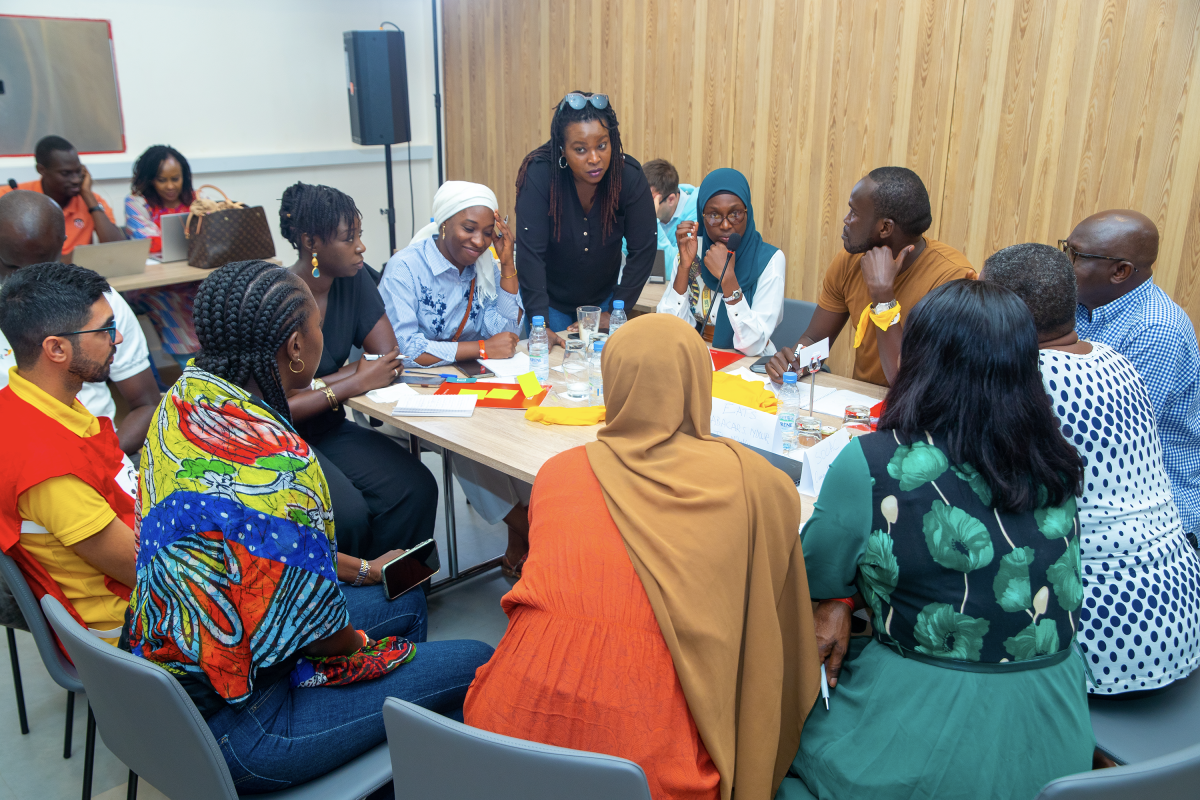
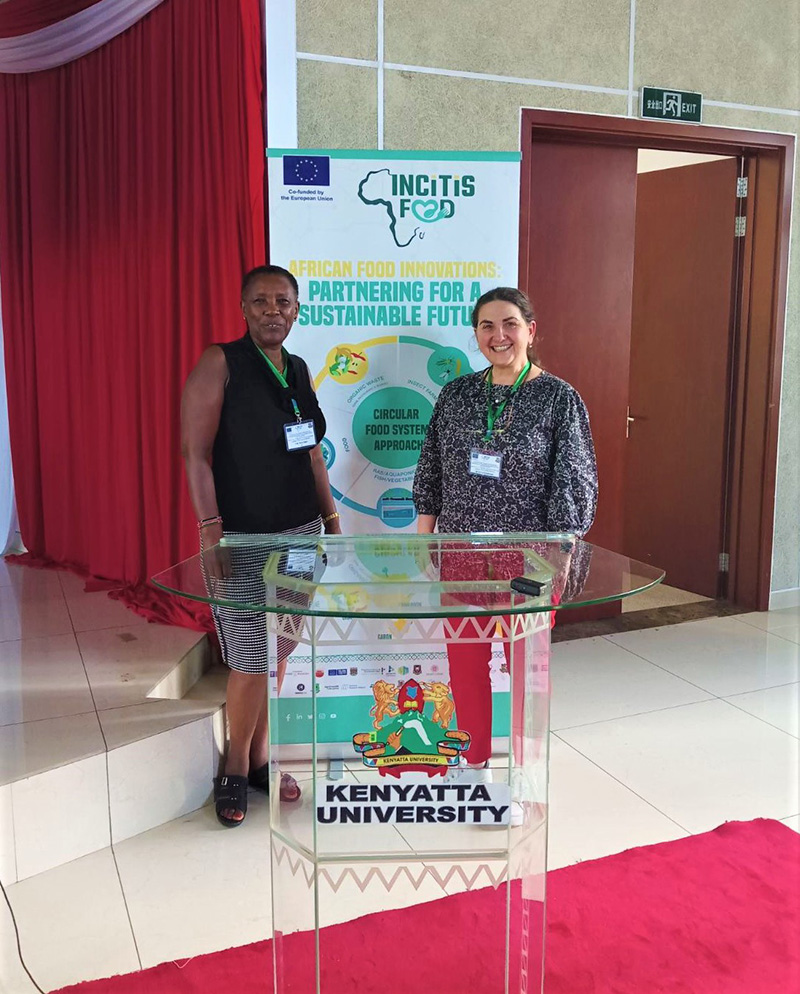
“We will set up 8 Living Labs in 6 African countries. Living labs will be turned into incubators of innovation and their mission will be to improve food and nutrition security in African city regions. Since current African food systems are experiencing severe challenges in delivering desired outcomes and a quarter of those who inhabit African cities remain food insecure and malnourished, we need to redefine and modernize the production. There are different methods to prevent food instability: availability of nutritious and safe food through local production, food access – affordability, food utilization, reduction of food waste, and food stability at all times.” Prof. Dr Gertrud Buchenrieder, Universität der Bundeswehr München – project coordinator (see pictures, right)

Thursday, March 23, 2023

Open-Source Tech to Boost Climate Resilient Agriculture

23 March 2023
Data in Climate Resilient Agriculture (DiCRA): Combining Data4Policy, Positive
Deviance, and Community Engagement
  • The analytics and data pipelines from DiCRA feed into numerous use cases including but not limited to Drought Early Warning Systems, Impact Evaluation of technical and policy interventions, designing targeted advisors, and long-term agriculture and food system budgeting, planning, and operations.
  • DiCRA was piloted for Telangana state in India, and is now being scaled to 5 other states in India and to other geographies around the globe.
The United Nations Development Programme (UNDP), in partnership with India’s State Government of Telangana, organized a webinar on Data in Climate Resilient Agriculture (DiCRA) as the latest addition to the Digital Public Goods Registry. Powered by Artificial Intelligence, the platform is geared towards strengthening food systems and food security.

The impact of climate change on agriculture is multifold, affecting crop yield, nutritional quality and livestock productivity. Using remote sensing and pattern detection algorithms, DiCRA is able to identify farms that are resilient to climate change and those that are highly vulnerable. In particular, it harnesses open-source technologies to facilitate analysis and insights sharing on climate resilience, based on empirical inputs crowdsourced from hundreds of data scientists and citizen scientists on best performing farms.

  • Within a three-month period, DiCRA gained more than 500 citizens and scientists from local digital ecosystems to support climate action in 112,077 square km of land in the state of Telangana.
  • As highlighted in a report authored by the Digital Public Goods Alliance, International Telecommunications Union and the World Meteorological Organization, a number of different yet interconnected stakeholders are the holders of climate data.


Background

As co-host of the Digital Public Good Alliance, UNDP is accelerating efforts to surface new technological frameworks required to drive climate adaptation and mitigation to achieve the goals outlined in the Paris Agreement on climate change. DiCRA now joins more than 100 digital solutions that adhere to privacy and other applicable laws and best practices to help attain the Sustainable Development Goals (SDGs). Data in Climate Resilient Agriculture (DiCRA): Combining Data4Policy, Positive Deviance, and Community Engagement.

As part of UNDP’s Digital Strategy, digital public goods such as DiCRA are part of the next frontier of digital public infrastructure, which will drive sectoral transformation and the concerted effort towards achieving the Paris Agreement goals on climate change.
UNDP’s Digital Strategy, outlines three interconnected objectives through which UNDP will support
countries in reaping the benefits of digital technology while mitigating the risks. 
  1. First, amplify development outcomes by embedding digital into all dimensions of our work; experimenting with new approaches and tools, scaling promising solutions, and applying foresight to understand possible futures.
  2. Second, support societies in their efforts to create more inclusive and resilient digital ecosystems, ensuring they are rights-based and leave no one behind.
  3. And third, continue to transform and lead by example to meet current and future technological needs. That means prompting #FutureSmartUNDP personnel to continue upgrading their digital skills and using data strategically – helping to future proof the organization.


Related:
30 March 2023- 12:30- 14:00 CEST. InfoPoint Hybrid Conference: "Agricultural data-driven strategies for development, food security, and resilience"


Tune in to Digital Agriculture: New Frontiers for the Food System, a dynamic event with food tech innovators and leaders from the private and public sector who will explore the transformational potential of digital agriculture to feed the world in a way that delivers healthier people, healthier economies and a healthier planet.

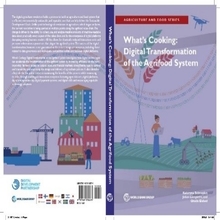
The book “What’s cooking: the digital transformation of the agrifood system” which proposes a roadmap through which data and digital technologies can lead to efficient, equitable and environmentally sustainable food systems, and looks at the role of the public sector in ensuring these outcomes are maximized.

Citation “Schroeder, Kateryna; Lampietti, Julian; Elabed, Ghada. (2021). What's Cooking : Digital Transformation of the Agrifood System. Agriculture and Food Series;. Washington, DC: World Bank. © World Bank. https://openknowledge.worldbank.org/handle/10986/35216 

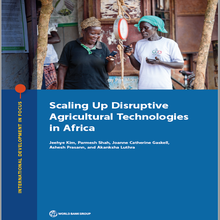
Scaling Up Disruptive Agricultural Technologies in Africa

This study—which includes a pilot intervention in Kenya—aims to further the state of knowledge about the emerging trend of disruptive agricultural technologies (DATs) in Africa, with a focus on supply-side dynamics. 
The first part of the study is a stocktaking analysis to assess the number, scope, trend, and characteristics of scalable disruptive technology innovators in agriculture in Africa. 

From a database of 434 existing DAT operations, the analysis identified 194 as scalable

The second part of the study is a comparative case study of Africa’s two most successful DAT ecosystems in Kenya and Nigeria, which together account for half of Sub-Saharan Africa’s active DATs. Scaling Up Disruptive Agricultural Technologies in Africa concludes by establishing that DATs are demonstrating early indications of a positive impact in addressing food system constraints. Read more

Reframing the local–global food systems debate through a resilience lens

Wood, A., Queiroz, C., Deutsch, L., González-Mon, B., Jonell, M., Pereira, L., Sinare, H., Svedin, U., Wassénius, E. 2023. Reframing the local–global food systems debate through a resilience lens. Nature Food. DOI: 10.1038/s43016-022-00662-0 # 8 p

For decades there have been debates about whether it is better for food to be locally produced and consumed, or globally. Recent crises such as the coronavirus pandemic and the war in Ukraine fueled the debate as some countries started to push hard towards more protectionism and self-sufficiency to the detriment of other countries that depend on the global food trade.

“The broader societal debate on how to solve food system challenges is often focused on two dichotomous perspectives and associated solutions: either more localized food systems or greater global coordination of food systems,” says centre researcher Amanda Wood, lead author of an article on the topic that was recently published in the journal Nature Food.

Food systems are becoming increasingly stressed, but whether they are local or global is not the big issue

Story highlights

  • Both local and global food systems suffer from similar challenges
  • By only using a global or local perspective on the food system, these challenges cannot be tackled
  • But resilience principles can provide promising pathways for transformation

Monday, March 20, 2023

UN Water Conference Side Events

22 - 24 March 2023. UN Water Conference Water is a fundamental part of all aspects of life. Water is inextricably linked to the three pillars of sustainable development, and it integrates social, cultural, economic and political values. It is crosscutting and supports the achievement of many SDGs through close linkages with climate, energy, cities, the environment, food security, poverty, gender equality and health, amongst others.

With climate change profoundly affecting our economies, societies and environment, water is indeed the biggest deal breaker to achieve the internationally agreed water-related goals and targets, including those contained in the 2030 Agenda for Sustainable Development.Programme at a glance (105KB PDF)
The Side Event programmes are being updated on a rolling basis, to ensure you are viewing the latest version, access it through the website.

The Conference, co-hosted by the Governments of Tajikistan and the Netherlands, will feature an opening and closing ceremony, six plenary meetings and five multi-stakeholder interactive dialogues. It will also feature a number of high-level special events and side events organized by Member States, the UN system and other stakeholders.

20/03. Groundwater: Potential and Pitfalls for Africa 


by IFPRI, AMCOW; Water Research Institute Ghana; Federal Institute for Geosciences and Natural
Resources Germany; Ministry of Water and Sanitation Senegal; Ministry of Water and Environment
Uganda; IFPRI; African Union Commission; Gov. of Ethiopia; NEXUS Gains, ILSSI

The economy-wide benefits of accelerating groundwater development in Senegal and Uganda

Development of groundwater is key to accelerating agricultural and overall economic growth, fighting climate change, and generating employment in Africa. However, improvements in groundwater institutions are needed to increase equity and environmental sustainability in groundwater use. This session discusses the groundwater program of the African Ministers' Council on Water (AMCOW), including case studies on the benefits of groundwater development and institutional advances in several African countries.
  • Moderator Claudia Ringler, Deputy Director of Environment and Production Technology Division, IFPRI
  • The importance of groundwater development for water and food security in Africa H.E. Dr. Seleshi Bekele, Ambassador of Ethiopia to the US
  • Africa’s groundwater development program Moshood Tijani, African Ministers' Council on Water
  • Groundwater development potential in Africa Ramon Brentführer, Policy Advice Groundwater bei BGR, Federal Institute for Geosciences and Natural Resources
  • The economy-wide benefits of accelerating groundwater development in Senegal and Uganda Angga Pradesha, Senior Scientist, IFPRI
  • The groundwater governance toolbox: Elements to increase sustainability of groundwater use in Africa Hagar ElDidi, Senior Research Analyst, IFPRI
  • Niokhor Ndour, Director of Resource Management and Planning, Ministry of Water and Sanitation, Senegal
  • Julius Aheebwa, Water Officer, Ministry of Water and Environment, Uganda
  • Mure Agbonlahor, Agricultural Production and Marketing Officer, African Union Commission
  • Ruth Meinzen-Dick, Senior Research Fellow, IFPRI

20/03. Water & SDGs - Downscaling WATer relevant SDGs (DWAT-SDGs)


To support localizing SDGs, the International Water Resources Association is increasing support to SDG implementation through a task force committee (TFC) on Water & SDGs. The overall goal of the TFC is to downscale WATer-relevant SDGs (DWAT-SDGs) to the country/region, basin, and local scales to facilitate SDG realization and support sustainable management of water resources in a climate crisis.

This session will allow member countries to exchange existing tools and case studies linked to SDG 6 implementation and will develop suggestions and partnerships for expanding SDG 6 localization, making an important contribution to the Water Action Agenda.

  • Moderator Claudia Ringler, Deputy Director of Environment and Production Technology Division, IFPRI
  • Overview and introduction Ximing Cai, Ben Chie Yen Professor, University of Illinois, Urbana-Champaign
  • A SDG localisation framework for guiding sustainable development leadership in the Australian water sector Paul Satur, Research Fellow and Lecturer, Monash University Sustainable Development Institute
  • Localizing SDG6 in India: Where to start? Riddhi Singh, Associate Professor, Indian Institute for Technology Bombay
  • How to localize SDG 6 in Egypt and the MENA Region: The role of the private sector Dahlia Sabri, International development practitioner, KEO International Consultants, Egypt
  • Does SDG 6 matter in a water-abundant country like BrazilAlcigeimes B. Celeste, Federal University of Sergipe, Brazil
  • Discussant Raya Stephan, Water law expert, International consultant; Deputy Editor in Chief, Water International, International Water Resources Association (IWRA)
  • Discussant Timothy Foster, Senior Lecturer in Water-Food Security, University of Manchester

21/03. Water for Sustainable Development: Innovative Solutions to the Water Crisis in Africa by International Centre for Leadership Development Nigeria

  • Keynote Address on Water Crisis Peter David Pedersen - Japan 
    Case studies from the 4Revs Innovation ecosystem
    4Revs (= 4 Revolutions) is a platform run by Nelis, a non-profit organization that supports sustainability innovation (see below) by connecting young social entrepreneurs, social innovators, and sustainability practitioners
  • Water as a great paradox for human survival Overview on Water Cases in Africa Nkechika Ibe- Nigeria 
  • Water crisis in Cameroon: Challenges and Innovative Solutions Tantoh Nforba - Cameroon 
  • Water challenges in Tunisia: Challenges and Innovative Solutions Radhia Essamin - Tunisia 
  • Water issues focusing on Water filters Tanzania: Challenges and Innovative solutions Henry Kazula - Tanzania

22/03 Water Management in Action for Productive, Climate Resilient Food Systems

  • USAID , German BMZ, EU, the Netherlands, Norad, and Sida
  • This webinar explores how to sustainably scale irrigation systems in Asia, Africa, and the Middle East and North Africa to achieve sustainable water and food security while facing climate change.
WE4F’s work, and this session, focus on bringing together the three communities/silos to achieve sustainable water and food security in the context of climate change.
  • For business and industry, this session shares how to integrate sustainable irrigation practices and water efficiency into their operations and the food value chain.
  • For the scientific and technological community, the session explores how research institutions and technology developers can contribute to better water management and security by researching basins and surface eater to help farmers and businesses improve monitoring and management while the technology community can help build better irrigation technologies that integrate different water management challenges.
  • And finally, for farmers, this session highlights how the first two communities’ work must be to the benefit of the vulnerable smallholder farmers whose water usage and ability to grow food will be the most affected by climate change.

23/03  “Resilient Rivers: Counting Fish from Forests” on integrated watershed monitoring and management.

  • FAO, Center for International Forestry Research (CIFOR) 
  • Presentations in this 90-minute side event describe collaborations across forestry and fisheries as a foundation for launching a new eLearning course, “Resilient Rivers: Counting Fish from Forests” on integrated watershed monitoring and management. Speakers include colleagues from Colombia, Zambia, Japan, and Sweden
Panel:
  • Mr. Davison Gumbo, Senior Scientist, CIFOR, Zambia. Social and ecological linkages across watersheds
  • Ms. Malin Ingemarsson, International Policy and Water for Resilient Landscapes, Swedish Water House, Sweden
  • Mr. Toru Nakamura, Deputy Director, Conservation Division, Forestry Agency, MAFF, Japan. Contribution of Forests to Fisheries’ environment - Model Analysis for Water, Soil, and Nutrient Runoff
  • Ms. Sandra Hernández, Fundación Humedales, Colombia, Fisheries and forests in the Magdalena and Atrato River Basins, Colombia, South America
  • Video – Resilient Rivers: Counting Fish from Forests
  • Launch of eLearning Ms. Ashley Steel, Livelihoods, Production & Trade Statistics Team (Forestry Division, FAO)

24/03 Small-scale irrigation in the Sahel: Climate action

  • World Bank, Minister of Agriculture, Animal and Fisheries - SIIP/Burkina Faso, Minister of Agriculture -SIIP/Niger, Ministry of Agriculture, Rural Equipment and Food Sovereignty - SIIP/Senegal  
  • The side event will consist of a panel with representatives from Burkina Faso, Niger, and Senegal, moderated by the World Bank. 

Friday, March 17, 2023

AfCFTA: A New Era for Global Business and Investment in Africa


Global businesses have an important role to play in accelerating the implementation of the AfCFTA. This report outlines high-potential sectors, initiatives to support business and investment, operational tools to facilitate the AfCFTA, and illustrative examples from successful businesses in Africa to guide businesses in successfully entering and expanding in this area.

According to the Forum’s report, agriculture has exceptional potential for increasing intra-African trade, meeting local demand, accelerating GDP growth, creating new jobs and improving inclusivity due to upstream and downstream linkages. It will increase value addition, meet new local demand and bring smallholder farmers — who are responsible for 80% of Africa’s food production — into wider supply chains.

Key sectors 

  1. Automotive industry 
  2. Agriculture and agro-processing
  3. Pharmaceuticals 
  4. Transport and logistics

Agro-processing and Africa's agricultural ascension


Opportunities abound in the AfCFTA for new investment in agro-processing, in particular.
Agro-processing has important implications for African food security, job creation and poverty reduction. Boosting it adds value to an already competitive agriculture sector.

Countries across Africa have already increased their focus on agro-processing in response to the food insecurity and price spikes caused by trade disruptions from global shocks — not least the Russian invasion of Ukraine — and because of the potential to transition economies away from the long-established but suboptimal model of exportation of raw materials.

With improved capacity to process their own agricultural goods — whether that’s grain, fertiliser or anything else — African countries can exploit the huge advantage many of them have in their established and sizeable agricultural sectors to build wealth and create new jobs and opportunities at home.

Scaling agro-processing has positive inclusivity impacts, too. Women make up 70% of employment in the overall agricultural sector and most of the domestic agro-processing workforce is female. A boost to African agriculture is a boost for the continent's women.

New investment, new opportunities


This growth in agriculture and agro-processing will drive new investment from abroad, from within the continent and outside of it. The common market introduced under the AfCFTA can leverage regional differences in the strengths and competitiveness of intra-African diversity in their food value chains, specialisations and key outputs.

Increased intra-African trade through the AfCFTA will help reduce dependency on foreign agricultural inputs. Currently, the continent imports about $50 billion worth of agricultural products per year. By 2030, intra-African agricultural trade is projected to increase by 574% if import tariffs are eliminated; a huge victory for a continent historically hobbled by unnecessary reliance on outside economies.

African-owned and run businesses will benefit from this intra-continental trade boost. The fertiliser industry, for example, is expected to boom. New agricultural activity is expected to require an 800% increase in fertiliser application for main nutrients. Irrigation is expected to benefit from $65 million in new investment, while more than $8 billion worth of investment in storage will also be required. All of this, under the AfCFTA, can be fulfilled tariff-free by African enterprises.

Related articles:

Wednesday, March 15, 2023

A holistic approach to understanding ICT implementation challenges in rural advisory services: lessons from using farmer learning videos

Gouroubera, Moumounia , Okry, Idrissoua (2023) A holistic approach to understanding ICT implementation challenges in rural advisory services: lessons from using farmer learning videos  THE JOURNAL OF AGRICULTURAL EDUCATION AND EXTENSION, # 21 p.

This paper examines the challenges of implementing Farmer Learning Videos (FLV) in Rural Advisory Services (RAS) through a holistic approach. The study focuses on a clear theoretical and managerial question – how do RAS manage FLV that does not easily fit into traditional models? 

Design/methodology/approach: The research collected data through semi-structured interviews (138 respondents) and focus group discussions (342 participants) in 30 RAS.

Findings: The study shows that although most of the RAS provided poor support and did not write FLV in their project documents, many are increasingly using FLV. Extension workers see FLV as a way to efficiently and effectively achieve their goals – a helpful tool that could reduce workload. Moreover, the presence of FLV champions who are generally young and the high level of positive attitude toward FLV as well as collaboration with other organizations favor the increasing use of FLV. 

Practical implications: The results of this study can be used by policymakers and RAS to improve the integration of information and communication technologies (ICT) into their work. 

Theoretical implications: This study sheds more light on the importance of a holistic approach to thoroughly understand the challenges of FLV implementation in RAS with theoretical implications for their design, implementation, and analysis. 

Originality: This study reports the first known application of a holistic approach to understanding the challenges of FLV implementation in RAS in Benin.

Extracts:

The use of digital technologies by RAS requires a more holistic approach to analyzing emerging challenges rather than just focusing on individual constructs or considering them only as a tool to disseminate agricultural information. (p. 3)

With FLV, less energy is expended to make farmers understand the main information during training. This idea was expressed by 98% of RAS. (...) The FLV spread covered multiple themes such as sustainable farming, cattle, integrated pest management, fruit and nuts, vegetables, legumes, processing, beekeeping and the environment. The variety of topics motivates farmers to express their needs. FLV responds to the emerging needs of farmers. (p. 9)

Organizations have yet to develop a more robust mechanism to support extension workers in FLV usage. For example, although there is a need to train users about new tools such as using FLV, they typically do not train them on how to successfully screen FLV in rural areas. There is no systematic process adopted by most organizations for FLV screening. A more cost-effective method of screening FLV is to use smartphones or laptops that the agents own as there is no budget to buy proper equipment. for it. (p. 12)

 FLV champions are generally young extension workers who have emerged informally within the RAS and motivate other extension workers to use FLV. They are skilled at dealing with ICT. Their role is facilitated by the positive FLV attitude within the RAS. (p. 14)

Psychic rewards, namely the intrinsic motivation to use FLV come from the positive farmer feedback they receive. This motivates most extension workers to use FLV even though financial incentives such as performance-related pay increases are known to be an important motivator.  (p. 15)

Researchers should attempt to unpack the informal system or the contextual factors that explain how FLV is being integrated within an organization. (p. 16)

Related:

AgriFI and Team Europe Initiative ‘Investing in Young Businesses in Africa’

16 March 2023. The hybrid event ‘Effective partnerships between European implementers and Development Finance Institutions (DFIs): Bridging the financing gap in developing countries’
Join from the meeting link
https://ecconf.webex.com/ecconf/j.php?MTID=me7868c7159febf2dcb3bedfa46856040
Join by meeting number
Meeting number (access code): 2742 283 0089

This 1-day event aims to bring together different actors involved in technical and financial cooperation for an exchange of experience with a view of identifying important next steps towards effective partnerships between development cooperation agencies, DFIs and development banks in EUs contribution to the Addis-agenda and Agenda 2030.

During the event, opportunities will be given to have practical and honest discussions on how a relevant mix of technical and financial cooperation can best contribute to development impact in partner countries, in the frame of their efforts to design and develop their Integrated national financial frameworks (INFFs). 

Extract of the programme

13:45 – 15:30 Thematic session: Case nº5: AgriFI Country and Regional windows: A framework
to foster greater collaboration with technical assistance providers.

Presenting: Guillaume Simoes and Aude Sauvaget, EDFI MC. 

The AgriFI Country and Regional Windows which provides long term investment to SMEs and financial institutions with the aim to improve smallholders livelihoods will be presented. A focus on potential collaboration opportunities with technical assistance providers will be explored.

EDFI AgriFI is one of the EU development instruments aiming to invest in sustainable agriculture projects with high impact on smallholders. EDFI AgriFI is managed by EDFI MC, on behalf of the 15 bilateral development finance institutions.

The mission of EDFI AgriFI is to support smallholders on their path to commercial and sustainable farming, contributing to improve their livelihoods while aiming to unlock, accelerate and leverage investments in the agriculture sector. To achieve this, EDFI AgriFI supports SMEs, Financial Institutions and Impact Funds having a positive impact on smallholder farmers with long term investments (4 to 10 years) in the form of debt or equity participation (ticket size between EUR 1 million and EUR 5 million).

After the successful deployment of a global facility of EUR 40 million, through various long-term investments, EDFI AgriFI reinforced its partnership in 2022 with the European Union, including with some of its Delegations, closely working with partner countries and with the European DFIs. It will allow to provide additional long term financial offering to local agriculture value chains and smallholders in some specific geographies. 

The four dedicated new financing windows (Ghana, Sri Lanka, Tanzania and ACP) offer customised approaches designed to meet the needs of specific markets, in line with the strategy of the European Commission, the EU Green Deal and national programs in the targeted countries, to support development agenda and sustainable development goals, and stimulate inclusive growth, private sector and job creation.

In addition to provide access to long-term finance to private companies, EDFI AgriFI is now developing a technical assistance offer to leverage and enhance the impact of its investments. This TA offer provides a framework for collaboration opportunities with technical assistance providers in targeted geographies. 

Typically, EDFI AgriFI technical assistance will allow to provide partners with:
  • Specialist advisory services during due diligence and/or contractual phase;
  • Capacity building (training to farmers, support to certification, improvement of environmental and social standards, digitalisation, etc.);
  • Governance standards improvements;
  • Impact measurement studies.

13:45 – 15:30 Case no7: Team Europe Initiative ‘Investing in Young Businesses in Africa’ (TEI IYBA)


National coordination between implementing agencies, DFIs and PDBs, the example of The Agence Française de Développement (AFD) Group.

Presenting: Rima Le Coguic, Expertise France Deputy CEO, on behalf of AFD Group.

Presentation of the AFD Group, as an example of national coordination between implementing agencies, Development Finance Institutions (DFIs) and Public Development Banks (PDBs). The articulation between Proparco, Expertise France and AFD was presented, focusing on the challenges encountered and how to address them. (Expertise France joined the AFD Group on January 1, 2022)

The Invest in Young Businesses in Africa (IYBA) initiative was used as an example of such coordination between different actors. 
  • Read Team Europe Initiative Investing in Young Businesses in Africa: A quick overview # 5 p.
  • The Investing in Young Business in Africa (IYBA) initiative is a €4.6 billion fund to support young entrepreneurs, growing start-ups, and local and national entrepreneurial ecosystems in Africa. 
    • Value of programmes falling within the TEI IYBA EU: nine (9) EU Member States: Total €1.9 billion + EU: €2.7 billion. TOTAL: €4.6 billion
    • On the Team Europe side, nine (9) EU Member StatesBE, DE, ES, FI, FR, IT, LU, NL, PT.
    • DG INTPA and several European development agencies are also putting together a new €20 million programme to strengthen the business ecosystem.
  • The Team Europe Initiative “Investing in Young Businesses in Africa” is made up of 3 building blocks:

    1) Increase the financial and technical support for pre-seed stage entrepreneurs and micro and small enterprises,
    2) Increase the finance for SMEs and entrepreneurs at seed and early stages, and
    3) Supporting the ecosystem, with a special emphasis on women and young people.


  • Aimed at extending financial and technical support at the early stages of those businesses’ development, it also tries to strengthen the ecosystem of organisations that support them, such as incubators and accelerators.
    • Senegal is the pilot country for this initiative: IYBA-SEED Senegal: Investing in Young Businesses in Africa - Supporting Entrepreneurship
      Ecosystem Development
       - Contributing to creating decent jobs and resilient economies by increasing access to financial resources and technical assistance of SEED beneficiaries through strengthened and sustainable entrepreneurial ecosystems. (Start date 30 December 2022 / End date 30 November 2026)
    • In December 2022 the Team Europe Initiative’s ‘Investing in Young Businesses in Africa’ (TEI IYBA) was launched in NigeriaThe Women Entrepreneurship for Africa (WE4A),  a constituent of the TEI IYBA, facilitated the session on the conditions where early-stage businesses and entrepreneurs in Sub-Saharan Africa could thrive, especially women and young people; also creating decent jobs for all. One example of a programme in Nigeria is a new €15 million agenda to improve the digital innovation ecosystem in Nigeria. While the EU and Germany are financing it, it will be implemented by GIZ.
    • Other countries are set to follow include Benin, Togo, Nigeria, Rwanda, Comoros, Kenya, and South Africa
4th July 2022. Workshop Team Europe Initiative (TEI) Investing in Young Businesses in Africa (IYBA) Working Group on Ecosystem Development 

The event was chaired by Ms. Cécile Billaux Head of Unit E2 – Micro-economic Analysis, Investment Climate, Private Sector, Trade, Employment Directorate-General for International Partnerships (DG INTPA), European Commission

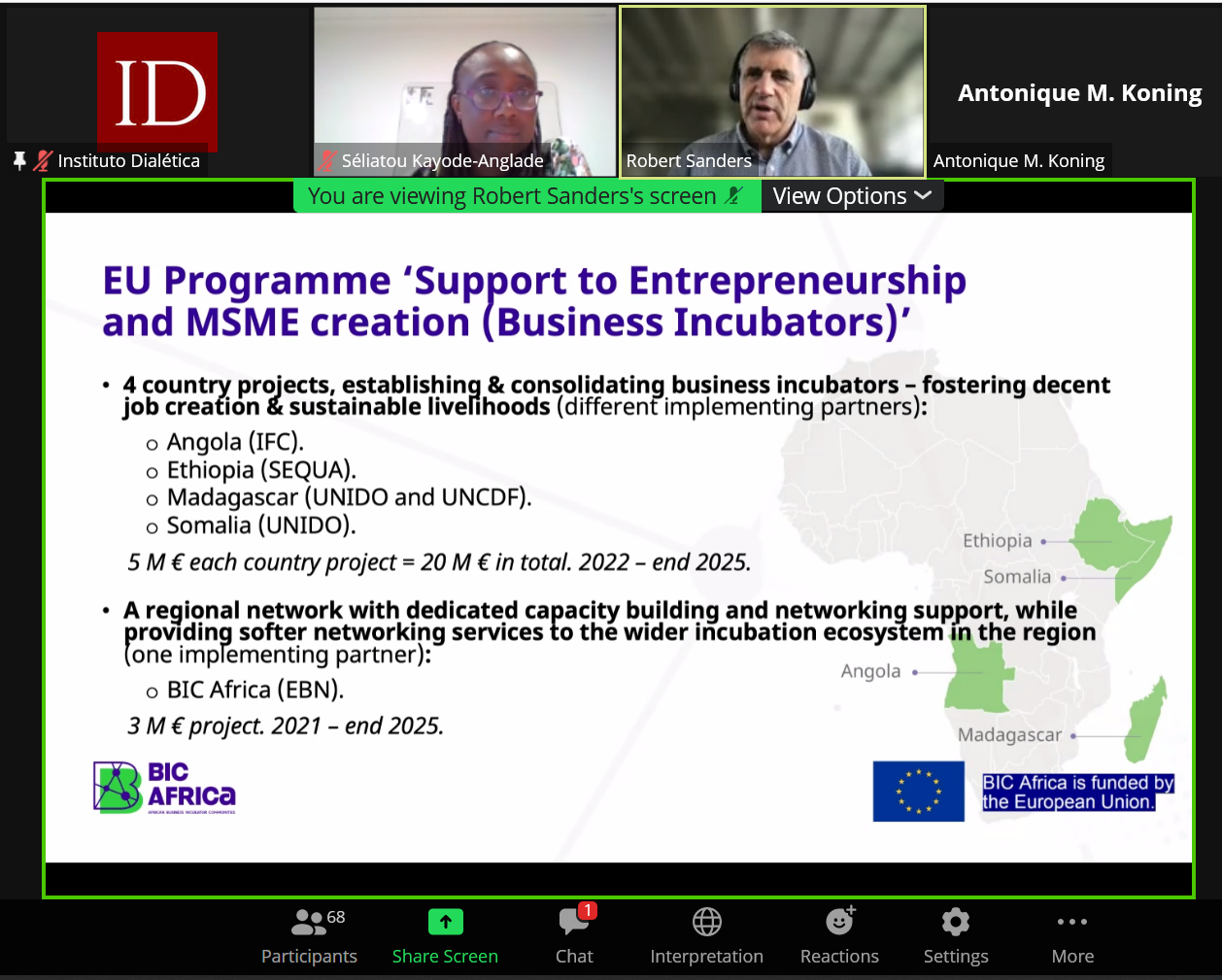
During the first part of the workshop, EU member state organisations (MSOs) (Expertise France, Enabel, GIZ, SlovakAid, SNV) presented the IYBA SEED components, with an emphasis on lessons learnt. The second part of the workshop focused on the regional perspective for ecosystem development where presentations from BIC Africa, UNCDF and the AfDB were made followed by an open discussion on how to connect different national ecosystems.


Report: transform food systems in Ethiopia, Malawi, and Nigeria

16 March 2023. How USD 10 billion can transform food systems in Ethiopia, Malawi, and Nigeria: Report launch by IFPRI and IISD

A new study finds that sustainable food system transformation can be achieved in the next decade in Ethiopia, Malawi, and Nigeria by increasing public investment by US$10 billion per year (on average from 2023 to 2030) and implementing a more effective portfolio of interventions that achieve multiple outcomes.

In an ambitious effort, researchers from IFPRI and IISD, engaged closely with the government, donors, and stakeholders in each country, synthesized the evidence, and then applied sophisticated macro- and microeconomic modeling techniques to identify pathways to provide affordable and healthy diets to all people in an environmentally sustainable way.
  • Introduction Sean Woolfrey, Senior Advisor & Research Coordinator, International Institute for Sustainable Development (IISD)
  • Presentation of the report: Evidence-based and costed deep dives for achieving sustainable food systems Alan de Brauw, Senior Research Fellow, IFPRI
  • Livia Bizikova, Lead II, Monitoring and Governance, Tracking Progress program, International Institute for Sustainable Development (IISD)
  • Francine Picard, Co-Founder and Director of Partnerships, Shamba Centre for Food and Climate
  • Carin Smaller, Co-Founder, Executive Director, Shamba Centre for Food and Climate
Reactions: From evidence to action 

Related Publications

Country-level work building on Ceres2030

IISD and IFPRI have undertaken ‘deep dives’ into the nexus of food systems, climate change, and diets in three countries: Malawi, Ethiopia, and Nigeria. This work builds on the Ceres2030 project and aims to strengthen the evidence base for climate-smart nutrition interventions in agriculture and food systems.

Summary Report

This report summarizes how public interventions in all three countries could help end hunger, make diets healthier and more affordable, and improve small-scale producers' livelihoods in climate-friendly ways.

Ethiopia

Ethiopia is not on track to achieve the United Nations Sustainable Development Goals by 2030. This report outlines what is needed to get agriculture and food systems back on the right track.

Malawi

Likewise, healthy diets are unattainable for most people in Malawi. This report details what interventions are needed to support the transition to sustainable food systems and what they will cost.

Nigeria

Hunger and poverty have also been rising in Nigeria. This report provides a roadmap for how country-level decision makers and the donor community can transform food systems in the country.

Tuesday, March 14, 2023

Useful applications of ChatGPT in knowledge work

14 March 2023.
 Useful applications of ChatGPT in knowledge work

Johannes Schunter showed a number of useful applications in development work ; what the bot is good at and what it is not good at. He is Head of Knowledge Management · Evangelisches Werk für Diakonie und Entwicklung e.V., Berlin, Germany.

Organised by Knowledge Management for Development (KM4Dev) is a global community of practice of primarily international development practitioners interested in knowledge management and knowledge sharing theory, practice and related matters.

In November 2022, ChatGPT is released for free, achatbotbased on GPT-3.5(trained on 100 billion words). Within 2 months, it gains 100 million users (TikToktook 9 months ; Instagram took 28 months). Microsoft follows with Bing Chat (based on GPT), and Google, Meta, and Amazonare about to release their own language models. 

ChatGPT is suitable for standard communications: Protocols, pressreleases, job advertisements, announcements, event invites, questionnaires, bureaucratic communication, etc.

Use of ChatGPT in office tasks leads to: 37%increasedproductivity, increased job satisfaction (related to the task), increased self-efficacy (Experimental Evidence on the Productivity Effects ofGenerative Artificial Intelligence, March 2023)

Open AI just announced 14/03 it is launching its long anticipated GPT-4 model, which according to them comes "with advanced reasoning capabilities". (see video at the bottom)


What does this mean for everyday knowledge work?

Useful for:
  1. First drafts of content (communication, FAQs, briefing notes, proposals, press releases, grant applications)
  2. Summary of texts (protocols, publications, transcripts)
  3. Translation“of complex texts (bureaucratic, legal, medical, scientific) in to easy language
  4. Generation of ideas (names, applications, slogans, interviews)
  5. As lectorate (grammar, stile, tone, voice, target audience)
  6. As remedy for writer‘s block
  7. For planning and analysis (schedules, analysis)
  8. As tutor and training partner
What does this mean @ institutional / organisational level?
  1. Every organisation will maintain its own internal AI system which knows all its internal content and can: a) Answer any questions innatural language regarding anything that was ever documented in written form (and visible for everyone in the organisation) ; b) Create new content in any format based on this 
  2. Currently still too expensive
  3. Hallucination problem is not solved yet
  4. Development organisations must ready themselves to make an investment in this area in the next 2-3 years
Prepare for the future:
  • Educate colleagues in your organisations about the potential and practical applications of retail AI tools
  • Plan for building a Q&A machine for your own organisational content by
    • Identifying the best use cases in your organisation
    • Prepare the data
    • Test tools and scenarios via prototypes
    • Plan financial investment

  • Discuss and prepare your organisation strategically for the coming wave of societal change
A lot of education today is about answering questions. But for the future—with AI in the picture—what’s likely to be more important is to learn how to ask questions, and how to figure out what questions are worth asking. Or, in effect, how to lay out an “intellectual strategy” for what to do. And to be successful at this, what’s going to be important is breadth of knowledge—and clarity of thinking. See: Will AI take our jobs?

The recording will also be available on the KM4Dev YouTube channel?


Shared resources:

What Is ChatGPT Doing … and Why Does It Work?

That ChatGPT can automatically generate something that reads even superficially like human-written text is remarkable, and unexpected. But how does it do it? And why does it work? My purpose here is to give a rough outline of what’s going on inside ChatGPT—and then to explore why it is that it can do so well in producing what we might consider to be meaningful text. I should say at the outset that I’m going to focus on the big picture of what’s going on—and while I’ll mention some engineering details, I won’t get deeply into them.


DALL·E 2 - DALL·E 2 is an AI system that can create realistic images and art from a description in natural language.


Food Loss and Waste in Fruit and Vegetable Supply Chains

14 March 2023. 2:30pm - 4pm CET Food Loss and Waste in Fruit and Vegetable Supply Chains - IFPRI Seminar

According to the United Nations Food and Agriculture Organization (FAO), about one-third of all food produced around the globe is lost or wasted. This is particularly egregious in a world where one in nine persons is food insecure, and widespread food affordability concerns in low- and middle-income countries have resulted from COVID-related value chain disruptions and the global impact of the war in Ukraine.

This annual event will take stock of efforts around the world to tackle food loss and waste through initiatives like Champions 12.3, a coalition of leaders from governments, businesses, international organizations, research institutions, farmer groups, and civil society dedicated to inspiring ambition, mobilizing action, and accelerating progress toward achieving Sustainable Development Goal Target 12.3 by 2030.

The seminar will also take a closer look at fruits and vegetables, which are among the healthiest but most wasted foods. Given their perishable nature, great care, attention, and cooperation along all parts of fruit and vegetable value chains are required to reduce food loss and waste.
  • Moderator Luciana Delgado, Senior Research Analyst, IFPRI
  • Welcome Rob Vos, Director, Markets, Trade and Institutions Division, IFPRI, and Lead, CGIAR Initiative on Rethinking Food Markets
  • Welcome Jacob Jensen, Minister for Food, Agriculture and Fisheries of Denmark (video recording)
  • Keynote Address Maximo Torero, Chief Economist, Food and Agriculture Organization (FAO)
Panel Discussion
  • Rob Vos, Director, Markets, Trade and Institutions Division, IFPRI, and Lead, CGIAR Initiative on Rethinking Food Markets
  • Muhammad Yakubu Bubayaro, Founder/CEO, Bunkasa Agritech
  • Shannon Sajdak, Senior Sustainability Manager, Apeel
  • Signe Frese, Director, CSR and Quality, Coop Denmark
  • Liz Goodwin, Senior Fellow and Director, Food Loss and Waste, World Resources Institute (WRI)

The sound and vision of organic farming for rural audiences


14 March 2023.
The sound and vision of organic farming for rural audiences - by AccessAgriculture

Webinar to know more about how media houses (radio, television, newspapers, and web media) can help in disseminating information about organic farming, agri entrepreneurship learning

Recording forthcoming