
The African diaspora is increasingly recognized as a strategic partner in agricultural development, climate resilience and rural entrepreneurship. Two initiatives illustrate this growing recognition: the European Union Global Diaspora Facility (EUDiF), which strengthens diaspora engagement in sustainable development, and a new joint programme launched by the Food and Agriculture Organization of the United Nations (FAO) and the International Organization for Migration (IOM) to mobilize Moroccan and Senegalese diaspora communities in Belgium for climate action in their countries of origin.
EUDiF: Turning diaspora engagement into development partnerships

The European Union Global Diaspora Facility (EUDiF) is funded by the European Union's Directorate-General for International Partnerships (DG INTPA) and implemented by the International Centre for Migration Policy Development (ICMPD). Following its first phase (2019–2024), EUDiF entered a second phase running from June 2024 to September 2027.

knowledge, expertise, investment networks and entrepreneurial capacities. Its activities include research, policy dialogue, capacity development, knowledge exchange and support for diaspora-led initiatives.
During its first phase, EUDiF mapped diaspora engagement policies and institutions across more than 100 countries and implemented 16 capacity-development actions. Its second phase introduced the Diaspora 4 Development Grants, which awarded support to 11 diaspora-led projects in 2025.
Several initiatives are particularly relevant to African rural development, including support for women's entrepreneurship in Cabo Verde, market gardening in Togo, diaspora skills profiling in Senegal and institutional capacity development in Morocco.
By promoting diaspora participation beyond remittances, EUDiF highlights the contribution that migrant communities can make through skills transfer, investment, innovation, business partnerships and access to international markets.
FAO and IOM launch a new diaspora initiative for Morocco and Senegal
Funded by the Migration Multi-Partner Trust Fund (MMPTF), the programme has a total budget of USD 3 million, including USD 1.8 million implemented by FAO and USD 1.2 million by IOM. Running from April 2026 to April 2029, it connects diaspora communities in Belgium with agricultural entrepreneurs, cooperatives, rural communities and public institutions in Morocco and Senegal.
The initiative focuses geographically on the Tanger-Tétouan-Al Hoceïma region in Morocco and the Saint-Louis and Fatick regions in Senegal.
Its activities aim to:
Mobilize diaspora investments, technical expertise and business networks for climate-resilient
agrifood enterprises.Provide training and coaching to rural entrepreneurs, cooperatives, women and young people on climate-adaptive agriculture and green businesses.
Establish mentorship programmes and connections between diaspora entrepreneurs and rural businesses.
Strengthen diaspora participation in national policy dialogue on agriculture, migration and climate change.
Promote partnerships between institutions and diaspora organizations in Belgium, Morocco and Senegal.
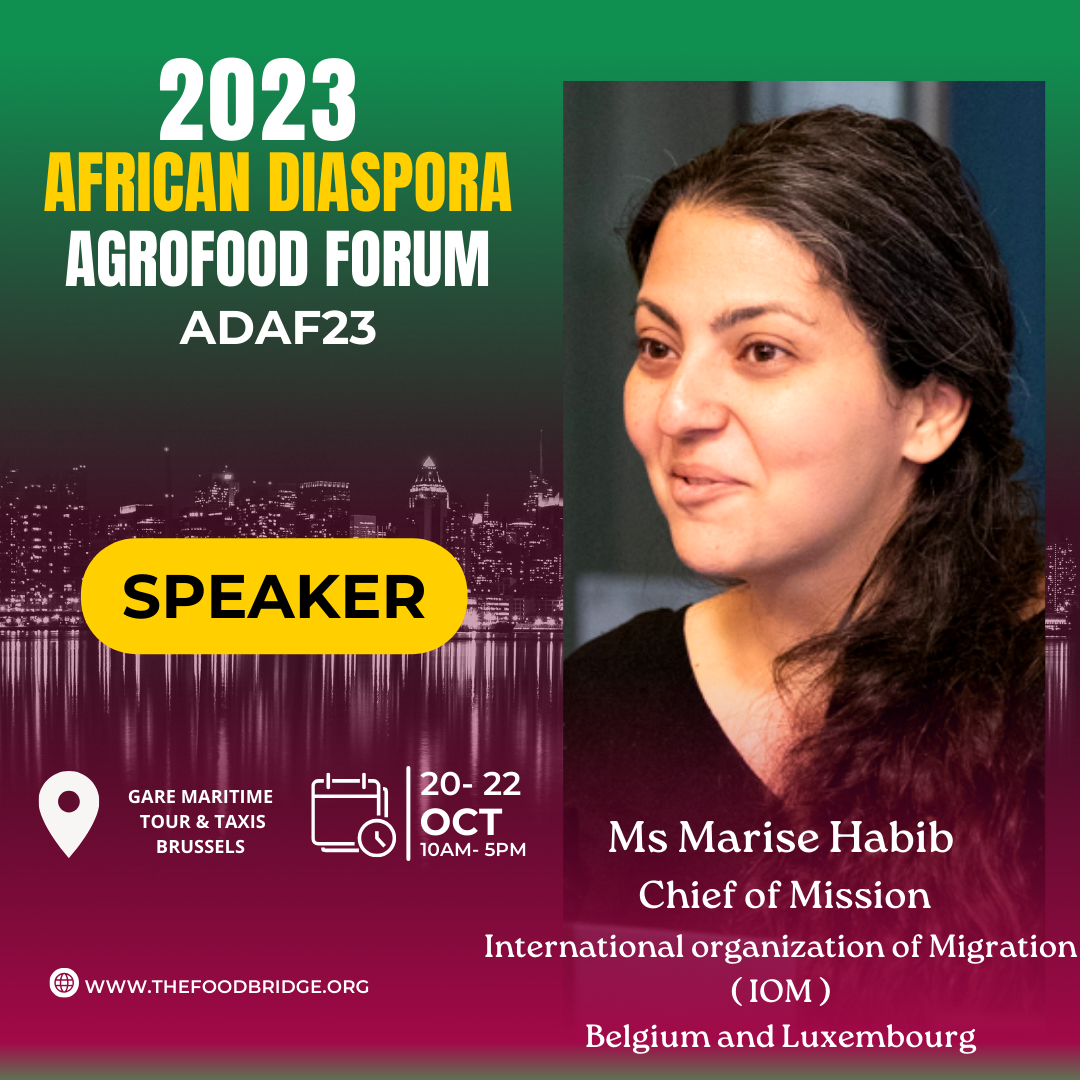
At the Brussels launch, Marise Habib, IOM Chief of Mission for Belgium and Luxembourg, emphasized the importance of connecting diaspora skills and investments with locally driven climate solutions. Giulia Castro, FAO Global Project Coordinator, highlighted the need to strengthen the enabling environment for diaspora participation in agribusiness and climate action.
From policy dialogue to practical partnerships
The programme took an important step forward on 13 October 2026, when the National Strategic Committee held its inaugural meeting in Rabat, Morocco, chaired by the Agency for Agricultural Development (ADA).
The meeting brought together representatives of agricultural institutions, government departments, FAO, IOM and other stakeholders to establish a governance framework for implementation.
Among the speakers were El Mahdi Arrifi, Director General of ADA; Alexandre Huynh, FAO Representative in Morocco; and Johann Barbé, Deputy Chief of Mission and Programme Officer at IOM Morocco.
Discussions highlighted opportunities for Moroccan diaspora members in Belgium to support agribusiness development through investment, mentoring, technical assistance and market connections.
Planned activities include mapping rural agripreneurs and cooperatives, assessing the entrepreneurial ecosystem, organizing pitch events and facilitating partnerships between diaspora investors and agricultural businesses. The initiative will also build on FAO's Agri-Accelerator 2.0 programme.
Opportunities for Forgotten Foods and African agrifood entrepreneurs

African diaspora entrepreneurs can play a critical role in bringing traditional African foods into European markets. Their businesses help connect producers and processors in Africa with consumers, distributors, investors and food innovation networks abroad.
However, many face significant obstacles, including limited access to finance, inadequate processing technologies, regulatory requirements, fragmented distribution channels and insufficient consumer awareness of African food products.
The experiences of diaspora-led enterprises such as Tsarona, promoting Bambara groundnut from Botswana in Germany, and Attiéké by LADOU, introducing processed cassava products from Côte d'Ivoire into European markets, illustrate both the opportunities and challenges of internationalizing African food value chains.
EUDiF's support for diaspora organizations and the FAO–IOM programme's focus on rural entrepreneurship provide potentially complementary approaches. While EUDiF strengthens diaspora institutions, networks and capacities, the FAO–IOM initiative seeks to translate diaspora engagement into concrete agricultural investments, technical partnerships and climate-resilient businesses.
For GFAiR and its partners, these developments point to opportunities to connect agricultural research organizations, national agricultural research systems (NARS), farmer organizations, SMEs and diaspora networks.
The challenge is to move from recognizing the diaspora's development potential to creating practical mechanisms that connect African agricultural innovation with diaspora expertise, investment and international markets. By linking local knowledge, scientific research and entrepreneurship, diaspora partnerships can contribute to more diversified, inclusive and climate-resilient agrifood systems.


No comments:
Post a Comment