
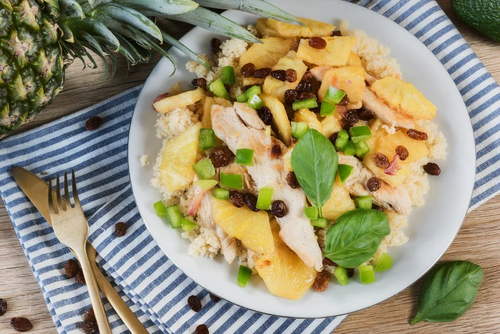
Attiéké is a traditional fermented cassava product originating from Côte d’Ivoire, where it is widely consumed as a staple food. It is produced through a process involving peeling, fermentation, pressing, granulation, steaming and drying. Traditionally prepared by women, attiéké represents an important source of employment, income and culinary identity in West Africa.
From traditional food to innovative commercial product
Lucie Adou began exploring the commercial potential of attiéké in 2009, working with food-processing engineers in Côte d’Ivoire to improve production techniques and meet international quality standards. She established LADOU in 2019, with the ambition of introducing this African food to consumers beyond traditional diaspora markets.
A key innovation is the development of dehydrated attiéké, which preserves the characteristics of the fermented cassava product while extending its shelf life to approximately 24 months. This makes it
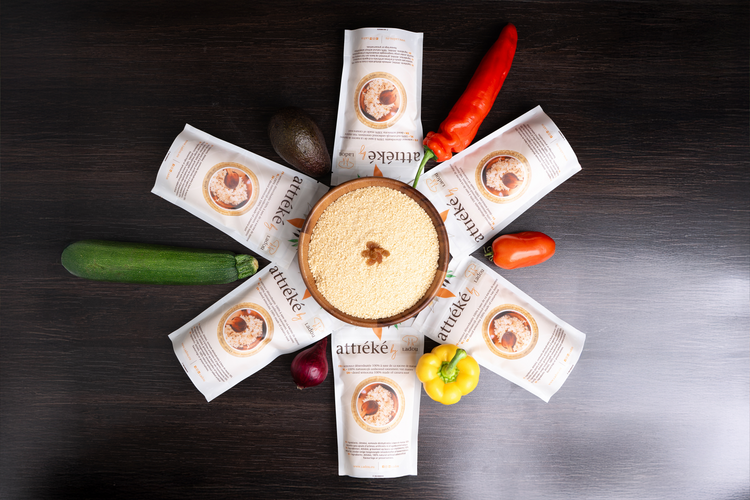
Attiéké by LADOU is marketed as a natural, plant-based and gluten-free product suitable for a variety of culinary applications. The company has also explored new recipes incorporating ingredients such as carrots, beetroot and other vegetables, positioning attiéké within the growing market for convenient and diversified plant-based foods.
Overcoming barriers to international market access
Introducing an African staple into European and international food markets presents significant challenges. Although attiéké is familiar to West African communities, many European consumers have limited knowledge of the product, its preparation and its culinary versatility.
For LADOU, expanding beyond diaspora consumers requires investment in branding, consumer
education, quality assurance, packaging and distribution networks. Competing with established staples such as couscous, rice and quinoa also means convincing retailers, restaurants and consumers to adopt an unfamiliar ingredient.

Supporting women processors and African food value chains
An important dimension of LADOU's business model is its connection with women involved in
traditional cassava processing in Côte d’Ivoire. By linking local production and processing expertise to international markets, the enterprise demonstrates how African food heritage can generate opportunities for value addition and entrepreneurship.
LADOU's participation in African diaspora agrifood initiatives, including the African Diaspora Agrofood Forum (ADAF), has helped showcase the potential of diaspora-led businesses to connect African producers with European consumers and investors.
At ADAF26 in Brussels, participants had the opportunity to taste Attiéké by LADOU, illustrating how traditional African foods can be introduced to new audiences through culinary innovation and entrepreneurship.

GFAiR's Collective Action on Forgotten Foods
Attiéké by LADOU offers a valuable example for GFAiR's Collective Action on Forgotten Foods, particularly regarding the importance of processing technologies, quality standards, diaspora entrepreneurship and access to international markets.
Although cassava itself is a widely cultivated crop rather than a neglected species, the commercial development of traditional cassava-based foods provides important lessons for promoting neglected and underutilized species (NUS). Improving shelf life, adapting products to consumer preferences and creating reliable distribution channels are essential steps in transforming traditional foods into commercially viable products.
Lucie Adou's experience demonstrates that the international promotion of African foods requires more than agricultural production. It also depends on food innovation, consumer awareness, strategic partnerships and recognition of the knowledge and expertise of African producers, particularly women.
Attiéké by LADOU illustrates how African culinary traditions can become the foundation for innovative food businesses, connecting local producers with global markets while preserving the cultural identity of traditional foods.


No comments:
Post a Comment