Platform for African – European Partnership in Agricultural Research for Development

Tuesday, October 29, 2024

The right to adequate food in urban and peri-urban areas

29 October 2024. The right to adequate food in urban and peri-urban areas

  • This event aimed to emphasize the integration of the right to food and the right to the city in all measures addressing food insecurity in urban and peri-urban contexts, advocating for equitable, sustainable, and resilient food systems through multilevel governance and human rights-based approaches.
  • Policymakers, researchers, and stakeholders explored the role of local governments, power structures, and inclusive policies to ensure access to adequate food and urban services amidst challenges like climate change, food insecurity, increasing urban populations, conflicts and raising inequalities.

Speakers:


Opening remarks
  • Juan Echanove, Team Leader of the Right to Food, Rural Transformation and Gender Equality Division (ESP), FAO
  • Corinna Hawkes, Director, Agrifood Systems and Food Safety Division (ESF), FAO
  • Keynote speech: Jane Battersby, Lead author of HLPE-FSN Report “Strengthening urban and peri-urban food systems to achieve food and nutrition”
Panel discussion
  • Emily Mattheisen, FIAN International is a global human rights organization that advocates for the right to adequate food and nutrition.
  • Iromi Perera, Colombo Urban Lab
  • Elisabetta Recine, National Council for Food and Nutrition Security (CONSEA), Brazil and HLPE-FSN 
  • Ximena Moreno, Civil Society and Indigenous People’s Mechanism (CSIPM), Committee on World Food Security (CFS)
  • Arthur G. Kawamura, Private Sector Mechanism (PSM), CFS
  • Afantchawo Koudasse, Network of Farmers' and Producers' Organisations in West Africa (ROPPA)

Resource:

  • The 19th report by the HLPE-FSN "Strengthening urban and peri-urban food systems to achieve food security and nutrition in the context of urbanization and rural transformation" highlights the critical need to address food insecurity in urban and peri-urban areas, where over 75% of the world's food-insecure population resides.
  • Policymakers, researchers, and stakeholders explored the role of local governments, power structures, and inclusive policies to ensure access to adequate food and urban services amidst challenges like climate change, food insecurity, increasing urban populations, conflicts and raising inequalities.

Powering Planetary Change: Climate Solutions for Africa, by Africa

Powering Planetary Change: Climate Solutions for Africa, by Africa" is a groundbreaking documentary series produced by the African Women in Agricultural Research for Development (AWARD).

This series highlights innovative research interventions and scientific advancements led by African scientists, beneficiaries of the AWARD One Planet Fellowship Program.


Background 

One Planet Fellowship is a $20 million initiative dedicated to supporting research on climate change adaptation

African Women in Agricultural Research and Development (AWARD) and Agropolis Fondation supported by the Bill & Melinda Gates Foundation (BMGF), France’s BNP Paribas Foundation, the European Union, Canada’s International Development Research Centre (IDRC) have partnered to implement the One Planet Fellowship.

The One Planet Fellowship seeks to build a vibrant, highly connected, and intergenerational network of African and European scientist leaders equipped to lead next-generation research focused on helping Africa’s smallholder farmers adapt to a changing climate.


GFAiR Mobilizes Global Collaboration for Critical Agricultural Innovation

22 October 2024. Press release. Samarkand, Uzbekistan. GFAiR Mobilizes Global Collaboration for Critical Agricultural Innovation Amid Growing Climate and Food Security Concerns.

A major milestone in international agricultural cooperation was reached as the Global Forum for Agricultural Research and Innovation (GFAiR) signed a series of Memoranda of Understanding (MoUs) with key Regional Platforms and institutions. The MoUs were signed during the Global NARS Consortium (GNC) workshop, held on 22 October 2024, in Samarkand, Uzbekistan, marking a pivotal moment in GFAiR’s commitment to advancing agricultural innovation and regional collaboration on a global scale.

The MoUs were signed with EMBRAPA, AARINENA, APAARI, CACAARI (see pictures), EFARD, FORAGRO and FARA, establishing a framework for enhanced cooperation. These agreements aim to strengthen the global voice, increase influence, and improve the resource base and capacities of National Agricultural Research Systems (NARS), while reinforcing the collaboration among global and regional partners.


Preparations for 2025: A Roadmap for Enhanced Collaboration


As GFAiR prepares to mark its 30th anniversary, the Regional Platforms will be instrumental in
implementing a strategic roadmap, developed in consultation with national, regional, and global institutions, networks, and organizations. This roadmap will be unveiled during the CGIAR Science Week, set for April 7-12, 2025, at the UN Campus in Nairobi, Kenya, as part of the pre-launch of new GFAiR initiatives.

Engaging the Private Sector and Expanding Partnerships


In recognition of the crucial role played by the private sector in agricultural innovation,
the agreements include a commitment to welcome private sector participation alongside government agencies. This will encompass extension services, social enterprises, and other private stakeholders, reinforcing the importance of diverse partnerships in advancing sustainable agricultural development.


Strong Regional Support from Central Asia


The workshop highlighted the strong support for GFAiR’s mission from the Central Asia region, with endorsements from governments, research bodies, and farmers' organizations in Uzbekistan, Azerbaijan, Kazakhstan, Georgia, and other nations. This regional backing underscores the shared vision of fostering agricultural resilience and innovation across Central Asia.

New Leadership and Steering Committee for GFAiR


GFAiR’s newly formed Steering Committee was also officially introduced at the workshop. Dr. Ravi
Khetarpal, who continues to lead as Chair, was joined by the newly appointed Vice Chair, Dr. Romano de Vivo, who took over from Dr. Ross McLeod. Dr. McLeod was acknowledged for his invaluable contributions and steadfast support to GFAiR over the years.

In addition, the Steering Committee welcomed three new members: Daniel El Chami from Tima Agro, Katja Vuori from AgriCord, and three representatives from UNWOMEN, signaling a strengthened commitment to gender equity and inclusive agricultural development.

Paving the Way for Global Agricultural Progress


The signing of these MoUs marks a significant step toward a more cohesive and impactful global agricultural research community. GFAiR, through the GNC, is committed to driving agricultural innovation and collaboration that meets the challenges of the 21st century. The 2025 roadmap will serve as a cornerstone for aligning regional strengths with global priorities, ensuring that the next decade of agricultural research is marked by sustainable growth, collaboration, and shared success.

Sunday, October 27, 2024

Soil Information Systems for Attainment of Soil Health in Africa

 Join the African Union 20th #CAADP Partnership Platform & 15th Africa Day for Food and Nutrition Security #ADFNS side event under Theme 3 "Soil Information Systems for Attainment of Soil Health in Africa" on Thursday, October 31st at 2PM in Harare.

Register via🔗 https://bit.ly/3YphoBs to participate via Zoom

Implementation of the Africa Fertilizer and Soil Health Action Plan

 Join the African Union 20th #CAADP Partnership Platform & 15th Africa Day for Food and Nutrition Security #ADFNS Plenary Session on the "Implementation of the Africa Fertilizer and Soil Health Action Plan" on Thursday October 31st at 8AM in Harare.

Register via 🔗 https://bit.ly/4e1Ee7S to participate via Zoom

Wednesday, October 23, 2024

Transcontinental research for sustainable food systems in a changing climate.

16 - 17 October 2024. The ERA‐NET Cofund Food Systems and Climate (FOSC) organised its annual meeting with a mix mode participation (presence/online). The consortium consists of 28 partners from Europe, Africa and Latin America gathered for transcontinental research for sustainable food systems in a changing climate. 

  • The Knowledge Hub session on 16 October shared with larger community the results of FOSC and the valorisation items of its results in clustered outputs. 
  • The training session on 17 October was a training session organised for FOSC R&I projects partners : one on freedom in science and diplomacy science and the other one on Euraxess. 

The European Research Area Network Cofund (ERA‐NET Cofund) Food Systems and Climate (FOSC) has been formed. FOSC started on 1 October 2019 for a duration of five years. The network received an extension of one extra year in 2023 and will run until September 2025. The FOSC Consortium consists of 28 international partners from Europe, Africa, and Latin America and has a funding budget of approximately 16 million euros (including European Commission co‐fund contribution).

Website : https://www.foscera.net/en/foscera.htm

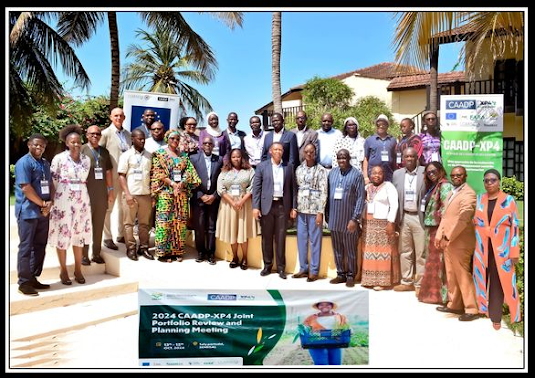
CAADP-XP4 Consortium Maps Steps Towards Project Closure

By: Bridget Kakuwa Kasongamulilo, Benjamin Abugri & Poko Alida Nadinga

Dear Colleagues,
October 15 - Saly, Senegal—The vibrant discussions of the CAADP-XP4 Consortium echoed through the halls of the Rhino Resort Hotels & Spa as representatives from across Africa gathered for a crucial Joint Portfolio Review and Planning Meeting from October 13 to 15, 2024. The air was charged with anticipation as stakeholders aimed to finalize strategies for the project's final year, focusing on sustainable agricultural development and integrating pressing issues such as agroecology and digitalization. For more information, follow the link below; https://www.ccardesa.org/caadp-xp4-consortium-maps-steps...

Soil Information System (SIS) and the African Fertilizer and Soil Health Action Plan (AFSH-AP)

 "For Africa to succeed..., stakeholders and member states must collaborate to implement continental frameworks like the Soil Information System (SIS) and the African Fertilizer and Soil Health Action Plan (AFSH-AP)..."