Authors and editors of the special issue presented evidence on the medium-term effects of rising fertilizer prices and their implications for global demand, highlighting the disproportionate effects on smallholder farmers in low- and middle-income countries. The discussion will also cover issues related to the role of targeted subsidy programs, integrated soil fertility management, and site-specific nutrient approaches.
A panel of fertilizer experts discussed how these insights can support policymakers seeking to mitigate price volatility, strengthen soil health, and ensure resilience in agricultural production, particularly during adverse weather events and economic shocks. This seminar offers critical perspectives for researchers, policymakers, and agribusiness leaders working to build more sustainable and equitable food systems in an increasingly uncertain world.
Introduction and Opening Remarks Ruth Hill, Director, Markets, Trade, and Institutions, IFPRI
Christopher Barrett, Stephen B. and Janice G. Ashley Professor of Applied Economics and Management, Charles H. Dyson School of Applied Economics and Management, Cornell University, Ithaca, NY, US
A synthesis of recent evidence on the policy dimensions of fertilizer, soil health, and economic shocks Kibrom Abay, Senior Research Fellow, IFPRI (Presentation)
Country and cross-country policy experience: A conversation with the authors
Jaweriah Hazrana, Postdoctoral Research Fellow, Arizona State University
Pauline Chivenge, Senior Scientist, International Rice Research Institute (IRRI)
Panel Discussion: How do we build resilience to future shocks in international and domestic fertilizer markets?
Moderated by Charlotte Hebebrand, Director, Communications and Public Affairs, IFPRI Peter Odhiambo Owoko, Head, Policy Coordination, Directorate of Agricultural Policy Research and Regulations, State Department for Crop Development & Agricultural Research, Kenya
Latha Nagarajan, Director, Sustainable Opportunities for Improving Livelihoods with Soils (SOILS) Consortium, International Fertilizer Development Center (IFDC)
Shamie Zingore, Director of Research and Development, African Plant Nutrition Institute (APNI)
The recording of the webinar, along with the presentation slides, Q&A document, and relevant links, is now (26/06) available on the FAO elearning Academy platform at the following link: https://elearning.fao.org/course/view.php?id=1272
National plant protection organizations (NPPOs) are responsible for carrying out specific functions established by the International Plant Protection Convention (IPPC) at the national level. By fulfilling these responsibilities, NPPOs contribute to the overarching goals of the IPPC: preventing the introduction and spread of plant pests and facilitating safe trade.
This e-learning course is designed to support plant health professionals, particularly those working within an NPPO, by enhancing their understanding of the organization's objectives and operations, as well as their own responsibilities within it.
Ms Sarah Brunel - Implementation and Facilitation Unit Lead, IPPC Secretariat, FAO
Ms Cristina Petracchi - FAO elearning Academy, FAO
Mr Saliou Niassy - Coordinator, African Union Inter-African Phytosanitary Council (AU-IAPSC)
Ms Temarama Anguna – Kamana - CPM Bureau Representative, Southwest Pacific and Head of the Ministry of Agriculture of the Cook Islands
Ms Mweene Kambombi - National Phytosanitary Evaluation Coordinator and Plant Health Inspector, Zambia Agriculture Research Institute (ZARI)
Mr Claude Bragard - Professor and Plant Health Specialist, Catholic University of Louvain
Background:
High-quality, accessible, and inclusive capacity development is essential for building strong, sustainable phytosanitary systems. That’s why the IPPC Secretariat — in collaboration with the FAO elearning Academy and with support from the European Union — has developed the IPPC Plant Health Campus.
The content is aimed at national plant protection organizations (NPPOs), NPPO staff, phytosanitary capacity evaluation (PCE) facilitators, plant health partners, stakeholders and students, with the overall goal of strengthening national phytosanitary capacity.
This new multilingual platform provides free, certified e-learning courses, practical guides, and capacity development tools developed to support the learning needs of plant health professionals, national and regional plant protection organizations, academic institutions and plant health stakeholders globally.
This e-learning course outlines the process that countries can follow to gain access to new markets for exporting plants and plant products, while minimizing trade disruptions and preventing pest introductions. It covers international agreements and standards relevant to exporting plants and plant products, emphasizing the importance of phytosanitary measures.
Participants will learn how to collaborate with national stakeholders and within their national plant protection organization (NPPO) to facilitate market access while protecting biodiversity and agricultural ecosystems.
ACAT is the foremost forum that focuses on game-changing novel agricultural technologies, ideas, and policies that foster agricultural transformation on the continent. The Conference is an agriculture technology transfer platform that promotes innovative and practical solutions to catalyse more efficient, inclusive, and resilient agriculture in Africa.
It brought together government representatives, industry thought leaders, policymakers, technical experts, private institutions, farmers, women and youth across the globe to discuss and define practical actions and solutions to the challenges of technology access and use faced in the agriculture sector in Africa.
This panel session explored how a user-centered design approach
can revolutionize the development and deployment of Science, Technology, and
Innovation (STI) in agriculture, with smallholder farmers and other key stakeholders
as integral members of the innovation team.
Sequence 1: How can we better understand and prioritize the specific needs of smallholder African farmers to ensure that technological solutions are truly impactful and sustainable?
Dr. Milindi Sibomana, Chief Agriculture Officer, One Acre Fund
Ms. Margaret Awinja, Coordinator, Western Region Farmers Network
Mr. Anthony Kioko, CEO, CGA
Prof. Maggie Gill, Board of Trustees Member, AATF
Dr. Kayode Sanni, Project Manager and Director of The Alliance for Hybrid Rice in Africa (AHyRA), AATF
Sequence 2: How can we create effective partnerships between researchers, policymakers, private sector actors, and farmers to design scalable farmer centric agtech solutions?
Prof. Richard O. Oduor, Research, Innovation and Outreach, Kenyatta University
Prof. Hlami Ngwenya, Head of Research Chair, Communication for Innovation Center for Sustainable Food Systems and Development, University of Free State
Prof. Bernard Slippers, Board of Trustees Member, AATF
Prof. Firew Mekbib, Chair, National Variety Release, Federal Democratic Republic of Ethiopia
Dr. Jean Claude Rubyogo, Director, Pan-Africa Bean Research Alliance (PABRA)
09/10 Building robust digital infrastructure in rural areas
This session explored a two-pronged approach: establishing resilient and accessible infrastructure for present impact and proactively developing the robust and interconnected infrastructure required to harness the transformative potential of AI, robotics, precision agriculture, and data analytics.
Sequence 1: How can digital solutions be leveraged to accelerate the adoption and
application of agricultural innovations?
Dr. Bellancile Uzayisenga, Plant & Microbial Biotechnology Programme
Coordinator Senior Principal Research Fellow, Rwanda Agriculture and Animal
Resources Development Board, (RAB)
Mr. Deo Massawe, CEO, Bank of Kigali (BK) TecHouse
Mr. Emmanuel Assiak, Chief Investment Officer, Fund for Export Development
in Africa (FEDA)
Dr. Ndambe Magnific, Deputy Vice Chancellor of Research, RICA
Sequence 2: What are the key challenges and opportunities in deploying digital tools in remote rural areas, and how can these challenges be overcome?
Mr. Pierre Kayitana, General Manager, Zipline Rwanda
Mr. Gabriel Macharia, Data Management Officer, AATF
Mr. Paul Kwengere, Board Member, International Trade Council
Mr. Faissal Sehbaoui, CEO, AgriEdge
09/06 Digital divide and promoting Ag-tech literacy
This panel addressed the critical issue of farmers’ voices to the forefront and exploring practical solutions to promote tech literacy and the adoption of farmer-centric agricultural technologies.
Sequence 1: Bridging the Gap - Farmers and Tech Developers in Dialogue
Ms. Elizabeth Nsimadala, President, EAFF
Mr. Pacifique Nshimiyimana, Founder & CEO, Real Green Gold Ltd
Mr. Naboho Wiledyo, Farmer, People’s Republic of Burkina Faso
Mrs. Tigist Endashaw Bealem, Consultant - Climate Action Policy Advocacy,
Federal Democratic Republic of Ethiopia
Sequence 2: Interactive workshop and reporting
What are the effective training and education models for Ag-Tech solutions in
Africa?
What are some practical strategies for enhancing access and affordability of
digital tools for farmers?
The role of youth in championing digital literacy among older farmers?
Day 2: Theme: Enabling Environment: Investment and partnerships
for Ag-Tech Solutions
10/06 : Enabling Environment: Investment and partnerships for Ag-Tech Solutions
This session explored strategic investments across a range of vital linkages,
markets, credit facilities, capacity building, and other essential support services.
Keynote Address: Investing in the Future of African Agriculture - H.E. Dr. Goodluck Jonathan, AATF Goodwill Ambassador & Former President, Federal Republic of Nigeria
Panel 1: Charting a Collaborative Roadmap for Quality Partnerships:
Dr. Canisius Kanangire, Executive Director, AATF
Prof. Appolinaire Djikeng, Director General, ILRI
Dr. Yuichiro Asai, President & CEO, Asai Nursey, Inc
Dr. Sheila Obim, Executive Director, Alliance for Science
Prof. Jean Jacques Muhinda, Regional Director East & Southern Africa, AGRA
Panel 2: Building the Ecosystem: Infrastructure, Finance, and Capacity
Hon. Tesi Rusagara, Minister of State for Resource Mobilization and Public Investments,
Rwanda.
Ms. Brenda Gunde, Lead Global Technical Specialist ICT4D, Sustainable Products, Markets and Institutions Division, IFAD
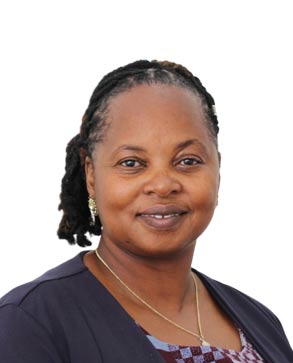
Dr. Stella Simiyu (picture), Director Regulatory Affairs & Stakeholder Relations, CropLife Africa Middle East: see video @ 42:27 - 46:38 She answers the question: How do we foster a PPP that works for the farmers?
Ms. Katie Taft, Communications and Engagement Lead, Gates Ag One
Mr. Hannington Namara, C.E.O Equity Bank Rwanda
10/06 : Developing sustainable business models for Ag-Tech
This session explored diverse investment opportunities, innovative financing mechanisms, and policy frameworks that can unlock the widespread development and adoption of impactful Ag-Tech.
Sequence 1: For sustainable Ag-Tech to thrive across diverse African markets, what are the primary investment hurdles and the resulting opportunities once these are addressed?
Dr. Eugene Mutimura, CEO, National Council of Science and Technology, Republic of Rwanda
Dr. Jonga Munyaradzi, Seed Production Manager, AATF
Dr. Said Rutabayiro Ngoga, Division Manager for Technology Innovation, Rwanda Information Society Authority
Ms. Martha Haile, Founder, Abze
Sequence 2: How can we foster a new generation of innovative agripreneurs who can drive sustainable agricultural development and economic growth?
Prof. Alfred Bizoza, Professor, University of Rwanda
Mr. John Agboola, Foundation Manager, AGCO Corporation
Mr. Peter Wamboga-Mugirya, Director for Communication and Partnerships, Science Foundation for Livelihoods and Development (SCIFODE)
Dr. Nomathemba Mhlanga, Country Representative, FAO
10/06 Researchers Dialogue Session Title: Integrating traditional knowledge systems with modern technology solutions
This session examined the synergies between indigenous ecological knowledge—deeply rooted in local cultures and ecosystems—and innovations such as precision agriculture, biotechnology, and digital platforms.
Sequence 1: Collaborative Pathways to Next-Gen Agriculture
Mrs. Gift A. Kadzamira, Director General, National Commission for Science and Technology Rwanda
Dr. Omar Mukama, Lead GCP inspector of Clinical Trials, Rwanda Food and Drugs Authority
Dr. Allan Liavoga, Technical Advisor, North American Millers Association
Ms. Bakang K. Kgasudi, PhD student, Botswana University of Agriculture and Natural Resources
Sequence 2: Interactive workshop and reporting - Bridging Wisdom and Technology
What core elements of traditional farming must be safeguarded and integrated?
How can digital agriculture enhance, rather than replace, local practices?
What governance mechanisms can ensure ethical knowledge sharing?
Day 3 : Last Mile Delivery: Commercialization and Scaling of
Ag-tech Solutions
11/06 Commercialization and Scaling of Ag-tech Solutions
The panellists analysed the persistent barriers hindering access in rural communities and explore how strategic, multi-sectoral partnerships, empowered by cutting-edge technological advancements in logistics and information flow, can revolutionize delivery.
Project Showcase: Climate Smart Remote Sensing Project in Rice Value Chain Project
- Dr. Kayode Sanni, Project Manager and Director of The Alliance for Hybrid Rice in Africa
(AHyRA), AATF
Opening Remarks & Setting the Stage
Mr. Sam Ngabire, Coordinator, Home Grown School Feeding Project, Ministry of Education,
Republic of Rwanda
Keynote Presentation: Overcoming Last Mile Hurdles -Ms. Mildred Nadah Pita, Head of
Public Affairs, Science and Sustainability, Bayer
Panel Discussion: Building Robust Partnerships Among Stakeholders (Public, Private,
NGOs) for Sustainable Scaling of Ag-Tech Solutions
Mr Shavda Tree Onov. CEO of East Africa Agro Limited
Prof. Karimbhai M. Maredia, Professor and Director of International Programs, Michigan State University - "The importance of South-South, North-South partnerships for technology transfer"
Mr. Momar Dieng, Chief Strategy and Partnerships Officer, AIMS Global Network
Dr. Jean Claude Rubyogo, Director, Pan-Africa Bean Research Alliance (PABRA)
Mr. Dagmawi Habte-Selassie, Country Director, Rwanda, IFAD
Panel Discussion: Beyond the Pilot, Scaling Ag-Tech Solutions
Mr. Amath Pathé Sene, Managing Director, Africa Food System Forum (AFSF)
Ms. Zoë Karl-Waithaka, Managing Director and Partner, Boston Consulting Group
(BCG) - Inclusive business models
Dr. Mel Oluoch, Director for Strategic Partnerships, Sasakawa
Dr. Telesphore Ndabamenye, Director General, Rwanda Agriculture and Animal
Resources Development Board (RAB)
Path Forward: Dr. Oliver Kamana, Permanent Secretary, MINAGRI
The Alliance for Cowpea Improvement in Africa (ACIA) is an Africa-focused community of cowpea experts. It responds to the demands of African farmers and consumers for cowpea that is safe, affordable and environmentally sustainable.
Cowpea is a delicious and nutritious food crop, one widely featured in African cuisines and widely grown on African farms. The mission of ACIA is to ensure this versatile and resilient crop reaches its full potential to support healthy diets and sustainable, productive farms.
Kira Everhart-Valentin of Gates Agricultural Innovations (Gates Ag One) Prof. Muhammad Lawan Umar - Cowpea breeder, Institute for Agricultural Research (IAR), Nigeria Francis Onyekachi, Manager Product Stewardship and Quality (AATF) He presented the progress on gene edited cowpeas Dr. Jean Baptiste Tignegre - African Agricultural Technology Foundation (AATF)
11/06 Licensing and IP: access to proprietary traits and germplasm
This session delved into the complex landscape of intellectual property (IP) and licensing concerning proprietary traits and germplasm – foundational elements for agricultural innovation and productivity gains in Africa. Access to these protected resources holds immense potential for developing climate-resilient crops, enhancing nutritional value, and improving yields for African farmers. However, navigating the legal, ethical, and economic considerations surrounding IP and licensing is crucial to ensure equitable access and foster sustainable agricultural development in Africa.
While the private and public seed sector share the same goal of developing improved varieties, there are
important differences that must be considered when developing appropriate IPR for cultivars developed
in the public sector. Public breeding often focuses on crops with high social returns to investment but
low private returns, such as small grains, perennials, cover and soil building crops, root and tuber crops,
and tree crops. Public breeders often focus on long arc research, that is, research in which the payoff
may require many years of work, often by many individuals. After development and proof of concept by
the public sector, the new products are commercialized by the private sector with little return of funding
to the public side. In many cases the public breeding sector collaborates with the private sector to
commercialize public cultivars, and considerations must be made to facilitate this technology transfer. (See: University of Wisconsin-Madison (2016) Intellectual Property Rights and Public Plant Breeding Recommendations, and proceedings of a conference on best practices for intellectual property protection of publicly developed plant germplasm)
Sequence 1: How can intellectual property and licensing frameworks be structured to enable access to proprietary traits and germplasm while still incentivizing innovation?
Dr. George Smith, Senior Associate Dean for Research, MSU
Dr. Damaris Odeny, Plant Geneticist, International Crops Research Institute for the SemiArid Tropics (ICRISAT)
Dr. Deogracious Protas Massawe, Principal Research Coordination Officer, Tanzania Commission for Science and Technology.
He presented: the Tanzania Technology and Innovation Support Centers (TISCs) Innovators are trained on the various aspects of IP, enabling them to identify protectable aspects of their inventions. This safeguards their innovations and gives innovators a competitive advantage at the market. The Tanzania Commission for Science and Technology (COSTECH) is managing a credit window(1 M USD) under the national fund for advancement of Science and technology (NFAST) to support commercialization of Innovations in collaboration with CRDB bank foundation and the World Bank. The establishment of this special commercialization fund in collaboration with CRDB Bank Foundation to accommodate market penetration of research and innovation products. This special window will serve to: (i) Promote commercialization of research and innovation products in Tanzania; (ii) Attract more financing opportunities within and outside Tanzania for supporting; commercialization of research and innovation products; (iii) De-risk innovators and unlock them to commercial funding from commercial banks. (the call opened on 5th May 2025)
Ag-Tech Frontier: Mechanizing the Last Miles: A viable, all-terrain machine to unlock rural food production - Mr. Eric Lane, Co-Founder and Principal, Prosparity Systems
Sequence 2: From Ownership to Access — Making IP Work for African Farmers. What practical steps are needed to ensure African researchers and farmers benefit from protected germplasm and traits, especially in the context of climate resilience and food security?
H.E. Ambassador Prof. Muhammadou M.O. Kah, AATF Board
Ms. Keziah Chomba, Legal Officer, AATF
Dr. Nyagatare Guillaume, Principal, University of Rwanda, College of Agriculture
"Let's put Intellectual Property Rights in the social context of Africa, and not from an individual gain perspective"
11/06 : Leveraging Ag-Tech for Sustainable Agriculture
This dialogue empowered young people to create, adopt and scale Nextgen AgTech solutions for a sustainable and prosperous agricultural future in Africa. This youth dialogue amplified the voices of young farmers and inspire a new generation of agricultural leaders.
Sequence 1: Collaborative Pathways to Next-Gen Agriculture
Mr. Norman Mugisha, CEO, Afrifarmers Market
Ms. Mildred Nadah Pita, Head of Public Affairs, Science and Sustainability, Bayer
Mr. Henry Lagat, Lead, Generation Africa, AGRA
Mr. John Agboola, Foundation Manager, AGCO Corporation
Sequence 2: Interactive workshop and reporting
What are the most effective ways to educate and train young farmers on AgTech in a way that resonates with them?
How can governments and other stakeholders create a more enabling environment that supports youth engagement in Ag-Tech?
How can we foster more effective collaboration between different stakeholders to avoid duplication of efforts and maximize impact?
11/06 Private Sector Dialogue: Commercialization and Scaling of Climate Smart and Modern Ag-Tech to the last mile
This private sector dialogue discusses effective
strategies for commercialization of climate-relevant agricultural technologies and
innovations in Africa.
Dr. Sylvester Dickson Baguma, Executive Director, ASARECA
Ms. Julian Barungi, Program Officer Policy, ASARECA
Dr. Joshua Okonya, Program Officer, Agricultural Technology and Innovation,
ASARECA
Mr. Federico Tonelli, Director of Development & Partnerships, Asili Agriculture
Ms. Iheoma Okpara Chienyenwa, Plant Operations Manager, The Rwanda
Fertilizer Company Ltd
Mr. Innocent Namuhoranye, Chairman, National Seed Association of Rwanda
(NSAR)
Mr. Didace Mparirwa, Head of Agriculture and Livestock Cluster, Private Sector
Federation (PSF)
Dr. Geoffrey Ongoya, Technical Manager, Koppert Biological Systems
Ms. Stella Kimani, Chief Operations Officer, Acre Africa
Ms. Sidonie Paques, Climate Finance Investment Lead, The Global Green
Growth Institute (GGGI)
Day 4 : Cultivating a sustainable future with AgTech Solutions
This subtheme explored practices for product integrity preservation to benefit farmers, enterprises, and consumers while creating regenerative and distributive products that work within the planet’s ecological limits.
Opening Remarks & Setting the Stage - H.E. Ambassador Prof. Muhammadou M.O. Kah, AATF Board
Keynote Address - Dr. Chris Holdgreve, CEO, Global Stewardship Group (GSG) & Executive Director, Excellence Through Stewardship (ETS) Stewardship for Transgenetic Plant Technology; Plant breeding Innovation (PBI) such as genome editing and other breeding innovations.
12/06 Stewardship: Cultivating a sustainable future with Ag-Tech Solutions
This session delved into practices that safeguard product integrity, ensuring the longevity and effectiveness of innovations.
Panel Discussion: Stewardship & Sustainability in Action
Prof. Johnnie Van Den Berg, Program Manager: Integrated Pest Management,
North-West University, South Africa He mentioned Nigerian Farmer’s Success Story with Bt Cowpea
Dr. Olusegun Adedayo Yerokun, Deputy Vice Chancellor, Academic Affairs,
RICA
Prof. Emmanuel Ikani, Executive Director, National Agricultural Extension and
Liaison Services, Zaria, Nigeria
This report outlines actionable recommendations for reforming the global governance architecture for food and nutrition in light of today’s pressing challenges, including conflict, climate change, and post-pandemic financial pressures.
It calls for a “common commitment” among governments and food systems actors to recognize food security as a universal public good, intrinsically linked to climate governance.
This vision involves building a robust foundation of knowledge, prioritizing prevention and resilience, and establishing clear frameworks of measurement and accountability. By positioning food security as central to global justice, it urges the integration of fragmented frameworks to ensure investments reach those who need them most.
Opening and keynote speakers
H.E Mr. Pedro Miguel da Costa e Silva, Ambassador of Brazil to the European Union
Ms. Marjeta Jager, Deputy Director-General, Directorate-General for International Partnerships, European Commission
Presentation of selected findings from the Kofi Annan Commission on Food Security Report
Ms. Sara Roversi, President, Future Food Institute, Commissioner
Mr. Amir Abdulla, Former Executive Deputy Director, World Food Programme, Former Coordinator, Black Sea Grain Initiative, Commissioner
Panel Reflections
Moderated by: Ayooshee Dookhee, Manager, Kofi Annan Commission on Food Security, Kofi Annan Foundation
Ms. Emmanuelle Gallet, Councilor, Development and Humanitarian Policy, Permanent Representation of France to the EU
Ms. Cecilia D’Alessandro, Policy Officer, Sustainable Food Systems and Climate Action, ECDPM
Mr. Leonard Mizzi, Head of Unit, Sustainable Agri-food Systems and Fisheries, INTPA, European Commission
The themes of the congress are designed to align with the UN Decade of Ocean Science for Sustainable Development and the overarching goal of aiding decision-making, as well as the global discussions and negotiations scheduled for the following United Nations Conference on the Ocean (UNOC3).
Aligning the themes of the Congress with the Ocean Action Panels of UNOC3 will foster greater coherence between the scientific deliberations at the One Ocean Science Congress and the international and national commitments, initiatives, and discussions that will take place at UNOC3.
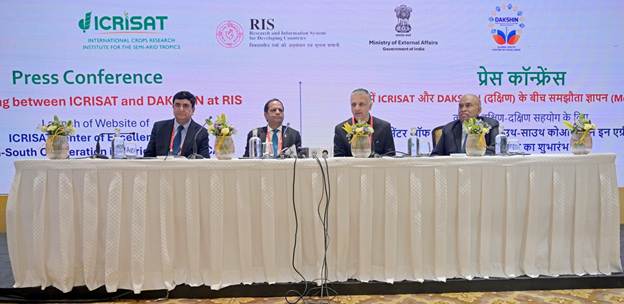
The initiative aims to accelerate agricultural innovation and collaboration across the Global South. The launch also featured the signing of a strategic Memorandum of Understanding (MoU) between ICRISAT and DAKSHIN (Development and Knowledge Sharing Initiative) - a Government of India initiative focused on strengthening South-South cooperation through capacity building and development partnerships.
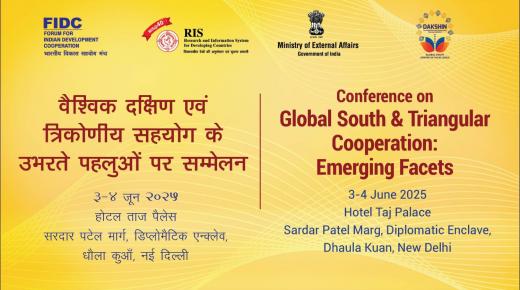
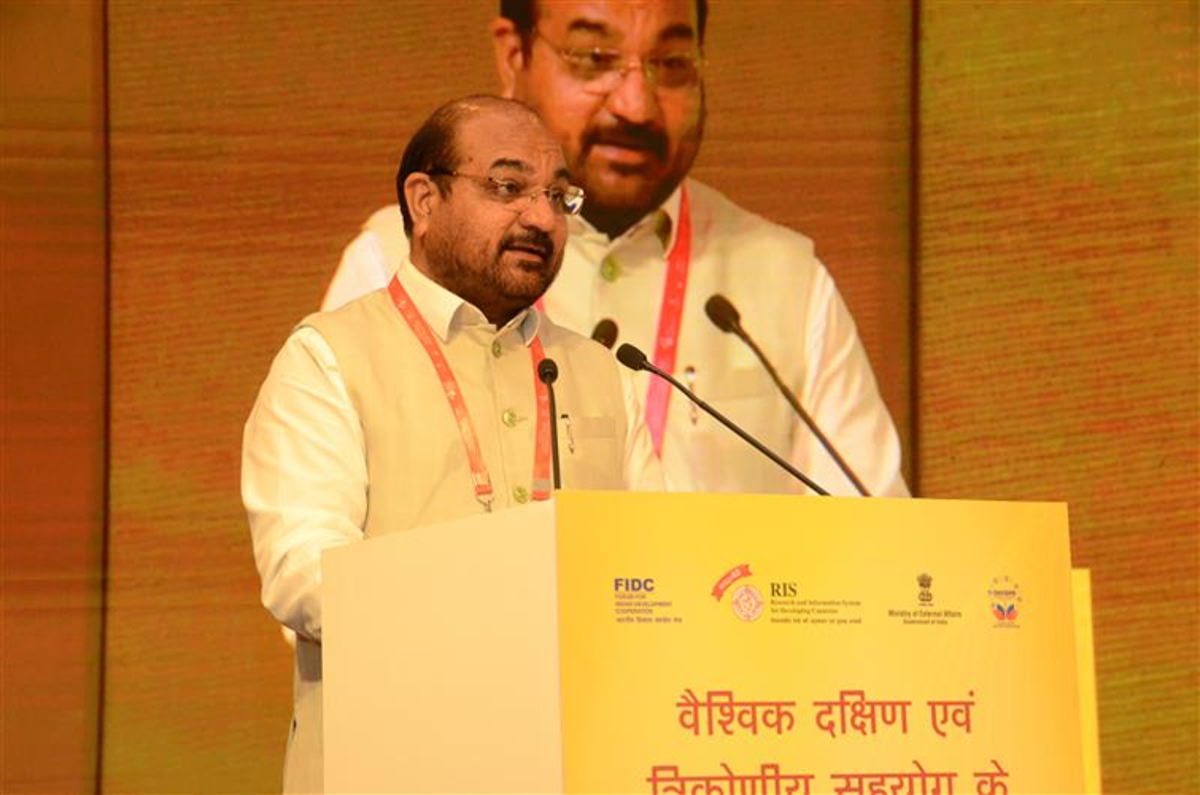
An emerging modality of engagement being spearheaded by the Global South comprise of various models of Triangular Cooperation as a hybrid collaboration of the North and the South, strongly embedded on principles of ownership, horizontality and partnership that has the potential to emancipate countries from debilitating dependence and encourage them to expand capacities for sustainable future. The important issue of enhanced development cooperation, along with development financing has been articulated at multiple levels by member governments including from the Global South, G7 and others. The G20 during the Indian presidency in 2023 emphasized the need to enhance North-South, South-South and Triangular Cooperation (TrC) and the Brazilian G20 presidency in 2024 made trilateral cooperation one of its priorities.
A cursory study of TrC projects demonstrates value addition,
enables home-grown innovations in developing country pivots to test for scale and replication, and builds
better trust among all stakeholders on account of participative decision making.
03/06 Special Session on Agriculture as Driver of Growth in the Global South in
partnership with ICRISAT
Agriculture remains a cornerstone of livelihoods, employment, and food security across the Global South. The sector contributes significantly to GDP and employs a large share of the population,
particularly women and youth. However, the potential of agriculture to drive sustained, inclusive growth is often underutilized due to structural challenges such as low productivity, climate vulnerability,
land degradation, and limited access to finance and technology. Key issues:
Examining the transformation of agriculture into a highvalue, technology-driven sector including the role of agri-tech, precision farming, and digital infrastructure.
Revisiting Cross-country knowledge sharing through South-South and Triangular Cooperation, and policy frameworks and institutional innovations supporting rural transformation
Speakers:
Special Address by Dr M. L. Jat, Secretary-DARE & Director General, ICAR, Ministry of Agriculture and Farmers Welfare, Government of India
Professor Sachin Chaturvedi, Vice Chancellor, Nalanda University and Director General, RIS
Dr Himanshu Pathak, Director General, ICRISAT, India
Ms Ama Brandford-Arthur, SSTC Global Technical Coordinator, Department for Country Operations, IFAD, Italy @2:53:31
Ms Archna Vyas, Director, Gates Foundation, New Delhi
Ambassador Ashraf Rashed, Chairperson, COMESA Committee of Elders, Egypt
Professor (Dr) Govind Raj Pokharel, former Vice-Chairperson, National Planning Commission, Nepal
Professor Joseph Keiyah, Deputy Director, KIPPRA, Kenya
03/06 Action Labs on Successful Case Studies and Sectoral Specificities of Triangular Cooperation
Action Lab I: Agriculture, Health, SMEs, Entrepreneurship and Digital Solutions
Co-Chair: Mr Chaman Lal Dhanda, Head, Triangular Cooperation, India Component, GIZ, India
Co-Chair: Dr Saravanan Raj, Director, National Institute of Agricultural Extension Management (MANAGE), India
Ms Dima Al-Khatib, Director, UNOSSC, New York US (Online)
Mr Manuel Mera, Director Social Protection, CIPPEC, Argentina
Dr Manuel Gonzalo, Research Professor, The Argentine Council for International Relations (CARI), Argentina
Dr Beatriz Muriel, Executive Director, INESAD, Bolivia
Ms Temwa Disi, Founder, Temwanani Agri Food's Enterprise, Malawi (Online)
Dr Jayanta Choudhury, Professor, Nagaland University, India
Mr Anal Raj Bhattarai, CEO, N.R.N Nepal Development Fund, Nepal
04/06 Valedictory Session: Preparing for Future Global South Partnerships
In the fractured multilateral space, this high-level panel charted the path for future global partnerships in general, and in/of the Global South in particular.
Co-Chair: Mr Dammu Ravi, Secretary, Economic Relations, Ministry of External Affairs, Government of India*
Co-Chair: Mr Pradeep S. Mehta, Secretary General, CUTS International, India
Key Takeaways: Professor Sachin Chaturvedi, Vice Chancellor, Nalanda University and Director General, RIS
Dr Sabyasachi Saha, Associate Professor, RIS
Dr Dushni Weerakoon, Executive Director, Institute of Policy Studies, Sri Lanka
Dr Posh Raj Pandey, Chair Emeritus, South Asia Watch on Trade, Economics and Environment, Nepal
Dr Carlos Correa, Executive Director, The South Centre, Switzerland
Professor N. R. Bhanumurthy, Director, Madras School of Economics, India
Vote of Thanks: Dr Sushil Kumar, Assistant Professor, RIS
DAKSHIN – Global South Centre of Excellence
DAKSHIN - Global South Centre of Excellence emanates from an announcement made by the Prime Minister of India, Narendra Modi, during the 1st Voice of Global South Summit in January 2023.
DAKSHIN stands for Development and Knowledge Sharing Initiative. It endeavours to assist relevant stakeholders and partners in the identification and implementation of scalable and sustainable solutions that can transform the economies and societies of countries of Global South.
22 January 2025. Sustainable Agriculture and Agro-Ecological Approaches in the Global South.
The global UN FSS+4 Stocktaking Moment (July 27–29, 2025, in Addis Ababa, Ethiopia, co-hosted by Ethiopia and Italy) aims to discuss progress made since the UN Food Systems Summit of 2021.
With just five years remaining until the 2030 Agenda for Sustainable Development horizon line, the UNFSS+4 will provide an opportunity to document progress, strengthen accountability, and unlock investments for transformative action.
The event spotlighted:
successful country-level transformations,
innovative practices,
challenges faced in fragile and conflict-affected settings,
and be part of broader efforts to shape a coherent global narrative on sustainable development and accelerate synergies between key SDG transitions.
Mr Khaled Eltaweel (UN Food Systems Coordination Hub)
Mr Oliver Camp (GAIN)
Perspectives on the relevance of the UNFSS+4 Stocktake
Ms Joyce Akpata (GAIN Nigeria)
Ms Namukolo Covic (IFPRI Ethiopia)
Dutch delegation update
Ms Ingrid Flink (Ministry of Agriculture, Fisheries, Food Security and Nature)
Ms Stineke Oenema (Ministry of Foreign Affairs)
Next Steps
NFP Mailing list for Dutch organisations
attending UNFSS+4, subscribe via:
events@nlfoodpartnership.com
Face-to-face expert meeting 18 June - Utrecht.
Food Systems Transformation in LMICs:
Opportunities to strengthen the Dutch
contribution. With Corinna Hawkes, Director
of the FAO Division of Agrifood Systems and
Food Safety. On invitation, via
events@nlfoodpartnership.com
This open consultation is part of the development of the UNFSS+4 Independent Stakeholder Report, a critical submission to the upcoming UN Food Systems Summit +4 Stocktake, taking place in Ethiopia, 27–29 July 2025. Non-state actors are invited to provide their feedback and insights to refine and enhance the report, ensuring an inclusive, participatory approach to UNFSS+4 preparations and outcomes and strengthen knowledge sharing. Consultation period: 26 May to 6 June 2025
Access to Nutrition Initiative *
● Sanku, Ethiopia
● Tetra Pak
● WBCSD *
● World Benchmarking Alliance * ● Act 4 Food
● Amref Health Africa
● CARE Nederland
● Christ Soldiers Foundation
● Max Foundation
● SNV *
● True Animal Protein Price Coalition *● Ethiopian Agricultural Transformation
Institute *
● National Department of Agriculture,
South Africa
● NL Ministry of Foreign Affairs *
● NL Ministry of Agriculture, Fisheries,
Food Security and Nature *● Clim-Eat *
● GFAIR - Global Forum Agricultural
Research and Innovation
● The Institute for Social Accountability
Kenya *
● Wageningen University & Research *
● Netherlands Food Partnership *
Update 17/06
→ Registrations for the UNFSS+4 are now open. Followthis link → Check the draft programme overview of the UNFSS+4,here. → Check the additional programme information presented by the host country Ethiopia, a/o. anoverview page, and further information aboutfield visits andexhibition opportunities. → Subscribe to the UN Food Systems Coordination Hub Newsletter, using thisform.
28 May 2025. Despite meaningful progress over the last half-century, conflict, climate change, rising inequality, and geopolitical tensions remain major challenges to reducing poverty, hunger, and malnutrition. As we approach 2050, policy research and analysis will be essential to help build sustainable healthy food systems in this changing world.
Thematic presentations from IFPRI’s leading researchers explored the role of evidence in shaping policies over the past 50 years, as well as the potential for research to address emerging challenges and opportunities.
A keynote lecture by Michael Kremer, Chair of the Innovation Commission and joint winner of the 2019 Economics Nobel Prize, addressed innovations for the future. Following these remarks, a distinguished panel of experts will discuss priorities for policy research in the decades to come.
Please click HERE, to the view the presentations for this event.
Unveiling of IFPRI’s flagship Global Food Policy Report Johan Swinnen, Director General, IFPRI
Christopher B. Barrett, Stephen B. and Janice G. Ashley Professor of Applied Economics and Management, Cornell University (video message)
Thematic GFPR presentations
Agrifood System Transformation, Structural Change and Development: James Thurlow, Director, Foresight and Policy Modeling (FPM) Unit, IFPRI
Agrifood Trade: Changing Perspectives and Challenges: Ruth Hill, Director of Markets, Trade and Institutions (MTI) Unit, IFPRI
From global to regional and national: How policy research can shape the future of nations: Steven Were Omamo, Director, Development Strategies and Governance (DSG) Unit and Director for Africa, IFPRI
From evidence to action: Informing policy to tackle poverty and gender inequities: Shalini Roy, Senior Research Fellow, Poverty, Gender, and Inclusion (PGI) Unit, IFPRI and Agnes Quisumbing, Senior Research Fellow, Poverty, Gender, and Inclusion (PGI) Unit, IFPRI
Policies and programs to tackle the global malnutrition challenge: Stuart Gillespie, Nonresident Senior Fellow, IFPRI and Deanna Olney, Director, Nutrition, Diets, and Health (NDH), IFPRI
Enabling environments for scaling innovations in agriculture, food systems and nutrition: David Spielman, Director, Innovation Policy and Scaling (IPS) Unit, IFPRI
Keynote Address and Strategy Discussion: A Focus on Innovations for the Future
Michael Kremer, Professor in Economics; Director of Development Innovation Lab; and Faculty Director, Development Economics Center, University of Chicago; and 2019 Nobel Laureate in Economic Sciences
Forward Looking Panel Discussion on Food Policy Research Priorities
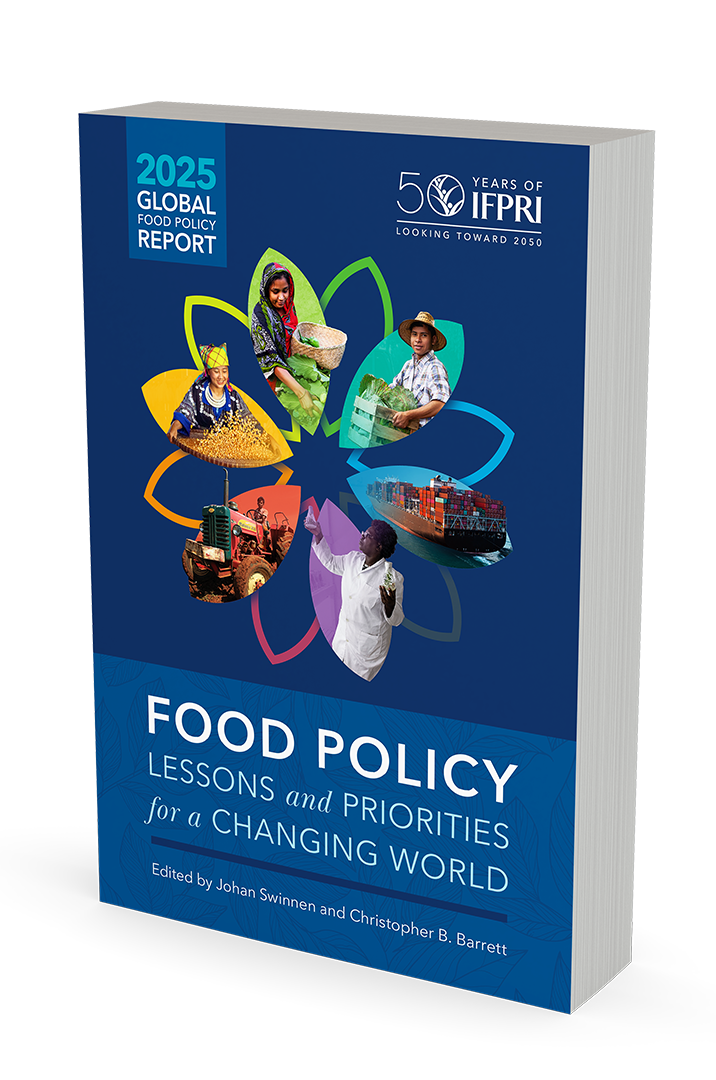
As a special edition marking the Institute’s 50th anniversary, the 2025 Global Food Policy Report examines the evolution and impact of food policy research and assesses how it can better equip policymakers to meet future challenges and opportunities.
The report’s thematic and regional chapters, written by leading IFPRI researchers and colleagues, explore the broad range of issues and showcase research related to food systems, from tenure and agriculture extension to social protection, gender, and nutrition to conflict, political economy, and agricultural innovation, and more.
As we approach 2050, policy research and analysis will be essential to help end poverty and malnutrition by building sustainable healthy food systems.
Companion planting—the strategic cultivation of mutually beneficial crops—has shown promise in Africa for enhancing nutrition, soil health, pest control, and agricultural resilience. Below are key examples where companion planting contributes to improved human nutrition and health outcomes in African contexts:
27-29 May 2025. Brasilia, Brazil. With its 5th global conference, the One Planet Network’s Sustainable Food Systems Programme intended to make a substantial contribution to inspire and encourage policymakers to take bold decisions in the key policy fora in 2025, such as the UNFSS+4 Stocktaking Moment and UNFCCC COP30.
The main theme was: "Overcoming the Barriers to Food Systems Transformation - Coherent Policies and Equity-sensitive Solutions to Simultaneously Fight Hunger and Malnutrition, Biodiversity Loss and the Climate Crisis".
This conference showcased concrete solutions, policies and actions to address political economy barriers at the intersection of food systems, nutrition, climate, biodiversity, livelihoods, equality and other related policy agendas, that can be adapted and replicated in different contexts.
Day 1
Plenary Session 2: Systems-based and equity-driven strategies to address political economy dynamics
H.E. José Wellington Barroso de Araújo Dias, Minister for Social Development and Assistance, Family and Fight Against Hunger, Brazil
H.E. Christian Hofer, State Secretary for Agriculture, Switzerland
H.E. Henry Musa Kpaka, Minister of Agriculture and Food Security, Sierra Leone
H.E. Paul Gulleik Larsen, Ambassador-at-large & Special Envoy, Ministry of Foreign Affairs, Norway
H.E. Ambassador Nosipho Nausca-Jean Jezile, Chairperson, UN Committee on World Food Security
Joao Campari, Global Leader, Food & Agriculture Practice, WWF International
Myrna Cunningham, President, Center for Autonomy and Development of Indigenous Peoples
Arilson Favareto, Full Professor of the Josué de Castro Chair of Healthy and Sustainable Food Systems, University of São Paulo
Adriana Lobo Castellón, Head of the International Cooperation Office of the Ministry of Agriculture and Livestock, Costa Rica
Elisabetta Recine, Former President, National Food and Nutrition Security Council (CONSEA) of Brazil, member of IPES-Food
Máximo Torero Cullen, Chief Economist, Food and Agriculture Organization of the United Nations (FAO)
Walter Belik, Professor, University of Campinas in São Paulo
Chris Béné, Senior Policy Advisor and Principal Scientist, Alliance of Bioversity International and the International Centre for Tropical Agriculture (CIAT)
Diva Dessai, Influencing Manager & Senior Policy Advisor (Nutrition and Food Systems), GAIN Mozambique Samuel Jose Hino, Thematic Focal Point of Green Economy and Resources, Children and Youth Major Group to UNEP
Yessika Hoyos, Member of CAJAR, José Alvear Restrepo Lawyers’ Collective (CAJAR)
James Leslie, Global Programme Manager, Food Systems, United Nations Development Programme (UNDP)
Rodrigo Orair, Director, Extraordinary Secretary for Tax Reform, Ministry of Finance, Brazil
Solutions Workshop 1: Addressing trade-offs and maximizing co-benefits
José Graziano da Silva, Director, Instituto Fome Zero (IFZ)
Lee Ann Jackson, Head of the Agro-Food Trade and Markets Division, Organisation for Economic Co-operation and Development (OECD)
Allison Loconto, Research Professor, INRAE
Bakari Mongo, CEO, Tanzanian Organic Agriculture Movement (TOAM)
Tebila Nakelse, Research Professor, Virginia Tech
Balance Phala, Sustainable Food Systems Officer, ICLEI
Juliana Tangari, Director, Comida do Amanhã Institute
Solutions Workshop 2: Leveraging the power of social protection, food procurement and school meals for improved farmer livelihoods, healthy diets, climate and biodiversity
Betina Bergmann Madsen, Chief Procurement Officer, Municipality of Copenhagen
Marcos Vinicius Dias Nunes, Vice President and Secretary of International Relations, National Confederation of Rural Family Farmers – CONTAG
Amos Laar, Professor of Public Health Nutrition, University of Ghana
Renata Mainenti Gomes, Coordinator, National Fund for Educational Development, Brazil
Nguyen Thi Ngoc Huyen, Youth sustainability advocate and social entrepreneur, Children and Youth Major Group to UNEP
Angie Katherine Roncancio Sánchez, Environmental Administrator, Ministry of Environment and Sustainable Development, Colombia
Luana Swensson, Policy specialist for sustainable public procurement, Food and Agriculture Organization of the United Nations (FAO)
Ana Terra Reis, Secretary of Supply, Cooperativism and Food Sovereignty, Ministry of Agrarian Development and Family Farming, Brazil
Najla Veloso, Executive Secretary, Latin American Sustainable School Feeding Network (RAES), Food and Agriculture Organization of the United Nations (FAO)
Anthony Wenndt, Technical Officer, Global Alliance for Improved Nutrition (GAIN)
Day 2
Plenary Session 3: Convergence and coherence: aligning policies and actions on climate, biodiversity, inequalities and nutrition through the food systems nexus
Karima Ahmed Al-Hada’a, Planning & Liaison Specialist, Ministry of Planning & International Cooperation, Yemen
Cherrie Atilano, Founder and CEO, AGREA Agricultural Systems International
Patrick Caron, Researcher, CIRAD
Agnes Kirabo, Executive Director, Food Rights Alliance & Chairperson, Scaling Up Nutrition Civil Society Network in Uganda
Alwin Kopše, National Convenor, Head of International Affairs, Federal Office for Agriculture, Switzerland
David Nabarro, Strategic Director, 4SD Foundation
Lilian Rahal, Secretary of Food and Nutrition Security at the Ministry of Development and Social Assistance, Family, and the Fight Against Hunger, Brazil
Jose Valls Bedeau, Policy Officer, Food and Agriculture Organization of the United Nations (FAO)
Solutions Workshop 3: Scaling Finance for NBSAPs and NDCS towards Food Systems Transformation: Exploring Solutions from the Global North & South
H.E. Christian Hofer, State Secretary for Agriculture, Switzerland
H.E. Henry Musa Kpaka, Minister of Agriculture and Food Security, Sierra Leone
Haseeb Bakhtary, Lead Scientist, Climate Focus
Oliver Camp, Environment and Food Systems Advocacy Advisor, Global Alliance for Improved Nutrition (GAIN)
Joao Campari, Global Leader, Food & Agriculture Practice, WWF International
Tereza Campello, Socio-environmental Director, Banco Nacional de Desenvolvimento Econômico e Social (BNDES)
Wendy Francesconi, Senior Scientist, Alliance of Bioversity International and the International Centre for Tropical Agriculture (CIAT)
Adriana Lobo Castellón, Head of the International Cooperation Office of the Ministry of Agriculture and Livestock, Costa Rica
Liban Mahad Abdullahi, Green Economy and Resources Working Group, Thematic Facilitator, Children and Youth Major Group to UNEP
Gonzalo Muñoz, High-level Champion, Ambition Loop • Orsayla Nyarai, International Union for Conservation of Nature (IUCN)
Maya Rajasekharan, Managing Director for the Americas, Alliance of Bioversity International and CIAT and Director General CIAT
Solutions Workshop 4: Multi-stakeholder Mechanisms for Food Systems Transformation
Tulsi Giri, Co-creator of Food Networks and Social Entrepreneur, Food Networks
Ceres Hadich, National Coordinator, Movimento dos Trabalhadores Rurais sem Terra (MST)
Agnes Kirabo, Executive Director, Food Rights Alliance & Chairperson, Scaling Up Nutrition Civil Society Network in Uganda
Alwin Kopše, National Convenor, Head of International Affairs, Federal Office for Agriculture, Switzerland
Beatriz Martins Carneiro, Food Systems Coordinator, Regional Office LAC, United Nations Environment Programme (UNEP)
Elisabetta Recine, former President, National Food and Nutrition Security Council (CONSEA) of Brazil, member of IPES-Food
Ana Maria Suarez Franco, Secretary General, FIAN International
Jose Valls Bedeau, Policy Officer, Food and Agriculture Organization of the United Nations (FAO)
Anthony Wenndt, Social Protection Lead, Global Alliance for Improved Nutrition (GAIN)
Day 3
Plenary Session 4: Measuring progress and
promoting accountability mechanisms for food
systems transformation
Solutions Workshop 5: Linking food systems
policies with biodiversity, nutrition and climate
Abdoulaye Falla, Director of Statistics of the Ministry of Agriculture,
Niger
• Alejandro Guarin, Food Systems Transformation Lead, World
Benchmarking Alliance
Thin Lei Win, Journalist, Lead Reporter for the Food Systems
Newsroom of Lighthouse Reports & Thin Ink
Hugo Melgar-Quiñonez, Associate Professor, McGill University
Stella Nordhagen, Research Lead, Global Alliance for Improved
Nutrition (GAIN)
Sergio Schneider, Full Professor of Sociology of Rural Development
and Food Studies, Federal University of Rio Grande do Sul
Maria Siqueira, Director, Pact Against Hunger
Solutions Workshop 5: Linking food systems policies with biodiversity, nutrition and climate
Bambot Grace Annih, National Convenor, Secretary General, Ministry of Agriculture and Rural Development
Oliver Camp, Environment and Food Systems Advocacy Advisor, GAIN
Maria Verônica de Santana, Northeastern Rural Worker’s Movement (MMTR-NE), Brazil
Patricia Gentil, Director of Ministry of Social Development, Family, and the Fight Against Hunger (MDS)
Karla Vanessa González Moreno, Farmer and active member of the Chamber of Livestock Producers of Nandayure, Costa Rica
Alwin Kopše, National Convenor, Head of International Affairs, Federal Office for Agriculture, Switzerland
David Nabarro, Strategic Director, 4SD Foundation
Elisabetta Recine, former President, National Food and Nutrition Security Council (CONSEA) of Brazil, member of IPES-Food
Fredrick Edward Walugembe, Chairperson, National Food Systems Coordination Committee, Uganda
Truong Tuyet Mai, Food Systems National Convenor for Viet Nam & Vice- Director of the National Institute of Nutrition, Ministry of Health, Viet Nam
Eduardo Sfoglia, Head of International Advisory Ministry of Fisheries and Aquaculture, Brazil
João Paulo Pucciariello Perez, Executive Secretary for Food Security and Sustainability, Municipality of Osasco, State of Sao Paulo
Key Themes and Outcomes
Addressing Political Economy Barriers. Participants examined how entrenched power structures, policy lock-ins, and geopolitical tensions hinder the implementation of sustainable food systems. The conference emphasized the need for equity-sensitive solutions that address these challenges, including adopting a Right to Food approach and promoting coherent implementation of nutrition, climate, biodiversity, and other relevant commitments.
Promoting Policy Coherence and Integration. The conference highlighted the importance of aligning policies across sectors to simultaneously address hunger, malnutrition, biodiversity loss, and the climate crisis. It showcased concrete solutions, policies, and actions that can be adapted and replicated in different contexts to achieve this integration.
Strengthening Multi-Stakeholder Collaboration. Recognizing that food systems transformation is a whole-of-society task, the conference called for meaningful, inclusive, and cross-sectoral collaboration at all levels. It provided a platform for diverse stakeholders to share experiences and deepen their collective efforts towards more equitable and sustainable food systems pathways.
Informing Global Policy Processes. Outcomes from the conference are intended to inform global food systems efforts in upcoming policy forums, including the UNFSS+4 Stocktaking Moment and UNFCCC COP30. The conference aimed to inspire and encourage policymakers to take bold decisions in these key policy fora in 2025.
One Planet Network’s Sustainable Food Systems Programme
The SFS Programme is a multi-actor partnership focused on catalyzing urgent transformation towards sustainable food systems, as a critical strategy to achieve the SDGs. Through a shared vision of inclusive, diverse, resilient, healthy and sustainable food systems, our partners collaborate on joint on-the-ground activities, research initiatives and advocacy efforts in support of more coherent and holistic policies to address complex food systems challenges. To do this, the SFS Programme promotes a ‘systems-based’ approach. The SFS Programme currently has over 200 members worldwide, bringing together leading organizations from government, the UN system, civil society, farmers and fisherfolk, the scientific community, and private sector.