Platform for African – European Partnership in Agricultural Research for Development

Wednesday, August 26, 2015

Extreme weather and resilience of the global food system

Global Food Security (GFS) SYNTHESIS REPORT, 2015, 20 pages

A Taskforce of academics, industry and policy experts was commissioned to examine the resilience of the global food system to extreme weather.

The report, which was sponsored by Britain’s Global Food Security program and was jointly commissioned by the UK Science and Innovation Network and Foreign and Commonwealth Office, notes that agriculture faces a triple challenge.

  1. The report states that increases in productivity, sustainability and resilience to climate change are required, 
  2. acknowledging that the effort will require significant investment from the public and private sectors, 
  3. as well as new cross-sector collaborations between scientists, agriculture, water and environmental specialists, technology providers, policymakers and civil engineers among others.
From a climatological perspective, two years stand out in recent years for being very high impact: 1988/9 where maize and soybean was seriously affected by drought in the US mid-West, and 2002/3 when rice and wheat were affected in Eastern Europe and Western Asia. Our plausible worst case scenario was built around both these events happening together. Given this potential for a food production shock, we then catalogued how different stakeholders in industry and different countries might respond. From this, we could flesh out a scenario of production shocks and market and policy responses. This was then used to stimulate thinking about how the responses would lead to impacts on people through changing prices and availability of food. Tim Benton, Global Food Security programme

The report is built on three detailed reports

It presents evidence that the global food system is vulnerable to production shocks caused by extreme weather, and that this risk is growing. 

  • Although much more work needs to be done to reduce uncertainty, preliminary analysis of limited existing data suggests that the risk of a 1-in-100 year production shock is likely to increase to 1-in-30 or more by 2040. 
  • Additionally, recent studies suggest that our reliance on increasing volumes of global trade, whilst having many benefits, also creates structural vulnerability via a liability to amplify production shocks in some circumstances. 
Action is therefore needed to improve the resilience of the global food system to weather-related shocks, to mitigate their impact on people. The contents of these reports are based upon workshop discussions held at Willis Tower, Chicago in October 2014 and the Foreign and Commonwealth Office, London in February 2015

Related:

Innovation platforms to improve smallholder dairying at scale

Innovation platforms to improve smallholder dairying at scale: Experiences from the MilkIT project in India and Tanzania
Duncan, A.J., Teufel, N., Ravichandran, T., Hendrickx, S. and Ballantyne, P.G.
August 2015. ILRI Project Report

In this paper the authors reflect on the potential role of innovation platforms as spaces to identify and spread useful innovations associated with dairy production and feeding. 

They draw examples from MilkIT, a project to promote milk production in India and Tanzania. They first introduce the idea of innovation platforms and show how they can be used to define the key issues quickly. They highlight the various changes in local practices that innovation platforms can stimulate. They then consider how local innovations can move beyond innovation platforms, and classify a series of mechanisms by which this can happen. They outline strategies to ensure that innovation platforms generate wide-scale changes.


Related PAEPARD blogposts:
Jul 09, 2015
The case entitled MilkIT Innovation Platform: Changing Women's Lives – One Cow and One Litre of Milk at a Time
6th All Africa Conference on Animal Agriculture
Nov 03, 2014
Field testing a conceptual framework for innovation platform impact assessment: The Case of MilkIT dairy platforms in Tanga Region, Tanzania - Pham, N.D., Cadilhon, J.J. and Maass, B.L.
Dairy innovation platform experiences from ...
Aug 18, 2014
The Tanga Dairy Platform was founded in December 2008 by a group of dairy enthusiasts and facilitated by the British NGO Research Into Use (RIU). 
May 19, 2011
Tanga Fresh Ltd - Tanzania The project aims to increase the production, collection and supply of milk from smallholder dairy farmers to Tanga Fresh Limited

Tuesday, August 25, 2015

Employment and mobility of graduates from African agricultural colleges and universities

17 - 19 August 2015. Accra, Ghana. FARA Secretariat. A three-day workshop on the eCapacities™ facility was held with the main objective of equipping representative staff from the demand-side (of labor markets) partner organizations with the know-how for effective management and administration of the eCapacities™ platform.

The eCapacities™ is a web-based interactive platform to aid strategic human capital formation in agriculture. Further, it has an integrated knowledge portal that provides linked-in information about capacity strengthening initiatives and the people involved. An important component of the eCapacities™ is the African student/graduate tracking feature, which will afford online employment and mobility tracking of graduates from African agricultural colleges and universities. Specifically, the feature will create online profiles, track graduates, provide them with access to job opportunities, access mentor networks and obtain access to other databases and networks. Moreover, the graduate tracking information gathered by eCapacities™ will be of benefit to tertiary agricultural institutes for internal quality assurance, in-house monitoring of students’ academic progress and accreditation by government regulatory agencies in the education sector.

The workshop participants were drawn mainly from Botswana, Ghana, Kenya, Madagascar, Uganda and Zambia. The specific organizations in these countries represented in the training include FARA Secretariat, the sub-regional research organizations (ASARECA and CCARDESA), Ministries of Agriculture, national agricultural research organizations, agribusiness agencies, technical training institutes, and National Chambers of Commerce and Industry.

Enhancing food security using PICS bags

24 August 2015. Effective storage of grains such as maize, beans, cowpea, groundnuts and rice has always been a major challenge to smallholder farmers, not only in the country, but the rest of Africa. Grains are mostly destroyed by pests and insects within three months of storage due to the lack of proper storage methods for farmers and food dealers.

It is for this reason that Purdue University in the United States of America must be commended for introducing a new technology called, “Purdue Improved Crop Storage” (PICS) bags to provide a simple, effective low-cost method of reducing post-harvest losses in cereal crops due to insect infestations in West and Central Africa.
  • A PICS bag consists of two layers of polyethylene bags surrounded by a third layer of woven polypropylene. This oxygen-deprived environment proves fatal to insects and pests and therefore prevents them from causing harm to stored grains.
  • PICS technology was developed in the late 1980s by Professor Larry Murdock of Purdue University with support from partners in Cameroon and funding from the U.S. Agency for International Development (USAID).
  • With further support from the Bill and Melinda Gates Foundation, the technology was introduced into Africa in 2007 with the focus on the storage of cowpea.
  • This initial phase of the project covered ten countries across West and Central Africa, including Ghana. It was later established that the technology was as effective in controlling pests and insects from other cereal crops as it had been for cowpea.

Improved forages for Africa

20 August 2015. The Genome Analysis Centre (TGAC), with partners in the UK, Colombia and Kenya bring together their leading expertise in forage breeding for animal nutrition, cutting-edge genomics and phenomics technologies to accelerate the improvement of Brachiaria, a vital livestock feed crop in central Africa and Latin America.

This project is in partnership with the Institute of Biological, Environmental and Rural Sciences (IBERS), UK, the International Centre for Tropical Agriculture (CIAT), Colombia, and the International Livestock Research Institute (ILRI), Kenya. These activities are supported by a BBSRC International Partnering Award, which aims to support the development of long-term international collaborations, and funding from the Research Councils UK (RCUK) and British Council’s Newton Fund, which through science and innovation partnerships, promotes the economic development and welfare of poor people in partnering countries.

International expert skill-sets in genomics and bioinformatics enhance the capacity to breed improved forages for Africa. More than 80 per cent of the world’s agricultural land is for grazing to support the ever increasing demand for meat and milk for an expanding and growing urban population while boosting the income of rural families. The scarcity of grass feed is a worrying constraint standing in the way of this livestock productivity.
“Our scientists are working towards a common goal of increasing sustainable agriculture, and collaborations like this allow us to exploit our combined expertise to contribute to the important issue of food security. This project will deepen our interactions with international centres in Africa and Latin America, and improve forage breeding for livestock production.” Project lead, Sarah Ayling, Crop Genomics and Diversity Group Leader at TGAC
Some Brachiaria species have been cultivated as forage grasses, providing nutrition for ruminants
across the globe. As well as nutrition, the grasses have desirable genetic characteristics linked to drought and pest-resistance and adaptation to poor and acidic soils. Over the past 25 years, several African species of Brachiaria have been used commercially as forages in the tropics; the most widely sown forage plant in tropical America.

With its combined high nutritional value and stress resistant properties, the Brachiaria breeding programme at CIAT is crossing different species to produce new varieties with superior traits. A particular Brachiaria species, B. decumbens, grants resistance to aluminium, which has a high concentration in acid soils. Most low-income livestock keepers live in tropical grasslands in countries in central Africa with great grazing potential but are vulnerable due to the growing problem of increasing acid soils and longer extreme weather seasons.

Monday, August 24, 2015

EU-Africa cooperation in science, technology and innovation

Directorate-General for Research and Innovation
July 2015, 60 pages

The projects presented in this publication offer just a few concrete examples – 24 out of 590- of collaborative research platforms and networks in which African scientists, from the North to the South of the continent, cooperated with Europeans. They also show the added value of cooperation in STI as each one of these 24 projects made its own unique and important contribution to the daily lives of Europeans and Africans.

This publication highlights some of many fascinating projects through which the EU and Africa are currently innovating side by side. Each one, an opportunity to learn from one another: paving the way for deeper, mutually beneficial cooperation in the future. The research set out in this booklet is revealing what we can learn from traditional African medicines, how we can collaborate to tap into gamma ray astronomy, how we can harness the desert sun to produce clean energy and even how we can bring Africa’s culinary diversity to European markets.

Extracts: 
  • EAU4FOOD Achieving a sustainable future for African farming . Since it began in July 2011, EAU4FOOD has focused on the needs of smallholder farmers. Study sites were purposely selected to represent Southern Africa (Mozambique and South-Africa), Northern Africa (Tunisia), West Africa (Mali) and East Africa (Ethiopia), to provide a baseline of usable data. From this, EAU4FOOD has been able to develop guidelines for achieving irrigated agriculture under a variety of water scarcity conditions. (page 22)
  • In collaboration with partners in Benin, Cameroon, Egypt, Madagascar, Senegal, Ghana and South Africa, the AFTER project (African traditional Food Revisited by Research) developed ways to improve some 10 foods and drinks from Africa, based on local knowledge in these countries. The project designed ways to improve their safety, sensory quality and nutritional content by adapting traditional processing techniques. The researchers also surveyed consumers to assess their potential acceptance in Europe (page 24)
  • In 2009, African and European countries launched the ERAfrica project to develop a more balanced, coordinated way of collaborating on scientific problems. Aſter two years of preparation, the first call was launched to trial priorities, approaches and organisational systems developed using the project’s collaborative ethos. The response was strong: 124 projects applied for funds. A final list of 17 projects was chosen to share €8.29 million of funding. Food security was a clear priority in the list, while health and new energy were also popular topics. Some of the ERAfrica partners are applying for further EU funds to finance the administrative costs linked to a second call in late 2015/early 2016. Angola and Mali have already promised experts to help prepare this call, while the South African and French project members will continue to support the ERAfrica approach financially beyond this call. (page 38)
  • The initiative CAAST-Net Plus and its predecessor CAAST-Net are cultivating new ideas, sharing knowledge and building working relationships to tackle major challenges aff ecting both Africa and Europe, from climate change to health and food security. In the process, they are building an unprecedented environment for the development of science and technology cooperation. African partners in Africa-EU partnerships need to be willing to fund programmes in health, climate change and food and nutrition security, and not only rely on research funding from other regions. Providing recommendations, fostering awareness and enriching policy-making to address these and other challenges will be among the key achievements of CAAST-Net Plus. (page 40)

The modernisation of African farmers’ organisations needs to include the use public-private partnerships

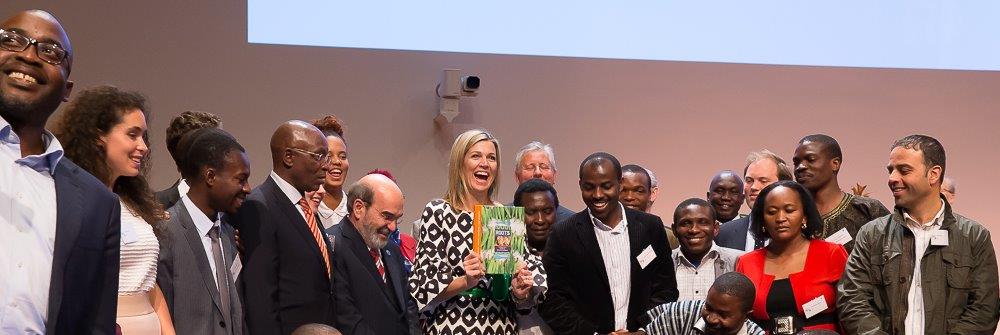
22 June, 2015. Utrecht. Rabobank. Conference "The Future of Farming and Food security in Africa".

Relive this event with 395 participants, with Her Majesty Queen Máxima of The Netherlands, and José Graziano da Silva, director-general of the FAO, Sharon Dijksma, State secretary Agricultural Affairs, a talkshow hosted by Ruerd Ruben and Andrew Makkinga, presentations by Dutch agro businesses.Videos of all the presentation are available on the the conference page.
Farmer organisations play a critical role in ensuring that the complex and dynamic developments that lie ahead “don’t leave smallholder farmers behind, so that they can manage the risks, and opportunities, that come with the future,” says Ishmael Sunga, CEO of the Southern African Confederation of Agricultural Unions (SACAU).

Uploaded on 22 Jun 2015

Published on 22 Jul 2015
Why African Farmers' Organisations need to modernise? Interview to Ishmael Sunga (CEO SACAU) In this conversation between Ishmael Sunga and Francesco Rampa, ECDPM’s Head of the Food Security Programme, at this year’s FoodFIRST conference, the CEO of SACAU explains that the modernisation of African farmers’ organisations needs to include the use public-private partnerships, improvement of logistics, and the use of digital solutions for issues like training, so that it becomes more accessible at a lesser cost.


How can we engage the private sector in African agriculture? – Irene Visser, NABC


"Just with farmers, you are not going to make it", says Irene Visser, Managing Director of the Netherlands-African Business Council (NABC). Interviewed by Francesco Rampa, Head of the Food Security programme at ECDPM during this years FoodFIRST conference, she explained that engaging the private sector in Africa's Agriculture and Food Security requires an approach that takes into consideration the entire value chain, not only farmers - but also producers of equipments, fertilizers, animal feed, etc.

International Conference on Livestock Nutrition

11-12August 2015. Frankfurt, Germany. The Livestock Nutrition-2015 Conference focused on the theme “Determining New Sustainable Feeding Strategies and Nutrient Standards”.

Livestock contributes directly to the livelihoods and food security of almost a billion people and affects the diet and health of many more. Livestock is needed for many reasons which include analyses of the social and economic aspects of the livestock sector; the environmental impacts of livestock such as the production and management of waste, greenhouse gas emissions and livestock-related land-use change; and large-scale public health and epidemiological investigations.

The livestock sector directly influences agricultural sector and therefore it targets a wide range of audience such as Livestock Feed manufacturing industries, RandD scientists in the field of Livestock Science, Veterinarians and Animal Health experts.

The scientific sessions focued on livestock nutrition and health, animal husbandry and modern agriculture, animal diseases, animal feed industries and the products manufactured, environmental impact of meat production and various other aspects directly concerning livestock science.

  • Voluntary intake and palatability indices of pedi goats fed Tanninferous Acacia karroo leaf meal by cafeteria method David Brown, University of Limpopo, South Africa
  • Influence of water deprivation on intake and growth performance of Nguni goats C T Mpendulo, University of KwaZulu-Natal, South Africa
  • Comparison of mathematical models described in situ DM Digestion of alfalfa cuts in sheep Evans Obura, Ataturk University, Kenya
  • Alternatives for inhibition of methanogenesis and enhance fermentation of feeds in the rumen Gebrehiwot Tadesse, Mekelle University, Ethiopia
  •  Effects of high fibre and its source on the growth and slaughter performance of pigs fed maize soybean diets fortified with Roxazyme® G2 F Fushai, University of Venda, South Africa

International Conference of Agricultural Economists 2015

9 - 14 August 2015. Milan, Italy. The 29th International Conference of Agricultural Economists 2015 (ICAE) with the theme “Agriculture in an Interconnected World” was intended to capture the widespread adoption of new communication technologies. 

The theme embraced a wide range of interconnections that are contributing to unprecedented changes in global agriculture, such as: 
  • trade policy debates, both when prices are high and when they are low;
  • the collective action problems associated with price volatility;
  • international investment in agricultural land;
  • links between scientific progress and productivity growth in agriculture;
  • climate change and agriculture;
  • competition between agriculture and other users of increasingly scarce water.
  • links between agricultural and energy markets through biofuels and inputs of fuel and fertilizer;
  • links between agriculture and other uses of land;
  • links between agriculture and other sectors as developing countries urbanize and labor moves out of agriculture;
  • the supermarket revolution in developing countries
Related:
7 - 8 August 2015. A 2-day pre-ICAE event was organised by the European Commission with the European Association of Agricultural Economists (EAAE) and the International Agricultural Trade Research Consortium (IATRC) at the margins of the EXPO Milan 2015. It gathered more than 30 high level speakers from academia, major international organisations and governments to provide a closer look at the various dimensions of food security. Recent food security scenario analysis set the scene and helped identify the main drivers that will impact food security in coming decades, in particular the role of productivity, technological breakthroughs, policies and other factors also beyond market fundamentals.
Extracts of the program:
Related:
13 August 2015. The Impact of Research on EU Agriculture is a 38 months research project implemented between November 2013 and December 2016. IMPRESA organised a symposium on Measuring the value of policy oriented research to discuss themes and issues in agricultural research impact evaluation with contributions from the IMPRESA consortium and its scientific advisory committee members. 
Extract: 
  • Draft of paper - IFPRI Policy Research Summary Summary of Workshop on Best Practice Methods For Assessing The Impact Of Policy Oriented Research, IFPRI headquarters in Washington DC, November 11–12, 2014SUMMARY AND RECOMMENDATIONS FOR THE CGIAR
  • Evaluating the Scientific Quality of Agricultural Research: The Approach of the CGIAR’s Independent Evaluation Arrangement, Chris Gerrard, Independent Evaluation Arrangement of the CGIAR

Agrifi: investment in smallholder agriculture and agribusiness micro/ small/medium enterprises

Agrifi is a new initiative that increases investment in smallholder agriculture and agribusiness micro/ small/medium enterprises (MSMEs) to achieve inclusive and sustainable agricultural growth.

Agrifi will be launched in 2016, together with interested parties and European Financial Institutions.
Neven Mimica, European Commissioner
for International Cooperation and Development
Real or perceived high risks often prevents investments in agriculture from taking place. What we need therefore, is to reduce this risk, and increase available finance. What we are proposing is a twin track: First, reducing risk on the producer side – meaning business and advisory services, skills, technology and innovation. Second – providing greater risk-bearing finance through blending. With these objectives in mind, the EU is preparing a new Agriculture Financing Initiative – to be launched next year. AgriFI is precicely aimed at increasing investment in smallholder agriculture and agribusiness enterprises. Remark by EU Commissioner Mimica at a Side event: Catalysing private sector engagement and resources for development: the EU and African perspective, Addis Ababa
A central feature of Agrifi is that the provision of EU grants will mobilise additional public and private investment. This additional investment is needed to enhance the development impact of investment projects and achieve impact at scale.

  • Agrifi responds to the lack of financing mechanisms adapted to farmers and agri-entrepreneurs, particularly for smallholders and agribusiness MSMEs. 
  • Agrifi will be backed-up by a robust component of technical assistance and value chains analysis capacity, to support decision making on investment, to enhance business development and advisory services for farmers and agri-entrepreneurs and to monitor the actions for accountability purposes. 
  • Agrifi addresses this situation by providing greater risk-bearing capacity through public money, to encourage project promoters and attract private finance to viable investments which would not have happened otherwise. 
  • Agrifi is therefore about addressing a market failure and it finances those actions that have a clear development impact on those who would normally not be reached. This includes smallholders with limited market orientation, vulnerable farmers, women and young farmers and entrepreneurs

Background:
Catalysing private engagement and resources for development - the EU’s role
© European Union, 2015
24 pages

In May 2014 the European Commission adopted its Communication on “A Stronger Role of the Private Sector in Achieving Inclusive and Sustainable Growth in Developing Countries”. This sets out the role of the private sector as being at the forefront of international development in its partner countries. It proposes a series of actions in areas where the Commission believes it can add value and effectively complement actions by the EU Member States and other development partners.

15 July 2015. Catalysing private sector engagement and resources for development: the EU and African perspective, Addis Ababa
  • This side event took place on  in the margin of the Third International Conference on Financing for Development (13 – 16 July 2015). It focused on the need to work for the development of the private sector and to engage with the private sector to achieve development goals. 
  • The event looked specifically at the role of blending in particular in the agricultural and energy sectors. 
  • The side event was organised jointly by the European and African Union Commissions and gathered representatives from the UN, AU, EU, EIB, other European Finance institutions as well as European and African private sector. 
  • The event followed up from the 5th EU Africa Business Forum held in 2014 in Brussels.

Announcement: Farming Systems and Food Security in Africa book

Farming Systems and Food Security in Sub-Saharan Africa
Priorities for science and policy under global change
Edited by John Dixon, Dennis P. Garrity, Jean-Marc Boffa, Timothy O. Williams, Tilahun Amede
Routledge – 2016 – 640 pages
To be published by Earthscan/Routledge March 2016.

The Routledge book highlights the priorities for science and policy in the agricultural systems of Sub-Saharan Africa to reduce poverty, improve food security and secured livelihoods. ECA’s report proposes new ways of looking at producing food and adding value to produces of African origin and complements the book. The volume provides an essential follow-up to and application of the seminal work Farming Systems and Poverty by Dixon and colleagues for the Food and Agriculture Organization (FAO) of the United Nations and World Bank, published in 2001.

Related:
22-24 July 2015
. Nairobi. ICRAF headquarters. The Economic Commission for Africa (ECA), African Union (AU), World Agro-Forestry Centre (ICRAF) and other technical partners across Africa discussed farming systems reforms in Africa. The meeting involved the participation of about 35 high-level thinkers including scientists, policy makers and development practitioners from the region itself, Europe, Australia and the USA. The meeting produced a comprehensive, up-to-date forward-looking strategy on African farming systems for policy and decision makers, research organisations, development actors and investors.

The expert group based their discussions on ECA’s strategic report: ‘Rethinking Africa’s strategic agricultural commodities production systems in the new global context’ and on the book “Farming Systems and Food Security in Africa” to be published by Earthscan/Routledge March 2016.

Drawing from the ECA report and expert insights, the meeting made recommendations and guidelines on how to turn emerging African production and food systems into a zero loss, zero waste, clean, closed loop economy towards 2063.

Friday, August 21, 2015

Crawford Fund’s 2015 Annual Parliamentary Conference

10-12 August 2015. Canberra, Australia. The Crawford Fund’s 2015 Annual Parliamentary Conference, with the theme of “The Business of Food Security,” gathered agricultural researchers, private industry and government together at Parliament House in Canberra, Australia, to discuss the future of world security.

This conference focused on the importance of collaboration and partnership between the public and private sectors to achieve sustainable intensification and improved food security.

Extract of the program:
The conference connected with business to explore new directions in research and sustainable sourcing already being taken by the private sector and to assess the implications of this for public policy and a new generation of public private partnerships.
Martin Kropff, director general of the International Maize and Wheat Improvement Center, or CIMMYTThere are many benefits to the private sector for increased engagement in food security programs. This included access to farmers, increased influence in the development of legal and regulatory regimes and improved corporate profiles. But we need industry linked with NGOs and other organizations,” 
Gerda Verburg, chair of the U.N. Committee on World Food Security and of the World Economic Forum Council on Food Security and Nutrition.: Australia has a wealth of agricultural knowledge to export to its neighbors. Its experience farming in arid environments and producing quality products was critical to its neighbors, especially with Pacific countries demanding more nutritious products to target the growing health problems of obesity and diabetes.  
In Vietnam Cargill has worked with CARE to train farmers on how to grow sustainable cocoa – Cargill has secured a more sustainable supply and CARE has gained knowledge related to quality seed and animal feed that they can extend to more and more communities. Together they have advocated at the policy level, for greater government support for innovative business models like theirs.
Mars Incorporated, a participant in CFS, is partnering with the World Food Program and others, including leading research institutes, to advance knowledge and capacity to manage food safety, particularly in the Asia-Pacific region. Mars’ supply chain is threatened by aflatoxins, found in peanuts and maize, as is the food that UN agencies deliver in humanitarian efforts. By combining their resources to address this shared challenge, they hope to build the capacity of actors in supply chains to control these risks and ensure food safety.
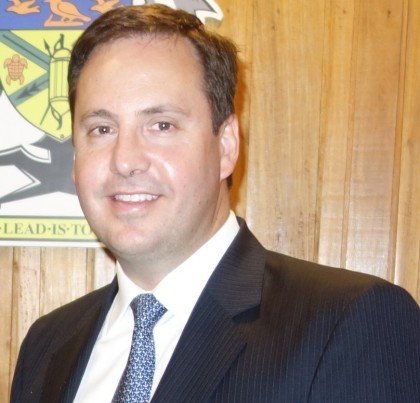
Steve Ciobo, parliamentary secretary to the foreign affairs minister: An example is the work the Australian Center for International Agricultural Research is doing with Mars in Indonesia to improve the quality of cocoa farming while reducing its environmental impact and said the private sector had already invested more than $3 million in food security programs within the Asia-Pacific region, with expansions already planned. The Australian aid program will continue to work with the private sector and other partners to identify new agricultural markets. 
From the speakers the message was clear: Private sector engagement was important in food security, particularly in scaling up, but this sector was needed in association with government, NGOs, research institutes and more.

Related:
Crawford Fund Scholarships are awarded to young students and scientists who have a genuine interest in international agricultural development in order to attend the Crawford Fund Annual Parliamentary Conference and special “Scholar Day” . It is part of the organisation's efforts to encourage young Australians to engage in international research, development and education for the benefit of developing countries and Australia. Since the program started in 2010, it has had more than 80 Scholars.


Thursday, August 20, 2015

WEBINAR: Bridging the science-policy gap through an online knowledge sharing platform

12 August 2015. WEBINAR. This webinar presented the  Climate and Agriculture Network for Africa (CANA); an online knowledge sharing platform that brings together players in the region working on the common topics of climate science and agriculture. 

The hour long webinar, attracted up to 88 registrants interested in learning more about the platform.
  • The webinar was open to all those interested in actively sharing emerging knowledge and experiences on climate change and agriculture in Africa with key decision makers.  
  • Scientists, Communicators/ Information Specialists, Decision Makers and other interested people working on climate science, agriculture/ food security.
  • A full transcript of this webinar is available

This is a combination of presentations that were shared during a webinar on bridging the science-policy gap through an online knowledge sharing platform by the Climate and Agriculture Network for Africa (CANA)


Youth in Agriculture Summit

3 - 6 August 2015. Durban, South Africa. The purpose of the summit was to engage, motivate and support youth involvement in agri-business opportunities along various profitable and exciting agricultural value chains.

Some of the delegates that attended the Youth in Agriculture Summit for Southern Africa were from various Southern African Development Community (SADC) countries and Agricultural organisations.

They included Her Excellency Dr. Stergomena, SADC Executive Secretary and CCARDESA Executive Director Prof. Timothy Simalenga. (right on the picture)

The main objectives of this summit was to involve youth in agri-business to transform and improve the agriculture sector in the SADC region. Other primary goals were to increase food security and improve rural livelihood.

Themes:
  • Farming as a Business: Towards addressing poverty and unemployment for youth 
    Teams from South Africa, Zambia, Zimbabwe,
    Botswana, Madagascar, Swaziland and South Africa,
    winners of the Hackathon project
  • ICT Revolution in Agriculture: How youth can participate in and benefit from developments in ICTs in agriculture 
  • Precision Agriculture and the role of youth in innovations and agribusiness solutions 
  • Climate smart agriculture, mechanisation and innovative solutions for future agricultural practices
  • Crop, Livestock and Fisheries value chains and markets: Oppotunities for agribusiness 

Youth Summit Presentations
Day 1
Day 2
Day 3
There were several commitments made by the committee and organisation to transform youth
Field visit at an organic farming community garden.
in agriculture in the Southern Region. The committees made an emphasis on building the capacity of the youth through knowledge management, learning and information sharing across the region.
That will enable youth with training and equipping youth with skills and knowledge in agribusiness along the various value chain through science, technology and innovation.

Videos:
Profiling Ruramiso Mashumba: 29-year-old young farmer Ruramiso is producing sweet peas in Marondera, Mashonaland East.


Profiling Kundai Musarurwa: Born in Zimbabwe, studied in the States, coming back to Zim to be one of ZFU's most successfull and innovative Young Farmers. She is currently running a peri-urban farm in Ruwa, Harare, producing mushrooms, pigs and seedlings in a Hydroponic-system.


Profiling Bright Nezomba
Bright Nezomba Bright's story is something to remember. Losing his parents at a very young age he was raised by his grandmother in the Honde Valley, Manicaland. Although being interested in farming, Bright went to the mines when they discovered diamonds in the area. But soon he realized that farming is a better and more rewarding business to be in. Therefore he left the mines and came back to farm on his grandmother's land. To date this remarkable 25 years old young farmer has a plot of 1.5 hectares under production. Producing bananas on 0.7 hectares on a contract basis he is able to produce maize on the rest of the land. He managed to gather other young farmers and start to work in a producer group with them and make use of the advantages of group schemes in agricultural production.


Profiling Dominic Machingura Listen to an exciting account of an upcoming Young Farmer Dominic Machingura who after attending the inaugural Zimbabwe Youth Agriprenuership Summit 2014, decided to start his farming Journey.


Research Institutes in Nigeria boost Aquaculture under WAAPP

10 August 2015. Nigeria. Three Research Institutes in the Nigeria were in active collaboration with West Africa Agricultural Productivity Programme, WAAPP, to boost aquaculture and improve fish production.
  1. the Nigerian Stored Product Research Institute (NSPRI), Ilorin 
  2. the Nigerian Institute of Oceanography and Marine Research (NIMOR), Lagos.
  3. the National Institute of Fisheries and Fresh Water Research (NIFFWR), New Bussa, Niger State.
The three Institutes were mandated to find cost effective ways of mass production of fingerlings and fish meals locally in order to cut down costs of importing same into Nigeria.
Professor Olufemi Peters 

of NSPRI

The Institutes were also tasked to fashion out cost effective and more hygienic ways of drying and packaging local fish in order to increase its shelve life without losing its original taste and add value to it. The objectives of the project centered on food and social security, increasing the country’s foreign exchange and income earnings especially those in aquaculture business.

The three Research Institutes have designed, developed and fabricated smoking kilns, storage tank and dryers for fish and have succeeded in developing modern and cost effective fish box that could preserve freshness of the fish for weeks and irrespective of the distance to the market. The Institutes have also come up with ways of mass production of fingerlings locally using tilapia and cat fish species native to the Nigeria waters.
The NSPRI kiln has capacity to collect oil oozing from the fish being smoked thereby reducing waste. The Institute has designed three ways of packaging smoked fish that would increase its shelve live and make it possible to display such fish in supermarkets and even export same. The Research Institutes were aimed at poverty alleviation as they would lead to more jobs creation, reduce capital flight and boost food self sufficiency and social security. Prof Peters of NSPRI. He was the maiden Deputy Vice Chancellor (DVC) of the National Open University of Nigeria (NOUN).

Related:
14/08/2015. The WorldFish Center with the funding from the European Commission (EC) has joined efforts with AU-IBAR and NEPAD Planning and Coordinating Agency (NPCA), to implement a programme called “Improving Food Security and Reducing Poverty through Intra-regional Fish Trade in Sub-Saharan Africa” (also referred to as Fish Trade Program).

This research grant forms part of the mentorship program which aims at building the capacities of the youth and young professionals in Africa through active engagement in the program implementation process.

It is expected that the candidates should be from AU Member states and should have completed their course work in any of the following Universities which are participating in the implementation of the Fish Trade project;
  • University of Abidjan, Ivory Coast 
  • University of Dakar, Senegal 
  • University of Dar es Salaam, Tanzania 
  • University of Douala, Cameroun 
  • University of Ghana, Ghana 
  • University of Ibadan, Nigeria 
  • Lilongwe University of Agriculture & Natural Resources, Malawi 
  • National University of Rwanda Other Universities within the regions will also be considered but priority will be given to the Universities above 
The students should be pursuing masters or have proven background in the following programs; Economics, Fisheries Economics, Agriculture Economics, International Trade and other related programs. The candidate should be willing to undertake the study in the southern corridor and parts of eastern corridor, such as Rwanda at the minimum possible cost. The candidates must develop a five paged concept note together with their supervisors and must have an endorsement letter from their supervisors and should reach not later than 4th September 2015. 

Enhancing innovation in agribusiness to increase productivity and improve food security

14th-15th August 2015. KENYA. Kabarak University, Nakuru County-Kenya. East Africa Growers Council agribusiness expo. Theme: "Enhancing innovation in agribusiness to increase productivity and improve food security“

This year’s focus was on innovations that respond to climate change challenges, that seek to answer issues on the nutrition of people and help in value addition and post harvest reduction . The agribusiness expo brought together more than 15,000 farmers, sponsors and exhibitors.

The expo provided a platform for EAGC members and other players in the agribusiness sector to make business contacts and explore business opportunities for their products and services. It also provided a platform for showcasing new technology and innovations to a variety of stakeholders for increased adoption.

The targeted participants of the Agribusiness Expo were stakeholders in the agribusiness and wider agricultural sector, including farmers, both large and small-scale; traders; processors; service providers, such as banks, warehouses operators, inspectors, certification companies and input suppliers; government agencies; research institutions and international organizations operating in the Eastern Africa region. The Expo attracted over 100 exhibitors, including seed companies who will put up demonstration plots of seed varieties. 
 
The East Africa Grain Council (EAGC) has said Kenyan Government loses approximately Sh3billion annually due to aflatoxin, lack of advanced harvesting technology, pests and diseases. EAGC Chief Executive Director Gerald Masila said the losses can be controlled by adopting advanced post-harvest technologies and fumigation. Masila said post-harvest activities are an integral part of food production system that promotes best practices for handling and management cereals along the entire food supply chain. He observed that there is a huge gap between technology development in research organizations and the ability to adopt new developments.

Related PAEPARD blogpost:
Agribusiness expos by the East Africa Grain Council

Wednesday, August 19, 2015

2SCALE learning modules for agribusiness Support Services

The 2SCALE learning modules have been developed by ICRA for coaches from Business Support Services (BBS) who are to support agribusiness clusters within the 2SCALE project. Each module is a package containing:
  1. Facilitators’ Guide on how to conduct a training session/workshop 
  2. Reference sheets, commonly referred to as hand-outs, and excerpts from educational films 
  3. Exercises. 
Business Support Services (BBS) will most likely be institutions/organizations/firms that include consultants, governmental and non-governmental organisations (NGOs), research departments and enterprises that support producers, processors and other affiliated enterprises. The BSS will also likely single out an individual from within the group to oversee the activities of the cluster through coaching; this individual is called a coach. It is worth noting here that the BSS is an important actor of the ABC, a group of “local” actors interacting in a given area around an agricultural product (commodity) and “servicing” a segment of the market (through a common or shared vision). Trainers will be responsible for strengthening the capacities of the BSS/coaches. Facilitators will be encouraged to take note of any lessons learnt in the capacity strengthening sessions and to give feedback so that their input can be used for further improvement of the module.

The roles and responsibilities of the BSS/coaches can be grouped into three main domains: 

  • Brokering services and networking; Information and advice, i.e. market analysis, strategies of competitors; 
  • Training and support in technical and entrepreneurial issues; 
  • Design and set-up of capacity strengthening and action research programmes that include the facilitation of interactive learning processes to support the formation of ABCs, value chain development and creativity and innovativeness. This is for instance strengthening of confidence, collective analysis, collective monitoring of concerted actions, etc.
The publication of these manuals was supported by the Dutch Ministry of Foreign Affairs. The manuals were developed by technical experts of ICRA, partner within the 2SCALE Project. 
  1. Module 1 Introduction to the CASE Approach (166 pages) 
  2. Module 2 Financial Education, 2SCALE Module 2 (54 pages)
  3. Module 3 Building Business Relationships (35 pages)
  4. Module 4 Introduction to Marketing for Agricultural Products (81 pages)
  5. Module 5 Economics Analysis and Crop Budgeting (90 pages)
  6. Module 6 Developing a Business Plan (39 pages)
  7. Module 7 Warrantage of agricultural products (47 pages)
  8. Module 8 Negotiation and contracting (43 pages)
  9. Module 9 Supporting rural organisations (72 pages)
  10. Module 10 Brokering in value chain partnerships (42 pages)
Related PAEPARD blogposts 

Monday, August 17, 2015

2nd Africa Food Security & Adaptation Conference

Umezuruike Linus Opara, Stellenbosch University, South Africa
30-31 July 2015. Nairobi. 2nd Africa Food Security & Adaptation Conference. UNEP in collaboration with the African Union Commission (AUC) and other partners convened the 2nd Ecosystems Based Adaptation for Food Security Conference to deliberate the wide scale implementation of a transformative strategy to enhance agricultural productivity in Africa that is both economically and environmentally sustainable.

The conference converged over 1200 delegates – experts in policy, the public and private sector, representatives of regional economic communities, UN agencies, academia, research think tanks, civil society, youth organizations, NGOs, students and the general public from across Africa and the globe.

The express mandate of this congregation was to deliberate and adopt transformative instruments toward implementing a transformative strategy for upscaling EBA-driven agriculture and its value chains across the entire continent, to ensure not only food security, but also economic and environmental benefits toward solving Africa’s nexus challenges of food insecurity, poverty, youth unemployment, environmental degradation and climate change. This innovative and participatory approach, premised on decentralization and generating continental ownership & buy-in holds great promise of progress in solving the continents food & livelihood security challenges, climate resilience as well as achievement of the proposed Sustainable Development Goals (SDGs) toward sustainable and inclusive economic growth in Africa.
From L-R: Alice Kaudia, Environment Secretary, Ministry of Environment, Kenya, and Chair of the Conference; Cosmas Ochieng, Executive Director, African Centre for Technology Studies (ACTS); Wilbur Ottichillo, MP Kenya National Assembly; Richard Munang, Coordinator, Africa Regional Climate Change Programme at the UNEP Regional Office for Africa (UNEP/ROA); Michael O’Brien-Onyeka, Executive Director, Greenpeace Africa; and Daniel Gad, Board Chairman, Ethiopian Horticulture Cooperative
To this end, the conference deliberations were organized around key agents that can transform dominant agricultural development paradigms towards EBA-driven agriculture. This was tackled under the following core themes:
  • harnessing EBA to protect and restore Africa’s ecosystems and contribute to reduction in
    Conference outcomes
    postharvest losses; 
  • building scalable and inclusive business models for EBA-driven agriculture that can create opportunities across the entire agricultural value chain; 
  • identifying scalable and innovative financing models for EBA-driven agriculture to stimulate growth, job creation and value chain partnerships in Africa; 
  • understanding the role of south-south cooperation in harnessing EBA for food security in Africa; 
  • identifying and harnessing the role of education, ICTs and data in transforming EBA agriculture in Africa; 
  • identifying and harnessing the role of youth and women in upscaling EBA agriculture; 
  • identifying enabling policies and legislation that will incentivize countries to invest in agriculture, soil conservation and EBA; 
  • and developing strategies to incentivize private sector involvement in EBA-driven agriculture for increased capital mobilization and competitiveness.

EBAFOSC 2 Resources and outcomes