Every four years Consumers International’s Global Congress brings together the consumer movement and leading cross-sector influencers to tackle pressing issues impacting consumers worldwide.
06/12 Serving up a food system that works for people and planet
Enough food is produced to feed the world, yet hundreds of millions of people face severe hunger and 3 billion and counting cannot afford a healthy diet. At the same time, food systems are responsible for approximately one-third of greenhouse gas emissions. Amidst inflated food prices our food systems need urgent reform to ensure all have access to affordable, sustainable and healthy food.
There is growing momentum behind the call for food systems transformation, and this needs to radically reshape how we distribute and consume food.
How can the consumer movement accelerate better food systems for people and planet?
What good practice business models and collaboration
Speakers
Moderator: Carla Mucavi Representative to Kenya FAO
Greg Garrett Executive Director Access to Nutrition Initiative
He mentioned the work of African Food Changemakers: African Food Changemakers is a Not-Profit organization that was founded in 2022 via a merger of two sister organizations, Nourishing Africa, and Changing Narratives Africa, both also founded by Ndidi Okonkwo Nwuneli in 2019 and 2021 respectively. The Mission of AFC is to enable African entrepreneurs to start and scale resilient and sustainable agribusinesses that feed Africa and the world by providing training, funding opportunities, exposure, trade linkages, and fostering a vibrant community of changemakers.
Maria José Troya
Executive Director Tribune of Consumers and Users of Ecuador
07/12 Fair prices for healthy and sustainable diets
Global food prices have been in decline since March 2022, yet consumer-level prices continue to soar, as trade distortions and overconcentrated value chains are enabling record profits built on unfair food prices. This panel explored how consumer groups in Africa – where the food crisis is at its worst – have been building evidence and collaborating with competition authorities to establish solutions, producing valuable learnings for the global consumer movement.
Beatrice Gakuba
Founder and Executive Director
African Women Agribusiness Network - AWAN Africa
Adano Roba
Acting Director-General
Competition Authority of Kenya
08/12 Enhancing the consumer movement
According to a UNCTAD publication, the issues of governance, human resources and professionalisation and funding are key to strengthening consumer associations. While the current global context is testing the resilience of consumer associations, how can governments facilitate the establishment and development of consumers associations? This side event will feed into the intergovernmental discussions on consumer protection at UNCTAD in July 2024.
Arnau Izaguerri Vila
Legal Officer
United Nations Conference on Trade and Development (UNCTAD)
Beatrice Gakuba
Founder and Executive Director
African Women Agribusiness Network - AWAN Africa
Damien Ndizeye
Executive Secretary
Rwanda Consumer's Rights Protection Organization (ADECOR)
Felicia Nwanne Monye
Chief Executive
Consumer Awareness Organisation (Nigeria)
During the event ATNI presented its business case for investing in nutrition and metrics for impact investors and learn from others in the impact investing space.
The event brought together stakeholders with expertise on the topic including donors, development finance institutions, impact investors, Agri-SMEs, NGOs, intergovernmental organizations, health professionals and more.
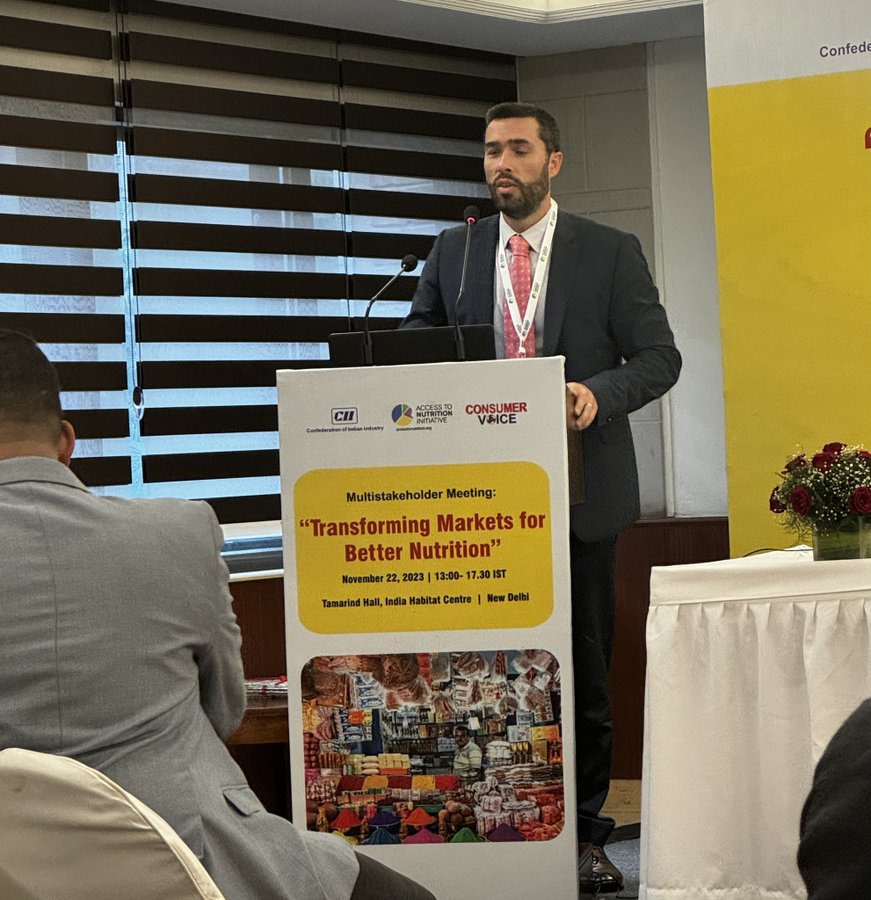
Organised by the Access to Nutrition Initiative (ATNI) and co-convened with support from Eat Right India- FSSAI, NIN, Consumer Voice and CII (TBC). During the event, ATNI launched its 2023 India Index, assessing the 20 top food and beverage companies in India on their performance to increase the accessibility of healthy foods in the Indian market.
The findings of the 2023 India Index show that the influence of the F&B industry is growing. It has both the responsibility and the opportunity to further embed nutrition into its core business improving product offerings for consumers. Actioning the Index recommendations is critical in the current context and will facilitate F&B manufacturers to play a more vital part in addressing pressing nutrition-related concerns and ensuring that a healthy, affordable diet is available to all.
GFRAS, the “Enabling Farmers for Agricultural Transformation (EFAT)” Project, Winrock International and the United States Agency for International Development (USAID) are collaborating to strengthen agricultural extension and advisory services and systems (EAS) globally.
Part of the activities planned for this partnership involve the revitalization of an on-line community of practice on extension and advisory services.
This first online meeting, presented the results of a survey collecting the main topics of interest in RAS and food-systems, present an overview of what the online platform has to offer, and how to interact with other members.
Digitalization is considered the avenue to reach the 500 million smallholders that deserve better livelihoods and improved resilience against the adverse consequences of climate change and other environmental threats. As a contribution to the global discussion around this theme, the Global Forum for Rural Advisory Services (GFRAS) seeks to determine what kind of agricultural extension will be needed in the future to overcome today’s challenges.
Advisory services are becoming more intelligent and data-driven, delivering highly
localised information that helps farmers make better decisions and in a timelier manner.
These can help link climate indicators with on-farm activities, using big data analytics
and artificial intelligence. Digitally powered peer-to-peer and participatory advisory
services, such as Wefarm and Farm.ink, help provide crowdsourced information in places
including Kenya, Tanzania and Uganda (page 7)
Related:
Close to 200 agricultural leaders and global experts in extension and rural advisory services gathered in Denver in October for the 14th Global Forum for Rural Advisory Services (GFRAS) Annual Meeting, sharing ideas and exploring strategies for producing the next generation of agricultural leaders.
Attendees representing more than 40 countries across North America, South America, Asia, Africa, and Europe participated in the three-day event, which was hosted by the North American Agricultural Advisory Network (NAAAN). It was the first GFRAS meeting held in the United States.
Can we find win-win solutions which tackle both climate change and improve food security and healthier diets?
The bidirectional relationship between nutrition and climate change means there are multiple opportunities for systems’ approaches that integrate action for climate and nutrition to address multiple national and global priorities simultaneously. Climate action positively impacting food, water and sanitation, social protection, and health systems can benefit nutrition. Good nutrition is, in turn, needed for healthy populations, healthy populations are needed for thriving economies.
Leonard Mizzi, Head of Unit INTPA F3 Agri-Food Systems and Fisheries
Lawrence Haddad, Executive Director, Global Alliance for Improved Nutrition (GAIN)
GAIN Executive Director and World Food Prize Laureate, Lawrence Haddad, presented the new report of the initiative on climate action and nutrition (I-CAN).
The report analyses levels of climate-nutrition integration across policy, research and finance. The report was researched by GAIN and launched at the Committee for Food Security (CFS) in November 2023. It forms part of efforts at COP28 to focus more on how food systems and climate are interlinked. It aims to foster collaboration to accelerate transformative action to address the critical nexus of climate change and nutrition. I-CAN further aims to build a strong alliance across nutrition and climate communities, strengthen existing efforts and take action to address the gaps, and develop an evidence base of integrated nutrition and climate action.
Lawrence Haddad introduced the I-CAN vision and objectives and shared the reports main findings. For example, just 2% of NDCs have concrete plans to address nutrition and only 1% of climate-related ODA financing explicitly mentions nutrition. At the same time, 95% of Global Nutrition Report commitments do not consider climate or sustainability at all.
Rudaba Khondker, Country Director, GAIN Bangladesh She presented a concrete example on the co-benefits of integrated action and collaboration across environment and nutrition. The case study from Bangladesh complemented the presentation with practical efforts to link climate and nutrition.
FAO(2023) Climate action and nutrition. Pathways to impact. #44 p. Climate change and malnutrition are two of the greatest challenges facing humanity today, both interconnected through agrifood, water, social protection, and health systems. Responding to both climate change and malnutrition with integrated actions provides one solution to two of our biggest barriers to sustainable development.
This paper, prepared as a contribution to the Initiative on Climate Change and Nutrition (I-CAN), explores options for integrated actions addressing jointly climate change and malnutrition across agrifood, water, social protection, and health systems by
recapping each system’s importance to good nutrition,
compiling the evidence on the interaction of each system with climate change, and
documenting the response options for integrated actions that have the potential to benefit climate change and malnutrition.
The evidence compiled in this paper shows there is the potential for each of the systems to be nutrition-sensitive and climate-smart for healthy diets, safe food, efficiently managed clean water for all needs, enhanced coping strategies, and less illness from systems that significantly reduce overall greenhouse gas emissions, protect biodiversity, preserve natural resources and increase resilience resulting in a virtuous cycle of healthier people, and stronger communities that can drive sustainable development.
Integrated actions can lead to positive outcomes on both climate and nutrition, with the support of key enablers identified in this paper. A comprehensive and strategic research agenda is also key in order to identify other key influencers and fill other priority gaps in our understanding of the trade-offs, enablers and pathways of integrated action to impact.
1 - 12 December 2023. The Trade House pavilion at this year's United Nations Climate Change Conference (COP28) is a dedicated space to spark discussions and solutions on how trade can help drive climate and sustainable development actions. For the first time, trade is featured as a specific theme at the conference, as part of the United Arab Emirates’ COP28 Presidency Programme. The pavilion is hosted by four international agencies: the International Chamber of Commerce (ICC), the International Trade Centre (ITC), the United Nations Conference on Trade and Development (UNCTAD), and the World Trade Organization (WTO) Secretariat. Activities at the Trade House will focus on accelerating climate action through trade-led development, using coordinated and inclusive approaches to ensure a just transition to a low-carbon economy.
The latest Intergovernmental Panel on Climate Change (IPCC) report highlights that forest conservation, improved
management, and restoration offer the most substantial potential for economic mitigation.
This panel will facilitate a meaningful and solutions-oriented dialogue toward achieving deforestation-free global value
chains. The conversation will highlight national and international efforts of forest protection, private sector initiatives,
innovative sustainable business models, and key enabling policy solutions.
In recognizing that deforestation is just one factor that exacerbates climate change and nature loss challenges, the
panellists will explore how businesses, including smallholders, local communities and indigenous peoples can
prepare for changing frameworks on environmental sustainability, and how trade and related policies can support this
transition.
Pamela Coke-Hamilton, Executive Director, International Trade Center
Mahmood Patel, Coco Hill – regenerative agroforestry project, Barbados
Hung Tran, Climate Excellence Centre, Fairtrade Association, Vietnam
Mario Boccucci, Head, UN-REDD Programme Secretariat
Around 1.6 billion people depend on forests for their livelihood, including some 70 million indigenous people. At the
same time, the small business sector represents 90% of the world’s businesses and more than half of global
employment.
Fostering sustainable business models of nature-based value chains is essential to delivering inclusive and sustainable
socio-economic development, and to accelerating the green transition.
Particularly within developing economies and countries with significant biodiversity, the bioeconomy offers a path to
better livelihoods, while preserving native flora and fauna.
The session will bring together parties, practitioners, international and regional agencies and SMEs to explore the
role trade can play in fostering sustainable and inclusive bioeconomy value chains.
Ana Margarida Castro Euler, Business Executive Director, Empresa Brasileira de Pesquisa – Agropecuária
(EMBRAPA), Brazil
Sofia Rubio, Chief Executive Officer, Shiwi, Peru
Mahmood Patel, Chief Executive Officer, Coco Hill, Barbados
Fiona Shera, Director Sustainable and Inclusive Trade, International Trade Centre
United Nations Conference on Trade and Development (UNCTAD)
01:35:23 Unlocking inclusion on Nature and Bioeconomy - the role of of trade (Session host: ITC)
The need, opportunities and impact for transforming global food systems in the face of climate change must be
understood and assessed as many countries design their measures to address the climate goals and those measures
will likely impact the global trade.
To secure the low carbon future, producers organizations, small holder farmers, Agri-MSMEs and rural communities
cannot be left behind. They are living through the changes in climate, are vulnerable from it, while at the same time are
already providing sustainable and inclusive solutions for transforming food system.
This session will discuss the role that food systems can and should play to promote social, economic and environmental
development and help deliver a just agroecology transition.
Moderation: Hernan Manson, Head Inclusive Agribusiness Systems, International Trade Centre
Juan Pablo Solis, Senior Advisor Climate and Environment, Fairtrade International
Butch Bacani, Programme Leader, UN Environment Programme’s Principles for Sustainable Insurance
Initiative
Dinesh Prasad Parajuli, Managing Director at Agriculture Enterprise Center, FNCCI, Nepal
Josephine Akia Luyimbazi, Country Coordinator Uganda, Participatory Ecological Land Use Management
(PELUM)
Mario Cerrutti, Chief Institutional Relations and Sustainability Officer, Lavazza Foundation
00:02:34 Global green deal: how would it fit the global south? How can the agroecology transition play a role in it? (Session host: ITC)
This session delved into the intricate relationship between trade dynamics, agricultural policies, and sustainability
within global food systems. The session deepened understanding of how international trade practices and
policies impact sustainable food systems, emphasizing the challenges and opportunities in global agricultural trade.
By examining diverse agricultural policies, the discussion will highlight their crucial role in ensuring sustainable
practices, fair trade, and food security. Additionally, the session will explore innovative solutions and collaborative
approaches, promoting sustainability, environmental conservation, and social equity in the agricultural sector.
Participants can expect insightful discussions that encourage collaboration and offer actionable strategies for a more
sustainable and equitable global food system.
Moderator:
Dhanush Dinesh, Founder and Chief Climate Catalyst, Clim-Eat
Speakers:
Marion Jansen, Director, Trade and Agriculture, OECD
Juan Carlos Mendoza, Director, Environment, Climate, Gender and Social Inclusion Division, IFAD
Aik Hoe Lim, Director, Trade and Environment Division, WTO
Gaurav Pundir, Coordinator, Trade and Investment Working Group, G20 Presidency of India
Martien van Nieuwkoop, Global Director for the Agriculture and Food Global Practice, World Bank
10/12 Trading safely: Why stronger SPS systems matter for climate change resilience?
Facilitating safe trade to regional and international markets offers a pathway for farmers, small businesses and
governments in developing countries to transform agricultural development, deepen regional integration and promote
sustainable economic growth, poverty reduction and food security. But climate change is creating new and increased
sanitary and phytosanitary (SPS) risks for agri-food trade, as recognized by WTO Members in the 12th Ministerial
Conference SPS Declaration.
Against this backdrop, this dialogue will ask: How does investing in SPS capacity support more sustainable agri-food
systems and markets that protect biodiversity and the environment, and are more resilient to climate change? Why is
collaboration key? What are the innovations and lessons from STDF's safe trade partnership?
The event will build on STDF work on climate change and SPS systems. The discussions will inform an ongoing
STDF learning assessment to improve mainstreaming of the environment, biodiversity and climate change in SPS
capacity development.
Moderator: Marlynne Hopper, Deputy Head, STDF
David Laborde, Director of the Agrifood Economics Division (ESA), FAO
Martien van Nieuwkoop, Global Director, Agriculture and Food Global Practice, World Bank Group
Jeremy Adamson, Senior Policy Advisor, Foreign Agricultural Service, U.S. Department of Agriculture,
United States
Dr Dinesh Prasad Parajuli, CEO, Agro-Enterprise Centre, Federation of Nepalese Chambers of
Commerce and Industry (AEC/FNCCI), Nepal
06:05:06 Trading safely: Why stronger SPS systems matter for climate change resilience? (Session host: WTO)
6 - 7 December 2023. Abidjan, Côte d'Ivoire. 2SCALE, Africa's leading incubator and accelerator dedicated to inclusive agribusiness, celebrates a Decade of Promoting Inclusive Agribusiness in Africa.
La transformation des petites entreprises Agro-industrielles
faibles en un groupe d’entreprises fortes et résilientes
Aminata Bonkoungou - Directrice APMR
Patricia Zoundi - Promotrice de Canaan Land
Talatou Nassirou - Directeur General CCPHN
Mahamadou Almoctar - Coach principal APGR
Aminatou Issoufou - SAE à Feder
07/12 INNOVATIONS VERTES INCLUSIVES
La contribution des innovations verts inclusives dans la
transformation du secteur agroalimentaire.
Ange Mohamed - Coach PEA de Kamelesso
Tahirou Dembélé - Union Siguida Yeleen &Agriculteur/Mali
Aminatou Feder - SAE- Feder moringa/Niger
07/12 BoP (Base de la Pyramide - Consommateurs à faibles revenus)
Un vecteur d'innovation et de croissance pour les entreprises
Africaines et d’inclusion pour les consommateurs à faible revenu.
Ndiaye Djeneba - Responsable Commerciale de Nebnooma SARL
Gislain Kouakou - PDG de MIENSAH Group
Dialia Keita - Keitala Negoce From Mali products Soya
Loba Youa Hélène - Promotrice de Mamie Attiéké
Talatou Nassirou - Directeur Général CCPHN, Niger
07/12 CHANGEMENT SYSTÉMIQUE
Le changement systémique sous-sectoriel porte sur les défis
qui dépassent la portée d’un PPP et qui adresse des solutions pour que
l’agro-industrie devienne plus inclusive, durable, résiliente et compétitive.
Coulibaly Aly - Conseiller Agribusiness Inclusif
Savadogo Arsene - Directeur Général
Amegankpoe Marlène - Directrice Générale
Niamoye Traoré - Conseiller Agribusiness Inclusif
07/12 PANEL DE PERSPECTIVES
Veyrl Adell - Directrice du développement des systèmes de marché (IFDC)
Emile Schmitz - Directeur Général mondial (Bopinc)
André de Jager - Directeur général des secteurs agro-alimentaires, de l’énergie et de l’eau (SNV)
In view of this challenges, in 2022, FAO launched a global project entitled “Foresight on Challenges and Opportunities for Sustainable Food Systems & Agro-Ecological Transition” in close collaboration with CIRAD as a scientific partner and with financial support from GIZ on behalf of the German
BMZ. The project aimed at developing global guidance on the use of foresight processes to support food systems transformations through agroecology.Between 2022 and 2023, a thorough stocktaking exercise on the use of foresight processes to support food systems transformations through agroecology was carried out. It involved diverse expertise, practitioners, and initiatives from the agroecology and foresight communities.
As a result, a “Guidance Document on the Use of Foresight Processes to Support Food System Transformations through Agroecology” has emerged. The Guidance Document caters to a diverse readership, with two primary audiences in focus.
The first group comprises foresight practitioners—individuals engaged in the strategic analysis of future scenarios and trends within the realm of food systems transformation towards sustainability. For foresight practitioners, this Document aims to answer the question: "How do we do foresight differently to better integrate agroecology to support transformation towards sustainable food systems?".
The second pivotal audience for this Guidance Document comprises agroecology practitioners, who play a vital role in advocating and implementing sustainable and biodiverse practices. For them, this report investigates the questions: "What is foresight, which insights about agroecology do foresight processes provide, and why is it important in supporting sustainable food system transformation through agroecology?"
Martin Vincent, Director, Office of Innovation, FAO
Ute Rieckmann, Team Leader, Support of Agroecological transformation processes in India (SuATI), GIZ
Anne-Sophie Poisot, Assistant-Team Leader, Pest and Pesticide Management Unit, Plant Production and Protection Division, FAO
Overview of “Guidance Document on the Use of Foresight Processes to Support Food System Transformations through Agroecology” + panel discussion
Marie de Lattre-Gasquet, Senior Researcher, CIRAD
Fatma Rostom, Researcher, CIRAD
Oliver Oliveros, Coordinator, Agroecology Coalition.
Monika Zurek, Co-lead, Foresight4Food Initiative.
Bruno Dorin, Senior Researcher, CIRAD
Marie de Lattre-Gasquet, Senior Researcher, CIRAD
Sylvain Perret, Director of Department Environment and Societies, CIRAD
Related:
22 November 2023. GFAR Talks VIII - An agroecological transformation requires a paradigm shift in agri research
Organized in collaboration with the Young Professionals for Agricultural Development and moderated by Prof. Sayed Azam-Ali OBE, this GFAR Talks VIII featured two eminent and engaging speakers:
Emile A. Frison (Senior Advisor and Ambassador, Agroecology Coalition) and
Romano De Vivo (Vice President of Sustainability, Croplife International)
unpacking the topic of “An agroecological transformation requires a paradigm shift in agri research”.
Related:
7 December 2023. GFAR regularly conducts events to ensure that its members, partners and stakeholders are well-informed on the organization's ongoing endeavors. This e-meeting gave a comprehensive overview of GFAR's recent advancements, such as the introduction of the new engagement platform, the establishment of the Global NARS Consortium and insights into the Collective Actions.
Over the past four years, IZiNCG’s Zinc Fortification Task Force has generated evidence and advocacy materials on large-scale food fortification (LSFF) with zinc. This webinar will showcase work undertaken by the Task Force, and discuss country experiences and actions.
Zinc is an essential nutrient for immune function, child health and development, and reproductive health. Based on available data, zinc deficiency is estimated to be a public health problem in 40 countries, concentrated primarily in sub-Saharan Africa and South Asia
LSFF is one of the most scalable, sustainable, and cost-effective tools available to reduce micronutrient deficiencies and improve nutrition worldwide. Recent publications have demonstrated that LSFF with zinc is effective, safe and cost-effective. However, at present, LSFF with zinc is an underutilized strategy for addressing zinc deficiency in countries where zinc deficiency is a public health problem.
Moderator: Dr Mduduzi Mbuya | Director, Knowledge Leadership, Global Alliance for Improved Nutrition
Dr Christine McDonald | Director of IZiNCG and Associate Professor, University of California, San Francisco
Dr Mari Skar Manger | Deputy Director of IZiNCG, University of California, San Francisco
Dr Ryan Wessells | Associate Project Scientist, University of California, Davis
Mr Frederick Grant | Senior Program Officer, Nutrition, Bill & Melinda Gates Foundation Ethiopia
Dr Ndèye Fatou Ndiaye | Coordinator of Senegalese Committee for Food Fortification (COSFAM), Ministry of Industry and Industrial Development, Government of Senegal
Mr Alex Marco Ongla Ndjebayi | Project Coordinator, Helen Keller International Cameroon
This publication provides an update on the European Commission’s Food 2030 initiative and aims to guide future research and innovation policy reflections related to Horizon Europe, the farm-to-fork strategy, the European Green Deal and beyond.
It sets out eleven pathways for action where research and innovation can concretely deliver co-benefits related to nutrition, climate, circularity, and communities, at multiple levels: from local to international:
Governance for Food Systems Change
Urban Food Systems Transformation
Food from the Ocean and Freshwater Resources
Alternative Proteins for Dietary Shift
Food Waste and Resource-efficient Food Systems
The Microbiome World
Nutrition and Sustainable Healthy Diets
Food Safety Systems of the Future
Food Systems Africa
Data & Digital Transformation
Zero Pollution Food Systems
This report also underlines that a systemic interdisciplinary and transdisciplinary approach to research and innovation is crucial for success and improved impact.
The Food 2030 pathways are being deployed via Horizon Europe, the EU’s framework programme for R&I (2021–2027), which provides funding to support a diversity of projects and initiatives, in Europe and beyond. The modernisation of the pathways was supported by a participatory expert workshop held on 10 March 2023 in Brussels, where about 90 experts with diverse backgrounds and experiences were invited to collectively reflect on the way forward.
Living labs are defined as practice-driven, place-based organisations that facilitate and foster open, collaborative innovation and real-life environments where both open innovation and user innovation processes can occur and where bottom-up-driven R&I can be designed and implemented. (...) Living labs will be extensively employed in the planned Horizon Europe partnerships on agroecology and sustainable food systems. For the latter partnership, they will serve as practice-driven organisations that facilitate collaborative innovation and real-life environments to support sustainable food systems transformation. The partnership will create a knowledge hub of living labs to enable knowledge sharing and dissemination. Living labs and lighthouses within the context of the EU mission ‘A soil deal for Europe’ are defined as follows: lighthouses are places for the demonstration of solutions and of exemplary achievements, while living labs are collaborative R&I initiatives between multiple actors that experiment in laboratories on the ground (e.g. urban areas, forest sites or industrial settings) to find solutions to the problem of degrading soil, based on a jointly agreed objective. (page 21)
The market for food in Africa is expanding rapidly, largely fueled by an increasing middle class. By 2030, food demand is projected to increase, bringing the size of Africa’s food and agribusiness to EUR 0.94 trillion119 and opening up employment opportunities all across food systems. (...) The African Development Bank estimates that Africa’s annual import bill of food will triple from EUR 35 billion in 2017 to about EUR 110 billion in 2025. (...) The need to strengthen the resilience of African food systems and actors is more important than ever in order to reduce the dependency on imports and increase food security by strengthening local production systems.(page 123)
The FAO estimates that one third of food is lost or wasted across the whole supply chain, and in Africa this food loss mostly occurs at the farm level(page 124)
The pathway ‘Food systems Africa’ is relevant to EU policies such as the EU Green and, in particular, the farm-to-fork, biodiversity and bioeconomy strategies. This pathway is part of the EU–AU R&I partnership on FNSSA, which was identified as the first priority of the AU–EU HLPD on Science, Technology and Innovation. It is pursuing a 10-year roadmap (2016–2026)130 with four priorities: (i) sustainable intensification, (ii) agriculture and food systems for nutrition, (iii) expansion and improvement of agricultural trade and markets and (iv) a group of cross-cutting topics. (...) The pathway is also closely related to the activities of SCAR, in particular the SCAR strategic working group on European agricultural research towards greater impact on global challenges.(page 125)
In the context of societal challenge 2 of Horizon 2020 and cluster 6 of Horizon Europe, pages 129 and consecutive pages describe the range of thematic issues covered, identifies future R&I needed such as:
linking food-system-related enterprises with local and regional financial intermediaries to fund profitable and sustainable entrepreneurial ideas, eventually linking these to payment for ecosystem services as security for repayment of loans;
enabling healthy and sustainable food environments, including the use of local and forgotten food types and protein-rich crops (e.g. legumes) to promote healthy diets
boosting food processing by SMEs, ensuring food safety and observing sociocultural preferences, while taking into account regional innovation profiles and, if applicable, geographical indications;
and provides a summary of Food 2020 projects.
Inno Food Africa: Locally-driven co-development of plant-based value chains towards more sustainable African food system with healthier diets and export potential 2020–2024, EUR 6.5 million (Horizon 2020), RIA, Food 2030
Healthy Food Africa. Improving nutrition in Africa by strengthening the diversity, sustainability, resilience and connectivity of food systems 2020–2024, EUR 7 million (Horizon 2020), RIA, Food 2030
FOODLAND Food and Local, Agricultural, and Nutritional Diversity 2020–2024, EUR 7 million (Horizon 2020), RIA, Food 2030
AfriFOOD-Links. Transforming Africa`s Urban Food Environment through Strengthening Linkages beween Systems Stakeholders in Cities across the Continent and Europe 2022–2026, EUR 12 million (Horizon Europe), RIA, Food 2030
INCiTiS-FOOD. Integrated and Circular Technologies for Sustainable city region FOOD systems in Africa 2023–2026, EUR 6 million (Horizon Europe), RIA, Food 2030
Healthy Diets 4 Africa Combating malnutrition in Africa through diversification of the food system 2023–2028, EUR 10.3 million (Horizon Europe), RIA, Food 2030
LEAP-AGRI A long term EU–Africa research and innovation partnership on food and nutrition security and sustainable agriculture 2016–2022, EUR 9.2 million (Horizon 2020), ERA-NET, Food 2030
FOSC Food System and Climate (FOSC): Assessing the impact of climate change on food and nutrition security and designing more sustainable and resilient food systems in Europe and beyond 2019–2024, EUR 5 million (Horizon 2020), ERA-NET, Food 2030
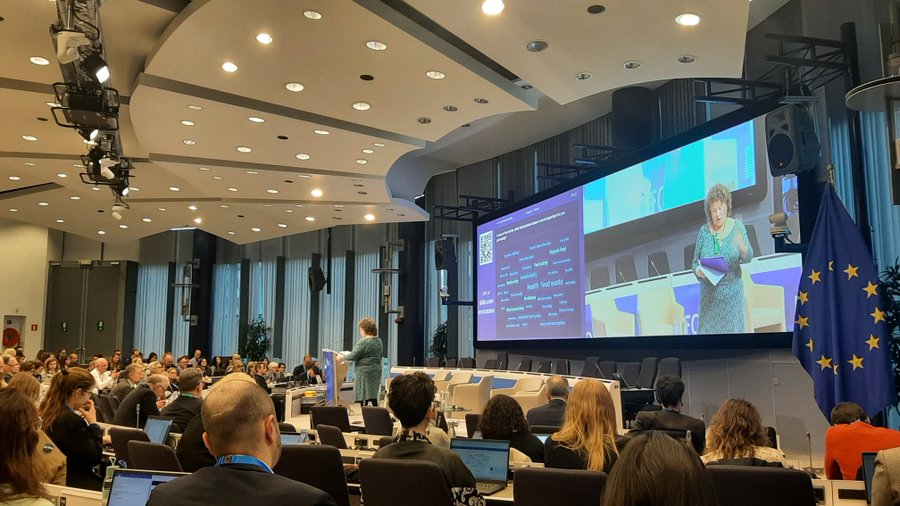
5-6 December 2023. Over 400 people from the Food 2030 community convened in Brussels to attend the high-level conference “Food 2030: Green and resilient food systems”, and over a thousand more followed it online.
The event, which represented an important milestone in the Food 2030 process, served to showcase promising Research and Innovation (R&I) outcomes contributing to sustainable food systems transformation in Europe and beyond. Furthermore, the conference provided a space for multi-stakeholder reflection and dialogue towards envisioning future R&I needs.
The conference constituted of 14 panel sessions, 4 keynote speeches, 4 high-level addresses, for a total of over 60 speakers.
05/12 CET International Partnerships - Breakout session 3:
Moderator Leonard Mizzi (EC)
Hugo de Vries (INRAE)
Hugo de Vries, Research Director at INRAE and coordinator of the EU funded project
‘FOODPathS’ that is preparing the EU Sustainable Food Systems (SFS) partnership, shared
his expertise and pivotal role in building up the Partnership, shedding light on the
development of the international dimension of this critical collaboration. The European
Partnership on Sustainable Food Systems enables to globally exchange on co-benefits and
trade-offs of food system approaches. Multi-scale orchestration of food system approaches
is the only sensible way to reach sustainable food systems globally and locally. A European
Partnership on SFS is not inclusive if the rest of the world (players) is absent.
Angelo Riccaboni (PRIMA)
Angelo Riccaboni, Chairman of the PRIMA Foundation, and an expert in fostering R&I
partnerships, provided valuable insights into the water, agriculture and food systems nexus,
emphasising how such partnerships can drive innovation, research, technology transfer, and
capacity development on a global scale. Technological and organisational R&I are key to
promote the transition towards more sustainable agrifood systems. To this purpose, in the
Mediterranean area, greater attention should be given to the adoption of innovations by
communities and SMEs. PRIMA is a successful example of R&I International Partnerships
31
fostering collaboration, exchange of knowledge and innovation in a critical area (i.e., the
Mediterranean), based upon the principle of equal footing. Now more than ever, it is important
to invest in cooperation and science diplomacy to find solutions able to address the common
challenges we are facing, leaving no one behind. For solutions to be effective, more attention
should be given to the nexus among water, energy, food and ecosystems. In fact, sustainable
agrifood systems are essential to meet the global targets that the International Community
has agreed upon in terms of climate change adaptation and mitigation, as well as for the
implementation of Agenda 2030.
Irene Frempong (FARA)
Irene Annor-Frempong, Lead for the AU-EU FNSSA International Research Consortium,
with her deep knowledge and contributions to the establishment of Food and Nutrition
Security and Sustainable Agriculture (FNSSA) priorities, discussed the forthcoming AU-EU
International Research Consortium (IRC) platform for FNSSA, highlighting the importance of
international collaboration in addressing global challenges.
The IRC will provide access to a
large database of FNSSA projects, skills, and events to facilitate cross-country, crossdisciplinary, and cross-sectoral learning to bring results to the end-users.
It will avoid
unnecessary duplication, enhance scaling, improve targeting of R&I investments, facilitate
effective governance of joint programmes, and catalyse higher impact.
The IRC presents a
two-way communication in the AU-EU science-policy interface and within the FNSSA
partnership. It therefore affords easy partnering with institutions across Africa and Europe to
bring results (i.e. practice) to policy.
The IRC knowledge platform on AU-EU collaborations
presents structural, practical, and participatory interaction between partners to promote joint
funding opportunities on priority FNSSA topics and improve the contribution of projects to
European and Africa development goals as well as to global targets e.g., SDGs.
05/12 Global Food Systems governance and Science-Policy interfaces - Breakout session 6:
Narrated by Kate Winslet, ‘Eating Our Way to Extinction,’ a Cinematic Feature Documentary addresses the elephant in the room that no one wants to talk about... Will we be the next species on the path toward extinction?
African countries have embarked on an ambitious process of integrating their markets beyond existing regional arrangements to create the African Continental Free Trade Area (AfCFTA). While a trade agreement, the ambitions of the AfCFTA go far beyond raising intra-African trade, to establishing regional value chains (RVCs) and promoting continent-wide industrialisation. Beyond the reduction of tariffs and non-tariff barriers, the AfCFTA’s success will therefore depend on a range of other factors, including its ability to encourage domestic and foreign investment to take advantage of expanded markets.
At the same time, the EU’s Global Gateway seeks to connect support to trade corridors with investments and access to critical raw materials. Against this backdrop, the AfCFTA Protocol on Investment represents an important step towards creating an environment conducive to investment within the African Continent. Nonetheless, such formal, legal mechanisms must be implemented and used to have an effect, raising questions for policymakers in Africa and their partners about how best to build on and support such mechanisms to promote the underlying goal of African economic transformation.
The InfoPoint addressed: (a) To what extent do harmonised legal frameworks and dispute resolution mechanisms address the key barriers to domestic and foreign investment in Africa to take advantage of a larger continental market? (b) What additional accompanying measures or support will be required to ensure the effectiveness of the Investment protocol and ensure the industrialisation and RVC ambitions can be met? (c) With the EU's Global Gateway intended to encourage public and private investments along African trade corridors, how should these initiatives be shaped to encourage investments that contribute to AfCFTA objectives of intra-African trade, investment and value-addition?
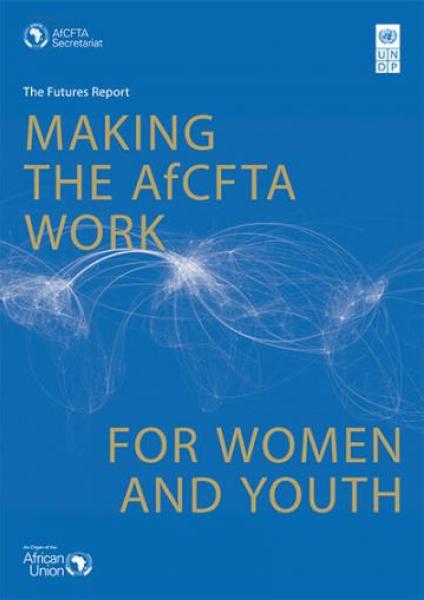
Francis Mangeni, Coordinator of Regional Advisors on the African Continental Free Trade Area, Secretariat of the AfCFTA Francis referred to the report
The need for intra-African cross-border trade in food cannot be overemphasized. In the European Union, intra-EU trade of agri-food products represents 72.7 percent. In sharp contrast, trade of food products within African countries accounts for a meagre 13 percent of total trade, dominated by small-scale maize, tea, tobacco, palm oil and sugar traders, as opposed to large-scale food conglomerates. The African countries that lead the way are South Africa, the major exporter and importer in the inter-African trade segment, followed by Egypt, Uganda, Kenya and Libya. (page 51)
Cross-border trade of value-added agricultural products is even lower than that of food products in Africa despite the growing focus on value addition by small and medium-sized enterprises (SMEs) across the continent. High costs of doing business, limited access to finance and restrictive regulations continue to limit the impact that SMEs have on value addition in the sector. (page 52)
Professor Dirk Willem te Velde, Director, International Economic Development group, Principal Research Fellow, ODI
Africa Pavilion hosted by the African Development Bank, the African Union Commission (AUC), the United Nations Economic Commission for Africa (UNECA), and the African Union Development Agency-NEPAD (AUDA-NEPAD), in collaboration with other regional entities, including the Africa Risk Capacity
Food Pavilion (hosted by CGIAR, FAO, IFAD and the Rockefeller Foundation)
Food Systems Pavilion (hosted by the Netherlands) – including 8 thematic days highlighting the critical role that transforming food systems must play in climate mitigation, adaptation and building resilience.
EU Side Events at COP28 - In Dubaï, Brussels & online Check out our EU side events programme. Register to watch all events live for free. The EU is acting now to fight climate change. 08/12 @07:00AM-08:30AM. The Great Green Wall and Land Restoration. A set of high-level interventions. It will showcase progress in the implementation of the GGW, as well as EU-supported action under the GGW Accelerator. This is also a space to announce potential new programs/commitments.
Conference to showcase achievements of EU food systems related projects, explore future research and innovation orientations and levers of change.
The EC aims to convene a wide range of actors and policy makers for this in-person event, which will also be web streamed and recorded for those unable to travel.
5 December 2023. 1200 EAT, 1100 Southern Africa, 1000 Central and parts of West Africa, online session of the Water School Africa (WSA)
Ferdinand Wafula of BIOGI and some of the farmers of Kathonzweni subcounty of Makueni, Kenya will share their experiences, aspirations and learnings on creating structures and other conditions that conserve water to help them in their food production.
GFRAS, the “Enabling Farmers for Agricultural Transformation (EFAT)” Project, Winrock International and the United States Agency for International Development (USAID) are collaborating to strengthen agricultural extension and advisory services and systems (EAS) globally.
this first online meeting, will present the results of a survey collecting the main topics of interest in RAS and food-systems, present an overview of what the online platform has to offer, and how to interact with other members
6 - 7 December 2023. 2SCALE Promoting Inclusive Agribusiness in Africa
7 December 2023. Networking and resource mobilisation to support the process of integrating PID concepts and practices into universities, and research Institutions - by Prolinnova
During the event ATNI will present its business case for investing in nutrition and metrics for impact investors and learn from others in the impact investing space. The event brings together stakeholders with expertise on the topic including donors, development finance institutions, impact investors, Agri-SMEs, NGOs, intergovernmental organizations, health professionals and more.
organized by the Food and Climate Systems Transformation (FACT) Alliance at the Massachusetts Institute of Technology (MIT), the University of Natural Resources and Life Sciences, Vienna, in cooperation with CIFOR-ICRAF.
the critical role of the Comprehensive Africa Agriculture Development Programme (CAADP) within USAID’s Feed the Future (FTF) strategy
the webinar will facilitate discussions to identify opportunities for enhanced collaboration between USAID and CAADP in navigating the Post-Malabo agenda, emphasizing collective efforts towards sustainable agricultural transformation in Africa.
The event is set to attract wholesalers, distributors, retailers, and other industry professionals for a three-day showcase that aims at addressing the different needs of both buyers and importers, as well as to serve new markets in Egypt and Africa.
Conference of four (4) days in collaboration with the organic agriculture actors in Africa, the African Union Commission and other strategic organizations outside Africa.
The theme of the conference is “Strengthening Resilient and Sustainable Food Systems in Africa Through Organic Agriculture”.
Please find attached the call for papers for the 5th African Organic Conference. Abstract not more than 250 words were to be submitted to Deadline – September 30, 2023. Full papers of accepted Abstracts to be submitted before 30 October, 2023. All finally accepted manuscripts will be published in the Conference Proceedings, while scientific ones that are evaluated acceptable for journal publication will have the opportunity to be published in the African Journal of Organic Agriculture and Ecology (AJOAE).
This webinar, will discuss a surprisingly diverse range of actions that are relatively low-cost, or even cost-neutral as put forth by the Global Panel (2023) Pursuing food system transformation despite financial constraints policy brief September 2023 # 19 pages
with Sir John Beddington, Tom Arnold, Amos Laar, Adeyinka Onabolu, Patrick Webb, Shibani Ghosh
The African Academy of Sciences (AAS) will participate in the UNESCO Chairs Seminar this where AAS President Professor Lise Korsten will give a keynote speech.
This summit is the only dedicated summit in India which provides a common platform for the Food & Nutrition industry to come together to discuss the key challenges. learn from the best practices adopted across the country. India Food & Nutrition Summit is India’s the most authoritative congregation of the Food, Dairy, Nutraceuticals, Dietary Supplements and Health Foods Industry in India.
Liz Ng'ang'a, a social scientist and communications specialist who has dedicated her career to the intersection of science, technology, and development.
The preliminary programme is available online and abstract submission is open until November 2023.
This fifth edition of the AAHC, initiated in 2009 by GlobalHort, will complement the African sub-regions hosting the event.
The event will strengthen scientific relations and partnerships between North Africa and sub-Saharan Africa, and highlight the place and role of horticulture in meeting the continent's global challenges: food and nutritional security, youth employment, and sustainable management of natural resources (water and biodiversity).