Platform for African – European Partnership in Agricultural Research for Development

Wednesday, April 10, 2024

ARTIFICIAL INTELLIGENCE TECHNOLOGY IN AFRICA

Microsoft (2024) AI in Africa: Meeting the Opportunity #82 p.

Tuesday, April 9, 2024

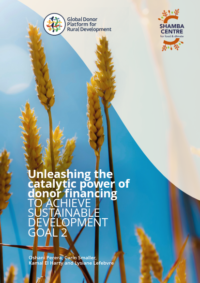
Unleashing the Catalytic Power of Donor Financing of agrifood systems

GDPRD (2024) Unleashing the Catalytic Power of Donor Financing to Achieve Sustainable Development Goal 2 # 48 p.

This report is dedicated to bilateral and multilateral donors engaging in blended finance, who aim to boost access to commercial finance by agrifood small and medium enterprises (SMEs). The investigation included a series of interviews which explored how donors, philanthropic organizations, public funds and blended capital funds can make their funding effective and act as an incentive for achieving SDG 2.

The report shows the risk appetite of donors and DFIs is on the rise. This is a unique opportunity for donors, DFIs and their beneficiaries in developing countries to make widespread changes by implementing the recommendations of this report.

Four key findings and recommendations are presented from the Donor Platform and Shamba Centre for Food & Climate's 2023 enquiry.

The report’s central message shows the catalytic power of aid. If donors and development finance institutions (DFIs) take higher risks with their grants and lending, every donor dollar has the potential to mobilize four dollars in commercial finance. When this happens, agrifood SMEs will have more financing, domestic lenders will participate, and markets will deliver affordable borrowing prices.

Read the report.

Key findings and recommendations

Key finding 1: Blended finance can make the biggest contribution to SDG 2 by focusing on the missing middle: agrifood SMEs seeking finance of between US$50,000 and US$2 million
  • Key recommendation 1: Donors and DFIs can increase the flow of finance to agrifood SMEs by:
  1. building the agrifood expertise and risk appetite of domestic lenders, including developing an agrifood credit risk assessment scorecard, as proposed by the United Nations Economic Commission for Africa;
  2. scaling up priority lending programmes and results-based lending incentives for domestic banks, encouraging them to use their own balance sheets to lend to agrifood SMEs;
  3. increasing finance for affordable, indemnity-based, weather-indexed and crop-indexed insurance;
  4. incorporating bookkeeping and accounting skills into SME technical assistance programmes.

Key finding 2: Every dollar of concessional finance can mobilize four dollars of commercial finance; however, whether those four dollars deliver a sustainable development impact will determine if blended finance can bring not only financial additionality but also development additionality.
  • Key recommendation 2: Donors and the wider blended finance community can expand the pool of blended finance by:
  1. reducing transaction costs related to the exploration, negotiation and conclusion of blended finance transactions;
  2. exploring how donors can provide not only first-loss financing but also lending at commercial rates, where returns on these investments can be ring-fenced for reinvestment into the same or other blended transactions;
  3. continuing to provide grants for technical assistance for SMEs and domestic lenders, as they bring high levels of financial and development additionality;
  4. sharing data, reducing transaction costs and collaborating on cofinancing through the creation of a multi-donor working group, supported by a sustainable finance knowledge hub.
Key finding 3: DFIs are governed by rules that discourage them from taking risks to provide finance that would otherwise not be available from commercial lenders.
  • Key recommendation 3: Donor governments must provide DFIs with dedicated funds that allow them to:
  1. offer higher-risk loans, such as first loss and mezzanine debt, that have well-defined targets on sustainable food and agriculture;
  2. provide long-term credit lines, guarantees, transaction advice and technical assistance to domestic financial institutions to build institutional knowledge on sustainable agrifood systems.
Key finding 4: More research and data on the performance of agrifood SME loans that originate from donors are a prerequisite for making ODA catalytic.

Extracts of this report

  • In 2022, lenders from CSAF primarily directed their lending to cash crop value chains (CSAF, 2023a). Agrifood SMEs and farmers’  organizations involved in coffee, cocoa, cashew nuts, soya beans and quinoa received most of the loans, with only 24 per cent going to value chains of other crops for domestic consumption in 2022.  (page 12)
  • Aceli Africa provides results-based financial incentives to domestic lenders in Kenya, Rwanda, the United Republic of Tanzania, and Uganda. In the absence of these incentives, local lenders would not be lending to agrifood SMEs. The incentives are designed based on lending data from 31 financial institutions, including local banks, international social lenders and members of CSAF. (...) Aceli Africa’s budget for 2020–2025 is US$75 million, more than 50 per cent of which is used to provide incentives. As of October 2023, Aceli Africa’s incentives had supported 1,404 loans totaling US$142 million (60 per cent of loans to first-time borrowers). (page 17)
  • In September 2023, the United States Agency for International Development (USAID) and the Norwegian Agency for Development Cooperation, each with a preliminary contribution of US$35 million, launched the FASA Fund to increase financing for smallholder farmers and agricultural SMEs in Africa with financing needs of between US$200,000 and US$5 million. The initial commitments from USAID and the Norwegian Agency for Development Cooperation are expected to attract additional contributions from other donors totaling US$200 million. (...)  The US$200 million donor contribution is expected to unlock US$1 billion in commercial financing. (... ) The US$1 billion of commercial financing mobilized is expected to support 500 agrifood SMEs, create 60,000 private sector jobs, benefit 1.5 million smallholder farmers and positively affect about 7.5 million people. (page 22)
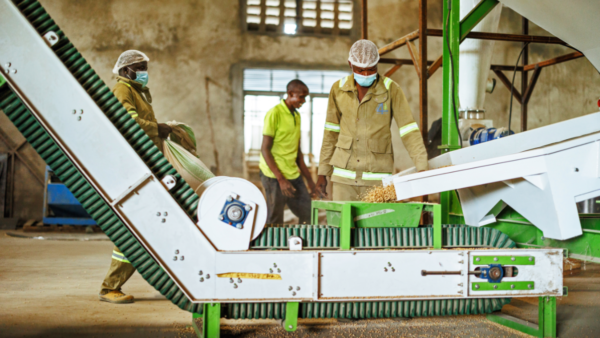
  • Africa Improved Foods is a social enterprise producing affordable fortified foods for pregnant and lactating women and for infants. It was established in 2015 as a joint venture between the Agaciro Development Fund, Royal DSM, FMO, the Dutch entrepreneurial development bank, the
  • Department for International Development Impact Acceleration Facility managed by the CDC Group and the International Finance Corporation (FMO, n.d.).  (page 25)

Related:

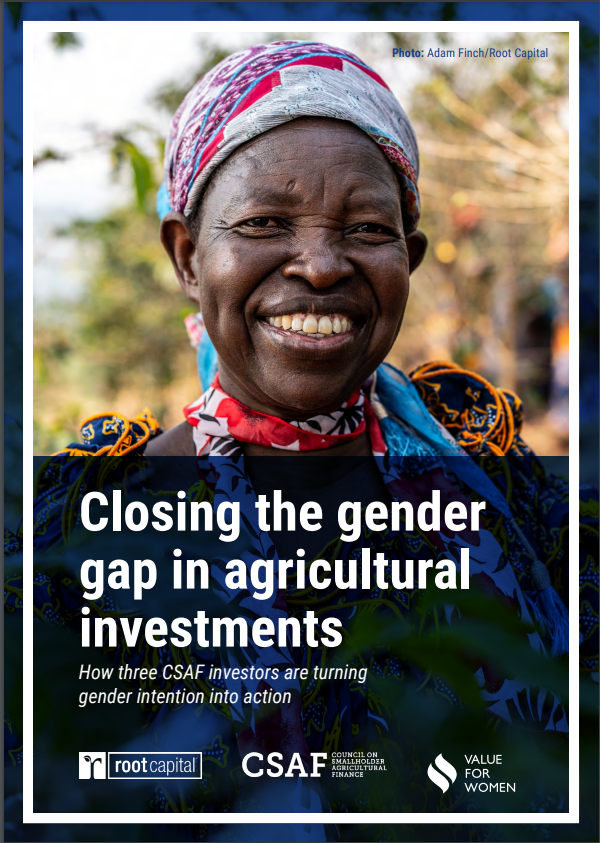
CSAF (2023) Closing the Gender Gap in Agricultural Investments: How Three CSAF Investors Are Turning Gender Intention Into Action. # 28 p.


The report features case studies on Incofin, Alterfin, and Cordaid Investment Management, three impact investors who were able to successfully turn their gender intentions into action by focusing on the Gender Lens Investing (GLI) strategies most aligned with their business and impact priorities. 

Root Capital, in collaboration with Value for Women and CSAF, provided comprehensive GLI training to these three investors as part of the "Strengthening the Livelihoods of Women Smallholders through Investments in Gender-Inclusive and Women-Led Agricultural Businesses project". The project aims to establish a replicable model and evidence base for other donors and investors to adopt GLI practices.

Extracts of this report
  • Over 65% of women in certain regions such as sub-Saharan Africa and South Asia earn their living from the agriculture sector. Yet, women receive only 7% of total agricultural investment. (...)
  • On average, women-led enterprises experience year-on-year growth rates of 25.7% CAGR (compound annual growth rate) and 45.2% AAGR (average annual growth rate). Gender inclusive businesses experience, on average, year-on-year growth rates of 20.6% (CAGR) and 35.1% (AAGR). (page 6)

CSAF (2023) 2023 State of the Sector # 26 p.


The 2023 State of the Sector report shares market insights drawing upon quantitative and qualitative input from 20 financial institutions and provides a deeper analysis of the risks agri-SMEs and lenders face, and how agricultural lenders can respond. 

In 2022, CSAF members issued loans totaling $750 million to over 650 businesses across 59 countries. Lenders sustained high volumes of lending following a year of significant growth, though there were large variances across regions, and sustained high additionality despite an increasingly maturing agri-SME finance market. 
Extracts of this report
  • CSAF lenders disbursed $750M in 2022 to over 650 businesses across nearly 60 countries. (2013–2022: $6.2B)
  • The sector needs to constantly be innovating new tools, subsidies, and blended finance structures to mitigate those risks and continue to deliver impact for agri-SMEs.
  • Sub-Saharan Africa remained the largest destination for CSAF member financing, but experienced negligible growth in 2022. (page 17)
  • Coffee continues to comprise the majority of CSAF member lending activity, reaching an all-time high in 2022
  • Cocoa lending reverted to 2020 levels, driven predominantly by lower activity in Côte d’Ivoire and Ghana.
  • Macadamia lending. After a couple of years of a steady downward trend, disbursement to tree nut enterprises grew significantly in 2022. Driven primarily by an increase to macadamia processors in Kenya of $16M, nut disbursements returned to 2019 levels.

Monday, April 8, 2024

Recordings in thematic order

AgriFoodTech Investment


27 February 2024. Nairobi, Kenya. Leveraging effective and inclusive collaboration with financial institutions to accelerate the transition to more circular economies Recorded

28 - 29 February 2024. 11th Sankalp Africa Summit  Recorded
  • The Sankalp Africa Summit at the Kenya School of Monetary Studies in Nairobi catalyzed collaborations across the entrepreneurial ecosystem in order to solve global challenges sustainably.
5 March 2024. Climate Change and the African Financial Sector Recorded
  • Making Finance Work for Africa (MFW4A) and Climate Finance and Investment Accelerator Limited (CFIA), in partnership with the African Financial Alliance on Climate Change (AFAC)
13 March 2024, Accra – The 3rd African Agribusiness Leaders Dialogue (AALD3) Recording not (yet?) available
  • This dialogue was held online and in person in Accra
  • It highlighted the barrier-breaking role of young African 'agripreneurs' in the agrifood sector.
  • Partners such as GIZ, FSD-Kenya, African Fertilizer and Agribusiness Partnership, AGRA, National Research Fund, International Food Policy Research Institute, Tegemeo Institute, Association of Fintechs in Kenya, AGRA, Association of Microfinance Institutions of Kenya, Fertilizer Association of Kenya, Apollo Agriculture, Kenya Union of Savings and Credit Co-operatives, SNBX Capital, contributed to this conference and transformation of the Agricultural sector in Kenya.
  • See the program
28 March 2024. Session two of the ‘Backing the Middle’ series Video
  • This session hosted a discussion with donors to discuss where concessional capital is best utilized in the agri-SME finance market.
  • Session 1 Highlights
29 March 2024. Brussels Africa Political Outlook 2024. 
  • Panel #1 Autopsy of the Global Gateway: dynamics in relations between the EU and Africa
  • Panel #2 Resurgence of coups in Africa: rethinking, reinventing and rebuilding democracies
  • Panel #3 Investing in Africa: the AfCFTA, the diaspora and impact investment 
  • Panel #4 Building on our commons: the potential of entrepreneurial innovation, civil society and territorial dialogue
  • Panel #5 Impact of the 2024 European elections on EU-Africa relations

Food systems

7 March 2024 Global Food 50/50 Launch Event Recorded

8 March 2024 Official Launch of the 4th BR Report and Post Malabo Agenda Roadmap Recording not (yet?) available

  • The Theme of the event was “Reflecting on the Malabo Declaration and Outlining the new (Post Malabo) Agenda to Build Momentum, Re-invigorate and Consolidate the Gains on CAADP, and respond to Emerging Trends and Dynamics”.
  • AU (2024) 4th CAADP Biennial Review Report 2012-2023 #170 p
11–13 March 2024. Leuven, Belgium. Open Food Conference Recording not (yet?) available
  • The aim of this conference was to create synergies between science, policy and practice in more than 20 thematic sessions.
  • To inaugurate the 2024 webinar series, this webinar gained a deeper understanding of how the community operates and how various stakeholders such as companies, governments, sector groups, and NGOs are addressing the challenge of achieving a Living Income.
  • The RMRN Project is funded by the European Union (EU) as part of its Regional Multi-year Indicative Programme (MIP) for Africa (2021-2027)
  • The MIP will support strengthening the consortia of Africa based institutions to lead interventions in Africa in several domains including multi-stakeholder partnerships to bring agroecological innovations to scale, using co-learning, co-creation, and multi-stakeholder approach.
  • Related: 9-10 March 2024. Tunisia. The ANzAR Forum 2023: Agroecology in North Africa Video
  • 20/03 17h:50 – 18:20 The AU-EU Innovation Agenda A Forward-looking Cooperation for the Africa-Europe Partnership
  • 20/03 17h:50 – 18:20 Evolution of Association of Third Countries to EU Research & Innovation Framework Programmes
  • 21/03 11:40 – 12:10 Innovation Ecosystems for Bioeconomy and Food Systems 
19–20 March 2024. Montpellier. The Montpellier Process: Pooling Collective Intelligence Recording not (yet?) available
  • The event gathered 300 selected individuals from scientific and policy domains, focusing on intentional, diverse representation.
  • The Blue Bioeconomy ERA-Net Cofund will organise a Final meeting in Brussels to mark the end of the ERA-Net. The event will gather science-policy professionals and research and innovation funders to discuss R&I project portfolio management, using a Value Chain Approach and creating synergies among projects. 
  • BlueBio funding partners, policy officers from The European Commission, representatives from relevant HE Partnerships and other institutions will be invited to join the one-day event in Brussels.
19 - 24 March 2024. VIII Global Conference Family Farming: Sustainability of Our Planet

  • Co-organized by IFPRI, CGIAR, and Germany’s Federal Ministry for Economic Cooperation and Development (BMZ)
  • Chaired by the Prime Minister of the Republic of Rwanda, the launch event was the premier drum beat and kick start event towards the Africa Food Systems Forum 2024, that will be held from September 2-6, 2024, in Kigali Rwanda.

Nutrition

12 - 13 March 2024. The World Banana Forum (WBF)  Recorded
  • 12/03 Session 1: Setting the Scene and Looking Ahead Towards the Future of the Banana Industry
  • 12/03 Session 3: Towards a more Sustainable Banana Industry. Achieving a Fairer Distribution of Value
  • VACS was launched in February 2023, in partnership with the African Union, FAO, and U.S. Department of State, with the goal of advancing more climate-resilient and nutritious food systems in Africa. A team of researchers from AgMIP, based at the Climate School, participate in VACS, conducting research to better understand how African opportunity crops can be used to address the challenges that African food systems face under climate change.
  • Why and how did nutritionists, plant breeders, climate modelers, soil scientists, economists – 60 global experts – decide on these crops.
  • Upcoming: 23 April 2024. VACS Community of Practice Webinar: Optimizing the Vision for Adapted Crops and Soils - Hosted by FARA
  • This virtual event brought together legume value chain stakeholders from across the region with a special emphasis on Malawi, Mozambique, and Zambia. 
  • The focal crops are common bean and cowpea.
21 March 2024. The biology of soybean rust and the available management options through Recorded
  • This webinar highlighted the biology of soybean rust and the available management options through a panel interview of soybean rust experts.
29 March 2024. International Year of Millets Closing Event Recording not (yet?) available

  • hosted in partnership with Bayer Crop Science.
  • In this webinar, the panel drew on case studies to identify practical and impactful farmer-centric solutions for building the relationship between healthy soils, regenerative agriculture, and climate-resilient food systems at scale.
11–15 March 2024, Livingstone, Zambia. Accelerating Nature-based Solutions summary videos
  • The Global EverGreening Alliance, the Government of Zambia, AFR100, African Natural Capital Alliance (ANCA), FSD Africa, and the UN Decade on Ecosystem Restoration, hosted the world's largest land restoration programming conference, which brought together NGOs, governments, the private sector, technical and scientific experts, and community representatives.
  • Related: 11 March, 2024, in Lusaka, Zambia. Official launch event of the Agdive 2024 program. Agdrive is an acceleration and investment platform focused on unlocking innovation and investment in Africa’s agro-processing, agritech, and digital agriculture sector.  AgDrive is a 12 month innovation and investing ecosystem focused on innovative early stage and growth oriented early stage and growth oriented small and medium enterprises (SMEs) in the agro processing, agritech, and digital sectors. 
  • FAO, Biovision, the Food Policy forum for Change and the Agroecology Coalition
  • learnings from Eastern and Southern Africa summarised in the outcome brief “National Agroecology Strategies in Eastern and Southern Africa: Lighthouses for food system transformation” which was launched during the event 
27 March 2024.  Webinar – Scaling DeSIRA – Strategies and policy Recording not (yet?) available
These webinars were the second of the series on how the innovations processes promoted by DeSIRA projects and their organizations, can or should be brough to scale. It targets projects that are coming to an end as well as those that need to start building their exit strategy as part of their theory of change.

27 March 2024. Overcoming barriers to building the circular bioeconomy Recording not (yet?) available
  • FAO, RUAF and the CGIAR Initiative on Resilient Cities 

Climate adaptation

4-5 March 2024. North Africa DIGITAL CLIMATE ADVIASORY SERVICES (DCAS) hybrid training event to support climate resilience for smallholder agriculture Recorded

Trade

Digital agriculture


European Union/Commission

20 - 21 March 2024. European Research and Innovation Days 2024 Recorded
  • The European Commission’s annual flagship research and innovation event brought together policymakers, researchers, stakeholders, and the public to debate and shape the future of research and innovation in Europe and beyond through key policy debates, funding and networking opportunities, and dedicated workshops.
  • Highlight: Closing remarks Janez Potočnik, Chair ForumforAg 2024 and Chairman RISE Foundation.

5th Global Food Security Conference


9-12 April 2024
| Leuven, Belgium. 5th Global Food Security Conference. Towards equitable, sustainable and resilient food systems

Building on the momentum from the UN Food System Summit and recognizing that the 2030 target year of the Sustainable Development Goals is on the horizon, this 5th Global Food Security Conference will bring together science, business and policy to address this need.

Presentations related to Africa


11/04 Knowledge centre for global food and nutrition security and sustainable food systems - building a common understanding, supporting better policymaking The European Commission Knowledge Centre for Global Food and Nutrition Security (KC-FNS) is a one-stop source of curated information on food and nutrition security, and sustainable food systems. It focuses on developing countries. The KC-FNS screens, selects, organises and synthetizes the most recent available knowledge. It contributes to build a common understanding on these challenges, and ultimately to better policymaking. The KC-FNS is organised in nine main topics: SFS, Agroecology, Food Security & Food Crises, Nutrition, Covid-19, Climate Extremes, R&I, Fisheries and Aquaculture, and Mycotoxins. Each topic proposes a scientific brief, a selection of news, publications, online resources, and explains major EU and international actions and initiatives.
11/04 Opportunities and challenges for the design of local spaces, built environments, and landscapes for food system governance: Partnership and knowledge co-production in the Breede Valley Municipality (BVM), Western Cape Province, South Africa
11/04 

World Cafes


  1. Worldcafé W1: Food Safety and food security - Moderators: Spencer Hanson and Lise Korsten Food safety is a core driver of food security, but how does it link to other pressures acting across the food system? This world café discusses food safety within the broader ‘one food’ concept, where One Health principles are applied to food systems to understand the human health, animal/plant health and environment health issues associated with food. 
  2. Worldcafé W2: The future of urban food systems - Moderators: Ramya Ambikapathi and Lisa Marie Hemerijckx This Worldcafe will discuss major urban challenges affecting social, economic and physical food accessibility, including the role of urban governance in the food system and beyond. 
  3. Worldcafé W3: Science as an alibi - Moderators: Koen Deconinck and John Ingram As the world is mobilising to transform food systems, we need to reconcile the need for evidence-based decisions with a robust democratic process. This café invites conference participants to share experiences on how science can be used, or abused, in food systems policy.
  4. Worldcafé W4: When is small farm size a binding constraint to increasing agricultural productivity?- Moderator: Romina Cavatassi (IFAD, Rome) and Ken Giller (Wageningen University & Research) Recent analyses provide a rather shocking picture of declining farm size in many of the most densely-populated regions of Africa, resulting in median farm sizes less than 1 ha. Why is small farm size a problem? 
  5. Worldcafé W5: Managing food demand with social innovations - Moderator: Matthew Kessler This café invites participants to share insights and success stories about social and policy innovations (as distinct from technical solutions) that effectively balance production, consumption and distribution.
  6. Worldcafé W6: Global – local food systems - Moderators: Goedele Van den Broeck and Charlotte Janssens After decades of globalisation and increasing international agri-food trade, local food systems are nowadays often promoted as more resilient and sustainable. Food sovereignty and strategic autonomy are in the policy spotlight, after major disruptions in global food supply chains in recent years. 
  7. Worldcafé W7: Alternative “meats” barriers and opportunities - Matthew Kessler and Julian Baggini - Cultivated meat is increasingly being presented as the inevitable future of animal proteins. 
  8. Worldcafé W8: Divided we fall: Has the food systems debate become too polarized? Moderators: Gerard Govers and Julian Baggini We face a situation in which many key actors do not even talk to each other. There is no greater symbol than this than the UK in January every year where the Oxford Farming Conference (representing the mainstream) and the Oxford Real Farming Conference (representing alternatives) meet in parallel, in the same city, but without any dialogue.
  9. Worldcafé W9: Governance and institutional structures  - Moderator: Saher Hasnain This world cafe will focus on developing a deeper understanding of the institutional structures that underpin the governance of food systems and the mechanisms required for resilient, sustainable, healthy, equitable, and future-proof transformation pathways. 

International Conference on Agrobiodiversity 2024


9 - 12 April 2024.
Pokhara, Nepal, International Conference on Agrobiodiversity 2024

The conference is facilitated by the Forest and Farm Facility, a partnership between the Food and Agriculture Organization of the United Nations (FAO), the International Institute for Environment and Development, the International Union for Conservation of Nature and AgriCord.

With agriculture covering the largest portion (46%) of the global land surface area, its ecological health and resilience is critical to human survival. Of 7000 plants historically cultivated for food, today just three crops – rice, wheat and maize – make up over half of global plant-based calories. This poses a significant risk for biodiversity and a major challenge for smallholder farmers, Indigenous Peoples and local rural communities who maintain most of the world’s remaining agrobiodiversity.

Increased land degradation and escalating climate risks also pose significant challenges for frontline forest and farm producers. Small farms of less than 2 acres account for some 84 percent of all farms worldwide, producing roughly 35 percent of the world’s food on 12 percent of its agricultural land. These small producers face strong competition for resource rights, technical support and cost-competitiveness from large-scale industrial monocultures.

09/04 @7:30 am CET Session 1: Agrobiodiversity – What it is and why it matters


Agrobiodiversity is what feeds, fuels and furnishes humanity with natural products and ecosystem services (where agriculture is now the largest land use). The session will involve five speakers who presented the importance of agrobiodiversity from an Indigenous perspective. The speakers include:
  • Damian Sulumo, CEO, Mviwaarusha, Tanzania: Key constraints to agrobiodiversity conservation from a smallholder perspective – and how to address them.

09/04 @10 am CET ­Session 2: How policies shape agroecology approaches that help to protect and manage agrobiodiversity for better or worse

 
This session will tackle how policies shape agroecology approaches that help to protect and manage agrobiodiversity (for better or for worse) and for meeting people’s needs with sustainable use and benefit-sharing. The speakers include:
  • Moderator: Ms Katja Vouri, Agricord
  • Keynote Speaker: Oliver Oliveros, Executive Coordinator, Agroecology coalition: Principles and element of Agroecology
  • Keynote Speaker: Mario Marino, FAO Technical Officer, International Treaty on Plant Genetic Resources for Food and Agriculture – Agrobiodiversity, landraces, seed laws

11/04 @5:00 am  Session 3: Traditional knowledge of agroforestry systems and knowledge exchange practices that maintain agrobiodiversity

This session will explore the vital role of traditional knowledge in maintaining and improving agrobiodiversity and agroforestry systems; and the practices, values and principles that underpin vibrant traditional knowledge systems, including exchange and transmission. The speakers include:
  • Aii Shatu, Gender and Women Coordinator Mboscuda Cameroon – Traditional knowledge of agrobiodiversity & agroforestry and knowledge exchange practices in Cameroon

Saturday, April 6, 2024

Transforming Africa’s food future: Policy changes for healthier food systems


28 March 2024
. Transforming Africa’s food future: Policy changes for healthier food systems

Food environments and consumption in Africa are rapidly changing. Obesity and overweight are now increasing at a rapid pace alongside existing problems of malnutrition. This comes with many challenges for population health. It is predicted that by 2030, non-communicable diseases will be the leading cause of death on the continent. This must be addressed proactively through an all-of-society approach to create and sustain healthier food systems for all.

There is an internationally recognized set of food and health policies that aim to tackle the many forms of malnutrition and improve population health. Their implementation in Africa is relatively new but we can learn much from the experience of trail-blazing countries that are already starting to implement such policies. This webinar will illuminate some of the key challenges and opportunities of food-systems policy change in Africa, through the experiences of research teams that are currently generating new evidence and advocating for policy change in Kenya, Nigeria and South Africa.

Host:  Greg Hallen, team leader, Climate-Resilient Food Systems, IDRC

Speakers: Dr. Semnen Osakue, African representative for CHOICES International, Nigeria
Sameera Mohamedy, senior researcher in health law and policy, PRICELESS, South Africa
Shukri Mohamed, associate research scientist, African Population and Health Research Center, Kenya
Kate Robertson, lawyer, public health law and policies, World Health Organization

Read the article and brief on policy changes for healthier food systems in Africa.

  • There is increasing evidence for the need to develop effective ‘double-duty policy bundles’ (DDPBs), which can enable more nutritious diets and effectively tackle under- and over-nutrition. 
  • To achieve food systems change, DDPBs integrate nutrition- and healthsensitive policies within broader strategies (e.g. environmental and agricultural policies).

Legume Lab Southern Africa Regional Stakeholder Convening

 20 March 2024. Legume Lab Southern Africa Regional Stakeholder Convening.

  • This virtual event brought together legume value chain stakeholders from across the region with a special emphasis on Malawi, Mozambique, and Zambia. 
  • The focal crops are common bean and cowpea.
The purpose of this convening was to discuss regional legume value chains to identify system gaps and research priorities that will drive funding priorities for the Feed the Future Innovation Lab for Legume Systems Research. Your expertise and participation in this interactive event is needed to achieve system-wide gains in this valuable food system for Southern Africa.


Friday, April 5, 2024

Resources March 2024

AgriFoodTech Investment

AgFunder (2023) Africa AgriFoodTech Investment Report 2023 # 56 p.
AU (2024) 4th CAADP Biennial Review Report 2012-2023 #170 p

FOLU (2024) The financial implications of mitigating agriculture and land use change emissions forbusinesses #27 p + Key Messages #3 p
  • Investment from the food sector of approximately US $205 billion per year between 2025 and 2030 could mitigate up to 9 GtCO2e annually by 2030. 
  • While significant, these costs represent less than 2% of total projected food sector revenues and come with other benefits including access to new and growing markets, some on farm savings and improved supply chain resilience.
  • This report highlights that the burden of mitigation varies depending on where actors sit along the value chain. A critical challenge is that the costs are currently projected to land most heavily on farmers, who are the least able to pay. 
  • Overcoming this inequity requires companies to reassess how they partner with actors in the value chain, particularly farmers, and how they engage with policymakers to accelerate action.

FOLU (2024) Developments in voluntary frameworks and standards and their influence on legislation for businesses #30 p + Key Messages #2 p
  • Businesses setting and implementing ambitious climate and nature strategies today will be better prepared for future sustainability regulation, facing fewer compliance risks and experiencing less disruption in their supply chains. 
  • Ambitious companies can not only leverage established and emerging voluntary standards to get ahead of the game, but they can and should also seize the opportunity to advocate for harmonized standards and regulation, which will accelerate the food sector’s transition to a sustainable future.
  • Related:11 April 2024. 03:00pm - 04:15pm How Can Businesses Secure a More Sustainable, Equitable and Resilient Future for the Food Sector?

AEF (2023) Realising the full potential of carbon pricing and markets: Opportunities for the Africa-
Europe Partnership # 33p.
  • In the framework of COP28 (the UN Climate Change Conference), the Africa-Europe Foundation (AEF) and the Climate Action Platform for Africa (CAP-A) released a joint report, outlining the reasons why carbon pricing and subsequent trading is a win-win opportunity to advance global climate action and achieve socio-economic growth.
OGL (2023) International development in a contested world: endingextreme poverty and tackling climate change A White Paper on International Development November 2023, #155 p.
  • This White Paper sets out a re-energised international development agenda, for the UK, working with its partners, based (among others) on the following priorities: going further, faster to mobilise international finance to end extreme poverty, tackle climate change and biodiversity loss, power sustainable growth and increase private sector investment in development
  • (page 55) Established in Nairobi in 2012 by the UK, FSD Africa is a specialist development agency working across more than 30 African countries to address challenges stopping finance getting to where it is most needed.


Food systems


IFPRI, UN Women (2024) GLOBALFOOD 50/50REPORT2023/2024Analysis of family-friendly
workplace policies and gender equality in 51 global food system organizations
#30 p
  • For the first time, the 2023/2024 Report expands its focus to address a policy area that plays a decisive role in promoting equality of opportunity in the workplace: the extent to which workplace policies recognize and support employees’ care responsibilities. 
  • The data reveal policy attention to parental leave, but other policies related to family needs, such as child care and elder care, remain scarce.
  • Gender- and equity-related policies and practices global food system organizations Recorded

Keith O. Fuglie , Ruben G. Echeverria (2024) The economic impact of CGIAR-related crop technologies on agricultural productivity in developing countries, 1961–2020 #21 p.
  • This article highlights the diffusion and productivity impact of CGIAR crop research. The report shows that by 2020 , CGIAR-related crop technologies were adopted on at least 221 million hectares across Asia, Africa, and Latin America.
  • There is increasing evidence for the need to develop effective ‘double-duty policy bundles’ (DDPBs), which can enable more nutritious diets and effectively tackle under- and over-nutrition. 
  • To achieve food systems change, DDPBs integrate nutrition- and healthsensitive policies within broader strategies (e.g. environmental and agricultural policies).
  • Webinar: 28 March 2024. Transforming Africa’s food future: Policy changes for healthier food systems

Nutrition


ACB (2024) Exploitation of socioeconomic inequities drives UPF consumption and malnutrition #13 p.

  • In this fifth fact sheet of the series, ACB delves into the complexity of some of these socioeconomic inequities and argue that these are being perversely exploited by the ultra-processed food (UPF) giants to drive the purchase and consumption of UPF in Africa. 
  • This is overlayed by the changing socio- and politico-economic conditions, which provide further market opportunities for UPF as more accessible, affordable, and desirable food options in both urban and rural contexts.

FAO, FARA (2024) Compendium of forgotten foods in Africa  # 120 p


Agrocology

FAO (2024) Outcome Brief: National Agroecology Strategies in Eastern and Southern Africa - Lighthouses for food system transformation #52 p
  • Following a three-day peer-to-peer exchange with policymakers and shapers on the National Agroecology Strategies (NAS), which took place in Nairobi in October 2023, the Biovision Foundation has recently published an outcome brief at a joint event with FAO and Agroecology Coalition. This brief shares insights on the NAS processes in Kenya, Tanzania, Uganda, and Zambia, outlining five main reasons why governments should opt for NAS today and serve as a unique opportunity to learn from policy developments in Eastern and Southern Africa.
  • These strategies have the potential to harness opportunities of a sustainable development of agri-food systems, by upscaling agroecological production practices, developing markets, value chains and consumer demand that can accelerate transition.

Climate adaptation


Clim-Eat (2024) Picking locks for potential. Mobilizing private sector innovation for climate action # 8 p.
  • This paper outlines the most promising ways for research and philanthropic organizations to engage with the private sector to develop innovations that support the transition to a more sustainable food system.
  • It explores how the private sector research and development pipeline for food and agriculture works, how it currently aligns to the need for climate action, the hurdles (“lock-ins”) involved in making it more climate responsive, and how to overcome them with a series of interventions (“lockpicks”).

Trade


Digital agriculture


  • The report analyses 72 FAO activities and projects in Africa, spanning various agricultural subsectors and sub-regions, and how they harnessed digitalization. It highlights where more investment is needed from FAO and others. 
  • Two sets of recommendations are made: the first centres around how generally to better leverage digital technologies for food security and food system transformation in Africa. The second articulates around how FAO may strengthen the integration of digitalization in its Africa programme priorities.

EC publications


  • The Commission has proposed a series of targeted actions to boost biotechnology and biomanufacturing in the EU. 
  • The advances in life sciences, supported by digitalisation and artificial intelligence (AI), and the potential of solutions based on biology to solve societal issues, make biotechnology and biomanufacturing one of the most promising technological areas of this century. 
  • They can help the EU to modernise its agriculture, forestry, energy, food and feed sectors and industry. In addition, these technologies can contribute to a more competitive and resilient EU, that provides better healthcare to its citizens, and succeeds in its green and digital transitions. Find more online.
EC (2024) Transition pathway for the agri-food industrial ecosystem #63 p.
  • The agri-food ecosystem is one of the 14 key industrial ecosystems identified in the EU's Industrial Strategy. This strategy announced the co-creation of transition pathways with stakeholders to help accelerate the green and digital transition. This collaborative effort aims to build on existing strategies and enable their implementation by providing concrete actions. These actions aim to reinforce commitments by relevant actors towards the sustainability, digitalisation and resilience of the ecosystem.

EC/DG RI (2024) Food 2030: Green and resilient food systems - conference outcome report #45 p.

EC/DG RI (2024) Valorisation policies – Code of practice on industry-academia co-creation – Commission recommendation, Publications Office of the European Union # 2p.
  • The Code of Practice on industry-academia provides practical guidance for creating successful partnerships for knowledge valorisation. It calls for promoting co-creation in the organisation’s strategy, investing in skills, networking, communication, and awareness raising. It stresses the importance of creating incentives and strengthening the role of intermediaries and joint infrastructures in translating research results into business applications.
EC/DG RI (2024) Valorisation policies – Code of practice on citizen engagement – Commission recommendation, Publications Office of the European Union, # 2p.
  • The Code of Practice on citizen engagement offers practical guidance to strengthen links between research entities and societal actors for better uptake of research results. It identifies the need for a strategic approach at the organisation level which encourage cross-sector collaboration, awareness raising and strengthening the role of intermediaries. 
  • It also proposes the use of incentives, co-creation tools and digital solutions with a human-centric and sustainable design.