Platform for African – European Partnership in Agricultural Research for Development

Tuesday, October 26, 2021

GUIDELINES FOR APPLICANTS AND CALL FOR PROPOSALS: The Impact of the African Continental Free Trade Area (AfCFTA)


Background

The African Continental Free Trade Area (AfCFTA) was formally established in March 2018 at the 10th Extraordinary Session of the African Union (AU) Assembly in Kigali, Rwanda. It is one of the key priorities of the Africa Agenda 2063 and a major step towards African continental economic integration. It also featured highly in the political declaration of the fifth AU-EU Summit of Abidjan, Cote d’Ivoire. Recently, remarkable progress has been made. Fifty-four of the 55 AU Member States have now signed the Agreement. The Agreement went into force on May 30 and entered its operational phase on 7th July 2019, following the 33rd Extraordinary Summit of the African Union. As of September 2021, 39 member states have ratified and deposited ratification instruments. Trading under the AfCFTA was launched on 1st January 2021 “based on a single rule-book for trade and investment”.


The AfCFTA aims at providing a single continental market for goods and services, with free movement of people and investments. Its goal is to accelerate Intra-Africa trade through better harmonisation and coordination of trade liberalisation. A dramatic boost to economic growth and the attraction of investments from both within Africa and the world are among the expected outcomes. The potential gains from increased regional and economic integration are substantial, as the continent has the lowest percentage of intra-regional trade. Only 15% of exports take place within Africa, compared with 25% in the Association of Southeast Asian Nations (ASEAN) and over 60% in the EU. In addition, exports are often limited to natural resources with little added value from other sectors of the economies. The EU, with its extensive experience with creating an internal market, has been supporting the Africa Free Trade Area since its inception in 2015 and remains committed to supporting its ratification and implementation process.


The Joint Research Centre (JRC) and the African Union Commission (AUC) Department of Agriculture, Rural Development, Blue Economy and Sustainable Environment (ARBE) are currently finalizing an assessment of economic effects of the AfCFTA on African countries with a focus on the agri-food system. The study analyses the economy-wide (continental, regional and national) and distributional impacts of policy and/or structural shocks, sectoral transmission of sector-specific policies for sectors and regions. The output of the study includes projections of GDP, employment, bilateral trade, capital flows, household consumption and welfare.  The results of the model will be presented to the Policy Organs including the 4th Specialised Technical Committee on Agriculture, Rural Development, Water and Environment in December 2021.


Please download the full guidelines for applicants and call for proposal in both English & French:

English Version : JRC-Call for proposals and guidelines for Applicants – Impact Analysis of the African Continental Free Trade Area (AfCFTA)_Eng

French Version : JRC-Call for proposals and guidelines for Applicants – Impact Analysis of the African Continental Free Trade Area (AfCFTA)_FR


Deadline & Submission

Proposals developed must be submitted in English. To facilitate the evaluation procedure, proposals developed in French, Portuguese, and Arabic should be translated into English before submission.

FARA and JRC are available for further clarification and can be reached via email at the email listed below. Proposal submission should be done no later than 10th November 2021. Proposals should be submitted to recruitment@faraafrica.org, kantwi@faraafrica.org and, JRC-PANAP@ec.europa.eu


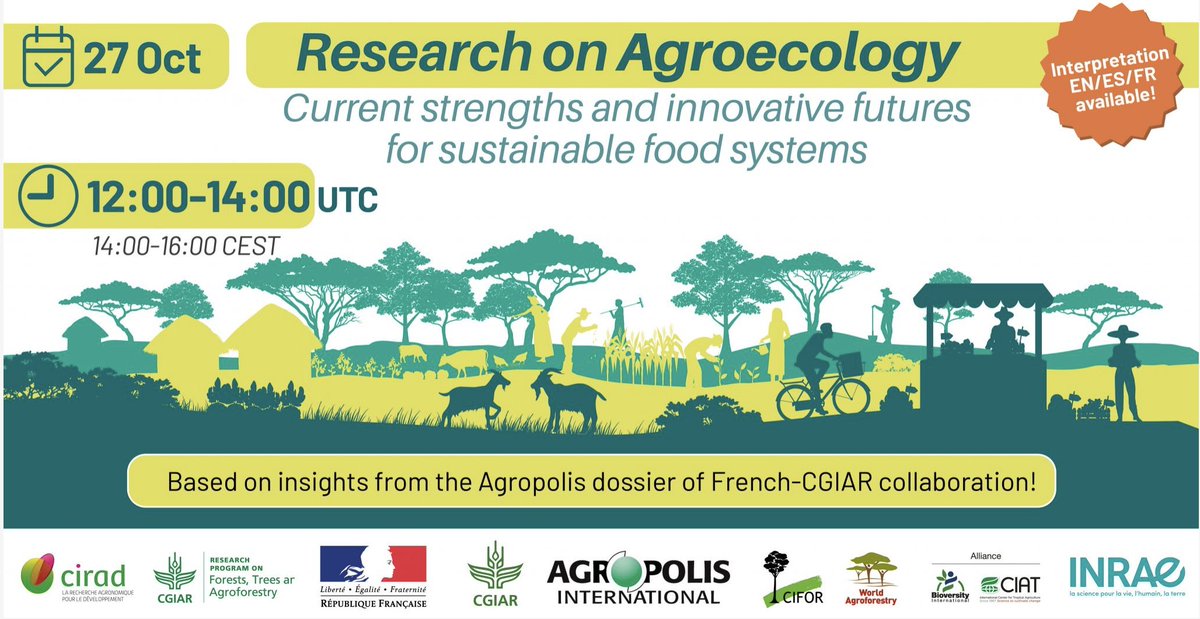
WEBINAR: Research on Agroecology: Current strengths and innovative futures for sustainable food systems

27 October 2021 (14:00-16.00 CEST). Research on Agroecology: Current strengths and innovative

futures for sustainable food systems

The topic of agroecological transformation of agrifood systems and its link to the SDGs was one of the most prevalent at this year’s UN World Food Systems Summit in New York. Clearly, there is a perceived urgency for such transformation to occur.

Divided into three parts, this interactive 2-hour session will help you gain first-hand knowledge of the linkage between sustainable intensification and agroecological transformation.
  1. Part 1 will provide an introduction to the Agropolis Dossier released this last September. It will give an overview of the extensive research conducted by more than 500 researchers from over 100 universities and research organizations spread around the globe - illustrating the strong commitment of France and CGIAR to promoting the agroecological transition.
  2. Part 2 will address the demand and the need for research in the area of agroecology. It will look at current knowledge gaps, new research questions and the emerging need to conduct research differently.
  3. Part 3 will talk about how research in agroecology can provide answers to the current global challenges. Experts overview of a variety of ongoing projects and initiatives in the field, such as the Agroecology Coalition, a Million Voices initiative and many more linked to the Agroecology TPP.

Welcome and introduction Etienne Hainzelin, event’s moderator and Emeritus Research Director, CIRAD 

Part 1 – Introduction of the Agropolis Dossier 

  • Bernard Hubert, President, French Committee on International Agricultural Research (CRAI) 
  • Stefanie Christmann, Senior Scientist, ICARDA 
  • Stephan McMullin, Scientist, CIFOR - ICRAF 
  • Muriel Mambrini-Doudet, Research Director, INRAE

Part 2 – A perspective on the need to do research differently 

  • H.E. Ambassador Miguel Garcia Winder, Permanent Representative of Mexico to the UN agencies based in Rome 
  • Guy Faure EC/INTPA Food Systems and Fisheries
  • Alexander Shöning, GIZ [TBC] 
  • Million Belay, General Coordinator, Alliance for Food Sovereignty in Africa (AFSA) 
  • Rikke Olivera, Senior Global Technical Specialist, IFAD

Part 3 – A perspective on how research can answer global challenges and an overview of ongoing agroecology projects 

  • Marcela Quintero, Research Director – Agroecosystems and Sustainable Landscapes, Alliance of Bioversity International and the International Center for Tropical Agriculture (CIAT) 
  • Matthew McCartney, Research Group Leader, IWMI and Co-Lead, OneCGIAR Agroecology Initiative 
  • Vincent Gitz, Director, CGIAR Research Program on Forests, Trees and Agroforestry (FTA), and a member of Transformative Partnership Platform on Agroecology (TTP) 
  • Catherine Dembele, Institute for the Environment and Agriculture (INERA), Burkina Faso

INTPA Infopoint: Why nutrition matters more than ever before

26 October 2021. Why nutrition matters more than ever before by INTPA Infopoint

See the RECORDING here:
https://ec.europa.eu/international-partnerships/events/why-nutrition-matters-more-ever_en

The UN Food System Summit represented a milestone in the Year of Action for Nutrition, elevating
nutrition as a key driver for food systems transformation and ensuring links with other global summits and processes including Tokyo’s Nutrition for Growth (N4G) Summit on 7-8 December. The summit will be a key opportunity to mobilise financing. 

The EU’s sixth progress report on the EU Action Plan on Nutrition  (August 2021, 46 p.) reviews and reflects on the EU’s key achievements during the 2014- 2020 cycle. The lessons learned in the past years present evidence on what works best for improved nutrition is a locally adapted, sustained, multi-sectoral and rights-based approach. 

While ensuring availability and access to sufficient, safe, healthy and affordable food within our planetary boundaries remains essential for our rapidly growing population, we need to continue simultaneously addressing the broader drivers of malnutrition such as poverty, inequality, climate change, biodiversity loss, forced migration or conflict, and to promote an integrated approach to address malnutrition.
  • Marjeta Jager, Deputy Director-General, Directorate General for International Partnerships (DG INTPA)
  • Gerda Verburg, UN ASG and Coordinator of the SUN Movement
  • Leonard Mizzi, Head of Unit, INTPA F3 Unit, Sustainable Agri-Food Systems and Fisheries
  • Antonia Potter Prentice, Director Alliance2015
Shared resources
September update of the 2021 Global Report on Food Crises

Several EU policy processes and frameworks already exist which have the potential to provide suitable platforms to positively impact the nutritional status of the most vulnerable people: 
  • the Green Deal clearly shows the connection between the planet and food systems and the need to feed the world within planetary boundaries; 
  • the renewed EU-Africa partnership can re-prioritise nutrition to build a healthier, greener, fairer and more resilient future; 
  • and the Global Europe instrument (NDICI) committed to allocating at least 20% of the Official Development Assistance (ODA) to social inclusion and human development, including basic social services, such as health, education, nutrition, water, sanitation and hygiene, and social protection. 
Each of these frameworks must embrace nutrition as a cross-cutting and stand-alone issue which needs ambitious action. 

Questions asked during the webinar:
  1. How important is the contribution of biofortification? (see: 27 October 2021. Financing the fortification unfinished agenda - looking ahead to the Tokyo nutrition for Growth Summit by GAIN
  2. As of 20 October, 107 pathways towards sustainable national food systems by 2030 have been shared on the Food Systems Summit Dialogues Gateway. WHO WILL SCREEN THEM ON NUTRITION PRIORITIES for FUTURE DIALOGUES?

Monday, October 25, 2021

VIRTUAL EVENT: Reimagining Research for Agroecology

25-27 October 2021. Reimagining Research for Agroecology - Farmer-centered Research for Agroecology

The Collaborative Crop Research Program (CCRP) of the of the McKnight Foundation is hosting an online gathering on transforming research and reimagining food systems. Participants will hear stories, perspectives, experiences and evidence from farmers, researchers and the organizations that collaborate with them.

La Fondation McKnight a tenu, du 24 au 28 février 2020 à Montpellier, la réunion annuelle de la communauté de pratiques d’Afrique de l’Ouest de son programme de recherche collaborative sur les cultures. A cette occasion, une cinquantaine de représentants de projets financés par la fondation McKnight au Burkina Faso, au Mali et au Niger, sont accueillis à l’invitation d’Agropolis Fondation.

Keynote speaker Roger Kaboré (AMSP), Burkina Faso
Cet acronyme provient d’une expression en langue mooré, qui est un peu le slogan de notre association, et qui signifie « le savoir, la connaissance doivent venir en appui à la force physique des paysans pour plus de résultats ».

25/10 Panel discussion Using creative audio and visual content to share learning by/for/about farmers

  • Moderator: Luke Metelerkamp, (Environmental Learning Research Centre), South Africa 
  • Venuca Evanan Vivanco (Graphic Artist), Peru 
  • Francisco Basili Dell (Comunicacion Educativa), Peru 
  • Raymond Juma, (FIPS Africa), Kenya
    Shared resource:
    INGA FOUNDATION - Teaching Video

25/10 Workshop: Engaging farmers, researchers and support organizations in participatory research and shared action on seed systems

  • Moderator: Bettina Haussmann, (CCRP Liaison Scientist, West Africa; University of Hohenheim), Germany 
  • Samuel Gudu (Rongo University), Kenya 
  • Evans Ouma, (Rongo University), Kenya 
  • Abdoul Aziz Saidou, (Centre Imaan), Niger 
  • Juliet Nangamba, Zambia 
  • Euckaria Mpande, Zambia

25/10 Thematic session: Emerging approaches for closing organic matter and nutrient loops at farm, landscape and territorial scales

25/10 Learning Lab: The R in FRNs: Experience and thoughts on what it means to do research within an FRN

25/10 Workshop: Facilitating farmer-centered research: Sharing approaches and lessons

26/10 Opening inspiration Ruth Richardson (Global Alliance for the Future of Food), Canada

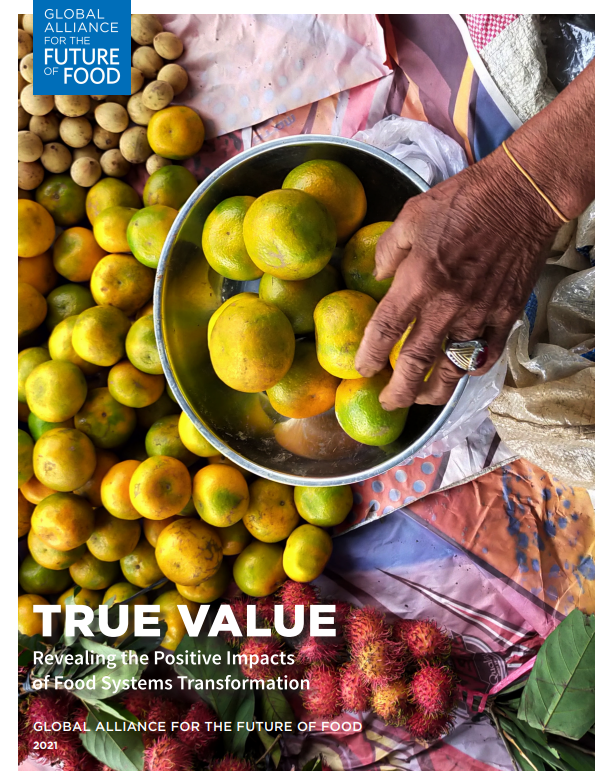
A new report True Value: Revealing the Positive Impacts of Food Systems Transformation
 (81 p.)presents powerful and compelling evidence that food systems transformation is possible and having an impact now. Conducted by TMG Think Tank for Sustainability, an inclusive and true cost evaluation approach is applied to six food systems initiatives featured in the Beacons of Hope series to understand the breadth and depth of their positive impacts. True Cost Accounting (TCA) is an innovative tool that provides a holistic understanding of the relationships between agriculture, food, the environment, and human well-being.

Using TCA enables us to see the significant monetary and non-monetary benefits sustainable food systems have on issues like public health, biodiversity conservation, climate, workers’ rights, cultural diversity, and gender empowerment. It also demonstrates how TCA can be used for a variety of organizations — from businesses, farmer cooperatives, food banks, research facilities, and more — as a systemic approach to assess, measure, and value the positive and negative impacts of food systems.

The analysis is grounded in multiple capitals-based approaches, accounting for food systems impacts on the environment (natural capital), society (social capital), people (human capital), and the economy (produced capital).

26/10 Panel discussion Agroecology from the land: research and conservation of agrobiodiversity by peasant communities and indigenous peoples

  • Moderator: Georgina Catacora-Vargas, (Sociedad Científica Latinoamericana de Agroecología), Bolivia 
  • María Claudia Dussi, (Sociedad Científica Latinoamericana de Agroecología), Argentina 
  • Heriberto Valdez, (Farmer), Argentina 
  • Maria Fernández Poquis, (Farmer), Peru 
  • Julián Champi, (Biodiversity Custodian of the Yampara-Suyu Indigenous Nation), Bolivia 
  • Irma Rosa Curruhinca, (Farmer), Argentina

26/10 Thematic session: Working with FRNs on ecological pest and disease management

  • Moderator - Linnet Gohole, CCRP Regional representative, East and Southern Africa, (University of Eldoret), Kenya 
  • Steven Belmain, (Natural Resources Institute, University of Greenwich), UK 
  • Diego Mina, (Institut de recherche sur le développement), Ecuador 
  • Yolice Tembo, (Lilongwe University of Agriculture and Natural Resources, Bunda College), Malawi 
  • Ibrahim Baoua, (Université Dan Dicko Dankoulodo de Maradi), Niger

26/10 Thematic session: FRNs as an approach to work with communities, territories and landscapes

  • Moderator: Sara Namirembe, CCRP Regional representative, East and Southern Africa, (STEPUP Standard Limited), Uganda 
  • Steven Vanek (Colorado State University), USA 
  • Angela Mkindi, (The Nelson Mandela African Institution of Science and Technology), Tanzania 
  • Gildas Assogba (Wageningen University and Research), Burkina Faso

26/10 Learning Lab: Soil Health with FRNs: principles and place-based approaches

  • Steven Vanek, (Colorado State University), USA 
  • John Ojiem, (Kenya Agricultural and Livestock Organisation), Kenya 
  • Peter Gubbels (Groundswell International), Burkina Faso Tsuamba Bourgou, (Groundswell International), Burkina Faso 
  • Katherin Paola Meza Retamozo (Grupo Yanapai & Colorado State University), Peru

26/10 Thematic session: Gender and inclusion in FRNs

  • Batamaka Somé, CCRP Regional representative, West Africa 
  • Frank Tchuwa, (Lilongwe University of Agriculture and Natural Resources), Malawi 
  • Norah Asiyo, (P’KWI Cooperative), Uganda Hannatou Moussa, (FUMA Gaskiya), Niger 
  • Anthony Wenndt, (Global Alliance for Improved Nutrition), USA 
  • Cecilia Turin, (Instituto de Montaña), Peru

27/10 Workshop: Moving from practice towards research: AFSA’s Healthy Soil Healthy Food (HSHF) experience trying out biofertilizers with farmers

  • John Wilson, (AFSA), Zimbabwe 
  • Samuel Nyanzi, (Rural Community in Development, RUCID), Uganda 
  • Mariama Sonko, (We Are the Solution), Senegal 
  • Ferdinand Wafula, (Bio Gardening Innovations), Kenya 
  • Claude Arsène Savadogo, (Bioprotect) (PAEPARD consortium)

27/10 Thematic session: Learning networks as a means for influencing policy processes

  • Moderator: Prudence Kaijage, (CCRP Regional representative, East and Southern Africa; CBLI Centre Limited), Tanzania 
  • Ross Mary Borja (Ekorural), Ecuador 
  • Daimon Kambewa (Lilongwe University of Agriculture and Natural Resources), Malawi 
  • Richard Lamboll (Natural Resources Institute), UK

27/10 Thematic session: Establishing stronger linkages between rural and urban spaces to create more robust food systems

  • Moderator: Roberto Ugas, CCRP Liaison scientist, Andes, (Universidad Nacional Agraria La Molina), Peru 
  • Marcelo Tiza (AGUAPAN), Peru 
  • Anne Maina, (Biodiversity and Biosafety Association of Kenya), Kenya 
  • André Leu (Regeneration International), Australia 
  • Maria Omonte, (AGRECOL), Bolivia 
  • Silvana Vargas (Pontificia Universidad Catolica del Peru), Peru

27/10 Thematic session: FRNs and Agro Ecology as a path to strengthen nutrition and food security

  • Moderator: Kate Wellard Dyer, CCRP Liaison scientist, East and Southern Africa, (Natural Resources Institute), UK
  • Fatoumata Ba, (Institut de Recherches en Sciences Appliquées et Technologies), Burkina Faso
  • Moustapha Moussa, (Institut national de recherche agronomique du Niger), Niger 
  • Ana Deaconu, (Université de Montréal), Canada

Friday, October 22, 2021

WEBINAR: Is Precision Farming the Next Agriculture Revolution? Experts Opinion

22 October 2021. 14:00 CEST. Is Precision Farming the Next Agriculture Revolution? Experts Opinion

IFAD views precision agriculture adoption as a way for smallholder farmers to increase productivity, significantly contribute to poverty and hunger alleviation, and benefit from climate change mitigation gains.

This webinar will bring together experts from the development sector, academia, and industry. It will share lessons learned and how they can be applied to advance precision farming and address the challenges faced by small-scale producers in remote areas.
  • Mylene Kherallah, Lead Global Technical Advisor, Rural Finance, Markets and Value Chains at IFAD 
  • Dr. Raj Khosla, Professor and Head of Agronomy Department at Kansas State University 
  • Sriram Bharatam, Founder & Chief Mentor of Kuza Biashara Limited 
  • Lohento Ken, Digital Innovation Strategy Specialist at FAO’s Regional Office for Africa 
  • Putso Nyathi, Senior Regional Technical Specialist, Agronomy at IFAD 
  • Virpi Stucki, Chief of Rural Entrepreneurship, Job Creation and Human Security Division at UNIDO 

Thursday, October 21, 2021

REPORT: The State of the Climate in Africa 2020

The State of the Climate in Africa 2020, report (44 p.) provides a snapshot of climate trends, observed high-impact events and associated risks and impacts on key sensitive sectors in Africa during the year 2020. 

The report also draws lessons on existing compounded effect of COVID-19, and pathways for investment for improving climate action in the continent.

IPES - Climate Change: How 1.300 Billion Africans Cause Least But Suffer Most

19 October 2021. While Africa reportedly causes just 4 percent of global emissions of Carbon Dioxide (CO2) —an acidic colourless gas with a density about 53% higher than that of dry air, causing climate change—, this vast continent, home to over 1.300 billion inhabitants in 52 countries, bears the heaviest brunt of 80 percent of the climate crisis destructive impacts.

See some of the most outstanding climate crisis negative consequences for Africa, as cited by a major multi-organisation report: The State of the Climate in Africa 2020, elaborated by World Meteorological Organisation (WMO), the African Union Commission, the Economic Commission for Africa (ECA) through the Africa Climate Policy Centre (ACPC), UN agencies, and international and regional scientific organisations.

Main findings:

  • Climate change contributed to mounting food insecurity, poverty and displacement in Africa last year;
  • Climate indicators in Africa during 2020 were characterised by continued warming temperatures, accelerating sea-level rise, extreme weather, and climate events – such as floods, landslides and droughts;
  • Increased weather and climate variability is disrupting lives and economies in the continent;
  • By 2030, an estimated 118 million extremely poor people on the continent will be exposed to drought, floods and extreme heat, which will hinder progress towards poverty alleviation and growth;
  • In sub-Saharan Africa, climate change could further lower gross domestic product (GDP) by up to 3 percent, by 2050. This presents a serious challenge for climate adaptation and resilience actions because not only are physical conditions getting worse, but also the number of people being affected is increasing;
  • Changing precipitation patterns, rising temperatures and more extreme weather contributed to mounting food insecurity, poverty and displacement in Africa in 2020, compounding the socio-economic and health crisis triggered by the COVID-19 pandemic;
  • Glaciers: Another under-reported consequence is the rapid shrinking of the last remaining glaciers in Eastern Africa, which are expected to melt entirely in the near future, signals the threat of imminent and irreversible change to the Earth system. In fact, only three mountains in Africa are covered by glaciers: the Mount Kenya massif, the Rwenzori Mountains in Uganda, and Mount Kilimanjaro in Tanzania. “Currently, their retreat rates are higher than the global average, and “total deglaciation” could be possible by the 2040s, WMO warns. Mount Kenya is expected to be deglaciated a decade sooner, it adds, which will make it one of the first entire mountain ranges to lose glacier cover due to human-induced climate change.
  • Temperatures: The 30-year warming trend for 1991–2020 was higher than for the 1961–1990 period in all African sub-regions and significantly higher than the trend for 1931–1960.
  • Africa has warmed faster than the global average temperature over land and ocean combined. 2020 ranked between the third and eighth warmest year on record for Africa, depending on the dataset used.
  • Sea level rise: The rates of sea-level rise along the tropical and South Atlantic coasts and Indian Ocean coast are higher than the global mean rate, at approximately 3.6 mm/yr and 4.1 mm/yr, respectively. Sea levels along the Mediterranean coasts are rising at a rate that is approximately 2.9 mm/yr lower than the global mean.
  • Glaciers: Their current retreat rates are higher than the global average. If this continues, it will lead to total deglaciation by the 2040s. Mount Kenya is expected to be deglaciated a decade sooner, which will make it one of the first entire mountain ranges to lose glaciers due to human-induced climate change.
  • Precipitation: Higher-than-normal precipitation – accompanied by flooding – predominated in the Sahel, the Rift Valley, the central Nile catchment and north-eastern Africa, the Kalahari basin and the lower course of the Congo River.
  • High impact weather events: There was extensive flooding across many parts of East Africa. Countries reporting loss of life or significant displacement of populations included the Sudan, South Sudan, Ethiopia, Somalia, Kenya, Uganda, Chad, Nigeria (which also experienced drought in the southern part), Niger, Benin, Togo, Senegal, Côte d’Ivoire, Cameroon and Burkina Faso. Many lakes and rivers reached record high levels, including Lake Victoria (in May) and the Niger River at Niamey and the Blue Nile at Khartoum (in September).
  • Food insecurity: The compounded effects of protracted conflicts, political instability, climate variability, pest outbreaks and economic crises, exacerbated by the impacts of the coronavirus disease (COVID-19) pandemic, were the key drivers of a significant increase in food insecurity. A desert locust invasion of historic proportions, which began in 2019, continued to have a major impact in East and the Horn of Africa in 2020.
  • Food insecurity increases by 5–20 percentage points with each flood or drought in sub-Saharan Africa. Associated deterioration in health and in children’s school attendance can worsen longer-term income and gender inequalities. In 2020, there was an almost 40 percent increase in population affected by food insecurity compared with the previous year.
  • Displacement: An estimated 12 percent of all new population displacements worldwide occurred in the East and Horn of Africa region, with over 1.2 million new disaster-related displacements and almost 500,000 new conflict-related displacements. Floods and storms contributed the most to internal disaster-related displacement, followed by droughts.
The report underlines a double-edge estimate: the investment in climate adaptation for sub-Saharan Africa would cost between 30 to 50 billion dollars… each year… over the next decade, or roughly two to three per cent of Gross Domestic Product (GDP).

Role of Youth in Building Resilient Agri-food Systems in Africa | Michigan State University & Alliance for African Partnership

21 October 2021. Side event The International Borlaug Dialogue. Role of Youth in Building Resilient Agri-food Systems in Africa | Michigan State University & Alliance for African Partnership

Building a sustained and resilient agri-food system in Africa is an intergenerational mandate which demands the active engagement of African youth. With their large numbers, relatively high educational levels, and affinity for digital technology, African youth represent an indispensable resource, which if properly harnessed, can foster a more resilient and productive agri-food system. However, questions remain on effective strategies to harness youth innovativeness and energy. 

To help provide guidance for policy, this session discussed evidence-based and pragmatic approaches that could foster productive youth engagements supportive of resilient agri-food systems in Africa.  

A panel of experts drawn from MSU and AAP partner institutions, Foundations and youth leaders shared insights highlighting the relevance of the agri-food system to youth livelihoods, the role youth could play to foster a resilient agri-food system, and salient trends, barriers and promising entry points for policy that could equip African youth with the skills, space and resources to effectively contribute to a productive and resilient agri-food system.

  • Prof Lindiwe Sibanda - Director, ARUA Centre of Excellence in Sustainable Food Systems, University of Pretoria
  • Felix Kwame Yeboah - Professor of International Development, Michigan State University (MSU)
  • Betty Kibaara - Director, Food Initiative at The Rockefeller Foundation, Africa Region Office
  • Richard Todosia Ruto - President, National Youth Bunge Association (NYBA), Kenya; and Director, West Pokot Youth Bunge County Forum
  • Sera Gondwe - Business Economist and Faculty, Lilongwe University of Agriculture & Natural Resources (LUANAR)
  • Somachi Chris-Asoluka - Director of Partnerships and Communications, Tony Elumelu Foundation (TEF)

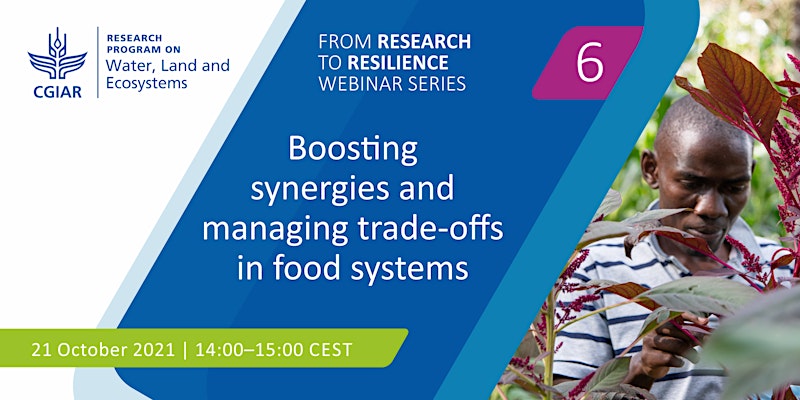
WEBINAR: Boosting synergies and managing trade-offs in food systems

21 October 2021
. Webinar #6 – Boosting synergies and managing trade-offs in food systems

Our climate, biodiversity and food systems are inextricably linked. This webinar discusses evidence, actions and lessons learned on how to leverage biodiversity in our food systems for people and planet.

Our climate, biodiversity and food systems are inextricably linked. Food systems cause huge biodiversity losses, account for about one-third of greenhouse gas emissions, and leave 2 billion people with unhealthy diets, even as 40% of all food produced goes uneaten. The ways we feed ourselves – through just a few crops and animals – are unsustainable for people and planet.

How can we actively strengthen synergies and better manage trade-offs between social, economic and environmental outcomes of food and agricultural systems?

This webinar presented and discussed insights, tools and forward-looking actions from the CGIAR Research Program on Water, Land and Ecosystems (WLE), with case studies and lessons learned from Africa, Asia and Latin America.

The webinar focused on the following:
  • What are the leverage points for strengthening synergies between biodiversity, climate and food systems agendas, at local and global scale?
  • How can we better anticipate, assess and manage synergies and trade-offs between social and environmental outcomes of our food and agricultural systems?
  • What are short- and longer-term actions that can be taken at local and global scale to help boost synergies and manage trade-offs in food and agricultural systems?
  • What capacity is needed for this?
Speakers
  • Dr Roseline Remans, Co-Leader of Enhancing Sustainability across Agricultural Systems research theme, WLE (Alliance of Bioversity international and CIAT)
  • Dr Fabrice DeClerck, Science Director, EAT Forum & Senior Scientist, Alliance of Bioversity International and CIAT
  • Dr Wei Zhang, Senior Research Fellow, Environment and Production Technology Division, IFPRI
  • Dr Pablo Tittonell, Principal Investigator, CONICET-INTA & WWF Chair, Resilient Landscapes for Nature and People, Groningen University, The Netherlands
  • Dr Alejandra Martinez-Salinas, Research Associate, Tropical Agricultural Research and Higher Education Center (CATIE)
  • Ms Emeline Fellus, Director, Food Reform for Sustainability and Health (FReSH), World Business Council for Sustainable Development (WBCSD)
  • Mr Webster Isheanopa Makombe, Youth Leader, Act4FoodAct4Change
Background:
Held strategically between the UN Food Systems Summit (UNFSS) and the UN Climate Change Conference (COP26), the webinars will identify evidence gaps, capture lessons learned and consolidate thinking on the future direction of research for development to sustainably transform our water, land and food systems.

Webinar #1 – 05/10 Accelerating clean energy access in rural areas

  • Presenting WLE energy research that can help countries enhance smallholder access to clean energy, address climate adaptation/mitigation challenges, and transform food, land and water systems.
  • Find out more and watch the recording

Webinar #2 – 7/10 Drought and flood risk reduction strategies

Webinar #3 – 12/10 Towards resilient city region food systems

Webinar #4 – 14/10 Innovation investment for impact

  • The WLE-supported Commission on Sustainable Agriculture Intensification (CoSAI) presented insights on enabling behavior change in innovation investors and policymakers – and how this can be used to underpin the investment approach for innovation of future food systems.
  • Find out more and watch the recording

Webinar #5 – 19/10 Managing water for climate adaptation and mitigation

  • The session outlined an evidence-based framework to help decision makers understand and remove the technical, economic, social, financial and institutional barriers that prevent the adoption of sound water adaptation options.
  • Find out more and watch the recording

WEBINAR: Reconciling Agroecology and Biotechnology

19 October 2021. Side event The International Borlaug Dialogue organised by U.S. State Department

As the world looks to promote sustainable agriculture and fight food insecurity, agroecology (often incorrectly conflated with “organic farming” and “regenerative farming” by some international actors) and agricultural biotechnology continue to be two central topics in developing sustainably agricultural systems. 

Unfortunately, anti-GE sentiments that are principally driven by political pressures give the false impression that agroecology and biotechnology are incompatible with each. This side-event seeked to have an honest, science-based, and data-driven discussion to reconcile these two approaches to understand how biotechnology can serve as an important tool that can work in conjunction with agroecological practices to promote sustainable agriculture and help small- and medium-sized enterprises and farmers.
  • Matt Murray, U.S. Department of State Acting Assistant Secretary (host)
  • Sarah Evanega, Cornell University Alliance for Science (moderator)
  • Beth Bechdol, DDG, FAO

    "The FAO Strategy for Private Sector Engagement is the outcome of an inclusive consultation process. It builds on the needs expressed by FAO Members as well as on the recommendations and feedback received from private sector representatives." 

  • Nassib Mugwanya, North Carolina State University 
  • Dr. Walter Suza, Iowa State University

Beth Bechdol, DDG, FAO, explained (@36:36) how the framework is angered on 4 aspirations: (a) better production which leads to better nutrition, which can lead to a better environment and hence a better life for everyone.

“How can producer be helped to produce more with less? Trade-offs need to be balanced between economic, social and environmental sustainability. The increased production will have to be realized while minimizing environmental damage and protect biodiversity while preserving and restoring the planet ecosystem. Agroecology and biotechnology are both unique approaches.”

 “At FAO we have more fully embraced the concept of innovation, more than in the past. For the first time FAO has a chief scientist as part of its senior management. We also established a dedicated office for innovation. As we think about the major outcomes of the Green revolution of the fifties and sixties we saw it was the result of an investment in research and technology investment. But we have to acknowledge the green revolution came with trade-offs, particularly to environmental outcomes.”

“We are particularly excited about the next generation of gene-editing technologies which can improve plant and animal population.” For climate smart agriculture Agroecology and Biotechnology practices have very important role to play. It is therefore critically important to include for this a myriad of partners. We recognize - more than ever before as a global organization - the importance to bring in as a partner the private sector.

“The FAO Strategy for Private Sector Engagement needs to be country owned and led. It has to be action oriented and how a private sector enterprise can make a difference for at farmer level and in the field”.

“For many of the risk related concerns about partnering with the private sector we worked diligently inside FAO to ensure a risk management approach on how we will engage with the private sector. It not about the quantity of MoUs but the quality of collaboration with the private sector. We are almost take them one by one, whether we work in Rwanda, Guatemala, Syria. We have a balanced approach and very intensive risk assessment – which may even be very difficult to collaborate with FAO. We support the engagement with local entrepreneurs and creative start-ups. Multinational are less agile.”


Shared resource:
FAO Strategy for Private Sector Engagement 2021-2025
This strategy specifically targets the different types of the private sector from large national and multinational corporations, to financial institutions, micro, small and medium enterprises (MSMEs), industry and trade organizations and consortia which represent private sector interests, farmers and farmers’ organizations, producers’ organizations and cooperatives and philanthropic foundations.

FAO’s Strategy for Private Sector Engagement 2021–2025 (the Strategy) seeks to promote a more proactive and catalytic role for the Organization in support of its Membership by setting out a clear path towards more innovative partnerships with the private sector. The Strategy also strives to develop principle-based, purpose-driven partnerships that deliver a meaningful impact that leaves no one behind, respecting the Guidelines on a principle-based approach to the cooperation between the United Nations and the business sector.

Wednesday, October 20, 2021

WEBINAR: Agroecology: food system transformation from farm to plate

20 October 2021
. This virtual seminar was co-hosted by the Institute for Agriculture and Trade Policy (IATP) and Coopération Internationale pour le Développement et la Solidarité (CIDSE). 

The dominant food system in the world is exploitative and extractive, but examples across the world demonstrate that a more just and fair food system is possible. Agroecological approaches have evolved to offer a set of guiding principles that can help transform our food systems to create a more socially just, diverse, holistic and sustainable food system that better respects and benefits cultures, the environment and people engaged at every level of the system.

Agroecological approaches are anchored in human rights, rooted in culturally and ecologically diverse knowledge systems, and have the potential to build the community resilience necessary to deal with both the forces of climate change and corporate control. Yet, there have been roadblocks to advancing agroecology globally.

Agroecology experts, advocates and practitioners discussed how agroecology, as a systems approach, can address multiple ongoing global crises — ecological, economic and sociocultural. Farmers based in the Global North and South shared their reasons for practicing agroecology and the challenges they face. Panelists discussed these challenges, as well as potential pathways to successfully advancing agroecology. Panel presentations will be followed by a question-and-answer session where audience members will interact with the presenters and the panelists.

Agenda:
  1. Introduction: Agroecology: A systems approach for food system transformations
  2. Agroecology Today: Anchored in human rights; rooted in culturally and ecologically diverse knowledge systems; building resilience
  3. Panel I: Why do agroecological approaches offer the most comprehensive pathway to address multiple challenges and crises?
  4. Farmers Stories: Farmers from the Global North and South will share why they practice agroecology and challenges to success
  5. Panel II: Impediments and pathways to advancing agroecology around the world
Speakers
  • Sophia Murphy, Executive Director, Institute for Agriculture and Trade Policy, USA
  • Michel Pimbert, Director, Centre for Agroecology, Water and Resilience (CAWR), United Kingdom
  • Lim Li Ching, Senior Researcher at Third World Network (TWN), Malaysia, and member of the International Panel of Experts on Sustainable Food Systems (IPES-Food)
  • Marcia Ishii, Senior Scientist at Pesticide Action Network, North America (PANNA) and coordinator of the PAN International Agroecology Group
  • Million Belay, General Coordinator, Alliance for Food Sovereignty Africa (AFSA), Ethiopia
    "Food policy dialogues have been conducted in 24 African countries in before the UNFSS dialogues started. We are now working on a synthesis to influence the AU for an Africa food policy which has agroecology as its center"
    "Covid-19 is also an opportunity to educate policy makers to demonstrate how nutritious African foods are"
  • Jim Goodman, Chairperson, National Family Farmers Coalition, USA
  • Nina Moeller, Associate Professor, CAWR, U.K. and Agroecology Now!
  • Timothy Wise, Senior Advisor, IATP, USA
    "The research with African society organisations and faith communities has focused on the need to disrupt and redirect funding which goes to industrial agriculture"
    "Our research has shown that AGRA and its green revolution approach has produced mediocre results. In the AGRA focus countries hunger has gone up with 13% and this is prior to COVID-19"
    "It's difficult to open a lane in government (both the policy and funding lane) for agroecological approaches. The donors are not the biggest problem. African government themselves are purchasing huge amount of subsidies for green revolution inputs, commercial seeds and fertilizers.
    "The government of Malawi in some years has spend 60% of its entire agricultural budget on seeds and fertilizers. Although those subsidies end up to benefit farmers they go directly to [seed and fertiliser] companies. They are the beneficiaries."
    "Corporate concentration has increased. ITPA has supported AFSA to ask all agri-donors to end funding to green revolution programmes. We plan to direct our attention to our own government [US] and open a lane for agroecology"
  • Francesco Ajena, Independent Researcher, Italy
  • Alberta Guerra, Senior Policy Analyst, Action Aid, USA/Italy
  • Jason Lindsay, agroecology farmer, educator, Southeastern African American Farmers Organic Network, (SAAFON), USA
  • Busisiwe Mgangxela, agroecology farmer, member of South African Organic Sector Organization (SAOSO), South Africa
  • Vincent Delobel, Agroecological farmer, Member of the Mouvement d'Action Paysanne and of the FUGEA, Belgium
  • Marcela Calderón, farmer in Buenos Aires province, Argentina
  • Cecilia Elizondo, Academic Staff of Agroecology Group, El Colegio de La Frontera Sur and former Chief of Cabinet of Ministry of Environment and Natural Resources, Mexico
  • Vincent Dauby, Agroecology and Food Sovereignty Officer, CIDSE, Belgium
  • Shiney Varghese, Senior Policy Analyst, IATP, USA
  • Moderator: Karen Hansen-Kuhn, Program Director, IATP, USA

Synergies between R&I, Entrepreneurship and Industry with funders in the FNSSA Sector

20 October 2021. Synergies between R&I, Entrepreneurship and Industry with funders in the Food and Agriculture Sector.

An inclusive array of private sector actors, from smallholder farmers to micro, small and medium-sized enterprises (MSMEs) and large industries, will be influential in driving the food transformation.

The discussion revolved around how this transformation requires all stakeholders to play a more dynamic role. An inclusive array of private sector actors, from small holder farmers to micro, small and medium-sized enterprises (MSMEs) and large industries, will be influential in driving this transformation.
Another key factor is mobilizing public and private investments to drive food systems transformation through innovative funding and financing.

The benefits that agriculture research and development and innovation can bring to industry and farmers and the role it plays in a region’s economic development was discussed as well. Speakers from R&I, Funding bodies and Agribusinesses were invited to present different perspectives in a complementary discussion to reach an integrated vision.
  • Kayan Jaff | Senior Partnership and Resource Mobilization officer, Regional Office for the Near East and North Africa – FAO. Mr. Jaff is currently the Senior Partnerships and Resource Mobilization Adviser at FAO’s Regional Office for the Near East and North Africa (RNE).
  • Olav Kjørven | EAT‘s Senior Director of Strategy and a key leader in the Good Food Finance. Olav Kjørven - EAT Senior DirectorOlav is part of EAT’s Leadership team and provides strategic oversight to EAT’s policy work, leads engagement on global policy arenas, and guides EAT’s science and knowledge initiatives for maximum impact on food systems policies and practices. 
  •  Nono Sekhoto – Sector Lead Agribusiness, AL for Agribusiness in Africa. She is a commercial farmer, an entrepreneur, and an award-winning youth-in-agriculture advocate, working in South African and the region. 
Shared resources
FAO Strategy for Private Sector Engagement 2021-2025 28 p.
This strategy specifically targets the different types of the private sector from large national and multinational corporations, to financial institutions, micro, small and medium enterprises (MSMEs), industry and trade organizations and consortia which represent private sector interests, farmers and farmers’ organizations, producers’ organizations and cooperatives and philanthropic foundations.

At the same time, it also targets FAO Membership, as well as the general public who wish to learn more about FAO's strategy and ways of engaging with the private sector.

The Food Systems Game Changers Lab
EAT, IDEO, Thought For Food, The Rockefeller Foundation, Forum for the Future, Meridian Institute, SecondMuse and Intention 2 Impact have joined forces to support ideas, enterprises and initiatives that have the potential to transform our world’s food systems. The Food Systems Game Changers Lab is in support of the UN Food Systems Summit.

Related:
The workshop discussed the African and European stakeholders, entrepreneurs, innovators, and farming communities needs and expectations, together with the funding opportunities, for an improved cooperation within the design and implementation of FNSSA projects.

Read/download the agenda [.pdf | 418 KB]

WE4F partners with AlphaMundi Foundation for Climate Finance in East Africa

21 September 2021. The DeSIRA project WE4F: Water and Energy for Food announced a new partnership with AlphaMundi Foundation. In order to scale water-energy-food (WEF) innovations and increase sustainable agricultural productivity, there is a need to focus on creating appropriated finance models to improve access to finance for SME’s.


It is through partnerships, like with AlphaMundi Foundation, that we can succeed inleveraging private investment and effectively tackle the social and environmental challenges we are facing in the food and agriculture sector. –
Lucie Pluschke, WE4F Hub Manager in East Africa, GIZ
Together with the AlphaMundi Foundation, WE4F will provide technical support to East African SMEs operating in the WEF nexus, strengthing and upscaling innovations for more productive and ecologically-sustainable food production. In partnership with not only the AlphaMundi Foundation, but also the AlphaMundi Group, WE4F will work with SMEs to provide technical assistance and result-based financing projects for sustained growth and increased impact. All while overcoming barriers to future investment and business growth.

The partnership builds on the Foundation’s success with the Powering Agricultural Investment Alliance to catalyze private sector financing for businesses providing clean energy solutions that increase agricultural productivity and value in emerging markets.

We are thrilled to launch this new partnership with the WE4F team and build on the progress we’ve made in East Africa to date through the Powering Agriculture Investment Alliance. - Christine Roddy, Executive Director, AlphaMundi Foundation
By making use the East African entrepreneurial energy, supporting smart innovations can play a key role in overcoming these challenges and contributing to food security and sustainable rural economic development. Among others with the right financing, SMEs will be able to develop their innovative and climate-friendly technologies, elaborate sustainable business plans, and disseminate innovative solutions in the East African region.

The partnership between WE4F and Turkana Basin Institute (TBI) in Ileret, Marsabit County in Kenya.

This partnership began in October 2020. TBI and WE4F’s partnership and project seek to create moreopportunities for the people in Ileret. A solar-powered water pump has been installed at the TBI borehole 8 km away from the institute. The new water system can pump up to 4 m³ of brackish water per hour to the institute, were it feeds into the solar-powered reverse osmosis (RO) System. 

This RO system currently produces about 15 m³ of clean water that is used at the institute and for the hydroponic systems. Fresh vegetables are produced in the institute’s old greenhouses. The plants, which include lettuce, spinach, kale, tomatoes and much more. are the living proof that this type of horticultural production can work in a region as dry as Marsabit.

The hydroponic system helps protect the produce from environmental conditions that prevent conventional agriculture in the region. Additionally, TBI is currently setting up new, improved structures and shade nets to cater for the growing hydroponic production. Read more

Field Trip to TBI: an Inspiring Journey in the Far, Far North of Kenya (teaser 1:36)

Field Trip to TBI: an Inspiring Journey in the Far, Far North of Kenya (documentary 9:55)

Tuesday, October 19, 2021

September update of the 2021 Global Report on Food Crises

The September update of the 2021 Global Report on Food Crises reports on the magnitude and severity of acute food insecurity in 2021 in countries that qualified as food crises in 2020 in the GRFC 2021.

Using data available by 10 September 2021, this update highlights the highest number of people in Crisis or worse (IPC/CH Phase 3 or above) or equivalent in 2021.

In many countries, the numbers were already higher than in 2020 and acute food insecurity continued to be primarily driven by high levels of conflict/insecurity in conjunction with economic shocks, including COVID-19-related effects, as well as weather extremes and natural disasters or a combination of these drivers.

KEY FINDINGS
  • By September 2021, around 161 million people were in Crisis or worse (IPC/CH Phase 3 or above) or equivalent in 42 out of 55 countries/territories included in the GRFC 2021 – already surpassing the figure of 155 million in 2020. 
  • By September 2021, around 584 000 people were in Catastrophe (IPC Phase 5) in four countries. 401 000 in Ethiopia's Tigray region in July–September 2021* 28 000 in southern Madagascar in October–December 2021* 108 000 in South Sudan in April–July 2021 47 000 in Yemen in January–June 2021
  • By September 2021, around 111 million people were in Crisis or worse (IPC/CH Phase 3 or above) in nine out of the 10 largest food crises of 2020
  • By September 2021, 227 million people were in Stressed (IPC/CH Phase 2) or equivalent in 40 out of 55 countries/territories included in the GRFC 2021.

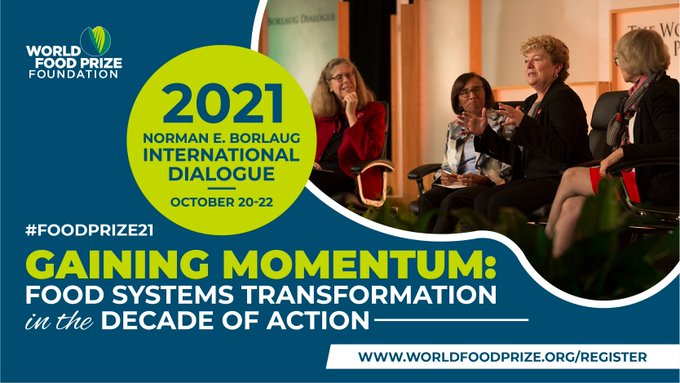
The International Borlaug Dialogue

18-22 October 2021
The International Borlaug Dialogue
The "Borlaug Dialogue," each year brings together over 1,200 people from more than 65 countries to address cutting-edge issues related to global food security and nutrition. The three-day conference convenes a wide array of scientific experts, policy leaders, business executives and farmers and has been called "the premier conference in the world on global agriculture." Through the Borlaug Dialogue, the World Food Prize Foundation helps build alliances in the struggle against world hunger and malnutrition.

The International Borlaug Dialogue follows the UN Food Systems Summit (FSS) and the 49th Plenary Session of the Committee on World Food Security (CFS) while building forward for COP26 and the Nutrition for Growth Summit, to gain momentum in the Decade of Action. Country commitments and Coalitions of Action adopted during the UN FSS will be highlighted during the Borlaug Dialogue, reaching additional audiences and widening opportunities for partnership.

Extracts of the programme

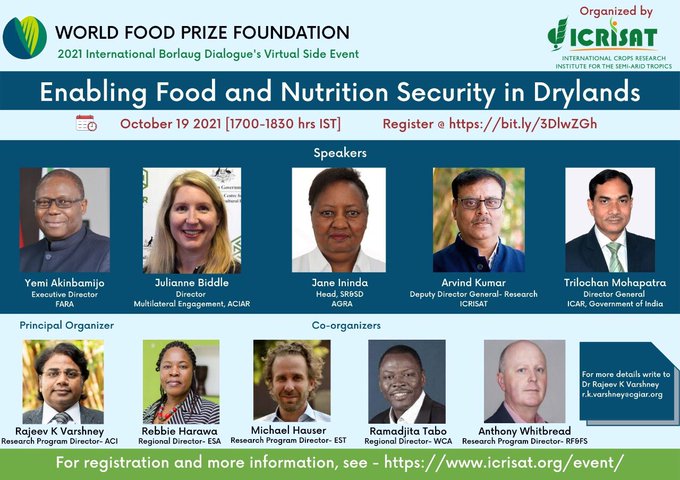
19/10. 13:30 CEST. Enabling Food and Nutrition Security in Drylands By ICRISAT
This panel highlighted opportunities and importance of global collaboration, and brainstorm the way forward for food and nutrition security in the dryland regions of the world.
  • Moderator: Dr Rajeev Varshney, Research Program Director- Accelerated Crop Improvement, ICRISAT
  • Yemi Akinbamijo Executive Director, Forum for Agricultural Research in Africa (FARA) 
  • Julianne Biddle Director Multilateral Engagement, Australian Centre for International

    Agricultural Research 
  • Jane Ininda Director and Chair, ARUA Centre of Excellence in Sustainable Food Systems (ARUA-SFS) University of Pretoria, South Africa 
  • Arvind Kumar Deputy Director General- Research, ICRISAT, India 
  • Trilochan Mohapatra Secretary, Department of Agricultural Research and Education and DG, Indian Council of Agricultural Research, Govt. of India
Respondents
  • Dr Anthony Whitbread, Research Program Director – Resilient Farm and Food Systems, ICRISAT
  • Dr Michael Hauser, Research Program Director – Enabling Systems Transformation, ICRISAT
  • Dr Rebbie Harawa, Regional Director Eastern & Southern Africa, ICRISAT
  • Dr Ramadjita Tabo, Regional Director West & Central Africa, ICRISAT

19/10. Reconciling Agroecology and Biotechnology | U.S. State Department
As the world looks to promote sustainable agriculture and fight food insecurity, agroecology (often incorrectly conflated with “organic farming” and “regenerative farming” by some international actors) and agricultural biotechnology continue to be two central topics in developing sustainably agricultural systems. Unfortunately, anti-GE sentiments that are principally driven by political pressures give the false impression that agroecology and biotechnology are incompatible with each. This side-event will seek to have an honest, science-based, and data-driven discussion to reconcile these two approaches to understand how biotechnology can serve as an important tool that can work in conjunction with agroecological practices to promote sustainable agriculture and help small- and medium-sized enterprises and farmers.
  • Matt Murray, U.S. Department of State Acting Assistant Secretary (host)
  • Sarah Evanega, Cornell University Alliance for Science (moderator)
  • Beth Bechdol, DDG, FAO
    "We worked diligently on the FAO Strategy for Private Sector Engagement 2021-2025"
  • Nassib Mugwanya, North Carolina State University 
  • Dr. Walter Suza, Iowa State University

20/10. World Food Prize events - Gaining Momentum: Food Systems Transformation in the Decade of Action
20/10. 15:00 CEST. Strengthening the Climate for Sustainable Agricultural Growth: 2021 GAP Report | Virginia Tech
21/10 14:30 CEST. Role of Youth in Building Resilient Agri-food Systems in Africa | Michigan State University & Alliance for African Partnership
22/10 18:30 CEST. MAIN EVENT Roundtable 4: International Cooperation This year's UN Food Systems Summit, 49th Committee on World Food Security plenary session, Nutrition For Growth Summit and numerous other dialogues are building momentum in the Decade of Action. In this final Roundtable session, speakers will explore the governance systems needed to guide transformation and move towards system change and implementation.
22/10. 14:30 CEST. A food systems approach to transforming Africa’s soil health: policy, science, implementation and impact | IFDC | International Fertilizer Development Center
22/10. 14:30 CEST. Agricultural Innovation for African Sustainability and Resilience | Board for International Food and Agriculture Development (BIFAD) and USAID
22/10. 15:00 CEST. Research and Innovation for a Decade of Action - CGIAR

EU Consumers and Sustainable Cocoa Products

19 October 2021. This webinar looked at the consumer preferences of the cocoa value chain and shed light on consumer attitudes towards sustainable food products in general, and chocolate products in particular.

The session looked into EU consumers’ attitudes towards sustainable food products – beyond chocolate – and the current trends in consumer shifting behaviours in the EU. The presentation  also looked at a study examining consumer willingness to pay more and price elasticity for selected chocolate products.

The presentation debated on the role of consumers to enhance the overall sustainability of cocoa production and trade. In particular, experts and panelists discussed the articulation between the evolution of consumer preferences and recent evolutions on the cocoa market, including the recent introduction of the Living Income Differential in 2019 in Cote d’Ivoire and Ghana.
  • Ms Cristina Miranda-Gozalvez, Head of Unit, Africa, Caribbean, Pacific, European Commission Directorate-General for TRADE
  • Mr Leonard Mizzi, Head of Unit, Sustainable Food systems and Fisheries, European Commission Directorate-General for International Partnerships
  • HEM Abou Dosso, Ambassador of Côte d'Ivoire to the Kingdom of Belgium, the Grand Duchy of Luxembourg and the EU
  • Mr Fuad Abubakar Mohammed, Manager, Ghana Cocoa Marketing Company, London, U.K.

Presentations:

  • EU consumer preferences and sustainable food productsStudy: Consumers’ willingness to pay & price elasticity of cocoa products by Mr.Christophe Alliot, Le Basic-Bureau for Appraisal of Social Impacts for Citizen Information
  • Ms. Cathy Pieters, Senior Director Sustainable Ingredients, Global Impact Sustainability & Well-Being, Mondelez International
  • Prof. Martin Franz, Researcherat the University Osnabrück
  • Ms. Vesna Savic, SpecialistCompliance Product Integrity, Ahold Delhaize
  • Ms Delphine Strohl, Associate, Dechert LLP
  • Mr. Nicolas Lambert, Director, FairTrade BelgiumBreak16:00-16:10Question and Answer Session
  • Moderator: Mr. Viwanou Gnassounou, Former Assistant Secretary-General at the Africa, Caribbean, Pacific Group of States (now OACPS)
  • Closing remarks: Regis Meritan European Commission, head of the “agricultural growth” sector, DG INTPA

Shared resources:

Value Chains and Consumption Decisions - Remote Effects of Governance and Product Biographies Using Cocoa as an Example. 
An interdisciplinary team of researchers at Osnabrück University, works with national and international partners in order to approach the complexity of cocoa from the perspective of our respective disciplines.
The team traveled to Ghana to investigate the origin of Ghanaian cocoa and follow its trade routes to the centers of cocoa consumption. A journey from the roots to the kitchen cupboard, so to speak.

Impacts of the Cocoa Living Income Differential Policy in Ghana and Côte d’Ivoire
Boysen, O., Ferrari, E., Nechifor Vostinaru, V. and Tillie, P., (2021) Impacts of the Cocoa Living Income Differential Policy in Ghana and Côte d’Ivoire, Publications Office of the European Union, Luxembourg, 33 p.

The study shows that the LID’s effects on prices and welfare of cocoa farmers in the two countries range from none to substantially positive, varying in magnitude with the scenarios. But it also highlights that the farmgate price target, which is reached in Ghana under most scenarios, is reached in Côte d’Ivoire only with additional supply management measures. The two countries’ government budgets and cocoa farmers in other countries lose out substantially in many cases, what is identified, among other issues, as potential threats to the sustainability of the policy that require attention. Evaluated in light of past attempts by governments and other actors to raise farmer welfare in the cocoa but also other agricultural sectors, one policy alternative stands out, although coming with its own challenges.

Related:
Round table on “economic and political actors” : bringing together producers, professional cocoa business organizations, public authorities, and researchers