
Resources:
- Fieldtrip RUFORUM 21ST ANNUAL GENERAL MEETING 2025
- Mainstreaming Agriculture Biodiversity in Global Value Chains - From ecological fit to economic proof: Botswana’s safflower strategy redefines dryland resilience
- Botswana Agriculture Business and Investment Forum
The experience also illustrates why research on indigenous and locally adapted seeds should not stop at crop characterization or conservation. It needs to be connected to the entire pathway from seed to consumer. Farmer-managed seed systems can conserve diversity while continuously adapting crops through farmer selection and exchange. At the same time, universities and national research institutions can provide complementary evidence on agronomy, nutritional characteristics, yield, processing qualities and market potential. The safflower work in Botswana already demonstrates the value of such collaboration: research has been combined with farmer training, seed multiplication, product development and cooperation among universities, technical and vocational education institutions, government agencies, farmers and cooperatives.
1. Enabling seed policies: recognizing farmers as seed-system actors
A first requirement is an enabling policy environment that recognizes FMSS alongside the formal certified seed sector. Botswana's seed regulatory framework provides mechanisms for seed testing and certification, including access to seed-testing services for individual farmers, researchers and seed producers. However, farmer-managed systems require approaches that recognize that farmers do more than purchase seed: they select, multiply, conserve, exchange and improve planting material over generations.
This is increasingly part of the wider African seed-policy debate. The emerging African FMSS policy framework defines farmer-managed seed systems as community-based systems through which farmers conserve, select, produce, save, exchange and trade seeds, drawing particularly on traditional varieties, landraces and indigenous knowledge. Earlier proposals for an African legal framework have similarly called for farmer seed registers, appropriate quality assurance mechanisms, farmer seed committees and greater participation of farmers in seed-policy decision making.
For Botswana, this could mean developing proportionate pathways for registering and marketing farmer varieties and locally adapted seeds, supporting community seed banks and decentralized seed multiplication, and creating mechanisms through which farmer knowledge and research evidence can jointly inform variety evaluation. Rather than forcing every indigenous or farmer variety through a system designed primarily for highly uniform commercial varieties, policy could recognize diversity itself as an agricultural asset. Links between farmer seed networks, BUAN and national seed-testing and research services could provide quality assurance while maintaining farmers' capacity to conserve, exchange and further develop locally adapted genetic resources.
2. Value addition: turning seed diversity into economic opportunity
Conservation becomes considerably more sustainable when farmers can derive income from the crops they conserve. Safflower demonstrates the possibilities particularly well because

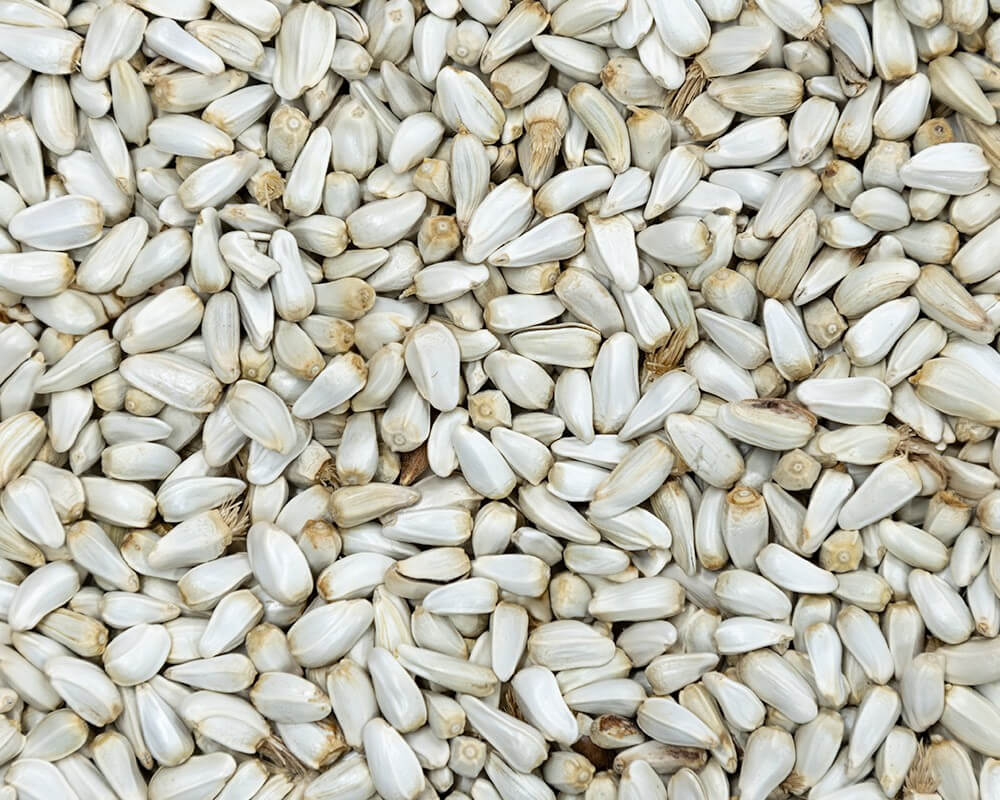
- Seeds can be pressed into edible oil;
- petals and other plant parts can be developed into herbal teas and food products;
- seed cake and biomass can become livestock feed;
- and safflower has potential applications in cosmetics, pharmaceuticals, textiles and other industries. Botswana farmers are already experimenting with several of these opportunities.
This creates an important role for women and youth-led small and medium enterprises. Small-scale oil extraction, drying and packaging of safflower petals, herbal tea production, livestock-feed formulation and cosmetic products could generate businesses beyond primary production. The safflower Community Action Research Project has already demonstrated how research, training and value-chain development can be combined, including through farmer cooperatives and technical and vocational institutions. The same approach could be extended to Botswana's wider portfolio of indigenous and underutilized crops.
3. Processing and market development: creating demand for diversity
The third challenge is ensuring that increased production is matched by processing capacity and reliable markets. Farmers will have little incentive to maintain diverse crops if there is no buyer after harvest. Processing is therefore the critical bridge between agricultural biodiversity and commercial demand.
For safflower, this means moving progressively from selling raw seed towards locally produced cold-pressed cooking oil, packaged herbal teas, livestock feed, cosmetics and other higher-value products. Research can support this transition by testing processing technologies, establishing product-quality and food-safety standards, determining storage and shelf-life requirements and developing affordable equipment suitable for farmer cooperatives and rural SMEs. Botswana research has already established that safflower genotypes differ significantly in seed yield and oil characteristics, making the selection of varieties for particular end uses an important part of market development.
The Kiama composite is a promising safflower (Carthamus tinctorius) population for Botswana’s semi-arid farming conditions, particularly because a composite brings together useful genetic diversity rather than relying on a narrowly uniform cultivar. This diversity can give farmers greater scope to select and maintain seed under their own local conditions, making Kiama especially relevant to Farmer-Managed Seed Systems (FMSS), where continued adaptation, seed saving and farmer selection are important.
Market development must occur simultaneously. Public procurement, supermarkets, restaurants, tourism and hospitality businesses, school-feeding programmes and health-conscious urban consumers could all provide markets for products derived from locally adapted crops. Branding could emphasize qualities that differentiate these products: Botswana-grown, climate-resilient, locally processed and biodiversity-friendly. Farmer organizations and SMEs could also explore regional markets in Southern Africa once consistent volumes and quality standards are established.
The emerging safflower sector demonstrates that this is already more than a theoretical opportunity. In Kweneng North, farmers organized to multiply safflower seed, while farmers in Pandamatenga subsequently expanded production and began selling seeds and petals while exploring oil extraction. Collaboration with BUAN has helped transfer research findings to farmers and reveal additional uses and business opportunities.
Building an integrated "seed-to-market" model
The central lesson from safflower is that FMSS, research and enterprise development should not be treated as separate agendas. An integrated approach could connect:
Farmer seed selection and indigenous knowledge → research and characterization → community seed multiplication → enabling seed regulation → production → processing and product development → branding and market development → increased farmer income → stronger incentives to conserve crop diversity.
Such a model changes the way indigenous seeds are viewed. They are no longer simply genetic resources that need to be conserved before they disappear. They become the starting point for climate-resilient agricultural value chains.
- Farmers remain custodians and innovators of diversity,
- researchers help identify and improve its agronomic, nutritional and commercial potential,
- processors turn crops into attractive products,
- and markets provide the economic incentives needed to keep these crops in farmers' fields.
Botswana's experience with safflower offers a promising foundation. Research has shown that the crop can perform well under semi-arid conditions and has significant oil and product-development potential. The next opportunity is to apply this experience more systematically to indigenous and underutilized seeds: recognize farmer-managed seed systems in policy, connect research to farmer knowledge, invest in decentralized processing and value addition, and deliberately build markets for the resulting products. In this way, conserving agricultural biodiversity becomes not only a conservation objective, but a strategy for rural enterprise development, food and nutrition security, climate resilience and farmer livelihoods.
Related:
The Safflower Africa Project is a long-term initiative associated with Kenyan plant scientist Dr Nelson Kiama Mwaniki that seeks to promote safflower (Carthamus tinctorius) across Africa as a multipurpose food, medicinal and income-generating crop, particularly suited to dryland conditions.I
- Its origins go back to Kenya in 2000, when about 2,500 small-scale farmers in Nyeri District were introduced to safflower, initially for cut-flower production for export to the Netherlands.
- The initiative subsequently broadened its emphasis toward safflower as a medicinal plant, leafy vegetable, source of edible oil and petals, and potential high-value crop for smallholders.
- Its stated long-term ambition is very large: 10,000 hectares of safflower farms across 50 African countries by 2050.
Related:

- QFP linked smallholder production + conservation agriculture/mechanization + aggregation + processing/oil extraction + marketing.
- QFP's model provides a useful Tanzanian precedent for turning a drought-adapted crop into a functioning value chain rather than promoting seed production alone
- AECF supported with US$700,000 (US$300,000 grant + US$400,000 repayable grant) this initiative.
Related:
4 August 2026. Much of the land in Botswana and southern Africa countries lie idle during winter due to the severe frosts which can go below 7 degrees centigrade killing all the traditional food crops like maize, sorghum, beans and grasses for animal foraging.
The safflower kiama variety solves this problem by its ability to withstand both the frost and the paucity of moisture. The Safflower Africa Project is at the stage of creating community awareness about the ease of growing the plant as well as the higher economic and food value associated with growing the plant for maximum land utilization.
In this video, we visit Mr. Johnson Moatlhodi in his Moshupa farm about 60 Km west of Gaborone, the village of Dr Eric Masisi, former President of Botswana. This is his first time to grow safflower.
13 Augustus 2026. Safflower vegetable harvesting should be guided by the buyer's quality standards. On the other hand, the quality standards are determined by the customer preferences. The farmer needs to understand that he/she is the one selling the vegetables and the buyer is selling the space in the shop only.


No comments:
Post a Comment