Platform for African – European Partnership in Agricultural Research for Development

Saturday, May 23, 2015

Global Land Forum 2015

11 - 17 May 2015. Dakar. This Global Land Forum meeting brought together over 500 grassroots organisations, activists, local and international NGOs, researchers, multilateral organisations and government agencies from around the world.

The Forum created opportunities for participants to learn from, and contribute to, land governance successes and challenges in Senegal and Africa. It facilitated dialogue to the highest political level on land reform in Senegal. Moreover, the global cope of the Forum enabled exchange across different national and regional contexts that allowed for not only identification of trends, but also the emergence of new perspectives and areas demanding common action.


Extract of the program: THE FUTURE OF SMALL-SCALE FARMING SYSTEMS

  • Keynote Ibrahima Coulibaly, Mali Farmers’ Union 
  • Mr Michel Mordasini, IFAD; 
  • H.E. Ms Tumusiime Rhoda Peace, Commissioner for Rural Economy and Agriculture at the African Union (AU) (tbc); 
  • Mr Auxtin Ortiz, World Rural Forum 
  • Mr Mario Cerutti, Lavazza, Green Coffee & Corporate Relations Partner Manager; 
  • Mr Jean Ousman Camara (National Coordinator, Land Reform Coodrination, Government of Madagascar)
Animation: Promoting accountability in agricultural investment chains
Published on 19 May 2015
  • This five-minute animated film is part of a programme of work by the International Institute for Environment and Development (IIED) designed to help grassroots organisations understand the complexities of international investment chains, find opportunities to influence the terms of land deals and hold actors to account for any harm done.
  • The animation was launched at the International Land Coalition Global Land Forum in Dakar , where it was shared with civil society organisations and grassroots organisations from all over the world during a panel discussing 'lessons from experience on legal tools for citizen empowerment' organised by IIED.

EU-Africa B2B Forum 2015

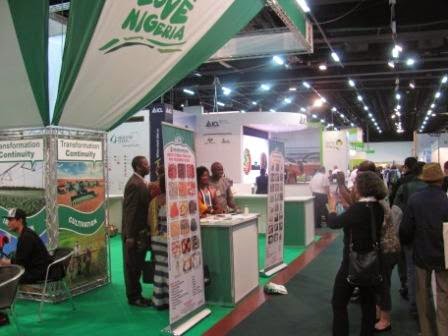
6 - 8 May, 2015. Mons, Belgium. For this first edition the tourism was in the spotlight. This forum promotes business meetings between African traders and those of Europe. It is a platform for discussion on Europe-Africa business relationship, but also a direct contact between economic operators platform between the two continents with practical workshops led by experts. It also gave to African countries the opportunity to promote investments in their territories.

Extract of the programme:

Agri-business

  • Mr Guy CALLEBAUT (Belgium) (VBT/BelOrta), GLOBALGAP Chairman 
  • Mr. Ernest Mintah, Matching Fund Manager African Cashew initiative (ACi) 
  • Mr. Jean Baptiste Satchivi, Chairman, Agrisatch Group, Chairman of the National Chamber of Commerce and Industry, Benin 
  • Viktória PALOTAI, International Policy Officer - Unit A3 – ACP and Development Issues, Directorate General for Agriculture and Rural Development, European Commission.

Access to finance for SMEs 

  • Mr. Luuk Zonneveld, CEO, BIO INVEST 
  • Mr. Daniel Monehin, Division President of Sub-Saharan Africa, MasterCard Inc.

Monday, May 18, 2015

Operation Maasai Removal

Published on 13 May 2015. A short documentary describing the political tension in Tanzania as traditional pastoralists are forced off of their lands.

Wednesday, May 13, 2015

PAEPARD Reflection and Learning Workshop


27-30 April 2015. Entebbe, Uganda. Drawing lessons from 5-years’ experience of PAEPARD is critical for the way forward.

This workshop harvested the experiences of the consortia related to the Users'led process of PAEPARD (research steered by the beneficiaries: private sector actors and farmer organisations) and the consortia funded under the PAEPARD Competitive research Fund and the Dutch Applied Research Fund.

During the project’s Steering Committee meeting (held in Montpellier on April 16th and 17th), which considered a possible new phase of the project, the weakness of the project with regards to publications and documenting the PAEPARD story was highlighted. As a consequence, the process and outcome of this workshop will be documented in detail.

Activities:
  1. Presentation of the survey on Capacity building needs (July-October 2014). This survey highlighted two main issues faced by the consortia: i) the weak implication of the European research stakeholders in the multi-stakeholders partnerships facilitated by PAEPARD, and ii) AIF insufficient support that brought consortia to develop their own facilitating “strategy”. Since that survey the situation changed with the launch of the PAEPARD Competitive research Fund and the PAEPARD Incentives Fund. The PAEPARD Competitive research Fund selected 4 consortia.
  2. Building a timeline per consortia. Participants identified and began to analysis the breakthroughs achieved and the setbacks/challenges they had achieved so far within the framework of the PAEPARD program.
Participants’ assessment of the workshop was positive as they felt it had enabled them to identify and collectively express the breakthroughs they have achieved and the challenges they are facing within PAEPARD, to learn from this experience and suggest solutions for the way forward. Participants expressed their interest in holding such reflection and learning exercises on a regular basis to allow all PAEPARD members to meet, exchange and reflect on their situation, strengthen their collaboration and ownership of the programme.

Tuesday, May 12, 2015

3rd CAAST-Net Plus Annual Meeting


10 - 11 May 2015. Johannesburg. Annual Meeting. The goal of CAAST-Net Plus is a reinforced bi-regional STI relationship for jointly tackling global societal challenges and contributing to smart, inclusive and sustainable growth of both regions.
See the agenda of the meeting.

Addressing this goal CAAST-Net Plus has a series of six core objectives:
  1. Focus on societal challenges: Encourage multi-disciplinary, multi-sectoral and bi-regional STI partnerships on key topics of mutual interest and benefit, focussing on major societal challenges.
  2. Coordination of policies and programmes: Explore collaborative and novel programming options and funding mechanisms for bi-regional partnerships around global challenges, promoting improved coherence and reduced fragmentation between relevant EU, AU and MS policies and programmes.
  3. Bridging the public-private sector gap: Foster greater public-private sector cooperation through enhancing mutual understanding to promote better exploitation of R and D outputs for innovation.
  4. Improving framework conditions: Identify and propose innovative solutions to reduce or overcome restrictive cooperation conditions, constraints or barriers.
  5. Mutual learning through bi-regional dialogue: Facilitate informal bi-regional stakeholder dialogues, complementing formal policy dialogue formats for advancing the bi-regional STI relationship, encouraging mutual learning, and understanding of national, regional and continental RDI in S and T strategies, priorities and instruments of relevance for cooperation.
  6. Stéphane Hogan, Minister-Counsellor 
    Delegation of the European Union 
    to the African Union
  7. Strengthening cooperation: Strengthen cooperation through increased awareness of the opportunities, the conditions, and the topics for cooperation supported by multilateral and bilateral programmes, through increasing capacities and networking of support structures for bi-regional RDI cooperation in S and T as well as fostering bi- regional networking of the science and innovation communities.
12 May 2015. CAAST-Net Plus Workshop on Pathways for Research Uptake. This meeting explored contemporary issues and emerging lessons for better evidence-based decision making and better uptake of research for innovation in goods, services and technologies for global challenges.

Session 1: Transferring Knowledge: Research Agendas, Challenges, Visions and Good Practices. The first
panel addressed the following topics:
  • the most pressing challenges to research uptake for global challenges;
  • actions required for the advancement of evidence-based knowledge for global challenges, for research and policy institutions at implementation level; and,
  • good practice examples for optimal uptake of research.
Session 2: Emerging Lessons from CAAST-Net Plus and DRUSSA. The second panel focused on
  • CAAST-Net Plus and the DRUSSA programmes as case studies for research uptake and knowledge transfer. 
  • Both initiatives seek to contribute to policy-making by offering recommendations and support to the formal and informal dialogue on issues concerning societal challenges.
Session 3: Building Partnerships for Research Uptake and Knowledge Transfer. The third panel focused on:
  • the diversity of partnerships; 
  • the challenges faced by these partnerships; and, 
  • good practices in forming sustainable partnerships for global challenges through research and innovation.
Background:
The DRUSSA project has received funding from the UK Department of International Development (DFID). CAAST-Net Plus is supported through the European Union's Seventh Framework Programme (FP7).

Development Research Uptake in Sub-Saharan Africa
  • Development Research Uptake in Sub-Saharan Africa (DRUSSA) is a five-year programme supporting 24 African universities as they strengthen processes and systems to manage research uptake.
  • Unfortunately, too little of the knowledge being generated by African universities is currently being put to use or incorporated into public policy and practice. The DRUSSA programme is working with 24 African universities to rise to this challenge by improving the capacity of universities to contribute research evidence in pro-poor policy and practice.
  • Research Uptake Management is an emerging university management field with a practical, cost-effective and sustainable approach to getting knowledge generated through research to those who need it, can benefit from it and put it into use. It requires specialist individual capacity, aligned organisational structures and strategic management processes to optimise conditions for the dissemination, uptake and application of scientific evidence.
  • The DRUSSA programme is led by the Association of Commonwealth Universities based in the UK and is delivered in partnership with the Centre for Research on Evaluation, Science and Technology at the University of Stellenbosch, South Africa and Organisation Systems Design, also based in South Africa.
  • For further information, visit the DRUSSA project website.

Monday, May 11, 2015

Towards a Research Agenda for Global Food and Nutrition Security

8 May 2015, Expo 2015, Milan. This high level conference was the official launch of a series of discussions that the EU Scientific Steering Committee for Expo will follow during the course of the six months of the Expo.

Including: Rhoda Peace Tumusiime, Commissioner for Rural Economy and Agriculture, African Union ; Monty Jones, President European Marketing Research Centre (EMRC) ; Lucy Muckoki, Chief Executive Officer, Pan African Agribusiness and AgroIndustry Consortium (PANAAC).

THE ROLE OF RESEARCH IN GLOBAL FOOD AND NUTRITION SECURITY
Expo 2015 EU Scientific Steering Committee Discussion paper
© European Union, 2015, 35 pages

Research within Europe, and alignment of Europe’s research (and funding) with other countries has a significant role to play to address foodand nutrition security in Europe and globally. A Steering Committee was established to provide expert advice on Expo’s theme. The Steering Committee’s role was to

  • give guidance on the draft programme of conferences, work-shops and online consultation for Expo 2015, and
  • provide this paper highlighting priorities for research, development and innovation on the theme of global food and nutrition security.

This paper should stimulate discussion with stakeholders and the general public and ultimately contribute to the EU’s legacy from the Expo. It is a “think piece” suggesting a strategy to address the challenges spanning the production of, access to, and consumption of food. The paper does not make recommendations for policy, rather it aims to prompt discussion of where research and innovation can contribute most to solving the issues, including providing underpinning evidence for policy development.

Related:
Online Consultation on the Role of Research in Global Food and Nutrition Security.
Period of Consultation: 13 April 2015 – 1 September 2015. The European Commission launched an online consultation on the role of research in global food and nutrition security. The aim of the consultation is to gather the views of stakeholders, citizens and the scientific community on the role that research has to play in tackling the challenges associated with ensuring food and nutrition security. EC wants an open and forward-looking debate with stakeholders to encourage dynamic and evidence-based policy making to tackle the many pressing challenges associated with food and nutrition security.

Thursday, May 7, 2015

La mécanisation partagée au Bénin : les Cuma

24 April 2015. Une expérience inédite de motorisation partagée au Bénin est au cœur de cette étude menée en collaboration avec l’Union nationale des Cuma du Bénin et l’association française Cuma Bénin. Cette publication retrace l’historique des Cuma, leur fonctionnement, leur réseau au Bénin et le partenariat franco-béninois. Sont analysées les conditions de la pérennité de cette initiative ainsi que les transformations induites par la motorisation sur l’activité agricole. 

Ce travail a vu le jour grâce à la FNCuma, FARM et la FAO qui ont accompagné cette capitalisation, entre février 2014 et mars 2015. Cette publication repose sur un stage de terrain mené auprès d’agriculteurs béninois par Marie Balse, une étudiante de l'Institut des régions chaudes (Montpellier Sup Agro), stagiaire à FARM.

Télécharger le document
Download the executive summary

Wednesday, May 6, 2015

10 videos about fruit trees in Central Asia

29 April 2015. For more than 15 years, Bioversity International has been working in Kazakhstan, Kyrgyzstan, Tajikistan, Turkmenistan, and Uzbekistan, focusing on promoting the conservation and use of traditional fruit tree varieties.

Fruit trees are the cornerstone of agriculture in Central Asia. As a centre of origin, there exists a highly diverse gene pool of both domesticated and wild fruit species. Fruit trees here have evolved to withstand drought and survive frost conditions. Many practices have also been specially developed to ensure their continued productivity under harsh conditions.

Published on 6 May 2015
An introduction to the wild walnut forests of Uzbekistan, why conserving these forests are important, and the genetic diversity that they provide to agriculture and nutrition.
You can watch the full Central Asia Fruit Trees playlist here, or view the individual videos though the links below. All videos are in Russian with English subtitles (click the CC icon on the bottom right of the video to activate the subtitles).

Mobile phone app for Agricultural video animations

27 April 2015.  SAWBO has developed more than 30 different 2D and 3D animations with voice-overs in over 50 different languages. SAWBO works in three main areas: Agriculture, Health and Women's Empowerment.

SAWBO has now a mobile app that is available for any compatible Android device. Download the app in the Google Play market to access the entire library of animations. You can then download as many videos as you want, and you can share them with anyone through bluetooth! Use the buttons below to download the SAWBO Deployer App or watch its video Tutorial.


Visit SAWBO's Video Library where you can watch or download all their videos in any available language, for free. All other languages for watching or downloading  will be available on the Video Library. Some languages can already be accessed on http://sawbo-illinois.org/lite/.


Here under are the videos developed around agriculture:
  1. Biocontrol of Legume Pod Borer (Maruca vitrata)
  2. Cooking With Soy!
  3. Natural Insecticide from Neem Seeds
  4. Natural Insecticide from Neem Seeds (With female and male character)
  5. Postharvest Loss: Bag Stacking
  6. Postharvest Loss: Bag Transportation
  7. Postharvest Loss: Bulk Transportation
  8. Postharvest Loss: Storage
  9. Postharvest Loss: Salt Testing for Grain Moisture Levels
  10. Solar Treating of Cowpea Seeds
  11. Survival Gardening: How to Create Compost (2D)
  12. Survival Gardening: How to Create Compost (3D)
  13. Survival Gardening: Raised Planting Beds
  14. Survival Gardening: Drip Irrigation
  15. Row Planting of Teff
  16. Tef (Teff) Transplanting Technology
  17. Charcoal Water Filtration
  18. How to Remove The Poison from Cassava Flour
  19. Improved Method of Shea Butter Processing
African Languages (examples):
AM|Amharic (Ethiopia) BBA|Bariba/Batonu (Benin) DDN|Dendi (Benin) DYU|Dioula (Burkina Faso) EN1|English (Nigeria) FAT|Fante (Ghana) FON|Fon (Benin) FR2|French (Congo) FR6|French (Benin) FUH|Fulfulde (Burkina Faso) GAZ|Afan Oromo (Ethiopia) GUW|Goun (Benin) HA|Hausa (Niger) LN|Lingala (Congo) PES| SBD|San (Burkina Faso)  TIR|Tigrigna (Ethiopia) WO|Wolof (Senegal) ZU|Zulu

Visit the You Tube channel of SAWBO™ Scientific Animations Without Borders

Postharvest Loss: Storage in English
This animation explains how to store grains using best practices for bag storage. It deals with how to prepare the grain for storage, transport the bags, and how to properly store the bags.


Published on 27 Mar 2015
SAWBO members discuss their new video on drip irrigation.

Tuesday, May 5, 2015

Upscale and Out-scale EbA-driven agriculture In Africa

UNEP, April 2015, 50 pages

Report with the findings of the Continental Task Force Members on EbA for Food security in Africa.

Africa faces a myriad of hurdles on its way to achieving the Millennium Development Goals (MDGs) and the post-2015 development agenda. Climate change, population growth, youth bulge, widespread unemployment, extreme poverty and hunger are some of the challenges that the continent is grappling with. Africa’s agricultural potential is immense. It is estimated the continent holds up to 65% of the world’s arable land and 10% of internal renewable fresh water sources. 

On incomes and poverty reduction, evidence from the World Bank is reported that in Africa, a 10% increase in crop yields translates to approximately a 7% reduction in poverty, greater than the 5% reduction reported in Asia. Neither the manufacturing nor services sectors can achieve an equivalent impact. The reason for this could be that in Africa, agriculture is not only a source of food but of livelihood, employing up to 60% of labour in the continent, a majority being small holders at 60%.

Related: 

The 2nd Africa Ecosystem Based Adaptation for Food Security Conference 2015
30 Jul 2015 - 31 Jul 2015, Nairobi, Kenya

This event "the 2nd Africa Food Security and Adaptation conference (AFSAC2)" is taking place on July 30 to 31, 2015. The theme this year is: Africa’s Soil the New Frontier: Re-imagining Africa Food Security Now and into the Future Under a Changing Climate. No fees are required to participate in this conference. For more information and registration, please visit the website: www.afsac2.aaknet.org
  • UN Organisation(s): UNEP
  • Partner(s):FAO, African Union, World Agroforestry Center , Africa Adaptation Knowledge Network, Nestle, Pan African Climate Justice Alliance, International Center for Tropical Agriculture, IUGG Union-Commission on Climatic and Environmental Change, Biodiversity International, EcoAgriculture Partners, Food, Agriculture and Natural Resources Policy Analysis Network , African Center for Economic Transformation, Greenpeace, International Center for Biosaline Agriculture, ActionAid, The Forum for Agricultural Research in Africa, African Centre for Technology Studies
The Ecosystem Based Adaptation programme aimed at enhancing food security and climate change adaptation by demonstrating how to build climate resilient, ecologically-sound food systems in sub-Saharan Africa. This project will implement "demonstration projects" in countries and use the results to build capacity that will inform food security and climate change policies at the national and regional levels.

Highlight: the the Institute of Postharvest and Food Sciences of Israel

The main objective of the Institute of Postharvest and Food Sciences is research and development for preservation of shelf-life while keeping the quality, safety and nutritional value of various types of fresh or dry agricultural produce intended for export as well as for local markets. These include foods intended for human consumption, animal feed derived from plants and animals and ornamental use.

The institute aims at advancing and supporting Israeli agriculture and contributing to the wellbeing of the farmers and the general public in the country. The existence of diverse research disciplines and research groups under the same roof enables fruitful interdisciplinary cooperative research between the various research teams aimed at achieving common objectives.

The Institute's research and development outcomes are recognized as a significant factor in the development of agriculture in Israel, the ability of fresh produce marketing, and especially the ability to export to foreign markets. Knowledge, methods and various technologies resulting from the activities in the institute relevant to agricultural produce treatment and preservation are transferred to - farmers, export companies, packing houses, dry grain storage facilities and the food industry.

Over the years, environmental friendly protocols and technologies have been developed in the Institute for the treatment, storage and packaging of fresh produce and dry grains using environmentally friendly substances, and biological control for the preservation of produce, whilst preventing microbial risks and minimizing food waste.

The recent issue of the "Volcani Voice" is dedicated to the subject of "FACING CHALLENGES IN POSTHARVEST and FOOD LOSSES" and include review articles written by the researchers of the Institute of Postharvest and Food Sciences who participated in the International conference  April 28-30 in the frame of the Agritech
2015 exhibition.

See also the recently published instructions for "HOW TO STORE FRUITS & VEGETABLES AT HOME" prepared by researchers of the Dept. of Postharvest Sciences.

Published on 27 Nov 2014
Located at the Volcani Center campus in Bet-Dagan, near Tel-Aviv, ARO's six institutes are responsible for Plant Sciences, Animal Science, Plant Protection, Soil, Water and Environmental Sciences, Agricultural Engineering, and Postharvest and Food Sciences. ARO also operates four research stations, in various parts of the country, and serves as a testing center for agricultural produce and equipment. Israel's Gene Bank for Agricultural Crops is also located on the ARO Volcani Center campus.


Highlight: SME Impact Fund invests in East Africa’s growth sector: agribusiness

The SME Impact Fund is dedicated to providing loans, skills and knowledge to SMEs in agricultural value chains, thus unlocking the agricultural potential of East Africa.. By connecting smallholder farmers and agribusiness SMEs, the SME Impact Fund strengthens links between small rural entrepreneurs and regional, national and export markets. The SME Impact Fund is an initiative of the Match Maker Group.

Small and medium sized enterprises receive comprehensive guidance and support throughout the implementation of their proposed project. The SME Impact Fund has extensive and complementary experience in agribusiness in East Africa and in SME banking and investments in Africa and Europe.
  • Number of Loans: 14
  • Total Permanent Employment: 232
  • Total Outreach to Small Holder Farmers: 912
How to Apply?
  • You are a duly registered company in Tanzania
  • Your company processes agricultural commodities
  • Your annual turnover exceeds TZS 200 million annually
  • You work in close cooperation with your suppliers
  • You are trustworthy and willing to share your financial data with the Fund
  • You are able to provide tangible securities for the loan
Related:
As part of fulfillment of the ongoing assignment by Bill & Melinda Gates Foundation (BMGF) to design an integrated value chain development (IVCD) project in Tanzania focusing on Common Bean and Groundnut, MMA organized a workshop in December 2014. A total of 31 key professionals and practitioners in the Legumes sector from East Africa region were brought together for two days to deliberate on the design parameters of the project.

Monday, May 4, 2015

International Agricultural Exhibition & Conference Israel

28 - 30 April 2015. Tel Aviv, Israel. Agritech Israel 2015, the 19th International Agricultural Technology Exhibition. Once every three years, Israel hosts the Agritech exhibition which is one of the world's most important exhibitions in the field of agricultural technologies.The exhibition was held at the Israel Trade Fairs and Convention Center in Tel Aviv .
Naresh Magan, Cranfield University, UK

Agritech Israel 2015 included the conference for Post – Harvest and Food Loses Technologies. See prgramme.

Extract: 30/04: Food safety - Consumer's perspective


Related:
Participants to the New KCC Israel tour
Boot from Ghana
19 April - 3 May 2015. Kenya Co-operative Creameries (New KCC), a milk processor, has sponsored 90 producers for a one-week tour to Israel, a country that has transformed its dairy sector despite its desert climate. The tour was organised by the New KCC extension wing, Platinum Ultra Events Limited and Israel Dairy School.

Participants at the KCB Israel tour
visiting Afimilk
Boot from Nigeria
Related:
23 April – 1 May 2015. Israel. Kenya Commercial Bank Biashara Club Members learning tour in Israel.
KCB Group sent 105 Biashara Club Members to visit Israel for international exposure that saw them network, find new export/import markets and learn from successful peer businesses especially on agriculture.

The 8-day tour aimed to expose the SME entrepreneurs to international business and agriculture practices and enable them learn from more established SMEs in Israel, one of the world’s experienced country on agriculture.
Boot from Kenya

The KCB Biashara Club was established in 2008 and currently has 12,000 active members in Kenya and over 4,000 in South Sudan and Rwanda. The trip () is part of KCB's efforts to support growth of the SME sector in the region by providing platforms for learning and knowledge sharing.

The programme included educational tours at:
Emek Hefer Bee Center
Some of the Ugandan students and their colleagues in Israel


Related:

Israel internship: students to change Uganda’s agriculture
Uganda has sent more than 100 students to Israel. During the internship, the students will be attached to farms to train and practice their agricultural skills, over the length of the internship.

The programme is run by Agrostudies, an Israeli body focused on agriculture capacity building and food security in the third world. Issa Agaba Mugabo is Agrostudies coordinator for sub- Saharan Africa.
“The students are exposed to state-of-the-art technology in agriculture, veterinary and horticulture. For a Ugandan used to subsistence farming, this is a mind opener, but most importantly will have an impact on our own agriculture in the future,” Mugabo said.
Over 1,400 students from 19 countries are currently participating in this year’s programme. Out these, 500 students are from eleven African countries, with Uganda having the highest number. Apart from Uganda, Rwanda, Kenya, Zambia, Cameroon, Burkina Faso, Ivory Coast, Togo, Malawi, Senegal and Democratic Republic of Congo are the other participating countries.

Related:
Published on 30 Mar 2015
The Galana-Kulalu food program in Tana River and Kilifi counties is a flagship for Kenya to ensure there is enough food in the country. It will integrate various food and cash crops. It will also cater for livestock, fresh produce and fisheries. The five-year project will double the production of maize and Kenya will then be able to have enough and even export maize.

Planting at the Galana Kulalu Food Security project was expected to start later in April 2015. The project manager said the first harvest would be in the next five months. The date of the first harvest changed quite a few times since the project started, and project managers said the entire 10,000 acre model farm would be developed in the next 15 months.


European Seminar on Extension & Education


28 April - 1 May 2015. 22nd European Seminar on Extension and Education. The 22nd European Seminar on Extension and Education (ESEE) was held in Wageningen and hosted by the Education and Competence Studies Group (ECS) of Wageningen University. This was organized in conjunction with the conference of the Association of International Agricultural and Extension Education,

The conference provided an opportunity to exchange ideas and experiences among university staff, private and professional personnel and others who are involved in Extension and Education. This was opportunity to look back at the development of competencies and their impact on Extension and Education. The input during the conference was predominantly given by researchers and academics but professionals from extension and education practice were equally welcome. See programme

Launch of the PROIntensAfrica project

The Executive Director of FARA, Dr Yemi Akinbamijo, 

Dr. Patrick Caron and Dr Martin Kropff 

signed the Consortium Agreement
21- 22 April 2015. Accra, Ghana. The General Assembly of ProIntensAfrica program was held at FARA.

The project consortium comprised of 23 Agricultural research and development organizations drawn from Europe and Africa that has agreed on carrying out different activities to develop a partnership program towards agricultural intensification in Africa.

The Consortium Agreement is the instrument that gives legal backing to the partnership arrangement within the program. And it represents a significant milestone in the history of ProIntensAfrica. It also paves the way for the implementation of the program activities.

As part of the kickoff session on April 21, each of the seven working packages (WPs) of the ProIntesAfrica program gave an overview of their activities for peer review, assessment and critique and the outcome of the review is expected to feed in into the project final document.

The high point of the general Assembly was the endorsement of the projects consortium agreement.
  • The program involves agriculture modernization, sustainability of food production and increase in output to meet the growing needs of people in the two continents.
  • It also seeks to improve the livelihoods of people in agricultural value chains while helping remove the barrier to achieving food security in Africa.
  • Consultation, case studies and stakeholder panel workshops are a major part of the activities of ProIntensAfrica. A wide range of strategic stakeholders will be invited to contribute to the activities and the agenda. Communication is considered crucial to develop and enhance the interactive dialogue between all stakeholders.
  • ProIntensAfrica is financed by the European Union (EU) and coordinated by the Forum for Agricultural Research in Africa (FARA) in Africa and the Wageningen University Research Institute in the Netherlands.
  • The project will develop into the IntensAfrica programme within two years.
  • African partners in the project are: FARA (Ghana), CORAF/WECARD (Senegal), CCARDESA (Botswana), ASARECA (Uganda), AFAAS (Uganda), ARC (South Africa), CSRI-CRI (Ghana) and INERA (Burkina Faso).
  • European partners are: Wageningen UR (The Netherlands), CIRAD (France), UCL (Belgium), SLU (Sweden), IICT (Portugal), Luke (Finland), University of Copenhagen (Denmark), ZEF (Germany), INIA (Spain), NRI (England), Teagasc (Ireland), BOKU (Austria), University of Life Sciences (Czech Republic), University Szent Istvan (Hungary) and Bioforsk (Norway).
Participants at the ProIntensAfrica kickoff meeting, at FARA Secretariat, Accra, Ghana
Mr. Marc Duponcel of the Directorate General of Agriculture at the European Union (EU-DG AGRI L-1), in a keynote paper expressed the commitment of the European Commision to partner with the stakeholders of ProIntensAfrica to make it a success. He expressed the commitment of the EC to the program, planned to be in a more engaging manner; compared to the previous practice of just committing funds to the program and expecting the outcomes. “The EC will participate in the entire work plan and other process from the beginning to the end” he indicated. He further expressed his conviction that the ProIntensAfrica will ultimately benefit Africa and Europe.

Related posts:
Related:
Published on 11 Dec 2014
Marc Duponcel (DG Agri) addresses the closing plenary 'Farmer groups leading inno-vation and research' session at the 9th Organic Producers' Conference - 27th November 2014.

The Improved Masters Project In Caltivar Development (IMCDA)

10 April 2015. Makerere University has launched an AGRA funded program worth USD 2.6 million towards training of Plant Breeders for Uganda and other countries.

The new project dubbed, “ The Improved Masters Project In Caltivar Development (IMCDA)” funded by the Alliance for a Green Revolution in Africa (AGRA) is coordinated by Dr. Richard Edema and implemented in the Department of Agricultural Production in the School of Agricultural Sciences, College of Agricultural and Environmental Sciences (CAES).

Speaking at the program launch, Dr. Edema said the project goal is to train (30) scientists at a Masters level in Plant Breeding and Biotechnology and /or Seed Systems and Technology and Business from Rwanda, Ethiopia, Kenya, Tanzania and Uganda.