Platform for African – European Partnership in Agricultural Research for Development

Wednesday, June 21, 2017

Animal Source Foods and Household Nutrition Learning Series

15 June 2017. Land O’Lakes International Development Livestock, Animal Source Foods and Household Nutrition Learning Series made possible through the USAID TOPS program held in 2016-2017 a Learning Series on Animal Source Foods and Household Nutrition with the participation of the diverse community interested in this important topic.

Along with key event cohosts including SPRING, Agrilinks, the International Food Policy Research Institute (IFPRI) and the International Livestock Research Institute (ILRI), the series reached almost 600 individuals from 52 countries. We covered the following topics across two webinars and two in-person events:
  • Measuring the nutritional impact of livestock programs
  • The importance of ASF in diets
  • Food safety issues with ASF
  • Technical considerations when implementing livestock projects
  • Review of the evidence of livestock programs on nutrition outcomes
  • Best practices when designing nutrition-sensitive livestock programming
A summary report of the series was recently published on our website – check it out HERE.

Resources and links to recordings and presentations from each of the events are available on the series webpage HERE.

The four events included:
  1. Livestock and Livelihoods: Measuring and Promoting Nutrient-Rich Value Chain Commodities (Webinar, June 16, 2016)
  2. Livestock Markets, Animal Source Foods and Human Nutrition: Considering Program Tensions, Maximizing Impact and Avoiding Harm (In person event, October 17, 2016)
  3. Issues and Opportunities: Addressing Food Safety Concerns in Animal Source Foods for Improved Household Nutrition (Webinar, January 25, 2017)
  4. Animal Source Foods for Nutrition Impact: Evidence and Good Practices for Informed Project Design (In person event, May 4, 2017)
Food safety and ASF go hand-in-handIt is estimated that the global burden of food borne illness matches that of illness from the major infectious diseases, HIV/AIDS, malaria and tuberculosis, combined. The most frequent cause of food borne illness are diarrheal disease agents, and children under five years of age disproportionally bear the burden of food borne illness. ASF are one of the primary sources of food borne illnesses.

ASF and food safety are intimately related, and more attention needs to be paid in this space. However, merely increasing regulations does not translate to improvements in food safety; growth in supermarket culture in LMIC also does not translate into improved food safety. As Dr. Delia Grace explained in October, interim solutions are necessary to bridge the food safety gap between informal and formal markets in LMIC. At the Agrilinks webinar in January, ILRI researchers Dr. Hung Nugyen and Dr. Silvia Alonso presented opportunities to improve food safety in formal and informal markets and ways to incentivize producers to produce and consumers to demand safer foods. USAID will continue to explore this subject in the AgExchange online discussion 20-22 June 2017.

Tuesday, June 20, 2017

International Forum on Women and Trade

20 June 2017. Brussels. the European Commission and the International Trade Center (ITC). Policymakers, the business community and civil society organisations convened to galvanize support for inclusive trade policy and the ITC SheTrades initiative to connect one million women to market by 2020, using trade as a lever for women’s economic empowerment. This initiative seeks to rally stakeholders around the world to work together on seven global actions to address trade barriers and create greater trade opportunities for women entrepreneurs. It is supported by a web and mobile digital platform.


Participants took stock of current trade policy's contribution to the economic empowerment of women, raise awareness of gender issues in trade, and considered how trade can promote the advancement of gender equality through a combination of multi-stakeholder engagement and a progressive approach to sustainable development.

Extract of The programme

Are EU exports gender-blind? Some key features of women participation in exporting activities in the EU

Women entrepreneurs Participants from African:
  • 25 from Kenya
  • 9 from Nigeria
  • 6 Tanzania
  • 4 from Gambia and Uganda
  • 3 from Ethiopia
  • 2 from DRC, Rwanda and Zambia
  • 1 from Lesotho
Photos and videos of the event.

What does inclusive trade policy look like?
What are the binding constraints that hamper women entrepreneurs from accessing markets and take part in trade? Panelists will discuss opportunities to leverage trade agreements, and highlight policy, legal and regulatory aspects contributing to levelling the playing field to ensure that women-owned and women-powered businesses are able to fully participate in the global economy.
  • Amina Mohamed, Cabinet Secretary for Foreign Affairs and International Trade, Kenya
  • François-Philippe Champagne, Minister of International Trade, Canada
  • Roberto Azevêdo, Director General, World Trade Organization, Switzerland
  • Jennifer Gallegos, Vice President of Development, International Women’s Coffee Alliance, USA
from @88:42 to @88:91:45 Amina Mohamed answers to a question from PAEPARD @ 79:03 on the role of the diaspora and sanitary and phytosanitary issues related to food processing in Africa
"The Diaspora is very critical for the agricultural development" Amina Mohamed, Cabinet Secretary for Foreign Affairs and International Trade, Kenya
Financing for growth
Women are more likely to cite access to finance as a major constraint on their business operations. What bold steps can be taken to support the achievement of universal financial access?
  • Maria Shaw-Barragan, Head of Global Partners Operations, European Investment Bank, Luxembourg
    "EIB and AFDB collaborate on Boost Africa: Empowering Young African Entrepreneurs"
    "From a total EIB budget of 125 million Euro for micro finance 45% goes to women"
    "EDD 2017 promoted this year a new global strategy with a particular emphasis on engaging the private sector as a partner in economic development". 
  • Monica Musonda, CEO, Java Foods, Zambia
    "Trade begins with scale"
    "Lease financing is an appropriate financial instrument for agri-SMEs, in particulary for processing machinery"
  • Deniz Duygu, Secretary General, Arya Women Investment Platform, Turkey (TBC)

x
Addressing supply side constraints
Trade-related technical assistance initiatives and game-changing solutions such as SheTrades are brought to the table by a diverse range of stakeholders building the case of inclusive value chains for a sustainable economic growth.
  • Sanem Oktar, President, KAGIDER, Turkey
  • Chiedza Makonnen, CEO, Afrodisiac Worldwide, Ghana
  • Malini Patel, Vice President of Economic Empowerment and Entrepreneurship, Vital Voices Global Partnership, USA
  • Klaus Rudischhauser, Deputy Director General, Directorate General for International Cooperation and Development, European Commission, Belgium

Women in SPS capacity building

3 pages

Women and men along the supply chain are responsible for meeting international SPS requirements. Yet, women working in agricultural value chains face more obstacles to plugging the knowledge gap on SPS issues and accessing domestic and export markets. 
Find out how STDF’s global partnership is working to build women’s capacity on SPS issues through its knowledge hub and grassroots projects.

The Standards and Trade Development Facility is a global partnership that supports developing countries in building their capacity to implement international sanitary and phytosanitary (SPS) standards, guidelines and recommendations as a means to improve their human, animal, and plant health status and ability to gain or maintain access to markets.

Relevant STDF projects benefiting women across agricultural value chains in Africa:
  • Shea nut collection and sesame production (Nigeria); 
  • Collection and distribution of flowers (Uganda)
    “The use of biological agents improves the health and safety of women who work in the greenhouse by reducing exposure to pesticides and its health risks. Of the 8,500 direct workers in the flower sector, 80% are women who have an income for their families.” Esther Nekambi Programme officer, Uganda Flower Exporters Association
Funding opportunity:
STDF provides support to developing countries through project preparation grants (PPGs) to prepare technically sound and sustainable projects.
  • Funds up to normally US$50,000 are available for PPGs, which can involve the application of SPS-related capacity evaluation tools, prepararation of feasibility studies and/or formulation of project proposals to address specific SPS capacity building needs linked to trade. 
  • The main criterion in awarding a PPG for the preparation of a project proposal is the likelihood that its implementation will result in a well-drafted proposal with the potential to achieve sustainable and effective results.
  • Resulting projects may receive funding from the STDF, or from other funding sources. 
  • Applicants are encouraged to consult other potential donors when developing and implementing PPG applications.
  • Next deadline for funding applications: applications received before 04 August 2017 will be considered at the STDF Working Group meeting in October 2017.
Examples of project grants:


Monday, June 19, 2017

New Africa fund targets women-led agribusiness

Altree Capital, Bo Masole, GTR Women in Trade Finance,
Jenni Chamberlain, Victus Global,
Victus Global Capital, Zee de Gersigny
Victus Global Capital and Altree Capital have partnered to launch a US$50mn fund focusing on investment into women-led agribusinesses in Africa.

The fund aims to boost African agriculture through the practice of so-called ‘gender lens investing’, which focuses on funding women-owned businesses, companies with a track-record of hiring women, and those that aim to improve the lives of women through their products and services.

It is initiated by Bo Masole and Zee de Gersigny – the founders of Victus Global Capital, an investment firm focused on transforming agriculture and empowering women in Africa – and Jenni Chamberlain, CEO of African asset management specialist Altree Capital.

Together, the two companies are working on a pipeline of projects, which include a tomato processing plant in Zambia, a meat processing plant in Malawi and a coffee export project in Ethiopia. The aim is to make individual investments of between US$250,000 and US$10mn.

Agriculture​ training colleges to mainstream courses on aflatoxins

8 June 2017. Uganda. Bukalasa Agricultural College. The Ministry of Education is including course units on aflatoxins in the school curriculum to increase food safety and reduce food contamination.Unsafe foods as a result of aflatoxins have continued to undermine food security, nutrients and agribusiness on the Africa continent.

The review to incorporate the latest modules will run up to August and in the next academic year starting September will be full course units in the curriculum, according to Anyang Anna Grace Head of Department Human Nutrition, Bukalasa Agricultural College.

The courses to be introduced are Introduction to micro biology, food systems and nutrition. The colleges have been funded by UNICEF to have the modules incorporated.
“Nutrition issues have not been given the priority they deserve. When you talk about aflatoxins and mycotoxins, these are issues of nutrition and food security. When we go to Mulago Cancer Institute more than 50% of the cancers are attributed to diet that’s depending on our feeding habits . Food and nutrition issues need to be addressed right from the farmers and other actors along the food value chain. Statistics indicate that 40% of food commodities are contaminated.

EU-Africa Business Forum 2017: Innovative agriculture for next generation farms

7 June 2017. Brussels. European Development Days (EDD). Invited CEOs and high-level stakeholders engaged in lively debate as part of a series of 3 thematic sessions (Agri-Business, Digitalisation and the Green Economy). The sessions and their organisers from the private sector have been selected from 25 proposals.

Opening:
  • Neven Mimica, Commissioner in charge of International Cooperation and Development
  • H.E Quartey Thomas Kwesi, Deputy Chariperson, African Union Commission
  • Ambroise Fayolle, Vice President, African Development Bank, Private Sector, Infrastructure and Industrialisation

High-level panel speakers panel
Vimal Shah, CEO of Bidco Oil Refineries Limited and BIDCO Group. BIDCO Group is a business conglomerate involved in the manufacture of edible oil, detergents, soaps, margarine and baking powder. He is also a member of the 3GF (Global Green Growth Fund) Advisory Board and the Tony Elumelu Foundation Advisory Board.

Pierre Gattaz, President MEDEF - French Business Confederation
French businessman Pierre Gattaz was elected president of MEDEF, the Movement of the Enterprises of France in July 2013. At the same time, he became first statutory vice-president of the Comité France Chine, an organisation which aims to promote knowledge and understanding between French and Chinese companies and China’s government.
"European SMEs should invest in Africa"
 AGYP, MEDEF International, Business Africa, BusinessEurope et l’Organisation internationale des employeurs (OIE) organiront à Nairobi le 20 novembre 2017 un Forum jeunesse et entrepreneuriat, Journée des patronats africains et Sommet des start-up.
Rebecca Stromeyer, Founder of eLearning Africa
Rebecca Stromeyer is director of ICWE, an international events and communications company. She is also co-founder and co-owner of ICEF, the global leader in international student recruitment and travel for education workshops.

Extract of the thematic sessions:
Innovative agriculture for next generation farms: Sparking youth interest in technology-driven agriculture and achieving food security
This session stimulated a discussion about the importance of bringing EU and pan-African agriculture into the third millennium. It addressed how “farming 2.0” innovation can improve food security and boost youth employment in a sector that has recently faced skills shortages. It looked at how technology-driven farming can play a key role in agricultural development over the coming decades to ensure that we can feed the world, given that by 2050 the global population will surpass 9.5 billion and will require 50% to 70% more agricultural output to ensure security of food supply for everyone.

The session highlighted the success of innovative African agricultural start-ups to explore how achievements in sustainable African farming can be leveraged to improve agricultural practices throughout the African continent. The session called on EU Member States and African countries to promote policies that support the development of agricultural technology, improve sustainability, and encourage the involvement of young farmers. 


Moderator:
Lanre Akinola is the Editor of African Business, IC Publications. He is the former Editor of the Financial Times’ flagship Africa publication, This Is Africa, and has worked with the Bloomberg Media Initiative Africa. He is a board member of the Business Council for Africa and a 2014 Desmond Tutu Leadership Fellow.
Josephine Okot, Founder and MD Victoria Seeds Ltd. Josephine Okot has steered Victoria Seeds from a struggling start up to Uganda’s leading seed house, which was ranked #2 in the 2016 Access to Seed Index. The company that she founded was established in 2004 to disseminate quality seed to smallholder farmers, with the aim of improving crop yields and nutrition. It is the proud winner of the Uganda Responsible Investment Award, Best Seed. In 2014 she was Uganda Business Woman of the Year.
Maira Dzelzkalēja, VP Latvian Farmers Parliament. Maira Dzelzkalēja is an expert in agriculture with over 20 years experience. She is vice-president of the ‘Latvian Farmers Parliament’ union, where she is responsible for agriculture and rural development strategy, as well as international relations. She has been vice president of the Committee of Agricultural Organisations (Copa) since 2013, and chaired the Copa-Cogeca working group on agriculture and rural development.
Michael Hailu, Director, Technical Centre for Agricultural and Rural Cooperation. Originally from Ethiopia, Michael Hailu is the director of the Technical Centre for Agricultural and Rural Cooperation (CTA) based in the Netherlands. CTA is a joint institution of the African, Caribbean and Pacific Group of States and the European Union working under the Cotonou Partnership Agreement. As CTA director, he identified three priorities for the centre’s work: enhancing inclusive value chains, strengthening capacities of agricultural research institutions, and building networks in knowledge management and ICTs.
Dr Kanayo F Nwanze. From 2009 until 2017, Dr Kanayo Nwanze was the fifth president of the International Fund for Agricultural Development (IFAD), an organisation that puts agriculture, and especially smallholder development and rural poor, at the heart of the international development agenda. He has also served as the director-general of the Africa Rice Centre’s Consultative Group on International Agricultural Research (CGIAR) where he was instrumental in introducing high-yield, drought- and pest-resistant Nerica rice varieties, developed specifically for Africa.
Karim Lotfi Senhadji, CEO, OCP Africa. Karim Lotfi Senhadji is the CEO of OCP Africa, a subsidiary of OCP Group, a producer and exporter of phosphates and other fertilizers. 
Dr Ndubuisi Ekekwe, Founder and Chairman, First Atlantic Semiconductors and Microelectronics Ltd (Fasmicro) An electrical and computer engineering whizz, Dr. Ndubuisi Ekekwe’s company, Fasmicro, produces the Zenvus, a smart device which tells farmers what, how and when to farm. Previously, he worked for Analog Devices Corp as a lead engineer, and served in the United States National Science Foundation Engineering Research Centre. He is also a TED Fellow, ‘IBM Global Entrepreneur’ and World Economic Forum ‘Young Global Leader’.


Related:
1 July 2017. Rome. High-level roundtable on Inclusive Agri-Business.
Agriculture continues to occupy a key role for poverty alleviation – and it is increasingly clear that private investment will be essential in the promotion of sustainable agricultural growth in developing countries. Nevertheless, private investments in agriculture continue to face many obstacles, and such investments are generally seen as high-risk. Only a marginal share of equity investments in the developing world is in the agriculture sector. The Commission is organising a high-level roundtable on agri-business, bringing together key players from the private and public sector, as well as civil society. The event seeks to address the main obstacles to agricultural investment, and improve the risk situation faced by investors. It aims to hear the voices of those directly engaged in agricultural investments, and gather their suggestions and ideas to de-risk investments in agri food chains.

The event will look at the business environment and innovative financing mechanisms available to investors (such as the European External Investment Plan proposed by the Commission), and identify where the public sector needs to intervene for a more favourable business environment. The event will also convey messages for the AU-EU agriculture ministerial meeting, which is being held the following day.

Sojagnon Benin visits CoEnCo Micro Breweries

13 June 2017. Oostkamp, Brugge. CoEnCo, constructs micro-breweries and peripheral equipement and projects in liquid food industry. CoEnCo offers complete production lines for manufacturing (soy) milk, yoghurt, cream, butter, cheese, etc. Besides, CoEnCo is a specialist in pasteurization lines for liquid foodstuffs.

The coordinator of the project: Re-engineered Soybean “Afitin” and Soybean Milk processing technologies in South and Central Benin (ProSAM) - Patrice Sewade - visited the Small and Medium Enterprise based in Belgium following his attendance and presentation of the soy milk products at the European Development Days on 7-8 June

  • Standard units (in particular for brewing beer) can easily produce 2.5 to 10 hl per batch. The incorporated buffer tank allows for 2 batches in 10 to 12 hours. The compact and user friendly design shows all parameters at a glance. Milk, yoghurt, cream, butter, cheese, etc. can be turned out 200 to 5.000 liters/hour with standard production lines.
  • (Semi) industrial brewery units can produce up to 40 hl per batch. The ergonomical, compact set-up offers the space and possibilities to compose beers to own taste and feel. The built-in wort buffer tank enables a production of 2 batches in the span of 10 to 12 hours. 
  • Various degrees of automatisation are possible. Moreover, CoEnCo caters for custom solutions: an equipment that meets all needs, desires and demands. 
  • Next to basic infrasrtucture, CoEnCo also offers all kinds of accessories and peripheral equipment.
CoEnCo has installed machinery in Kisantu (DRC), Ghana (see below), Ngozi (Burundi) and Rwanda. 

Bebobakery has bought 5 soy milk machines from COENCO in Belgium. They have been shipped in 2012 to Ghana and in Sept 2014. The installation of the first machines was done by COENCO in May 2012.

One machine was bought by Mrs Adjoa Boisson in Cape Coast. It was moved first to Kasoa in June this year and later on to Tamale. The second and third machine were lent out to the Seventh Day Adventists schools Scales and McLineus in Kumasi. The one at Scales was moved to Bolgatanga-Tamale to be operated in combination with a filling machine by Conrad Kaaiwala

Conrad submitted in September 2013 samples of his product to the Food and Drugs Administration in Accra and is now in production Tamale: 3 batches a day= 130 litres with one machine. McLineus school has been inspected by FDA in May, but is not yet in production. Theophilus is lending his support to obtain approval from FDA for all SDA schools. Theophilus also expects to be in milk production later on this year at his bakery in Kasoa

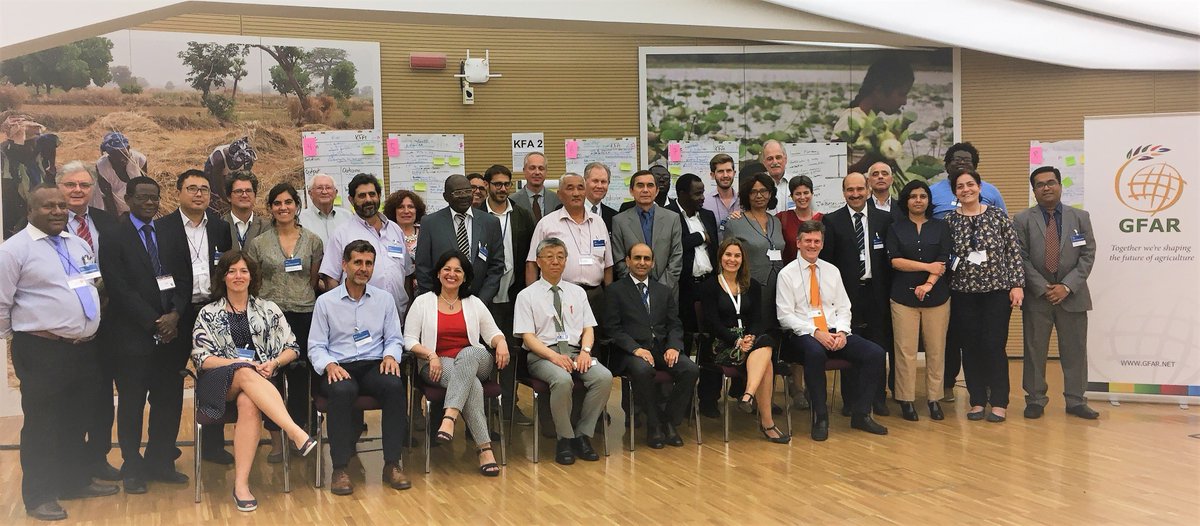
Steering committee GFAR

13-15 June 2017. Rome. The GFAR Steering Committee (Global Forum for Agricultural Research) has identified, at its meeting in  February 2017, key areas for GFAR to focus on in defining and developing GFAR's Collective Actions. Th ey than harvested the input of the nearly 500  Partners in GFAR to flesh out these actions. The minutes of the 31st GFAR Steering Committee can be found here.

Through an innovative consultative process facilitated by the GFAR Secretariat, the Partners are setting out their ideas for how they can meet these challenges together. Meeting the Sustainable Development Goals demands Collective Actions that integrate the strengths and capacities of diverse sectors, but that keep farmers and producers at the center.

The GFAR Steering Committee agreed on the new Collective Actions. Visit the GFAR website to learn about the new direction of GFAR, and become a Partner in GFAR to join the global movement for change.

For more information on the new GFAR governance, click here and here.

Islamic financing instruments and development perspective in sub-Saharan Africa

6 June 2017. Making Finance Work for Africa (MFW4A) and the Islamic Cooperation for the Development of Private Sector (ICD) organised a webinar on Islamic Finance: financing instruments and development perspective in sub-Saharan Africa.

Islamic Finance is a concept that is widely viewed as a viable alternative to conventional finance. The industry is increasingly attracting attention as a potential way to help mitigate institutional barriers and promote financial development. Islamic Finance is today seen as a significant financial innovation that is gradually making headway into mainstream finance. What then are the fundamentals of this concept? What role can this form of banking play in the development of the African financial landscape? What value proposition is Islamic Finance expected to deliver? And more importantly, can the core principles of Islamic Finance be linked to the UN Sustainable Development Goals?

Play recording (1 hr 10 min)
Recording password: (This recording does not require a password.)

The keynote speaker was Salah BABALE, from ICD (Islamic Cooperation for the Development of Private Sector).
Salah Babale joined ICD as a Line of Finance (LOF) Division Head -FIDD after spending 8 years in the Private Sector Department of the African Development Bank (AfDB) with various responsibilities and achievements. He is a holder of a Masters in Finance from Exeter University and has worked in the financial industry for several years. Babale has brought a wealth of experience to ICD and has been instrumental in the successful expansion of Shariah compliant LOF operations for the organization. He developed an assessment framework, manuals, guidelines and procedures and provides innovative solutions and new products improving the technical capacity of the ICD LOF team and training of junior staff and IFTDPs.

Slide 4 is about funding small and medium enterprises 


Friday, June 16, 2017

Global Forum on Remittances, Investment and Development

15 – 16 June 2017. New York. This Forum brought together key decision makers from the public and private sectors as well as civil society who work in the field of migration and remittances. During the two-day event, more than 300 participants gathered to share lessons learned and best practices on innovative business models, to stimulate long-lasting partnerships, and to raise awareness towards a more enabling market.

Specific objectives
  • Highlight the contribution of migrant remittances and diaspora investments to achieve the Sustainable Development Goals and its targets; 
  • Identify measures to reduce the transfer costs of remittances, through market competition, innovative business models and the use of modern technologies; 
  • Assess regulatory barriers and other constraints to lower remittance transfers, promote diaspora investments and facilitate financial inclusion; 
  • Explore innovative financing solutions to unlock migrant investments
  • Discuss the role of migrant remittances and diaspora investments in countries and communities hosting displaced populations; 
  • Highlight sustainable and innovative business models that expand current remittance markets and create synergies with other financial markets and products
Diaspora investors and mechanisms 
While migrant investment has demonstrated considerable potential for supporting economic growth back home, it is still hampered by a lack of appropriate financial instruments and information. This panel highlighed some ongoing initiatives aimed at facilitating diaspora investment, and discussed challenges and further opportunities in meeting diaspora investment needs.
  • Daniel Gonzáles, Program Officer, International Migration Initiative, Open Society Foundations 
  • Marion Jézéquel, Chief Executive Officer, Babyloan 
  • Pietro Mona, Deputy Head, Global Program for Migration and Development, Swiss Agency for Development and Cooperation, Federal Department of Foreign Affairs
Expanding opportunities and instruments for diaspora investment
This panel explored challenges and opportunities in promoting and supporting diaspora investment mechanisms. The panel brought perspectives from financiers and civil society stakeholders on ways and roles towards nurturing, enhancing and mainstreaming this growing market. The panel also addressed innovative or impact investing mechanisms that could be adapted to respond to diaspora investment needs.

  • Jennifer M. Brinkerhoff, Professor of Public Administration and International Affairs, George Washington University 
  • Eric V. Guichard, CEO, Movement Capital Ltd - Homestrings 
  • Justin Sykes, Managing Director, Innovest Advisory, Social Impact through Innovation 
  • Hassan Yusuf, Chief Executive Officer, International Bank of Somalia


14 June 2017. New York. Launch of a new IFAD report: Sending Money Home: Contributing to the SDGs, One Family at a Time is the first-ever study of a 10-year trend in migration and remittance flows over the period 2007-2016. While the report shows that there have been increases in sending patterns to almost all regions of the world, the sharp rise over the past decade is in large part due to Asia which has witnessed an 87 per cent increase in remittances.

According to the report, migrants will send an estimated $6.5 trillion between 2015 and 2030.

Transaction costs to send remittances currently exceed $30 billion annually, with fees particularly high to the poorest countries and remote rural areas. The report makes several recommendations for improving public policies and outlines proposals for partnerships with the private sector to reduce costs and create opportunities for migrants and their families to use their money more productively.

Other key findings from the Report:
  • Remittance flows have grown over the last decade at a rate averaging 4.2 per cent annually, from $296 billion in 2007 to $445 billion in 2016.
  • One hundred countries receive more than $100 million in remittances each year.
  • It is projected that an estimated $6.5 trillion (at no growth) in remittances will be sent to low- and middle-income countries between 2015 and 2030.
  • The top ten sending countries account for almost half of annual flows, led by the United States,
    Saudi Arabia and the Russian Federation.
  • Eighty per cent of remittances are received by 23 countries, led by China, India and the Philippines.
  • Asia receives 55 per cent of all remittance flows.
Diaspora Investment in Agriculture (DIA) initiative
This major partnership seeks to leverage the contributions of migrant workers and encourage their engagement in sustained economic development through investment in agriculture, particularly in rural areas.

Because of the close ties felt by those living abroad towards their communities ‘back home’, diaspora investors are not only well informed about the opportunities existing in their communities of origin, but are also more willing to invest in fragile markets than foreign investors.

The DIA initiative works to foster job growth in local communities, contribute to poverty reduction and curtail the need to migrate by: 
  1. Encouraging the global diaspora to invest in sustainable agricultural projects with real potential to impact the lives of poor rural people. 
  2. Enabling diaspora investors, diaspora organizations and actors on the ground to build the capacity necessary to undertake cross-border investments and gain access to markets for traditional products. 
  3. Stimulating agricultural production and reducing import dependency to enhance food security.
Rural SMEs in their homeland
In 2014, the Business in Development (BiD) Network Foundation, a Dutch NGO, in partnership with fund manager Shuraako, an American NGO with field offices in Somalia, initiated the Somali AgriFood Fund , a seed capital matching investment fund focused on driving diaspora investments into Somali agriculture, fisheries, food processing and livestock sectors. Investment projects ranged from US$20,000.

  • By January 2016, 199 candidates had applied to the AgriFood Fund and 6 business owners had been awarded financing for a total of US $435,600. 
  • The approved business plans involve 8 diaspora investors, of which 2 are women. These are all originating from the region they invest in and are contributing 40% to 60% of investment. 
  • The 6 awarded agribusinesses are expected to generate 196 new jobs and to open new market outlets for about 15,000 small-scale producers in the agriculture and fisheries sectors
  • The project has demonstrated that it is possible to attract diaspora investment into Somali agribusinesses and to generate employment and revenues through diaspora resources. Furthermore, it has raised interest from the national financial sector (local banks and micro-finance institutions) to develop activities aiming at diaspora investment into the local economy
  • IFAD is now planning to finance a follow-up phase, which will aim at upscaling good achievements by building the capacities of Somali public and private institutions to provide the diaspora with the services they need to invest into Somali SMEs

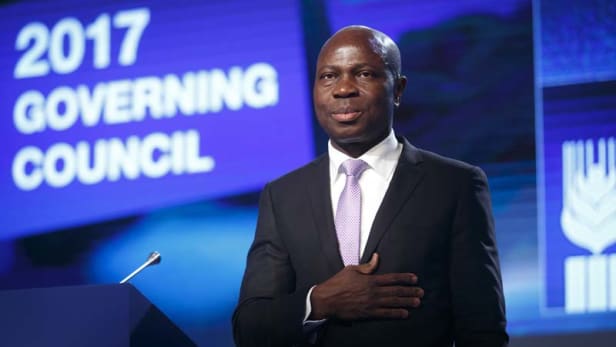
Related: Interview with Gilbert Houngbo, president of IFAD
15 June 2017Alesha Black, director of the Council’s Global Food and Agriculture Program, sat down with the recently appointed president of the International Fund for Agricultural Development (IFAD), Gilbert Houngbo.

Take a listen to the full interview (at the bottom of this blog post), check out highlights from their conversation below, and read Gilbert Houngbo's new op-ed on remittances and financial inclusion.

Extracts from the transcript

First of all, in the last 40 years, the United States has been by far our top donor—giving close to $1 billion. You can imagine the role that US money has contributed to achieving poverty reduction. The leadership that we’ve seen from the United States, though, is not limited to the money and what the money achieves. As a member of our managing board, the United States has helped to make sure that IFAD is nimble, agile, and effective, and drawing lessons from the debate on development aid effectiveness in general.

I want to convey that technological innovation is part of the solution, and I want to be very forceful about that—today, I believe that at a policy level, we need to encourage countries to use technology at the national level, even beyond cellphone technology, to map soil, to have smarter use of fertilizer and water, which is linked to the climate dimension. More and more drones are being used to reduce the costs of production. Meanwhile, access to financial data, market information, technical information about production on cellphones is really happening. And again, back to my rural transformation point, when you have a youngster in a village, if they can have the same access that they could have in the capital, maybe they don't feel the need to physically be there. That’s part of what’s happening in the development of technology and innovation is really going to be part of the solution.

Connecting larger agricultural and forestry SMEs to finance

31 May 2017. Montreal. The Finance Alliance for Sustainable Trade (FAST) officially launched
Finance Connect, a service created to connect larger agricultural and forestry small and medium enterprises (SMEs) in developing countries that have financing need of more than USD 800,000 and up.

It was attended by numerous representatives relating to financial institutions, trade organizations, sustainable development, government representatives, international organizations, and other strategic partners.
Getting financing means access to working capital, inputs, and labour but also long-term finance for infrastructure and larger projects […] which can genuinely make a difference in developing and growing businesses, and therefore improve the livelihoods of producers on the ground. Noemi Perez, President and CEO of FAST See short video snap during the event (5:33 min)
Finance Connect is a unique service that focuses on addressing the needs of larger sustainable Agricultural and Forestry SMEs in developing countries that have financing needs of more than USD 800,000. These are usually enterprises that have larger projects, or projects that require both short and long-term finance.

It is a tailor-made service that supports the enterprises throughout the process of obtaining finance, including linking SMEs to financial services providers (FSPs) that can meet their needs in an accurate, efficient, and effective manner. Ultimately, this service will enable FAST and its partners to create a tangible benefit on the ground by helping SMEs restructure their finances, reach their potential growth, employ more people, and have a more sustainable business model that will benefit them and their communities in the long term.

See also short video of Mauricio Rosemsary, FAST Business Development Director.
The International Finance Corporation (IFC) […] reports over 40 million formal small and medium enterprises globally, that have a gap of $1.5 trillion in credit financing. Our services in Finance Connect are designed to collaborate towards the closing of this gap.”
About FAST
The Finance Alliance for Sustainable Trade (FAST) is an international non-profit organization. By
partnering with FSPs and other stakeholders, FAST uses tools and services to facilitate access to finance for agriculture and forestry SMEs in emerging economies mainly in Africa, Latin America and the Caribbean. FAST’s training, analytics, and matchmaking services provide impact investing solutions and capacity-building for their stakeholders.

Thursday, June 15, 2017

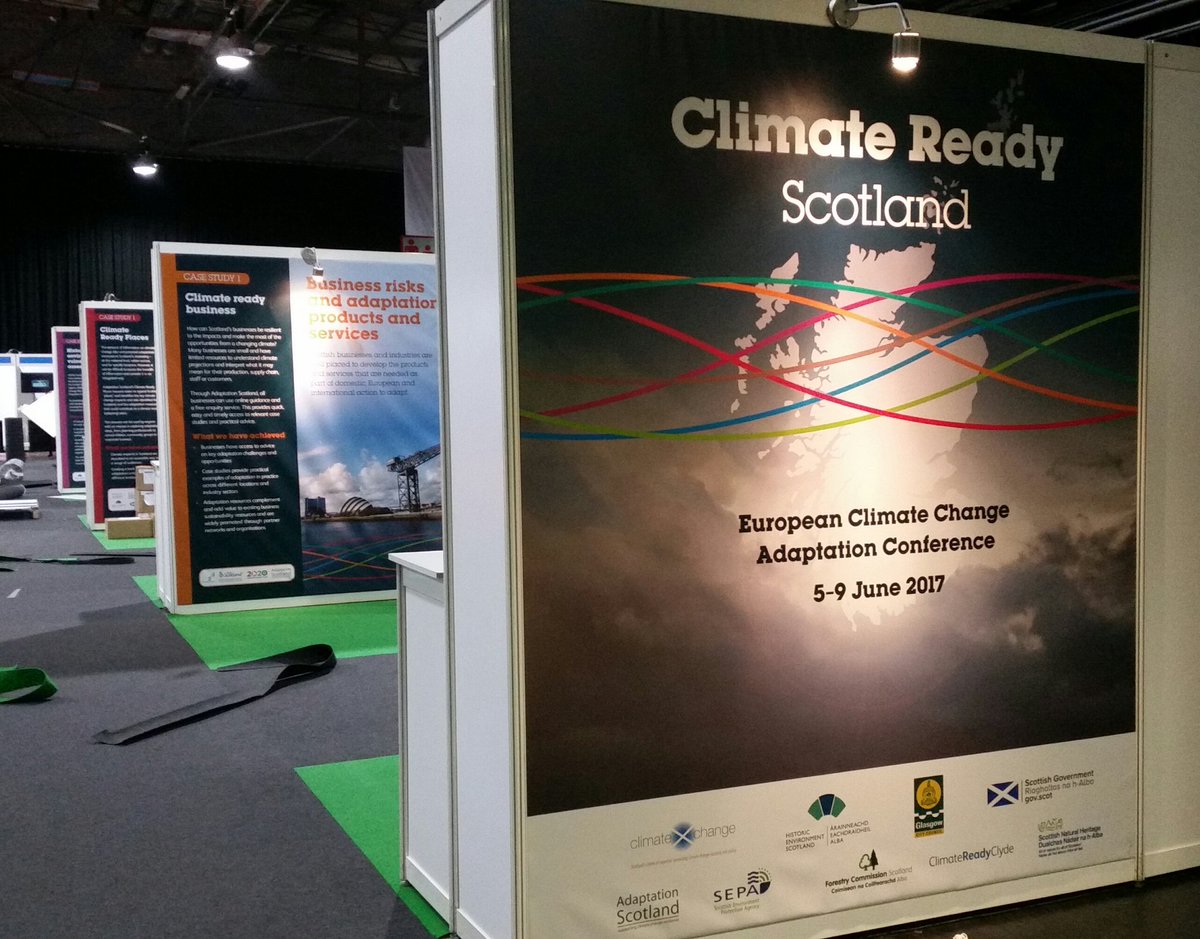
3rd European Climate Change Adaptation Conference

5-9 June 2017. Glasgow. Over 850 people attended the ECCA 2017: Our Climate Ready Future, with
presenters from 48 countries on five continents.

The packed programme featured three plenary sessions, 85 parallel sessions, a poster drinks reception, a Ceilidh and a film screening. This year, for the first time, there was a special Business and Innovation programme which ran in parallel with the first two days of the conference.
Scotland supports eleven water
projects in Africa
 thanks to Scotland's expertise in water

The closing Plenary focused on the way forward for climate adaptation research, opened by Diogo de Gusmao-Soerensen, Head of Climate Services, Climate Action and Earth Observations, Direcotrate-General for Research and Innovation, European Commission.

EUPORIAS: Added value of using a regional climate model for seasonal forecasting in eastern Africa (Florian Gallo, Met Office)
Weather and climate information on a seasonal timescale is vital in many developing countries around the world. In particular, information on monsoon characteristics is of primary importance for planning and adaptation for rural population in tropical regions. For this reason, the demand for seasonal data is growing in developing countries. However, the ongoing climate change is having an impact on interannual variability, increasing the difficulty for decision-making on such timescales.
EUPORIAS project, aims to assess the added value of using a regional climate model (RCM) to generate seasonal climate information over eastern Africa, focusing on the rainy Kiremt season (JJAS).
Inserting rights and justice into urban resilience: a focus on everyday risk (Eric Chu, University of Amsterdam, The Netherlands)
Urban resilience needs to be placed within the context of global systems, which highlights the need to reimagine the role that African cities might play in these global finance, politics and science processes.
Policy Polarities: Migration, Climate Change and Adaptation (Dr. Caroline Zickgraf, The Hugo Observatory, University Of Liège)
Coastal megacities in West Africa,  do not possess the infrastructure or socio-economic opportunities necessary to cope with a large influx of migrants. Without appropriate adaptation measures in destination areas, rural migrants arrive in precarious urban slums and often become the most vulnerable to coastal flooding, associated health risks and other human security concerns.
South Africa: using Desired Adaptation Outcomes to monitor and evaluate the transition towards climate resilience (Mike Harley, Climate Resilience Ltd)
South Africa’s National Climate Change Response White Paper (NCCRWP) advocates a risk-based approach to adaptation. This seeks to address the immediate and observed threats of climate change to South Africa’s society, economy and environment, and to identify and prioritise short-to-medium term risk management policies and adaptation interventions to reduce vulnerability and build resilience to climate change.
Agricultural impact and adaptation through irrigation: a focus on Sub-Saharan African countries (Lorenza Campagnolo, Fondazione Eni Enrico Mattei) See article 2015,  28 pages
This paper provides a macroeconomic assessment of climate change impact on Sub-Saharan African agriculture using a General Equilibrium framework considering land heterogeneity, rain-fed and irrigated land, and a dedicated capital endowment for irrigation. This specification offers a more detailed description of climate change impacts under two climate scenarios proposed (RCP8.5 with different assumptions on CO2 fertilization effect). Agriculture results are highly vulnerable to climate change and are largely based on rain-fed and traditional crop growth techniques; therefore, an adaptation plan boosting irrigation practices represents a key strategy to cope with climate change and at the same time to favor development.
Capacity building approaches to climate adaptation in African Rangelands: European institutional inputs and outcomes for livelihoods, wildlife and ecosystems. (Michael Thompson, Frankfurt Zoological Society)
UK and European institutions have been supporting governments and civil society institutions and the private sector to adapt to a changing climate in less developed countries. This paper describes the mechanisms by which European climate change adaptation expertise is being provided to help address these issues. The approaches adopted through international advisory programmes, development assistance, and civil sector peer support includes:
  • building networks of expertise (North-South and South-South)
  • supporting grass roots civil society movements
  • and capacity building focussed on government and civil society institutions.
Short ‘pitch-style’ presentations from innovative land use-oriented start-ups and SMEs
  • Dionisio Perez, CMCC (Euro-Mediterranean Centre on Climate Change) Services for local and economy-wide assessment of adaptation actions in agriculture
  • Srini Sundaram, Agvesto Real time risk as a service for farmland assets
  • Tom Downing, Global Climate Adaptation Partnership Expert insights and training for adaptation solutions
  • Vesela Tanaskovic, Afforest4future Making the deserts green
    Moringa Oleifera will end malnourishment and hunger. Afforest4future plans on planting it across the Sahara desert and thus eradicating hunger in the region!
  • Erik Chavez, WINnERS Weather-index based risk services for agricultural protection

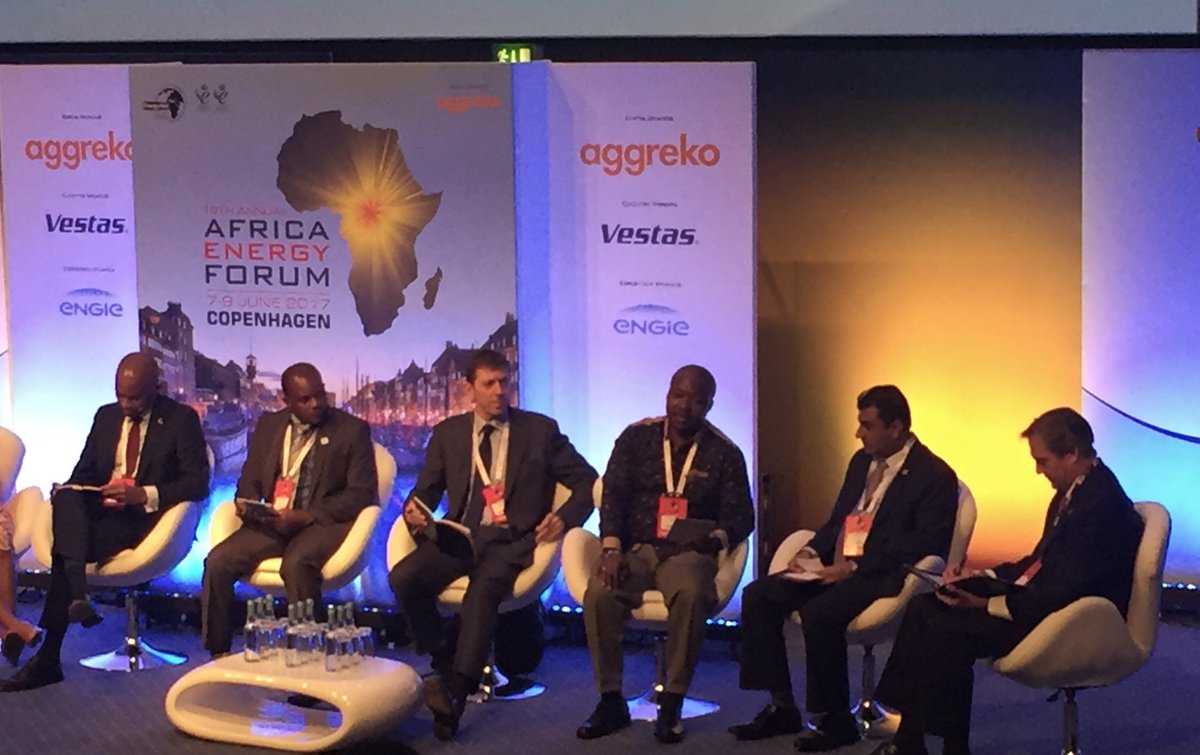
Africa Energy Forum

7-9 June 2017. Copenhagen, Denmark. The Africa Energy Forum (AEF) is the global investment meeting for Africa’s power, energy, infrastructure and industrial sectors. Nineteen years in the running,

AEF brought together senior-level representatives from governments, utilities, regulators, power developers, financial institutions, technology providers, consultants, law firms and large energy consumers to form partnerships, identify opportunities and collectively move the industry forward. AEF has a loyal following of credible players working in the power space, and a track record of delivering a valuable networking experience.

The Off the Grid Club was launched
  • an EnergyNet’s business accelerator and networking hub for the Rural Energy Access community – with the support of 45 members. 
  • The ‘Off the Grid Village’ was the destination and networking hub for the Energy Access and Off Grid Community, occupying premium space at the front of the main exhibition hall. An Innovation Theatre hosted interesting panels, workshops demonstrations and seminars as part of a dedicated off grid Stream of the AEF agenda.
  • Selected students from across the African continent were sponsored to attend this year’s Africa Energy Forum. 
  • The Forum enabled these future leaders to witness the wider impact of the power sector on global economies and industries, understand the impact of electricity and access to energy on industrial development and job creation in Africa.
Extract of the programme: 
New Deal on Energy for Africa – The Way Forward

Moderator: Alain Ebobissé, Chief Executive Officer, Africa50
Speaker: Henry Paul Batchi Baldeh, Director Power Systems Development, AfDB
Investor Participants:
  • Martin Bille Herman, State Secretary for Development Policy, Ministry of Foreign Affairs of Denmark
  • Andrew M. Herscowitz, Coordinator, Power Africa
  • Lucio Monari, Director, Energy and Extractive Global Practice, World Bank
  • Abel Didier Tella, Director-General, Association of Power Utilities of Africa
  • Mike Scholey, Chief Operating Officer and Chief Financial Officer, Globeleq
  • Bruno Bensasson, Chief Executive Officer, ENGIE Africa
What is the Right Energy Mix to Achieve Sustainable Development Goals
Moderator: Mustapha Mourahib, Partner, Clifford Chance
Speakers: 
  • Faith Wandera Odongo, Deputy Director of Renewable Energy, Ministry of Energy and Petroleum, Kenya
  • Mahama Kappiah, Executive Director, ECOWAS Centre for Renewable Energy and Energy Efficiency (ECREEE)
  • Rafael Huarte Lazaro, Director, International Gas Union 
  • Matthew Bell, Director, Business Development, HIMOINSA, South Africa
  • Kate Steel, Energy Director, Power Africa
  • Lisa Pinsley, Director, Actis
  • Andres Isaza, Vice President and Chief Commercial Officer, Renewable Energy, GE
  • Amina Benkhadra, Director General, ONHYM
Project Guarantees – Discussing Solutions for Live Projects
International Investor Partners:
  • Pankaj Gupta, Practice Manager, Financial Solutions, Project Finance and Guarantees, World Bank
  • Paloma Perez de Vega, Head of Division, Project Finance and Guarantees, Global Partners and
  • Neighbouring Countries Department, European Investment Bank
  • Karine Genty, Deputy Head of Unit for Sustainable Energy and Climate Change, Directorate-General for International Cooperation and Development, European Commission
African Public Sector Stakeholders:
  • Karén Breytenbach, Head of IPP Projects, IPP Office, South Africa
  • Samuel Boakye-Appiah, Ag, Managing Director of Electricity Company of Ghana
  • Kwadwo Obeng Ayensu, Director/Engineering, Electricity Company of Ghana, Ghana
  • Omar Vajeth, Head – SAPP Project Advisory Unit, Southern African Power Pool (SAPP)

Wednesday, June 14, 2017

GFAR webinar Farm Radio, Community Radio and Participatory Radio

13 June 2017. This webinar was a collaborative effort: the panel of professional communicators worked together to share their experiences and approaches, their trials and errors.
  • Karen Hampson is Regional Programs Manager with Farm Radio International (FRI), a Canadian NGO. She has over 20 years experience in international development, working with farming communities on three continents in various guises.
  • Lucky A. Komba a.k.a Allan Lucky – is a media personality, media consultant, education activist and a digital expert who’s been in the communication industry for 12 years. He started with experiential marketing campaigns in 2005 and eventually made an entry to TV & radio career with East Africa Television Ltd (EATV) in 2008. He was among the founders of the most famous high school TV show in Tanzania in 2009 – Skonga, which still airs on East Africa Television (EATV).
  • Rainbow Wilcox is Africa’s Voices Foundation‘s Impact, Learning and Communications Manager.
  • Riccardo del Castello is a Communication for Development (ComDev) Officer at the Food and Agriculture Organization of the United Nations (FAO). He has more than 30 years of experience in participatory communication processes in agricultural and rural development, with a focus on food security and nutrition.


Some resources and links:
Pantnagar Janvani is a Community Radio Service in which Mobile Phones have been strategically and prominently utilized in the project to create a platform of sharing and interaction among stakeholders to utilize Community radio strength upto its fullest.

  • The outcomes have been surprisingly outstanding due to mobile phone interface in Community radio service at three layers. 
  • The CRS works as platform provider, the community avails it for information seeking as well as sharing and the stakeholders get it for providing instant solution, connectivity with community for inter-personal communication, answering grievances as well as in updating the community for forthcoming plans and programmes. 
  • Mobile phones are the only communication tools in this interface.

Monday, June 12, 2017

Investing in women agri-entrepreneurs


Organised by: CTA, PAFO, Agricord
Today, women in Africa are largely restricted to the type of microfinance that is typical of development programmes. The experience of Ugandan entrepreneur Lovin Kobusingye has shown that with persistence and drive, African women’s agri-businesses can thrive. When Kobusingye was refused bank credit – despite a surge in orders following her appearances in the Ugandan press and on national TV – she received the fresh fish she needed for her processed fish ‘sausages’ on credit from her poor farmers’ suppliers and paid them out of the proceeds of the sales. Her company now exports products across Africa, trades with Lebanon and is exploring ways to enter European and US markets.

The European Investment Bank is among the international financial institutions that are trying to

strengthen the business environment for women like Kobusingye, with new credit structures that will allow entrepreneurs to get enough large-scale loans for them to launch small and medium-sized enterprises or grow bigger corporations.

Two Kenyan women, for example, have developed a phone-based credit score and lending system. The She Trades initiative focuses on seven areas critical to the expansion of women-owned enterprises in Africa, helping women farmers to escape from their traditional roles in low-paid primary production. 


Comprehensive data collection on agri-businesses is seen as a first step to bring government and scientific partners together to diversify crops, increase output and promote value-adding activities such as food processing and exporting.
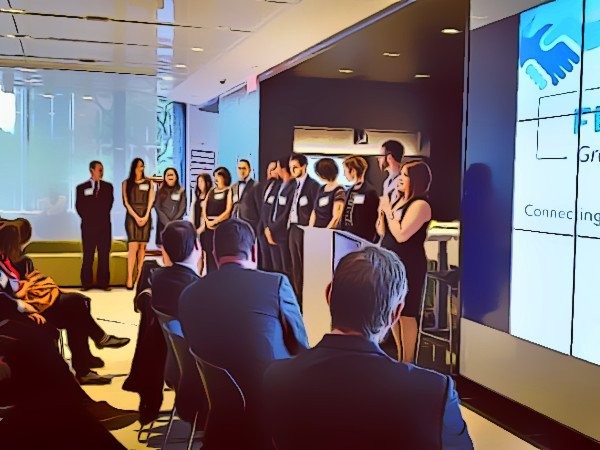
Moderator
  • Michael Hailu, Director CTA
  • Vanessa Erogbogbo, Head of Women and Trade Programme, International Trade Centre (see below video)
  • Heike Ruettgers, Head of Mandates Management, European Investment Bank
    In her presentation Heike refers to FarmDrive (Kenya) which is transforming how smallholder farmers access financial services and she also refers to Boost Africa: empowering young African entrepreneurs (see below audio video)
    In her answer to a question Heike @1:11:30 says
    "We have to showcase what is bankable"
    "It is crucial to have a network in Africa about those innovative ideas which are happening in one place but there may have a technical solution in another place"
    "It needs more joint efforts to demonstrate such success cases"
    "Financial intermediaries need to be associated to this"
  • Lovin Kobusingye, Managing Director, Kati Farms Ltd
    Kobusingye’s humour and determination made her success story a pleasure to hear. Her practicality and can-do approach to problem solving overcame every obstacle.
    See also 
    CTA - Brussels Briefings Videos – Lovin Kobusingye – Managing Director, Kati Farms Uganda - Women entrepreneurs – key players in ACP agribusiness development
    "I have not found in this whole EDD market a supplier of sausage casings... Imagine how difficult it is to find in in Africa"
  • Marie-Joseph Medzeme Engama, Chargée de Programmes de Développement des Chaînes de Valeur agricole, Plateforme Régionale des Organisations Paysannes d'Afrique Centrale
  • Fatma Ben Rejeb, CEO PAFO (Organisation panafricaine des agriculteurs)
    "PAFO will organise business fora, among others on energy and processing food"
Questions among others from
  • Energy for impact. For businesses to grow and markets to expand, certain resources need to be in place, and in much of the developing world they are hard to come by: technology, skills, delivery networks and capital. The activities of Energy for impact are designed to help businesses overcome these gaps, and so to flourish, build markets and expand energy access in the form of energy-efficient cookstoves, briquettes, solar lighting and home systems, biogas and mini-grid electrification.
  • Practical Action. Practical Action uses low cost, appropriate, small-scale development solutions to help people to help themselves

AUDIO STARTS @ 6:30


Related: ‘Africa Tech Ventures’ – a venture fund focused on investing in and accelerating the growth of disruptive tech-enabled startups and businesses in Sub-Saharan Africa.