Platform for African – European Partnership in Agricultural Research for Development

Saturday, February 10, 2018

Third Africa Science, Technology and Innovation Forum

10-12 February 2018. Cairo, Egypt. The theme of the third edition of the 2018 Africa STI Forum, co-organized by the African Development Bank and the Egyptian Government,  is “Enhancing the competitiveness of the African private sector and transforming Africa through science, technology and innovation” – aligns with the Bank’s Ten Year Strategy and High 5 development priorities.

Download the MINISTERIAL DECLARATION of THE THIRD AFRICA SCIENCE, TECHNOLOGY AND INNOVATION FORUM CAIRO, EGYPT (6 pages). 

The Forum gives priority to innovation in five areas selected for their great potential to boost and transform the economies of the continent: climate change, nutrition, water, ICTand the pharmaceutical industry.
  • As a space for exchange and promotion of knowledge, the STI Forum allows a wide dissemination of the latest knowledge and technologies, best practices both at regional and global level, besides promoting entrepreneurship in higher education as well as in science and technology. African political leaders and other decision-makers - current and future - have the opportunity to draw together a common roadmap for scaling up science, technology and innovation for the African continent.
  • In addition to many African Ministers of Higher Education, Science and Technology, the STI Forum brings together different actors from the public and private sectors, scientists, researchers, inventors - including many young people - and cooperation partners for the development.
Egypt, the host of the third edition of the Africa STI Forum, is one of the continent’s highest-achieving countries in science and technology, particularly at the forefront of chemistry and engineering. The last edition of the forum took place in Rabat, Morocco, in 2014, two years after the first Africa STI Forum was hosted by Kenya.

In addition to the invaluable support of the Republic of Korea and ADEA) hosted by the Bank.
Japan, the Forum is supported by approximately 20 prestigious institutional and private partners, including the African Union, the United Nations Economic Commission for Africa, UNESCO, the World Bank, and the Association for the Development of Education in Africa.


Extract of the programme:

Parallel Session 11/02European Union- Africa Research and Innovation Partnership: Policy Framework and Funding Instruments 
Moderator: 
Prof. Hany El Shemy, Co-Chair, EU- AU High level Policy Dialogue (HLPD) on Science, Technology and Innovation
Panelists:
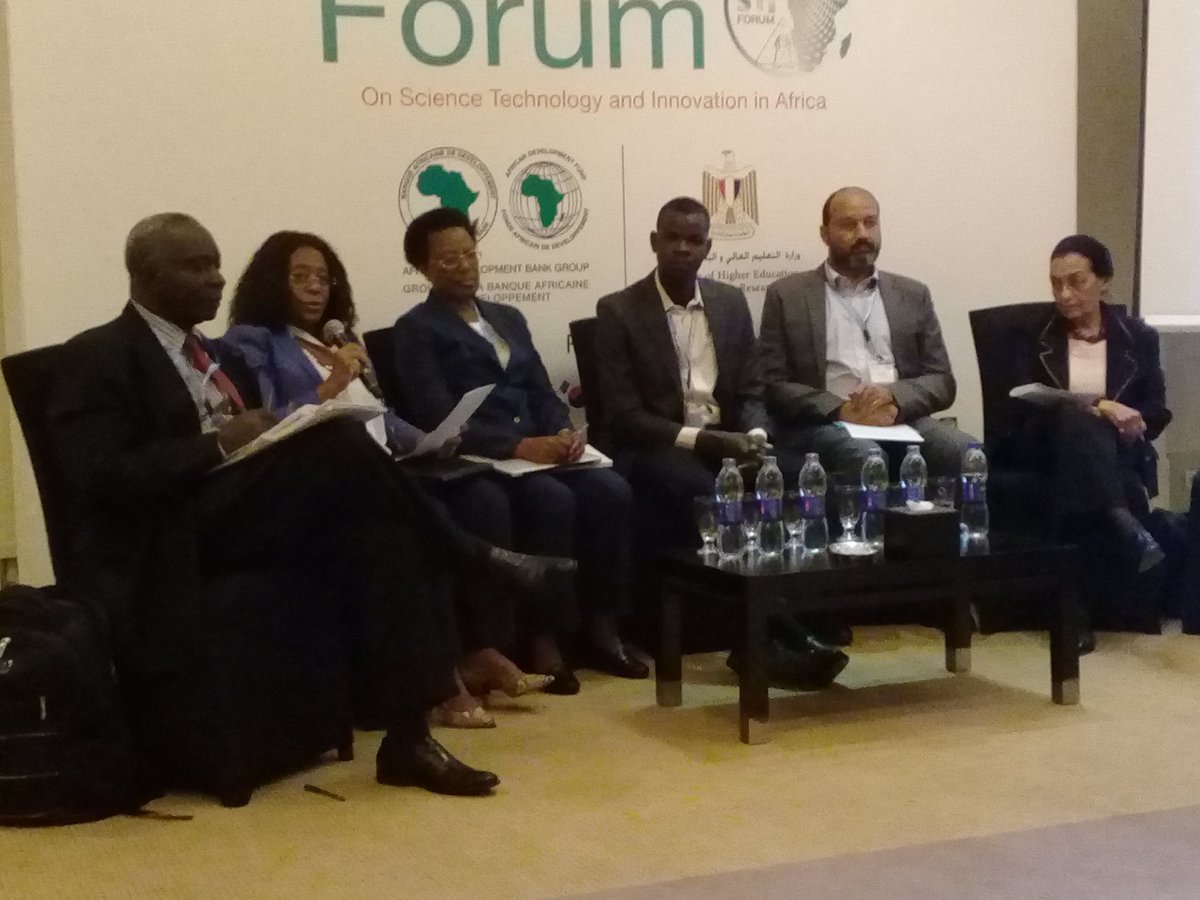
  • Ms. Fadila Boughanemi, DG Research and Innovation, European Commission 
  • Dr. Heba Gaber, Research and Innovation regional officer, European Union Delegation to Egypt 
  • Dr. Tarek El Arabi, Ministry of Higher Education and Scientific Research, Egypt 
  • Mrs. Gift Kadzamira, National Commission for Science and Technology, Malawi 
  • Dr. Mohhamed Salheon, Advisor to the Minister of Higher Education for Strategic planning, Egypt.
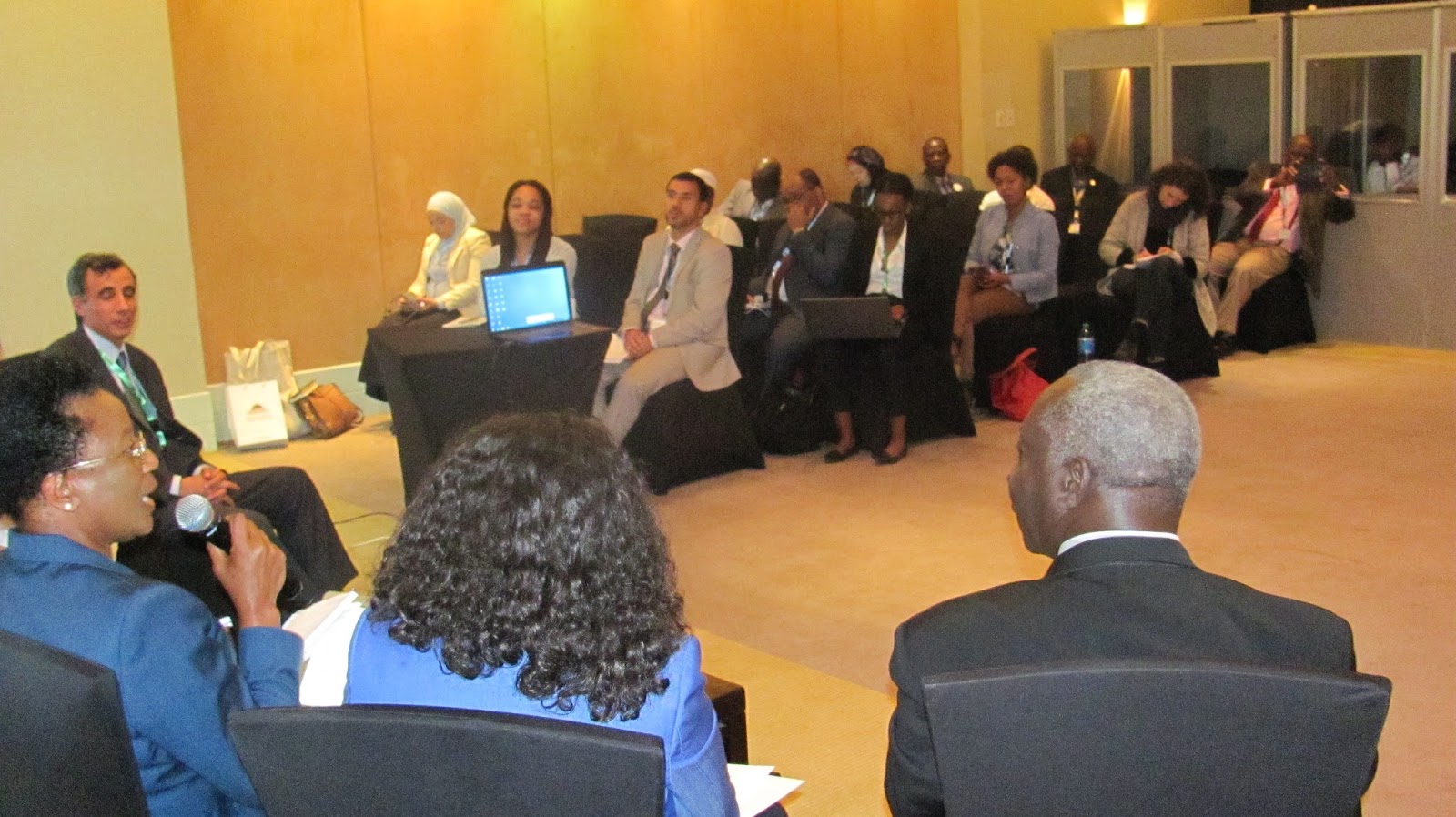
Parallel Session 11/02: Food and nutrition technology: Innovative pathways to build grey matter infrastructure in Africa

Moderator: Prof. Adipala Ekwamu, Executive Secretary, RUFORUM
Panelists: 
  • H.E. Dr. Maria do Rosário Bragança, Minister of Higher Education, Science, Technology and Innovation, Angola
    Study of traditional nutritious food is essential for our populations. It's also important to tackle the rise of non-communicable diseases like obesity.
  • Prof. Joyce Kinabo, e-Nutrition Academy and Sokoine University of Agriculture, Tanzania

    Which academical response is needed to address the nutritional problem? Not all solutions need to be hightech. In Rwanda 1 day per week is a car free day to force people to move more.
  • Prof. Hany A. El-Shemy, Minister Advisor for African Affairs, Ministry of Higher Education and Scientific research, Egypt
    We want to establish a platform for international collaboration (involving Egypt, Kenya, Uganda, Ghana and some European universities) and to harness and track all publications in the agricultural faculties of research which was done a field level. We created an incentive when researchers have published in ranked publications.  
  • Mr. Kahitouo Hien, Young scientist Graduate from the International Institute of Water and Environnent (2iE, Burkina Faso) and CEO, FasoProf, Burkina Faso
    Il est important d'appliquer les résultats de la recherche pour pallier aux déficits sociaux. Les chenilles de karité sont des insectes comestibles. En 2012 comme étudiant j'ai découvert que c'est l'un des insectes avec le plus protéines. (La viande du pauvre). Depuis 2015 après deux ans d'incubation nous arrivons à travailler avec 500 femmes. Nous avons 4 gammes de produits. La consommation d'insecte est une tradition dans plusieurs pays africains et dans nos sociétés. Il faut valoriser les insectes et mettre à la
    disposition de nos populations. Le but est de diversifies la gamme de produits. Et il y a des manières de le transformer pour le rendre acceptable : exemple comme comprime. Les chercheurs doivent nous aider afin qu'on puisse cultiver les insectes comestibles a grande échelle.
  • Mr. Faris Farrag, Founder of Bustan Aquaponics, Egypt
    What is the role of the private sector? The system requires a sustained source of energy: day and night. STI should resolve this. It requires a multi
    disciplinary and a multi stakeholder approach. We work with several Egyptian and international universities to realise this. There is a lot of potential for closer collaboration between research and Small and Medium Enterprises. We also work on renewable and sustainable packaging. Unfortunately the quality of agricultural engineers is rather low.
Discussant: 
Dr. Habiba Hassan-Wassef
  • Dr. Habiba Hassan-Wassef, Medical Doctor and Nutrition Expert, Egypt Discussions: Q/A from the audience 
A 2015 study published by The Lancet Global Health journal looked at the consumption of food (both healthy and unhealthy items) and nutrients in 187 countries in 1990 and then again in 2010. The aim was to determine which countries had the world’s healthiest diets. It found that none of the healthiest ten diets is in a wealthy Western nation, nor are any in Asia. Most were found in Africa, which is so often portrayed as a continent of constant famine in need of foreign know-how and advice on how to eat and to grow food. And yet, of the ten countries with the healthiest diets on earth, nine of them are African. This doesn’t mean that these countries have no food insecurity, hunger or malnutrition. But it does mean that it is time for a serious rethink on how “development” affects diets – especially among the development agencies, international institutions and donors in the (sometimes lucrative and self-serving) business of food aid or improving food security and nutrition in Africa.There is a need to better understand and document the trends in consumption to put in place agro industries. Another gap is appropriate legal frameworks. Food processing and intra food processing need to be dealt with. 
Grey matter is now crucial for the African Development Bank. It is important to train and create capacity in African food systems. If we want to report on advancing FNSSA research we have to overcome language barriers between anglophone, francophone and Portuguese (Lusophone) speaking African.
Evidence based policy: few African countries have translated research from FP7 in policy. It is important to exchange information on urgent nutritional and health hazards like the problem of aflatoxin.  
There is an interruption in trans-generational transmission of knowledge related to food. For example: young Moroccans are loosing the knowledge of the virtues of medicinal plants.We need to invest in African food traditions.   
There is a lot of progress in how to make insect food acceptableScience and technology can give a support during man made disasters and use insect food to tackle severe malnutrition.  Nutrition is hardly present in the curriculum of agricultural research scientists.  But it is encouraging to see that in Senegal the Nutrition coordination is at the level of the prime Ministers' office. 
Parallel Session 11/02 : Improving Diaspora Partnerships in higher education, research and Development: Promoting Brain Circulation Organized by AIMS

Moderator
Ms. Nathalie Munyampenda, Associate Director -Partnerships and Public Engagement, Next Einstein Forum 
Panelists
  • Dr Thomas Auf der Heyde, Deputy Director-General for Research and Development Support Department of Science and Technology, South Africa 
  • Dr. Solomon Assefa, Director of IBM Research Africa 
  • Dr. Ingrid Ursula Wüning Tschol, Vice-President for Strategy, Robert Bosch Stiftung 
  • Dr. Youssef Travaly, VP of Science, Innovation & Partnerships, Next Einstein Forum 
  • Dr. Assane Gueye, Research Professor, University Alioune Diop of Bambey and NEF Fello
Related:


Related:
PAEPARD interviewed (October 2016) Prof. Dr. Hany El-Shemy of the Faculty of Agriculture, Cairo University on the curriculum revision , its challenges and the collaboration with the private sector.

Questions:
  • What is the purpose of the curriculum revision?
  • What have been the biggest challenges of this curriculum revision?
  • Are farmers and private sector represented in the Faculty Council?
  • How do you attract EC funding and researchers from the European Union?
  • What about the collaboration with Sub Saharan Africa?

Thursday, February 8, 2018

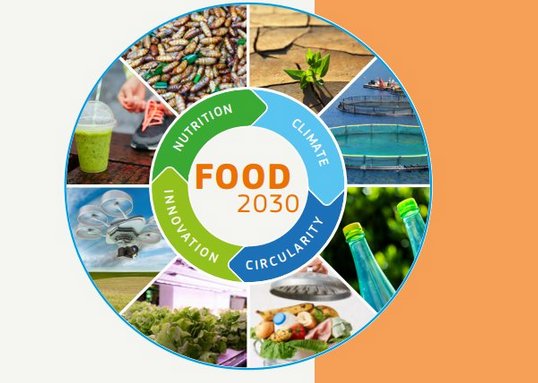
Harnessing Research and Innovation for FOOD 2030

8 February 2018. Outcome report of the FOOD 2030 conference "Harnessing Research and Innovation for FOOD 2030: A science policy dialogue". 60 pages

This conference was held in Brussels on the occasion of World Food Day on 16th October 2017 and highlighted successful European research and innovation outcomes relevant to Food and Nutrition Security and provided inspiration for further development of priorities which will play a key role in achieving the objectives of FOOD 2030.

The report will soon be also available online on the Food 2030 website: http://ec.europa.eu/research/bioeconomy/index.cfm?pg=policy&lib=food2030.

The Second FOOD 2030 High Level Event "Research & Innovation for Food and Nutrition Security – Transforming our food systems“ will take place from 14-15 June 2018 at the Agricultural University in Plovdiv under the auspices of the Bulgarian Presidency of the EU. A web site for on-line registration will be made available shortly and information will be provided at www.eu2018bg.bg.

Extracts:
The role of Research and Innovation in food systems is crucial to support long-term EU targets, Member States and regional priorities, relevant to natural resource management priorities, climate action, soil, air, water and biodiversity. Research and Innovation in food systems needs to tackle the complex phenomenon of migration for the long term. Research and Innovation has the opportunity to strengthen policy coherence and coverage in food systems, as well as the targeting of actors with influence. (page 4) 
There is a need for more face-to-face interactions with policy makers and  implementation mechanisms for research results to have measurable impact. (page 4) 
For the development of new products or by-products related to the circular economy it is important to go beyond the classical sectors and have a close look at the demand side. Cooperation with industry in this frame is also needed. (page 5) 
There is no single solution to the complex phenomenon of migration and a long-term approach will be needed. A key element in the process will be to improve the food and nutrition security in migrants' home countries and invest in rural development and agriculture to address some root causes of migration. (page 10) 
In 2017 many reports analysed the future of food systems globally. Unlike reports in previous years they adopt more and more a systematic approach, so they don't look at individual sectors alone and call e.g. for a boost of agricultural production. These recent reports look at the other factors of the food equation, calling for nutrition sensitive agriculture, addressing the need to reduce losses in the food system and addressing obesity risks in developing countries where the diet is solely based on sugar and cheap carbohydrates and lack diversity. (...) The reasons behind this increased attention by science and policy to the food systems approach, including sustainability concerns around food and agriculture and transformative science and technologies which are driving this growing interest.  
The Inter Academy Partnership study on Food and Nutrition Security and Agriculture 2017/18 could have a profound impact around the globe on how food systems are discussed at the science/policy interface.
See PAEPARD blogpost: 08/02/2018 Opportunities and Challenges for Research on Food and Nutrition Security and Agriculture in Europe
All world regions are engaged in the debate and are about to publish their regional report before the first half of 2018 when the global report is finalised. The approach is science based with a strict peer review process for all regional reports and the global synthesis report. (page 11) 
The African report is an example that will be inspired by African science policy agendas, including the Malabo declaration or the Comprehensive African Agricultural Development Programme and also the EU-African Union High Level Policy Dialogue on Food and Nutrition Security and Sustainable Agriculture.  (page 11) 
Related:
APRIL 06, 2017. Halle, Germany. IAP - Academies discuss Food and Nutrition Security and Agriculture Community Feed
While the regional reports and the ultimate global report are still being finalised, it is clear that there is a role for science in developing a holistic food system, for example by utilising new technologies to improve agricultural production (such as biotechnology or precision agriculture), and by highlighting areas where appropriate regulations need to be implemented (such as seed quality and initiatives to encourage people to switch to healthier behaviours). Likewise, there is a need for innovation and entrepreneurship to develop new food preservation and processing technologies so that the food that is grown can reach the markets. 

This will also create jobs – important in regions where there is a growing young population. Social scientists must work with governments and other stakeholders to devise the best ways to inform the public about healthy eating and ensure that all members of society, including the poorest and most marginalised, can access an adequate diet. And there is a need to use the opportunities provided by ‘big data’ to improve monitoring and evaluation of food chains.

The circular economy in developing countries

7 February 2018. Brussels. Infopoint Lunchtime conference. The circular economy is a high priority of the EU. It is now also gaining traction with the international development community, and there is growing optimism about the potential of the circular economy as a new model for sustainable growth in developing countries.

Presentations:
  • Astrid Schomaker, Director, DG ENV.F - Global Sustainable Development
  • Felix Preston, Senior Research Fellow and Deputy Research Director, Energy, Environment and Resources, Chatham House

If you would like to watch the video of the conference, please click on this link.
Summary
CHATHAM HOUSE BRIEFING
Briefing December 2017 Energy, Environment and Resources Department, 24 pages
  • There is growing optimism about the potential of the ‘circular economy’ (CE) as a new model for sustainable growth in developing countries. A CE is one in which products are recycled, repaired or reused rather than thrown away, and in which waste from one process becomes an input into other processes. In recent months there has been CE-related activity in countries as diverse as Laos, Rwanda and Colombia.
  • A CE strategy could help lower-income countries ‘leapfrog’ to a more sustainable development pathway that avoids locking in resource-intensive practices and infrastructure. But a stronger evidence base is needed to show how the agenda can deliver opportunities for industrialization, as well as addressing environmental insecurity.
  • Lower-income countries are in many ways more ‘circular’ than their developed-economy counterparts – the question is how to turn this into a development opportunity. Much economic activity in lower-income countries revolves around sorting and reusing waste. However, higher-value, employment-generating opportunities for reuse and remanufacturing are yet to be captured.
  • The existence of circular activities in developing countries provides excellent political ‘entry points’, which could enable governments, the private sector, civil society and other actors to promote innovative economic models. The CE could provide a powerful narrative, helping to build momentum around a set of ideas that can be applied in and tailored to multiple sectors or cities.
  • There is a window of opportunity in which to align the efforts of development organizations and partner countries. Donors are exploring how the agenda should be aligned with the Sustainable Development Goals (SDGs) and the Paris Climate Agreement. Wider international cooperation on the CE could involve trade partnerships, regional hubs or pilot zones.

Opportunities and Challenges for Research on Food and Nutrition Security and Agriculture in Europe


Report for European audiences as a contribution to a worldwide project initiated by IAP, the InterAcademy Partnership, the global network of science academies.

Downloads
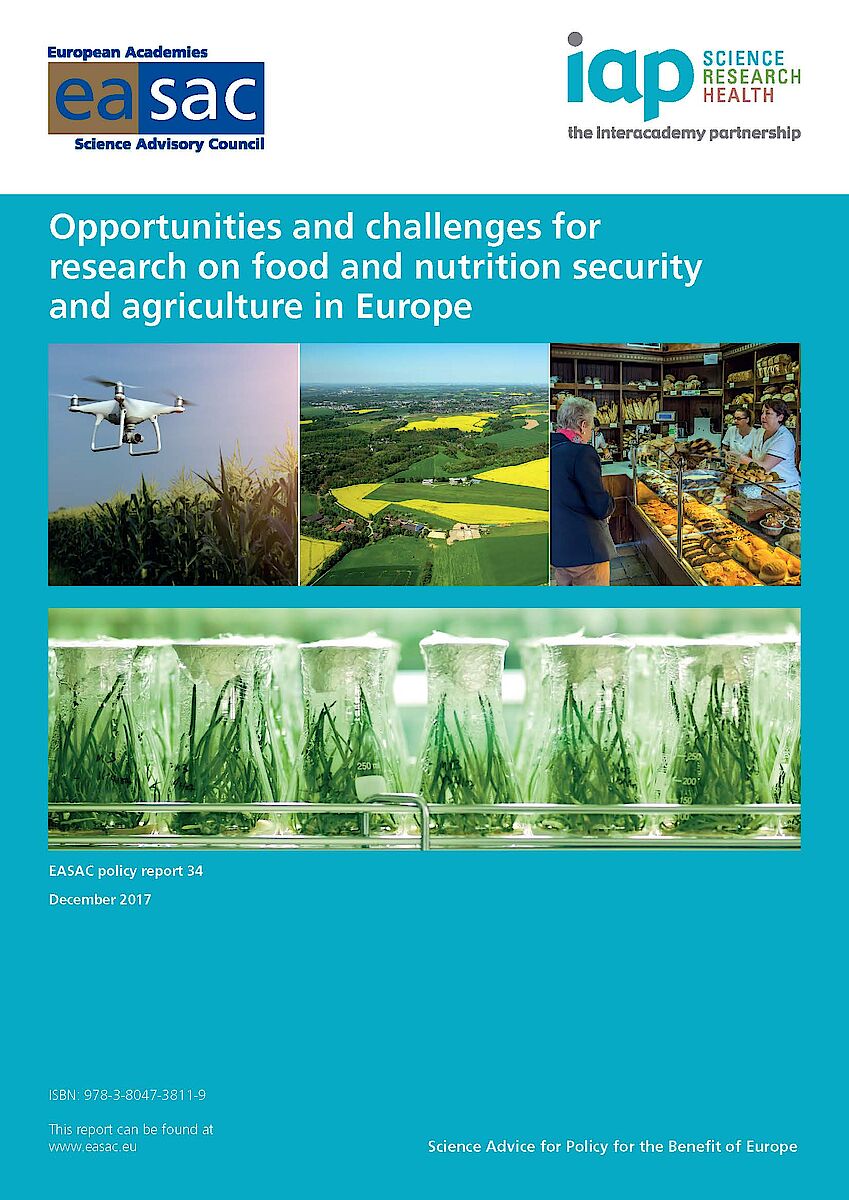
EASAC IAP Report on Food Security
December 2017. EASAC policy report 34, 80 pages

National academies of science have a long tradition of engaging widely to strengthen the evidence base to underpin the delivery of enhanced food and nutrition security at regional and national levels. EASAC, the European Academies Science Advisory Council, has produced this report for European audiences as a contribution to a project worldwide initiated by IAP, the InterAcademy Partnership, the global network of science academies. The IAP work brings together regional perspectives in parallel from Africa, Asia, the Americas and Europe on the opportunities for the science-policy interface, identifying how research can contribute to resolving challenges for agriculture, food systems and nutrition.

This EASAC report combines analysis of the current status in Europe with exploration of ways forward. Overconsumption of calorie-dense foods leading to overweight and obesity creates a major public health problem in Europe but Europeans are not immune from other concerns about food and nutrition security and must also recognise the impact of their activities on the rest of the world. We define the goal of food and nutrition security as providing access for all to a healthy and affordable diet that is environmentally sustainable. It recognises the necessity to take account of diversity: in food systems and dietary intakes within and between countries, and in the variability of nutrient requirements in vulnerable groups within populations and across the individual's lifecycle.

Extracts
EU development assistance should be viewed broadly, to include international collaborative research; research in the EU on priorities for global food systems, their resilience and perturbations; sharing of science and technology especially related to food and nutrition security; and resolution of international governance issues of food and agriculture. page 2
The linkages between basic science and problem-solving applied science seem likely to become more closely related in the future. This is so in the fields of biosciences, digitisation, mathematics and farm precision technologies, health and behaviour, as well as in complex environmental and food system modelling. This has consequences for the redesign of the science landscape and for science teaching and the training of next-generation scientists to address food, nutrition and agriculture issues. page 3
Tackling the food systems’ challenges requires new knowledge from the natural and social sciences as a resource for innovation and for informing policy options across a very broad front. Scientific knowledge is a global public good, provided by a wide range of research institutions, supported by a wide range of funders. There is need to give increased prominence to all the elements necessary in a global research agenda to improve food and nutrition security. page 6. An agenda for addressing gaps in agriculture climate adaptation research must also include the social sciences, for example to understand farmer behaviour (Davidson, 2016), because climate-smart agriculture requires coordinated actions by farmers, researchers, the private sector, civil society and policymakers to identify and introduce climate-resilient pathways page 17
Capitalising on scientific opportunity is something that should pervade EU policy widely and not just a matter for those involved in funding and prioritising  the research agenda.page 10
Up to 70% of the EU’s food imports come from developing world areas, (...) analysis of global changes demonstrates that increasing temperatures are associated with migration flows from countries that base a large part of their economies on agriculture and can be attributed to crop yield losses. In particular, climate-induced migration enlarges the flow in already established migration routes— suggesting that this will be a continuing challenge for the EU. page 17
The current research landscape is fragmented and there are gaps in the translation of research outputs to innovation and in the policy take-up. There is urgent need to take account of the disparate outputs from the various initiatives to synthesise the evidence base and to deploy that new knowledge for innovation and to advise policy development. page 19
There is also a critical need to develop new options for public– private partnership to shape and implement research priorities. page 19 
Haddad L et al. (2016). A new global research agenda for food. Nature 540, 30–32.
 We need better mechanisms for public private dialogue to shape and then implement research priorities that will enable the food system to deliver higher-quality diets. Pre-competitive collaborations across sectors, perhaps facilitated by public actors, could be important to shift sectors collectively and overcome disincentives for single firms to conduct research in isolation. The Business Partnerships for Nutrition Research hosed by GAIN is one such example. To strengthen accountability in the public-private domain, research is needed on which partnerships tend to be more diet-improving than others. Such research exists in the health field, but not in the nutrition field. 
(...) Funders who support agriculture and nutrition research need to focus much more of their resources on food intake and on diets. The era of commodity research aimed at feeding a starving world is over; a new era has begun that requires us to nourish all consumers globally in ways that can be sustained environmentally, economically and culturally. Highincome countries do not have a monopoly on poor-quality diets — nor do they yet have the solutions. Scientists and the academic journals in which they publish need to become more pluralistic in the methods and approaches that they support. Narrow disciplinary lenses cannot help us in addressing today’s challenges
The interfaces between research on the nutrition sensitivity of food and agriculture systems and on environmental sustainability must be addressed to connect scientific knowledge on natural resources to the food value chain. One major priority is to generate and use better knowledge about climatesmart adaptation and mitigation in food systems. Another priority is to ensure that progress in food and nutrition security capitalises on other actions for the bioeconomy. page 49
to be continued 

Monday, February 5, 2018

Sustainable Agricultural Mechanization of Conservation Agriculture

Sustainable Agricultural Mechanization of Conservation Agriculture in Smallholder Kenyan Maize Farmers for Sustainable Intensification and Increased Climate Resilience 
– Student Dissertation by Holly E. Morgan

Upscaling of sustainable-intensification systems such as conservation agriculture, which has shown great capacity to increase farm productivity and climate-resilience while reducing environmental degradation, has yet seen limited uptake in sub-Saharan Africa despite its potential. The purpose of this study is to examine challenges and successes of sustainable agricultural mechanization of conservation agriculture, a vital component of the innovation’s success, by conducting a location-based case-study in Laikipia, Kenya.

Areas in need of attention were: finance, extension services, and equipment access. Recommendations for issue remediation were developed from stakeholder interviews conducted in the case study, and findings from examination of mechanization success-stories in other countries and systems. Continued examination of trends across different communities and contexts will support a more robust, exhaustive understanding of mechanization challenges and opportunities, thereby enabling informed policy-making and project design for upscaling conservation agriculture. 

High-level meeting Achieving Zero Hunger in Africa by 2025


27 January 2018. African Heads of State gathered in Addis Ababa, Ethiopia for the 30th African Union Summit to discuss issues vital to the continent’s progress and prospect.

A high-level meeting was organised in the margins of the Summit on “Achieving Zero Hunger in Africa by 2025” which aimed to review and renew the 2013 partnership between the AU, FAO and the Instituto Lula to end hunger and malnutrition.
There is a need for a deepening and broadening of hunger-fighting initiatives in Africa in order to put the continent back on track to eliminate the scourge of undernutrition. Achieving zero hunger in our lifetime is still possible, although it will require a redoubling of current efforts and a push for political commitment and timely concrete actions such as never seen before. Investment in agriculture development is “the single most effective way to provide opportunities for families to generate income and improve nutrition in Africa,” Graziano da Silva, FAO Director General
The high-level meeting was co-organised by the African Union (AU) Commission and Ethiopia’s Ministry of Agriculture with support from FAO and the UN Economic Commission for Africa (ECA).

Participants at the high-level event included:

  • the UN Secretary General Antonio Guterres, 
  • leaders from the African Development Bank (AfDB), 
  • the Alliance for a Green Revolution in Africa (AGRA), 
  • the International Fund for Agricultural Development (IFAD), 
  • the New Partnership for Africa's Development (NEPAD), 
  • ECA

Preparations for the European Development Days 2018 kicks off

24 January 2018. The first preparatory meeting for this year’s edition of European Development Days 2018 also known locally as the EDDs took place at the European Commission. The aim of the annual event is to bring together the development community to share ideas and experiences in ways that inspire new partnerships and innovative solutions to the world’s most pressing challenges.

Established in 2006, the theme of the 12th EDDs will be on Women and Girls at the Forefront of Sustainable Development: protect, empower and invest.”

The EDD 2018 will take place in Brussels on 5-6 June 2018.

Friday, February 2, 2018

January PAEPARD blog posts

Hereunder you will find an overview of the blog posts related to ARD activities in January 2018. 

Veuillez trouver ci-dessous les ressources du blog se relatant à la RAD pour le mois de janvier 2018. Pour consulter le blog dans son entièreté au lieu de nouvelles distinctes cliquez sur http://paepard.blogspot.com/Pour la traduction en français cliquez dans la colonne de droite du blog sur « automatic translation » et choisissez votre langue !

Por favor, encontre aqui os posts do blog relacionados à ARD atividades. Para visualizar todo o blog, em vez de postagens em separado clique em http://paepard.blogspot.com/. Para a versão em Português, clique na coluna da direita do blog "tradução automática" e escolha o seu idioma!

This book reviews the existing knowledge on scaling technologies and innovation.
2.       Failing access to agriculture funding new resource ***
30 January 2018. A 2017 report by the Uganda Agribusiness
23-26 January 2018. Davos, Switzerland. AGRA will be focusing in the future on helping to strengthen country capacity to work with the private sector, find investment opportunities and improve leadership around key agriculture issues.
4.       Food East Africa
23-25 January 2018. Nairobi. East Africa platform where international and regional food and beverage companies meet, network and establish business ties.
24 January 2018. This paper assesses the role of learning video in changing vegetable farmers’ behaviour towards sustainable agriculture.
23 January 2018. Webinar. To gain a better understanding of how agriculture interventions can contribute to improved nutrition, USAID’s flagship multi-sectoral nutrition project, Strengthening Partnerships, Results, and Innovations in Nutrition Globally (SPRING), partnered with USAID
7.       Upcoming events in Agriculture for Development PAEPARD activity
From February 2018 onwards
22-25 January 2018.   Ibadan, Nigeria. Sientists, development specialists, agricultural experts, representatives from national agricultural research and extension systems (NARES), and entrepreneurs from the private sector mainly from Africa assembled in IITA for the inauguration and planning workshop of the African Development Bank (AFDB)-funded program called Technologies for African Agricultural Transformation (TAAT).
9.       Living territories for sustainable development new resource **
22-24 January 2018. Montpellier. This conference was organized by CIRAD in partnership with AFD, the CGIAR System Organization and CGIAR Research Program on Policies, Institutions, and Markets (PIM), the NEPAD, the GFAR, UNDP-ART, AgroParisTech, IAMM, INRA, the RIMISP, Wageningen University, and with the support from the French Ministry for Europe and Foreign Affairs and the French Ministry of Agriculture and Food.
22 January 2018. Opportunities and Challenges along the Value Chain. From Agricultural Farming to Food Processing and Distribution.
18-19 January 2018. Nairobi. This workshop took place in conjunction with the International Conference on Powering Agriculture, which aimed to enhance renewable energy solutions for agricultural development, organized by the German International Development Agency (GIZ) and the United States Agency for International Development(USAID).
17 January 2018. Norwegian incubator in search of fintech, agribusiness start-ups.
This call is open to applicant organizations that will work in partnership with others to carry out research in one (or more) of the eligible countries: Burundi; Ethiopia; Kenya; Malawi; Mozambique; Rwanda; Tanzania; Uganda; Zambia; and Zimbabwe. Deadline for applications is 1 March 2018.
This FAO report identifies a range of pathways through which support to food security and livelihoods can also help build resilience against conflict and contribute to sustaining peace.
17 January 2018. The PRIMA Foundation announced the PRIMA Calls for proposals for 2018.
17 January 2018. Innovation Accelerator Kenya call for proposals 2018. The deadline for submission of these proposals is 6th February 2018
17 January 2018. Aid International and Development Webinar.
13-17 January 2018. Researchers at BGI and other centers are in the process of sequencing — and resequencing — the genomes of 101 plants for the African Orphan Crops Consortium (AOCC), an international effort to improve nutrition in Africa through genome-assisted breeding resources and training.
16 January 2018. The Hague. Innovation Network Feeding Cities – 2nd meeting
15 January 2018. "A 'crazy idea' has resulted in the ability to grow durum wheat in the extreme heat of famine-affected Senegal, Mauritania and Mali,
15 – 18 January 2018. Stellenbosch. South Africa. Combined Congress 2018 of the Soil Science Society of South Africa and Crop Science Societies of South Africa, with the African Crop Society. The theme of the Congress is Sustainable agricultural systems for food security in Africa.
12 January 2018. A new CTA publication
12 January 2018. A support to 120 African researchers working to help the continent adapt to climate change and bolster the scientific community
24.   The business of plant breeding new resource ***
12 January 2018. This report is the result of a study on demand-led plant variety design for markets in Africa, sharing the best practices from private and public sector breeding programmes
11-12 January 2018. Arusha, Tanzania. A workshop organised by the African Centre for Research, Agricultural Advancement, Teaching Excellence and Sustainability (CREATES)
99 pages, April 2016. This study focuses on the willingness to pay for agricultural training through video in the Oueme valley (Benin).
10 January 2018. Webinar.
10 January 2018. A recent paper by Dr Carl Lachat of Gent University, Jessica Raneri of Bioversity International, and others introduces Dietary Species Richness, a new food biodiversity indicator to help examine the correlation between agrobiodiversity and diet quality.
Published 9 January 2018. Final report of the project: Support to Agricultural Research for Development of Strategic Crops in Africa (SARD-SC) (20 pages)
9 January 2018. Key findings in a decade-long research project at the University of Nebraska–Lincoln may lead to solutions in sub-Saharan Africa’s challenge with vitamin A deficiency
8 January 2018. A UNEP report (2015, 212 p), highlights the urgent need for a blended financing model combining publicly, privately, domestically and internationally sourced finances in Africa. Furthermore, in Africa, energy development must be considered a socioeconomic development and job creator accelerator.
8 January 2018. Opinion
7 January 2018. Access Agriculture videos, including the one on yoghurt making and on making a rabbit house.
4 January 2018. Bill Gates, has hailed the efforts of Dr. Segenet Kelemu, Director General of the International Centre of Insect Physiology and Ecology (icipe).
36.   Oxford Farming Conference + video
3-5 January 2018. Oxford. Professor Leon A. Terry, Director of Environment and Agrifood at Cranfield University, has called for a paradigm shift in funding strategies and research programmes in order to tackle food waste on a global scale.
37.   PAEPARD 2017 in figures PAEPARD activity
Funded by the UK Department for International Development (DFID), APRA’s directorate is at the Institute of Development Studies (IDS), UK.
UNEP launched a new study called: Strengthening the Science-Policy Interface: a Gap Analysis (134 pages). The key findings will be presented to the Member States during the 4th Global authors meeting of the Global Environment Outlook-6, taking place from the 19th to the 23rd of February 2018 in Singapore.

12 December 2017. GFAR has commissioned a series of short videos telling the farmers’ stories in their own words. The videos tell a vital story of why the living conservation and use of these irreplaceable resources are crucial, not just to the communities concerned

Total number of page views in the month of January 2018:
Most viewed pages on PAEPARD blog over the past month: 16,222
Entry
Page views
976
478
200


Strategies For Scaling Agricultural Technologies in Africa

Ajayi M.T, Fatunbi AO and Akinbamijo O. O (2018). Strategies for ScalingAgricultural Technologies in Africa. Forum for Agricultural Research inAfrica (FARA), Accra Ghana

The need to bring existing and upcoming technologies to scale has been highlighted broadly by policy makers and development practitioners in Africa. This felt need came along with the mantra that Africa have a lot of technologies on the shelve that are yet to be translated to socio economic benefit for the stakeholders in the sector. Whether this is factual or not, Africa agriculture requires a systematic way of bringing technologies with very high potentials to scale.

This book aims to bridge this gap in knowledge, by reviewing the existing knowledge on scaling technologies and innovation. It provides a comprehensive review of knowledge and systematically propose various strategies to ensure that agricultural technologies are scaled up and scaled out for mega social and economic benefits.

GFAR champions farmers’ rights to seed and genetic resources in new video

12 December 2017. Over the last four years, GFAR has played a leading role in mobilizing awareness and learning about farmers rights, to help farmers continue to benefit from the crop varieties and traits they have developed over generations, both in their own use and when used for further breeding.

In partnership with the International Treaty on Plant Genetic Resources for Food and Agriculture and with the amazing farmers and civil society organizations who are championing farmers rights around the world, GFAR has directly shared knowledge and learning to promote the conservation and sustainable use of these vital resources by communities themselves, as their birthright and heritage.


Smallholder farmers seldom have a direct voice in shaping policies and understanding of their needs. To celebrate the often unsung work of farming communities, GFAR has commissioned a series of short videos telling the farmers’ stories in their own words. The videos tell a vital story of why the living conservation and use of these irreplaceable resources are crucial, not just to the communities concerned, but to all our futures. We hope that these videos will help understanding at all levels and enable many other farmers to gain from these successful practices.

Available in English, French, Bangla and two Malawian languages (Chichewa and Tumbuka), with more translations planned, these training videos will help to raise farmers’ awareness across the world. Visit the Access Agriculture website to download the videos here: https://www.accessagriculture.org/farmers-rights-seed

Related:
A range of farmers’ capacity development materials have been generated by Juanita Chaves Posada of GFAR Secretariat, working with GFAR Partners in Malawi and Central America. Find out more about this work and how it supports seed policy developmentat the dedicated page on the GFAR website. In the blog post Richness in Diversity, Paul Van Mele of Agro-Insight, talks about his experiences during production of the video.

Thursday, February 1, 2018

Sustainable Rural Bioenergy Solutions in Africa

18-19 January 2018. Nairobi. SUSTAINABLE RURAL BIOENERGY SOLUTIONS IN AFRICA

The workshop was organized by the International Renewable Energy Agency (IRENA), World Agroforestry Center (ICRAF) and Japan Research Center for Agricultural Sciences (JIRCAS).
This workshop took place in conjunction with the International Conference on Powering Agriculture, which aimed to enhance renewable energy solutions for agricultural development, organized by the German International Development Agency (GIZ) and the United States Agency for International Development(USAID).

In rural areas of sub-Saharan Africa, solid bioenergy is the main source of energy for cooking and heating for up to 90 percent of the population. Due to growing demands on food and energy from population growth, coupled with the increasing frequency of natural disasters and climate change, it has become more challenging for rural communities in Sub Saharan Africa to meet their own food, energy and development needs.

This has substantial implications for poverty alleviation as well as for environmental protection, including forests, ecosystems and biological diversity within the region. Various innovative technologies to produce renewable bioenergy, which promote the sustainable use of locally-available resources without disrupting food and water supply, are affordable and efficient and have been emerging within the region. This workshop aims to exchange best practices and tools and establish a sound knowledge basis for policy makers and development practitioners, including private sector actors, non-governmental organizations and researchers.

The workshop focused on three themes (1) Sustainable Rural Biomass Supply, (2) Biomass-to-Energy Innovations, and (3) Tools for Enhanced Bioenergy Sustainability. At the end of the workshop, a panel discussion on the creation of enabling conditions for scaling-up innovation was held.

Download the workshop's agenda.
Presentations
Session 1: Sustainable Rural Biomass Supply
Session 2: Biomass to Energy Innovations
Session 3: Tools for Enhanced Bioenergy Sustainability
Panel Discussion/Plenary Discussion – Creating enabling conditions for scaling-up innovation