Platform for African – European Partnership in Agricultural Research for Development

Wednesday, August 19, 2020

WEBINAR: Mapping the benefits of nature: The use of spatial data in African cities

18 August 2020. 14:00 – 15:30 CAT. Mapping the benefits of nature: The use of spatial data in African cities

The world's economic prosperity and well-being are underpinned by its natural capital, which includes ecosystems that provide essential goods and services for mankind. Mapping ecosystem services is essential to understand how ecosystems contribute to human wellbeing and to support policies which have an impact on natural resources. It is also useful in bridging the gap between environmental protection, meeting the needs of people, and identifying opportunities for action and investment.

The field of ecosystem services mapping is growing and this webinar will showcase some of the tools available to do this. It will also highlight some of the progress to date on mapping ecosystem services benefits, creating policy-relevant information, and making this information readily accessible through online data portals.

This webinar aims to demonstrate how mapping can help decision makers at sub-national and local levels to identify priority areas to engage targets for the conservation and restoration of nature, as well as pathways to achieve these targets and where to direct investment for green open spaces.
  • LARISSA DUMA - Independent Consultant, The World Bank - Urban Ecology & Resilient Specialist
  • FAHIEMA DANIELS - Deputy Director: Biodiversity Planning South African National Biodiversity Institute (SANBI)
  • SHUAIB LWASA - Makerere University – Associate Professor: Department of Geography Geoinformatics and Climatic Sciences
  • CAMERON MCLEAN - eThekwini Municipality - Senior Specialist Ecologist Environmental Planning and Climate Protection Department (EPCPD), currently in the post of Acting Senior Manager for the Biodiversity Planning Branch
  • LARISSA DUMA - The World Bank - Urban Ecology, Environment, and Sanitation Consultant
  • JOE MÜLDERS - Systems Ecologist – Prime Africa
  • GILLIAN MAREE - GCRO – Senior Researcher . Before joining the GCRO she worked at the South African Cities Network (SACN)
PANELLISTS 
  • ALLAN KWANJANA - Lilongwe City Council – Director of Parks, Recreation & Environmental Services in our City
  • ISAAC LUWAGA MUGUMBULE - Kampala Capital City Authority - Head of Landscaping 
  • TENDAMUDZIMU MAṰHAGU - City of Johannesburg - Deputy Director: Biodiversity Conservation
  • INGRID COETZEE - ICLEI Africa & ICLEI CBC – Senior Programme Manage


Upcoming:
25th August 2020 at 14h00 (CAT). ICLEI Africa Webinar Effective communication: Lessons for responding to climate change and health pandemics 

New research report: Dutch sugar industry influences scientists

19 August 2020New research by foodwatch reveals that 'Big Sugar' in the Netherlands uses broadly the same strategies as 'Big Tobacco' to influence science. 

Nine Dutch scientists publicly place sugar in a more positive light, trivialise the risks, criticise measures to reduce sugar consumption, and so on. This can disrupt the scientific consensus, influence food policy and confuse consumers.

These nine scientists are involved with the sugar industry through the Knowledge Centre for Sugar and Nutrition (Kenniscentrum Suiker en Voeding, KSV). KSV is financed by the company Suiker Unie (Sugar union, recently changed to 'Cosun Beet Company') and, according to its own articles of association, its purpose is 'to look after the interests of the sugar industry'.

According to foodwatch, research and research communication relating to products that are proven or potentially harmful, such as sugar, should be carried out by independent scientists and research bodies. Foodwatch wants an end to the sale of science and calls on the various players to take action by means of a manifesto.

Monday, August 17, 2020

Food safety & security : The challenges of the current pandemic

17 August 2020. Food safety & security : The challenges of the current pandemic. Organised by the Africa Food manufacturing

The current COVID-19 crisis has presented all industries with new challenges. Amongst those challenges, the F&B manufacturing industry finds itself facing the major challenge of maintaining safety & security in the production process.

Africa Food manufacturing presented its second webinar of its webinar series on "Food Safety & Security
Challenges during the Current Pandemic", joined by 3 of the top food safety & security experts in the MENA region who shared their views on how to improve food safety and what the industry has learned in that matter during the COVID-19 pandemic.
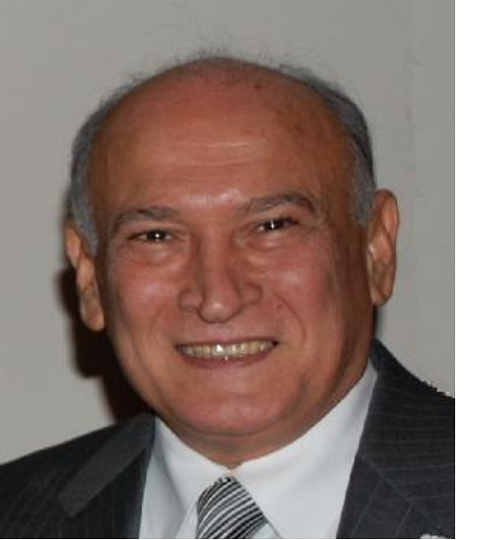
  • COVID-19 is an opportunity to improve food safety control - Dr. Hussein Mansour, Chairman, NFSA - National Food Safety Authority , Egypt
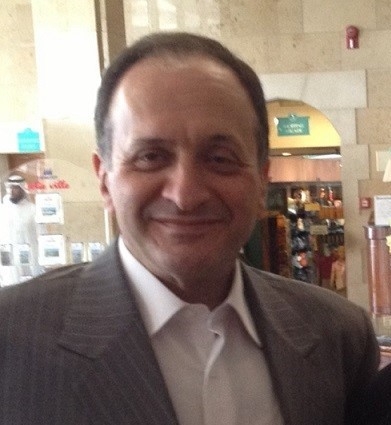
  • Food security in times of covid 19 - Mr. Atef Idris,Chairman, MEFOSA – Middle East Food Safety Associates, Lebanon
  • Covid-19 and food safety - Mr. Mamdouh Issa, Managing director, AHDO - Arab Health and Development Corporation
Previous webinar
The spread of the novel corona-virus has had impacts across all sectors. As health authorities and scientists around the world work towards identifying solutions to bring the situation under control, across the world packaged goods are in high demand. Africa Food Manufacturing Featuring Fi Africa & ProPak MENA brought together three of the food packaging industry leaders in the world and the region to share their views on the role of packaging in a pandemic.

How the world's food security depends on biodiversity


Year of publications: 2020
Place of publication: Rome, Italy
Pages: #20 p.
Publisher: FAO

As the world population continues to rise, new ways are needed to sustainably increase agricultural production, improve supply chains, reduce food losses and waste, and ensure access to nutritious food for all at all times.

This brochure includes the contribution of genetic resources for food and agriculture to food security and to the achievement of relevant sustainable development goals.

Last updated date 06/08/2020

Wednesday, August 12, 2020

WEBINAR: Post-Harvest Management in the Sub-Saharan African Region

12-13 August 2020. 14h00 – 16:00 (SAST). Post-Harvest Management in the Sub-Saharan African Region. FANRPAN. Registration of 12/08 + registration for 13/08

Recording forthcoming

Over the last 10 years, state and non-state actors have developed and promoted various PHM technologies in the region, albeit, with no broad adoption by the intended beneficiaries as a result of various factors. The overall objective of the strategy to effectively guide and coordinate PHL initiatives at the regional and national levels towards achieving reduced losses in line with the Malabo Declaration and SDG targets. A number of NGOs and funders that include FANRPAN, CARE, Swiss Development Cooperation (SDC), HELVETAS, etc. have been supporting AU Member States to implement PHM and/or PHL initiatives at national and regional levels.

This PHM Regional Multi-stakeholder Dialogue was convened over a series of two episodes webinars mainly focusing on the status of PHL and opportunities to improve PHM performance in the SSA region. Perspectives from farmers, researchers, extension and advisory services, CSOs and the government were explored, and case studies presented and discussed. 

Specific objectives are as follows: 
  • To share findings from FANRPAN PHM studies conducted in targeted project countries in Sub-Saharan Africa; 
  • To discuss PHM challenges and opportunities in the African continent; and 
  • To come up with policy recommendations on how to improve the performance of PHM in the continent.
12 August 2020.
  • Welcome - Dr Tshilidzi Madzivhandila, FANRPAN CEO
  • Overview - Matthew Pickard, CARE
  • Contextualize PHM Regional issues - Hon. Sindiso Ngwenya, Policy Champion
  • Background & Introductions - Dr Njongenhle Nyoni, Facilitator
  • Keynote Presentation: Talentus Mthunzi, Consultant
Breakaway Sessions: Country PHLM State of Play
  • Madagascar - Mina Tsiriarijao Randrianarisoa
  • Malawi - Pamela Kuwali
  • Tanzania - Vivian Kazi
  • Zambia - Masiye Nawiko
  • Zimbabwe - Dr Isiah Mharapara
  • Regional Perspectives - Talentus Mthunzi, Consultant
Day 2 : 13 August 2020
Engagements will be based on findings from the Post-harvest Management in Sub-Saharan Africa Project (PHM-SSA). This FANRPAN-led research conducted in Mozambique and Benin, with a special focus on a comprehensive cost-benefit assessment of PHM technologies and the critical role civil society can play in influencing the development of national PHM strategies, aims to improve food and nutrition security as well as increase food self-sufficiency and incomes of smallholder farmers through reducing

  • Welcome & Day #1 Reflections - Prof. Simba Sibanda, FANRPAN
  • Overview - Martin Fischler, Helvetas
  • PHM Innovations in SSA Background - Vitumbiko Chinoko
  • Introductions - Dr Njongenhle Nyoni, Facilitator
Keynote Presentations
  • Status report of PHM policies in sub-Saharan Africa - Prof. Brighton Mvumi, Consultant
  • Post Biennial Report Review for PHM - Talentus Mthunzi, Consultant
Breakaway Sessions: Country PHLM State of Play: 
  • Benin - Dr Njongenhle Nyoni, Facilitator
  • Mozambique - Prof. Joao Mutondo Consultant
  • Regional Perspectives - Talentus Mthunzi, Consultant
Related:
29 July 2020. Innovations in Nutrition Security & Post-Harvest Loss Reduction in Uganda

The deeply integrated partnership between Iowa State University and the communities and institutions in the Kamuli district of Uganda demonstrates a unique model for both development and philanthropy. This partnership has given rise to a host of innovative programs in the Kamuli district (agriculture, health, and education) and it represents a living laboratory for deeply integrated development interventions. The Consortium is directly involved in programs related to nutrition security and post-harvest loss reduction. 

During this webinar, panelists provided an overview of the project in the Kamuli district and discussed implemented strategies to improve nutrition security and reduce post-harvest losses. The webinar demonstrated how the partnership is reducing the contamination of aflatoxins in grain and coordinating a subsidy program to increase the use of plastic hermetic silos to reduce post-harvest loss. Panelists also discussed the potential to replicate this unique development and philanthropic model elsewhere to improve food and nutrition security. 
  • Dr. David G. Acker is the Associate Dean for Global Engagement at Iowa State University and Director of the Center for Sustainable Rural Livelihoods. 
  • Dr. Thomas Brumm is the Charles E. and Mary B. Sukup Professor in Food Security at Iowa State University and Associate Director for the Center for Sustainable Rural Livelihoods. 
  • Mr. Thomas Buyinza is a Post-Harvest Technology Specialist for the Iowa State University - Uganda Program. He is responsible for overseeing grain storage and safety, and working with smallholder farmers to implement strategies for post-harvest losses reduction.

Tuesday, August 11, 2020

WEBINAR: COVID-19’s Short-term Impacts on Economies, Food Systems and Poverty in African and Asian Countries

11 August 2020COVID-19’s Short-term Impacts on Economies, Food Systems and Poverty in African and Asian Countries: Economy wide Estimates from Economy wide Models.

Developing countries responded to COVID-19 by implementing social distancing measures and limiting non-essential business operations. Agrifood systems and food supplies—although generally exempt from restrictions—have been exposed to policy disruptions and global market instability. To measure the impacts of COVID-19 on economies and food systems, IFPRI researchers worked alongside partners in several African and Asian countries to conduct economywide multiplier analysis, tracing direct and indirect spillover effects along and across supply chains. 

Results reveal substantial but varying levels of GDP losses during lockdowns, depending on policy design and implementation and countries’ exposure to global markets. Despite policy exemptions, impacts on food systems account for about one quarter of GDP losses on average. Income losses are felt by all segments of the population. Negative impacts persist, but gradually weaken as restrictive measures are lifted.


Opening Remarks

  • Frank Place, Director, CGIAR Research Program on Policies, Institutions, and Markets (PIM)

Presenters

  • Karl Pauw, Senior Research Fellow, IFPRI
  • Kwaw Andam, Research Fellow, IFPRI, impact on Nigeria
  • Mariam Raouf, Senior Research Associate, IFPRI: impact on Sudan
  • Xinshen Diao, Deputy Division Director, Development Strategy and Governance Division, IFPRI, impact on Myanmar

Discussant

  • Paul Dorosh, Director, Development Strategy and Governance Division, IFPRI

  • Chris Hillbruner, Division Chief (Acting), Analysis and Learning Division, Office of Policy, Analysis, and Engagement; Bureau for Resilience and Food Security; United States Agency for International Development (USAID)

Closing Remarks

  • John McDermott, Director, CGIAR Research Program on Agriculture for Nutrition and Health (A4NH)

OECD-FAO Agricultural Outlook 2020-2029

OECD-FAO Agricultural Outlook 2020-2029
OECD and FAO 16 Jul 2020, 330 pages

The OECD-FAO Agricultural Outlook 2020-2029 is a collaborative effort of the Organisation for Economic Co-operation Development (OECD) and the Food and Agriculture Organization (FAO) of the United Nations, incorporating expertise from collaborating member countries and international commodity organisations. It provides market projections for national, regional and global supply and demand of major agricultural commodities, biofuel and fish.

During the preparation of the OECD-FAO Agricultural Outlook 2020-2029, the exact effects of the COVID-19 pandemic on agricultural markets were still largely unknown and they were therefore not incorporated in the baseline projections. Nevertheless, the Outlook aims to outline the channels of transmission of COVID-19 impacts on the various food and agriculture sectors.

Supplementary information can be found at www.agri-outlook.org.

According to the  report, ‘Agricultural Outlook 2020-2029’, sub-Saharan Africa’s trade deficit in major food items is anticipated to widen over the next 10 years.

Evaluated at constant (2004/2006) global reference prices, the deficit is anticipated to grow from about US$18 billion to US$31 billion by 2029. This is a result of the fact that import volumes of cereals, meat, sugar and oils are rising, and apart from sugar, imports to the region of nearly all main commodities are growing at a faster rate than the production or exports.

To help address the threats to Africa’s food and nutrition security includes:
  • accurately assessing COVID-19’s impact on food and nutrition security, livelihoods and food systems in the African Union’s member states;
  • meeting the immediate food needs of the continent’s vulnerable populations;
  • helping Africa’s smallholder farmers increase their productivity and market access;
  • and establishing adequate emergency strategic food reserves and storage facilities.

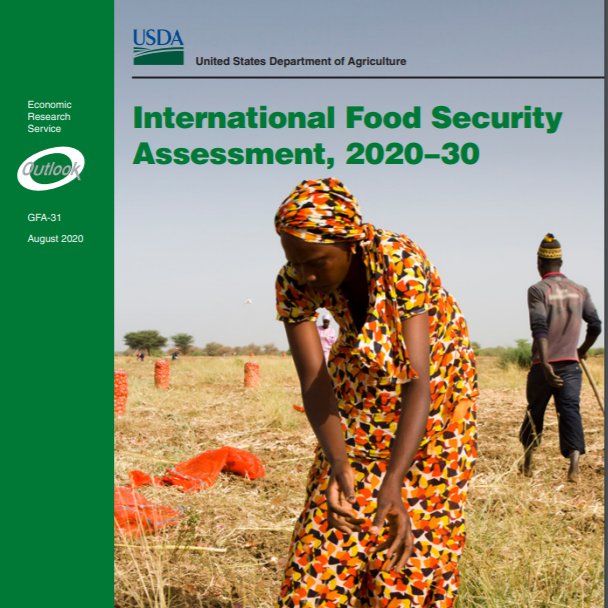
USDA world food security report measures the damage caused by COVID-19 pandemic

11 August 2020
. USDA’s Economic Research Service (ERS) is out with its annual International Food Security Assessment, and it isn’t pretty. And the reason things have gotten worse is the worldwide coronavirus pandemic.

International Food Security Assessment, 2020–30 (August 2020, 81 pages) 
Report summary  (August 2020, 2 pages) 

The authors–Felix Baquedano, Cheryl Christensen, Kayode Ajewole, and Jayson Beckman–say the bottom line is this:
“In the 76 low- and middle-income countries examined in the report, the number of people considered food insecure in 2020 was estimated at almost 761 million people or 19.8 percent of the total population. The shock to GDP from COVID-19 is projected to increase the number of food-insecure people by 83.5 million people in 2020 to 844.5 million and increase the share of the population that is food insecure to 22 percent.”
This year’s report looks at the income shock associated with the COVID-19 pandemic on food security in each of the 76 countries, which are located in Sub-Saharan and North Africa, Latin America, and Asia.

Among the findings are:
  • The number of food-insecure people in 2020 is estimated at 844.3 million, an increase of 83.5 million (11 percent) due to COVID-19 income shock. This implies that 22 percent of the total population of the 76 focus countries is unable to consume 2,100 calories a day, an average caloric level necessary to sustain a healthy and active lifestyle.
  • Most of the increase in people estimated to be food insecure as a result of the COVID-19 pandemic are in Asia (41 million people) and Sub-Saharan Africa (35 million people).
  • Even with the income impacts from COVID-19, food security is projected to improve in all 76 countries over the next 10 years. By 2030, the share of the population that is food insecure in these countries is projected to fall to 10 percent (456.8 million people), a 46 percent drop from 2020 in the number of food-insecure people. Despite this sharp decline, the 2030 estimate of food insecurity is almost 13 percent higher than the pre-COVID-19 scenario.
  • Improvement in food security is driven by income growth, relatively stable prices for major grains over the projection period, and lower population growth, particularly in Asia and in Latin America and the Caribbean.
  • Per capita income in the following decade is projected to increase by almost 42 percent on average for the 76 countries, but this is 1.3 percentage points lower than the pre-COVID-19 estimate.
  • The food gap, defined as the amount of food needed for all food-insecure people to reach the caloric target of 2,100 kcal/day, indicates the intensity of food insecurity. It can be expressed in calories per capita per day or in grain-equivalent quantities and is used to measure the intensity of food security at the aggregate level. For the 76 countries examined, the total food gap is projected to decline in all four regions from a total of 44.7 million tons in 2020 to 24.3 million tons in 2030.

UK Royal Society Africa Prize for use of plant nutrients to kill parasites in Kenya

10 August 2020. “The Royal Society Africa Prize 2020 is awarded to Dr Steven Runo for elucidating pathways for long distance RNA trafficking between parasitic plants and their hosts and identifying and developing transgenic protocol for characterising and validating candidate host and parasite genes,” the Society said in a statement.

The award comes with a cash prize of British Sterling Pounds 15,000 or Sh2.1 million for research plus additional personal cash award of British Pounds 2,000s (Sh280,000) and a bronze medal. The prizes will be awarded in London later this year.

Prof Runo is the head of Biochemistry Microbiology and Biotechnology Department at Kenyatta University. His specialty is plant molecular biology. A mouthful, one would say, but which in plain terms means studying the nutrients of plants and using that knowledge to change their biological composition and make them resistant to weeds.

The research is on the use of plant nutrients to kill parasites. In scientific terms, it is about controlling parasites using what they call RNA interference. And the parasite in question here is Striga, the pink coloured weed that kills maize, sorghum and millet and largely prevalent in western Kenya. The other name of the parasite is witchweed, literally and appropriately, a killer plant.

Striga attacks

The research is concentrated on sorghum, maize and millet, main food crops around the country, but which are vulnerable to Striga attacks. According to agricultural research, Striga is one of the most lethal weeds.

According to Prof Runo, parasitic plants establish what is called vascular connection with the host plant through structures termed haustoria, which allow acquisition of water and nutrients, often to the detriment of the infected host.

The parasitic plant extracts the nutrients from the host plant, either killing it or rendering it unable to produce crops. That is why when Striga strikes a maize farm, for instance, it will strangle the crop and leave the farmer without any yield.
“What we do is gene editing, where we study the nutrients that parasitic plants like Striga suck from the host plants and from that, we develop similar biological nutrients, inject them in the host crops and ultimately kill the parasites,”says Prof Runo.

The concept, he explains, is similar to what doctors do; that of gene editing. It involves examining the composition of one’s DNA and developing similar elements that are injected into human beings to give them immunity against viruses that cause diseases, such as polio vaccination.
“The overall objective of our research is to achieve food security,” says Prof Runo. “We have been working with seed companies to develop crops that are resistant to parasites based on the research we have done.”

Friday, August 7, 2020

WEBINAR: Strengthening Food Systems in Fragile Contexts

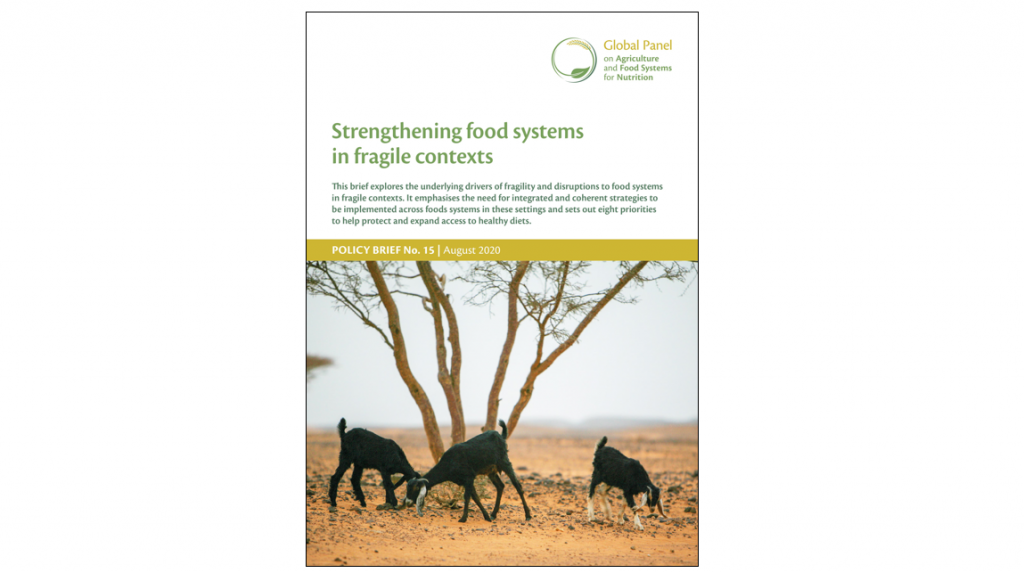
3 August 2020The Global Panel on Agriculture and Food Systems for Nutrition  launched its latest policy brief, Strengthening food systems in fragile contexts. (15 pages)

This policy brief seeks to stimulate international development organisations, governments, and other stakeholders, to realign policies within fragile contexts to ensure that diet and nutrition are improved, whilst also building more sustainable, resilient food systems. 

Currently, 1.8 billion people live in fragile regions with high societal, economic, environmental, political and security risks. By 2030, according to OECD, this is projected to reach 2.3 billion, and will include 80% of the global poor. In 2020 fragile states were disproportionately affected by food crises. 

Global food systems and nutrition experts who will discuss policy priorities for strengthening food
systems in humanitarian crises.

Follow the conversation on Twitter using #Food Systems in #FragileContexts during the webinar. 750 persons attended this webinar.

More info and agenda available here

  • Prof Sandy Thomas – Global Panel Director
  • Sir John Beddington – Global Panel Co-Chair and former Chief Scientific Adviser to the UK Government.
    "The latest foresight report of the Global Panel will be published end of August"
  • Ute Klamert – Assistant Executive Director (Partnerships and Governance) at WFP
  • Prof Patrick Webb – Global Panel Technical Adviser on: ‘Strengthening food systems in fragile contexts’
  • Sir Mark Lowcock – UN Under-Secretary-General for Humanitarian Affairs on: ‘The need for a cross-sectoral response’
  • Coumba Sow – Subregional Coordinator for Resilience, West Africa and the Sahel, FAO
  • Dr Mohamed Abdi FarahSUN Focal Point, Government of Somalia
  • Michael DunfordWFP Regional Director, East Africa

WEBINAR: Universities & Research Institutions supporting Family Farmers during and post COVID19 Pandemic in Africa

31 July 2020. This webinar brought together representatives of universities, family farmers organizations, development partners, agricultural research institutions, and government agencies to chat a way forward for universities in Africa to contribute to enhancing the livelihoods of family farmers and developing their capacities to cope with increasing uncertainty caused by current shocks. In particular, the webinar will aim to address universities’ role in: (i) promoting rural communities’ initiatives, and development and transfer of technologies; (ii) harmonization of regional policies and strategies to support family farmers; and (iii) strategies to reinforce the capacity and resilience of family farmers, especially women and youth, and their organizations to cope with shocks.
  • Moderator: Prof. Abebe Haile-Gabriel, Assistant Director-General FAO, Accra, Ghana
  • Ms. Beth Bechdol, Deputy Director General FAO, Rome Italy
  • H.E. Sacko Josefa L. Correa, Commissioner DREA (AUC), Addis Ababa, Ethiopia
  • Hon. Michael Katambo, Minister of Agriculture and Livestock, Lusaka, Zambia
  • Dr. Stephen Muchiri, Chief Executive Officer, Eastern Africa Farmers Federation, Nairobi, Kenya
  • Dr. Vuyo Mahlati, President African Farmers Association of South Africa (AFASA), Pretoria, South Africa
  • Dr. Abdou Tenkouano, Executive Director CORAF, Dakar, Senegal
  • Lead Presenter: Dr. Marcela Villarreal, FAO-PSU Director, Rome, Italy
  • Discussant: Prof. Brice Sinsin, Former Vice-Chancellor, University of Abomey Calavi, Benin

WEBINAR: Climate-Resilient Development & Transformative Food Systems in the Covid19 era

7 August 2020. @ 16:00 Nairobi (EAT) 15:00 Denmark (CET) 6:00 am LA (PST) 9:00 am Washington (EST) 21:00 Taiwan "Climate Change and Food, Health and Social Systems Resilience: Lessons Learned from Covid19 crisis”

These series of webinars on “Climate-Resilient Development & Transformative Food Systems in the Covid19 era” aim to provide a Solutions Space where stakeholders including civil society, scientists, UN and governments can share lessons learned from the Covid-19 crisis, in a world already challenged by the impacts of Climate Change, Malnutrition and Inequity. 

Experts, innovators and visionaries will identify climate resilient development pathways, for transformative and equitable food systems, that can contribute to One Health Planetary Health and green, inclusive and healthy recovery. This session will showcase exemplary initiatives addressing current compounding risks and will identify short- and long-term strategies to build Health, Food and Social Systems Resilience during Covid19. 

  • Moderator: M. Cristina Tirado-von der Pahlen, IIPCC AR6 Lead Author Health & Wellbeing | LMU | SHE Foundation. 
  • Dr. Asha Mohamed, Secretary General of the Kenyan Red Cross Society 
  • Dr. Ming Nan Lin, Vice Superintendent, Dalin Tzu Chi General Hospital 
  • Nate Wook, CEO, World Central Kitchen 
  • Federico Villatico Campbel, Strategic Advisor, CTCN

Previous webinars as part of these series include:
Climate-Resilient Development and Transformative Food Systems in the Covid19 era
Climate Change, Food Security and Covid19: challenges and opportunities

Planned webinars over the summer include:
Transformative and Equitable Food systems: towards One Health & Planetary Health
Transitioning into Sustainable and Healthy Diets
Growth after Covid19: A Just Transition.

WEBINAR: Policies to address COVID-19’s impact on Africa’s informal sector

6 August 2020. The COVID-19 pandemic has significantly impacted livelihoods in Africa by reducing earnings and limiting economic activity. Among the hardest hit economically are informal jobs, which account for 86% of all employment in the region (ILO, 2018). Informal workers are often not incorporated into social welfare systems and rely heavily on informal coping mechanisms to manage shocks.

Ongoing IGC surveys of traders in Nigeria and Sierra Leone show they have less customers, challenges restocking, and drops in income after national lockdowns were implemented in those countries. Informal traders are particularly impacted by social distancing rules and have less access to clean water and sanitation. Additionally, with 90% of women across Africa employed in the informal sector, COVID-19 threatens their economic self-sufficiency from plying their trade and contributing to the livelihood of their household.


This event explored the impact of COVID-19 on informal workers and discusses necessary policy measures to enhance social protection coverage and support mechanisms to protect informal workers if they lose their livelihoods.

 
Babatunde Fashola

Minister of Works and Housing, Nigeria

 
Hakeem Bishi

Research Project Manager

Lagos Trader Project

 
Danielle Resnick

Senior Research Felllow

International Food Policy Research Institute

 
Niccoló Meriggi

Country Economist

Country Staff, Researcher, Sierra Leone and Liberia Team

 
Twivwe Siwale

Policy Economist

International Growth Centre


WEBINAR: Animal Source Foods (ASFs) and Child Nutrition in Bangladesh, Nepal and Uganda

5 August 2020.
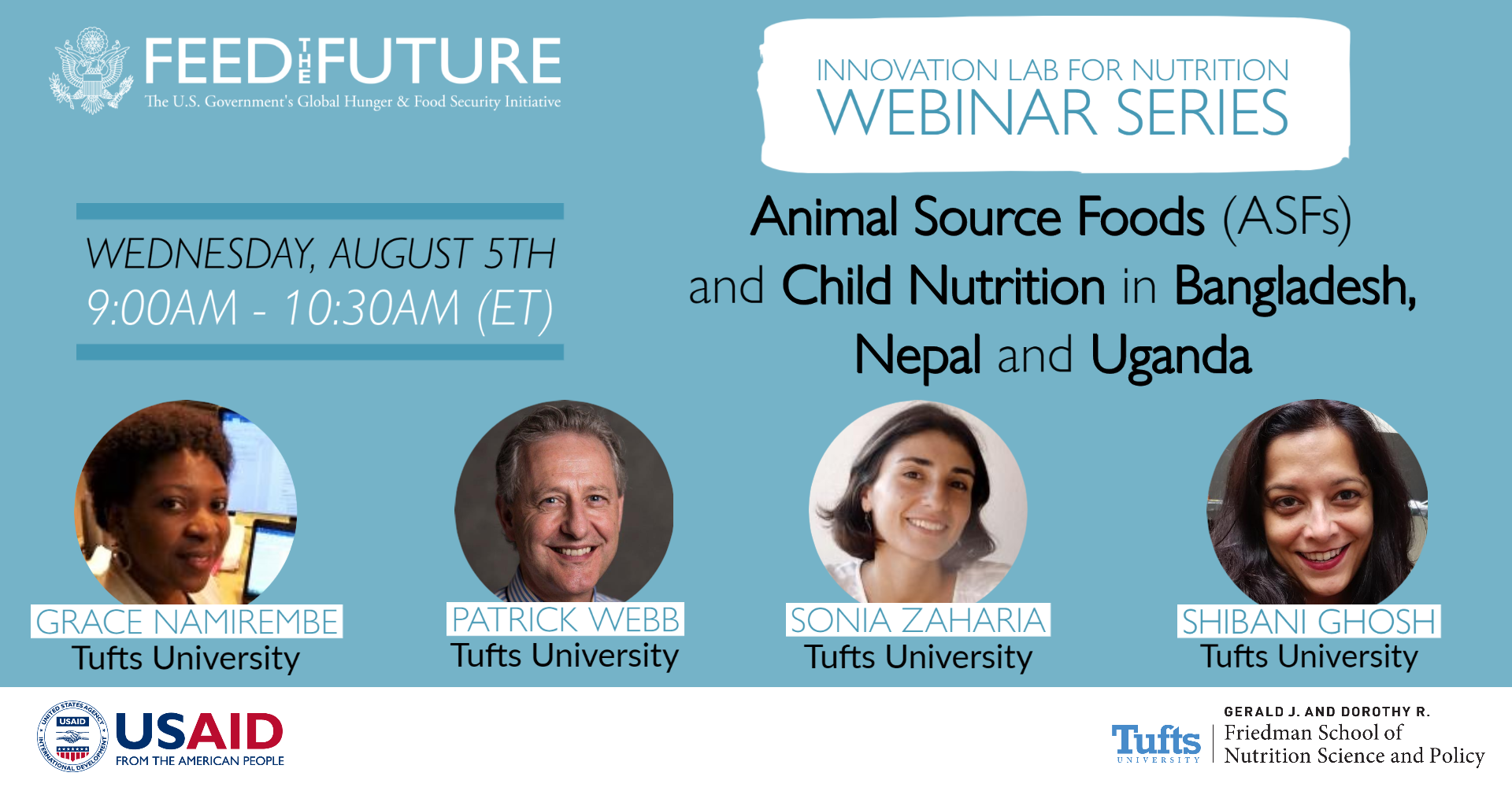
 Webinar: Animal Source Foods (ASFs) and Child Nutrition in Bangladesh, Nepal and Uganda.

Animal sourced foods (ASFs) are nutrient dense foods that when consumed in small amounts provide quality protein, vitamins, minerals and amino acids, and all nutrients critical for growth and development, particularly of infants and young children. 

While evidence supports the contribution of ASFs in improving the linear growth of children, a better understanding of the long-term effects of the consumption of different ASFs is needed. This webinar examined the role of ASFs in improving the nutritional status of vulnerable populations and present findings from the Innovation Lab for Nutrition’s studies in Nepal, Uganda and Bangladesh. These include econometric multi-country analyses assessing the role of the type of ASF and the total number of ASFs in supporting optimal growth and development. 


The webinar analysed nutrition-sensitive interventions (e.g. aquaculture and animal husbandry), consumption of ASFs, and nutritional status.
  • Moderator: Grace Namirembe - Data Analyst for the U.S. Government’s Feed the Future Innovation Lab for Nutrition
  • Dr. Patrick Webb - Director for the U.S. Government's Feed the Future Innovation Lab for Nutrition and Alexander McFarlane Professor of Nutrition at Tufts University Friedman School of Nutrition Science and Policy
  • Dr. Shibani Ghosh - Associate Director for the U.S. Government's Feed the Future Innovation Lab for Nutrition and Research Associate Professor at the Friedman School of Nutrition Science and Policy, Tufts University
  • Dr. Sonia Zaharia - Post Doctoral Fellow for the U.S. Government’s Feed the Future Innovation Lab for Nutrition

New scientific report ‘Towards a sustainable food system’

4 August 2020.
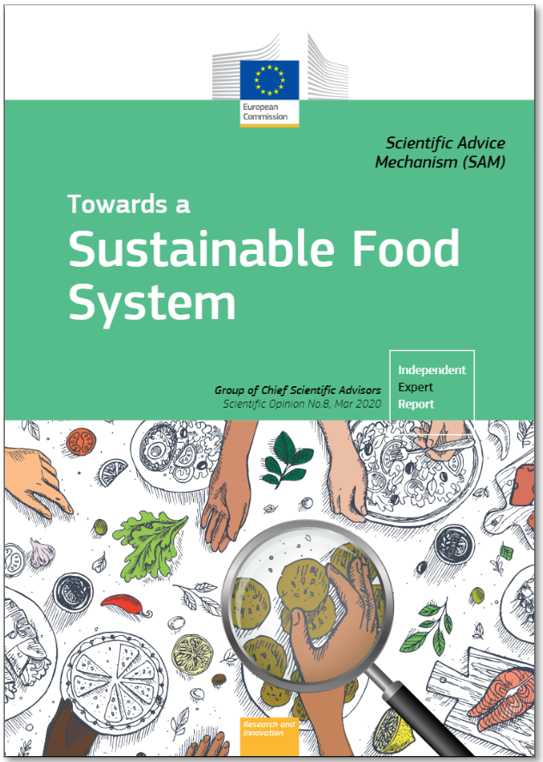
 New scientific report ‘Towards a sustainable food system’
The present EU food system provides a high level of food security, food safety and wide consumer choice. Its environmental, economic and social sustainability are by contrast poor. Maintaining ‘business as usual’ will endanger natural resources, our health, the climate, and the economy. 

The scientific opinion by the SAPEA (Science Advice for Policy by European Academies) consortium published in March 2020 (62 pages) provides advice on how to achieve a sustainable food system.
  • It recommends making environmental, social and economic sustainability the central objective of all policies relevant to food, in which ‘food’ is viewed more as a common good than a commodity. 
  • It calls on the European Commission to: be the engine that drives change in the EU and beyond, taking an active, step-wise and fully integrated approach; address power and information asymmetries in the food system and support a food environment that helps citizens to make sustainable choices; use a well-balanced policy mix in an iterative, responsive and adaptive manner, considering binding policy measures as the main drivers.
FIT4FOOD2030 Policy brief 1:
A systems approach is essential to transform the food system. 
Read the policy brief #1 to understand why we need to strengthen the systems approach to Research and Innovation (R&I) in order to inform policy and decision makers to foster the transformation of EU food systems, in line with societies’ needs. (This policy brief is a revised and updated version of policy brief 1, published in October 2018).

FIT4FOOD2030 Webinar 4:
RRI in policy making for future proof food systems
14 July 2020. The FIT4FOOD2030 webinar 4 touched upon the place of Responsible Research and Innovation (RRI) in policy making with the objective of achieving a sustainable food system in the EU. Visit this page to see the recordings of the webinar.


Upcoming webinar:
4 September 2020 at 14:00 (CEST)
The EU’s Farm2Fork strategy Register by invitation only

The Farm2Fork Strategy aims to promote sustainable food systems by setting concrete targets and establishing an Action plan, annexed to the F2F Strategy. This creates the framework for a real debate on the future of food systems, leading to a legislative proposal for sustainable food systems by 2023.

This webinar will bring together 30 organisations participating in the work of the EU Food Policy Coalition with Dr Jeroen Candel, a member of the working group which wrote the SAPEA evidence review report. Together, they will discuss how closely the published Farm2Fork Strategy follows the scientific evidence, and which elements and approaches will be best to achieve food systems transformation.

This webinar will be co-hosted by the new EU Food Policy Coalition. Public participation is not available for this webinar.
Lead speakers
Dr Jeroen Candel, Wageningen University

Related:
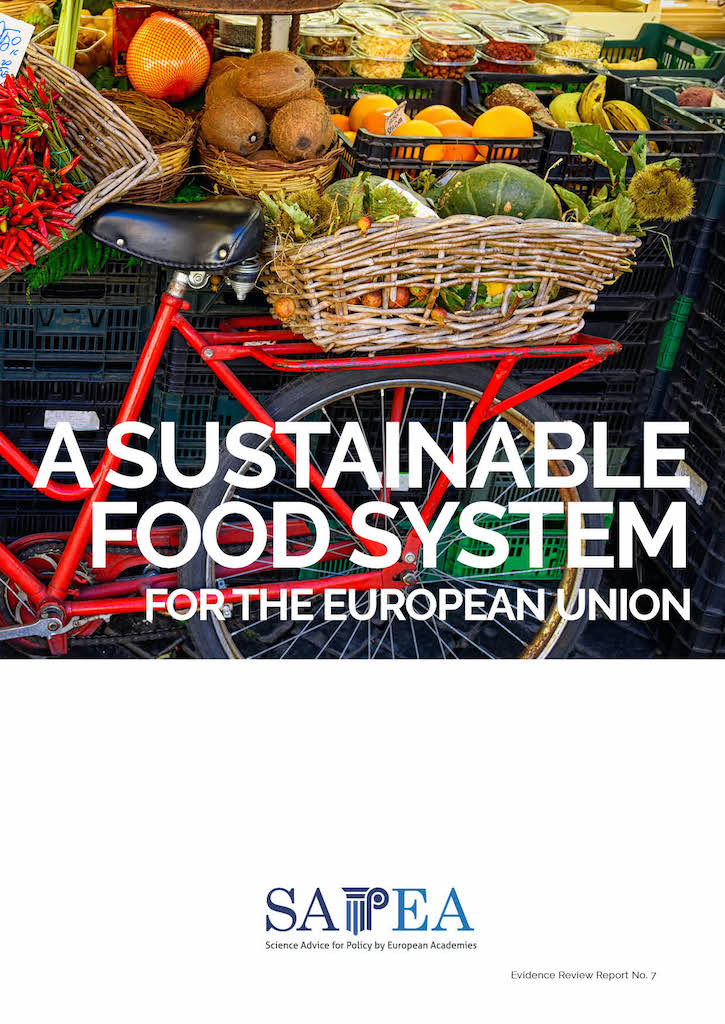
A sustainable food system for the European Union (224 pages)
  • The global demand for food will increase in the future. To meet this demand, it is not enough simply to increase productivity in a sustainable way. We also need to change from linear mass consumption to a more circular economy — which will mean changing our norms, habits and routines.
  • The evidence shows that this kind of behaviour change needs to happen collectively, not just individually. So we need joined-up governance at local, national and international levels.
  • Food systems also contribute significantly to greenhouse gas emissions. This can be addressed by reducing waste or directing it back into the supply chain.
  • A mix of different measures will be most effective. The evidence shows that taxation is one of the most effective ways to modify behaviour. Accreditation and labelling schemes can also have an impact.
  • Meanwhile, reform of European agriculture and fisheries policies offer great opportunities to develop resilience and sustainability.
  • But there is not yet enough evidence to know for sure exactly what works in practice, so the steps we take should be carefully evaluated, and trade-offs anticipated.

WEBINAR: The healthy choice logo to prevent overweight and non-communicable diseases

 21 July 2020. 10:00-11:00 am CEST. Choice Webinar

recording forthcoming

Thirteen years ago, Choices International started as a foundation to promote a healthy choice logo to
help prevent overweight and non-communicable diseases. While this has remained unchanged, over the years, it became clear that much more is needed. Stand-alone nutrition interventions gave way to a food systems approach, in which different policies are aligned to generate optimal impact. 

From FOP labelling to taxation, from school feeding to policy evaluation. Choices has acknowledged this development and has been working for the last year on how to adopt this approach. The result is a new comprehensive Choices strategy to enlarge its impact by working in a different way.
  • Rokiah Don, together with Clémence Ross, discussed the changing picture of nutrition in the world and the shifts that our organization has made. 
  • Gerda Verburg responded to that from the viewpoint of the SUN Movement.
  • Clemence Ross unveiled the new Choices logo.
During the webinar, young African nutrition scientists voiced their ambition to improve nutrition in the continent, together with Choices. 


African Orphan Crops Consortium (AOCC): progress

The AOCC’s goal is to sequence, assemble and annotate the genomes of 101 traditional African food crops that rural Africans know and understand, to allow scientists to efficiently improve the crops’ nutritional quality, productivity, climate resilience and disease and pest resistance, while training African scientists to best use the genetic information.

Ultimately, the objectives are to ensure that African plant breeders have access to and knowledge of ways to integrate the latest genomic technologies and tools to efficiently develop and release improved varieties of orphan crops to smallholder farmers for cultivation. By this means, both diets and farmers’ incomes are improved, allowing the 600 million people who live in rural Africa to grow their own food and nutrition security and support a growing urban population in Africa.

This 2019 progress report highlights 10 key achievements:
  • AOCC financial and in-kind support tops $80 million.
  • African Plant Breeding Academy (AfPBA) alumni launch 37 improved crop varieties.
  • Celebration of AfPBA’s fourth class achieves graduation of 112 scientists from 27 African nations including 87% PhDs and 38% women.
  • The fifth AfPBA class will begin in late 2020 to increase the graduates to 150 and funding for a sixth class has been secured.
  • AfPBA alumni publications reach 171 scientific papers in peer-reviewed journals.
  • 185 national breeding programs focused on African orphan crops across the continent are being directed by AfPBA alumni.
  • AfPBA scientists were awarded more than $13 million highly competitive plant breeding and research grants.
  • AOCC published three new genomes in 2019.
  • AfPBA alumni created and organized the inaugural meeting of the African Plant Breeders Association.
  • The FAO-AOCC partnership is working to take the orphan crops movement global in 2021 with a High-Level Multi-Stakeholder Consultation on Crop Improvement to Help Lift Africa out of Poverty through Enhanced Nutrition: The Unique AOCC Approach.
By 2030, the use of nutritious, climate resilient African crops stimulated by the AOCC activities and individual and collective efforts of AfPBA alumni are expected to be part of dietary improvements in 20% of Africa’s rural populations and 10% of its urban populations.

On a global scale, through collaboration with FAO, the AOCC approach has the potential to spur a global revolution in local crops. This success will be an important contribution to the nutritional agendas of the United Nations 2030 Sustainable Development Agenda, the Decade of Action for Nutrition, and the 2021 UN Summit on Food Systems, especially their Action Track that seeks to ensure access to safe and nutritious food for all.

Tuesday, August 4, 2020

WEBINAR: launch e-book COVID-19 & Global Food Security

4 August 2020. COVID-19 & Global Food Security. Organised by IFPRI. The coronavirus pandemic has sparked not only a health crisis but also an economic crisis, which together pose a serious threat to food security, particularly in poorer countries. 

The e-book COVID-19 & Global Food Security (144 pages) brings together a groundbreaking series of IFPRI blog posts looking at the impacts of COVID-19 and the policy responses. 

IFPRI researchers and guest bloggers provided key insights and analysis on how the global pandemic is affecting global poverty and food security and nutrition, food trade and supply chains, gender, employment, and a variety of policy interventions, as well as reflections on how we can use these lessons to better prepare for future pandemics. 

These pieces draw on a combination of conceptual arguments, global and country-level simulation models, in-country surveys, case studies, and expert opinions. Together, they present a comprehensive picture of the current and potential impact of COVID-19 and the world’s policy responses on global food and nutrition security.

  • John McDermott, Director, CGIAR Research Program on Agriculture for Nutrition and Health (A4NH)
  • Johan Swinnen, Director General, IFPRI
  • Purvi Mehta, Senior Advisor & Head of Agriculture (SA), Bill & Melinda Gates Foundation (BMGF-Asia)
  • Apollos Nwafor, Vice President, Policy and State Capability, Alliance for a Green Revolution in Africa (AGRA)
  • Máximo Torero, Chief Economist, Food and Agriculture Organization of the United Nations (FAO)
  • Moderator - Purnima Menon, Senior Research Fellow, IFPRI

INTRODUCTION 

Chapter 1. COVID-19: Assessing impacts and policy responses for food and nutrition security [download]

FOOD SECURITY, POVERTY, AND INEQUALITY

Chapter 2. Poverty and food insecurity could grow dramatically as COVID-19 spreads [download]
Chapter 3. COVID-19 is exacerbating inequalities in food security [download
Chapter 4. COVID-19 lockdowns have imposed substantial economic costs on countries in Africa [download
Chapter 5. How China can address threats to food and nutrition security from the COVID-19 outbreak [download
Chapter 6. Assessing the toll of COVID-19 lockdown measures on the South African economy [download
Chapter 7. Addressing COVID-19 impacts on agriculture, food security, and livelihoods in India [download]

DIETS AND NUTRITION

Chapter 8. The COVID-19 nutrition crisis: What to expect and how to protect [download
Chapter 9. COVID-19 is shifting consumption and disrupting dairy value chains in Ethiopia [download
Chapter 10. Survey suggests rising risk of food and nutrition insecurity in Addis Ababa, Ethiopia, as COVID-19 restrictions continue [download]

LABOR RESTRICTIONS AND REMITTANCES

Chapter 11. Lockdowns are protecting China’s rural families from COVID-19, but the economic burden is heavy [download]
Chapter 12. Economic impact of COVID-19 on tourism and remittances: Insights from Egypt [download]
Chapter 13. Significant economic impacts due to COVID-19 and falling remittances in Myanmar [download]

FOOD TRADE

Chapter 14. COVID-19: Trade restrictions are worst possible response to safeguard food security [download]
Chapter 15. COVID-19 border policies create problems for African trade and economic pain for communities [download]
Chapter 16. COVID-19 lockdowns threaten Africa’s vital informal urban food trade [download]

SUPPLY CHAINS

Chapter 17. How COVID-19 may disrupt food supply chains in developing countries [download]
Chapter 18. Impacts of the COVID-19 crisis on vegetable value chains in Ethiopia [download]
Chapter 19. Chinese livestock farms struggle under COVID-19 restrictions [download]

GENDER

Chapter 20. Why gender matters in COVID-19 responses — now and in the future [download]
Chapter 21. Why gender-sensitive social protection is critical to the COVID-19 response in low- and middle-income countries [download]

POLICY RESPONSES

Chapter 22. Fiscal and monetary responses to the COVID-19 pandemic: Some thoughts for developing countries and the international community  [download]
Chapter 23. Social safety nets are crucial to the COVID-19 response: Some lessons to boost their effectiveness [download]
Chapter 24. How India’s food-based safety net is responding to the COVID-19 lockdown [download]
Chapter 25. IFPRI’s COVID-19 Policy Response Portal: Identifying trends and implications for food systems [download]
Chapter 26. Water in the COVID-19 crisis: Response, recovery, and resilience [download]
Chapter 27. Prepare food systems for a long-haul fight against COVID-19 [download]

PREPARING FOOD SYSTEMS FOR FUTURE PANDEMICS

Chapter 28. Africa’s growing risk of diseases that spread from animals to people [download]
Chapter 29. COVID-19 and the promise of food system innovation [download]
Chapter 30. COVID-19 and resilience innovations in food supply chains [download]