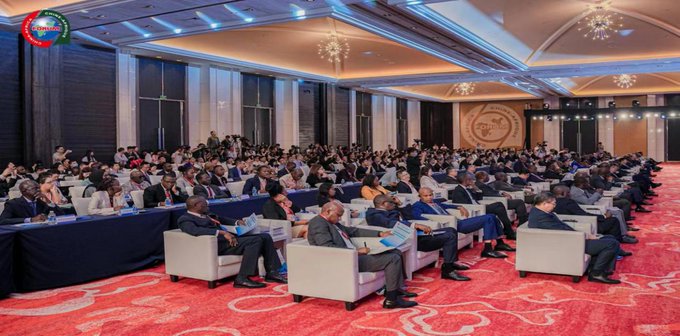
21/11: Technical Session
Location: Nelson Mandela Conference HallZoom Link to Nelson Mandela Conference HallChair: Dr. Elizabeth Mirika Musvoto, University of Cape Town, South Africa; liz.musvoto@uct.ac.za
Assessing transparency, inclusiveness, and sustainability in large-scale land acquisitions in Africa
Marie Gradeler1, Dr. Jeremy Bourgoin1,2, Angela Harding1, Dr. Christoph Kubitza3, Dr. Ward Anseeuw1
1: International Land Coalition, Italy; 2: CIRAD, France; 3: German Institute for Global and Area Studies, Humboldt-Universität zu Berlin, University of Göttingen
Medium Scale Commercial Agriculture and its Role in Structural Transformation, Wealth Creation and Enhanced Livelihoods in an African Context: Evidence from Contemporary Zimbabwe
Dr. Clement Chipenda
University of South Africa, South Africa
The cohort of medium scale farmers created by the fast track land reform programme (FTLRP) has become pivotal in the country’s reconfigured agrarian structure with the State identifying them as key drivers of its agricultural transformation strategy. In an economy that is heavily reliant on the agricultural sector, medium scale commercial farmers are considered as agents of change, bridging the gap left by the predominantly white owned large scale commercial farming sector, decimated by the FTLRP. The predominate black medium scale Zimbabwean farmers are increasingly being considered as critical in spearheading agricultural commercialisation trajectories, facilitating accumulation and as catalytic agents for socio-economic transformation and development.
Potential Livelihood Benefits of Entitling Customary Rights to Land in Africa: Evidence from Farm Households in Nigeria
Prof. Adebayo Musediku Shittu1, Dr. Mojisola Olanike Kehinde2
1: Federal University of Agriculture, Abeokuta, Nigeria; 2: Landmark University, Omu-Aran, Kwara State, Nigeria
Scaling bottom-up land governance interventions: including local institutions to increase (perceived) tenure security
Dr. Wytske Chamberlain-van der Werf
Utrecht University, The Netherlands,
23/11: Technical Session
Location: Nelson Mandela Conference Hall
Zoom Link to Nelson Mandela Conference Hall
Chair: Prof. Uchendu Eugene Chigbu, Namibia University of Science and Technology, Namibia; echigbu@nust.na
Scaling-up Community Participatory Mapping and Land Use Planning to reinforce customary land governance for multi-stakeholder engagement on sustainable investments and trade on land in Southwest Cameroon.
Harrison Nnoko, Dr. Ndjounguep Juscar, Solomon Brown
AJESH (AJEMALEBU SELF HELP), Cameroon
Post independence land policies in southern Africa: Improving agricultural productivity and value chains for export
Dr. Charles Chavunduka, Marcyline Chivenge
University of Zimbabwe, Zimbabwe
A National Land Policy in Crisis: The Case of Ghana
Eunice Naa Odarley Lamptey, Prof. John Tiah Bugri
Department of Land Economy, KNUST, Ghana
A review of the Enabling Environment for Transformative Land Investment in Ethiopia, Ghana and Mozambique
Dr. Ermias Aynekulu Betemariam1, Dr. Endalkachew Wolde-Meskel1, Dr. Emily Jeanne Gallagher1, Dr. Tamiru Amanu3, Dr. Delia Catacutan1, Dr. George Christoffel Schoneveld1, Eunice Matey Offei2, Divine Appiah2, Nana Ama Yirrah2, Dr. Osvaldo Matessane2, Dr. Anne Larson1
1: Center for International Forestry Research and World Agroforestry (CIFOR-ICRAF), Kenya; 2: SNV; 3: Wageningen University Research
24/11: Technical Session
Impacts of Land Registration and Cash Grants on Agricultural Investment and Trade: Evidence from Women Farmers in Uganda
Joao Montalvao, Michael O'Sullivan
World Bank, United States of America
The findings of this study indicate that tenure insecurity and credit constraints are important barriers hindering African women's participation in higher-value, agricultural trading. They also show that it is possible to alleviate these barriers through policy design, and that doing so can have important impacts on women's empowerment.
Related: AFSA PUBLICATIONS
November 21, 2023 – We are excited to announce the launch of a series of five national land policy study reports on Senegal, Mali, Togo, Ghana, and Cameroon, as part of AFSA’s "Our Land is Our Life" initiative. This landmark release underscores AFSA’s commitment to promoting sustainable land rights and governance in Africa.
Key Insights and Objectives of the Reports:
Recommendations for Advocacy Strategy: They offer recommendations to inform advocacy strategies for land rights, identifying key policy spaces, entry points, and actors best placed for advocacy.
Policy Barriers and Advocacy Opportunities: The reports aim to identify barriers to land rights and opportunities for policy advocacy, including strategies for challenging opposing narratives.
Stakeholder Analysis: They provide an analysis of key stakeholders in land policy, identifying allies for protecting small-scale farmers and pastoralists’ rights, and examining the influence and narratives of those who favor privatization and investment in land rights.
Implementation of International Guidelines: The reports assess how international guidelines on land governance, such as those from the UN, AU, and RECs, are being implemented at the national level.
Large-Scale Land Acquisitions: They evaluate the extent and impact of large-scale land acquisitions by both national and international investors on local land users.
Impact Assessment on Land Users: The reports assess how current land governance frameworks impact various groups such as family farmers, indigenous peoples, women, and youth. This includes examining human rights, land rights, access to and control of land, protection of customary land rights, and involvement in land policy decisions.
Examine Land Policies and Governance: They seek to understand the national land policies and governance structures, focusing on how these policies affect peasants’ rights, women’s rights, and food sovereignty.